Leaving Ivrea we crossed the southern edge of the Serra d’Ivrea, the largest moraine in Europe, formed over millenia by melt from the glaciers of Mont Blanc. Now a 25km long, 600 metre high forest zone dotted with glacial lakes, it’s a popular area for hiking and mountain biking.

This roadside shrine carried the blessing “O, pilgrim, we will go together … if you wish”.

We passed some stately homes, and vineyard estates on the lake shores.


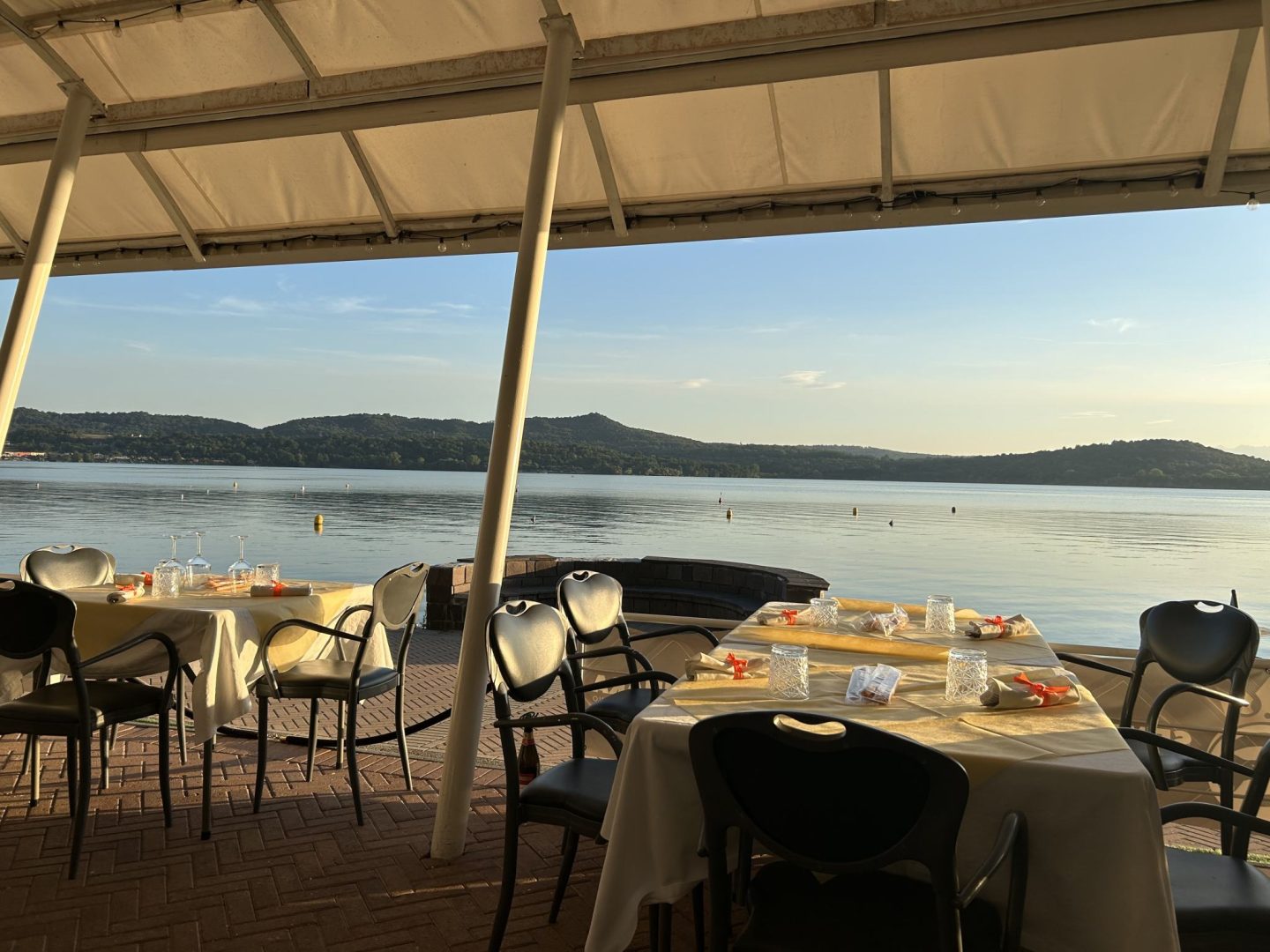
Lake Viverone, the largest in the area, marks the southern end of the moraine. Its town of the same name is a snoozy ‘resort’ area with low key hotels, paddle boats, fishing and some lakeside restaurants from which to watch the sunset. Although, as we discovered, there’s a reason staff scurry around lighting a mosquito coil under every table as dusk descends.
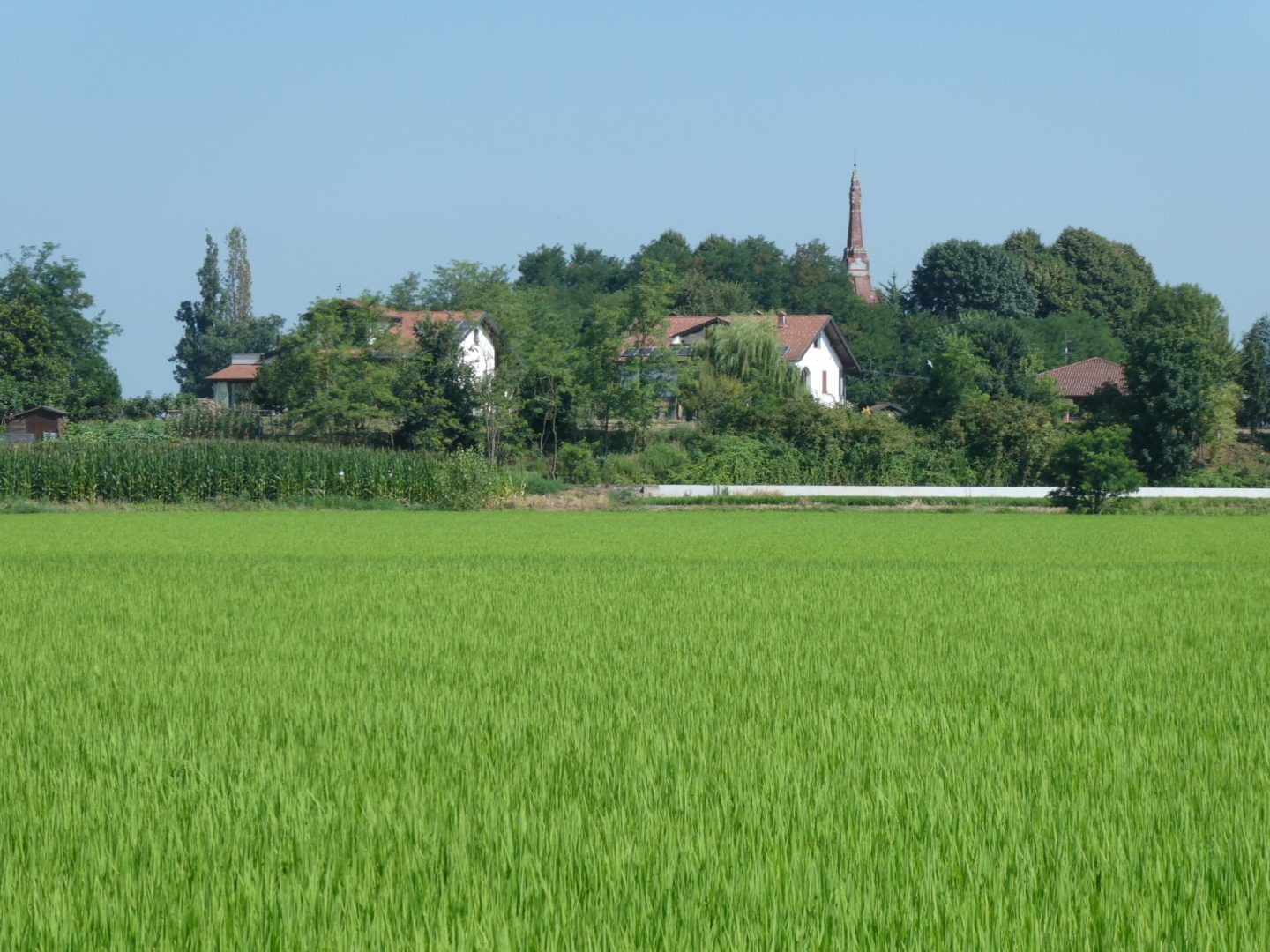
After Lake Viverone, we passed the last of the moraine hills and reached the Po River Plain. 650km wide, 46,000 square kilometres in area, and as flat as the corn fields of Indiana, the Po Valley is responsible for about 35% of the country’s agricultural output.
There are fields of corn, soybean and sunflowers, but by far the most important crop is rice, which has been grown here since at least the 15th century. In the mid 19th century, Count Camillo Benso di Cavour built the massive Canal Cavour between the Po and Ticino Rivers, to be used for irrigation throughout the entire valley. Well, he didn’t build it himself. 14,000 peasants working with picks and shovels constructed the 85km long irrigation canal, the third longest in Italy. It has 101 bridges, 210 siphons and 62 canal-bridges. And is still the largest hydraulic engineering work ever undertaken in the country. The Po became the food bowl of Italy, and Cavour went on to become the Kingdom of Italy’s first prime minister.

In May each year, the Associazion OvestSesia uses the canal to flood the rice fields ahead of planting. A landscape of bare earth is transformed into the mare a quadretti, the ‘sea of little squares’. Italy produces 1.3 million tons of rice per annum, and most of that is grown here. It’s where all that arborio and carnaroli used for risotto comes from.


We spent most of the week zig-zagging through this seemingly endless latticework. It doesn’t have the beauty of the rice terraces of Asia, but it is a stunning green and the growing season attracts lots of birds, especially sacred ibis.
 Rabbits were making an appearance on menus in local restaurants as well as out in the countryside.
 We glimpsed an otter slithering down a bank into an irrigation canal, too fast to get a photo.
And a coypu, a semi-aquatic rodent the size of a large cat, originally from South America and defined as an invasive species here, which has colonised many Italian waterways and marshes.

It’s getting hotter by the day, but the Alps where we started are still showing areas of snow. 
Until the age of mechanisation, women known as mondines came from nearby provinces to work as seasonal weeders. The work was arduous and poorly paid, with long days spent in knee deep water in the stinking heat. They became a symbol of resilience in the early 20th century when they began organising strikes and protests, in 1906 becoming the first Italian labour force to win the right to an eight-hour work day. Forbidden to talk, the women would sing to each other and their song Bella Ciao became the anthem of Italian partisans in WWII.
The fields are still dotted with the derelict dormitories in which the mondines were housed, as well as crumbling essiccatore, cavernous warehouses where the harvested rice was dried using enormous overhead fans. Some are still in use or being renovated for other purposes.


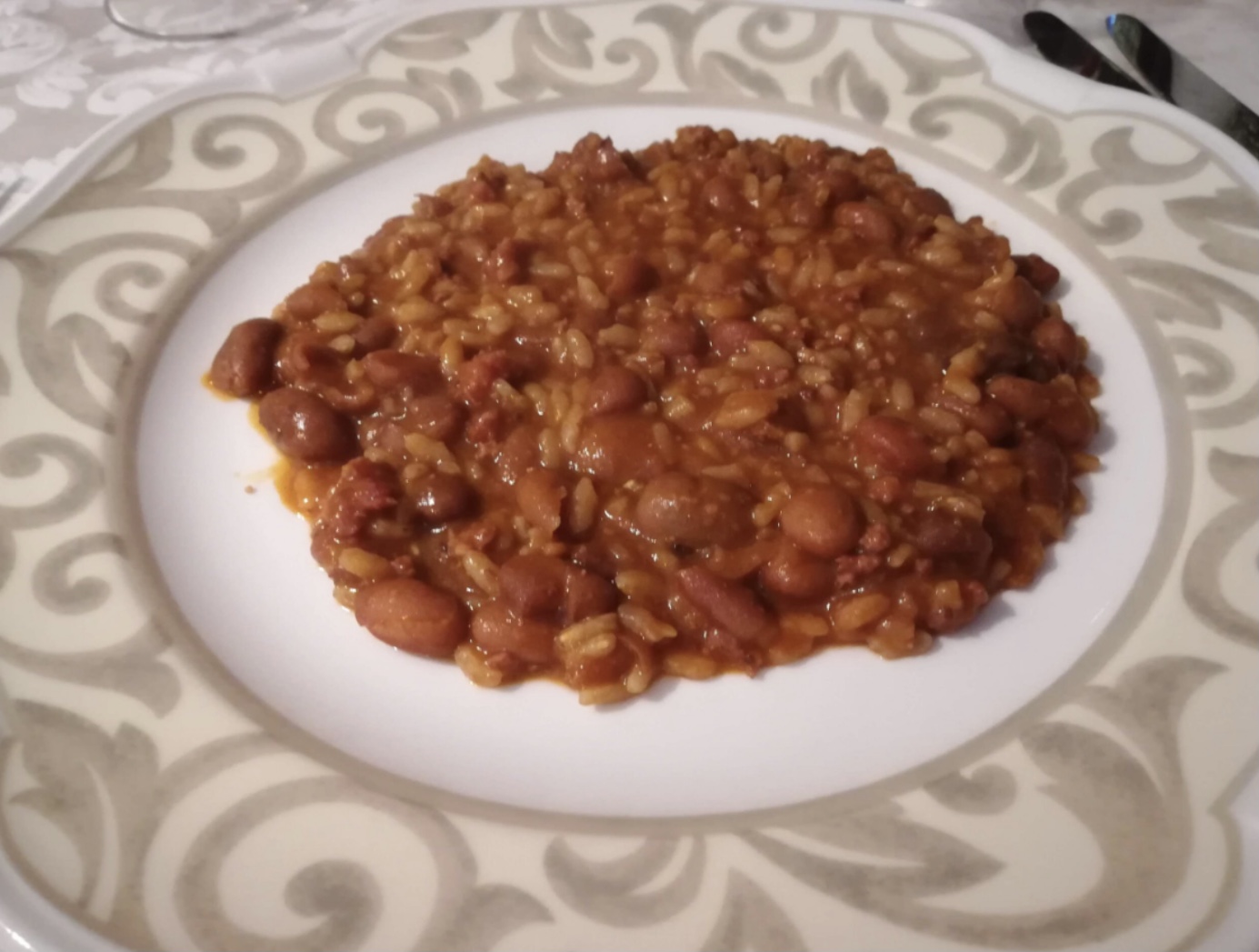
In Santhia, we had panissa vercellese, a local specialty, which involves stewing dried beans and pork fat until soft, adding carnaroli rice and diced pork salami, cooking the mixture until the dish has the consistency of risotto, then adding a big slug of red wine. It might not look great, but after a long day’s walk, it’s nourishing comfort food at its best. Yum!
There were old villages, photo-worthy but with few signs of life.


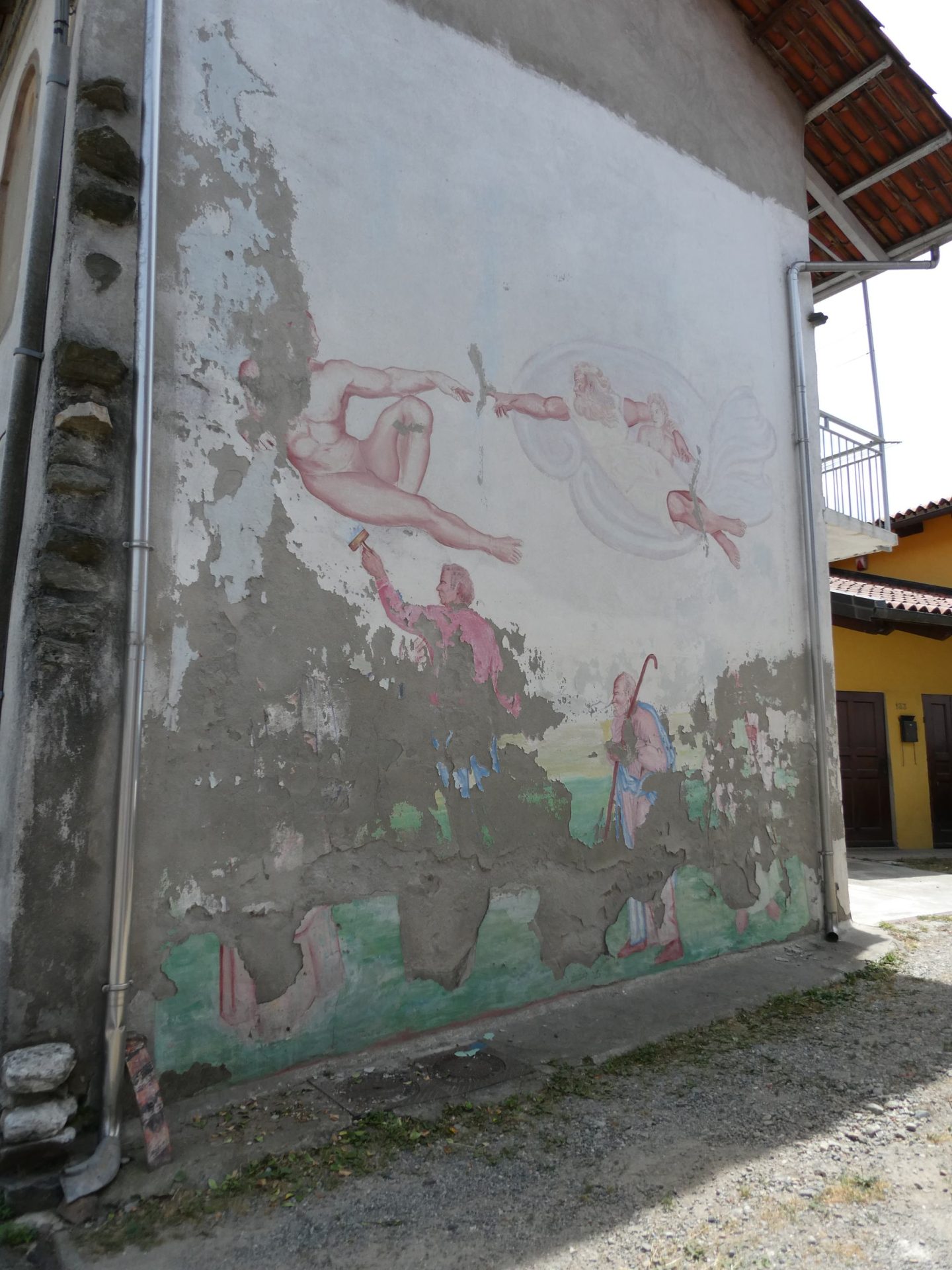
An occasional interesting mural.


Mostly any renovations are sympathetic to traditional style. But not all.
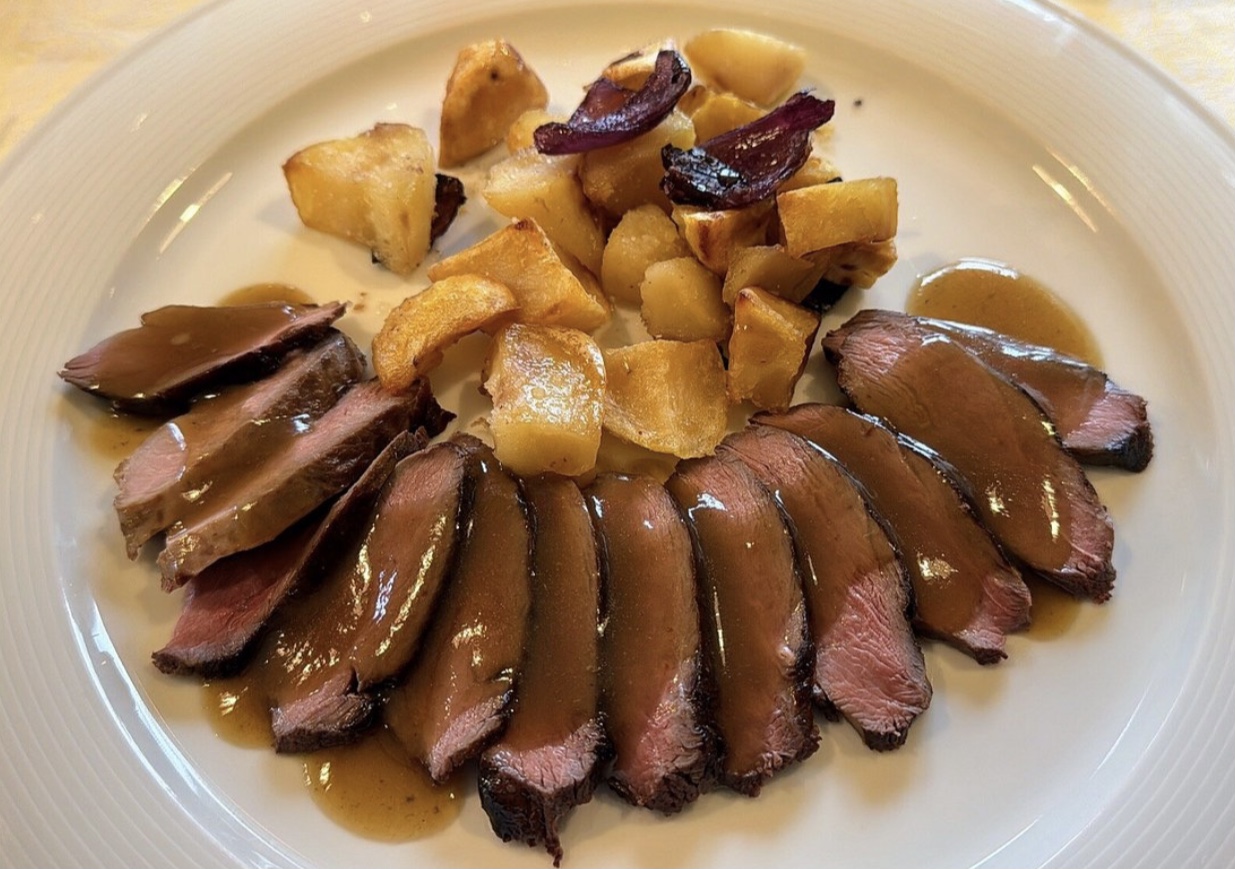
 Mortara is famous for its local delicacy, salame d’oca (goose salami). Plentiful freshwater springs and tender grasses have given rise to a longstanding tradition of geese raising here, initially kicked off by Jewish communities as an alternative to pork. We had a mixed antipasto of goose products, followed by a roasted goose breast. To be honest, the salami didn’t taste much different to pork salami, but the goose liver pate and the roasted breast were delicious. Better than duck.

 In medieval times, other pilgrim routes from Paris, Amsterdam and Stad (Norway) linked to the Via Francigena at Pavia. This sign showed the converging routes. It is still a long way to Rome.

Pavia was once an important cross-roads town and its distinctive covered bridge, Ponte Coperto, dates to 1354, although the current one is a reconstruction of the original damaged by bombing in WWII.

The city’s other landmark symbol is the statue of Minerva. This is a university town and according to legend, students shouldn’t look Minerva in the eye or they will fail their exams.

Despite the WWII bombs, much of the historical centre has survived.


Town was quiet and we were too exhausted to explore much after a 26km tramp in +33 degrees. It seems locals were feeling the same. Quite a few were out cooling off in the Ticino River.

We seem to be living on granita and gelati. The Italians do this stuff so much better than an Australian Mr Whippy van cranking out a tinny rendition of Greensleeves and fast-melting soft serve ice cream.

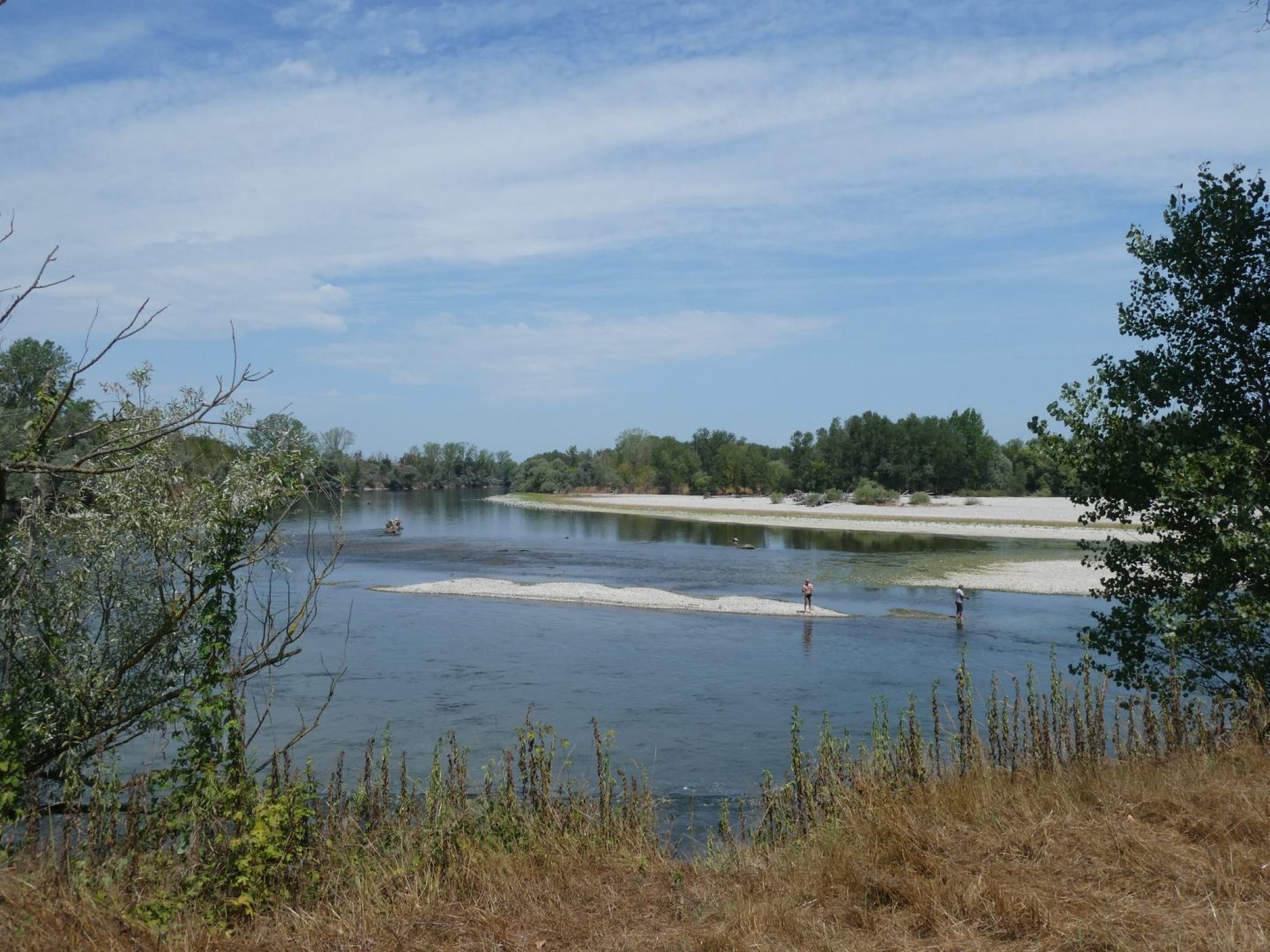
On our last walking day for the week we arrived at the Po River at the very location where Archbishop Sigeric was ferried 4km downstream and deposited on the opposite bank. Danilo Parisi has been transporting pilgrims along the exact same stretch since the Via Francigena was re-established in 1998. It’s a pleasant 30 minutes puttering along at a slow pace and eliminates a major detour to find a bridge. Some might say “well, you didn’t walk all the way”, but taking the boat is a more accurate replication of old Sigeric’s path.
Today, it was us and a Hungarian woman who started in Lausanne a few days walk further back in Switzerland than where we started. The river is low and it was a bit of a scramble.
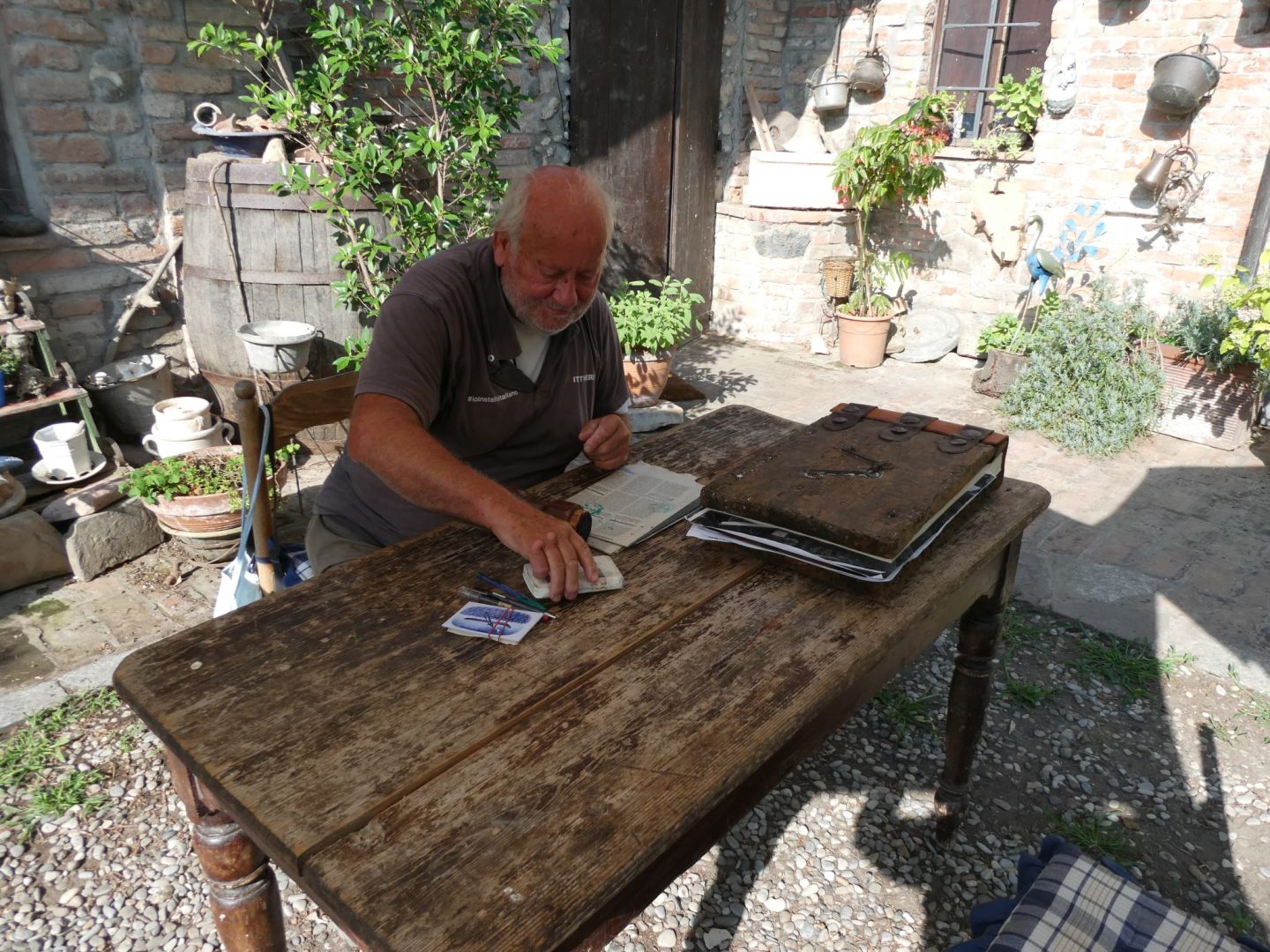
 After the crossing, we climbed the bank up to Signore Parisi’s house where he keeps a register for each year, recording every pilgrim transported, their age, occupation, country of origin and their pilgrimage start point and destination. It’s mid July and we were pilgrims number 668 and 669 for the year.
We’d crossed into Lombardy, and from the river it was a mere 18km tramp to Piacenza. Piacenza is another university town with lots of historic architecture, some good restaurants and an opportunity for a rest day.


But it also has something truly unique. The Liver of Piacenza is an Etruscan period, exact-size, bronze replica of a sheep’s liver with protuberances for the positions of the gall bladder, caudate lobe and posterior vena cava. Etching on the surface divides the liver into 38 compartments with the name of a god inscribed in each.
Etruscan priests known as haruspex practised the art of divination via sheep sacrifice. The ritual sounds like something out of Monty Python. Wearing a special tunic, cape and conical hat, the priest placed his left foot on a stool, held the slaughtered sheep’s liver in his left hand and inspected it with the fingers of his right hand for lesions or anomalies. Depending on their location, he could interpret which god was sending a message and what the god wanted to convey.
Cast in the 2nd century BCE and found by a farmer ploughing his field just outside Piacenza in 1877, it’s the only one known to still exist and it’s here in the city’s Archeology Museum. Except it’s not. For the first time in over 2,000 years, the Liver has left Europe. It’s on temporary loan to an exhibition in San Francisco. But there’s a replica here, which the curator assured us was so good she worried they wouldn’t be able to tell one from the other when the original comes back!

John was somewhat underwhelmed. But it’s proof of the weird stuff you only see on a slow journey through places less often visited.
This week:
Day 9: Ivrea to Lake Viverone: 23km
Day 10: Lake Viverone to Santona: 19km
Day 11: Santhia to Vercelli: 29km
Day 12: Vercelli to Robbio: 21km
Day 13: Mortara to Garlasco: 21km
Day 14: Garlasco to Pavia: 26km
Day 15: Pavia to Santa Christina: 30km
Day 16: San Colombiano to Piacenza: 18km
Day 17: Rest day in Piacenza
Total to date: 311km

So looking into Minerva’s eye is like a Brisbane uni student having a jacaranda blossom fall on their head 😳