It’s been described as ‘the world’s longest art gallery’. The stations of the Stockholm Metro system don’t just display art. Art is integrated into the stations themselves. Metro operator, Region Stockholm, believes it contributes to a calm and safe environment, reduces vandalism and graffiti, and even helps regular travellers identify their stop, since each is so different.
The first one, completed in 1965, doesn’t seem too innovative today.
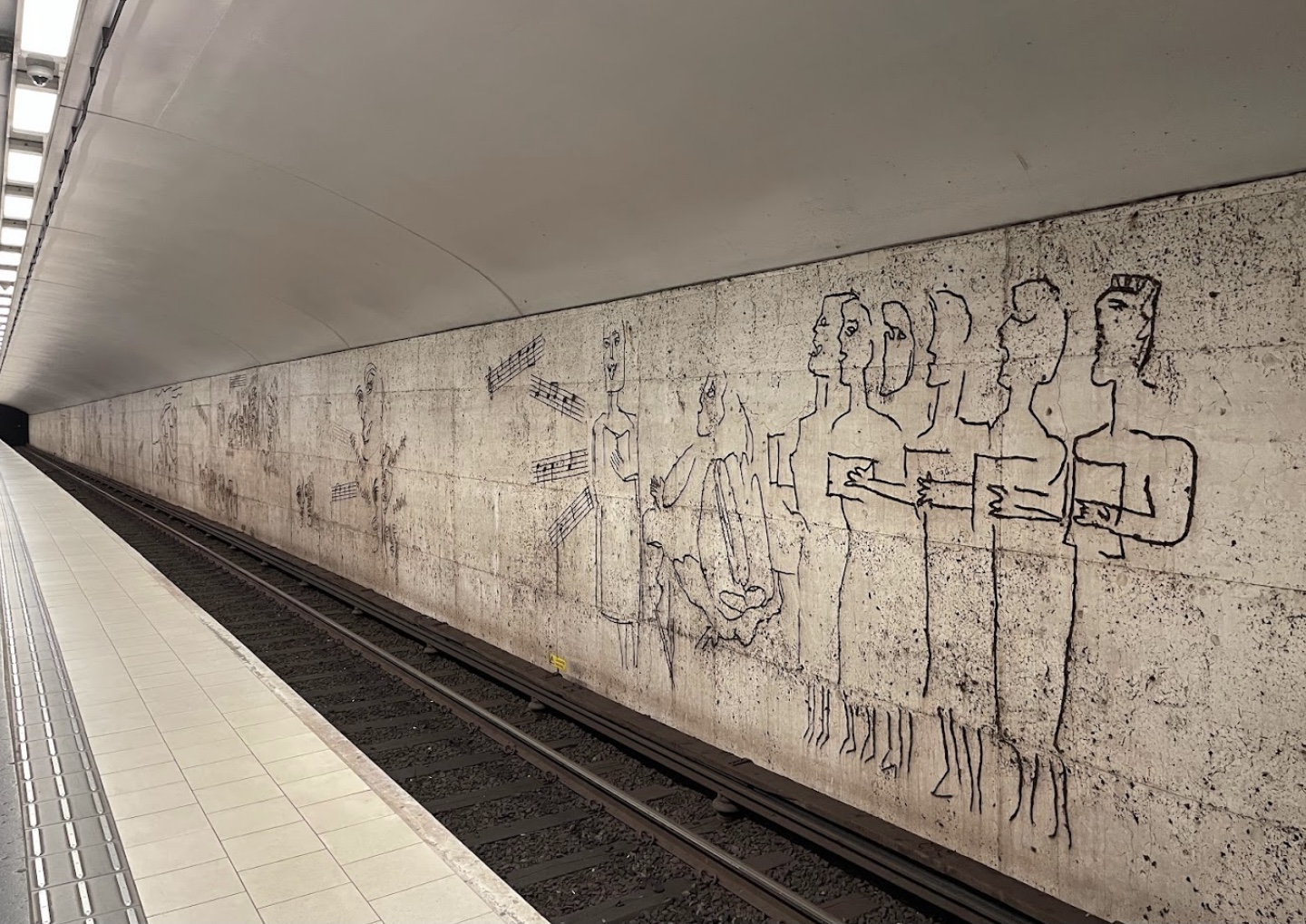
But as the metro expanded, the designs became larger and more spectacular, making use of the contours of the tunnels and incorporating sculpture, mosaics, reliefs and light installations. Since 2015, artists are selected by public competition and are included in the design team with the architects and engineers in the planning and construction of new stations.
The metro system is extremely simple to use, and you can easily spend a few hours jumping on and off at different stations to check out the designs.
One of the most vibrant is Stadion, one of the metro’s first ‘cave’ stations, where the walls follow the contours of the underlying bedrock. The vibrant colours and rainbow are supposed to remind metro users that although they are underground, the sky is not far away. It’s the stop for Stockholm’s Olympic Stadium, site of the 1912 Olympics, so it also references the Olympic rings.

 Finding the station exit isn’t difficult.

The next stop on the line, Tekniska Hogskolan, has a science and technology theme as it’s the stop for Stockholm’s University of Technology.
At the ends of the platforms there are representations of the four elements: earth, fire, air and water.

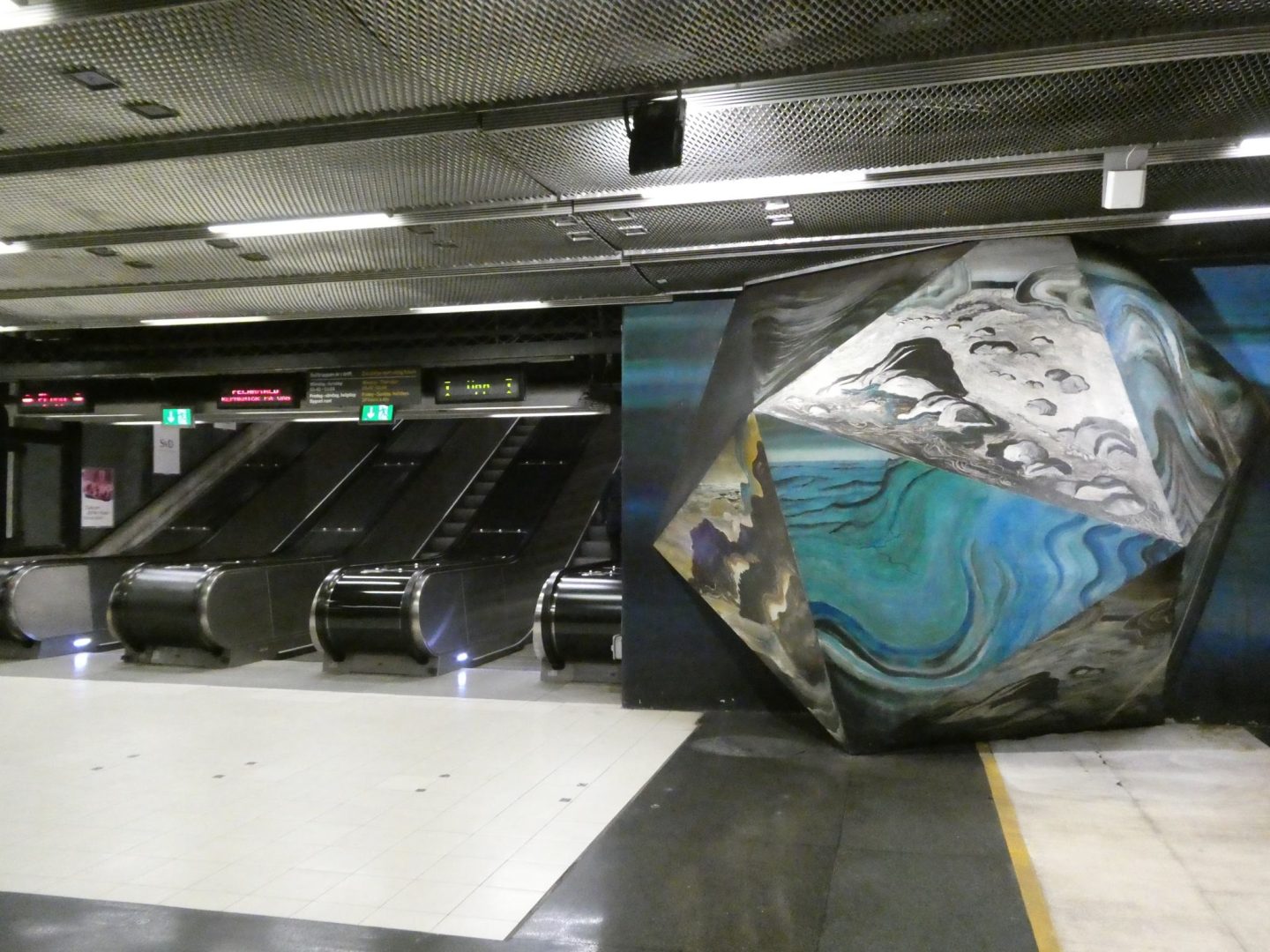
Plato theorised the existence of a fifth element: ether, represented by a huge glass polyhedron in the central atrium.

Also there’s a nod to Newton’s apple.

Stockholm’s metro lines converge at the city’s largest and busiest station, T-Centralen. The artwork on the Blue Line is quite striking. At the bottom of the escalators, blue leaves, and at the top, silhouettes of the workers who built the metro tunnels.


The artists who completed Hallonbergen thought the name – which translates as Raspberry Mountains – evoked a children’s fairytale. They took drawings made by their own children and kids from a local school, and reproduced them on a large scale. Legend has it that a station worker arrived early the day after they started and thought graffiti artists had entered overnight, so he started painting over the work.


 One of our favourites was Solna Centrum. Originally it was supposed to be simply a vivid green forest backed by a red sunset.

But the artists improvised as they painted, adding images invoking the major topics of the day: pollution, environmental destruction and the hollowing out of rural communities. Still topical today.


We particularly liked this little detail of a moose about to give a hunter a nasty surprise.

Universitet is the stop for Stockholm University. Sprawling tile panels depict the drawings and work of Swedish botanist and zoologist, Carl Linnaeus. Known as the ‘father of taxonomy’, Linnaeus formalised the modern system for the classification of organisms. A series of panels concentrate on Linnaeus’ expedition to Lapland in 1732.

We think this was a depiction of the travels of Swedish explorers all over the world.

But we have no idea what’s going on here.

The most ornate station was Kundsträdgården, which means ‘the King’s Garden’. Between 1643 and 1825 the land above it was the site of Makalös Palace which included a huge French-style garden featuring Roman statues and pillars. The palace burned down and the area eventually became a public park.
There are authentic archeological remains and replicas of features from the former gardens embedded in the walls.
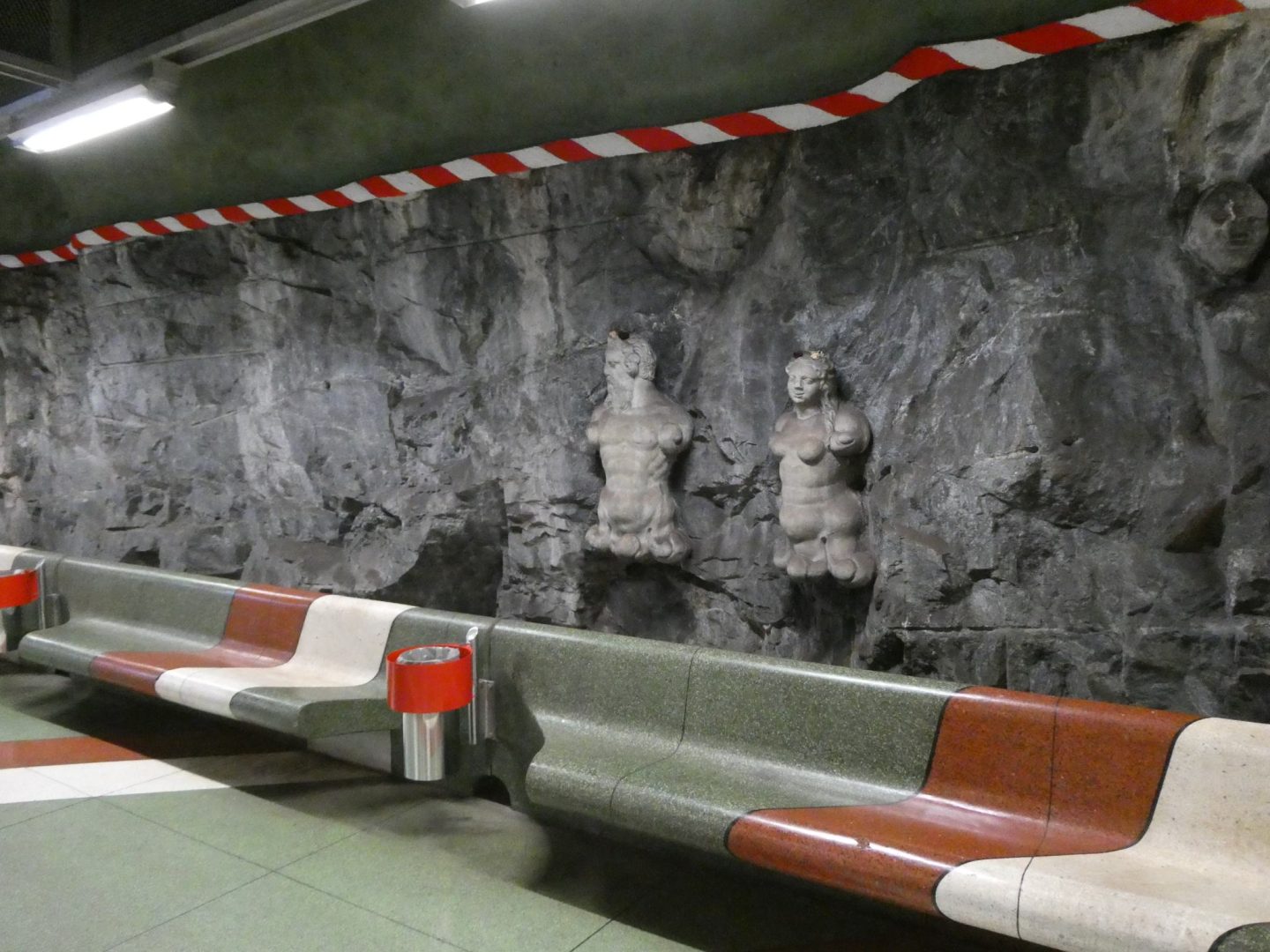
On the floor are representations of pull tops from beer bottles because, according to the artist, these will become the fossils of our age.

How many subway stations have a hanging garden or a fountain.


The escalator access points are quite unique too.

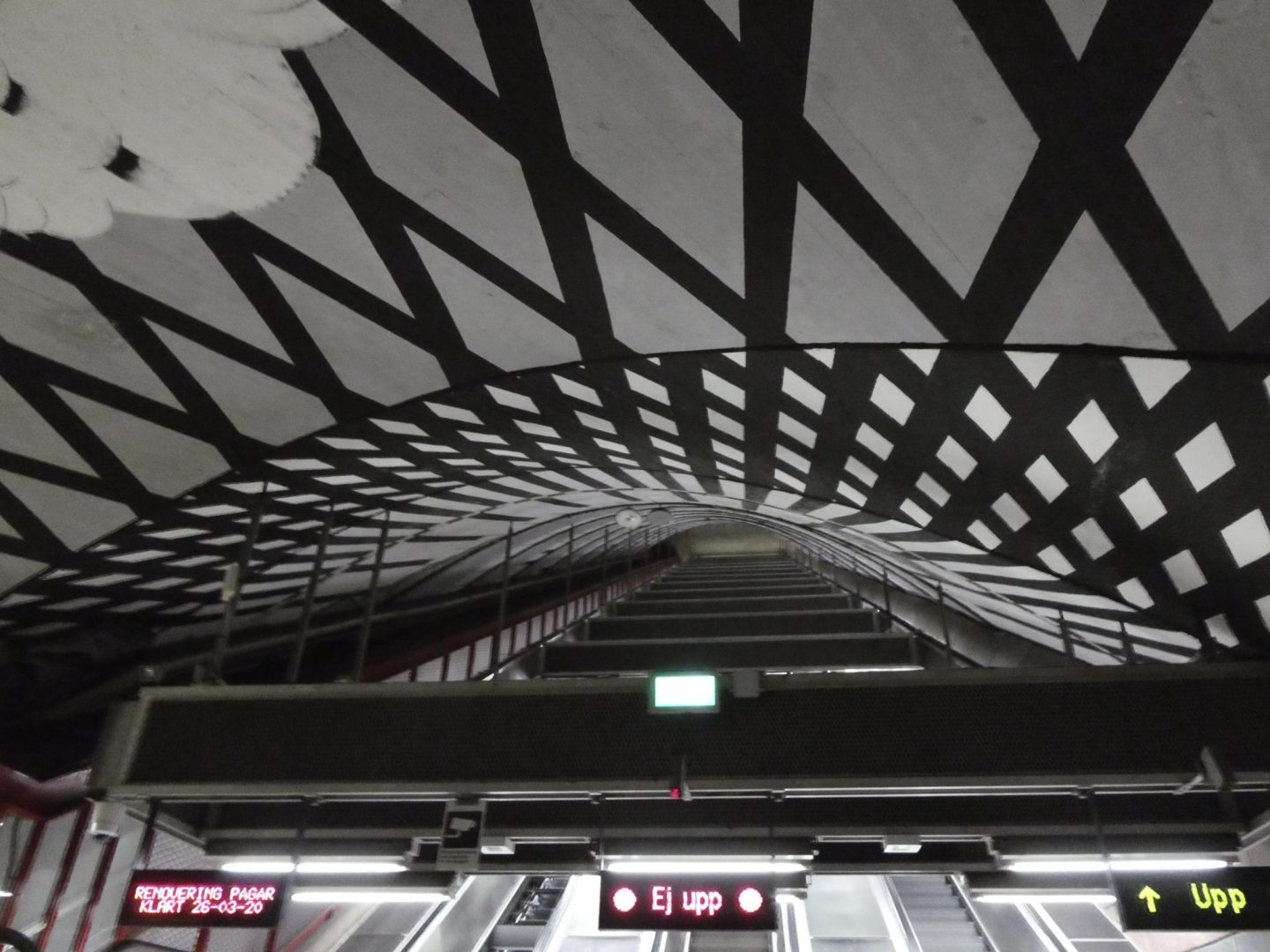
But probably our favourite was Tensta. It’s in an area where lots of migrants lived when they first arrived in Stockholm. The artist wanted to showcase aspects of Nordic life and create a welcoming feel. She succeeded, we think.
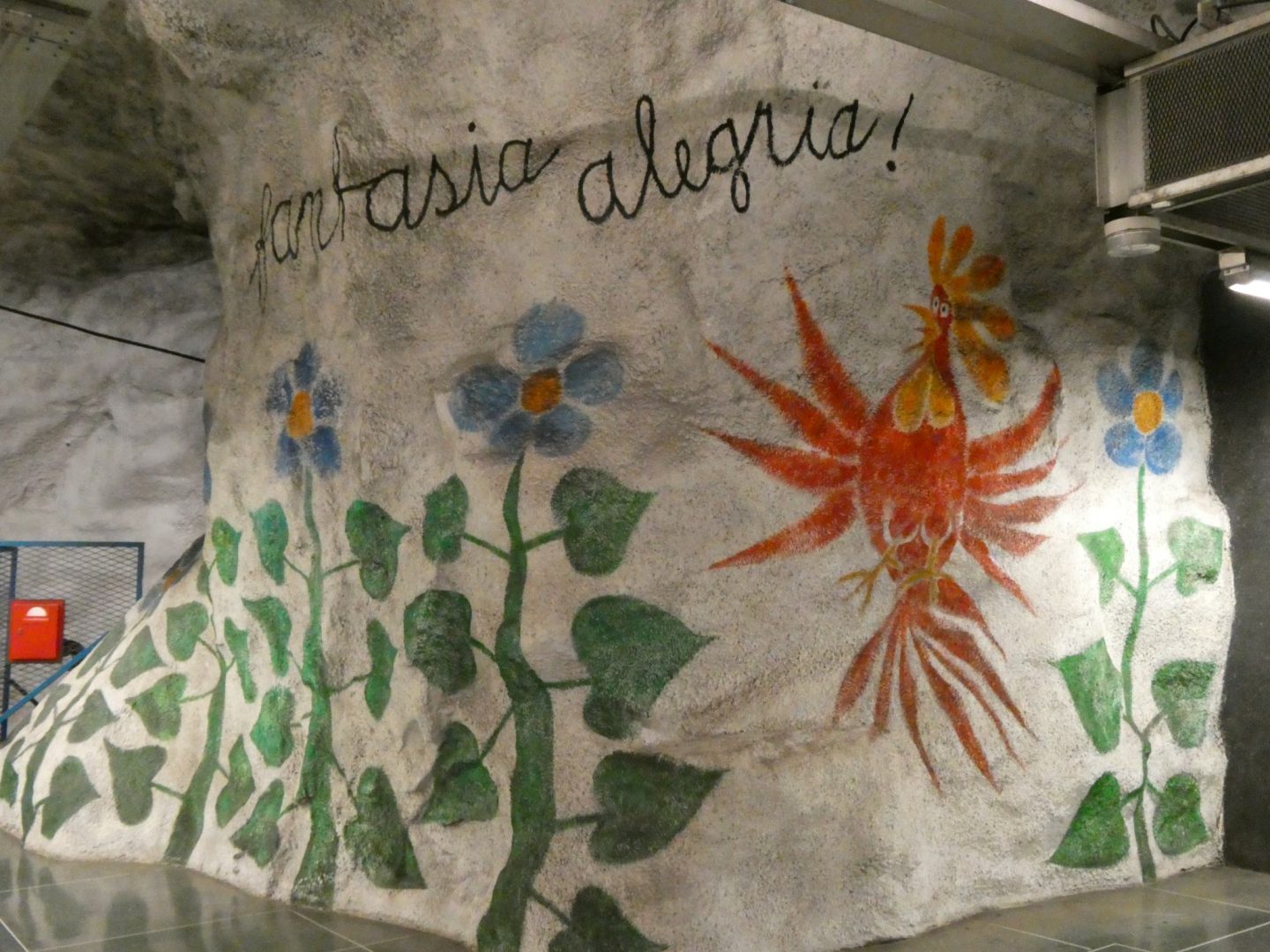


The animal motifs were lovely.
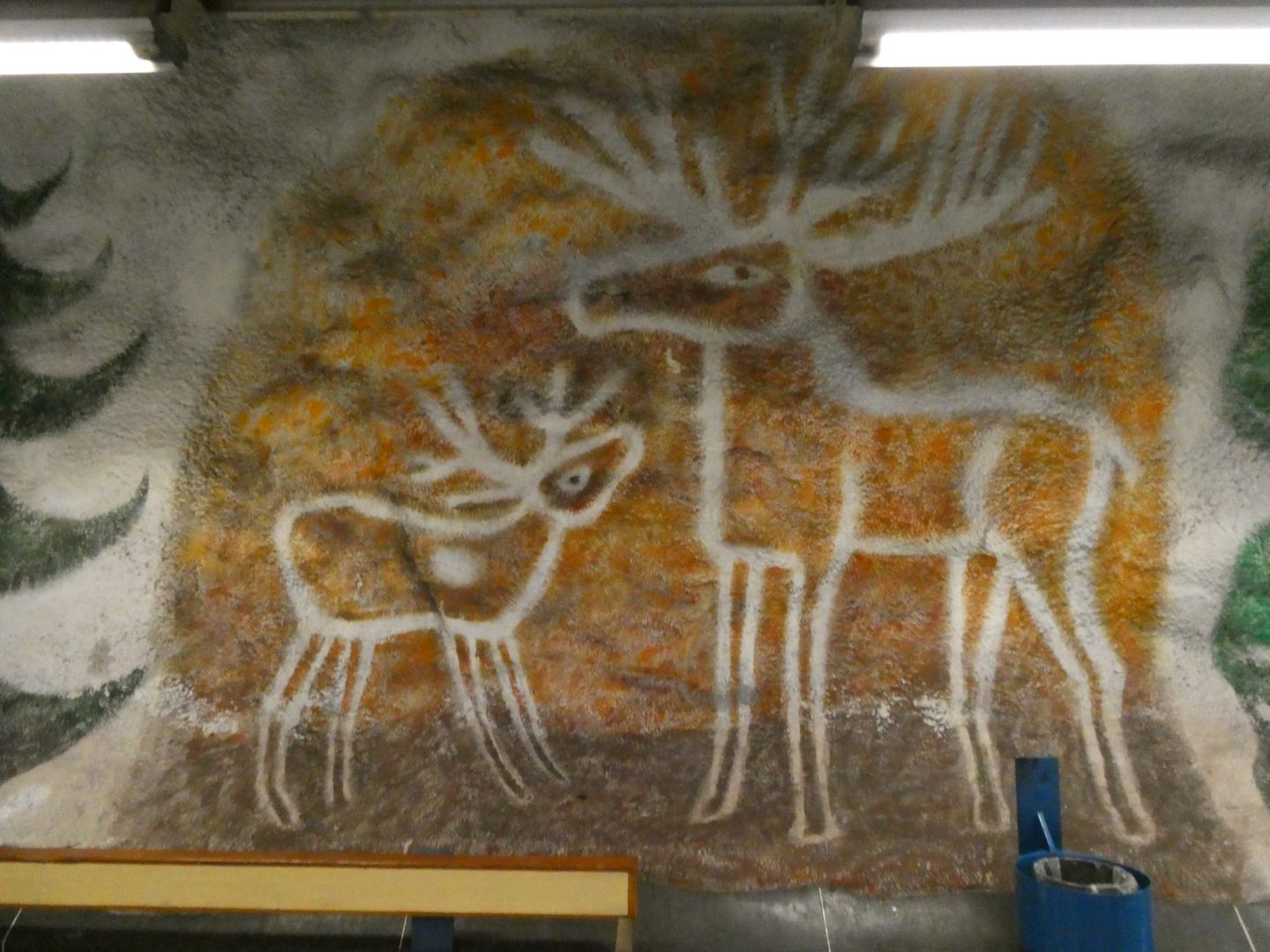


We read that the birds perched in the crevasses are penguins. If so, they are a long, long way from home. But as the artist’s message is about welcoming newcomers, maybe that was the point.

Ninety-four of Stockholm’s one hundred metro stations have artistic embellishments of some kind, but we were out of time to see more. Our brief visit to Sweden was over and we headed off to an overnight ferry to Helsinki.

As a big fan of public art catching a train in Stockholm looks like lots of fun 😀