Chocolate, fondue, watches and Swiss Army knives. Yes, we’re talking about Switzerland, and more precisely, its second largest city, Geneva.
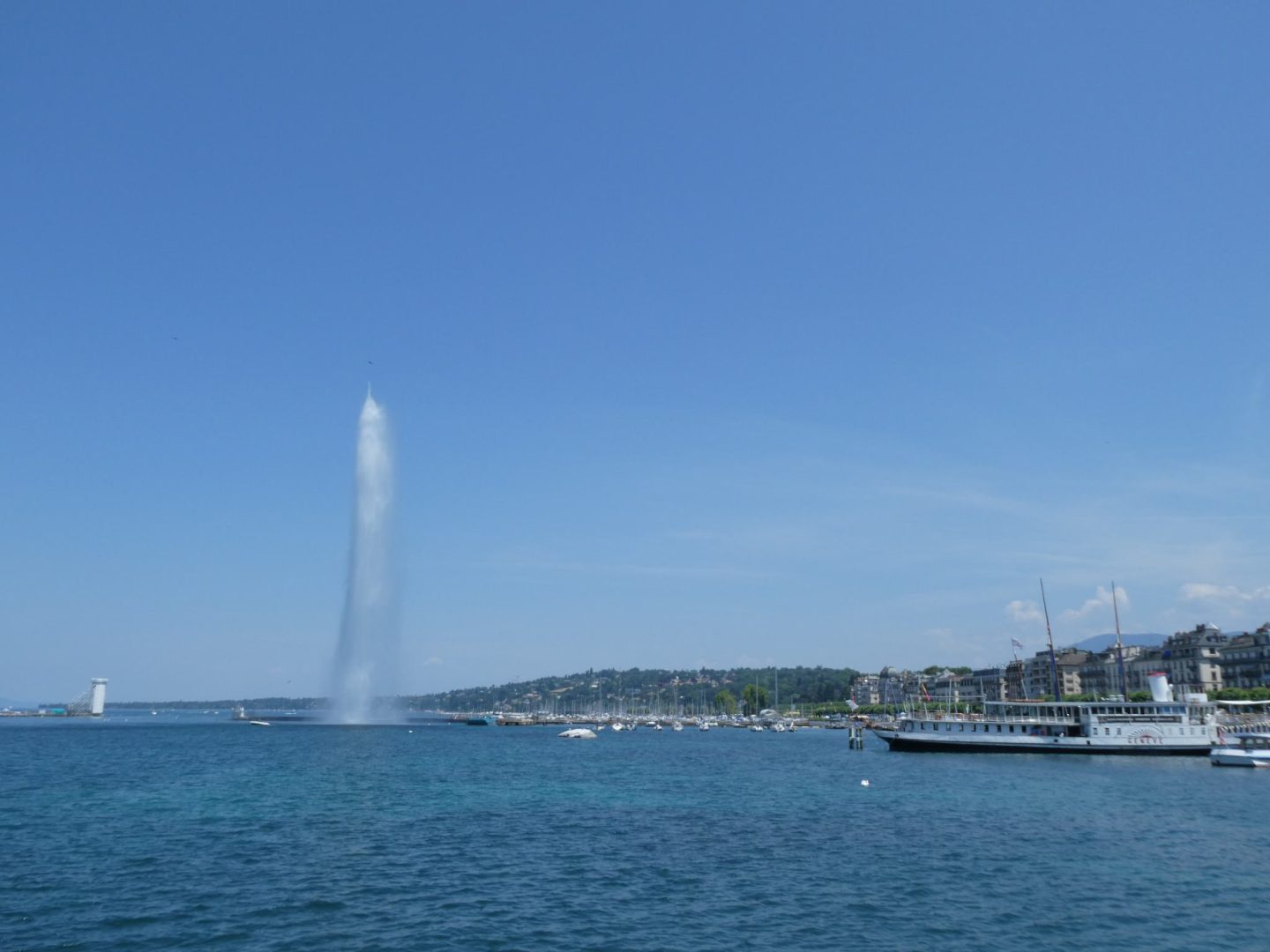
The city’s most recognisable landmark, and the image in every piece of tourism information, is Jet d’Eau. Just off the shore of Lake Geneva where it empties into the Rhone River, a fountain powered by two pumps spurts out 500 litres of water per second, at a velocity of 200km per hour, sending a plume of water 140 metres into the sky. The first iteration was a safety valve for a hydraulic power project installed a bit further downstream in 1886. It ‘only’ spurted 30 metres high but people loved it, so it was moved to its current site in 1891 for the 600th anniversary of the Swiss Federation. Upgraded twice since, it’s now a major tourist attraction and recognised symbol of the city.
You can see it from just about everywhere near or along the lake.


The city’s floral clock gets frequent mentions too. We’re not sure why. We’ve seen bigger and more elaborate ones elsewhere.

Like a large swathe of Western Europe, Geneva is sweltering, recording temperatures exceeding 35 degrees for weeks. One of the best things to do is an early morning stroll around the shore of the lake, through the botanical gardens to the international agencies precinct. Then visit the museums as the temperature climbs.


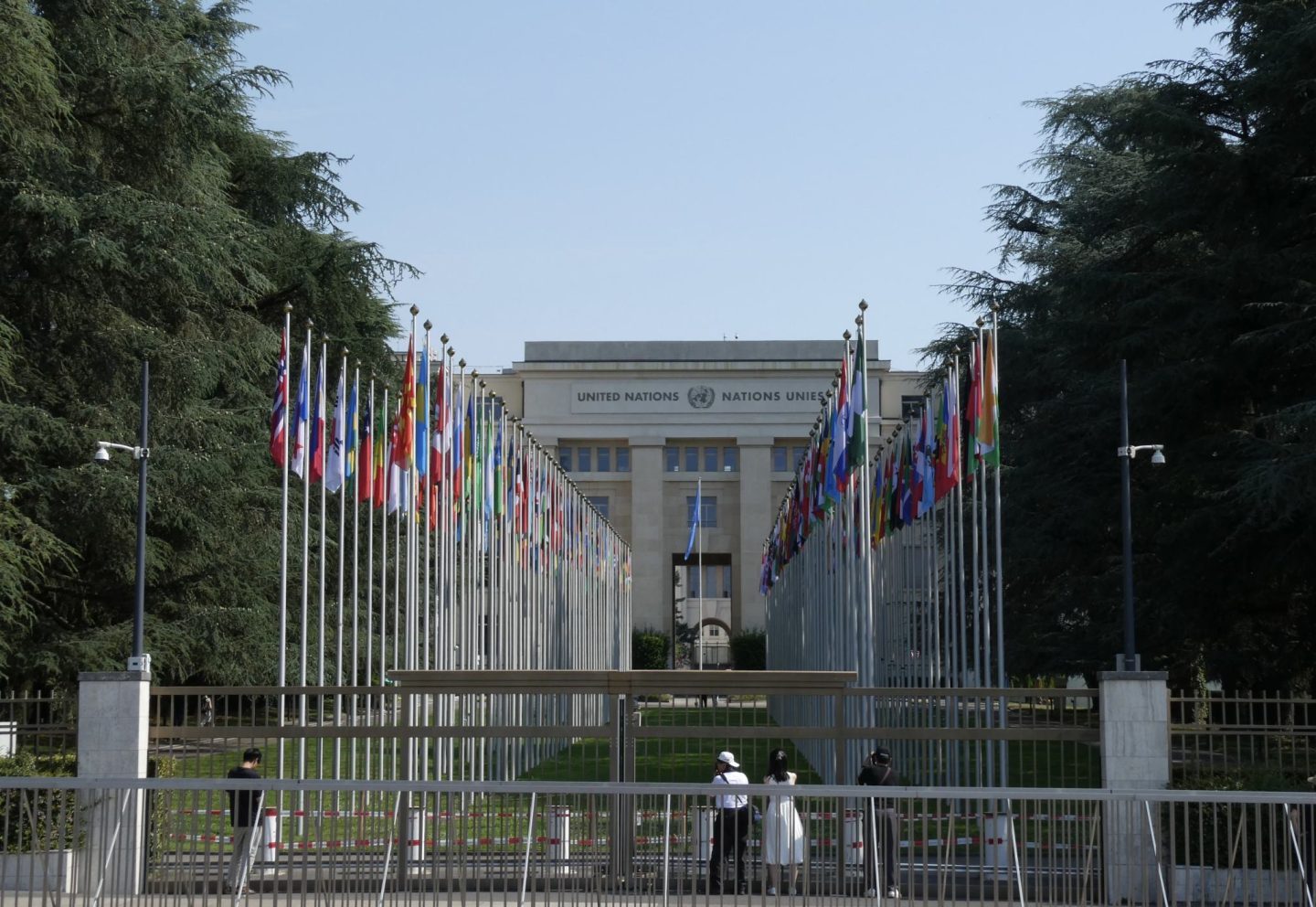
Geneva hosts the highest number of international organisations in the world, earning it the nickname ‘the global Capital of Peace’.
It’s the European headquarters of the United Nations.
And home to the International Committee of the Red Cross. Its small but thoughtful Museum of the Red Cross and Red Crescent explains the history of the Red Cross and highlights some of the organisation’s lesser known work, such as contact tracing and family reunification of people displaced by conflict.
Swiss businessman, Henri Dunant co-founded the Red Cross in 1909, winning him the inaugural Nobel Peace Prize. His attitude to women wouldn’t earn him any prizes these days.

Ten metre high Broken Chair was erected in 1997 by Handicap International to encourage nations to sign a proposed treaty banning the use of land mines. Originally intended to be in place for only three months, it has remained since as a more generalised protest against the cost to civilians from warfare.

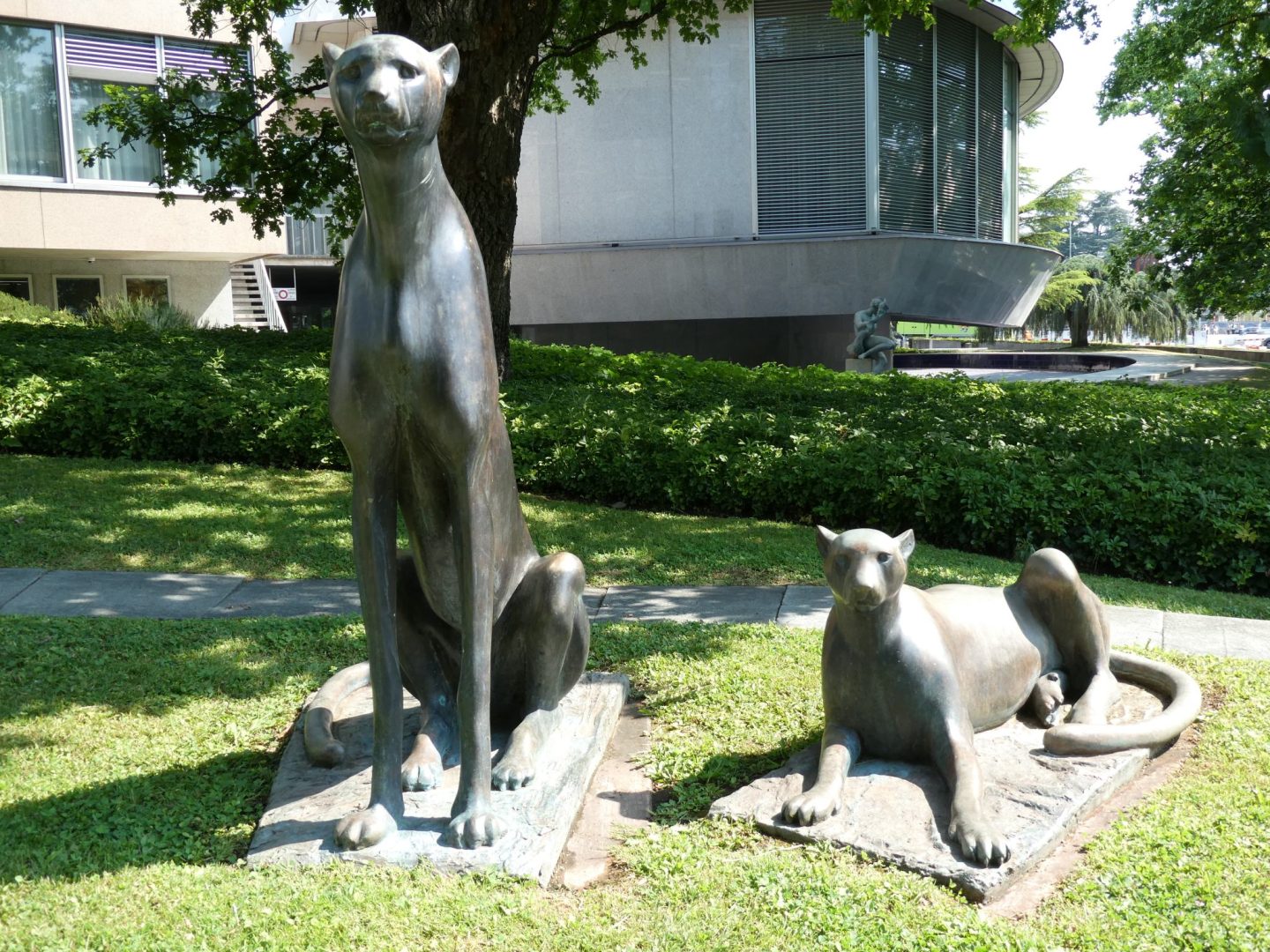
There’s lots of sculptures around the city. We liked this one of two cheetahs, erected by the World Intellectual Property Organisation in 1995 to celebrate the 25th anniversary of the Patent Cooperative Treaty.
If the heat gets overwhelming, you can take a rest on the world’s longest park bench.

Geneva was predominantly Catholic until embracing Protestantism in 1536. Under John Calvin’s ‘guidance’ in both religious and secular matters, the city became one of the main centres of the Protestant Reformation, earning it the nickname ‘the Protestant Rome’. Due to his extreme and autocratic ways, opponents sarcastically referred to Calvin as ‘the Pope of Geneva’ but this statue in the Museum of the Reformation probably sums up what he thought of them.

Calvin founded the University of Geneva. In 1909, to celebrate the 400th anniversary of his birth, a huge bas relief was built into the old city walls on the University grounds depicting Calvin and his fellow founders of Protestantism. Known as the Reformation Wall, it was and remains a testament to the importance of Geneva to the Reformation.


Calvin banned ostentatious displays of wealth, including the wearing of ornate jewellery. Timepieces were tolerated because they had a practical purpose so goldsmiths and jewellers turned to watchmaking. Combining artisanship with advancing skills in micromechanics, Geneva’s horologists developed a world wide reputation for precision timepieces which were practically works of art.
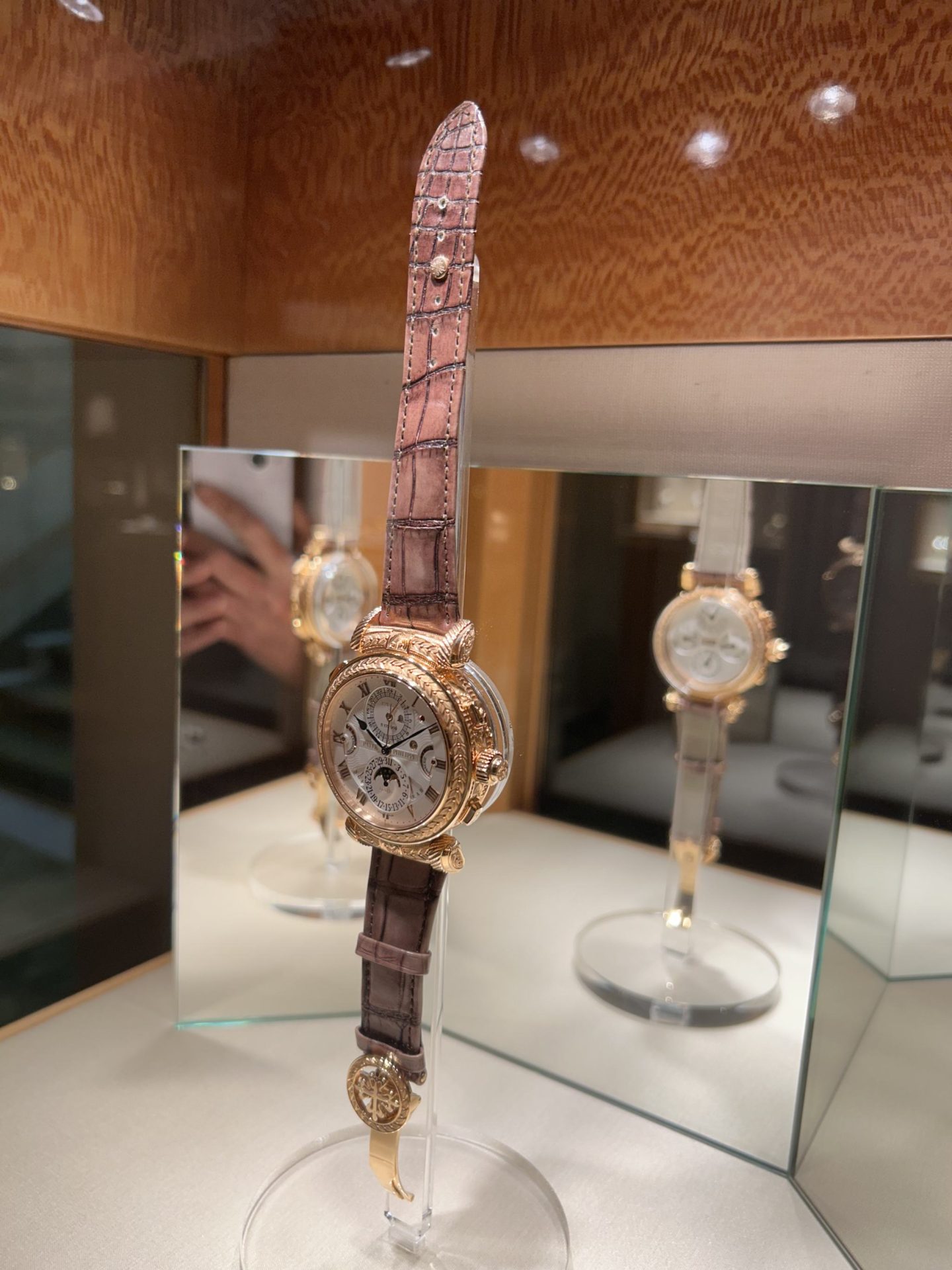
In 1868, Geneva-based Patek Philippe created the first Swiss wristwatch, a ladies’ timepiece commissioned by Countess Koscowicz of Hungary. Almost 160 years later it’s a global brand synonymous with luxury. They wouldn’t be so vulgar as to advertise their prices, but an entry level watch will set you back around $20,000 – more than three times an equivalent Rolex – whilst their well preserved vintage ones fetch prices exceeding $6m at auction.
The Patek Philippe Museum showcases one of the most valuable collections of watches in the world including an incredible array of antiques from the 16th to 19th centuries.
It’s actually quite amusing to think that Calvin’s imposed austerity resulted in such glorious pieces as these.

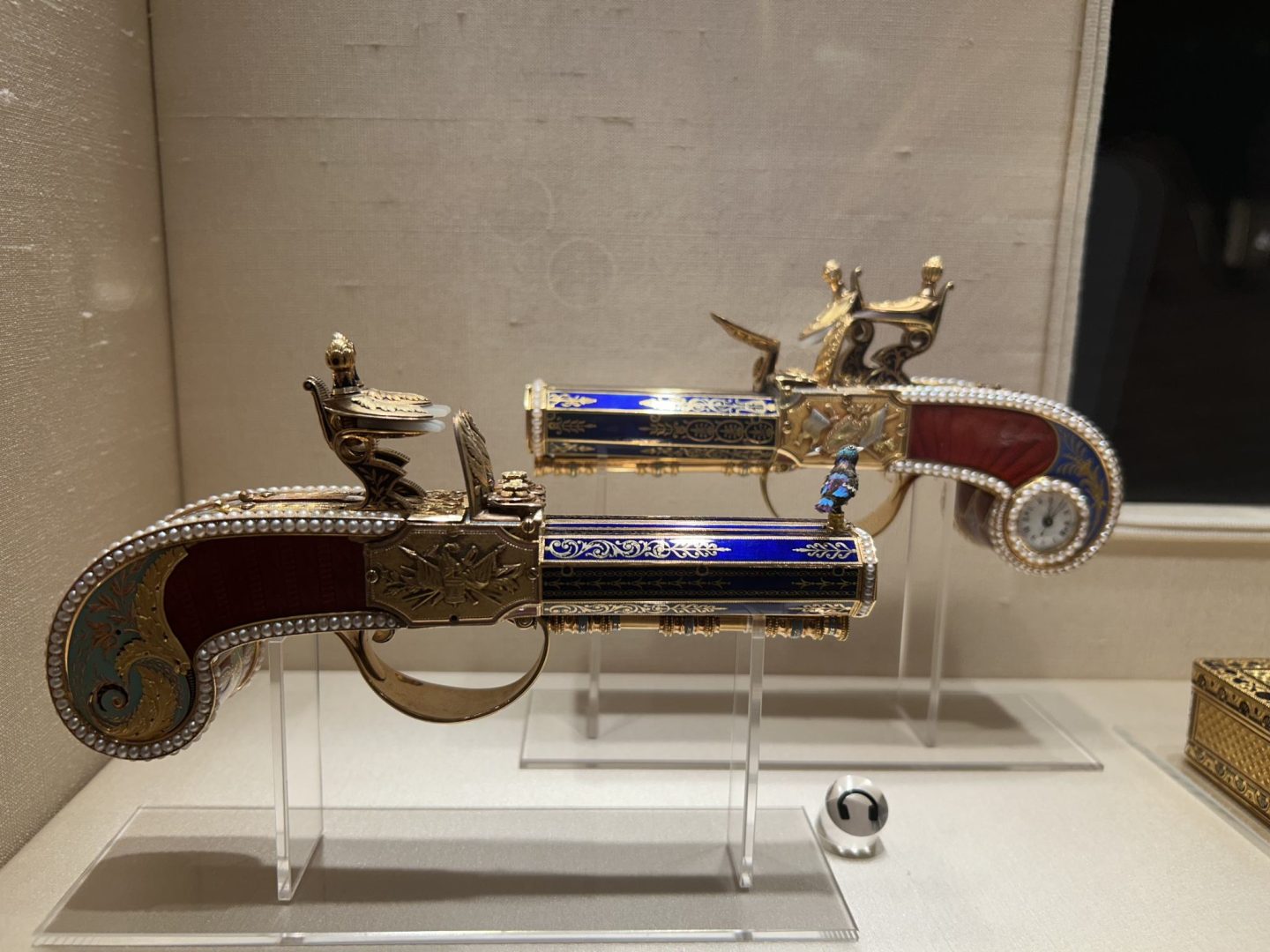
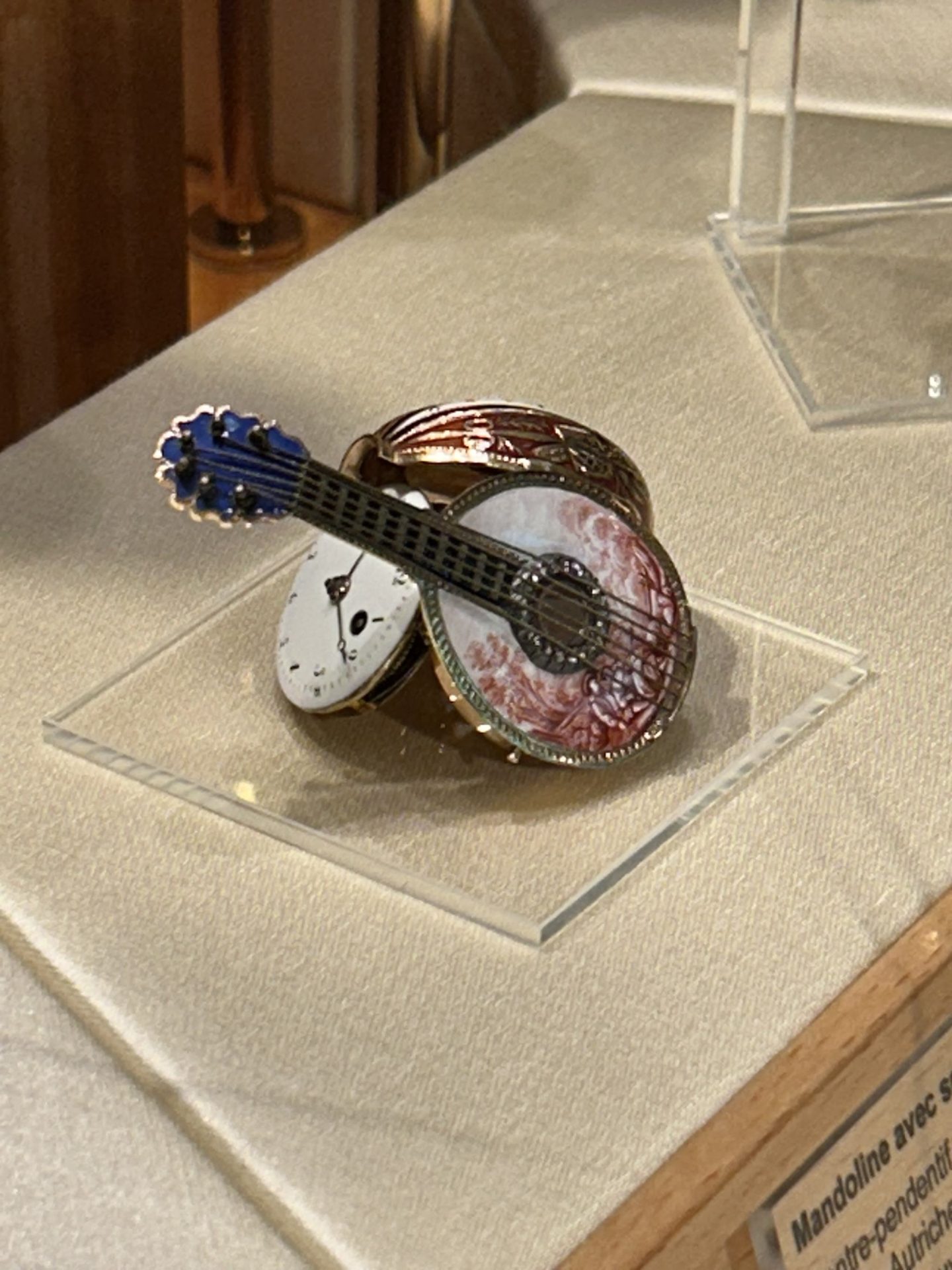
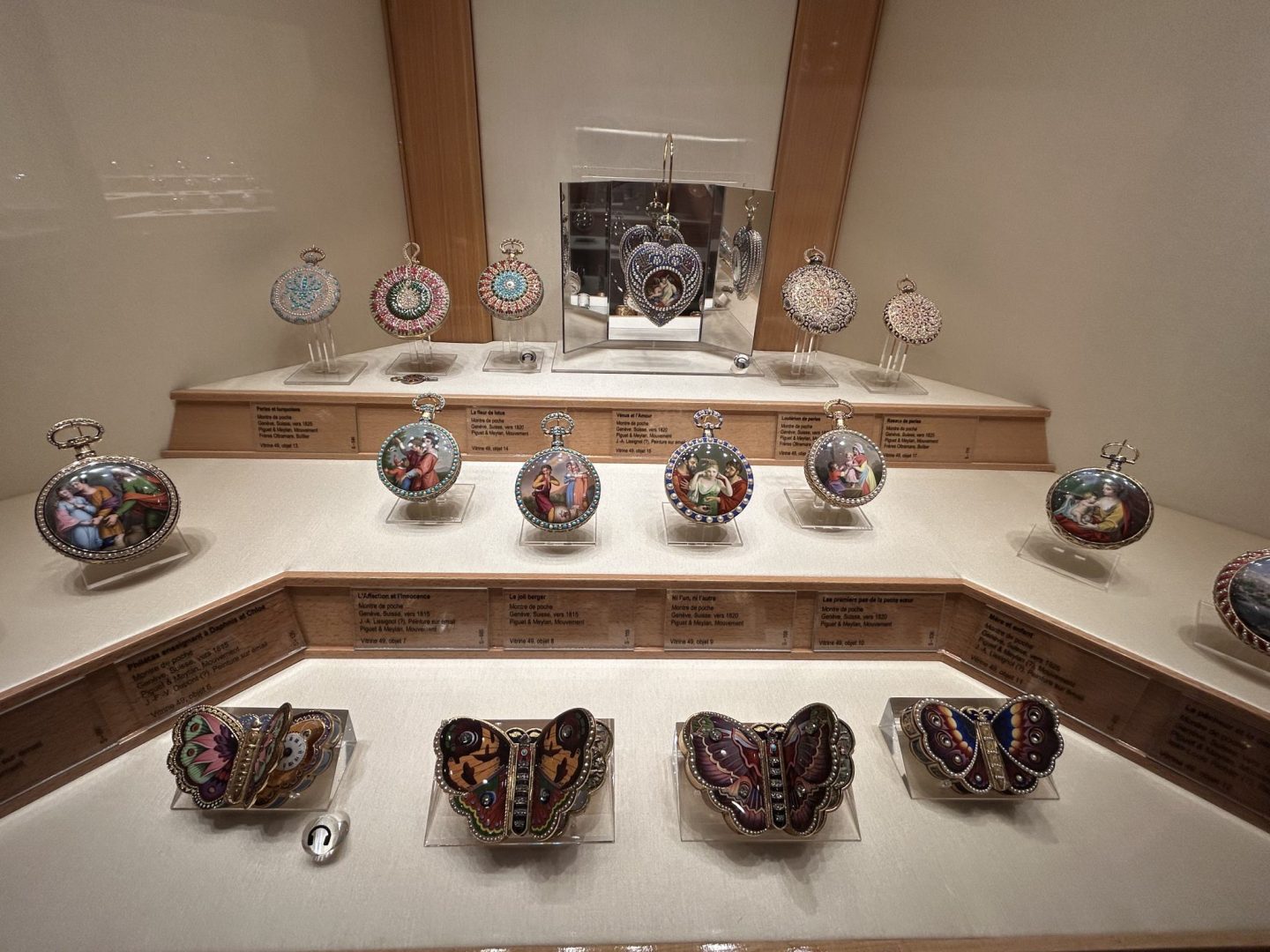

And of course the museum showcases the brand’s own pieces through history, some with re-sale values in the millions.

Despite the baking temperature we had to try a fondue, which in truly local places is served with potatoes as well as bread. Delicious!

But we’re in Switzerland as the starting point to hike the Via Francigena, an old pilgrim path to Rome. Three trains and a bus to Bourg St Pierre in the Swiss Alps and our next adventure begins.

Very interesting. Love the photos. The colour in the glass house is lovely.
Henry Durant is no women’s advocate , that’s for sure !
I love the intricate time pieces shaped like insects and flowers. One must always admire the ability of human beings to pivot when put under constraint.
Also quite enamoured with the cheetah sculptures.