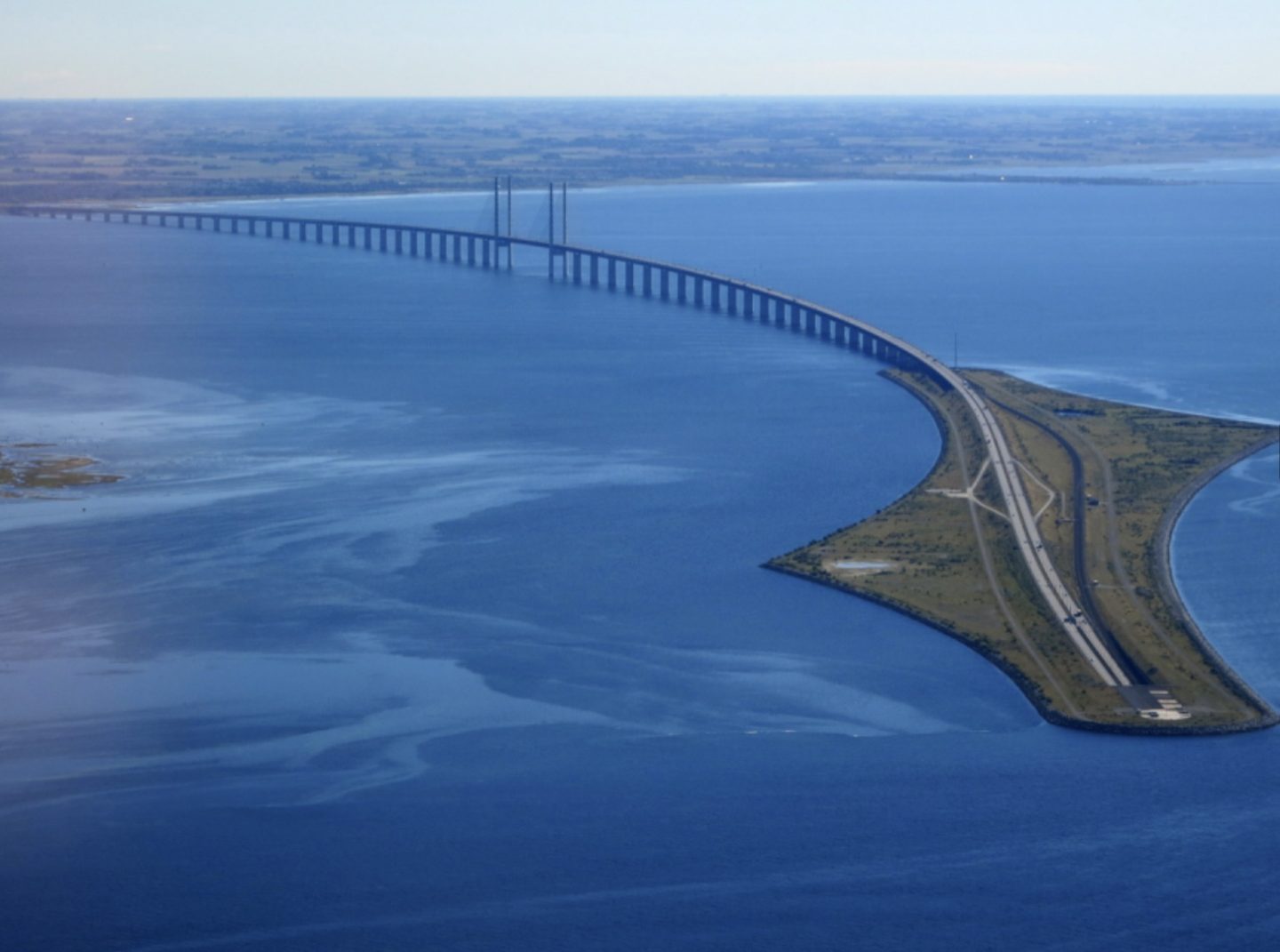
Sweden’s third largest city, Malmo sprawls along the shores of the narrow strait known as the Oresund which separates Denmark and Sweden. From the Danish side, cars and trains pass through a 4km underwater tunnel, emerging on an artificial island which marks the international border, then onto the Oresund Bridge, Europe’s second longest, to complete the journey to the Swedish mainland. This engineering marvel makes it possible to travel from Copenhagen to Malmo in a mere 45 minutes. Here’s an aerial shot of it at the point where the tunnel emerges from the sea. Thanks, Wikipedia.
Founded in the 1200s, Malmo has always been an important commercial centre, passing from Danish to Swedish rule and back again several times over the centuries. Its historic squares bear witness to that past.

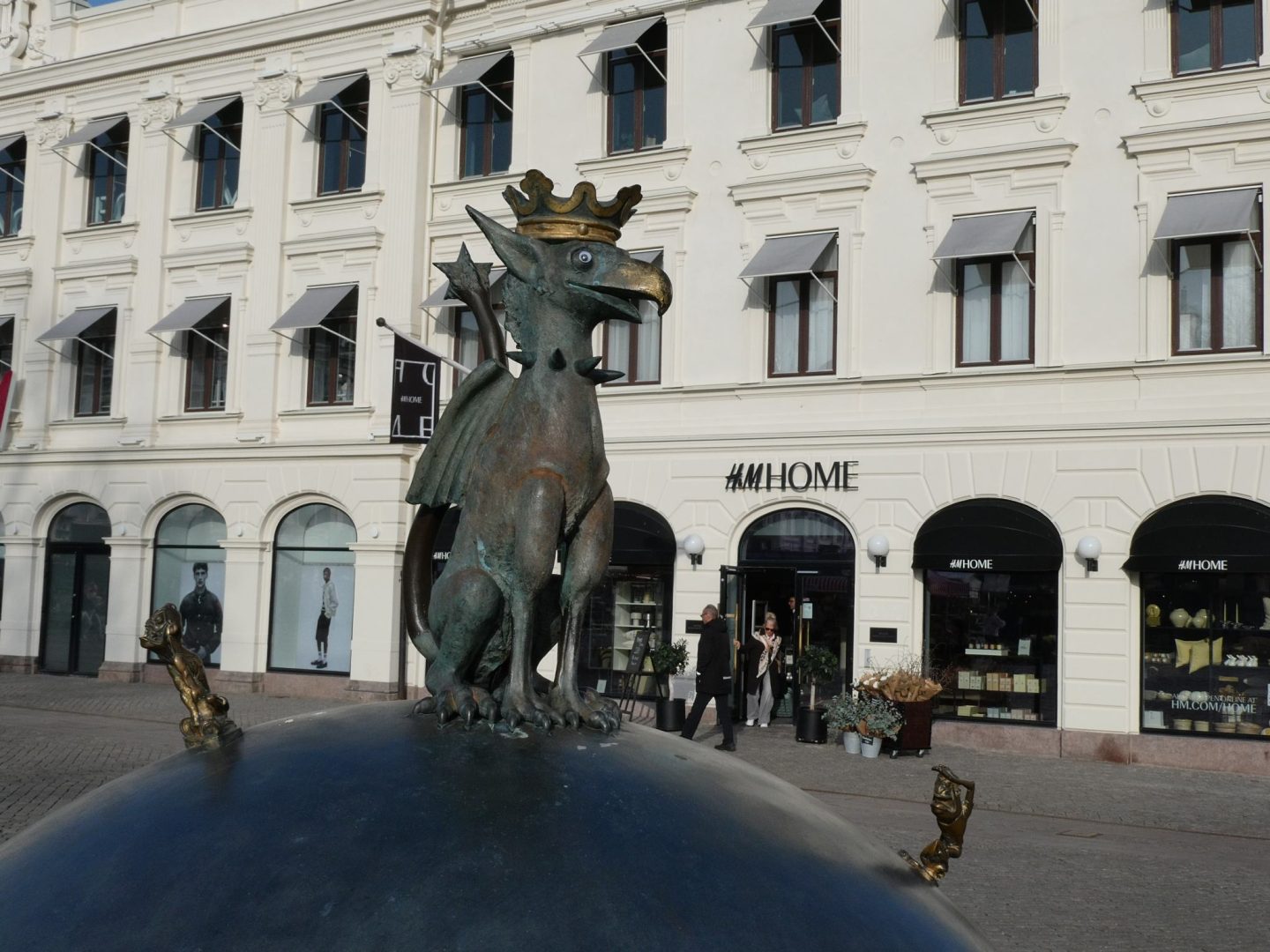

There’s lots of stylish coffee houses, bakeries and boutiques, like the tiny shop of Swedish specialist tea maker, Paloma with bobbing marmots in the window.

That’s the elegant side of Malmo. At the other end of the spectrum, there’s the Disgusting Food Museum. Who could pass up the opportunity to explore “80 of the world’s most disgusting foods”, with the option to smell and taste a bunch of them.
As the exhibition introduction says “the evolutionary function of disgust is to help us avoid disease and unsafe food … [but] while the emotion is universal, the foods that we find disgusting are not. What is delicious to one person can be revolting to another”.
Yes, much of food ‘disgust’ comes down to what we grow up with. Vegemite features in the collection, despite being loved by many Australians. There are several stinky cheeses in the exhibition including Epoisses, which is practically a French national treasure and is one of our personal favourites. And some Mormons in the US might take exception to the inclusion of Jell-O Salad, which surely must be one of those foods that only makes sense if you’ve had it since childhood.

But there are some foods featured that we cannot fathom anyone loving. For example, jugo de rana – a concoction made from blending skinned frogs, raw quail eggs, honey, spices, water and a few local herbs. Strained to remove any frog bones, this frothy green goo is sold by street vendors in Peru as a health tonic.
Here’s a few other examples. If you are reading this over a meal, we’d suggest you finish eating before proceeding any further.


The foods whose aroma makes them ‘disgusting’ were accompanied by smell jars for full effect.
And at the end, visitors have the option to try nine of the disgusting foods. The admission ticket is in the form of a vomit bag and apparently some people do need it. A blackboard records the number of days since someone vomited during a tasting. When we visited, that number was two.
The first few were dried or roasted stink bugs, bamboo worms and beetles. We’ve eaten similar in markets around the world. Not a problem.
Likewise the durian, a fruit which smells like dog poo but is reasonably pleasant in flavour.
Contrary to popular myth, century eggs are not made by soaking uncooked hen eggs in horse urine, and don’t taste too bad in small quantities. On the other hand, sauerkraut juice will bring tears to your eyes. It’s often consumed as a hangover cure in Poland, probably because it’s so sour, you forget about the pain in your head.
But then came the challenging Nordic ones.
Greenland shark is toxic if eaten fresh. Icelanders bury it until it rots, then hang it to dry out before cutting it into cubes and eating it with the local firewater, aquavit. It has a mouth feel not unlike tough calamari, and the smell, a combination of ammonia and rotten flesh, is revolting. It’s been described as “like chewing a urine-soaked mattress”. Anthony Bourdain said it was “the single worst, most disgusting and terrible tasting thing” he had ever eaten.

And really, the Greenland shark should be left alone. These amazing creatures can live for up to 400 years, twice the lifespan of the longest living land-based animal, the giant tortoise. Several years ago, scientists tagged and released one which their tests found to be 392 years old. Born in 1627, this creature began swimming around in the Baltic Sea the same year a Dutch ship made the first recorded European sighting of the south coast of Australia, the last of the Ming Dynasty emperors was crowned in China, and Galileo was still working on his heretical theory that the earth rotated around the sun.
The worst food we sampled was surstromming. Baltic Sea herring is fermented in brine for six months, then canned. It continues fermenting so vigorously that the only safe way to open the can is while it is immersed in water. The cans are prone to exploding on opening and if the spray lands on your body or clothing, no amount of washing will eliminate the pong.
It is truly disgusting. Slimy in the mouth and gag-worthy to smell. It’s so bad, there is a documented case of a German landlord who evicted a tenant for opening a can in his apartment building’s stairwell. The tenant sued but the court ruled the eviction was lawful after the landlord’s lawyer opened a can inside the courtroom.

Having successfully sampled all the disgusting foods without vomiting, we then got the chance to taste-test six chilli sauces in ascending order of heat. Chilli heat is measured on the Scoville Heat Scale. A fresh jalapeno has a Scoville score of between 4,000 and 8,500. The mildest of the six for tasting had a score of 2.5 million. They climbed from there, the strongest measuring 9 million.
The last three are so intense, they have no use in cooking. They are manufactured purely for use in challenges. The final one is a paste which allegedly will do unthinkable things to your stomach if swallowed undiluted, so you are given a toothpick dipped in it and must hold it against your tongue for 15 seconds while saliva liquifies it, before swallowing.
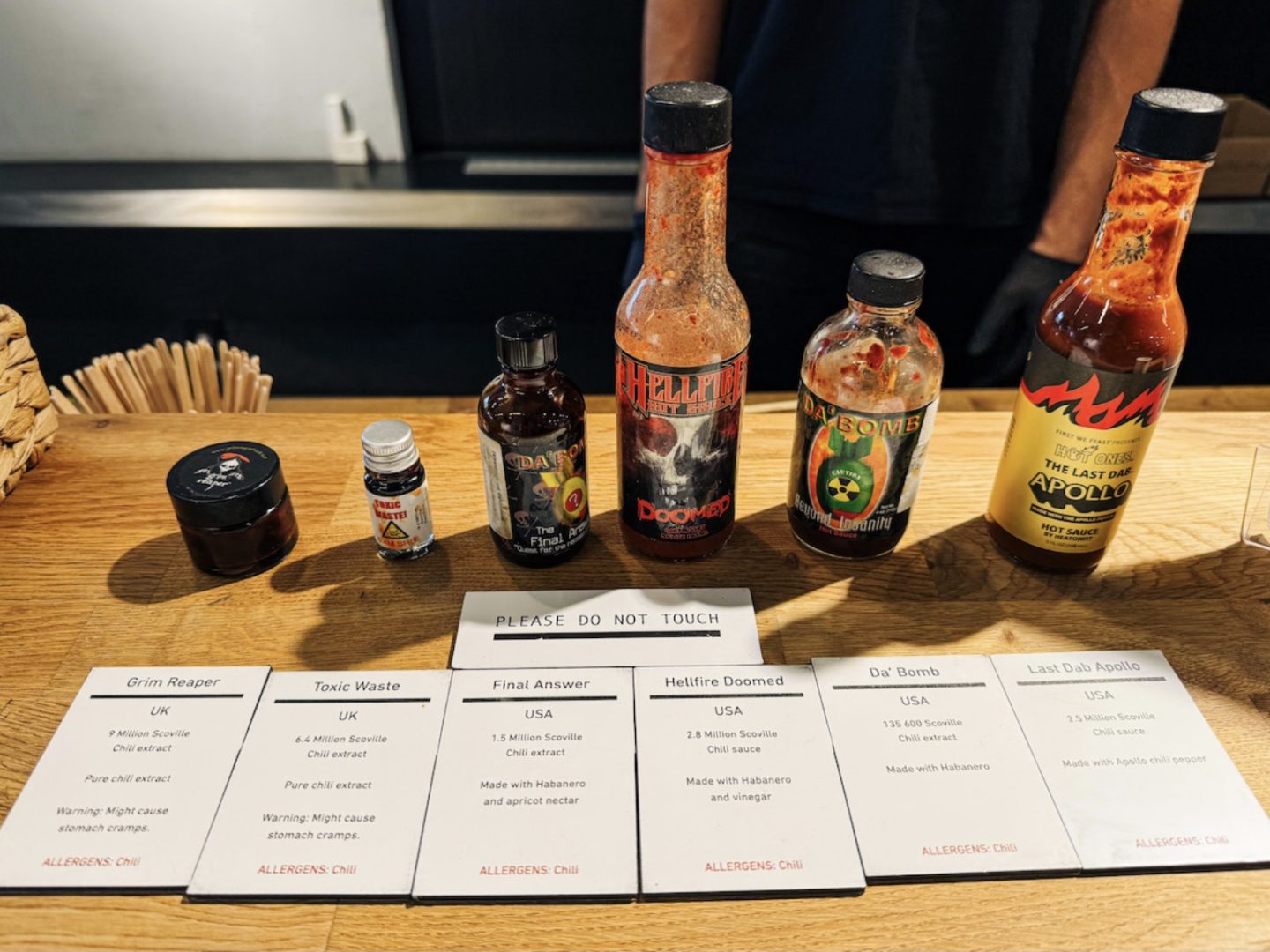 We made it through all six, at which point we were rewarded with copious amounts of milk to dull the burn, and some stickers and a fridge magnet confirming we completed the full set. We won’t be repeating it any time soon.
We love quirky museums and this one met that brief. As did the IKEA Museum in Almhult, 90 minutes by train from Malmo in the building where the first IKEA store opened in 1958.
When budding young entrepreneur Ingvar Kamprad opened a huge furniture store in his sleepy hometown many hours drive from any major city, it probably seemed like folly. But he had a cunning plan – come to us and you can take it home with you today.
Kamprad didn’t invent the flat pack, but was the first to apply it at scale, drastically reducing the cost of transporting furniture to his store, and enabling customers to fit furniture purchases in their own cars. His concept was so successful, the existing industry attempted a boycott, trying to strangle his business by refusing to supply him or accept orders to manufacture the new products he conceptualised. This drove him to employ his own design and fabrication teams, ultimately increasing rather than decreasing his profitability.
Kamprad didn’t invent the allen key either, but IKEA certainly democratised it. There probably isn’t a household in the western world which doesn’t have one left over from a self assembled piece of furniture.
IKEA’s self-assembly instructions became the subject of many jokes, but sales soared. IKEA even used their notoriety in a self-deprecating ad campaign in the 90s with the slogan “Loved or hated for 30 years”.

And when Sweden sent its first astronaut into space in 2024, he took an IKEA allen key with him. Now that’s product placement.

The museum is a homage to the man himself, but also an enjoyable meander through changing furniture styles in the decades from the 1960s to today.


At its height, an IKEA catalogue had a print run of 220 million in 32 languages across 50 countries. With the rise of on-line shopping and increasing environmental awareness, printed catalogues were discontinued in 2021. But the entire collection is on show here. A true time capsule.

We might laugh now, but in the 1960s and 70s, families drove from all over Sweden to visit the first furniture store in the country where they could take their purchases home rather than wait weeks or more for delivery from a remote factory. So popular, Kamprad built a hotel next door. The ultimate in ‘destination shopping’.
Almhult remains a small place, but the hotel is still operating.

And it was Kamprad who had the last laugh. When he died at the ripe old age of 91, his estimated net worth was $US58 billion.
Malmo proved to be a great base. We also took the train to Helsingborg, a Gothic era town where the Danes met their Waterloo in 1710, finally giving up their ambitions to conquer Sweden after losing round three of the Danish-Swedish wars. The countries are friendly now, but the Swedes have not forgotten.
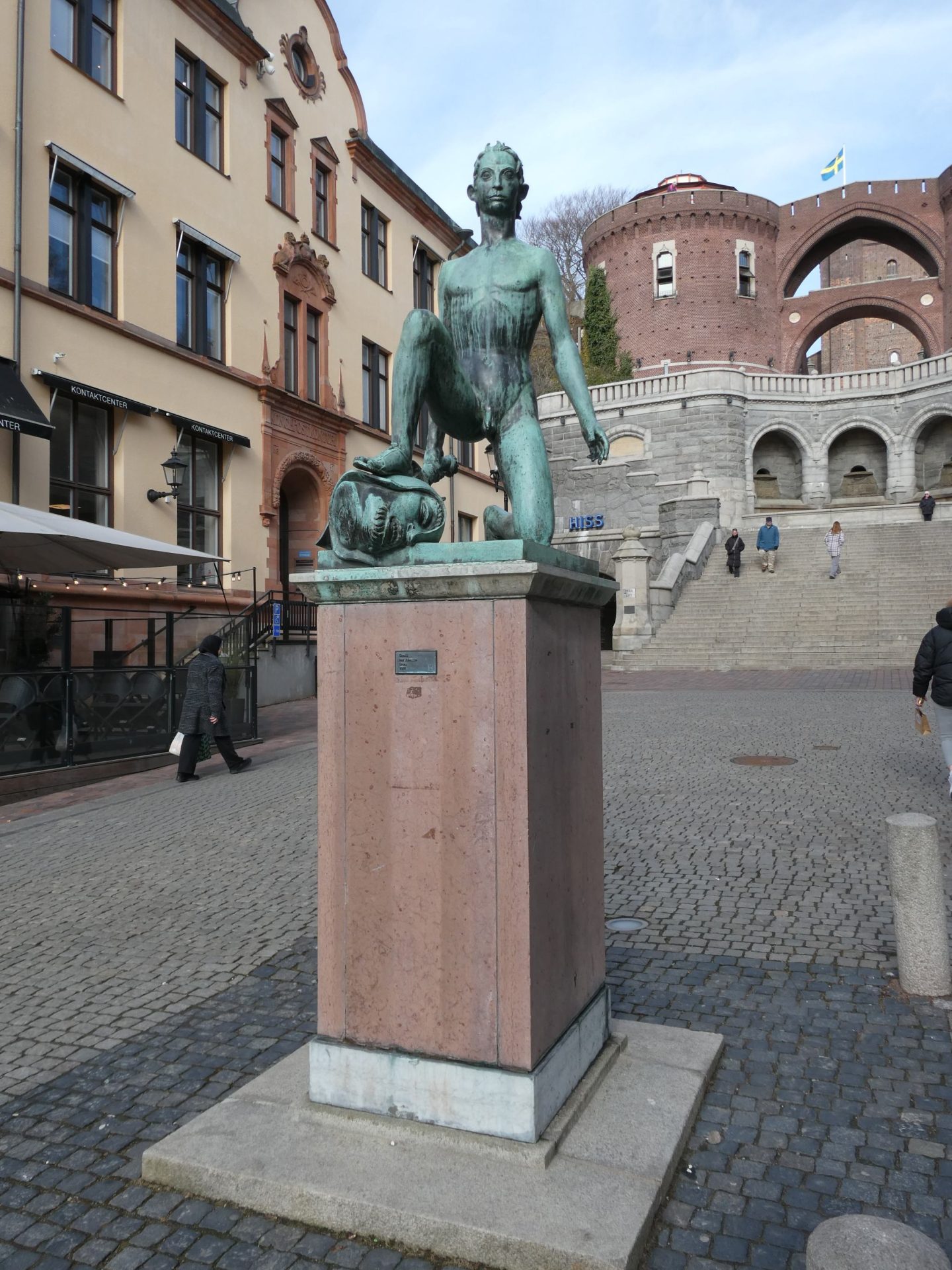
On a clear day you can see the Danish town of Helsingør, just 4km and a short ferry ride across the water.

Better known as Elsinore – the anglicised form of Helsingør – the town’s imposing Kronberg Castle is the setting for Shakespeare’s Hamlet. The castle was inscribed into the UNESCO World Heritage list in 2000 as a unique example of a Renaissance castle in northern Europe. It served as a Royal party palace, a staging post for the Danes’ attempts to invade Sweden, and a profit centre amassing wealth by controlling maritime traffic into the Baltic Sea.


Live performances of scenes from Hamlet are held in the courtyard several times per day. We wandered through the Royal chambers, kitchens and grand ballroom wondering whether “to be or not to be”.
Then headed back to Malmo, ready for onward travel to Stockholm.
