Departing Siena, we continued the long walk across Tuscany. Italy is always hot in summer, but it’s regularly topping 36/37 degrees. Everywhere we stay people say “it’s not usually like this”. Not much consolation in that! And it’s so dry.

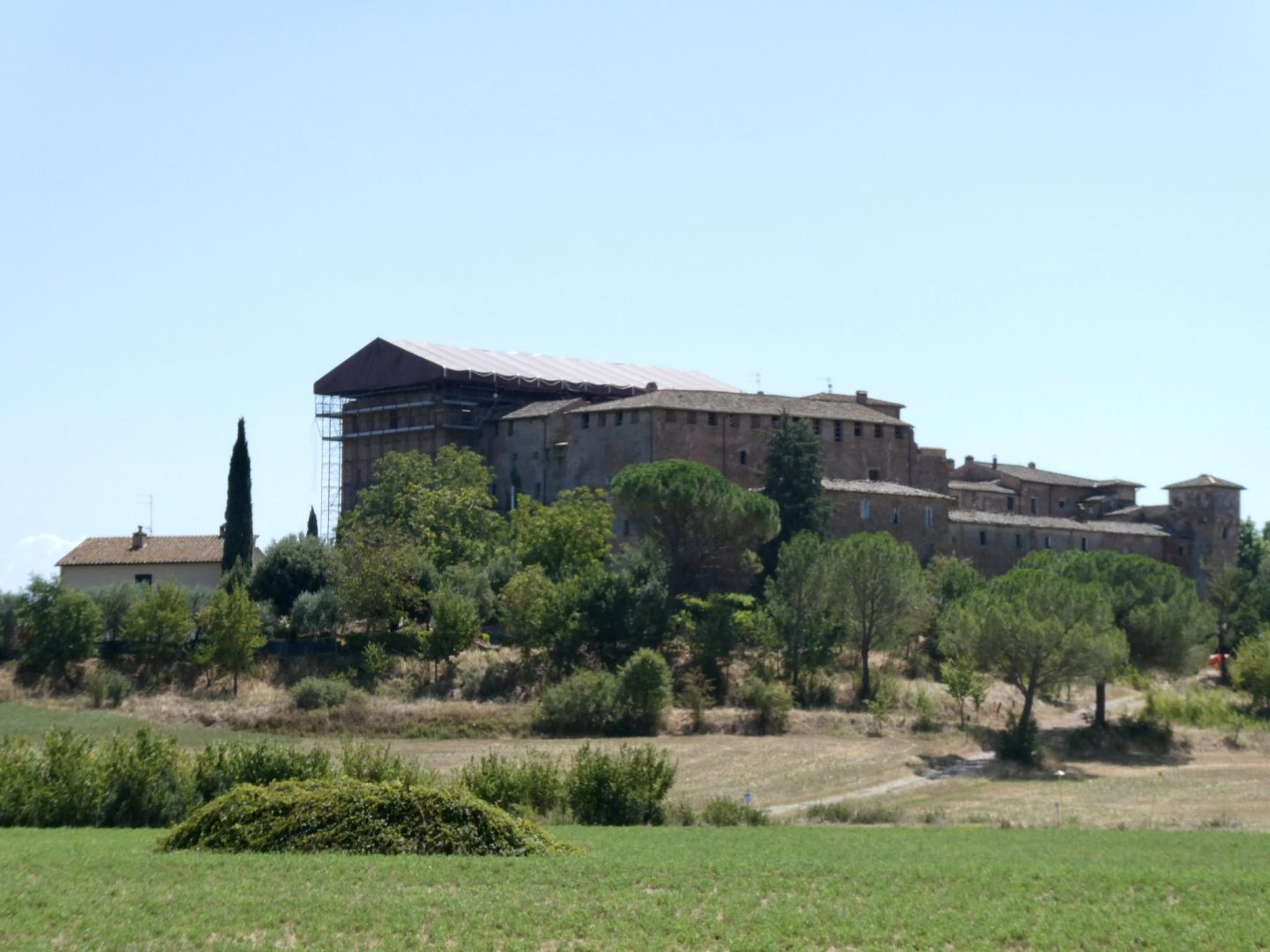
In medieval times, the Hospital of Santa Maria della Scala in Siena was an immensely wealthy ecclesiastical hospice which tended to pilgrims on the Via Francigena. To support its work, it owned vast agricultural holdings in the surrounding countryside with fortified ‘farms’ equipped with huge granaries, wine cellars and olive presses. Built in about 1295, Grancia di Cuna is one of best preserved examples.
In stark contrast, as we went up and down the hills, this strange modern tower kept appearing and disappearing from sight. So completely out of place in the rural landscape. Torre dell’Isolo, commonly known as ‘The Tomato Tower’, was built in the 1960s during a failed attempt to bring industrialisation to Tuscany. It was a drying tower built for a company planning to market dehydrated tomatoes, but the venture failed almost as soon as operations began.
Too expensive to demolish, too difficult to re-purpose, for over half a century it has stood empty, gradually rusting away while controversy rages about what to do with it. To some it’s a blot on the landscape. To others it’s a reminder of a time of vision and innovation.

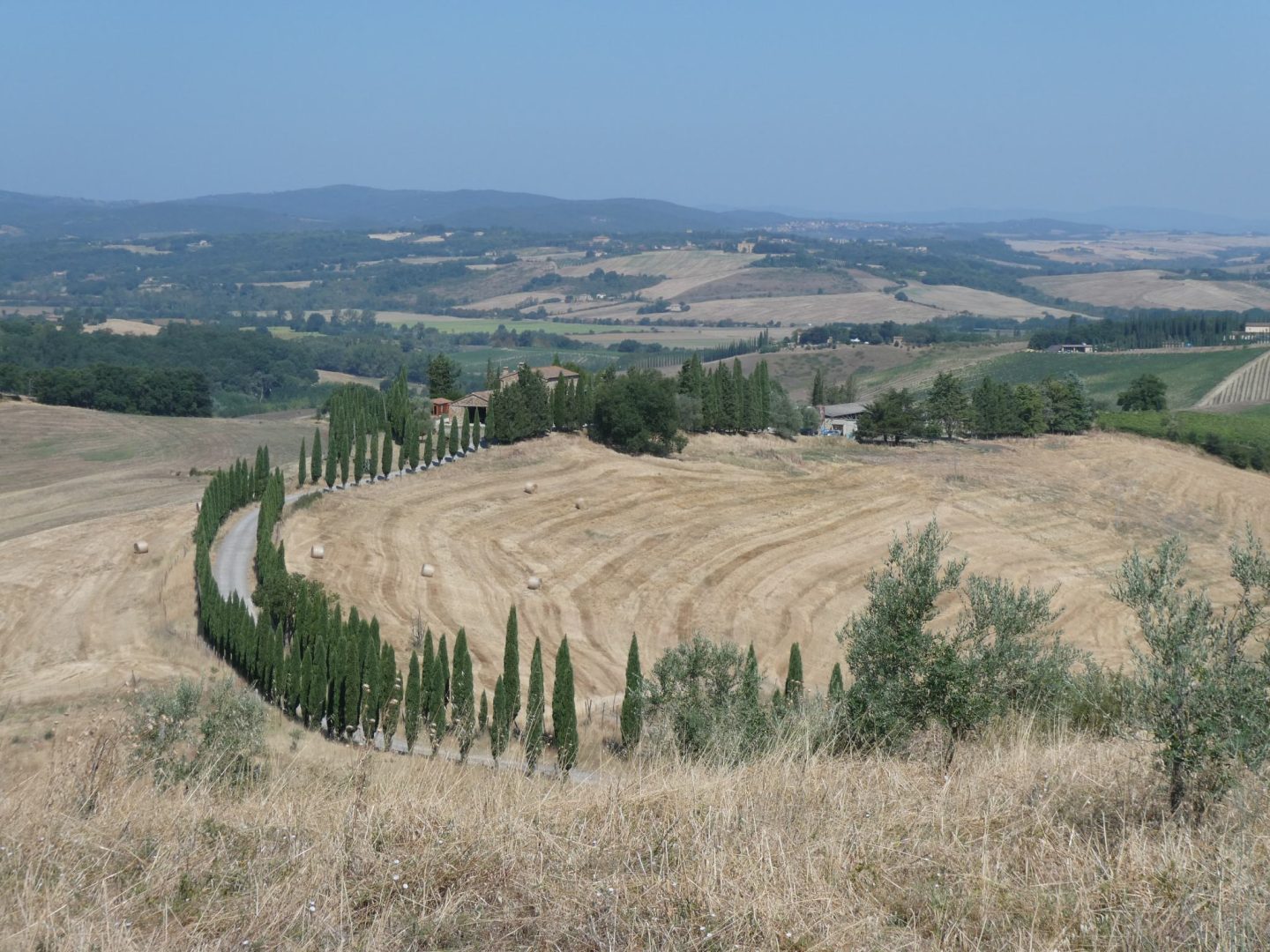
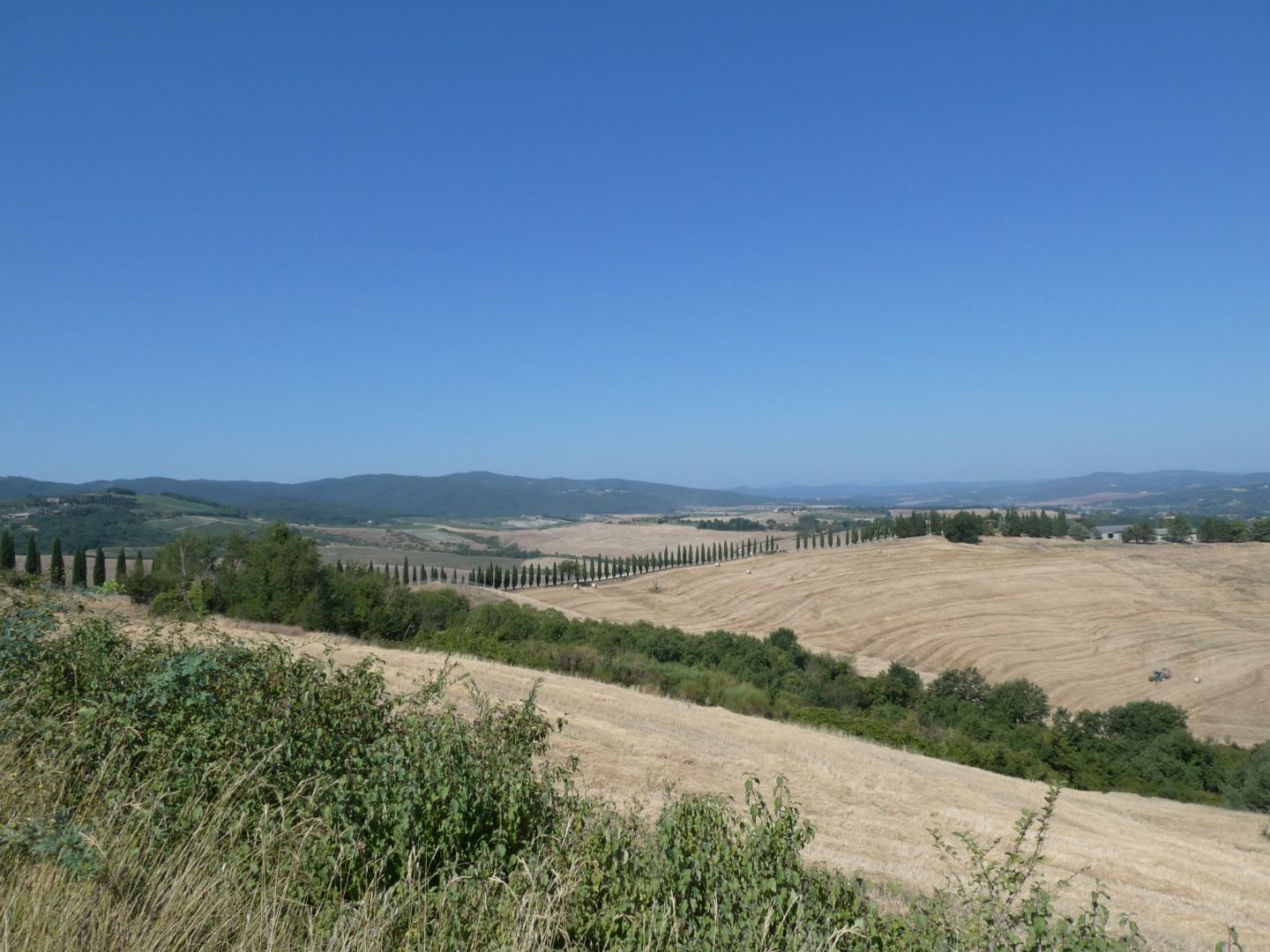
The tower sits on the edge of the Val d’Orcia, a semi-frozen-in-time agricultural valley. UNESCO has listed it as “a cultural landscape and rural agricultural ensemble that is well preserved and authentic in its form and design, materials, use and function, management system, setting, and spirit and feeling. The high degree of authenticity of the Val d’Orcia derives notably from its history of comparative neglect and marginalization after the sixteenth century”. Maybe it’s a good thing industrialisation never took off.
The valley covers that part of Tuscany which is famous for cypress pines. The final scene in Gladiator where the deceased Maximus walks through wheat fields and looks up a pine-lined road to his old home, was filmed near here. We weren’t close enough to see it, but that’s ok as we saw it in 2019. And anyway, there are pine-lined roads everywhere here!

Also running through the valley is the route of the Mille Miglia (Thousand Miles), an historic open-road motor endurance race which ran from 1927 until 1957, when it was stopped after a fatal crash. It was re-started in 1997 with entry restricted to car models which competed in the original years. That would be fun to see.
San Quirico d’Orcia is a celebrated stop on the route and on the outskirts of town is a statue in memory of Tazio Nuvolari, aka the Flying Mantuan. Nuvolari dominated Italian motor bike and Grand Prix auto racing in the inter-war period, winning the Mille Miglia in 1930 and 1933. Known for his daring and his big personality, he famously once raced despite having broken legs. By strapping them to his bike.
Ferdinand Porsche called him ‘the greatest driver of the past, present and future’.

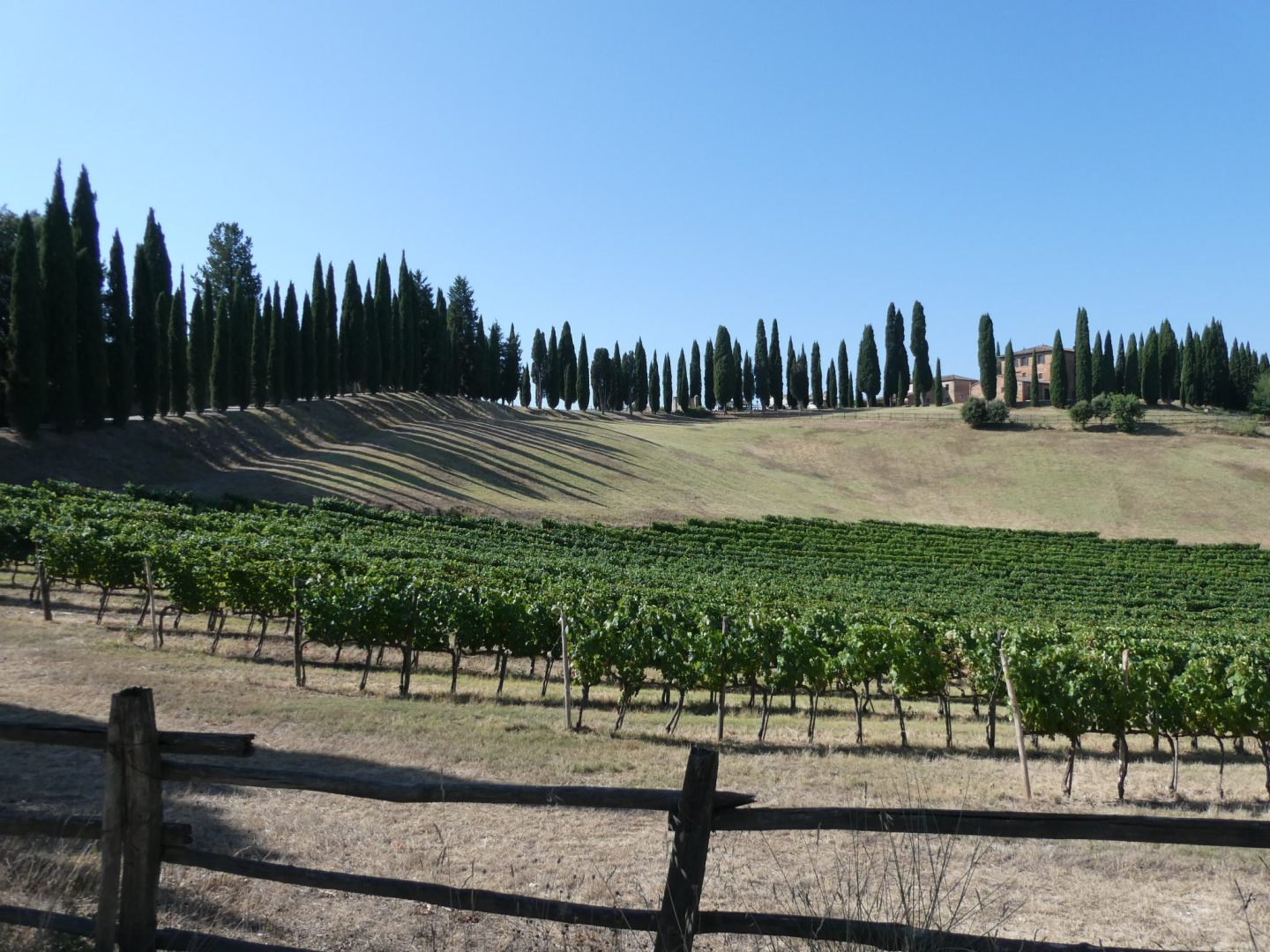
The valley’s vineyards produce the region’s famed Brunello reds, highly prized for their depth and ageing potential. Strict laws require them to be made from 100% Sangiovese grapes grown only in a specific area around Montalcino, which is the hottest, driest part of Tuscany, and aged for at least two years in oak and four months in the bottle before release.
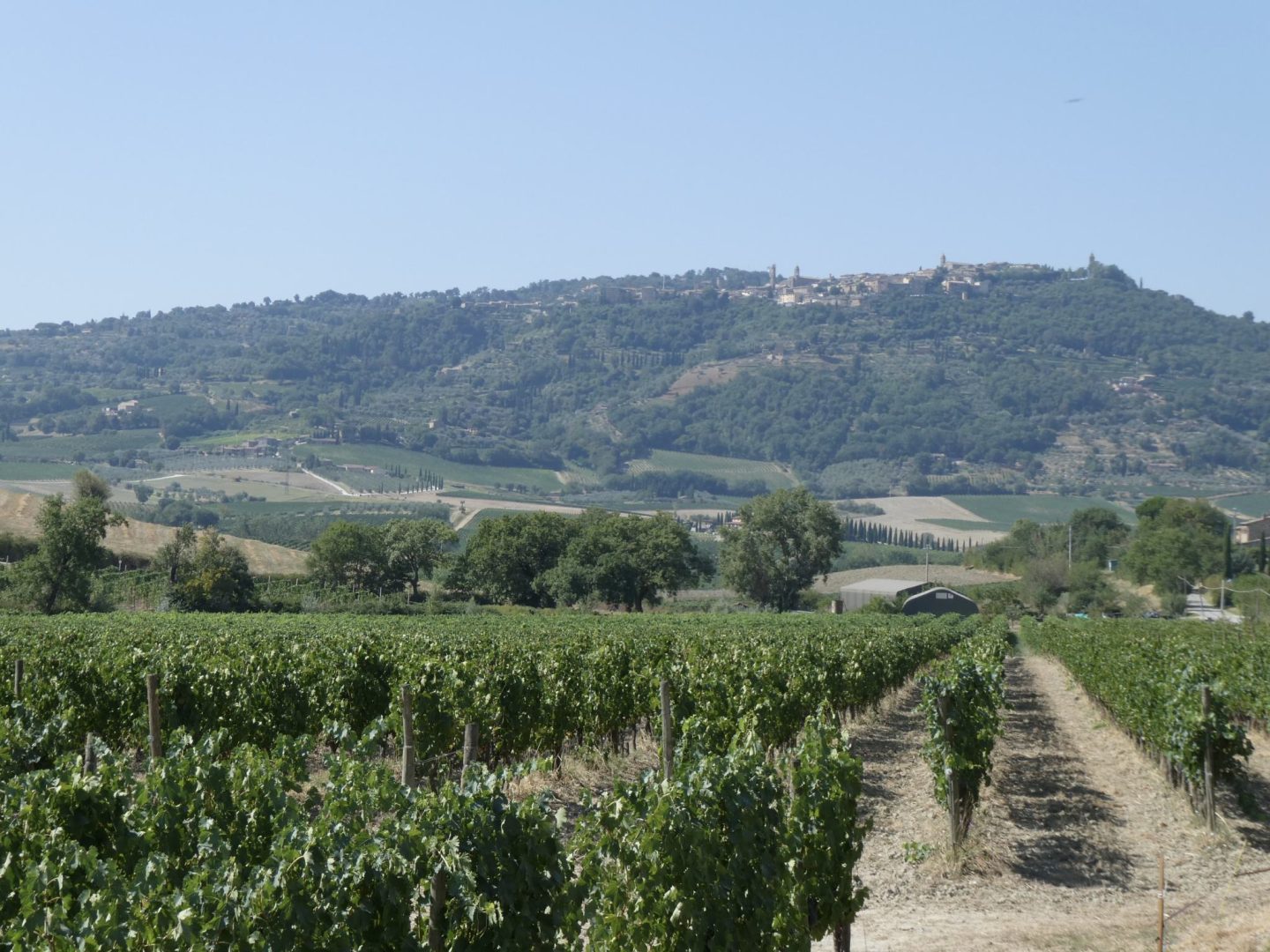 This wine is heavy, with dark berry flavours, best served with meat, so it was a surprise to see this fellow with a glass in hand at 8am one morning. But when we came closer, it wasn’t a man with the thousand yard stare we have at the end of each day, just a mannequin.

It was so hot, even the sunflowers bowed their heads.
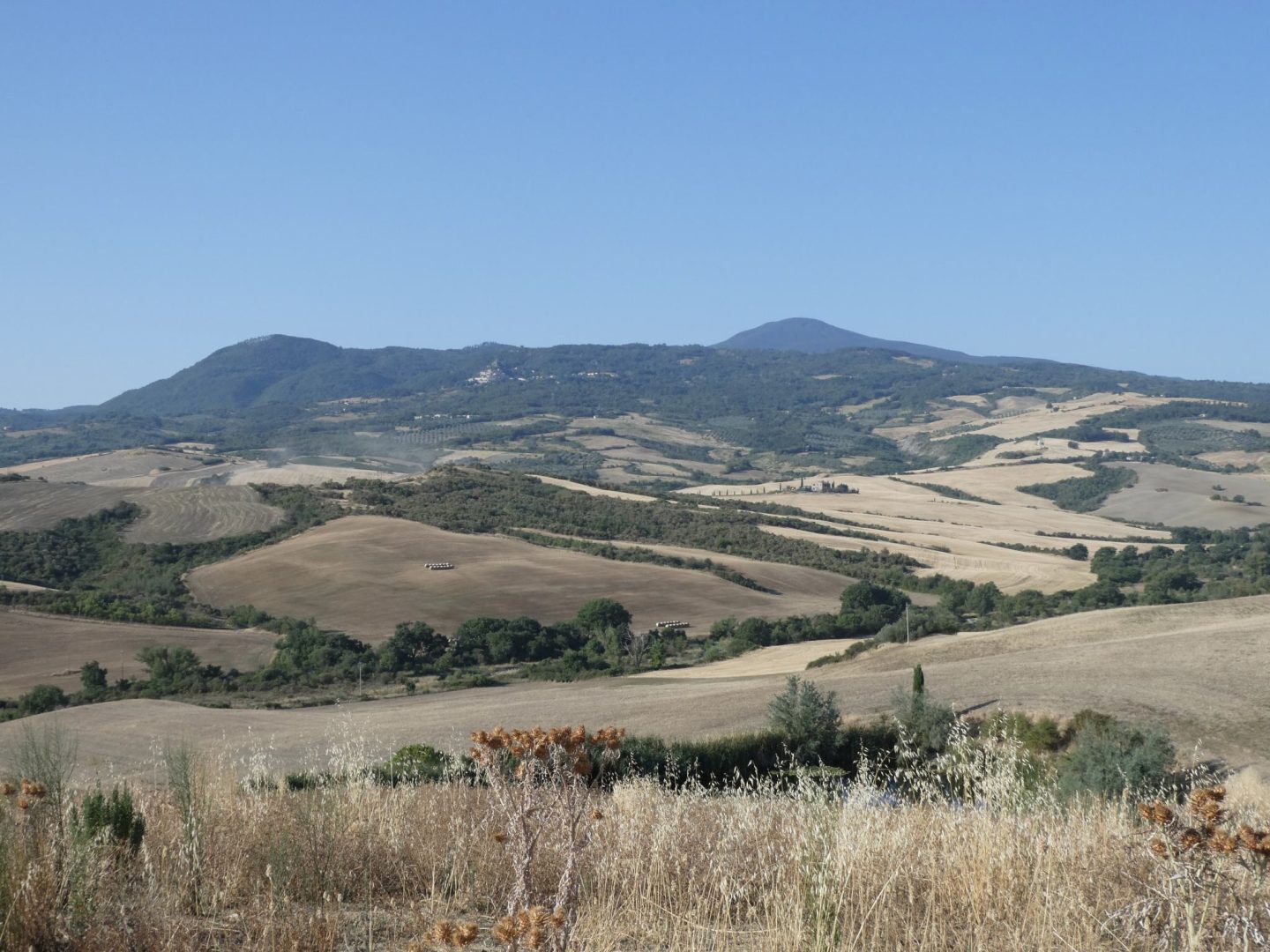
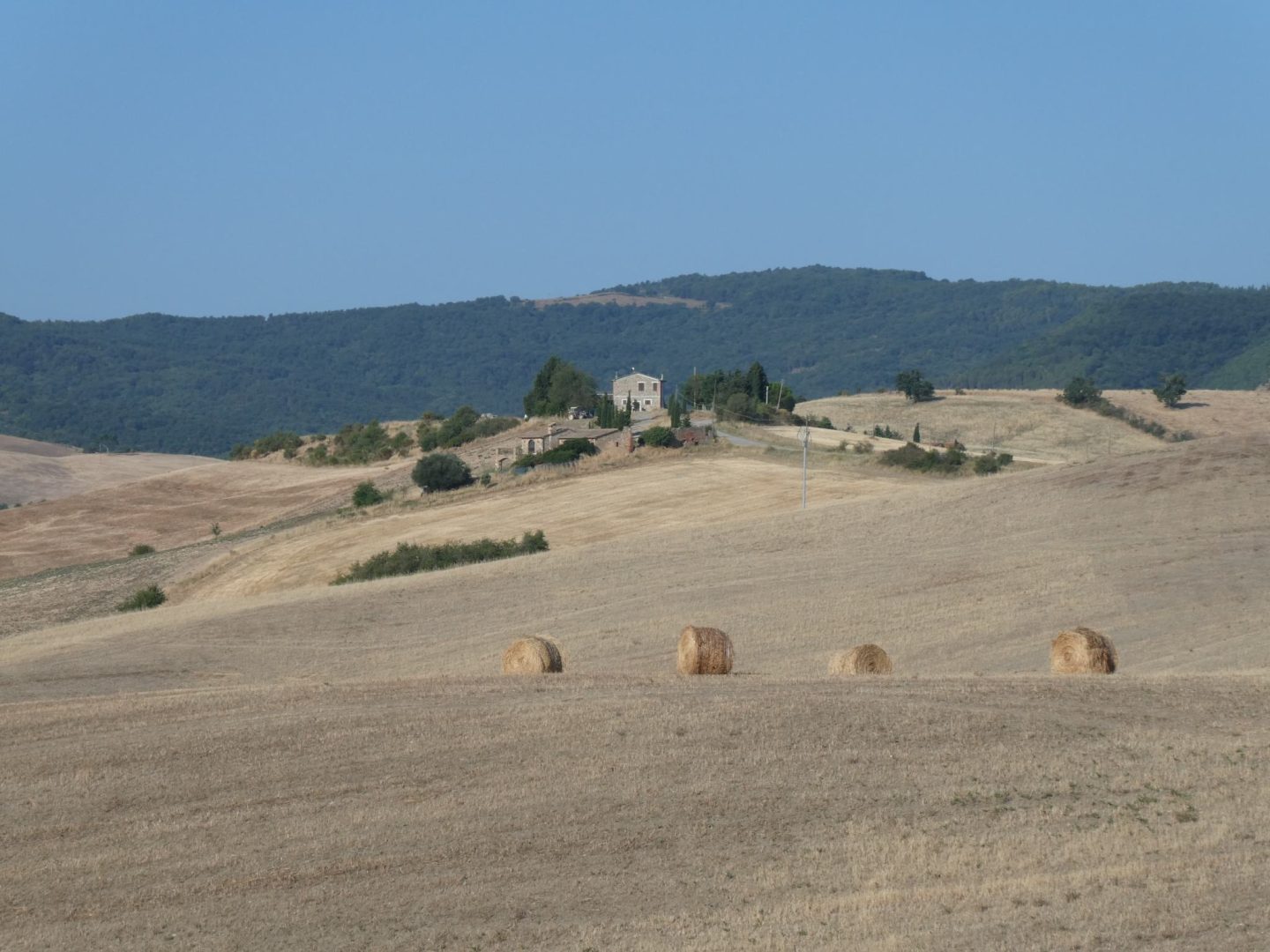
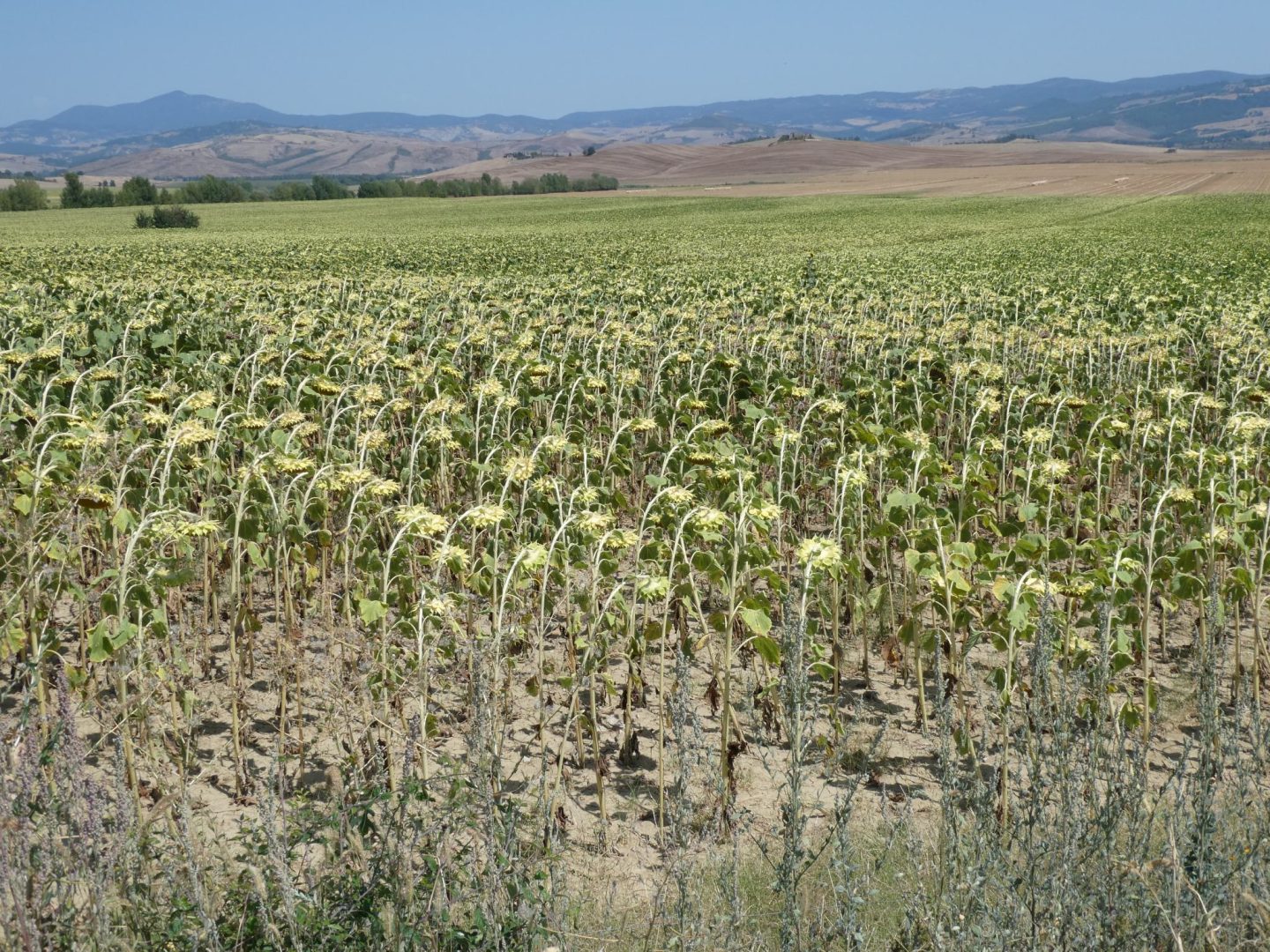 But the scenery was spectacular.
 We started to encounter these signs.
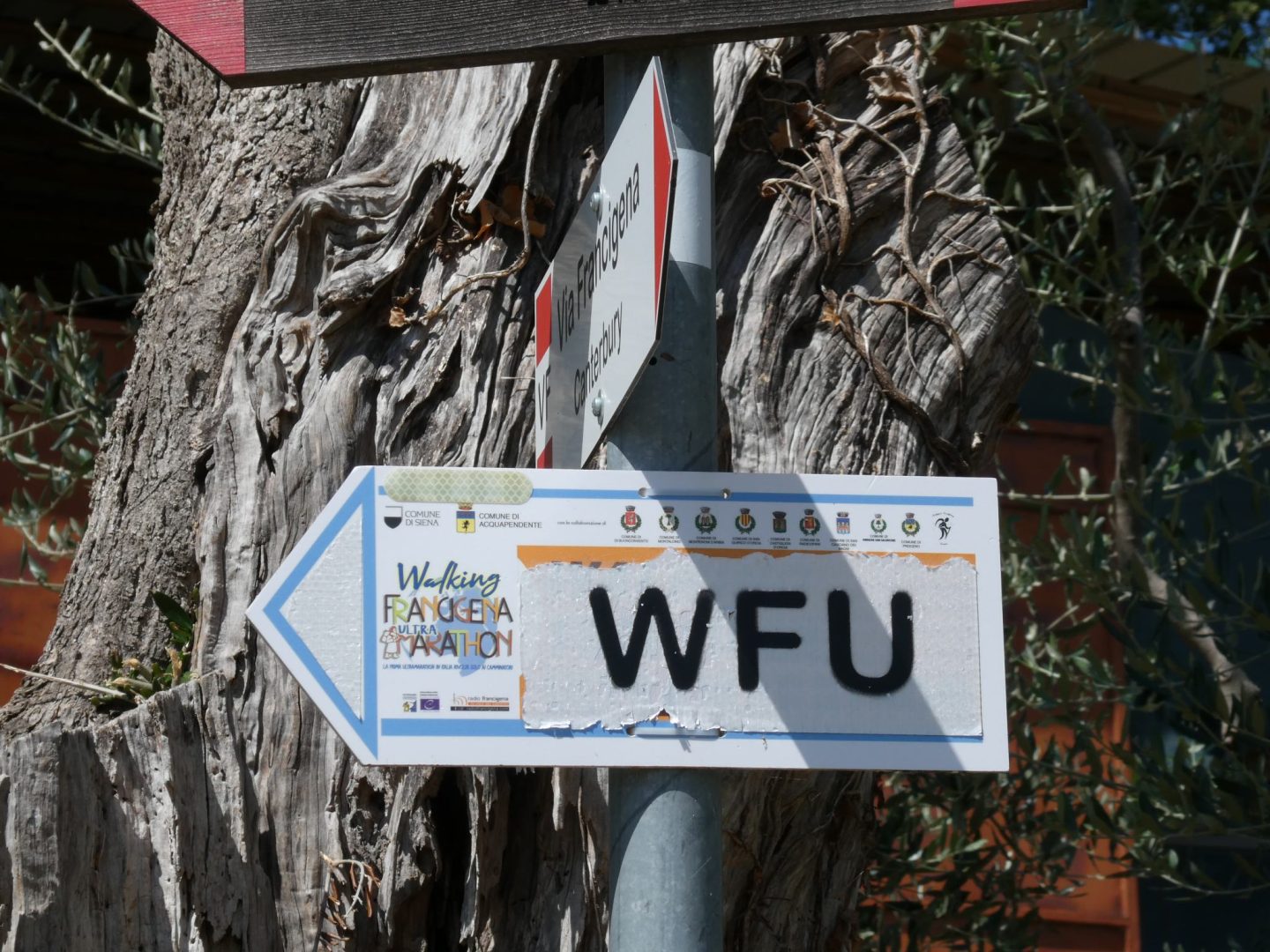
John thought they stood for ‘Who F#*ked Up”, especially when trails had sections like this.
 But on closer scrutiny they were signs for the Walk Francigena Ultramarathon, a non-competitive walking event that “celebrates the beauty of slow travel and community spirit”. Walkers can choose various distances from 5km to 130km, and it’s held in October when the summer heat is over. Sounds eminently more sensible than our endeavour.
Once again there seemed to be a castle or fortress on every hill.
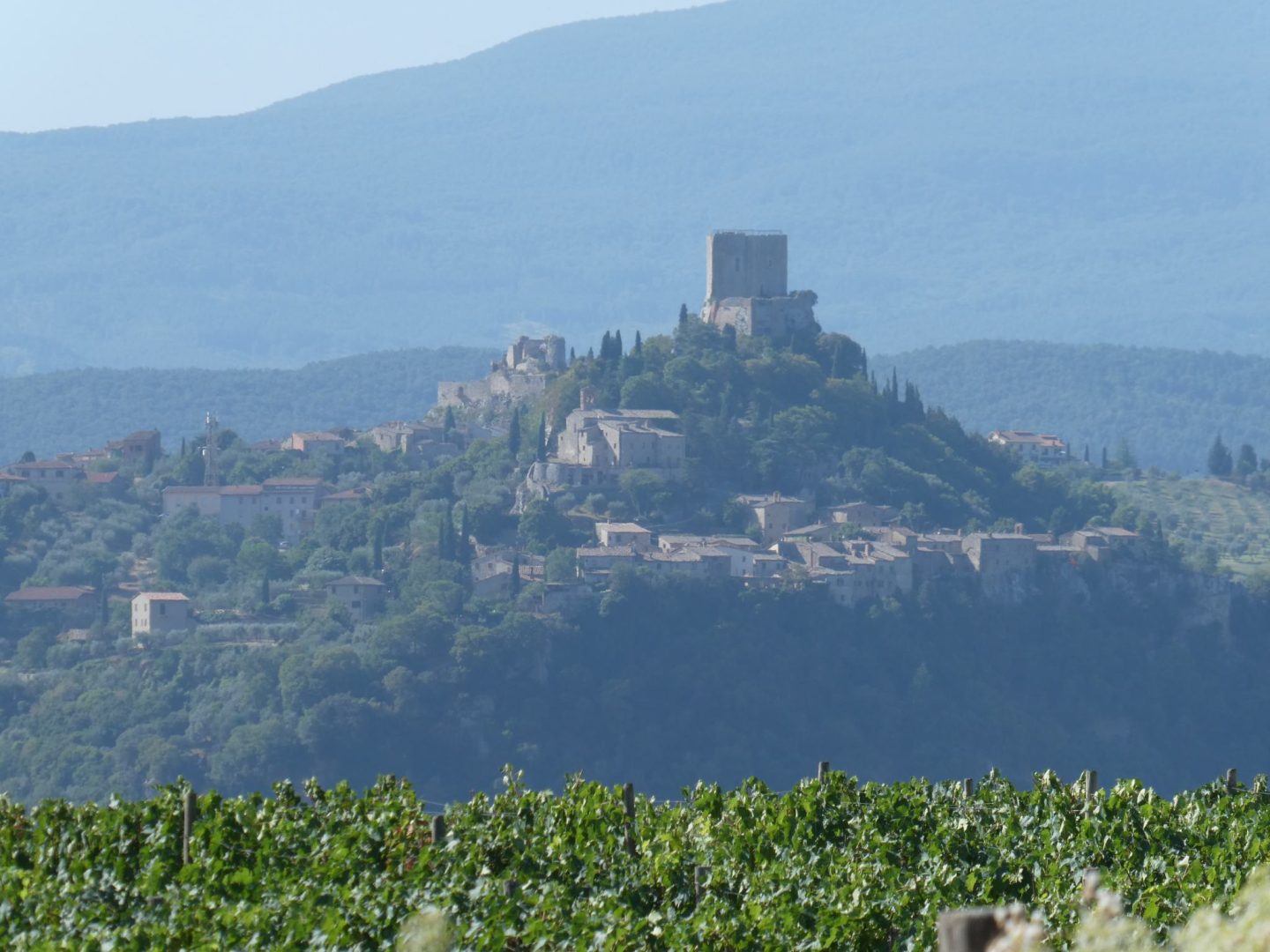
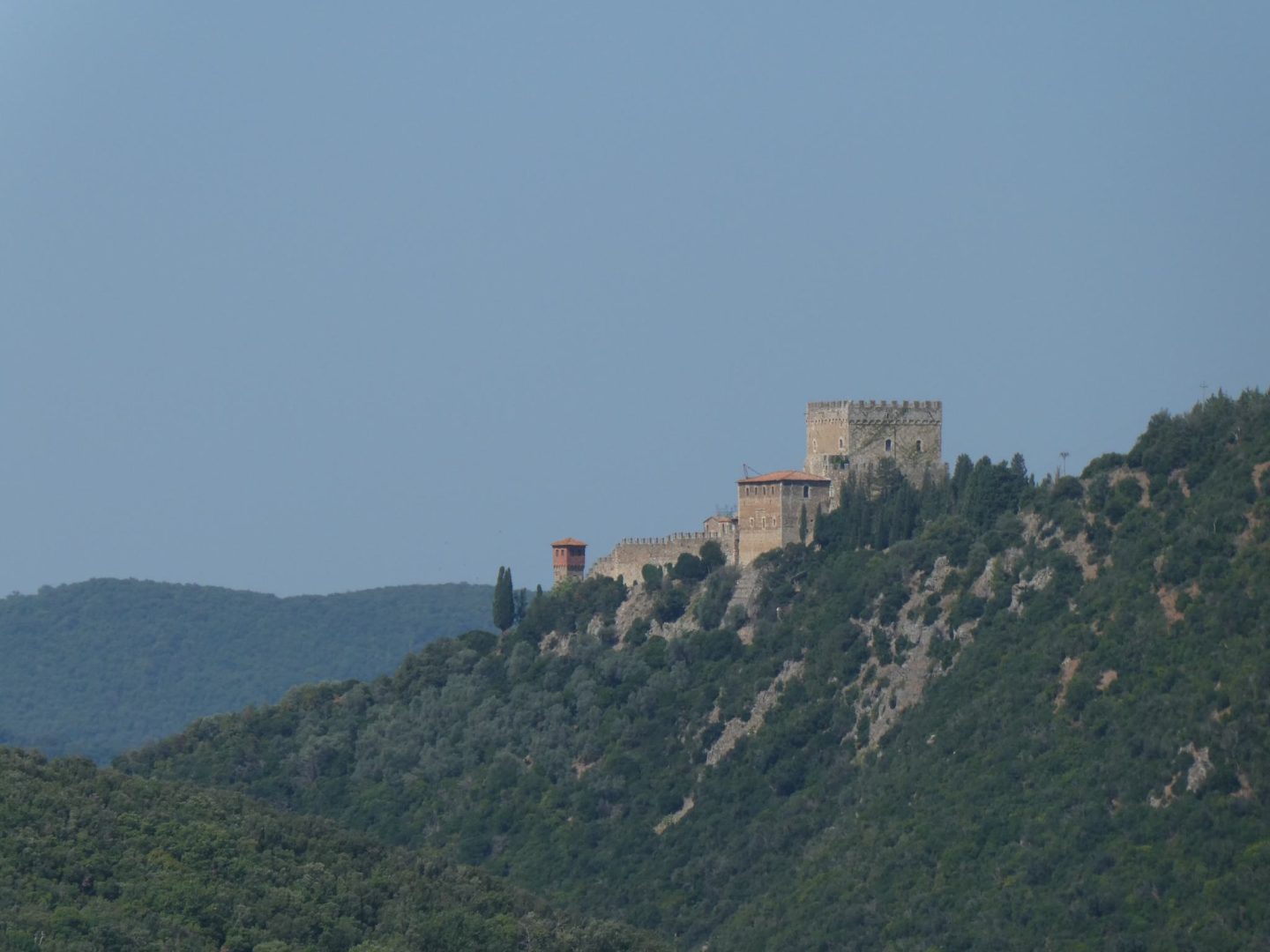
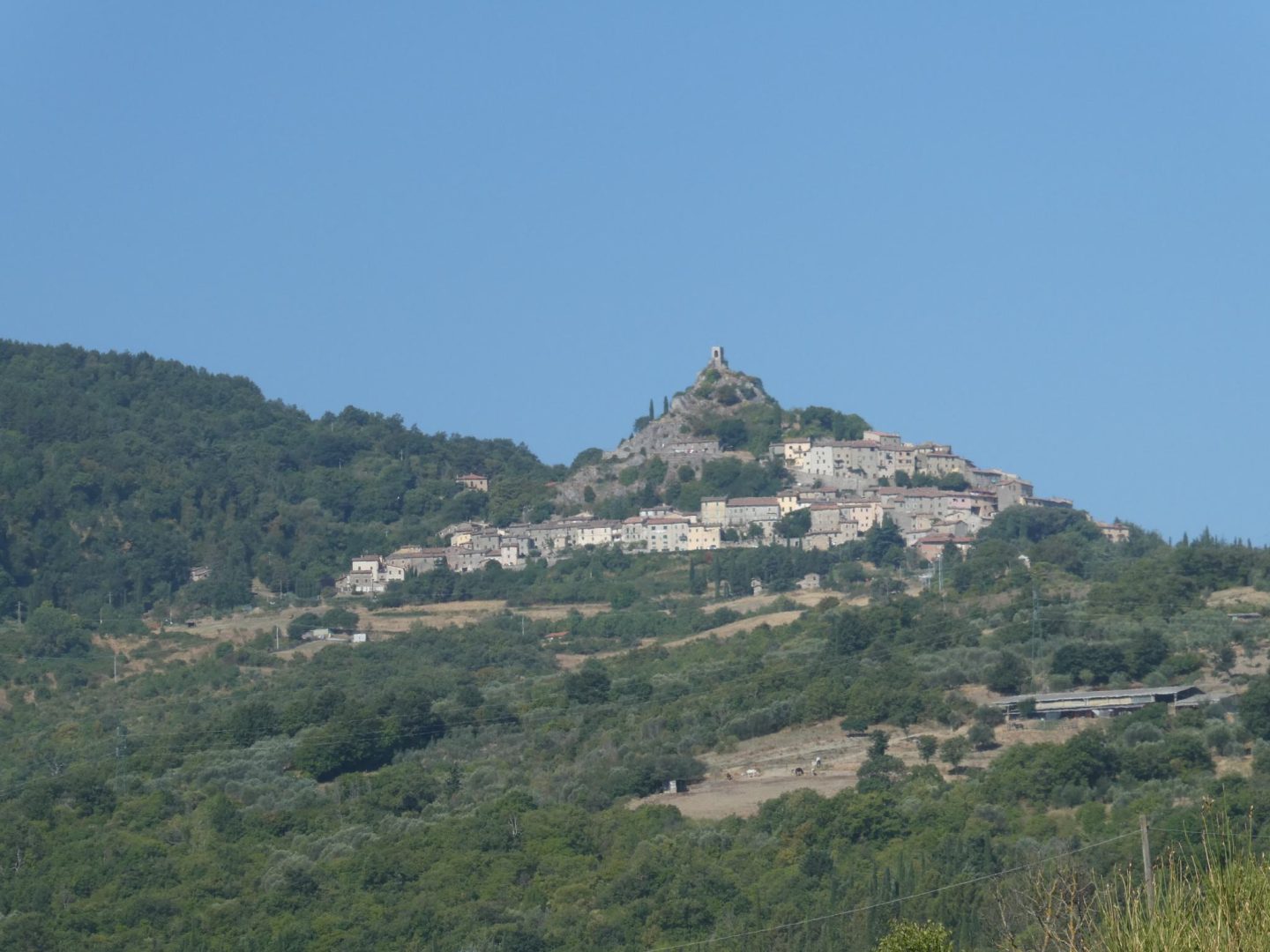
Some we scaled, some we skirted. On Day 44 we were walking toward Radicofani and its castle. Oh dear, we aren’t walking all the way up there, are we?
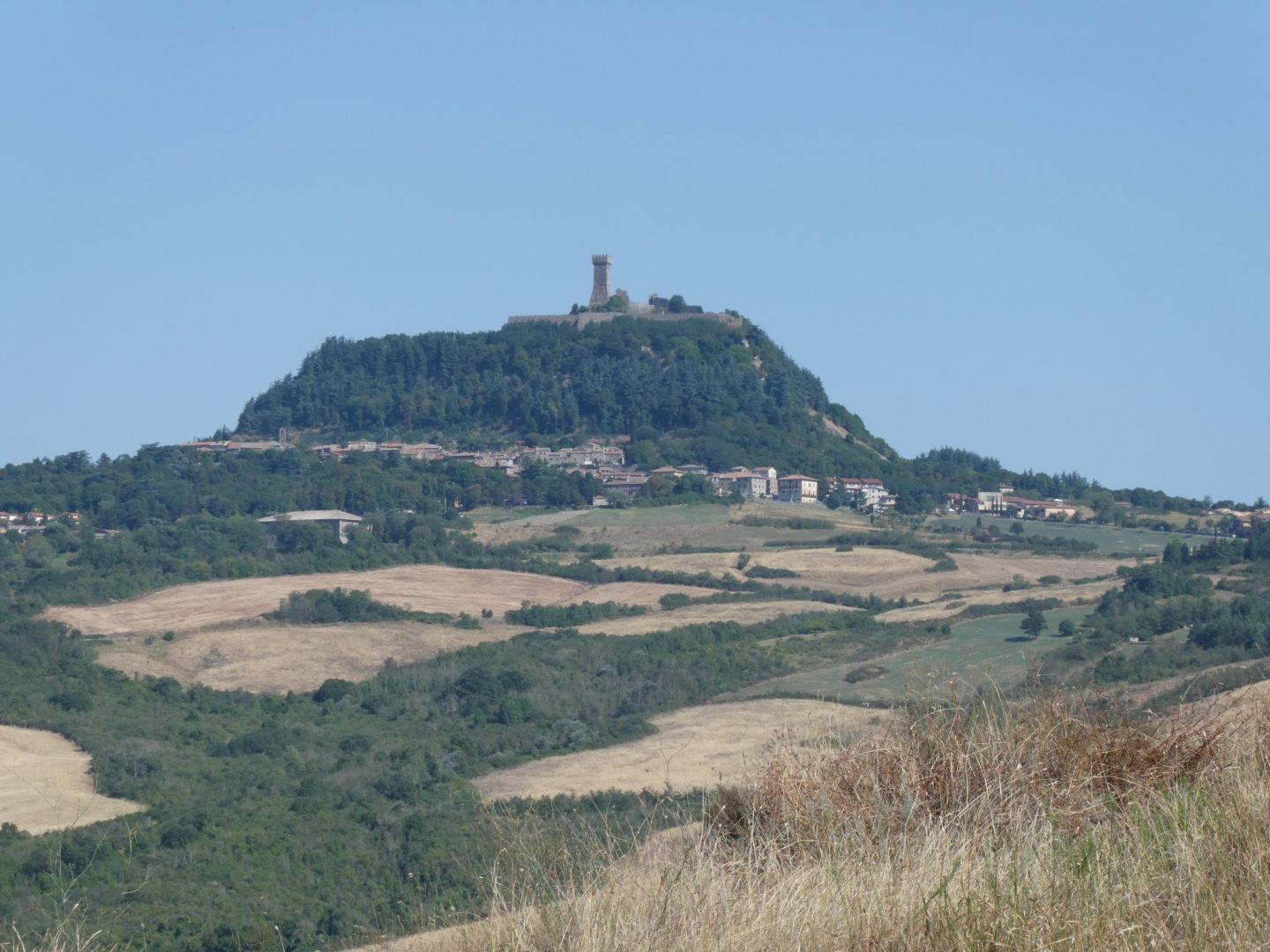 Yes we were. But what a gorgeous town once we got there.


Bars, gelaterias and a couple of butchers selling one of our pork favourites, porchetta. How could you not want to spend more time here.
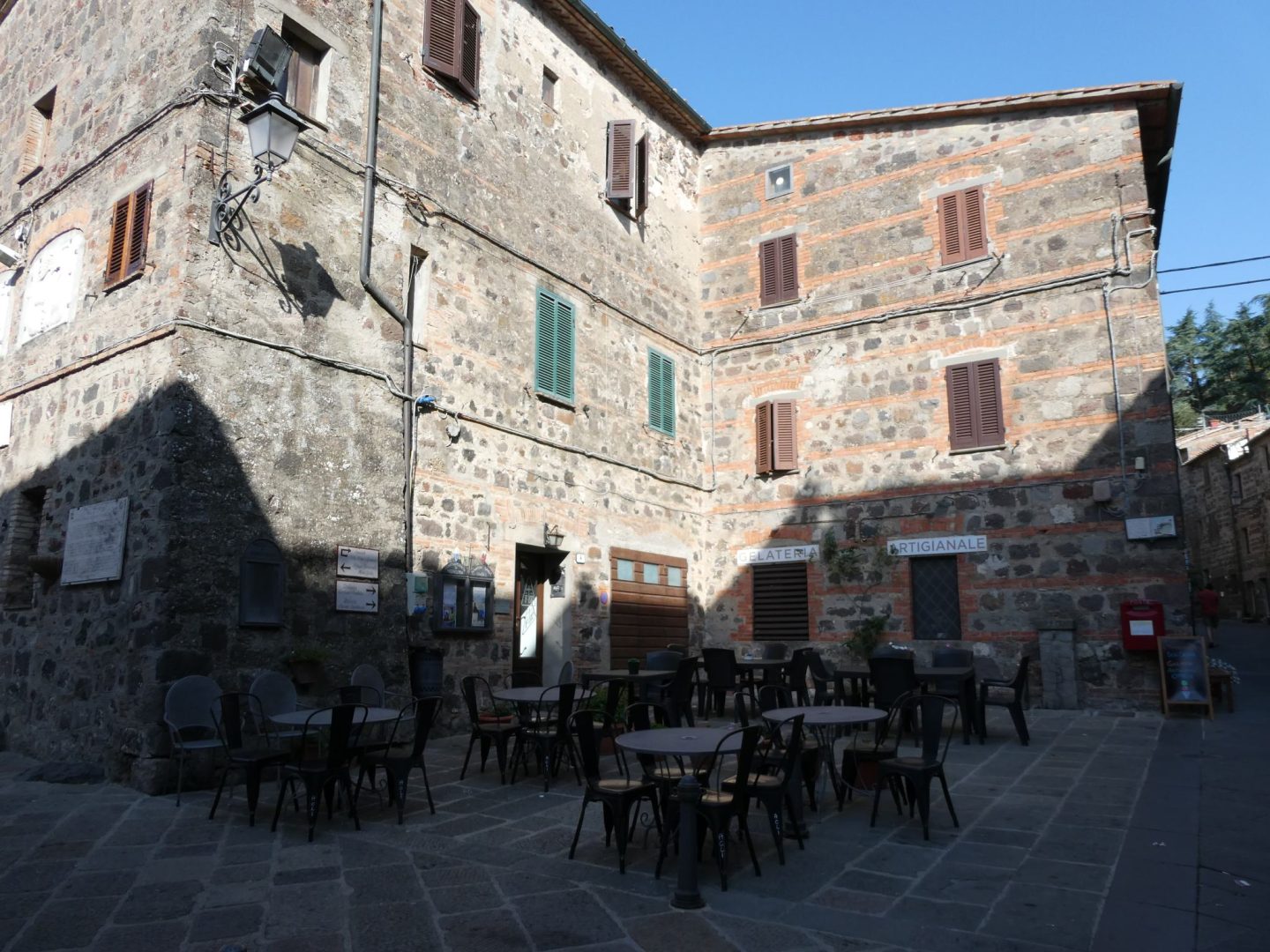

The town’s local hero was a brigand with the unlikely name Ghino di Tacco. He conquered Radicofani Castle, then used it as a base to ambush and rob travellers on the Via Francigena. He let poor people and students pass unharmed, so locals considered him “a thief but a gentleman”.
His father and uncle had been executed for similar exploits, and to avenge their deaths he travelled to Rome and be-headed the sentencing judge, returning to Radicofani displaying the head on a pike.
Needless to say, this made him a wanted man. But later the Abbott of Cluny passed by. After a hefty stint of over-indulgence in Rome, he was suffering liver and stomach complaints. Ghino captured and imprisoned him, curing his intestinal problems with a strict diet of bread, dried beans and the local Vernaccia wine. Impressed by this ‘miracle’, the Abbott convinced the Pope to pardon Ghino and appoint him as a Knight of St John. So you can get away with murder if you know how to cure a clergyman of the ill-effects of gluttony.
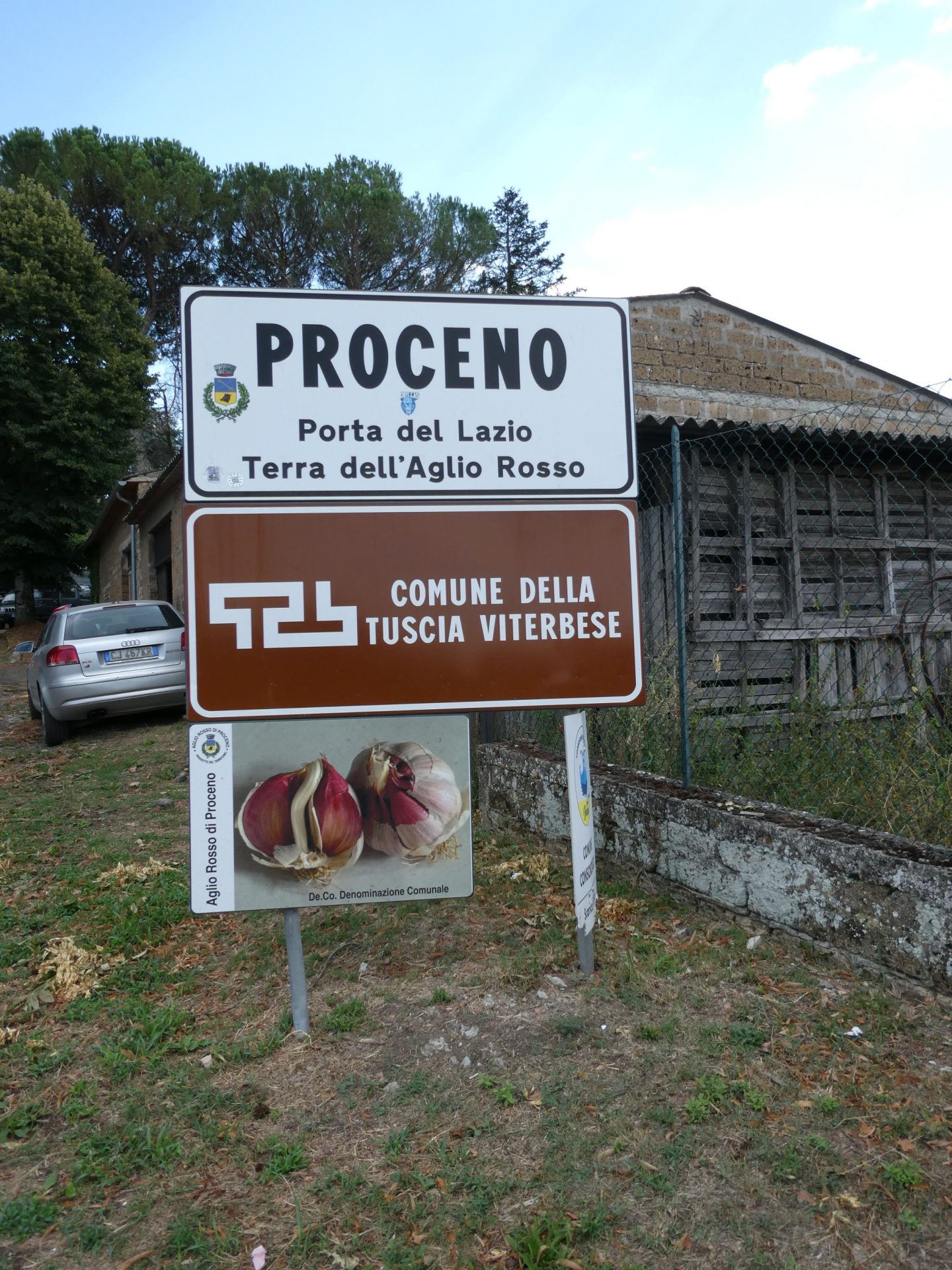
After Radicofani we continued south to Proceno, the first village in Lazio, previously known as the Papal States, the region that surrounds and includes Rome.
Every Italian village seems to be famous for something. Here it’s Aglio Rosso di Proceno (red garlic of Proceno). This rare native garlic is famous for its deep red skin and strong spicy flavour, and remarkable because it will remain fresh for up to a year unrefrigerated. It has been cultivated here since the Etruscans decided they preferred it to onions. They also considered it an aphrodisiac, presumably only if both parties indulged.
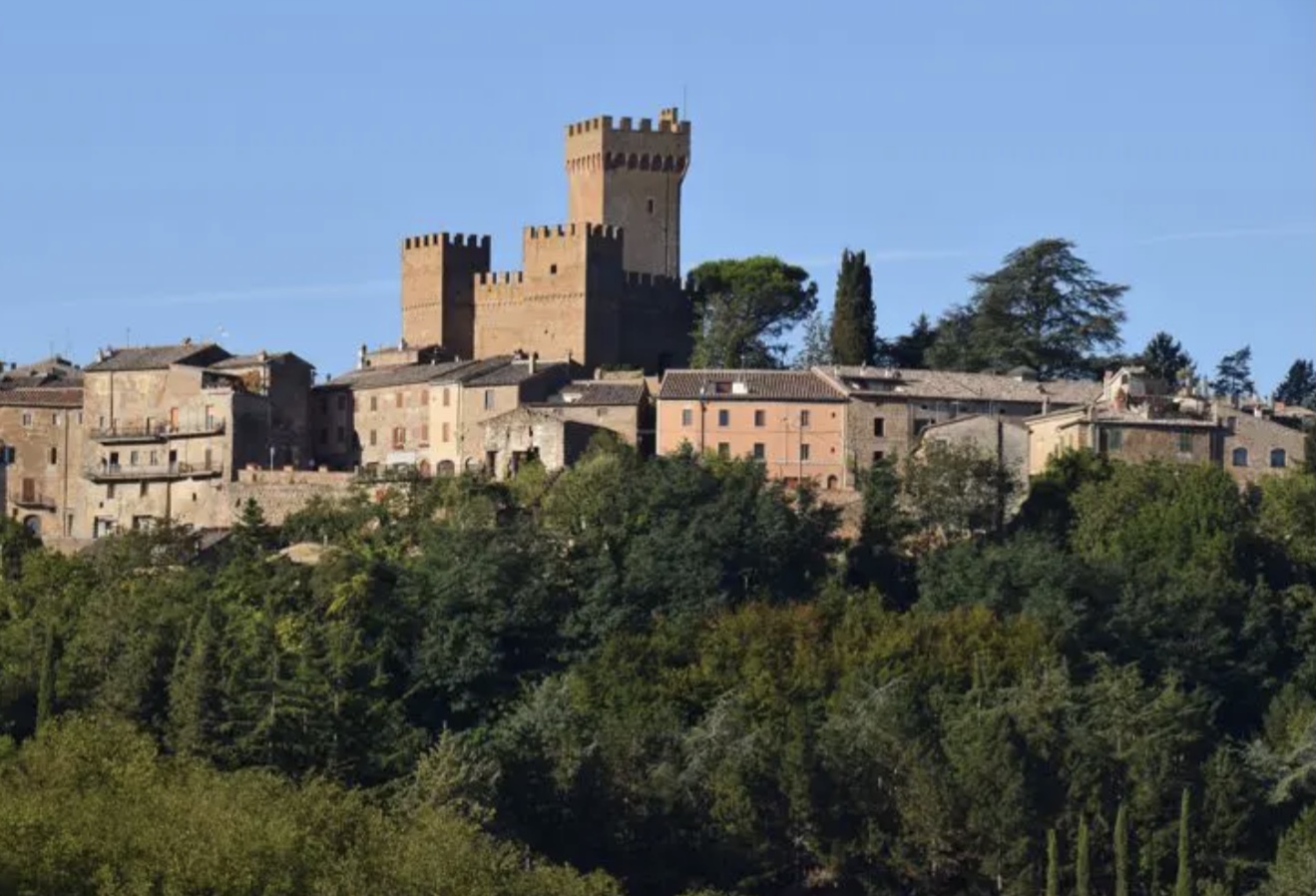
 We stayed a night in the Castle of Proceno, an intact 12th century medieval fortress which is still in the hands of the original family. It has several towers and one of Italy’s few remaining working drawbridges. It now operates as an ‘albergo diffuso’ or scattered hotel, with apartments in different parts of the towers and town.
 The diminutive family matriarch, a lady surely in her 90s, was the epitome of Italian hospitality. After checking in, we told her we would not have breakfast in the morning because we had a 32km walk and wanted to get started early. “No!”, she declared. “It is not good to walk on an empty stomach. Come to breakfast and I will drive you to Aquapendente”. Breakfast included the best croissants we’ve ever eaten – apologies to the French – and her driving carved 7km off our journey. Truly a double bonus.
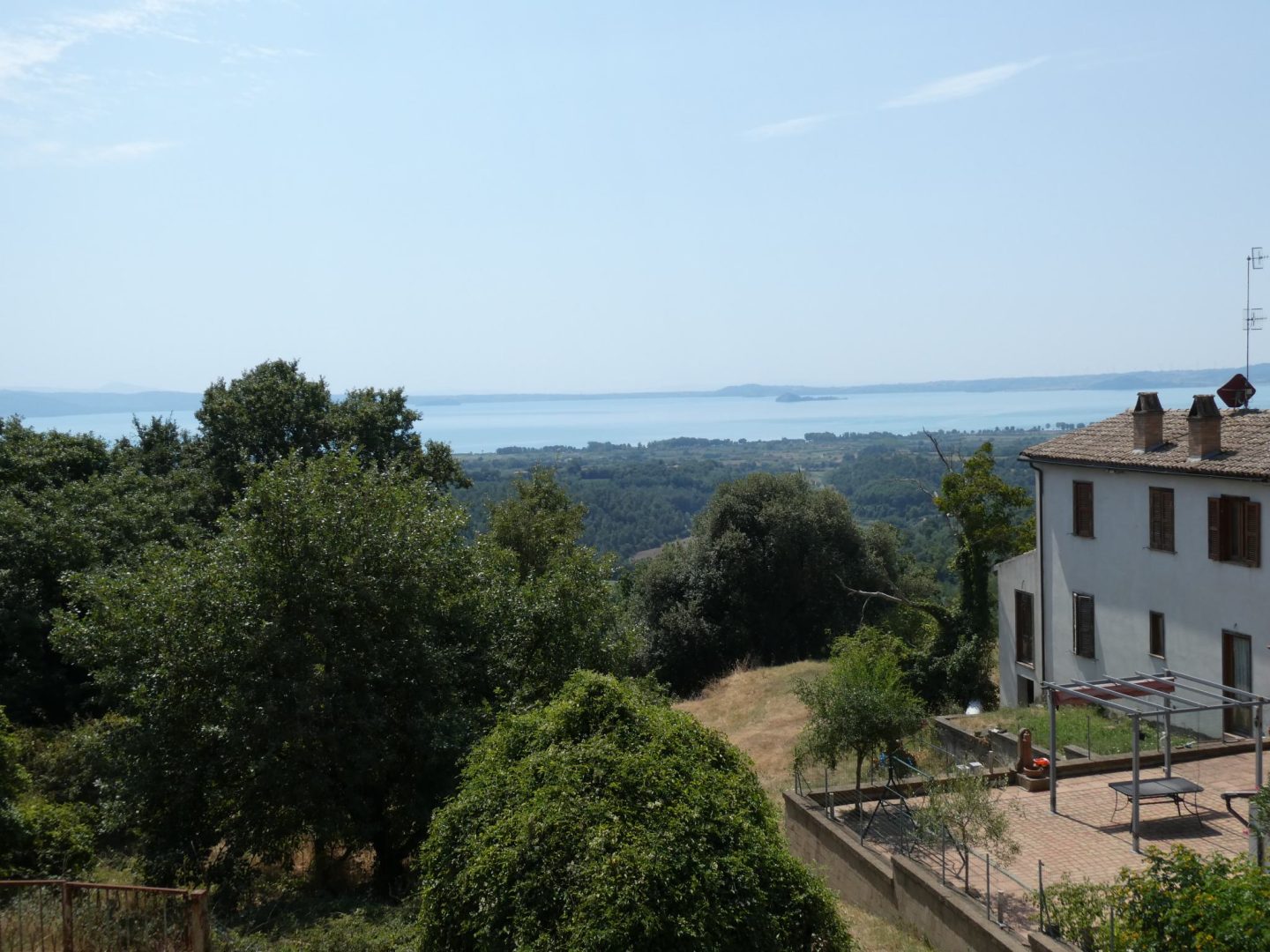
Around lunchtime, walking out of San Lorenzo Nuovo, we caught our first glimpse of Lake Bolsena, the largest volcanic lake in Europe.
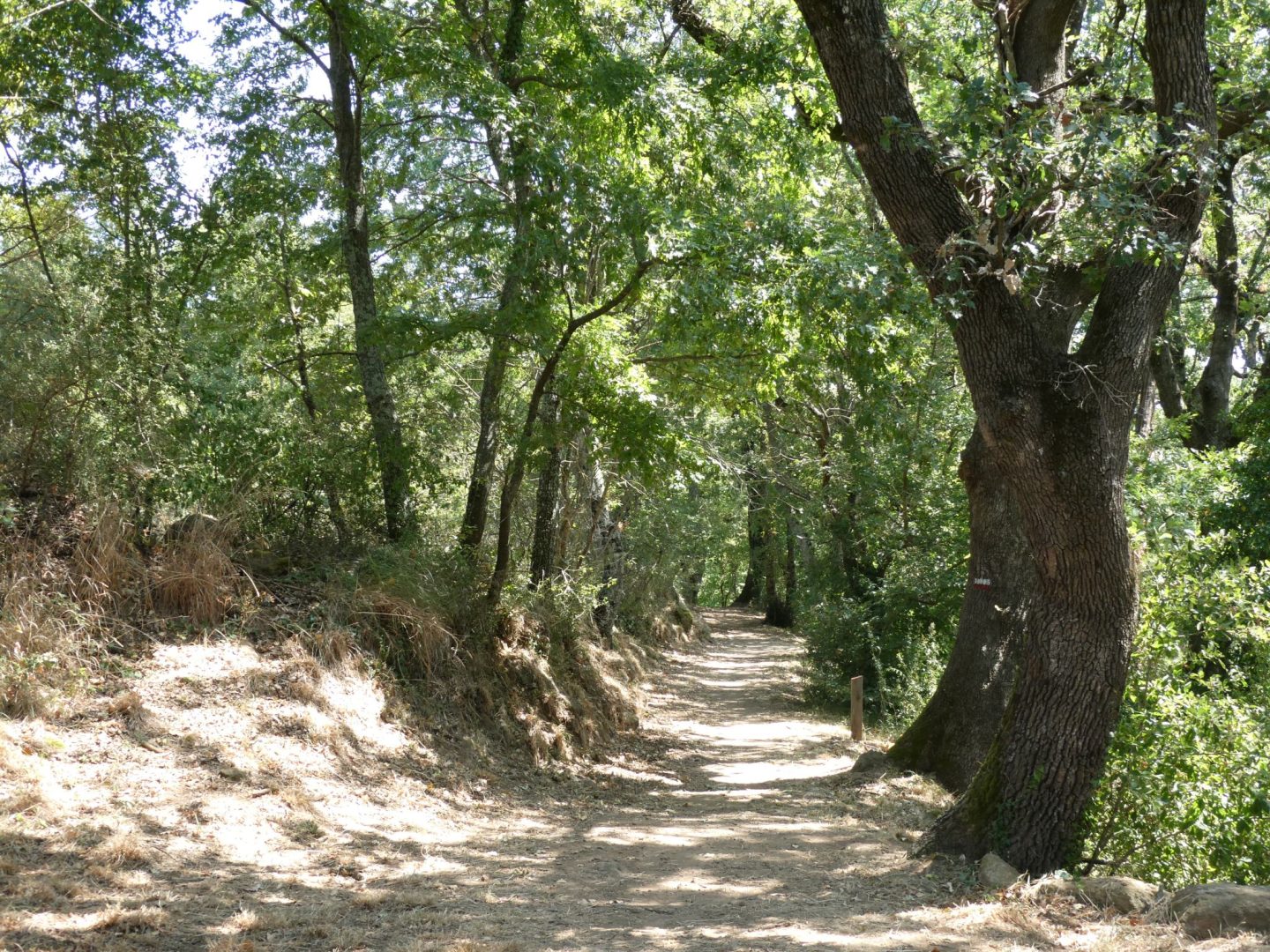
 Outside the town, the Italian Forest Fund has been gifted a large swathe of land which it is returning to forest. A lovely shady walk.
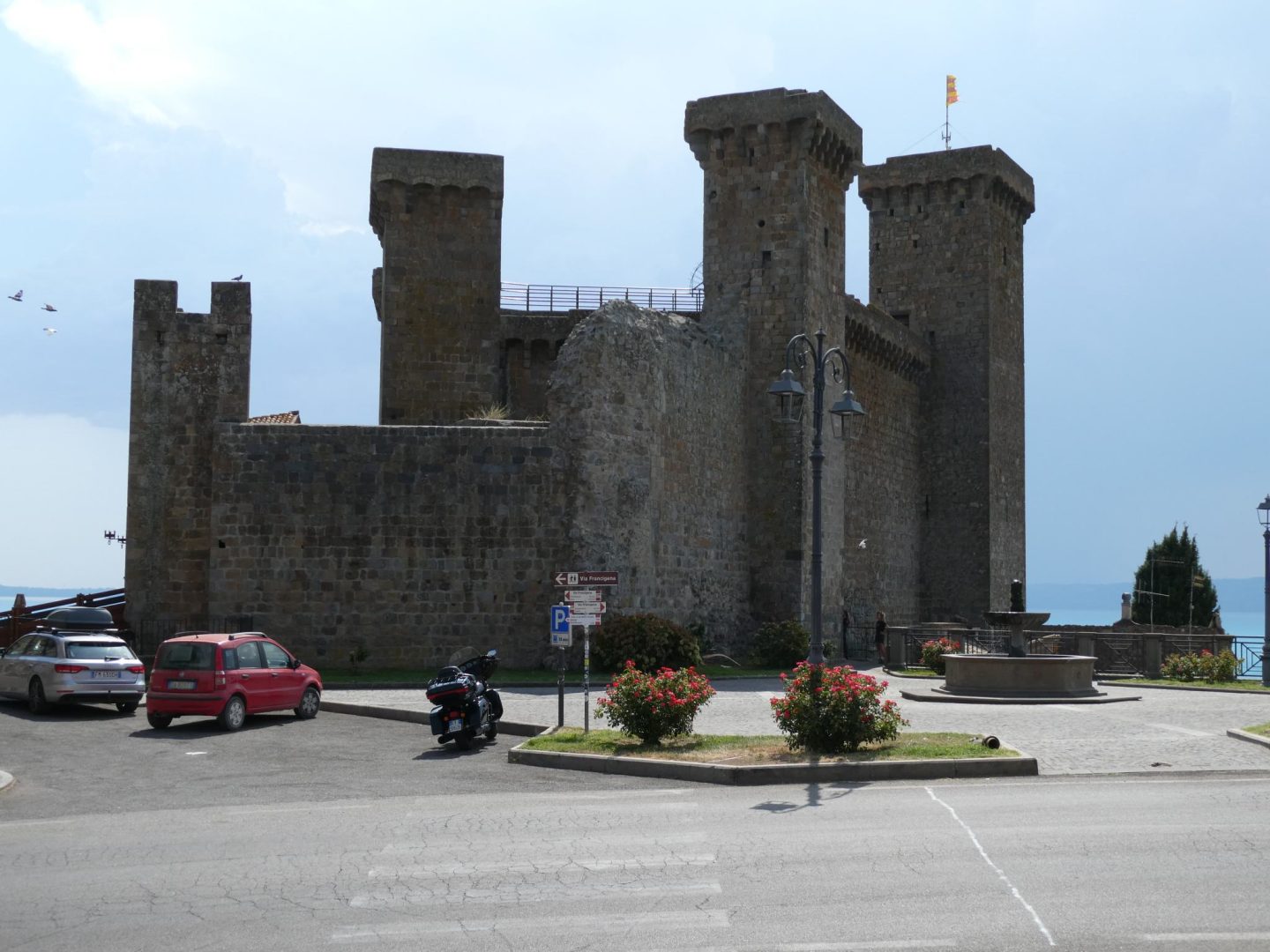
The town of Bolsena sits above the lake with, of course, it’s own castle, the ruins of Monaldeschi Castle, built by the lords of Orvieto in the 13th century and all but destroyed by the townsfolk in 1815 to prevent it falling into the hands of Lucien Bonaparte.
But its biggest drawcard is the lake, where hotels and restaurants cater to largely domestic holidaymakers escaping the heat to loll about in the lake’s beautifully clear waters.
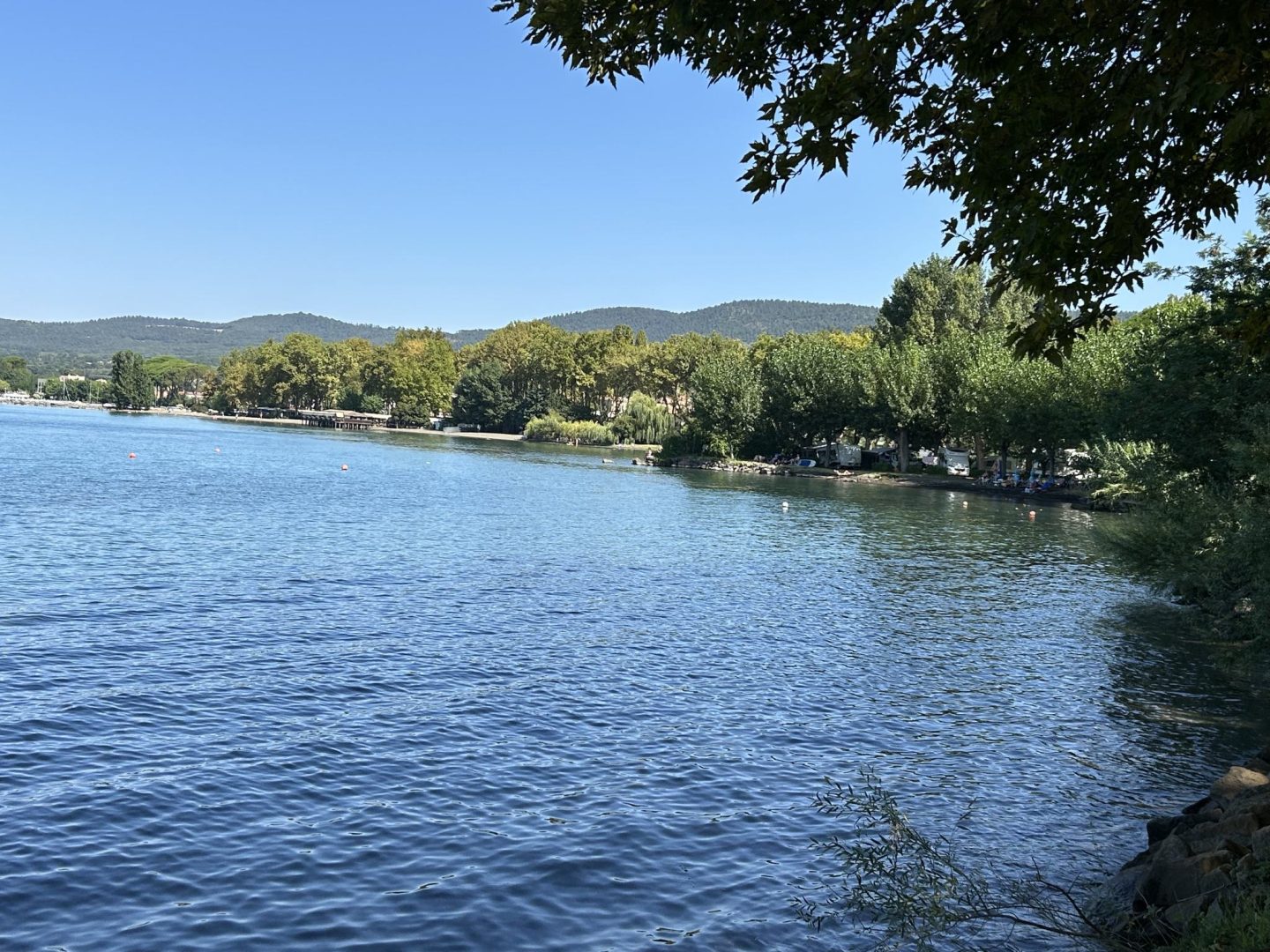
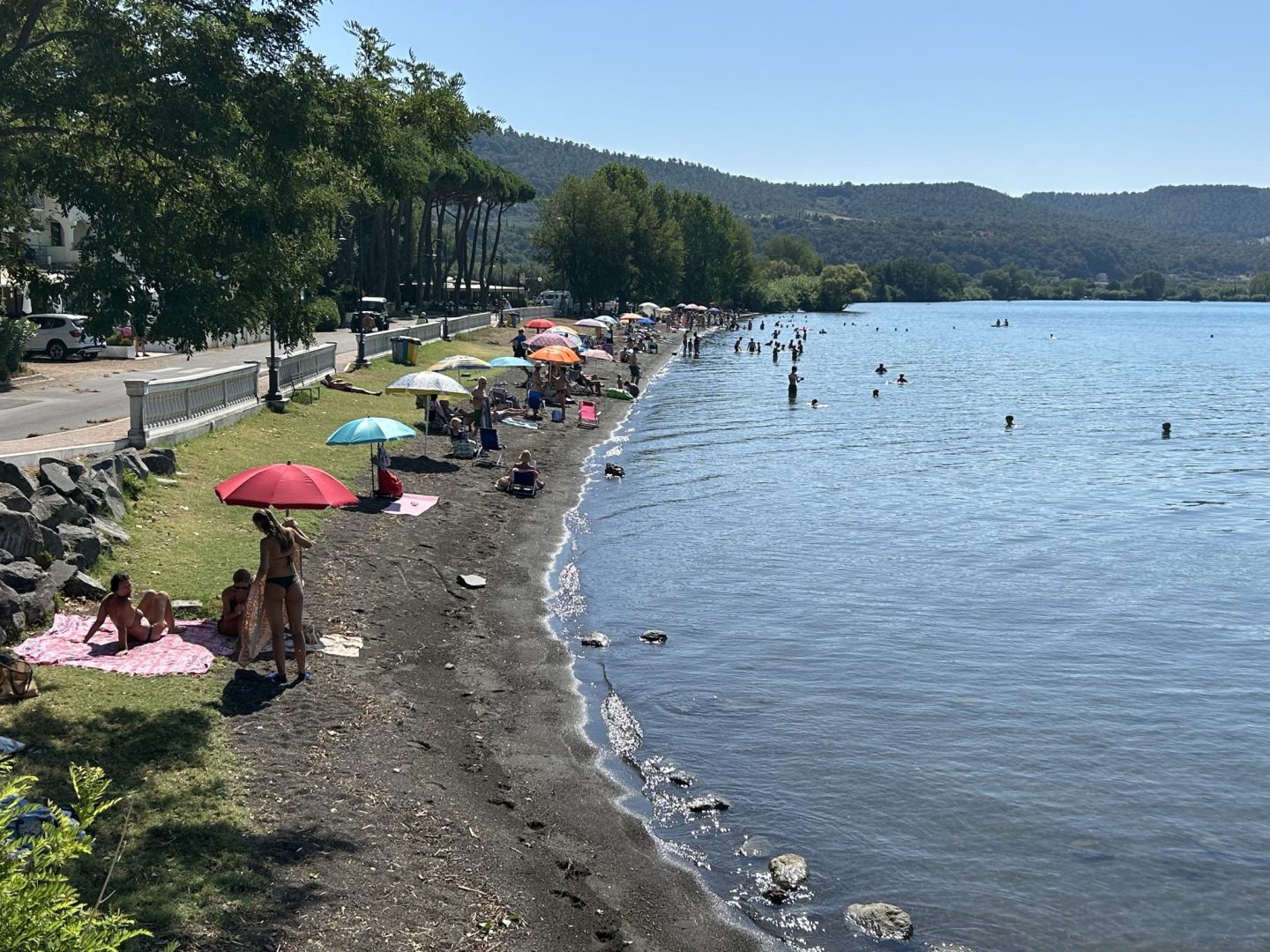
We had a rest day here and friends from Brisbane who are staying at their apartment in Panicale, just over the border in Umbria, joined us for lunch by the lake. It was great to catch up, and share a meal and some Aperol spritzes.
One week to go. Rome is almost in sight!
Day 41: Siena to Grancia di Cuna: 20km
Day 42: Buonconvento to San Quirico d’Orcia: 25km
Day 43: San Quirico d’Orcia to Gallina: 18km
Day 44: Gallina to Radicofani: 21km
Day 45: Radicofani to Proceno: 27km
Day 46: Proceno to Lake Bolsena: 25km
Day 47: Rest day at Lake Bolsena
Total to date: 866km

Wonderful information and photos 💛