A week strolling through the Tuscan hills from one medieval town to the next. Sounds idyllic. It was idyllic. Except for the heat.
On the outskirts of Lucca, it seemed even the signs were melting!

The walk to Altopascio was uninspiring, but next day as we headed to San Miniato, forest shade brought the temperature down dramatically.


The relief only lasted half a day. In the bare hills, the mercury climbed.
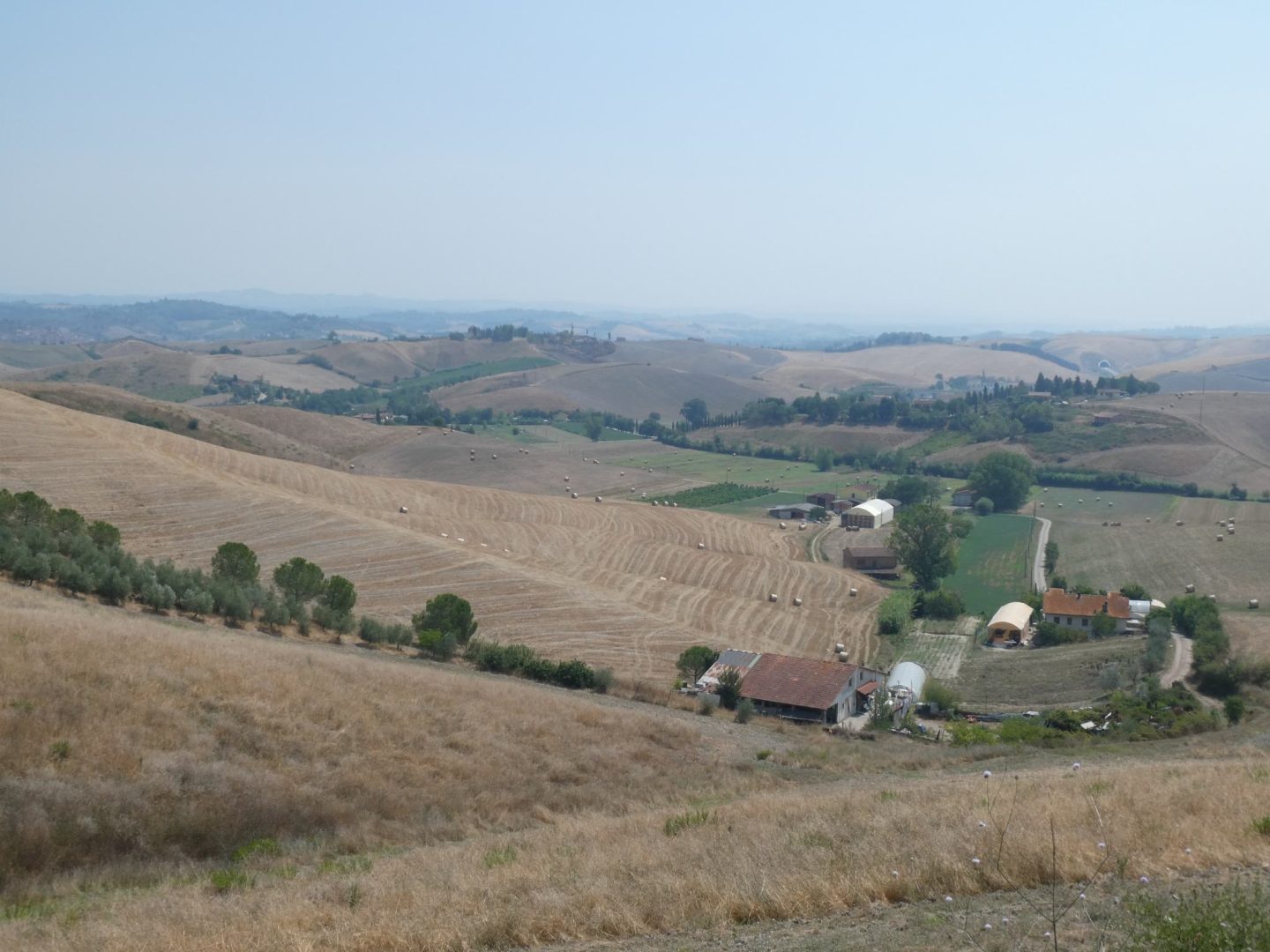
In medieval times, San Miniato occupied an important position: the intersection point of the Lucca-Siena and Pisa-Florence roads.

Like most strategically significant medieval towns, it was built on top of a hill. A particularly steep one. As we trudged up a path from the valley below, exhausted after a marathon 32km in the heat, we were not only following in Sigeric’s footsteps but those of countless soldiers, traders, pilgrims and peasants who’d washed through the place over the centuries.
David and Noreen had taken a different route and discovered an elevator which, needless to say, carried them effortlessly to the top. We’re not bitter about that. Not at all. We’re sure Sigeric would have taken the lift if such things had existed in his day.
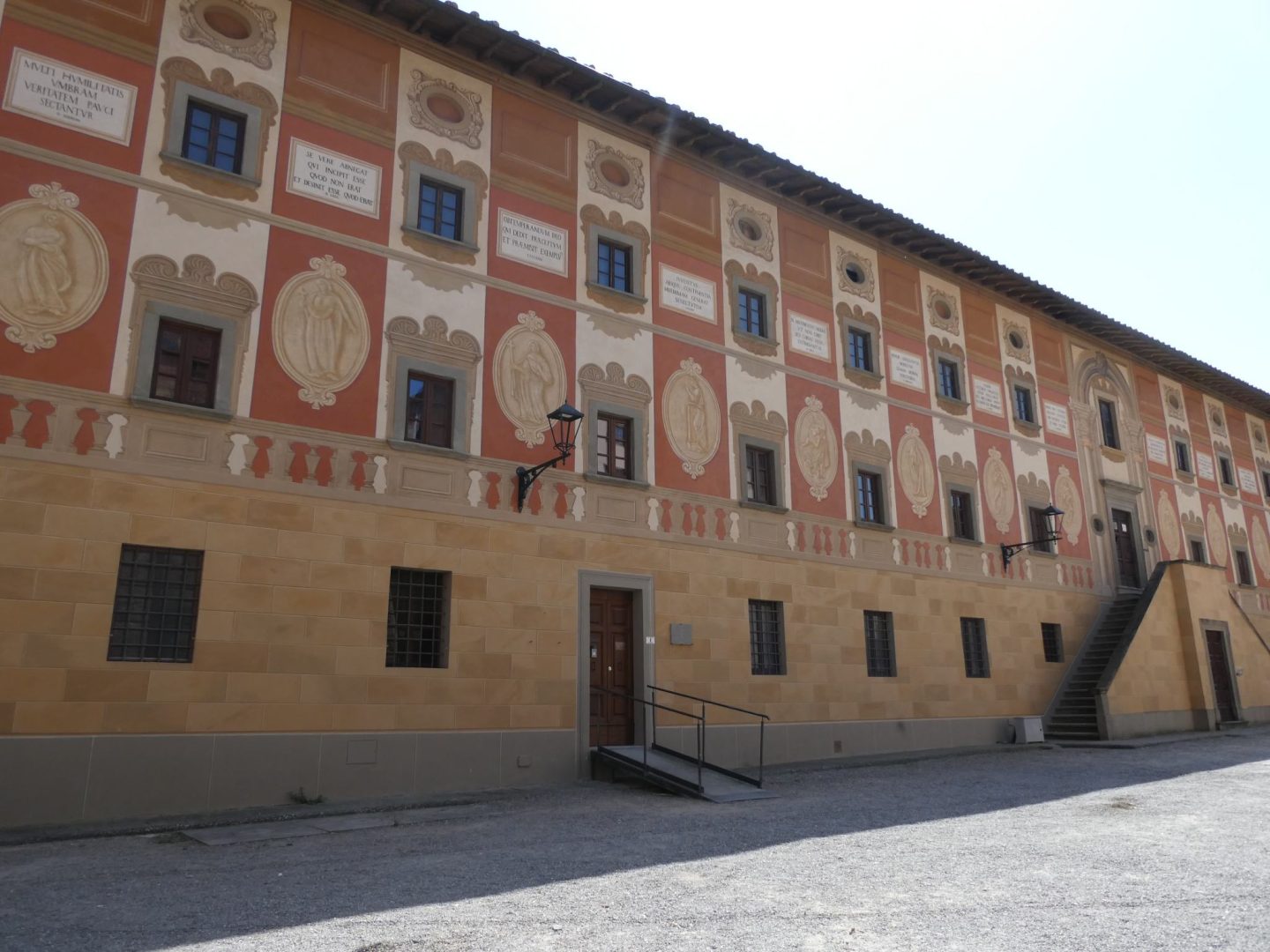
Once at the top, San Miniato is a lovely brick and stone town.


And here we discovered the delights of the Hugo spritz. Similar to the ubiquitous Aperol spritz, but made with elderflower liqueur and mint instead of Aperol, it is sweeter and just as refreshing. Created by an Italian and already popular in France, it’s apparently ’having a moment’. With sales tripling this summer, could the Hugo threaten Aperol’s stranglehold on the spritz market? Maybe not, but certainly the light and minty flavour is perfect for summer drinking.

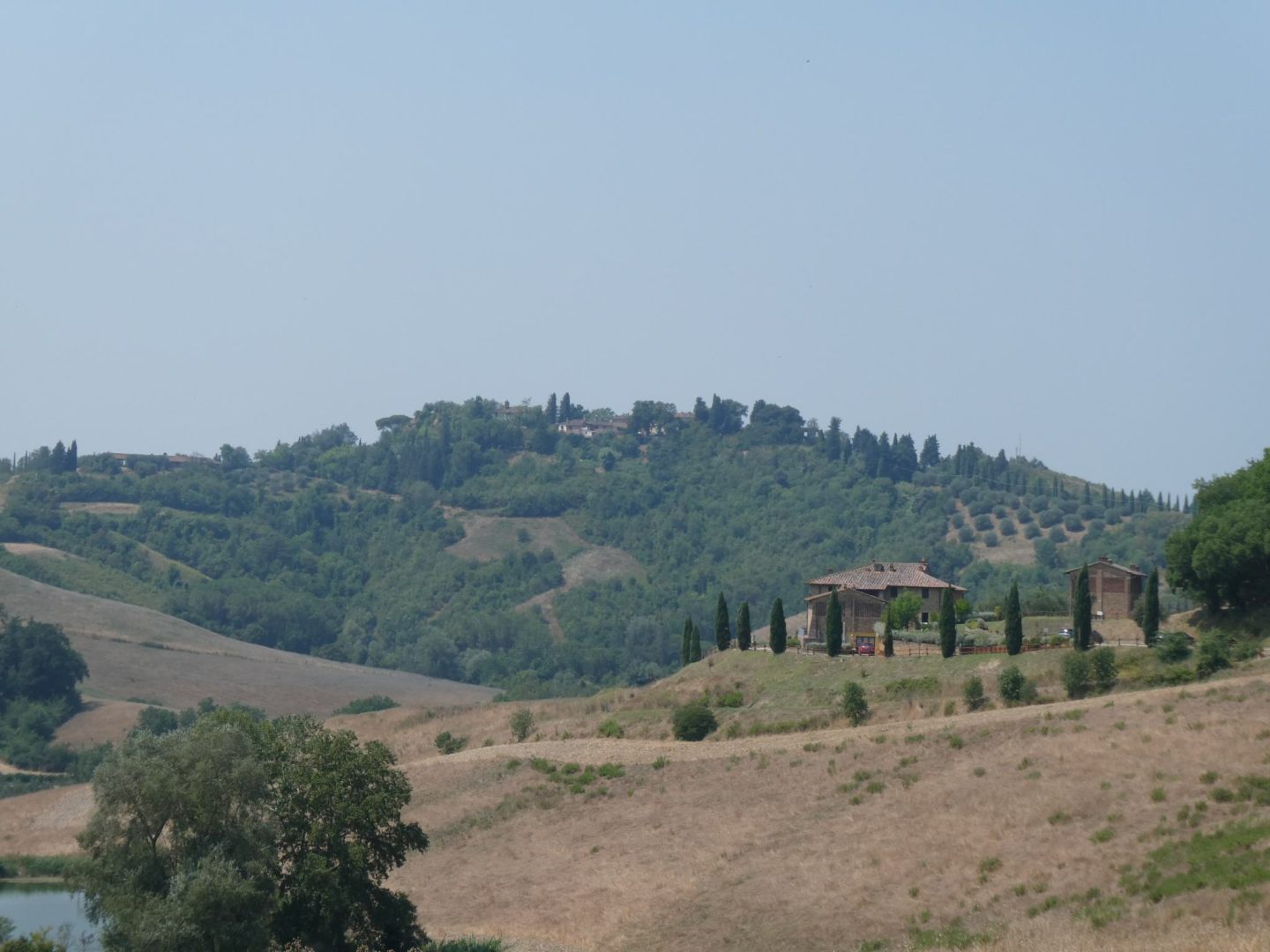
And so the week progressed. Classic Tuscan landscapes and hilltop stone towns.

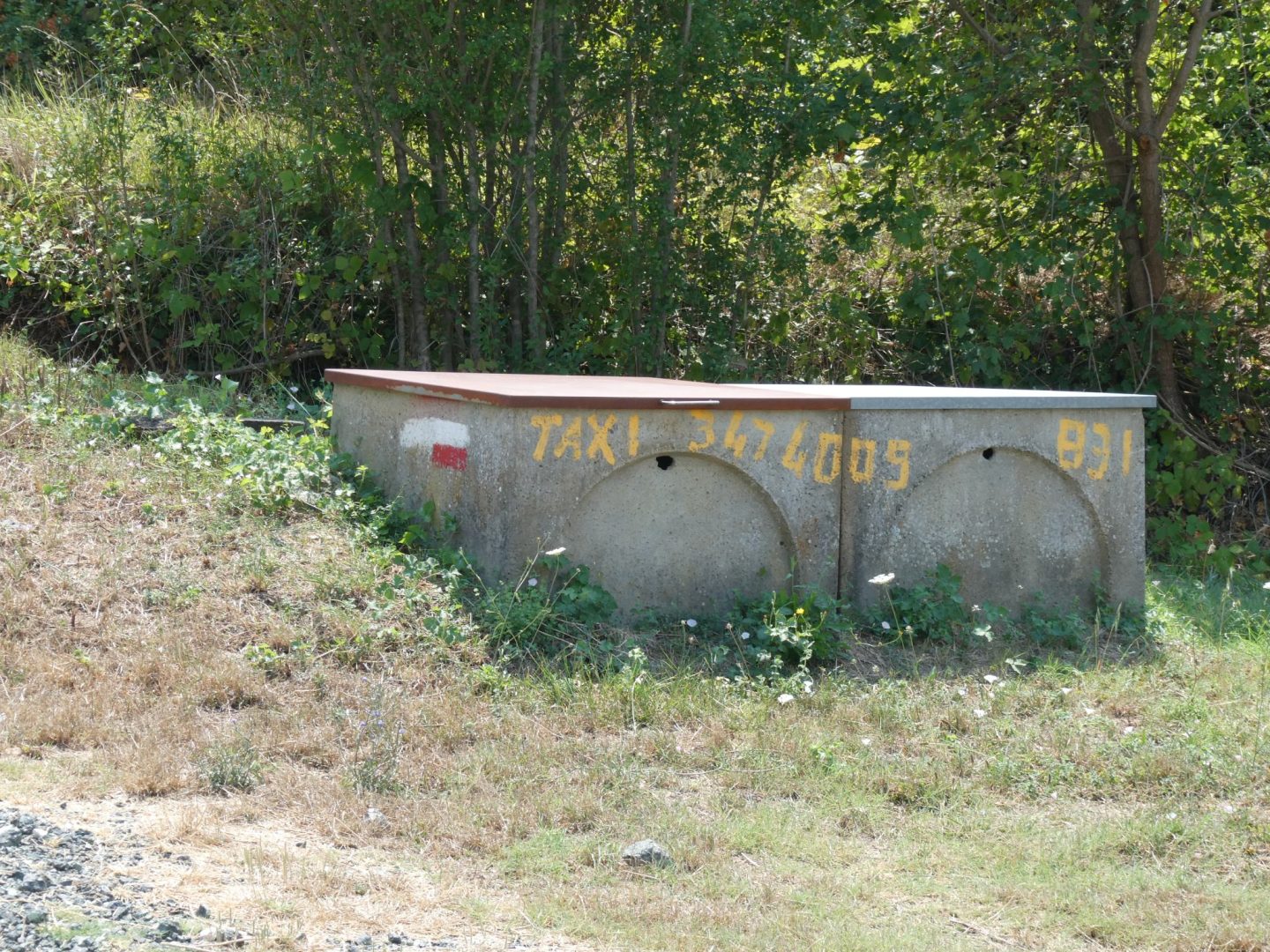
Strategically positioned near the top of a particularly steep, shade-less slog up a gravel road approaching Gambasse Terme, this taxi driver knew exactly where to advertise his services.
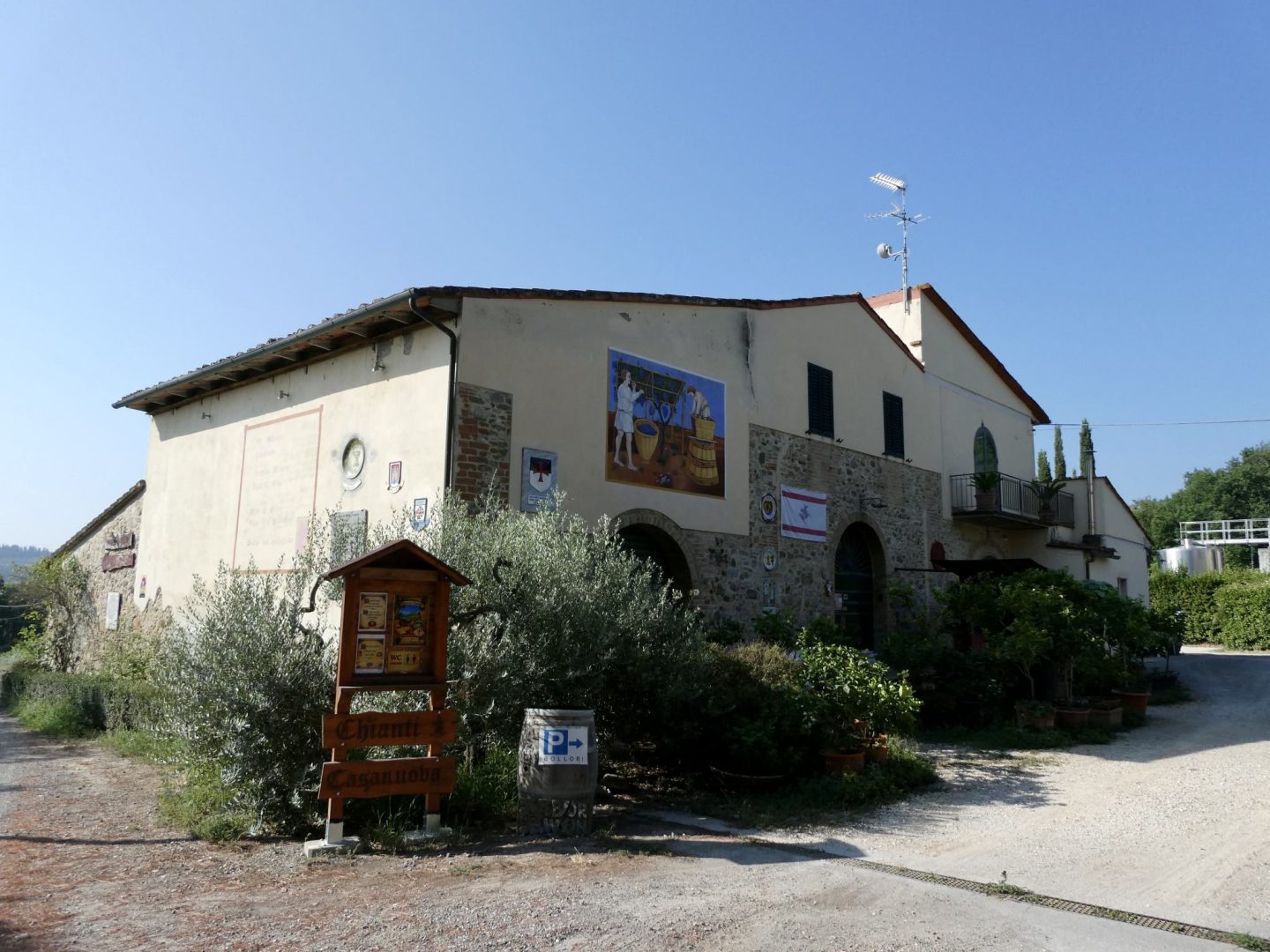
We were in the land of wine and olives.

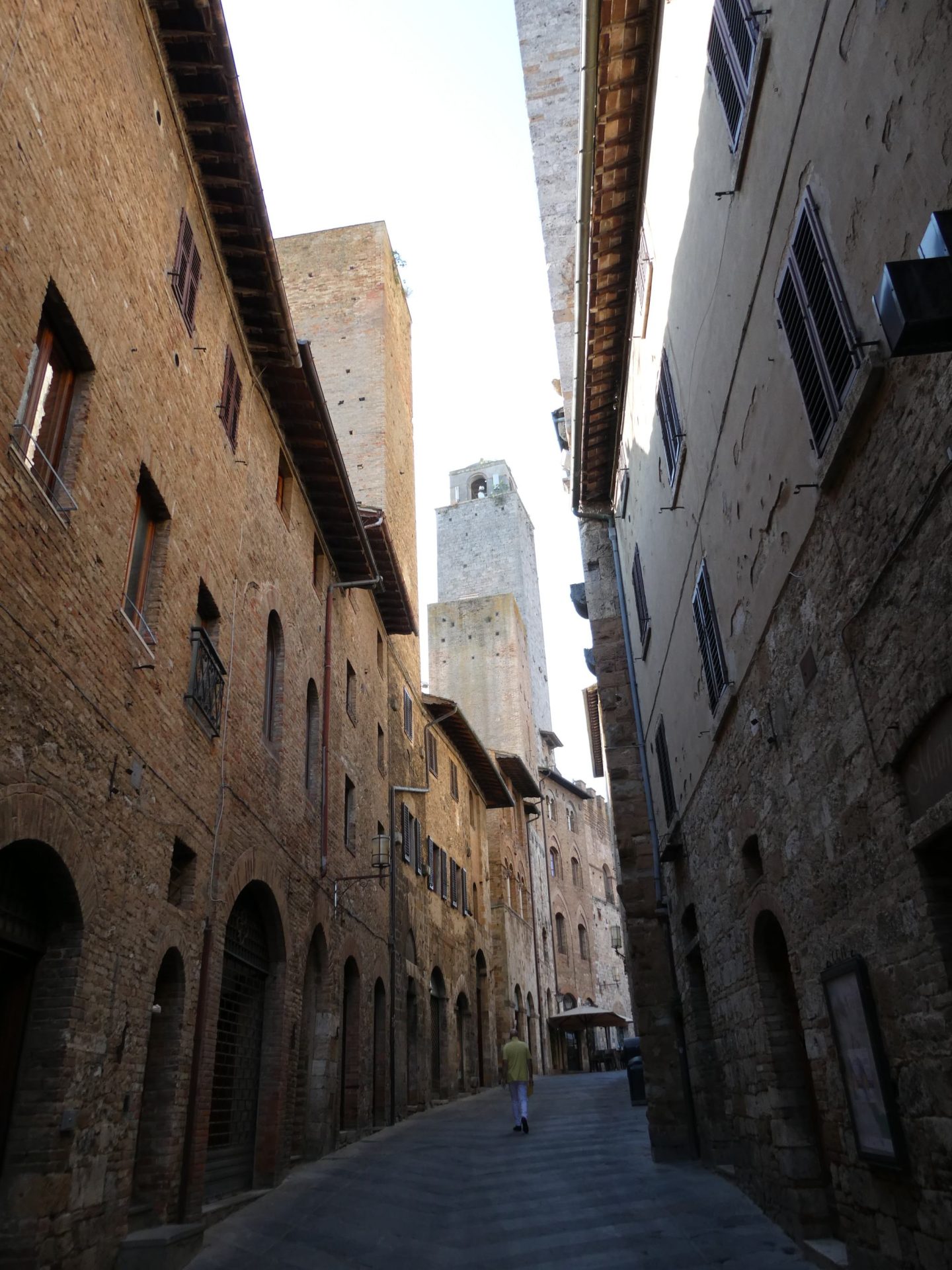
San Gimignano is famous for its towers. One of the town’s nicknames is ‘the Middle Ages Manhattan’ for its supposed similarity to New York’s skyscraper skyline. It’s safe to assume whoever came up with that one that had never been to Manhattan, although it is true that from afar the towers look more modern than medieval.

Between the 11th and 13th centuries, the town’s patrician families built 72 tower houses as symbols of their wealth and power. When the city’s fortunes declined, many fell into ruin, but 14 remain, including, ironically, the oldest one. Torre Rognoso was built as a family palazzo but the name means ‘scabby’ or ‘troubled’, referencing its later use as a debtors prison.

In 1255, the city passed an ordinance that no tower taller than the 51 metre Rognoso would be permitted. But ordinances are mere trifles for the clergy. In 1310, the local church commissioned the 54 metre high Torre Grosse, forever relegating Torre Rognoso to second tallest.

Torre del Diavolo (‘the Devil’s Tower’) was built around 1280. The owner claimed he went away on business and when he returned the tower was mysteriously taller. He blamed the Devil. We think maybe he was worried he’d breached the height limit. “It’s not my fault. It was the work of the Devil”.

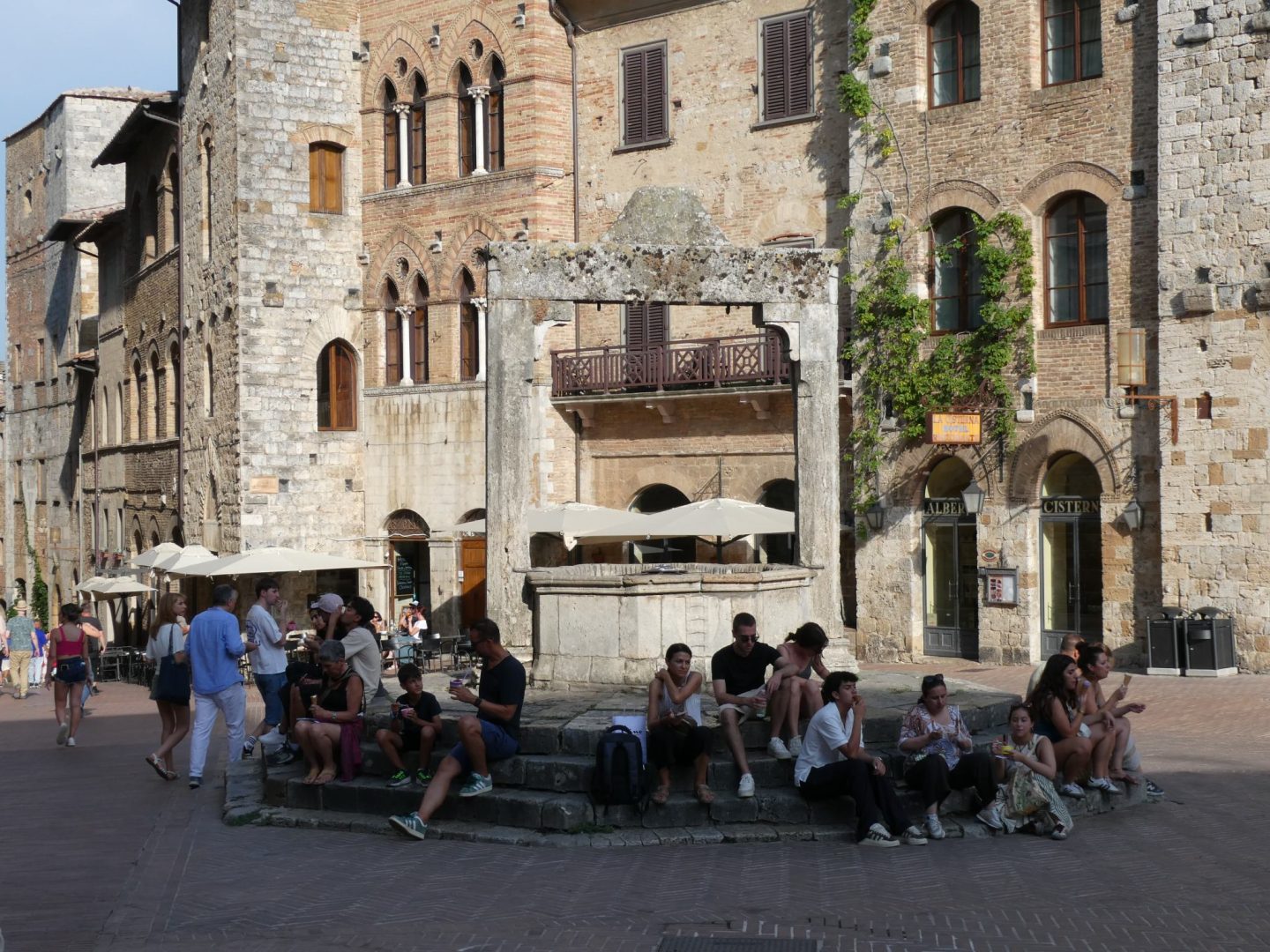
As you can see, San Gimi is mobbed by tourists. It’s a UNESCO World Heritage listed town, regrettably over-loved. The central piazza with its signature well is empty in the baking sun.

But as shade creeps across, it becomes a lounging spot for mobs of gelati-slurpers.
 There’s lots of shops firmly targeted at tourists.
 When the day-trippers are gone, it’s pleasant enough away from the central lanes.
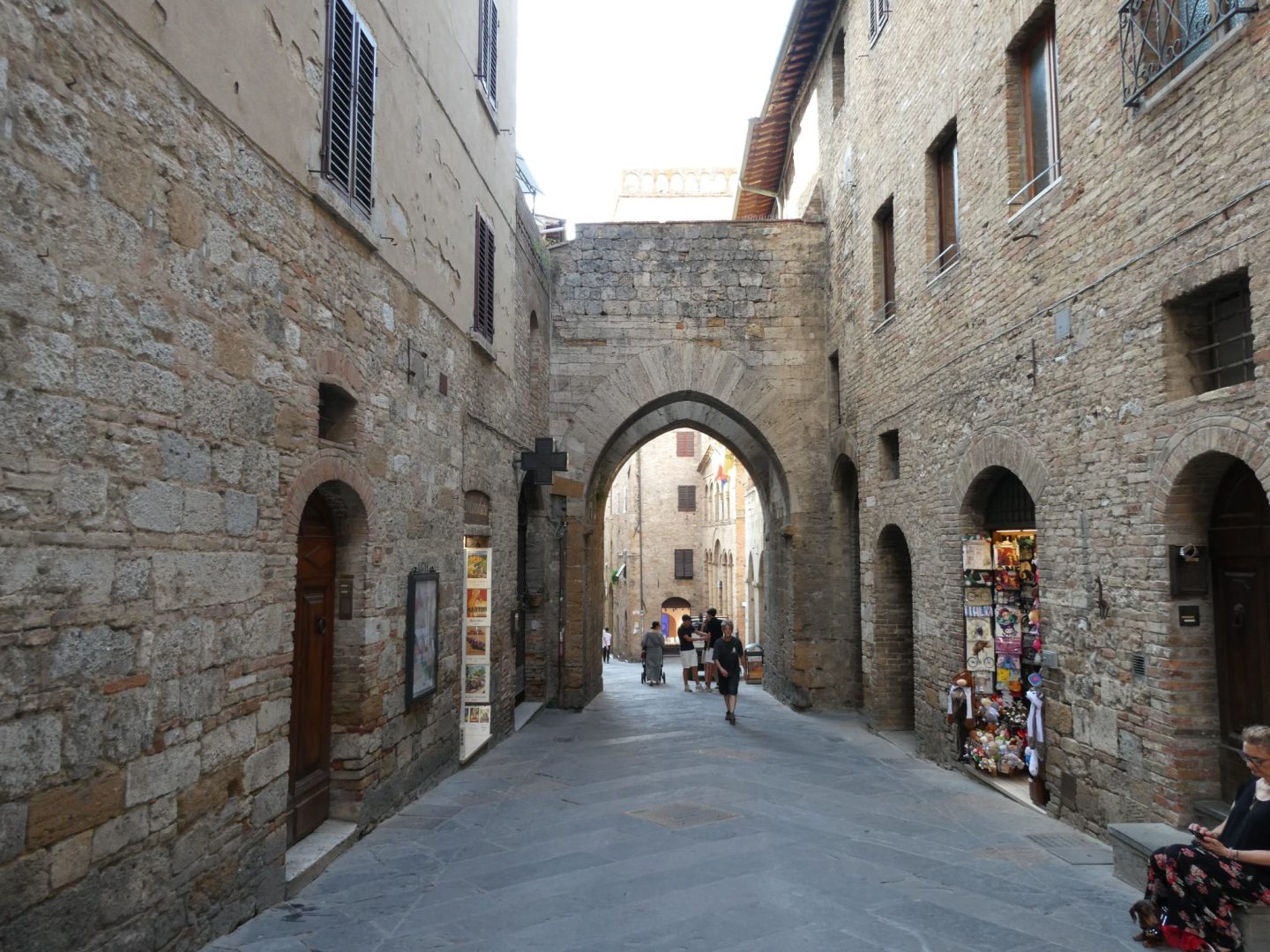 But every bit as pretty, and inexplicably devoid of people, was our next stop, Colle di Val d’Elsa.
High on a ridge, the historic city begins at an ancient gate, Porta Nova.
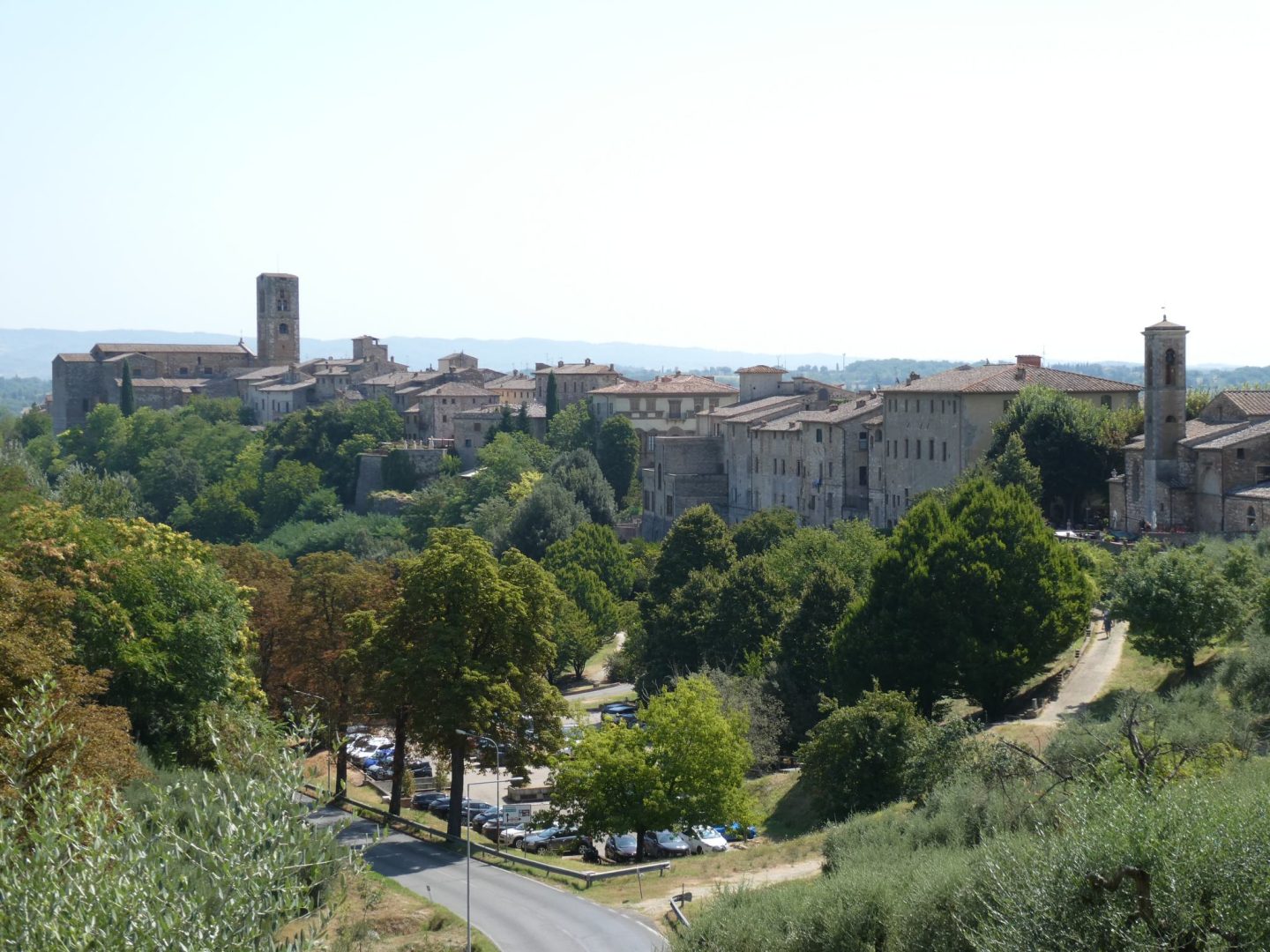
 The town flourished in the 15th, 16th and 17th centuries as a centre for the production of crystal glass, earning it the nickname ‘Italy’s Bohemia’ and crystal production still supports the economy of the more modern town below. We found the ancient part equal to San Gimignano in appeal, but without any towers, it seems that tourists do not come.
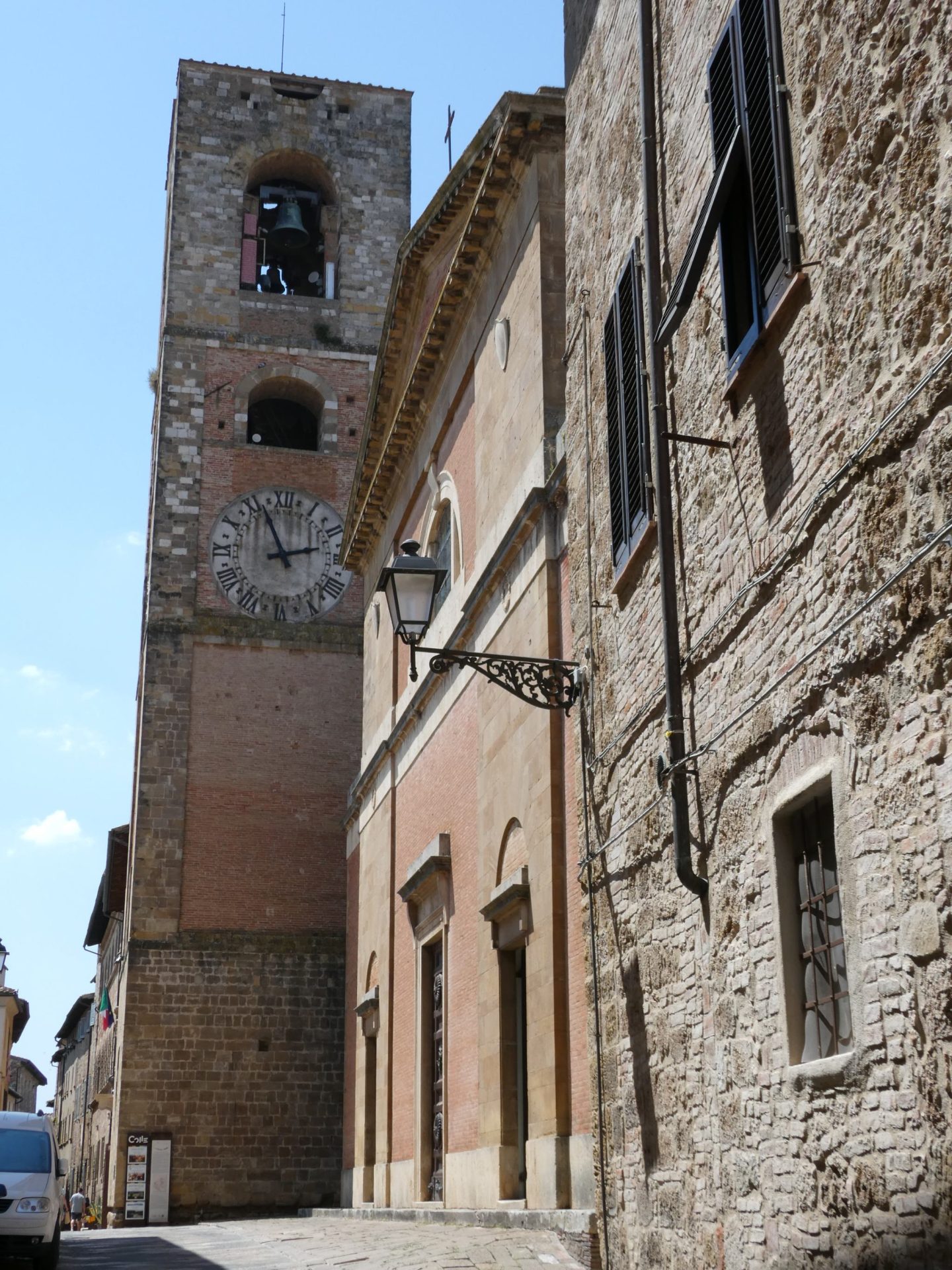
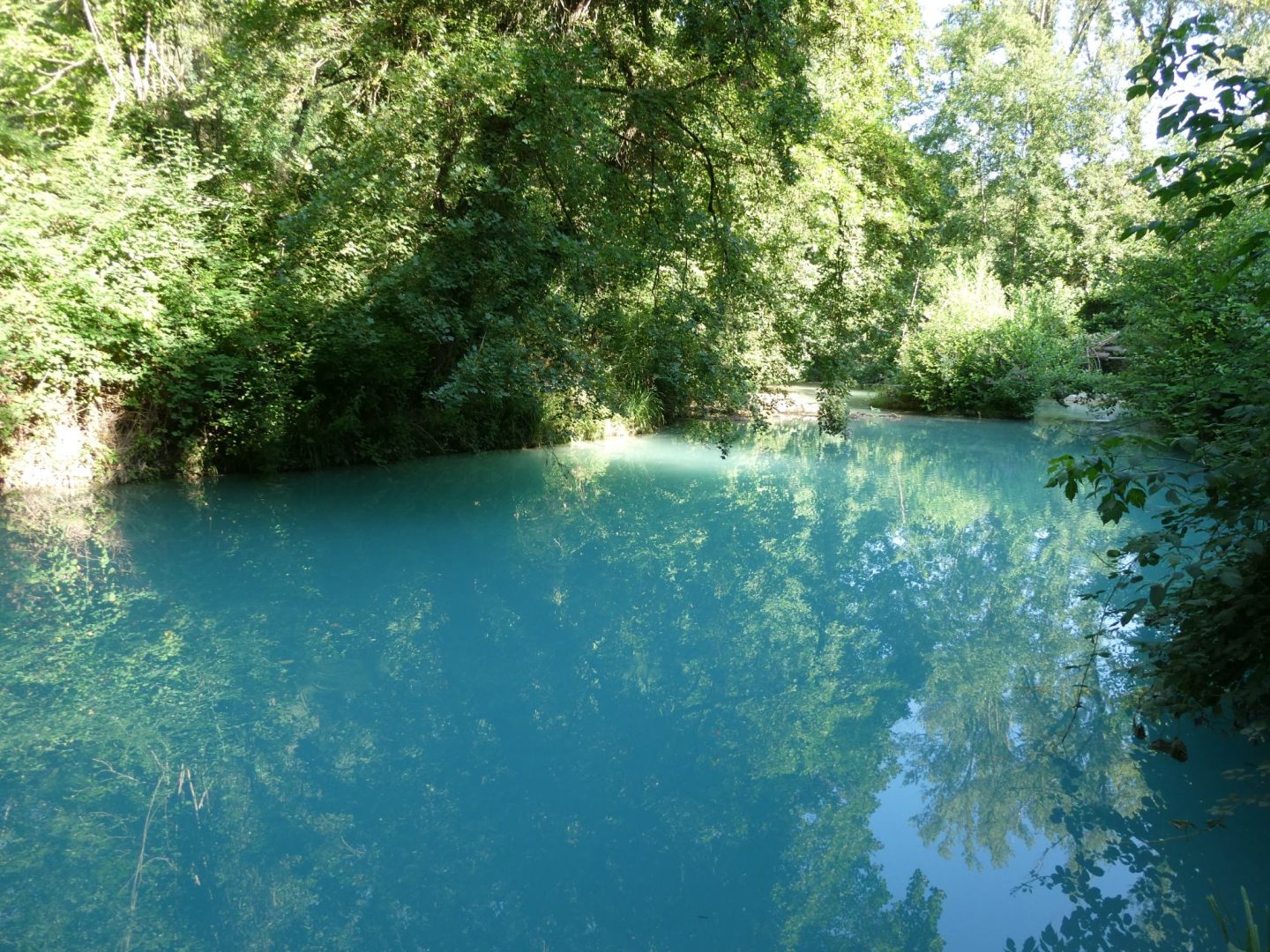
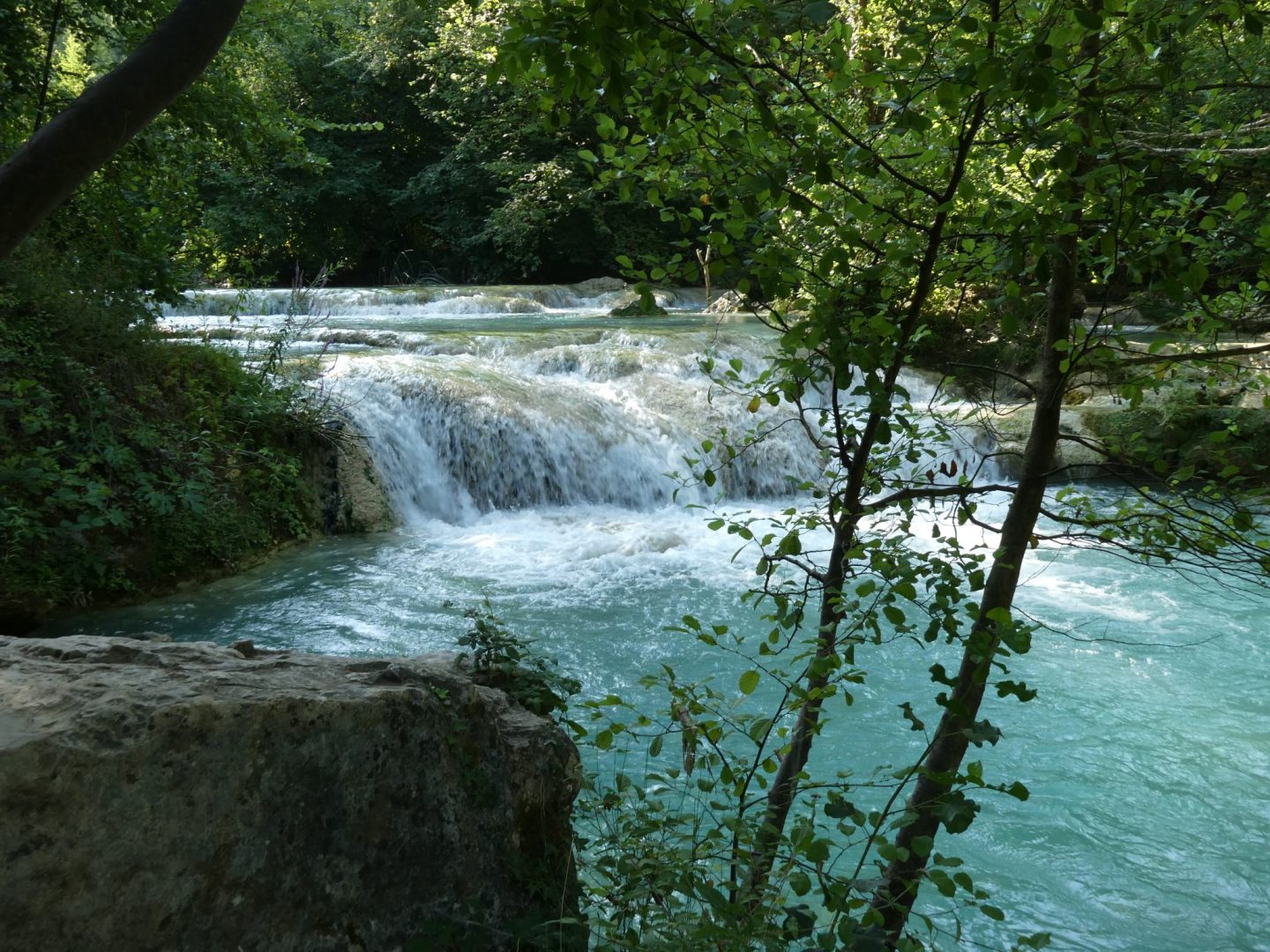
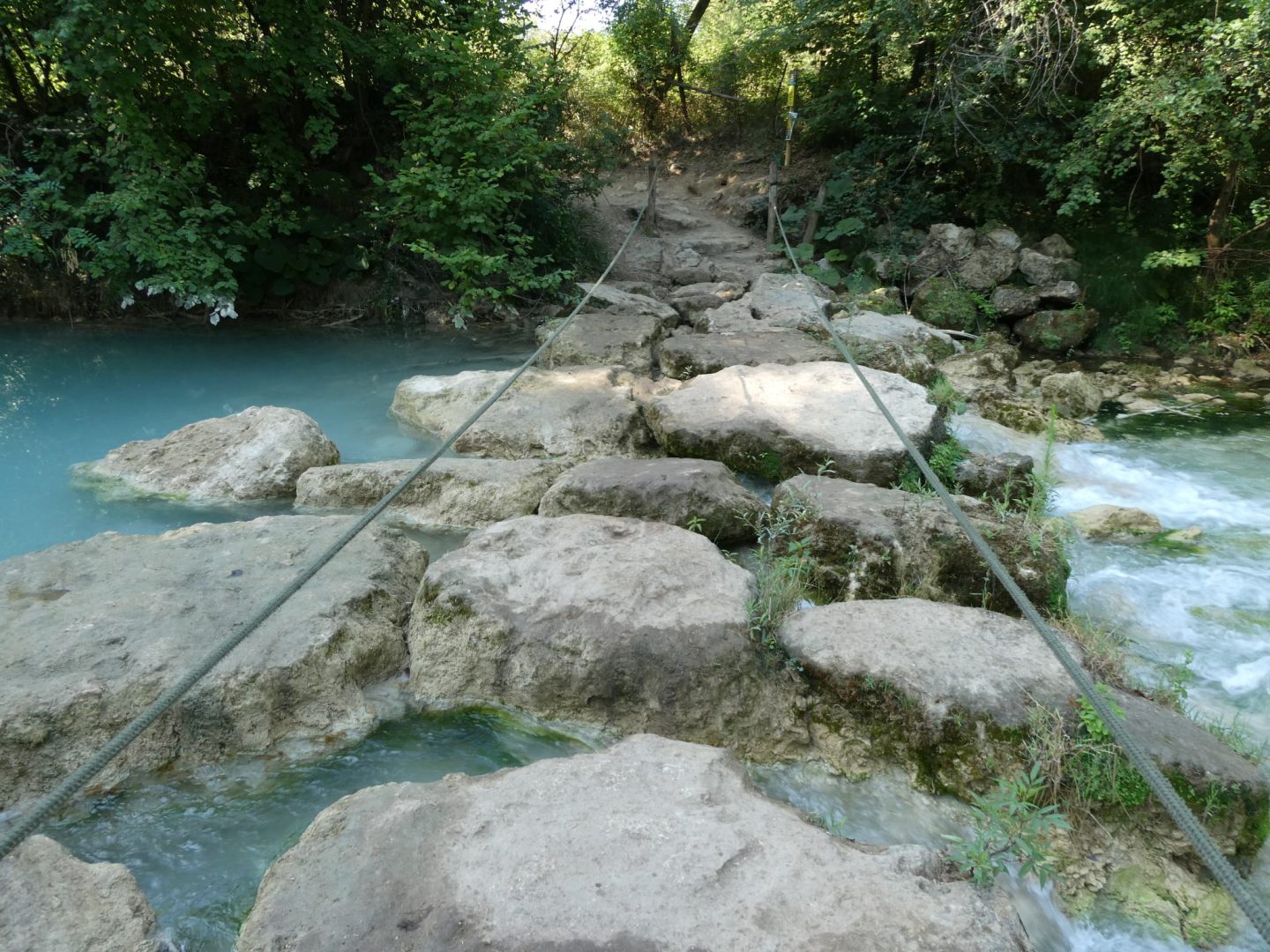
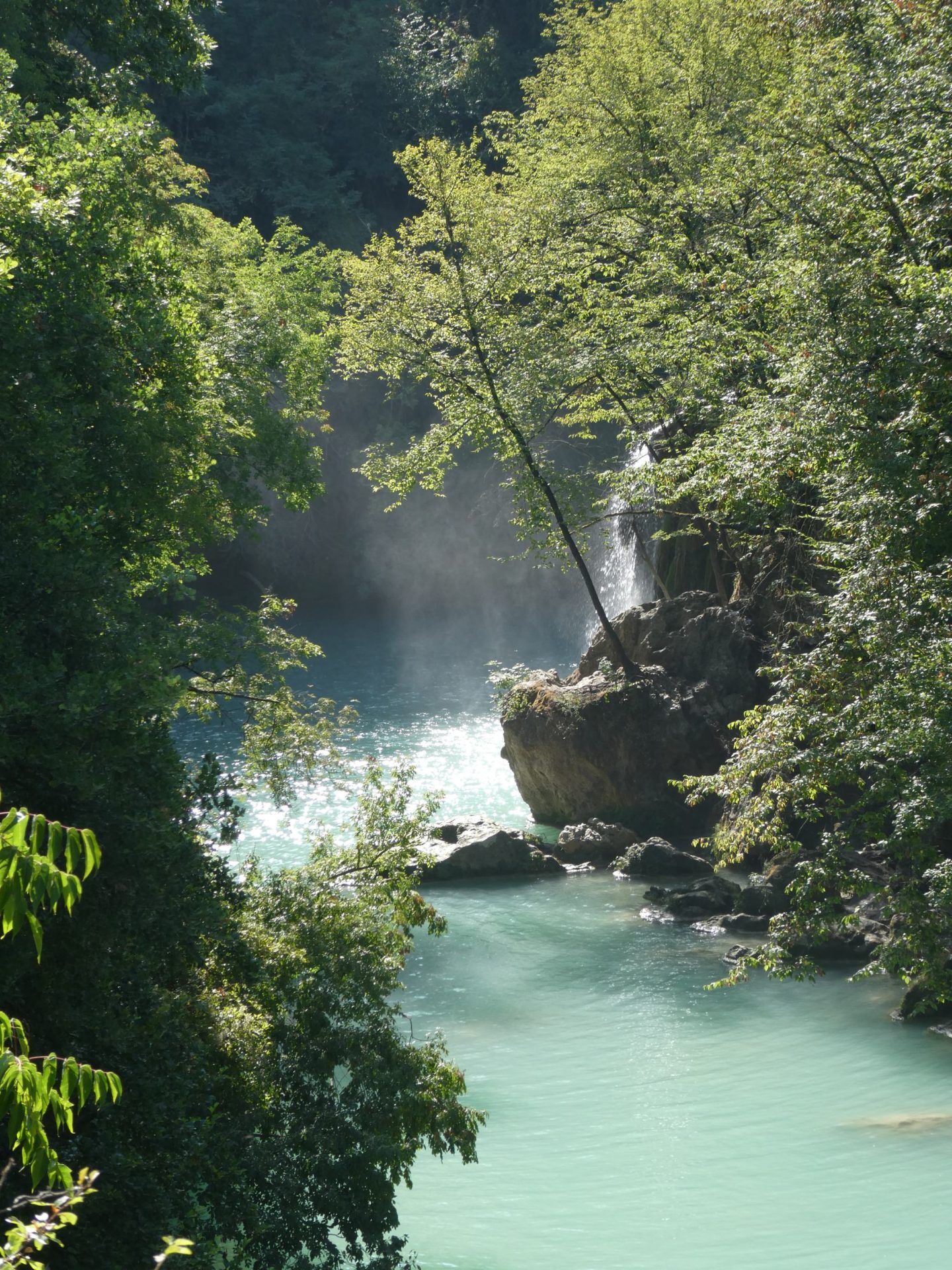
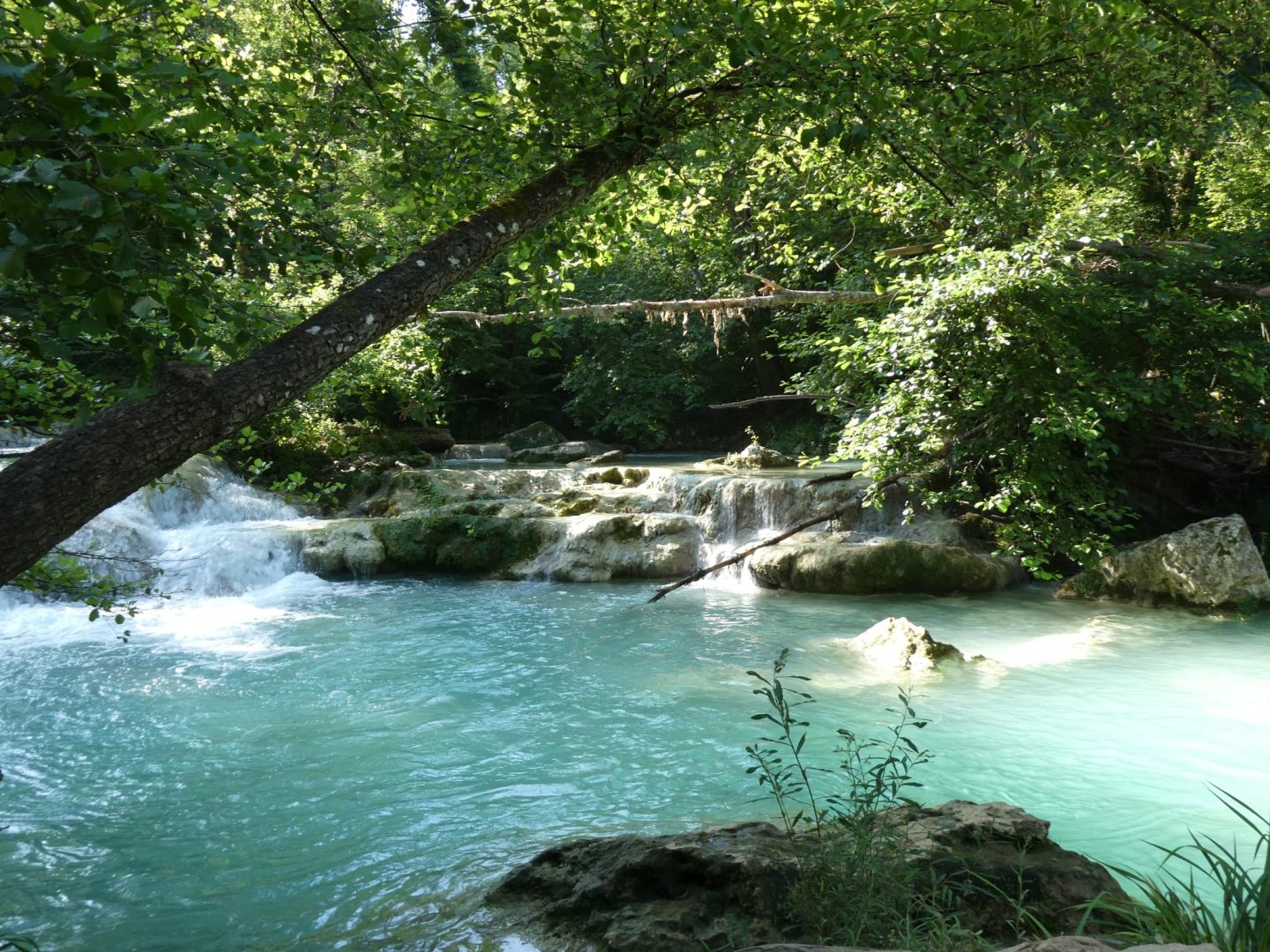
After leaving Colle di Val D’Elsa, a morning walk crisscrossing the Elsa River was one of the highlights of the week. Almost cool under the forest shade, stunning water colour and gentle cascades.
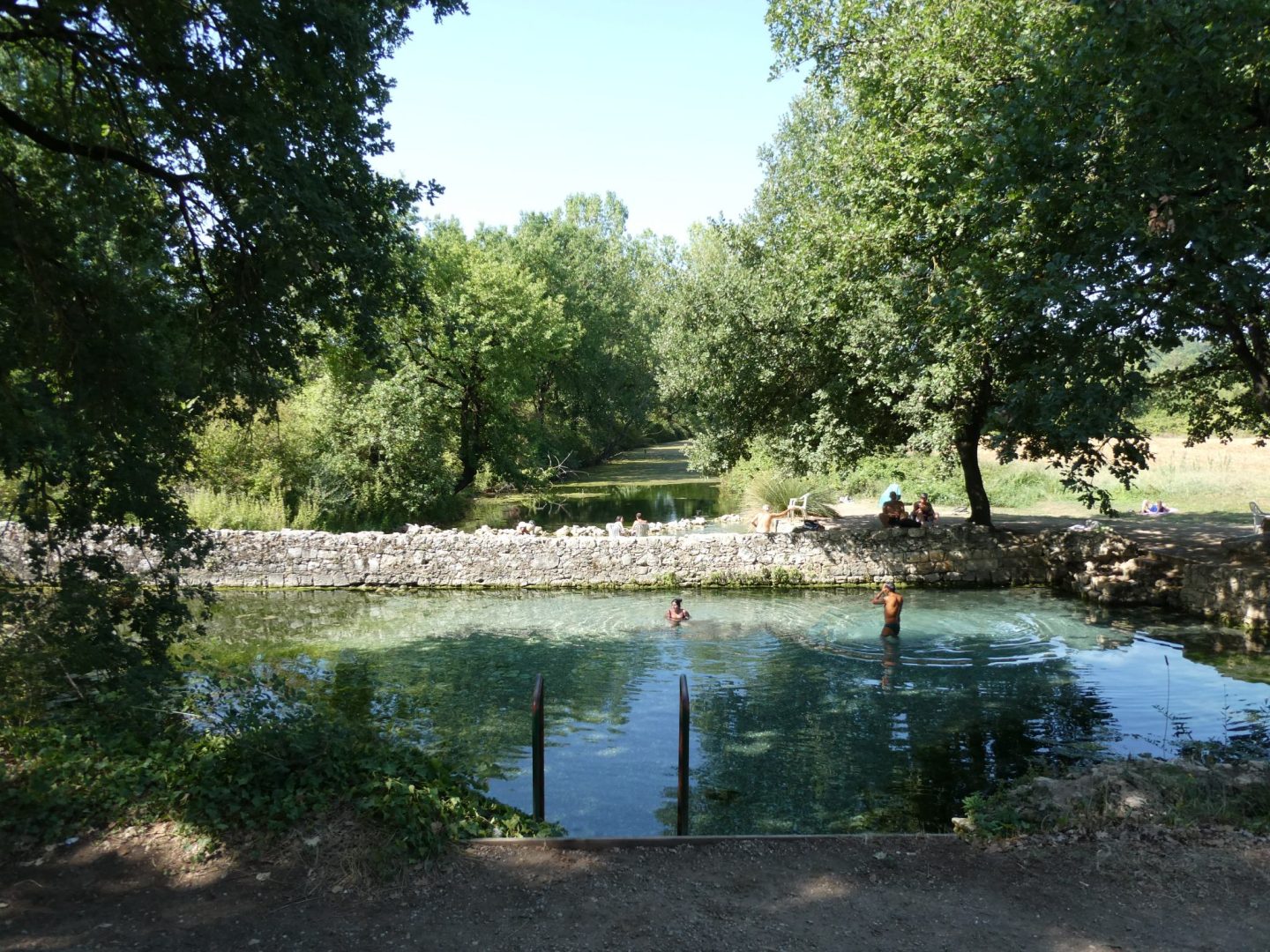
Later that day we passed Le Caldane, a system of stone-lined thermal pools originally built by the Etruscans and used in Roman times as therapeutic waters for skin ailments. We guess a centurion from the old days left the hot water running for too long, as the pools are no longer hot. But at today’s temperature, who wants a hot bath anyway. They are a constant 20 degrees Celsius, perfect for a cooling dip.

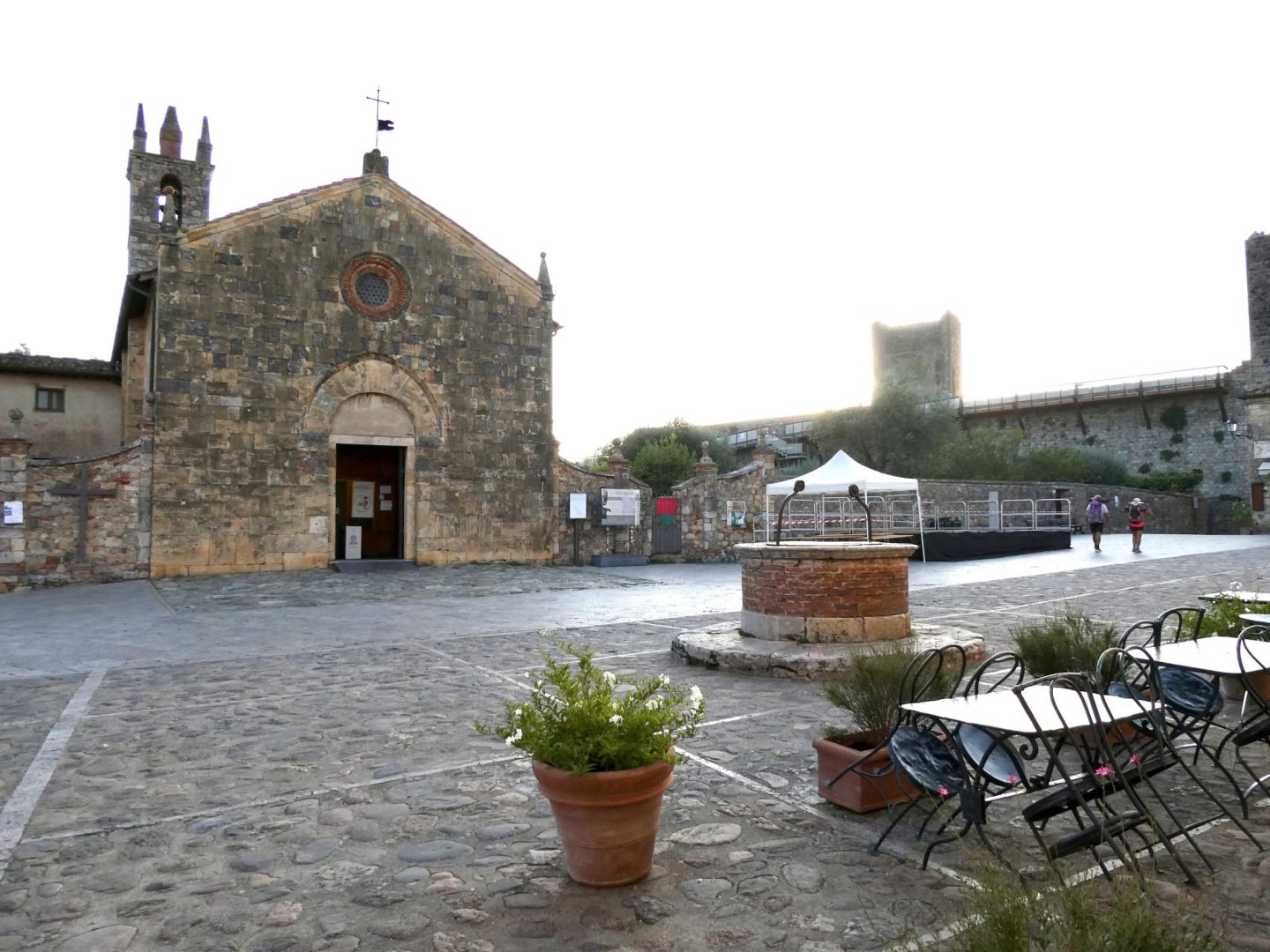
 Our next night was in Monteriggione, another tiny stone town that we loved more than the bustle of San Gimignano. A compact village completely ringed by a preserved wall.
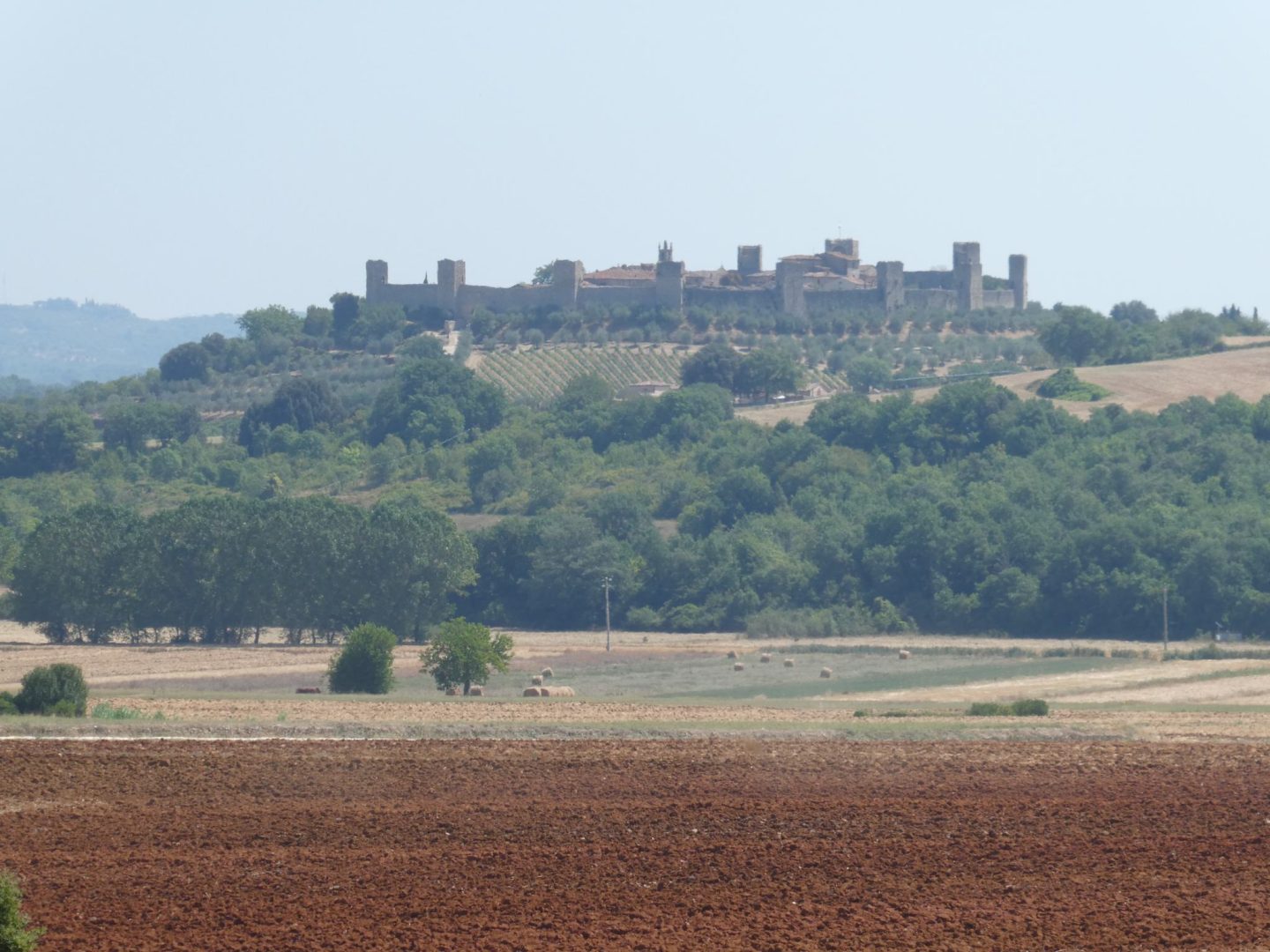
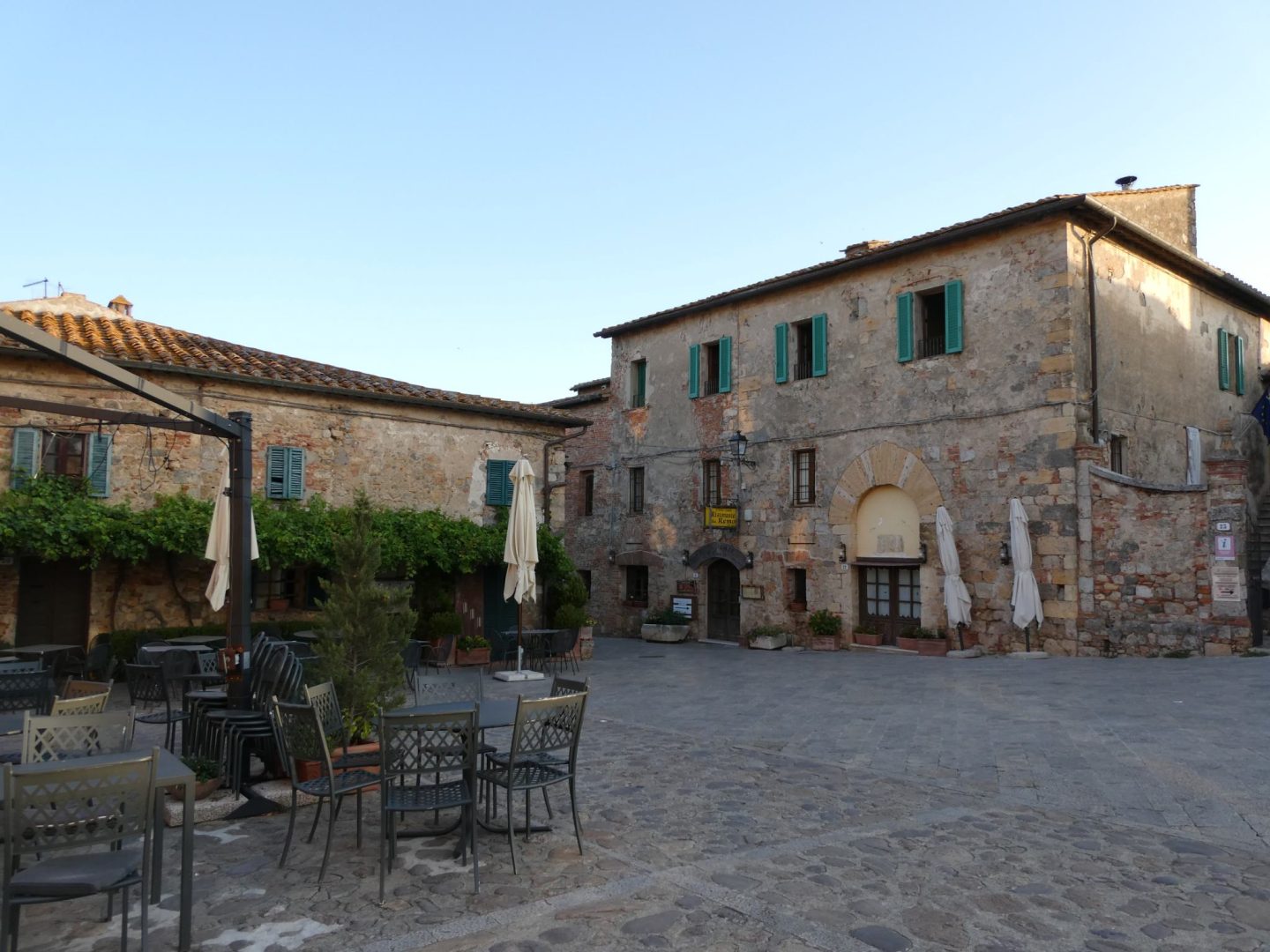
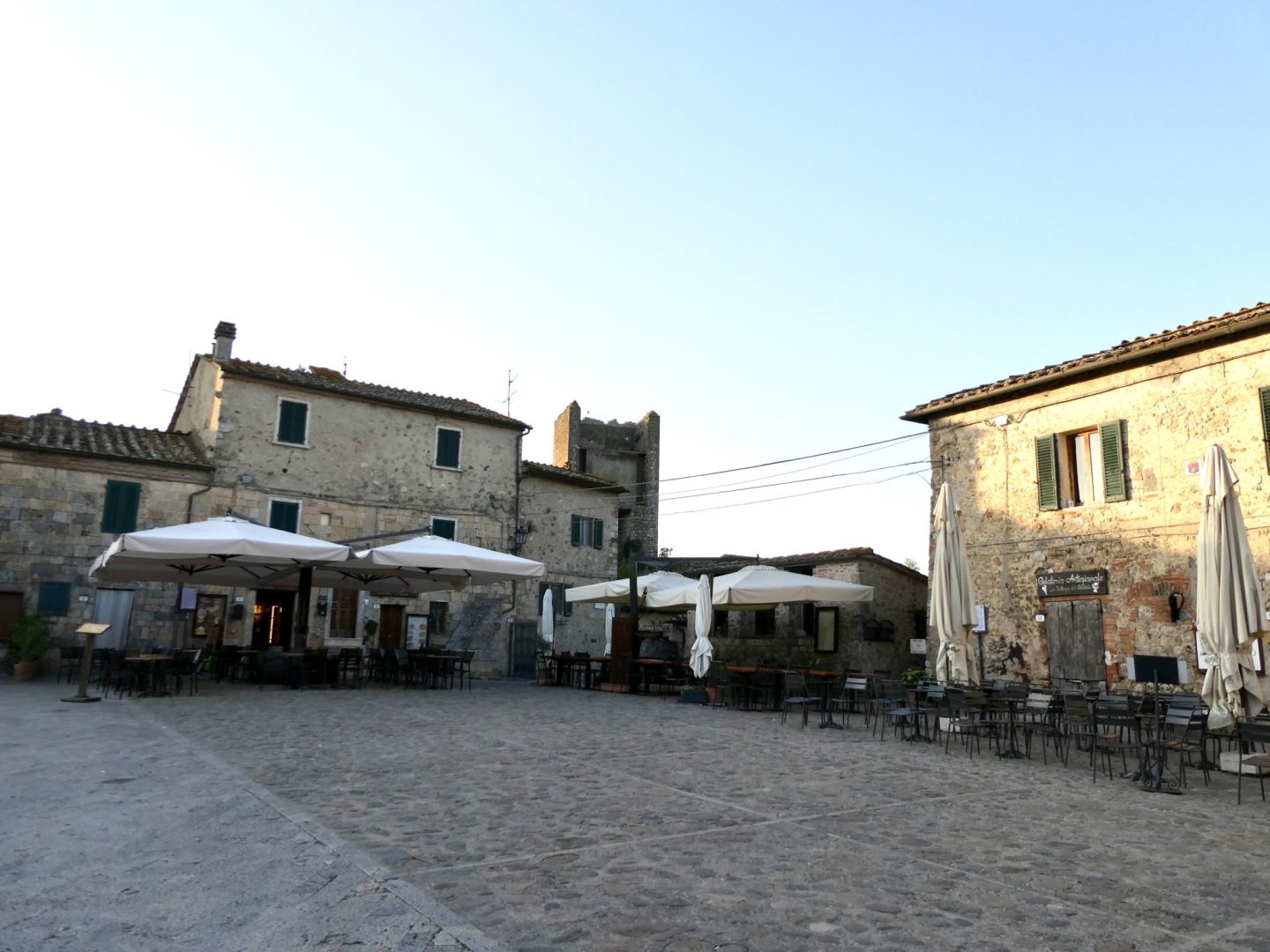
And within, a piazza with a few restaurants, gelaterias, a church and not much else. We stayed in beautiful apartments above an enoteca appropriately called Rooms and Wine. Says it all, really.
As we wound our way toward Siena, the remnants of castles kept popping up, some restored as private houses, apartments or boutique holiday accomodation.
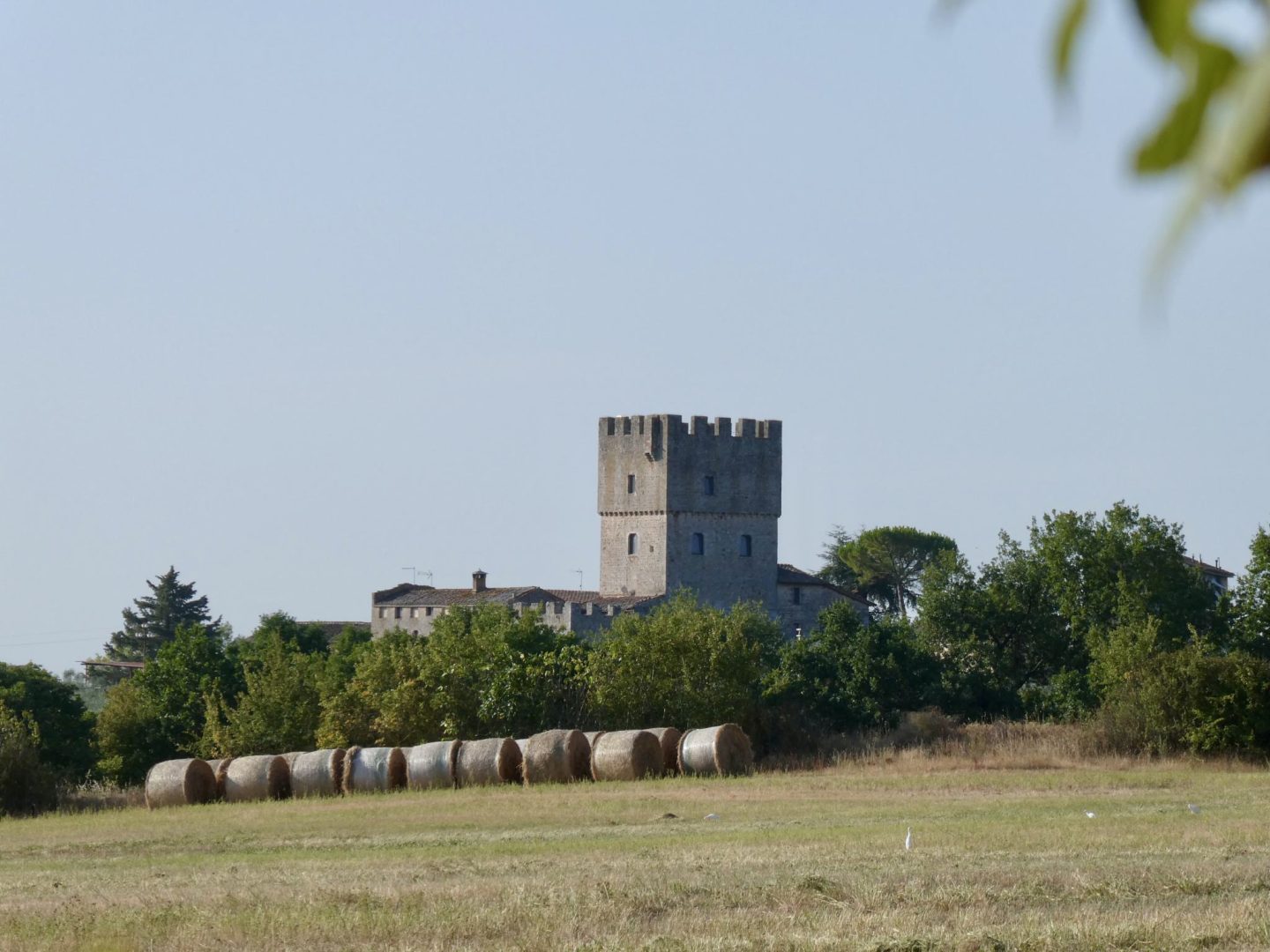
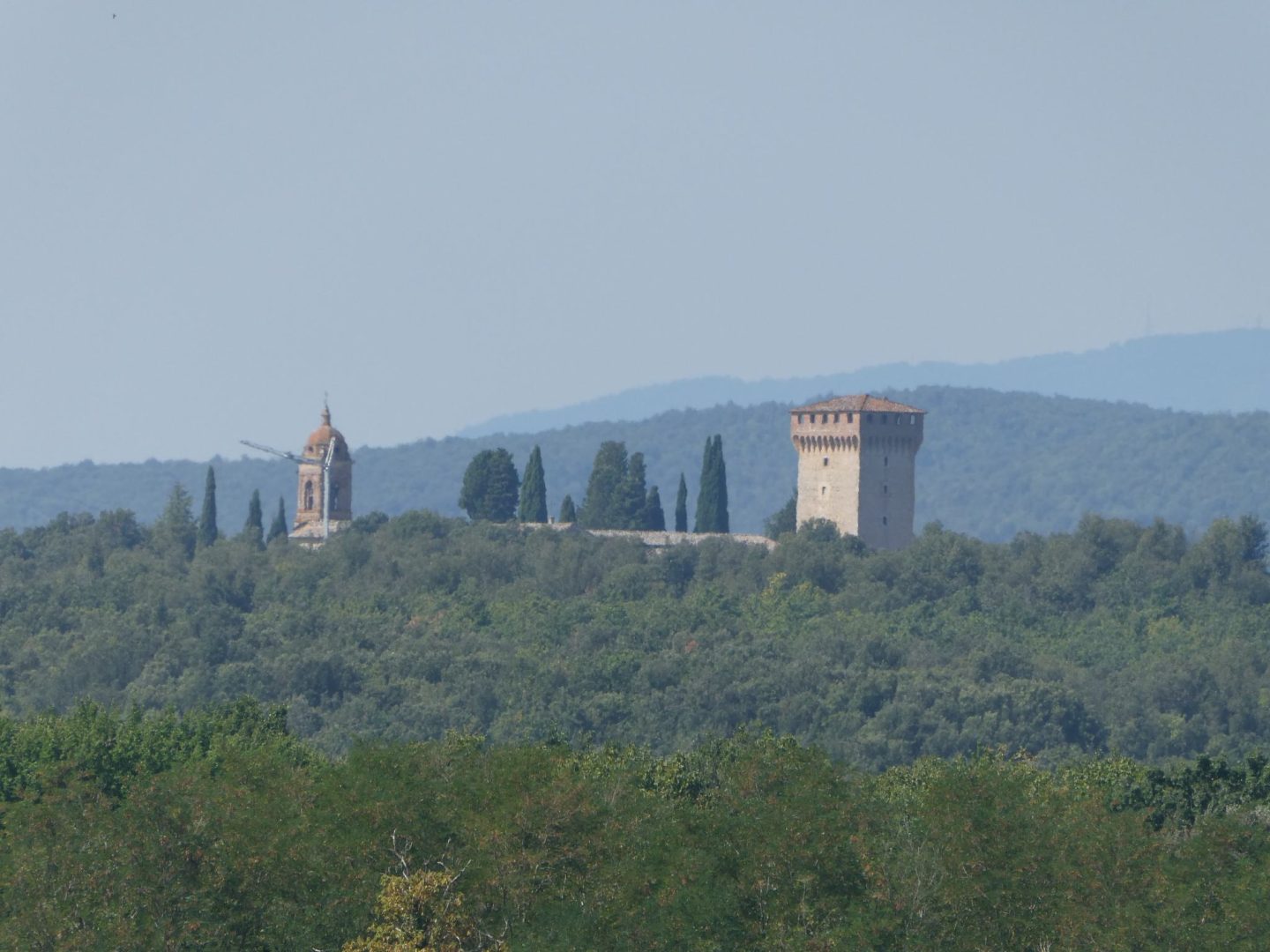
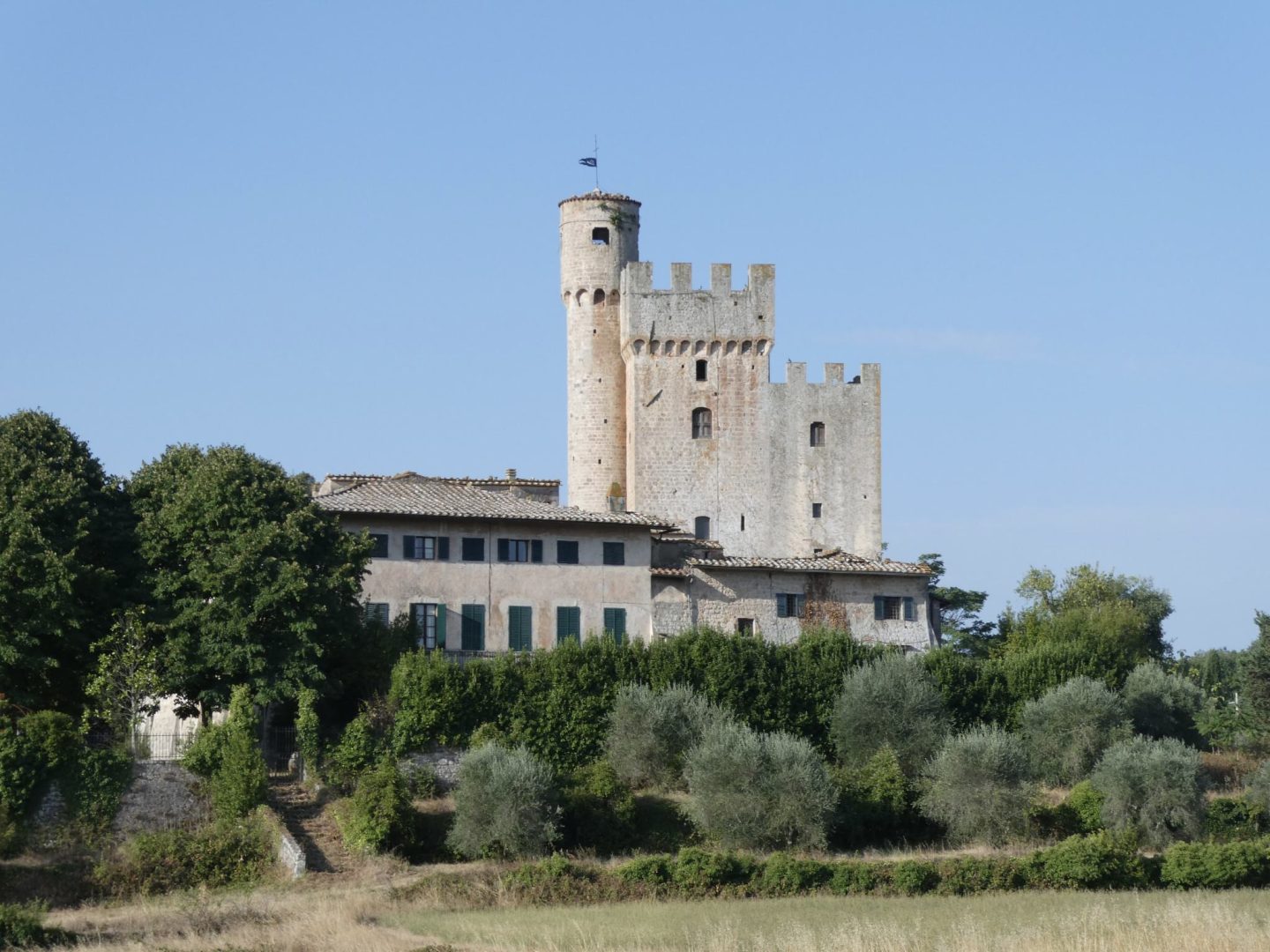
Most have square towers, but Castello della Chiocciola has one of the few cylindrical ones. A spiral stairway inside gives the castle its name, which means Snail Castle.
 We ended the week in Siena. What a beautiful city, and although a major tourist draw, it’s not completely overwhelmed. Maybe because it’s still a working, living city and not just given over to tourism.
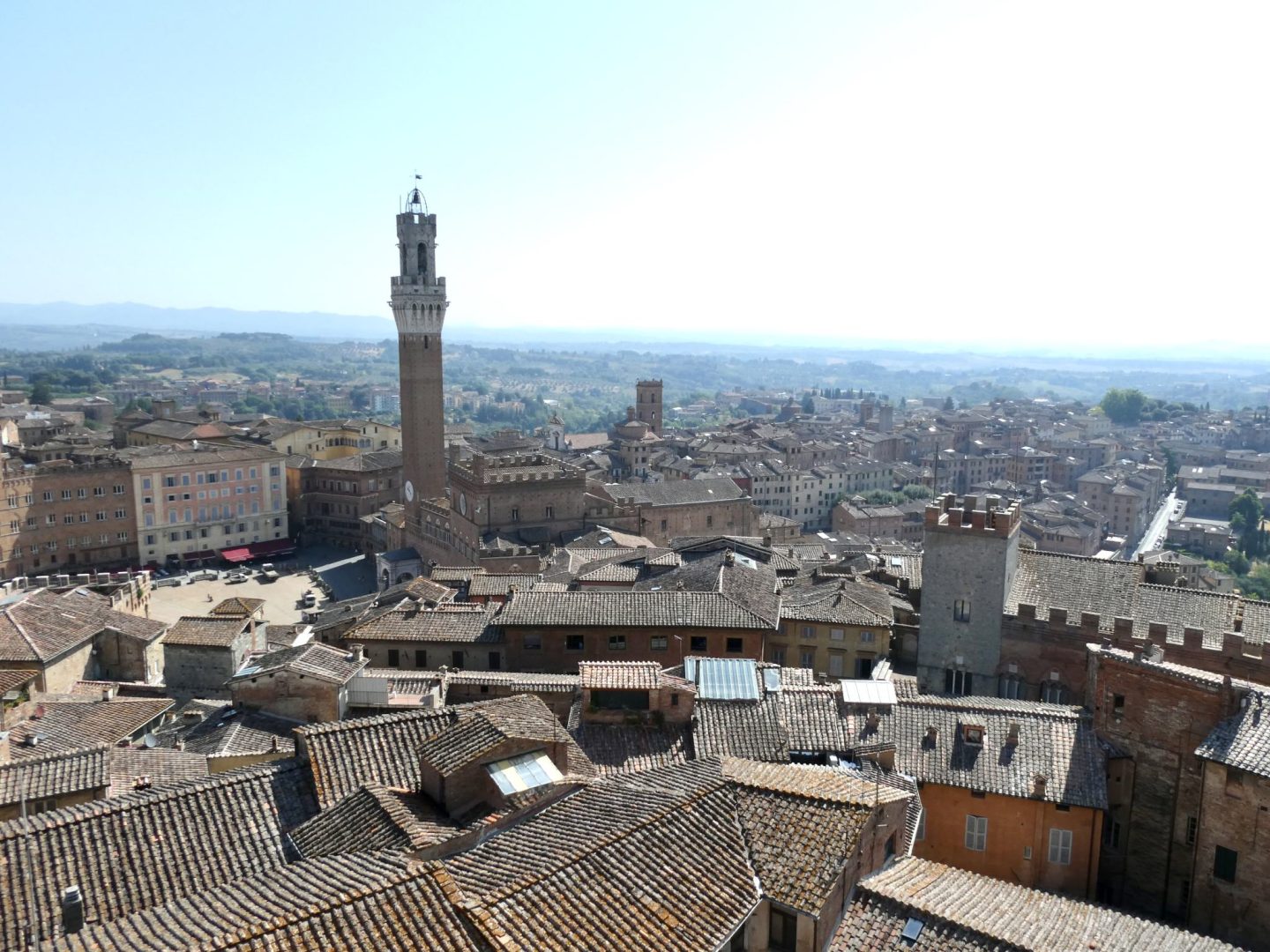
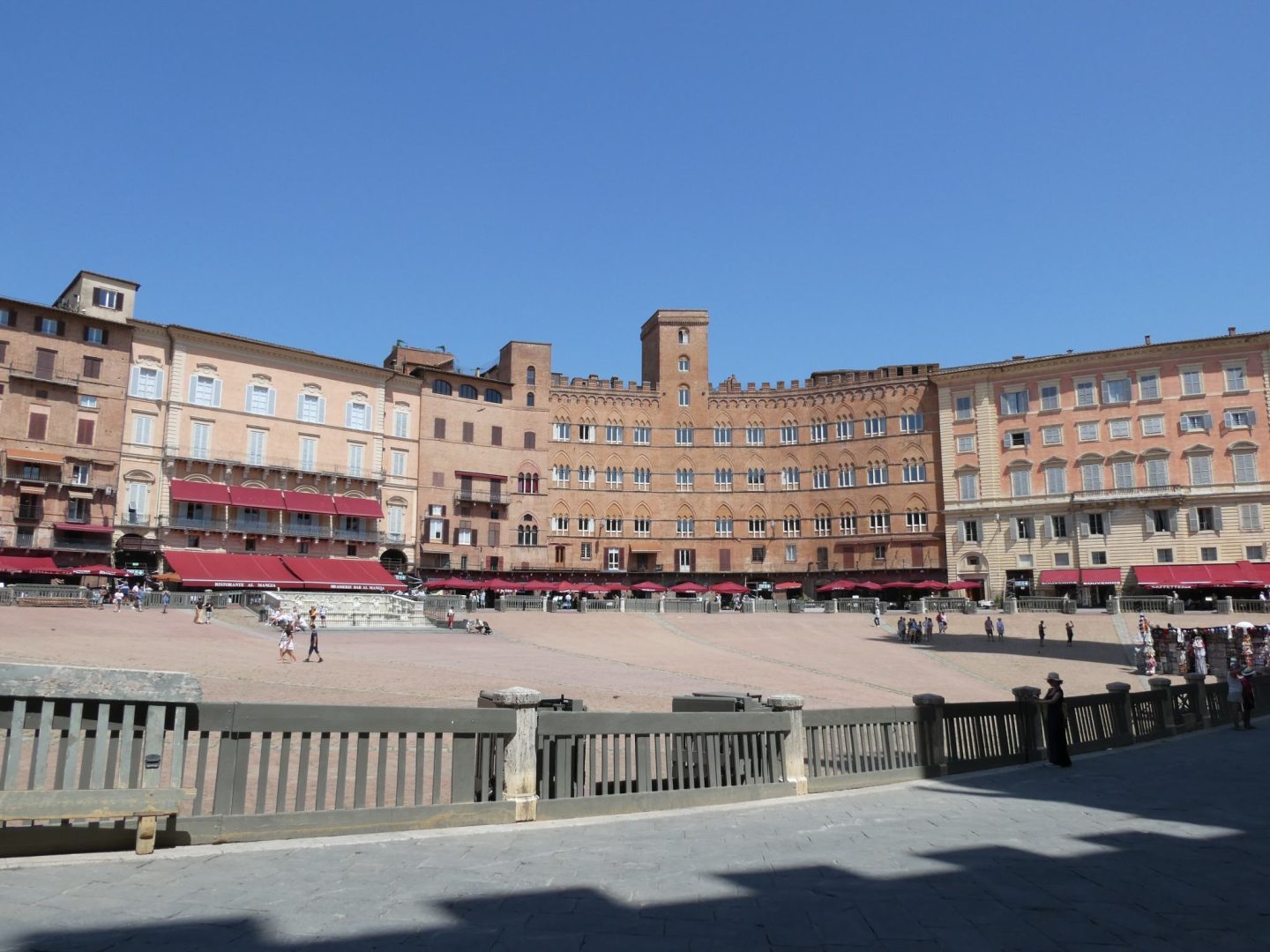
Siena’s Piazza del Campo is considered one of Europe’s greatest medieval squares, designed by the families who ruled the city at the height of its powers and whose palazzos lined it. Enormous for its day, it could hold the city’s entire population of 50,000.
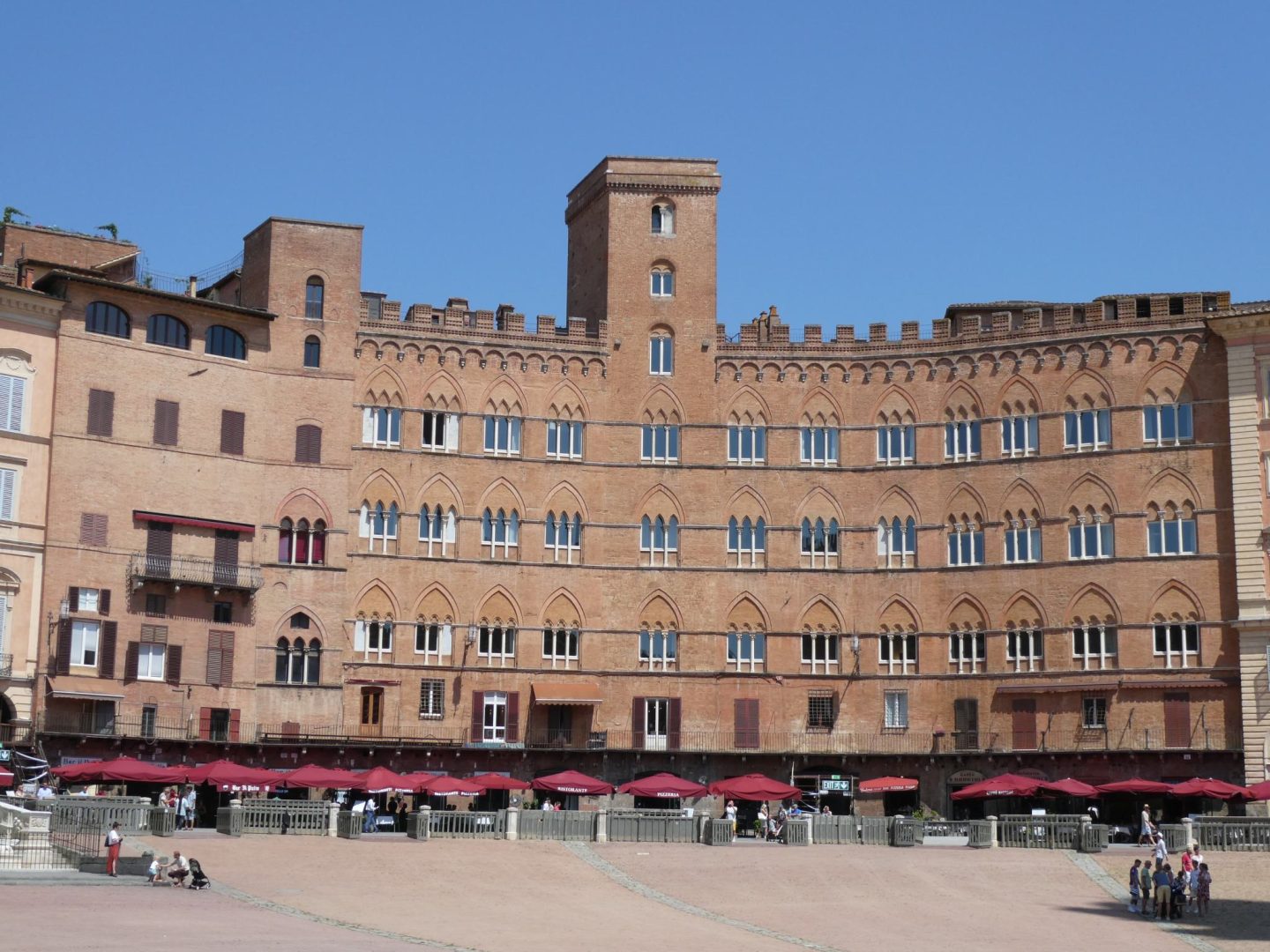
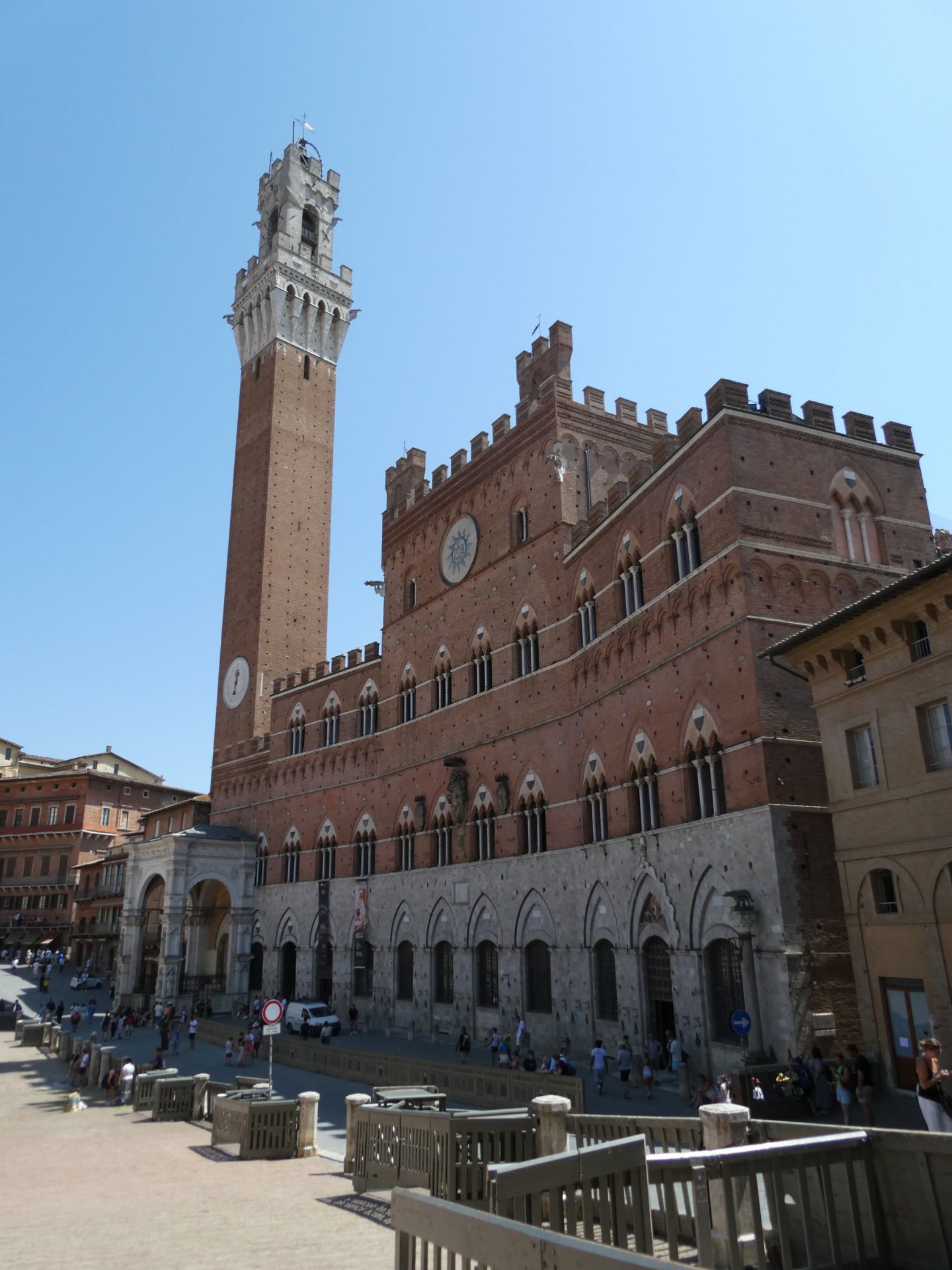
In a tradition dating back to the 17th century, every year on 2 July and 16 August, the Palio di Siena sees ten horses race three circuits of the piazza. They represent ten of the seventeen contrade, or city wards of Siena. Thousands of spectators fill the piazza and the balconies of the surrounding buildings.
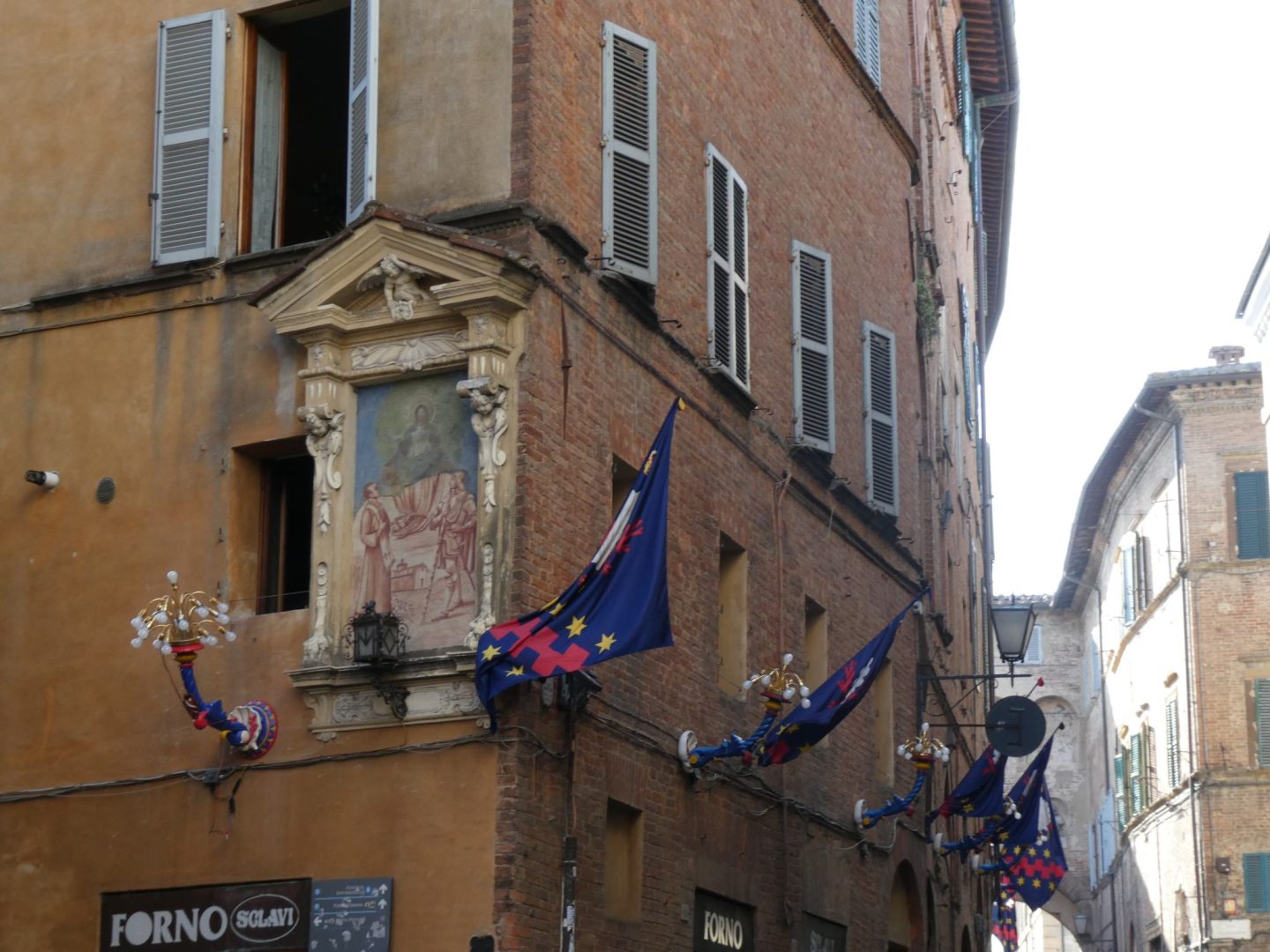
The cobblestones are covered with a particular mix of river sand and volcanic clay to reduce impact for the horses, but the sharp turns, bareback riding and breakneck speed mean the race is fraught with injury risk for the horses. Still, it is a deeply rooted cultural tradition much cherished by the city’s residents. We were there in the lead up. The flags of the contrades were everywhere and temporary infrastructure was literally appearing overnight.
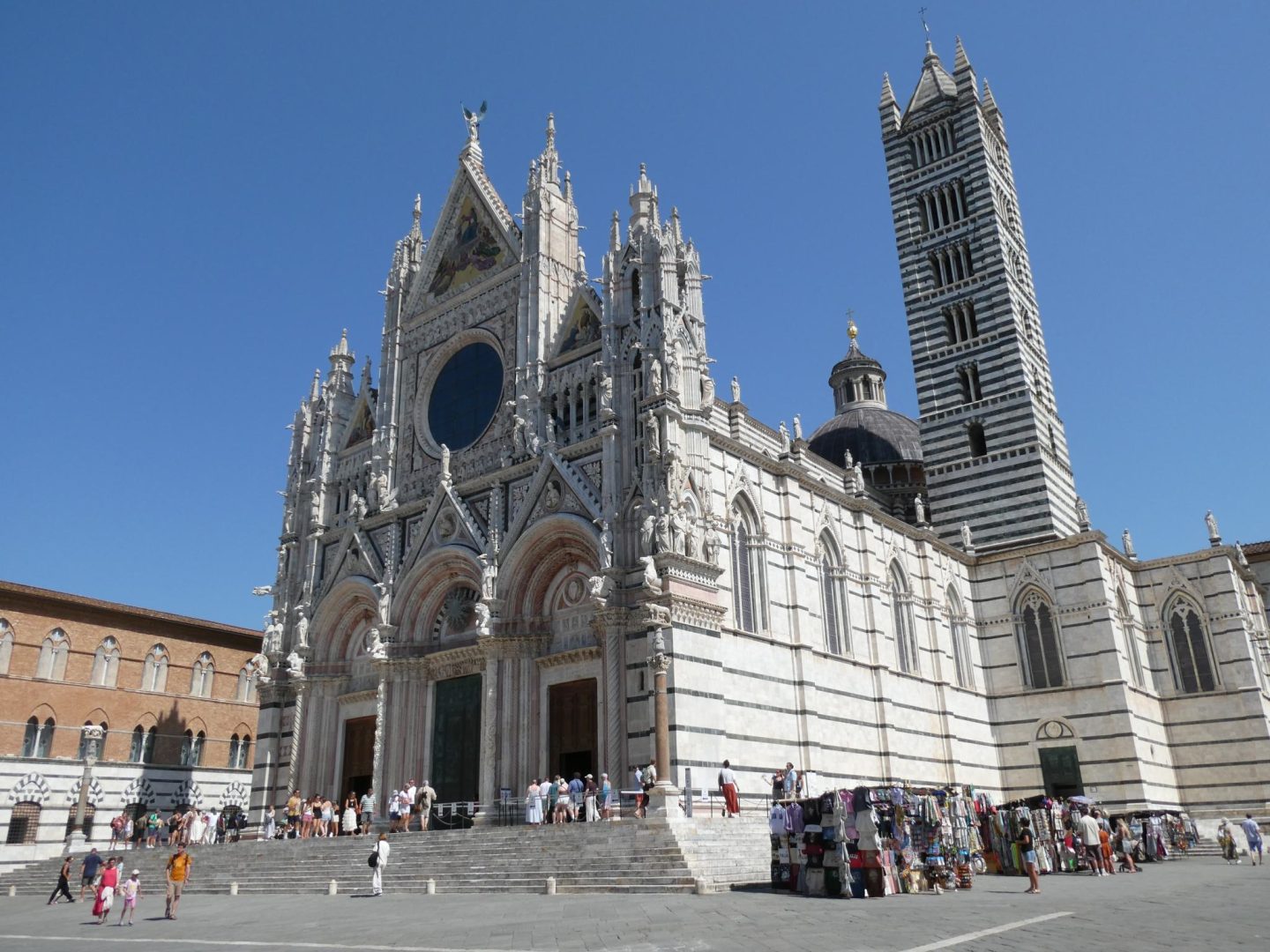
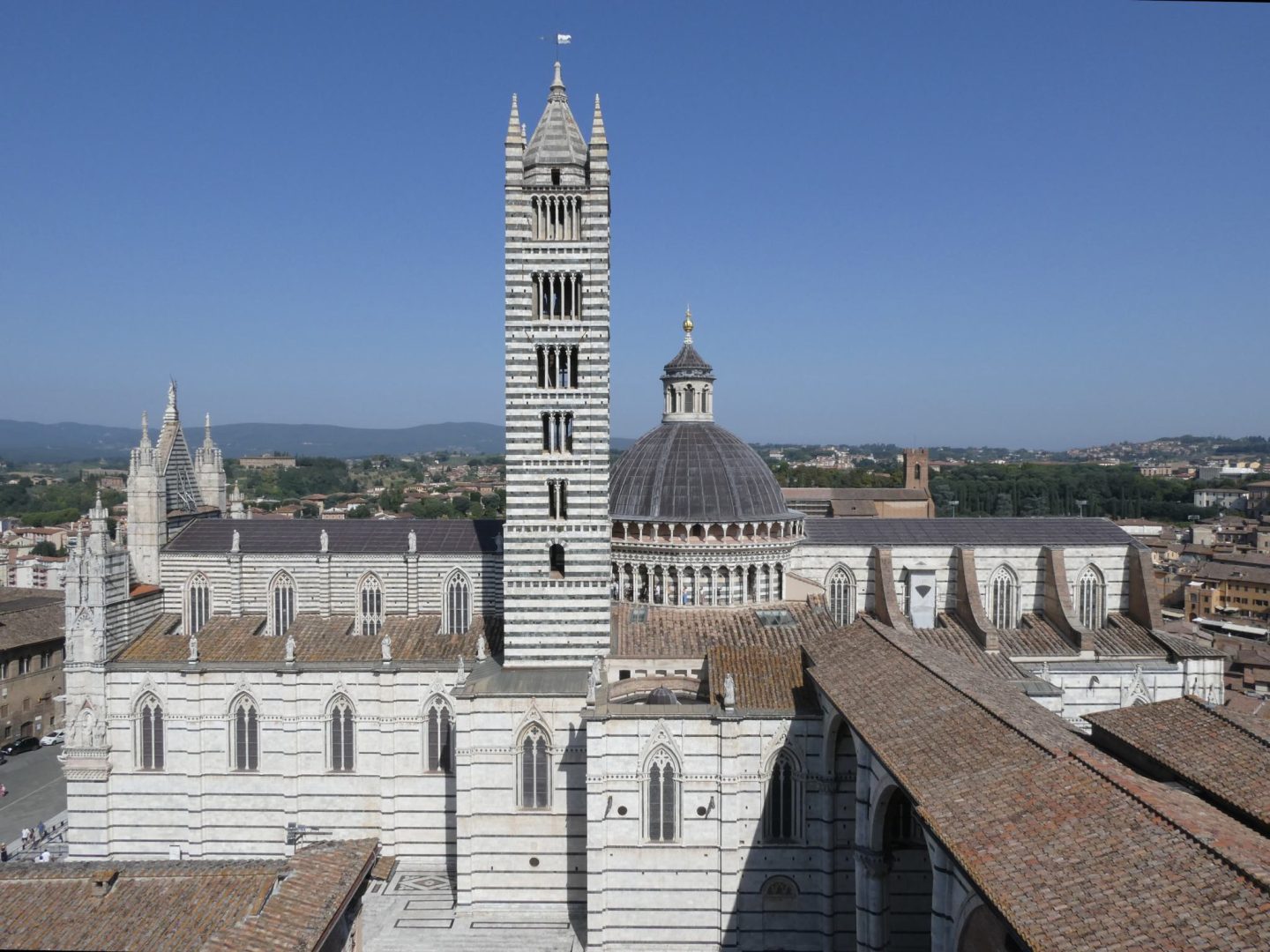
Siena Cathedral needs no introduction.
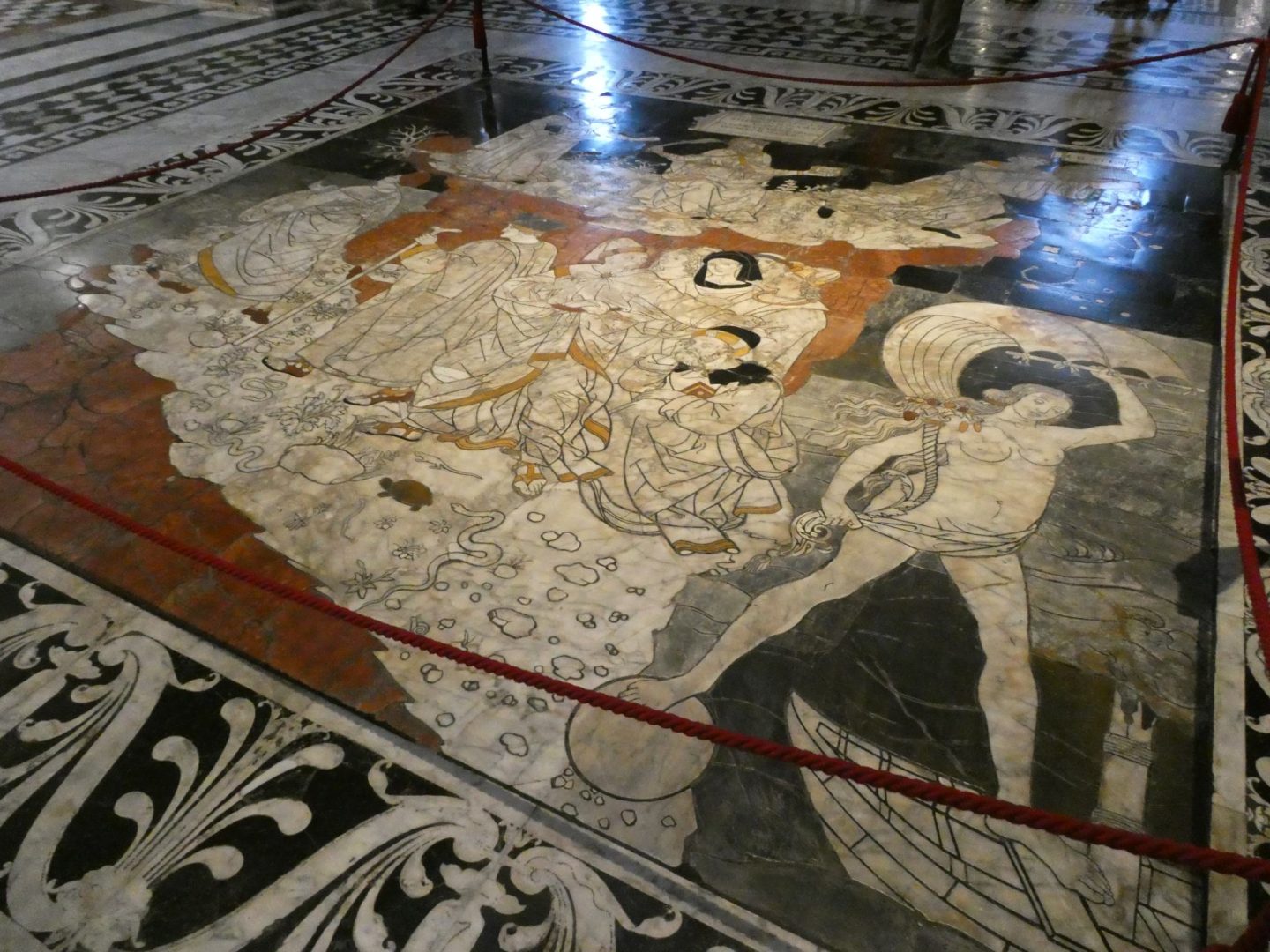
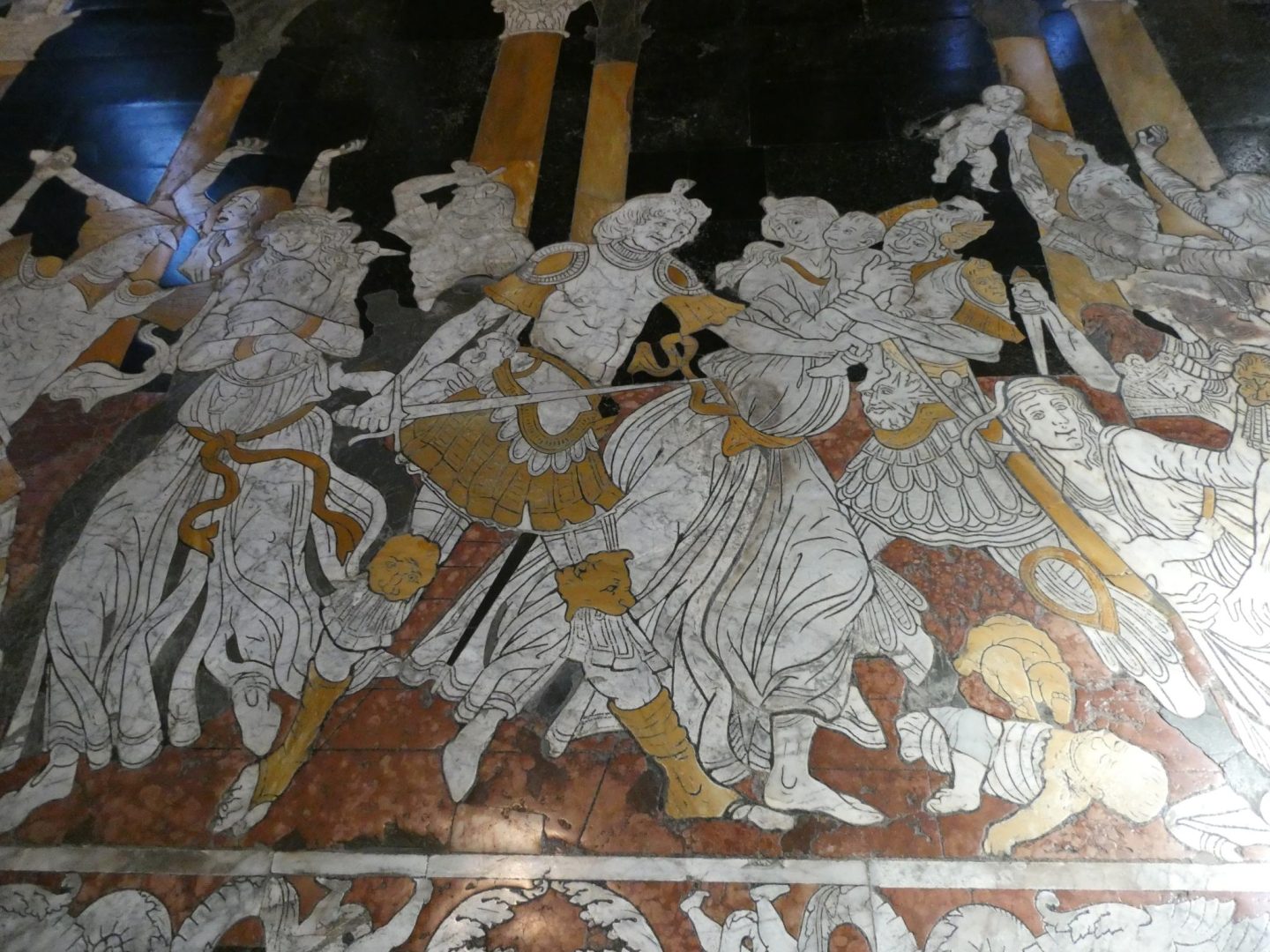
 Inside, 56 intricately inlaid marble panels created between the 14th and 19th centuries have been declared “the most magnificent floor ever made”. They are covered for protection except between August and November 1st, so we were lucky to see them.

The Cathedral, its crypt, nearby Museum Santa Maria della Scala and Palazzo Publico have some of the best frescoes we’ve ever seen.
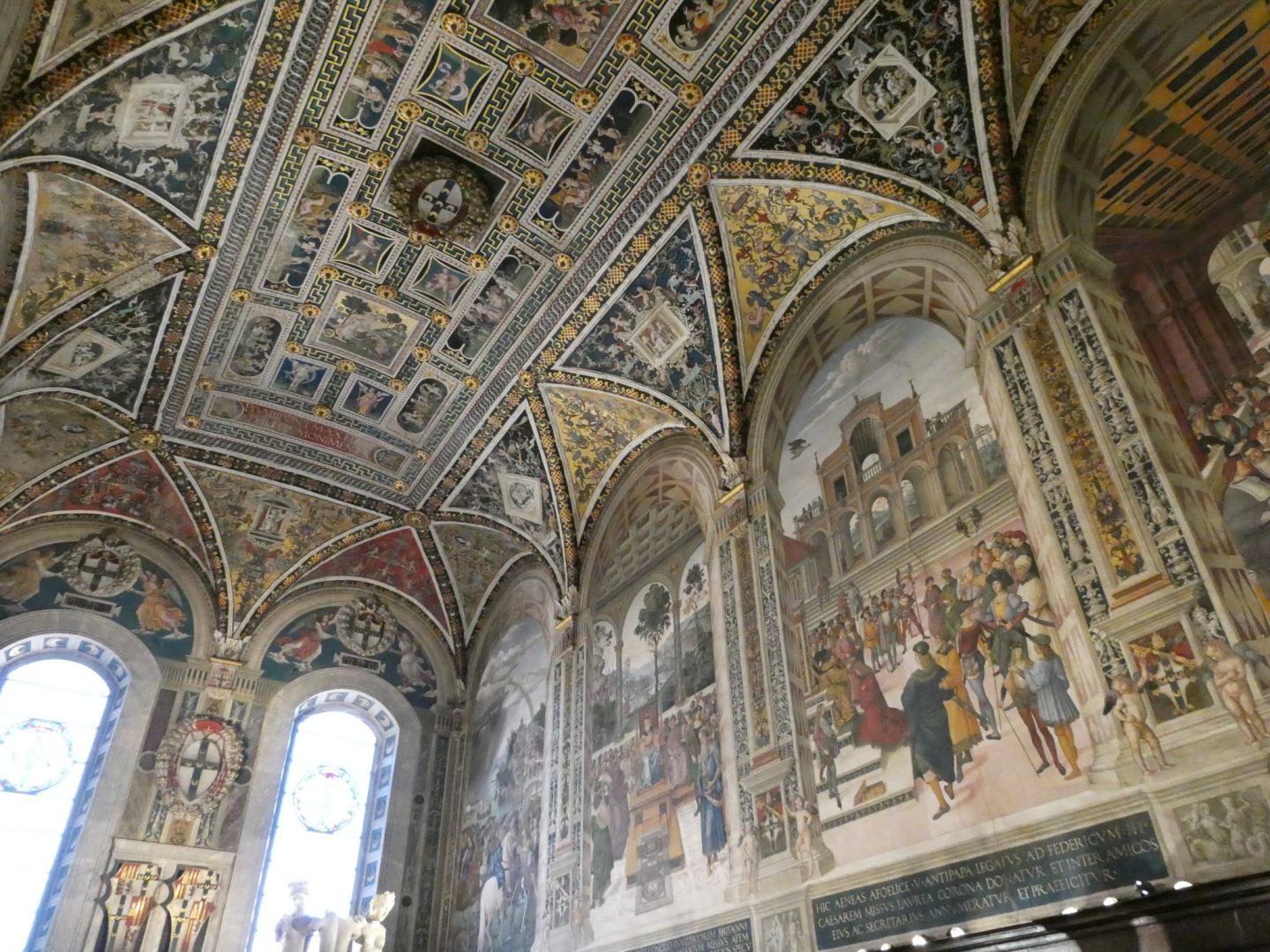
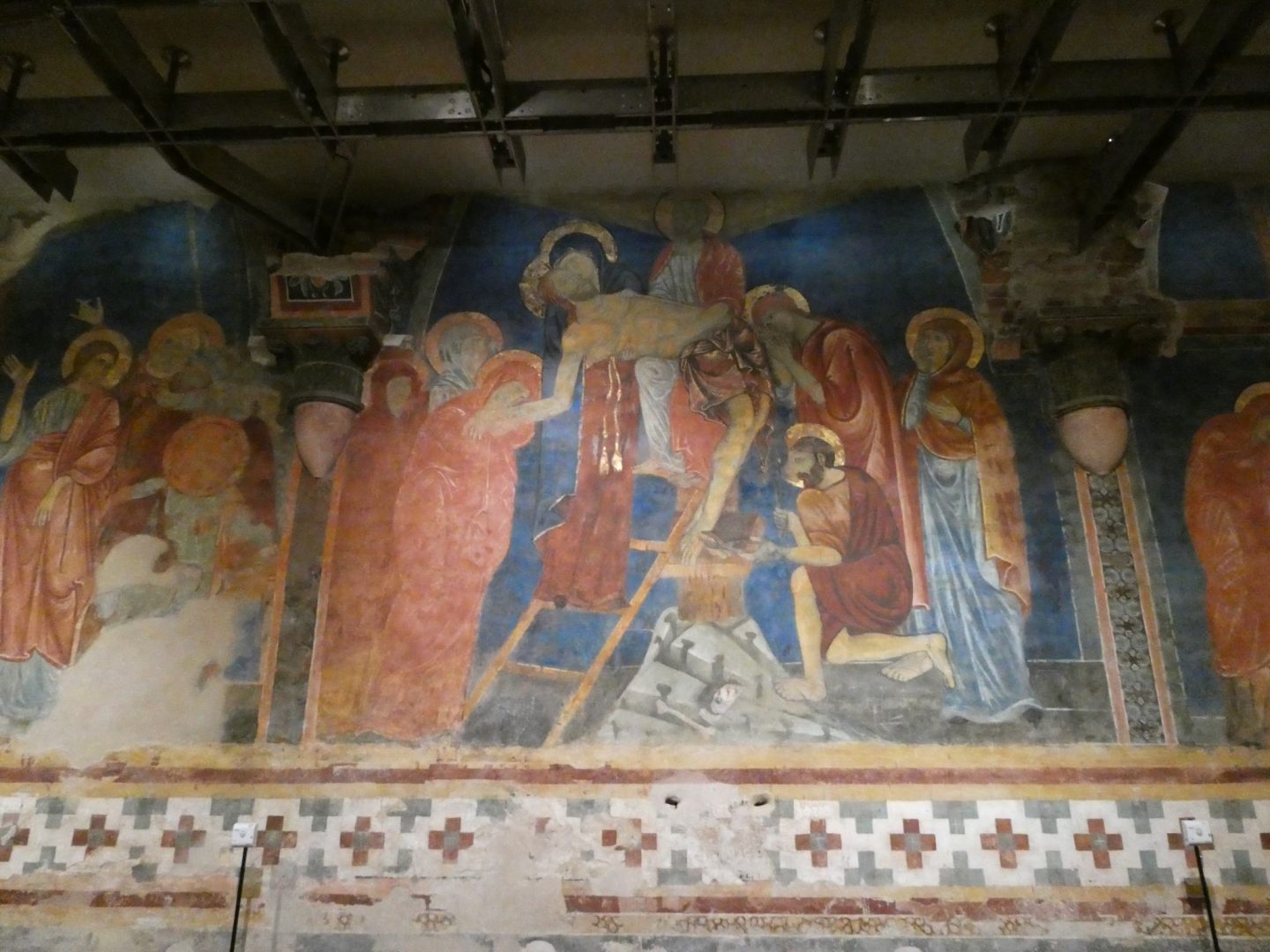


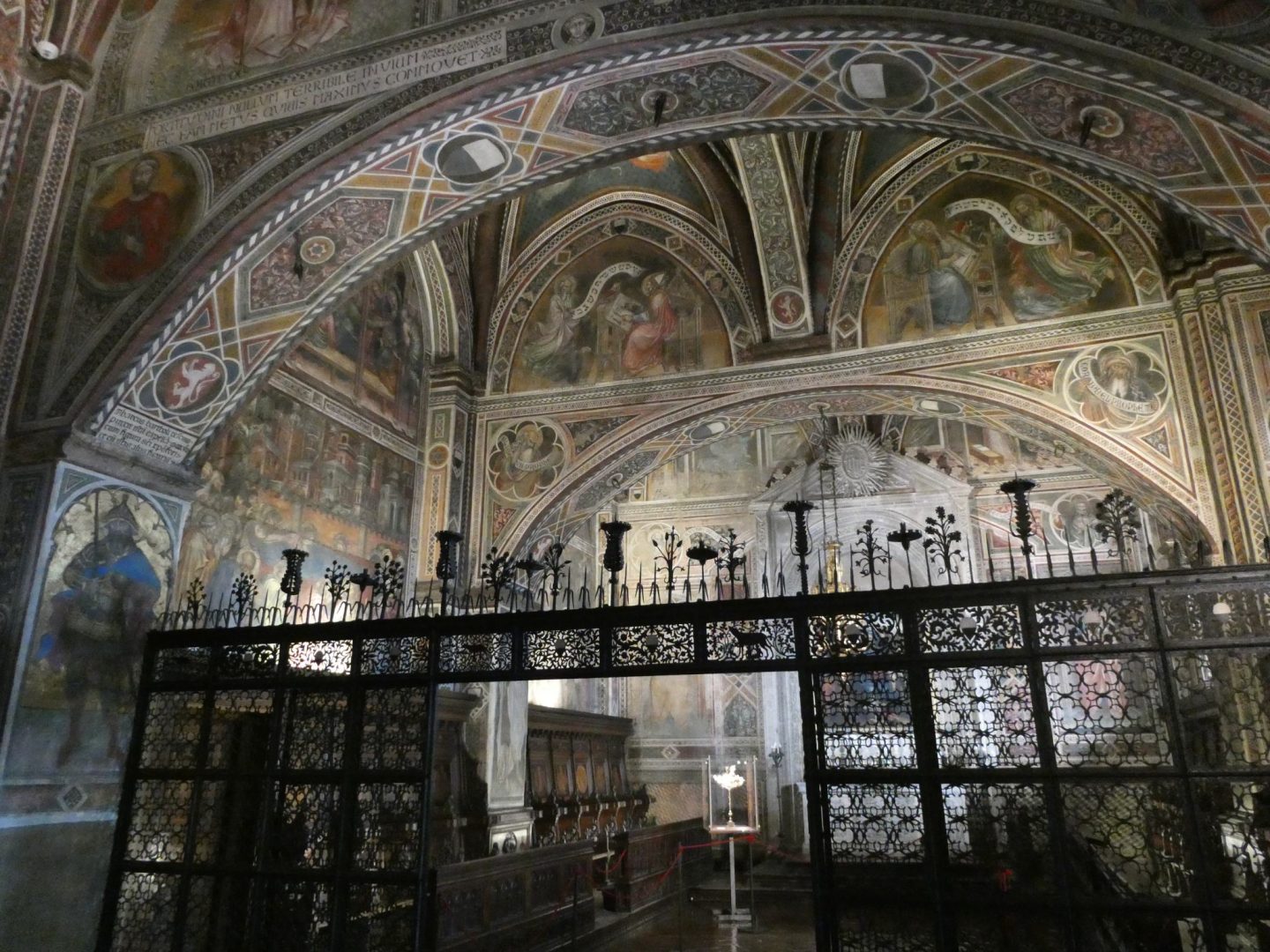
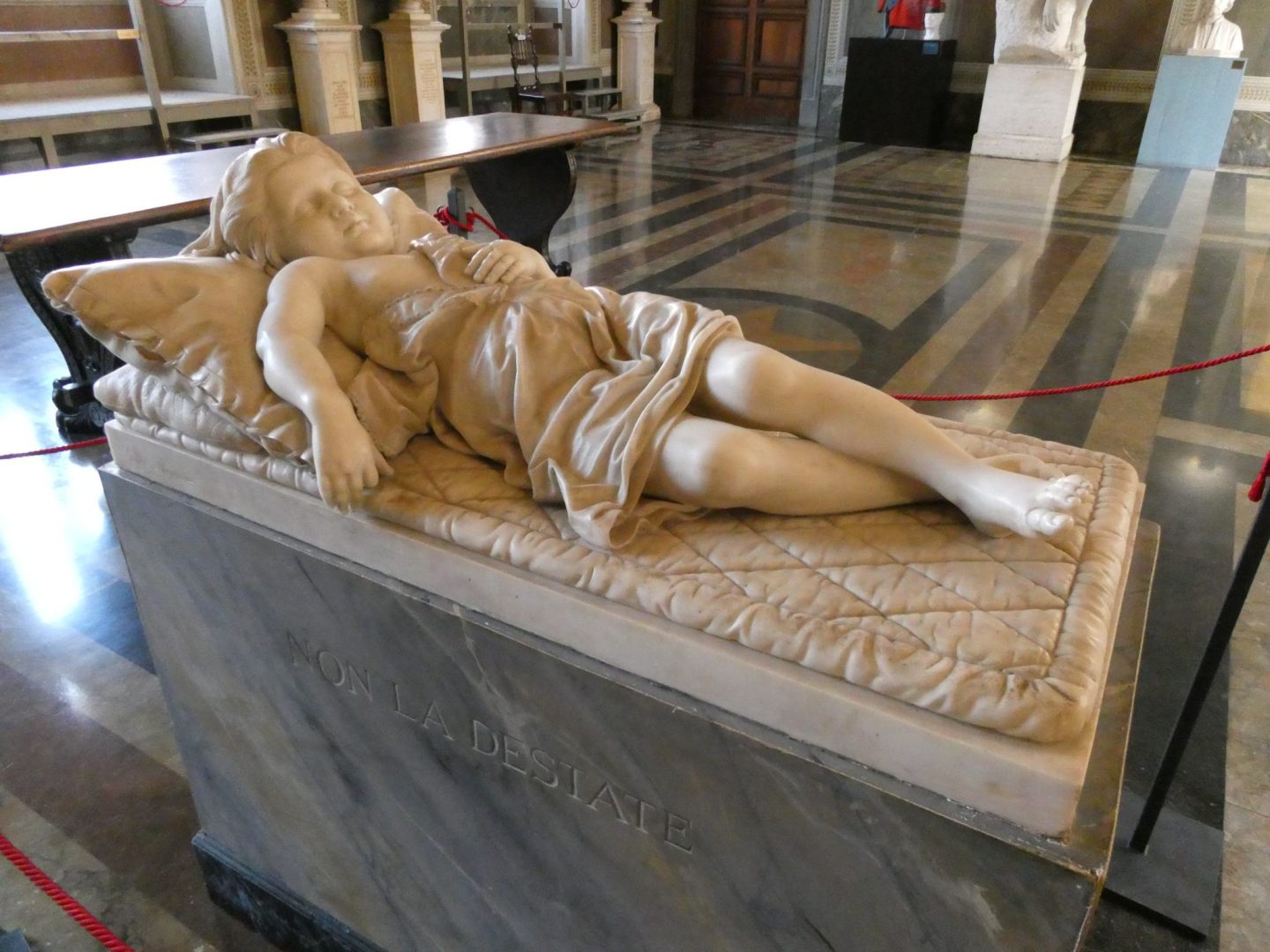
As well as marble statues and stained glass.

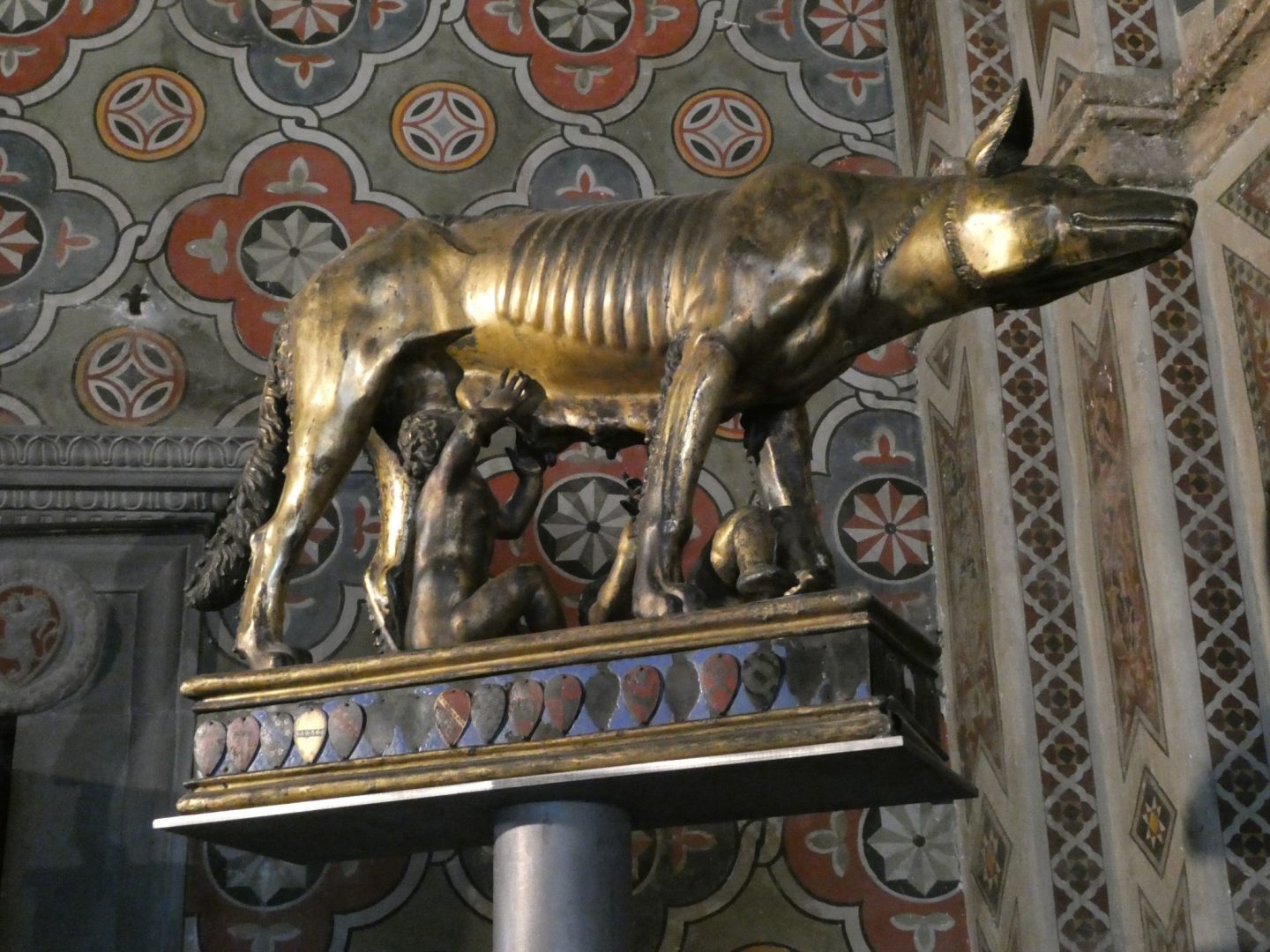
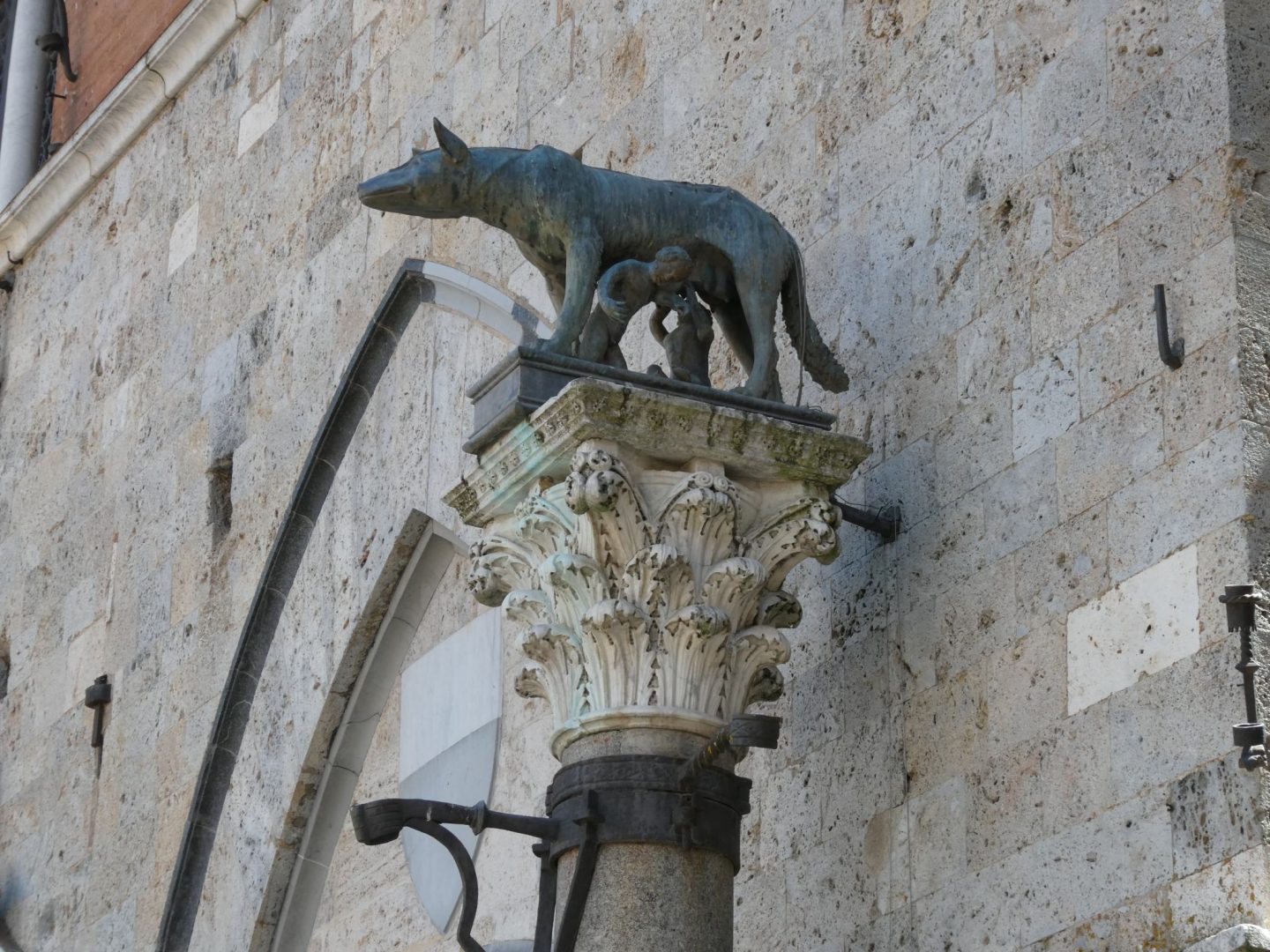
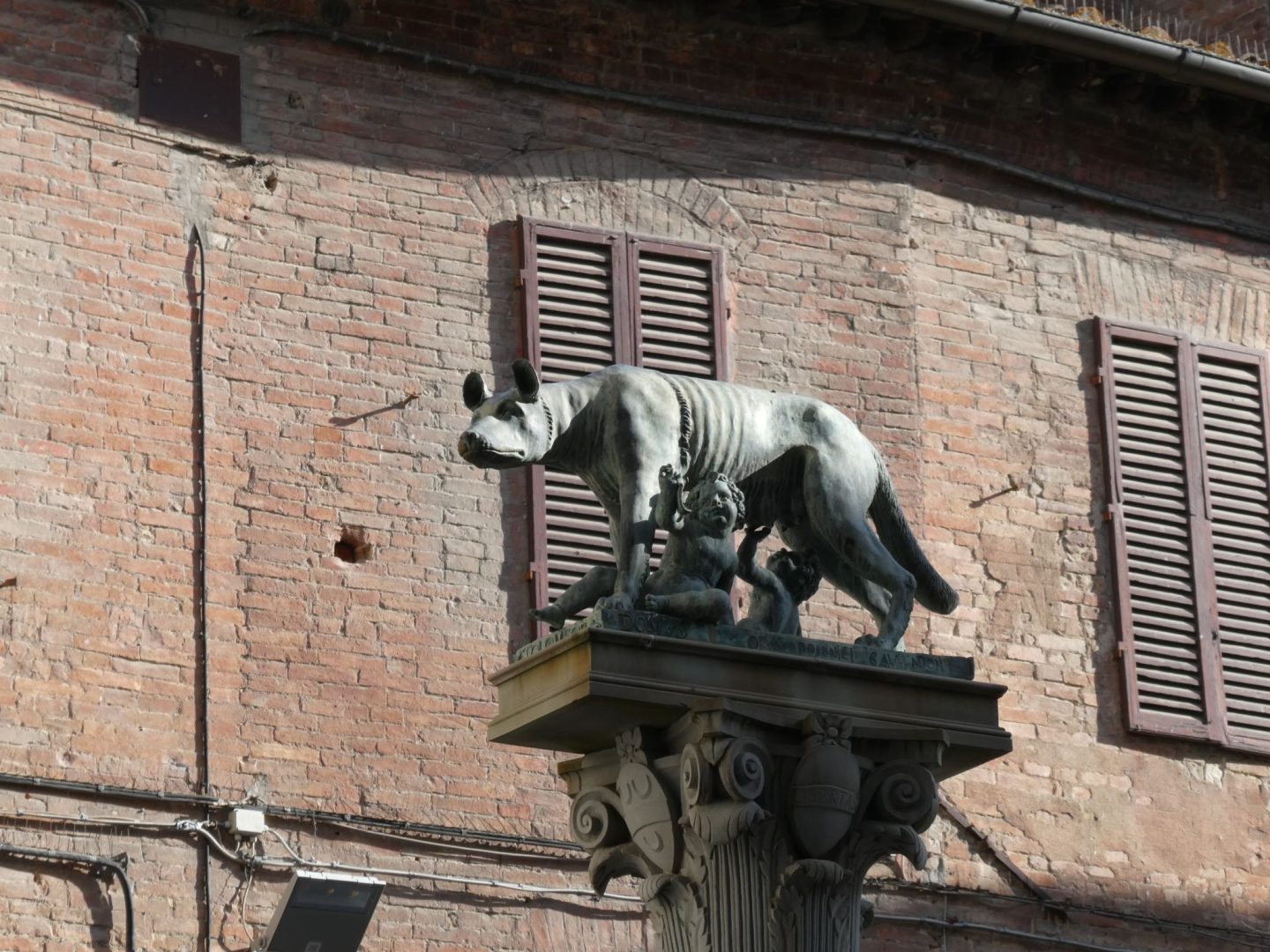
According to tradition, after establishing Rome, the brothers Romulus and Remus fell out and Romulus killed Remus. The Sienese claim that Remus’ twin sons, Senius and Aschius fled Rome on horseback, taking with them a statue of the Capitoline Wolf, the she-wolf suckling their father and uncle.
They settled in the Tuscan hills and founded Siena. The she-wolf became the city’s primary emblem from the Middle Ages, but is subtly different to Rome’s. In Rome, the wolf turns her head back to lick the twins, whereas Siena’s wolf faces forward, symbolising strength and autonomy.
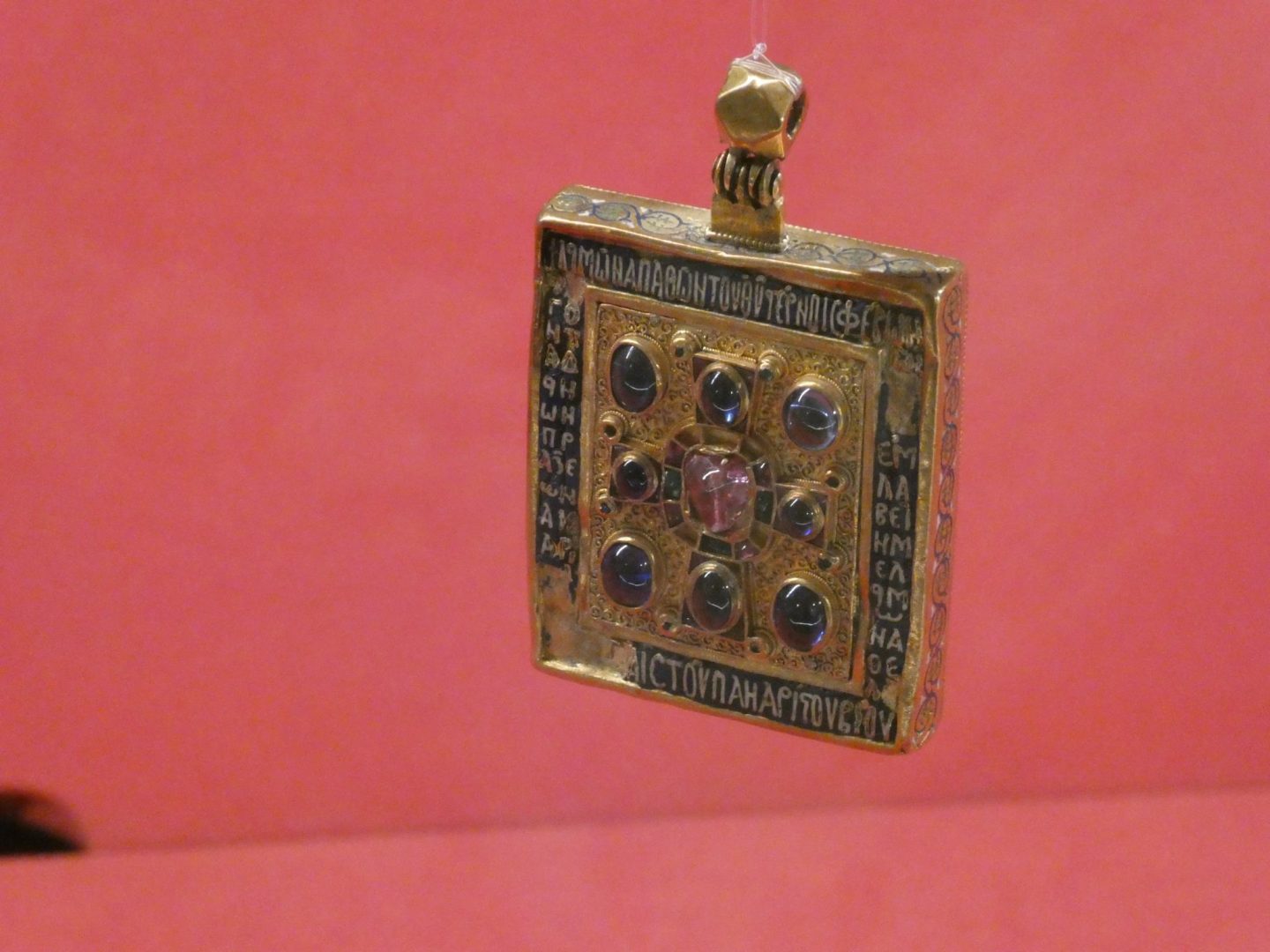
Regular readers have probably worked out that Julie loves religious relics. John doesn’t share her passion, so he peeled off to do laundry while Julie went relic spotting. Siena is a happy hunting ground, with the bones, teeth and other bits of saints displayed in cathedrals, churches and sacred museums around the city.

St Catherine of Siena is the city’s patron saint. She was the 24th of her parents’ 25 children. At the age of 5 or 6 she claimed to have a vision of Christ seated on a throne surrounded by the apostles Peter, Paul and John. Maybe she realised at an early age that with so many siblings she would have to do something extraordinary to get any attention.
From the age of 16, she engaged in regular, rigorous fasting. Initially she found it hard, but claimed that while tending a woman with cancerous breast sores, she gathered the pus into a ladle and drank it. That night, she had a vision of Jesus inviting her to drink blood spurting from his pierced side. She reported that after this “her stomach no longer had need of food and no longer could digest”. Yes, that probably would put you off food for life.
She devoted herself to caring for the sick and incarcerated, later becoming an influential theologian and a diplomat for the Pope in trying to heal various schisms between competing church power blocks, an extraordinary role for a woman at that time.
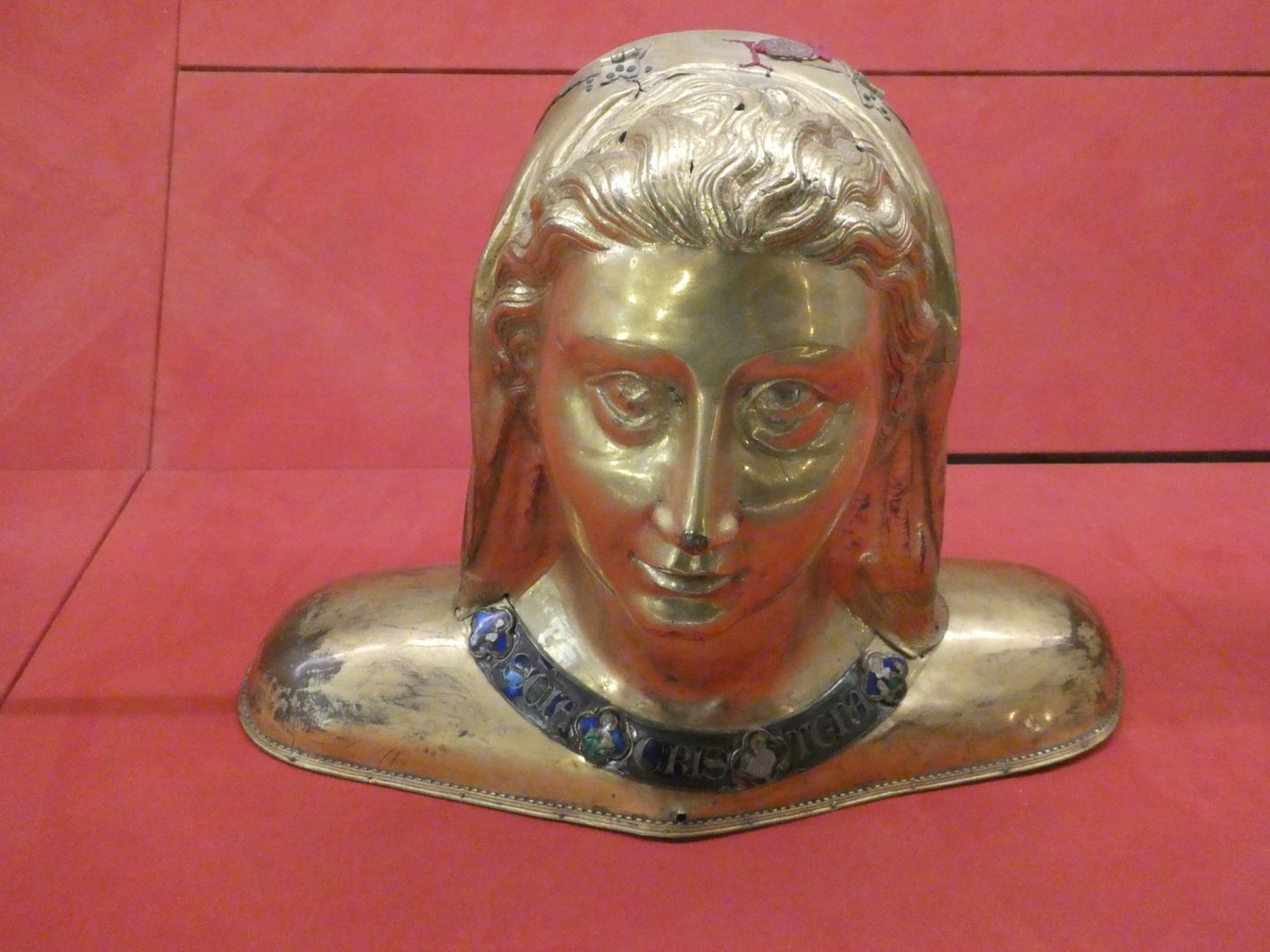
Her extreme fasting took its toll and she died at the age of 33 after a massive stroke. She was buried in Rome but the Sienese were desperate to get her back. Realising they wouldn’t be able to get her whole body out undetected, followers severed and took her head. They were stopped by guards but when they opened the bag for inspection, all the guards saw was rose petals.
So now the severed head, encased in a metal reliquary, is held in the Basilica of San Domenico in Siena. No photos are allowed but there’s a replica in one of the sacred museums.
Siena also has a Holy Nail, said to be one of the nails from the cross on which Jesus was crucified. There are 36 such nails in various locations around the world. He was obviously a difficult man to pin down.
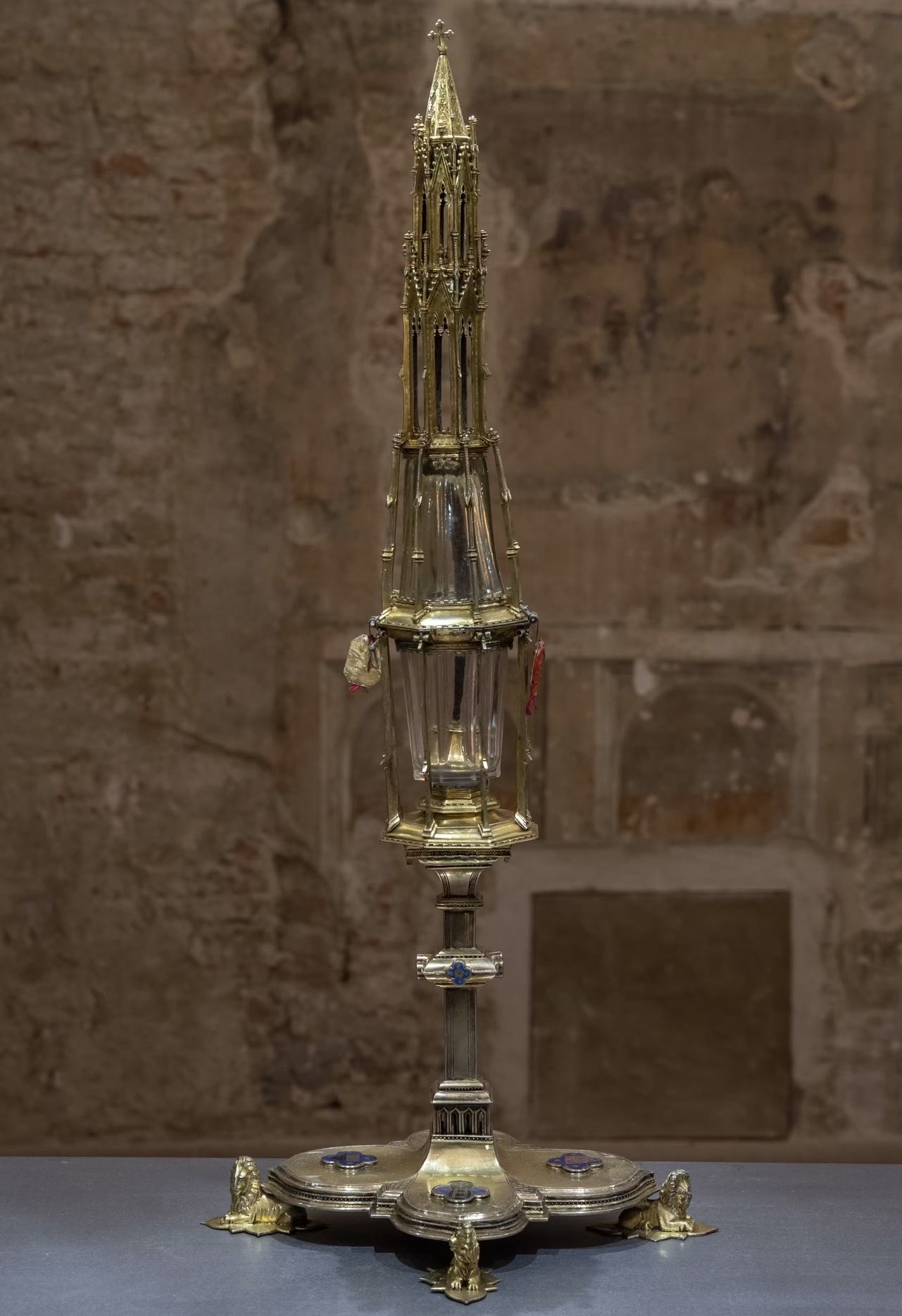 Also a reliquary containing some of Jesus’ blood and hair.
Like all of Tuscany, Siena has great food, good wine. We’ve feasted well this week, and David and Noreen are still talking to us. They now peel off for some R&R in the countryside and we’re continuing south. Rome is ever closer.
This week:
Day 33: Lucca to Altopascio: 17km
Day 34: Altopascio to San Miniato: 31km
Day 35: San Miniato to Gambassi Terme: 25km
Day 36: Gambassi Terme to San Gimignano: 14km
Day 37: San Gimignano to Colle di Val d’Elsa: 14km
Day 38: Colle di Val d’Elsa to Monteriggioni: 17km
Day 39: Monteriggioni to Siena: 20km
Day 40: Rest day in Siena
Total to date: 730km

Enjoyed this post with all the beautiful old towns & in particular, the photos of the Elsa river – it may have been because of all the talk of the terrible heat. Interesting tale of Romulus & Remus x