Leaving Piacenza it’s hard to miss Monumento alla Lupa. It’s a two metre bronze replica of the iconic Capitoline Wolf, the she-wolf credited with suckling the mythical twin founders of Rome, Romulus and Remus.
Erected in 1938, it stands atop two 7.3 metre granite columns taken from the city’s Farnese Palace. Apparently in the Fascist era, Mussolini gifted Capitoline statues far and wide, promoting a notion of the country returning to the ‘splendour of ancient Rome’.

Shopping malls on the outskirts of towns are usually dull but occasionally they throw up a random point of interest.
After what emerged from the Wuhan wet market, this was slightly concerning.

And was this store selling bimbos or is it where bimbos go to shop?

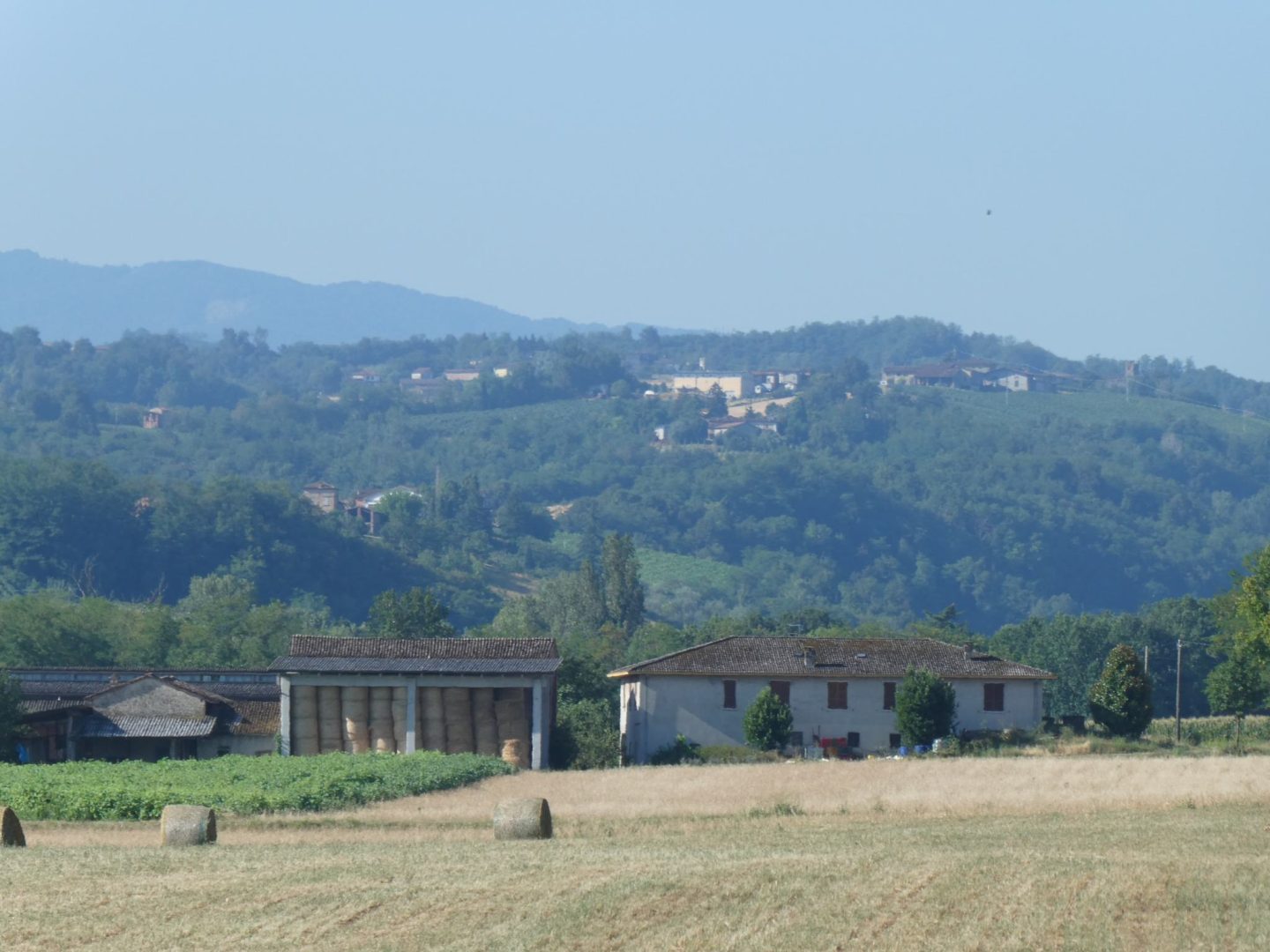
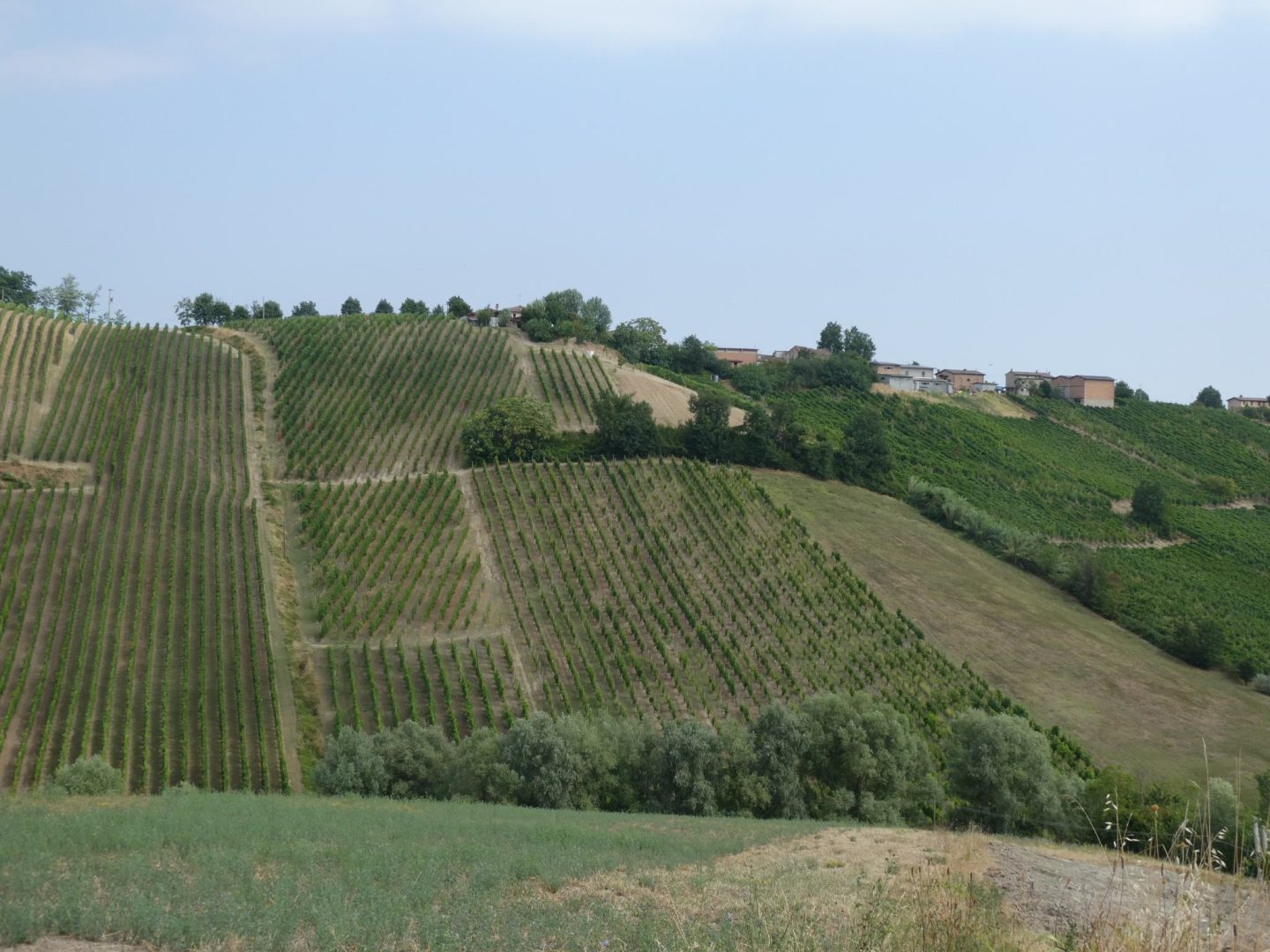
After a week of flat, flat, flat terrain, it was nice to reach the Val D’Arda and the foothills of the Apennine Mountains which mark the border into Emilia-Romagna. The change was almost instantaneous. Rolling hills and tidy vineyards brought a much softer feel to the landscape.


Outside one town we caught Snow White red-handed as she took ‘fighting the patriarchy’ to a new level.

We spent a night in Castell’Arquato, a perfectly preserved medieval town. Other than the addition of a fortress tower in the 1500s, its structure has barely been changed since Sigeric shuffled through in the 10th century. It’s one of the designated borghi piu belli d’Italia (‘most beautiful villages of Italy’).


But as the saying goes, “Be careful what you wish for”. The modern Via Francigena aims to avoid major roads where possible, so after Castell’Arquato we found ourselves following farm tracks ‘straight down, straight back up again’.


After one 32km day in 34 degrees Celsius with no shade, we felt like this guy.

As we have found from the beginning of the walk, many villages are virtually empty during the day while the residents work on their farms or elsewhere. Almost every house has a ‘beware of the dog’ sign.

This one was a bit more serious: ‘beware of the dog … and the master’.

By now we were used to being barked at, but the dogs are always behind fences so at worst you may get a fright. Some deserved respect.

But some just can’t be taken seriously.

As the trail pushed up into the Apennines, the terrain got more rugged, but also very beautiful.

The ascents and descents were getting more prolonged. We’re not really going up there, are we?

And then down there? Well actually not all the way down. Those are part of series of rock formations jutting up from the valley floor known as the Devil’s Jumps. We circled the mountains around them but never actually got closer than this.


It was refreshingly much cooler up here in the forest, which made the climbing a little more comfortable. We reached sleepy Cassio, population 130, all of them enthusiastic about crochet, it seems.


After Cassio, we hiked up to the even smaller hamlet of Castellonchio. Just 22 permanent residents, apparently it thronged with pilgrims in medieval times. Today the only sign of life was a grandad kicking a soccer ball with his grandson.


From there it was a short hike to Berceto, our last stop in Emilia-Romagna before the challenging climb over the Cisa Pass.
According to Berceto’s founding story, Bishop Moderanno of Rennes stopped here on his way from Normandy to Rome. He was carrying with him the sacred relics of Saint Remigio, which he tied to a tree while he took a nap. He woke to find the tree had grown miraculously fast, making the relics unreachable. He vowed to establish a monastery in Berceto and the tree lowered the relics. Honouring his promise, Moderanno stayed and established a Benedictine monastery. Sounds to us like he just didn’t want to keep walking to Rome.
Either way, Berceto became an important stopping place for pilgrims travelling the Via Francigena. It remains so today. Our walk from Cassio only took a few hours, and we had a short but regenerating afternoon and an excellent dinner based around local porcini mushrooms, in what turned out to be one of the prettiest towns we’ve seen so far.

Berceto is a favoured summer holiday destination for city folk from Parma looking for some cool mountain air, good hiking and great food. The area is renowned for its Parma ham, parmesan cheese and porcini mushrooms. We think they’re onto something!
This week:
Day 18: Piacenza to Carpaneto: 25km
Day 19: Carpaneto to Castell’Arquato: 15km
Day 20: Castell’Arquato to Fidenza: 24km
Day 21: Fidenza to Fornovo: 32km
Day 22: Fornovo to Cassio: 23km
Day 23: Cassio to Berceto: 11km
Total to date: 441km

Love the crocheted bike. So clever !
And a town famous for Parma ham, Parmesan and porcini mushrooms would win my heart.
Loved the pics of the Capitotine Wolf & the scenery in the Emilia-Romagna region – the idea of enjoying dishes of porcini mushrooms & Parma cheeses very inviting x