After the peace and relative solitude of the Camino del Norte walk, Amsterdam was a challenge. So many people, urban grime and everywhere a tangle of cars, trams, pedestrians and bicycles.
Soooo many bicycles.
Amsterdam has a population of just under 950,000 people, who between them own almost one million bikes. 60% of trips in the inner city and 40% of trips in the greater city area overall are made by bike.

The cyclists don’t just ride on the fietspad, the 400km of dedicated bike paths which shadow every road, canal, tram track and pedestrian path in the city. They ride on the footpaths, hurtle the wrong way down one way streets and nonchalantly ignore traffic lights.
We never did work out who had right of way. It didn’t matter really – self preservation compels pedestrians to capitulate in any potential game of chicken. Nothing gets in the way of a cycling Amsterdammer heading to work, or out to buy some clogs, plant a few tulips or attend to whatever else they are determined to do. There’s a saying here, that’s it’s safer to step in front of a car than get between a Dutch cyclist and their destination.
Every year more than 12,000 bikes are fished out of the canals. No one knows how many are thrown in, but in John’s view, “whatever the number, it’s a good start”.
Bicycles are one of the city’s iconic images. There are plenty of decorative ones about town.


Apparently decorating your bike is more than just for fun. Distinctive looking bikes are less of a target for thieves as they are more easily identified and harder to sell. That’s important in a city where more than 54,000 bikes are stolen annually.
In truth, many of the highly festooned ones are promotions for businesses.


Amsterdam is also, of course, famous for its canal houses. Between 1580 and the mid 1700s, Amsterdam grew from a town of 30,000 to a city of over 160,000, thanks mainly to trade generated by the Dutch East India Company. A series of half circle canals known as the Canal Belt was dug out around the medieval centre and the burgeoning merchant class built grand homes and warehouses along the banks.

Typically the buildings had narrow frontages, but were tall and deep. To support their weight in the swampy conditions, they sat on tall posts driven deep into ground. It didn’t always work well. Subsidence over centuries has caused many to lean. On one particular stretch, a group of them has been dubbed the Dancing Houses because of the forward/backward and side-to-side angles.

They were fun to see, but not unique. We later we saw a set almost as good just one street from our hotel.
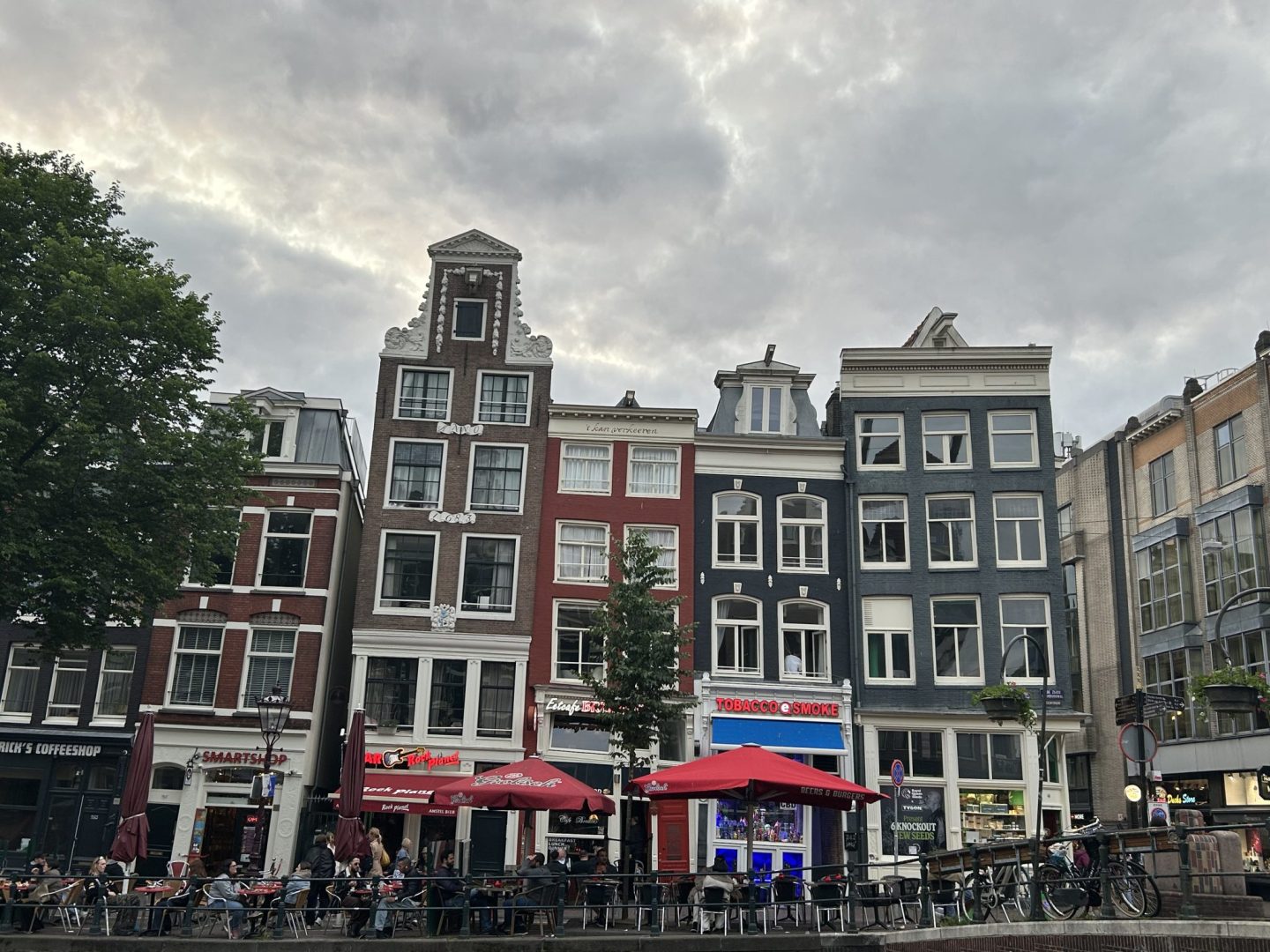
There are some beautiful parts of the city once you get away from the areas frequented by the six millions visitors who come here annually.


 In the area known as the 9 Streets, gentrification has created an enclave of stylish clothing boutiques, design studios, art houses and jewellery stores.
It looks like there have been efforts to refresh some of the central areas too.

The once drab Beurspassage has been transformed into a stunning arcade.


Here, over a million glass mosaic tiles were used to create an artwork called Oersoep, ‘Primordial Soup’. It’s intended to evoke a feeling of walking beneath one of Amsterdam’s canals while clogs, umbrellas and other items which find their way into the murky waters float by.
There’s unlikely to be any tigers in the canal, but the mosaic work is stunning.

A fish head fountain dribbles water drawn from the canals. Definitely not drinkable but you are invited to bottle it and ‘take some mokum [a local nickname for Amsterdam] with you’.

We were lucky to visit the Anne Frank House. Visitor numbers are strictly limited but we managed to nab a couple of last minute tickets. It’s a worthwhile experience with an audio guide taking you through the annexe where Anne, her parents, her sister and four others hid for two years during WWII before being discovered and sent to concentration camps. All except Anne’s father died only months before the war ended.

And the Van Gogh Museum which houses the biggest single collection of his works anywhere in the world. It’s thoughtfully curated and despite being one of Amsterdam’s premier attractions, doesn’t feel crowded due to limited admissions. But you need to plan ahead. It’s timed entry tickets via the internet only, and they sell out well ahead.
We’ve never seen the point in photographing paintings in galleries, so we’ve no pictures of the works, but back in the city centre we passed the Lego store which had some fantastic creations. Windmills, tulip fields and recreations of Holland’s famous artworks including one of Vincent’s self portraits.

There’s lots of museums in Amsterdam. We will admit to poking our noses into the Cheese Museum for a tasting.

Although you don’t really need to go to a museum. This country is rather proud of its gouda, which comes in every imaginable flavour from natural to ones flavoured with chilli, cumin, truffle, herbs, pesto, capsicum, honey, whisky and so on.

We also visited the Red Light Secrets – Museum of Prostitution. This was not at all prurient, rather it focussed on the practical aspects of the trade and the legal protections now in place for sex workers in Amsterdam. It’s located in a former brothel with original room furnishings.

 Further along the canal we saw this bicycle.
 It wasn’t advertising the condom shop. That was a few blocks away, stocking both utilitarian and novelty condoms.


Inevitably, there’s a Donald Trump. For every one sold, the shop donates a percentage to a sexual health service. No prizes for guessing their politics.

But we digress.
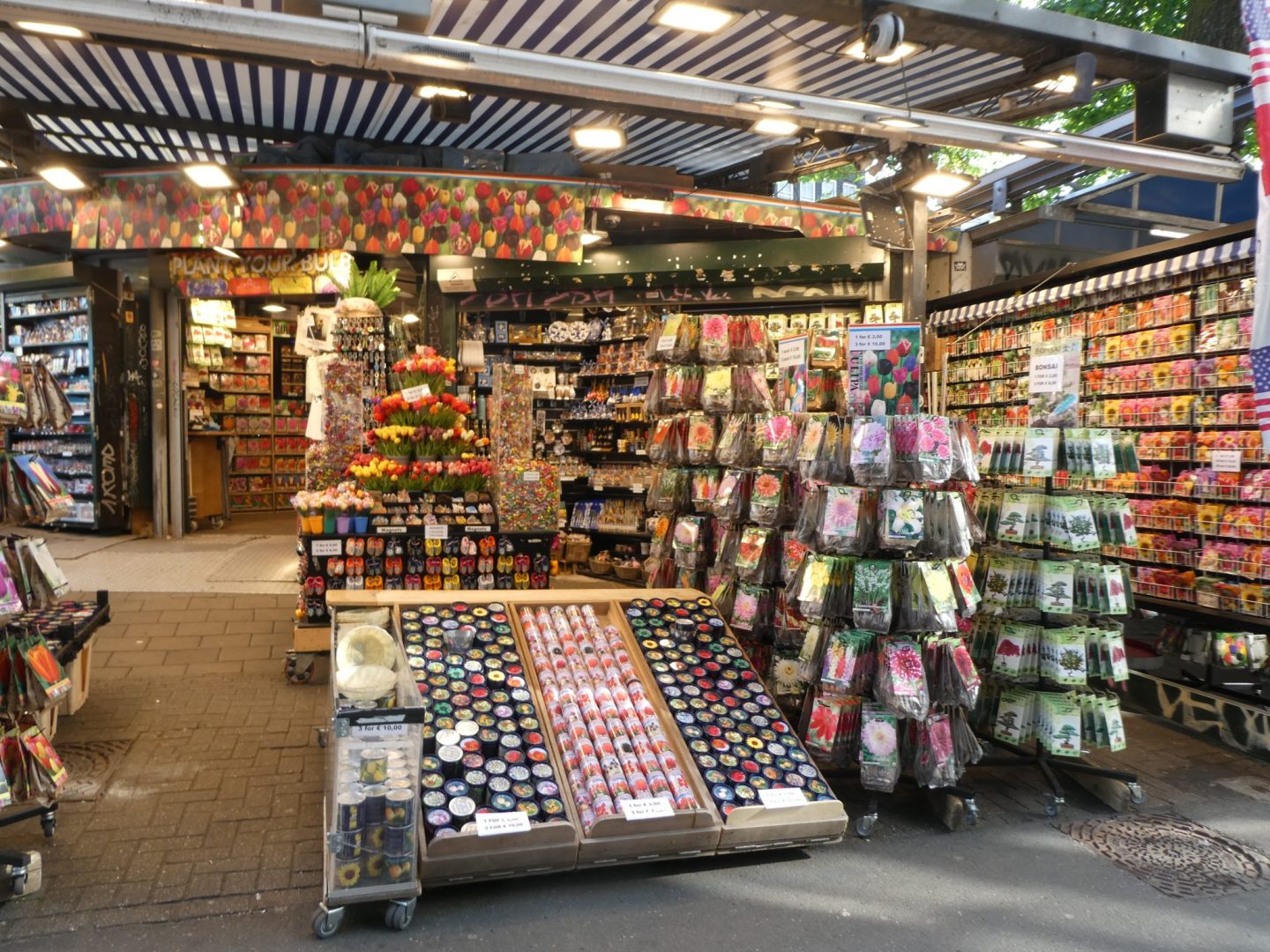
We skipped the Tulip Museum but wandered through the Bloemenmarkt. Operating since 1862, it once consisted of barges moored in the Singel Canal selling fresh flowers brought downstream from tulip farms outside the city. It’s promoted as ‘the world’s only floating flower market’, but that’s a misnomer. The market no longer floats, instead the vendors’ premises are stalls lining the canal bank. And there are very few flowers for sale. Mostly it’s bulbs, seeds and tulip themed souvenirs. It’s squarely aimed at international visitors, with prominent signs announcing the bulbs are packaged to comply with most countries’ quarantine rules. But quality might be a different story. Apparently a 2019 survey found bulbs purchased at the Bloemenmarkt ‘rarely to never’ flower.

Amsterdam is heaven for museum junkies. We skipped the Rijksmuseum, the highlight of a trip to the city if you’re into Dutch Masters portraits of amply proportioned women and dour church folk, but that’s not our cup of tea. We also resisted any urge to visit one of the umpteen canal house museums, the Hash, Marijuana and Hemp Museum, the Sex Museum, the Scheepvartmuseum (that’s Dutch for Maritime Museum), the Houseboat Museum and, and, and. You get the picture.
Amsterdam was once famous for its ‘coffeehouses’ which date to the 1970s when soft drugs were generally tolerated although still technically illegal. They were not cafes in the usual sense but establishments where customers could, with a nudge and a wink, purchase marijuana to smoke or munch on cookies laced with the stuff.
The frisson of naughtiness in visiting a coffeehouse has probably dissipated now that it’s all decriminalised and regulated by law. And if you want to indulge – which, for the record, we don’t – no subterfuge is required.


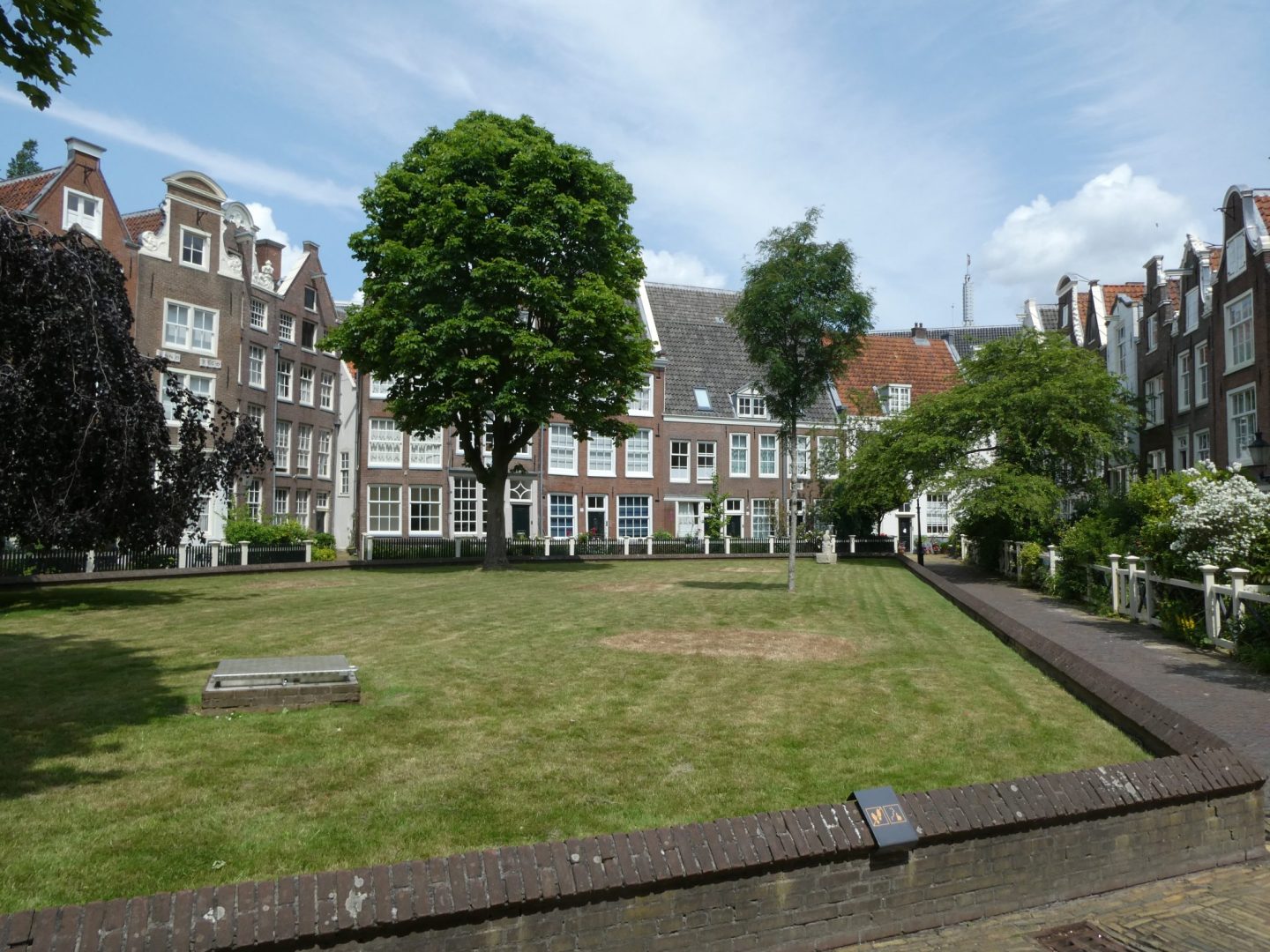
Personally, we think the best place for a chill out in Amsterdam is the Begijnhof. Beguines were single Catholic women who did not want to join a convent but lived in groups and dedicated their lives to good works in their communities.
One such begijnhof was established in Amsterdam in about the late 1300s. Like other begijnhofs, it was a circle of houses and a church facing into a central courtyard. With limited entry points, the design gave them a private and semi-cloistered life but engagement with the community as they chose.
The oldest house in Amsterdam is located here.

Between 1578 and 1795, Catholics in the Netherlands were forbidden to practice their faith in public. The begijnhof’s church was confiscated in 1602 and ‘donated’ to the English Protestant community then living in Amsterdam. It’s been known as the English Church ever since.
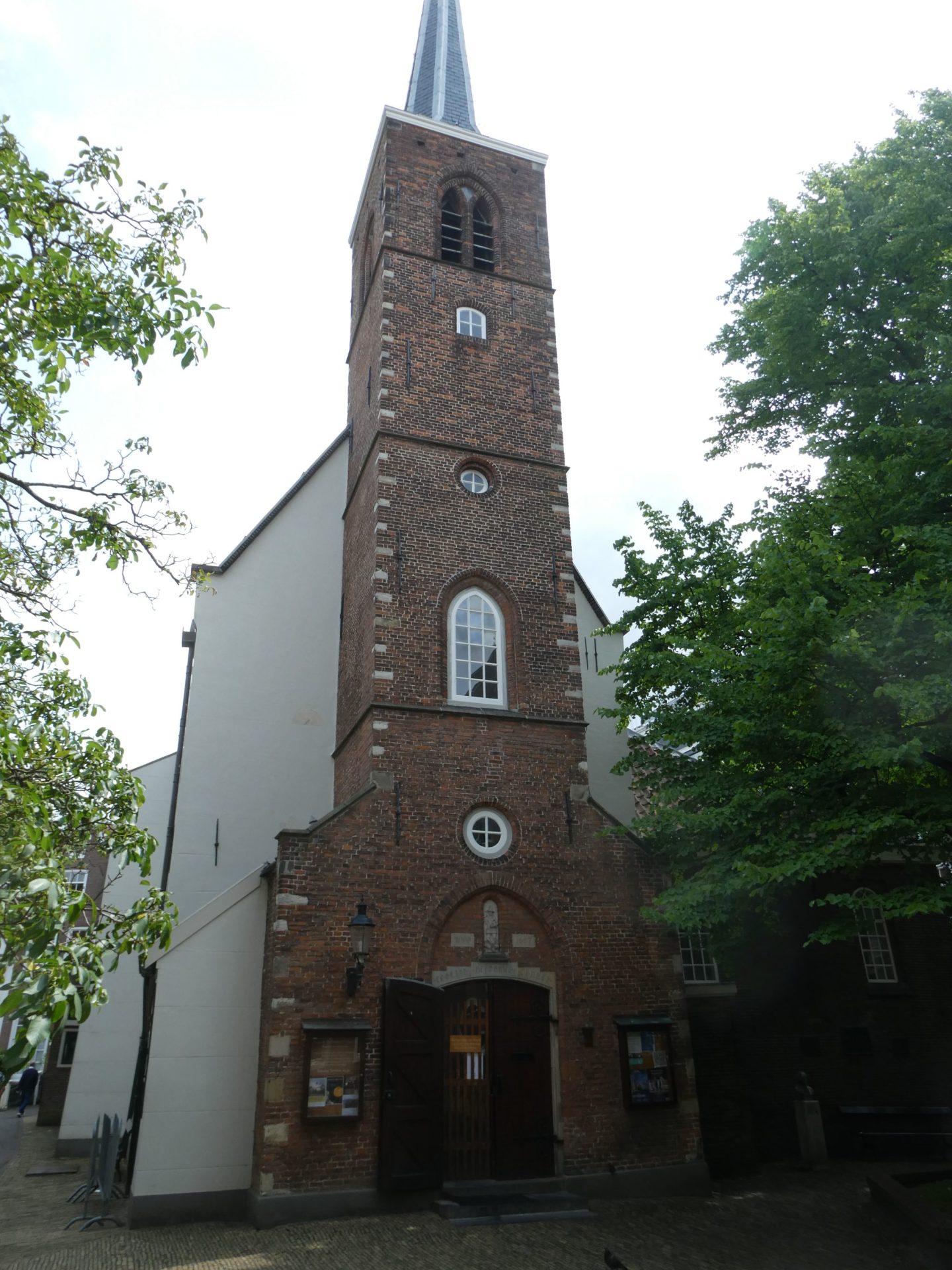
Remarkably, the houses, which were owned by the beguines personally, were not taken. Forced to practice in secret, the women engaged a master builder who merged two existing houses and built a hidden church within. It’s still here, looking exactly like two houses.

The compound is still a residential one, and only women are allowed to live here. It’s a lovely little oasis of calm.

For us, Amsterdam feels over-touristed although well worth a visit. Next stop, Rotterdam.

Tulips, brothels, & bicycles- is a place worth visiting but think I’ll avoid the leaning houses – too tricky to stay upright x