The Netherlands second largest city is often overlooked by tourists, but that’s a shame. It’s got a lot to offer.
There’s a parochial rivalry between Rotterdam and Amsterdam which Australian readers will recognize. It’s like the Sydney/Melbourne divide. The residents of each think their city is superior. Rotterdammers like to say “Money is earned in Rotterdam, distributed in The Hague, and spent in Amsterdam”. They consider their city the economic powerhouse of the country and are dismissive of frivolous Amsterdam, the party capital.
Which is not to say Rotterdam is boring. Far from it. While Amsterdam has the fame and the big tourist drawcards, we preferred Rotterdam. Great vibe, plenty to do. And not so many of those damn bicycles!
If you’re looking for medieval architecture and canal houses, Rotterdam is not for you. When Germany invaded the Netherlands early in WWII, Hitler expected to take over the country in one day. But German forces met unexpected resistance, and after four days, he ordered a massive bombing campaign which all but destroyed central Rotterdam. The Netherlands capitulated the next day.
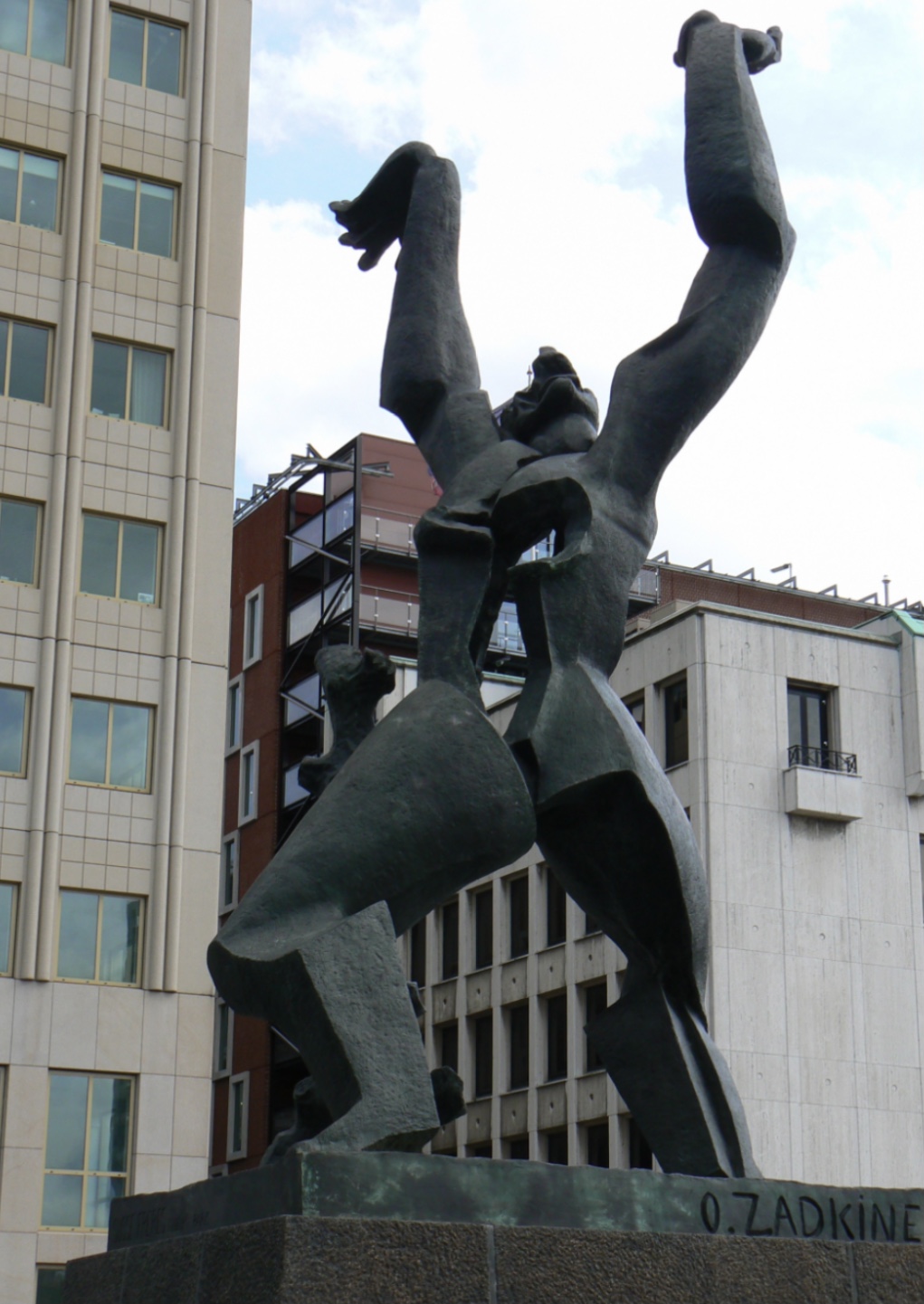
A 6.5 metre high bronze entitled The Destroyed City was erected in 1953 in memory of the event. It sits on a 2 metre high granite plinth which is said to have been earmarked for a sculpture of Hitler, had history unfolded differently.
It’s supposed to depict a human leaning against a tree stump but hasn’t been without controversy. The then Director of Public Works described it as “a madly demonic scourge”. Locals nicknamed it Jan with the Little Hands.
All was not lost in the bombardment.
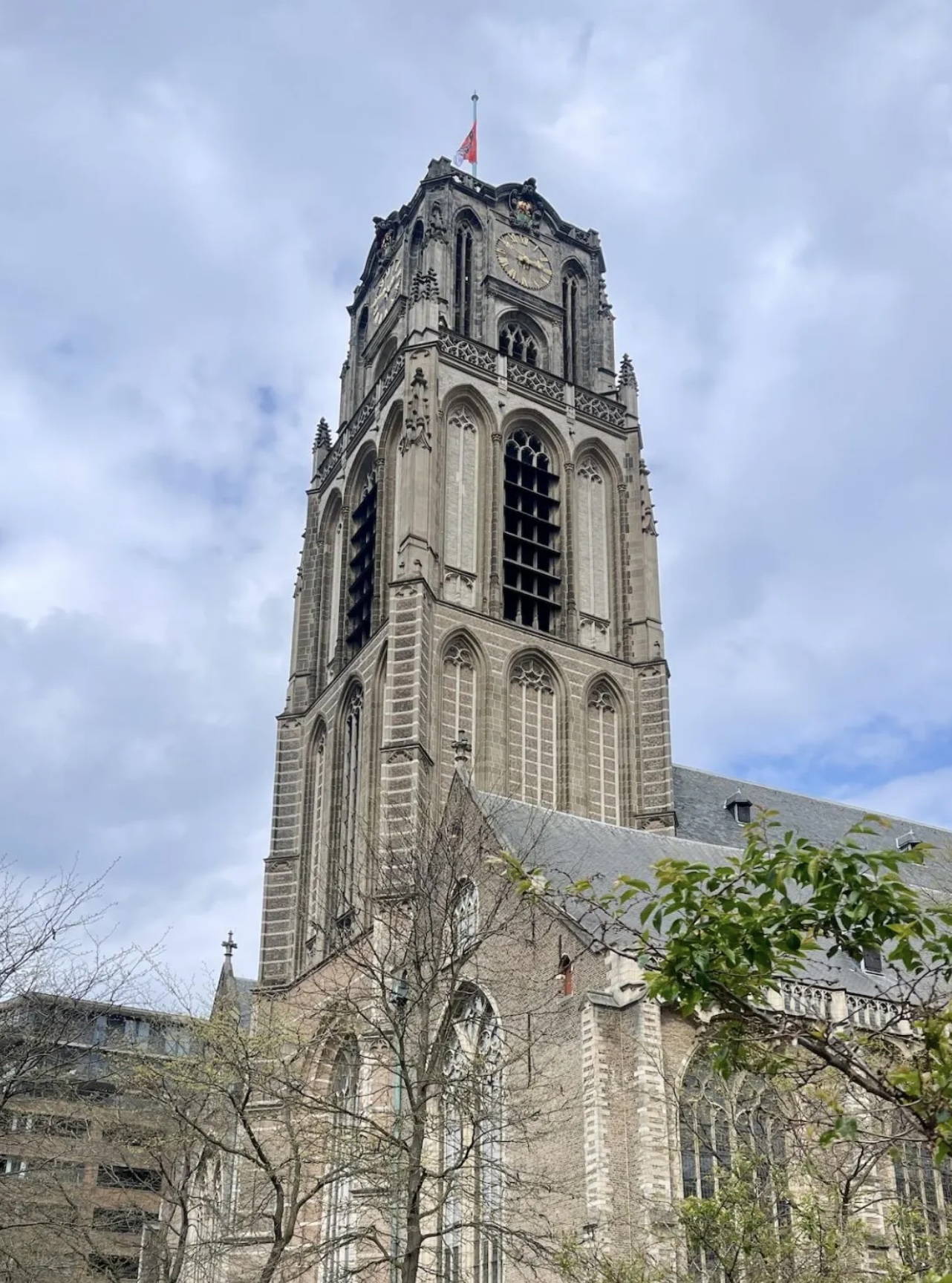
The Basilica of St Lawrence was built in the late 1400s. When the original wooden spire was replaced with a stone one in 1645, it became Rotterdam’s first all-stone building. Only the tower and walls survived the bombing and initially the remnants were slated for demolition. But after years of debate, the church was restored in the 1960s. It had come to be seen as a symbol of the city’s resilience.
The Witte Haus (White House), built in 1898 also survived. Inspired by New York’s rising skyscrapers, the ten storey Art Nouveau-style office tower was Europe’s first high-rise building and at the time of completion, the tallest on the continent.

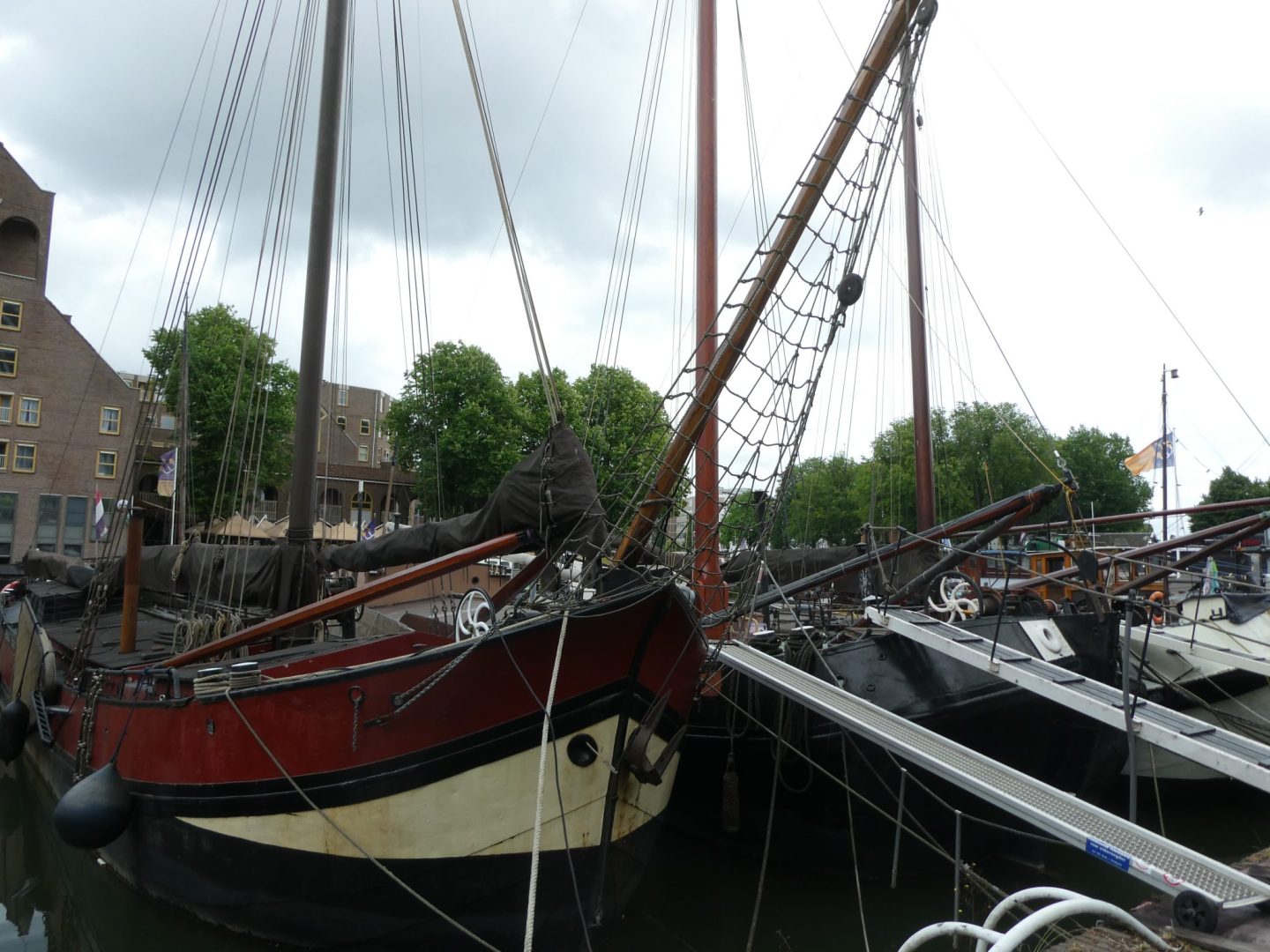
It’s by the Oude Harbour, where restored boats from the 1800s and earlier line up.
De Hef was the first vertical lift bridge in Western Europe, built in 1927 as part of a rail line linking Rotterdam to the nearby city of Bref. It was severely damaged in the bombardment but was rapidly rebuilt. It was decommissioned in the 1990s but is preserved as a monument to Rotterdam’s importance in the early industrialisation of the Netherlands.

The silver lining to the destruction of the city centre is that it allowed some really creative architecture to emerge in the post-war reconstruction, a trend that continues today.


In the late 1970s, a complex of 40 ‘cube houses’ designed by Dutch architect Piet Blom was built near the Oude Harbour. Each house is a cube on a concrete stalk, tilted 54.7 degrees.

Residents got so tired of people nosing around to gawp at them, one owner set his up as a show house which you can visit.
From the outside, they look amazing, but honestly they seem totally impractical. The internal area is 100 square metres, but that’s spread over three tiny floors and about one quarter of the area is unusable because of the angled ceilings.


That emphasis on aesthetics rather than efficient use of space continues today. This next development is Markthal. It’s an apartment complex built as an arch.

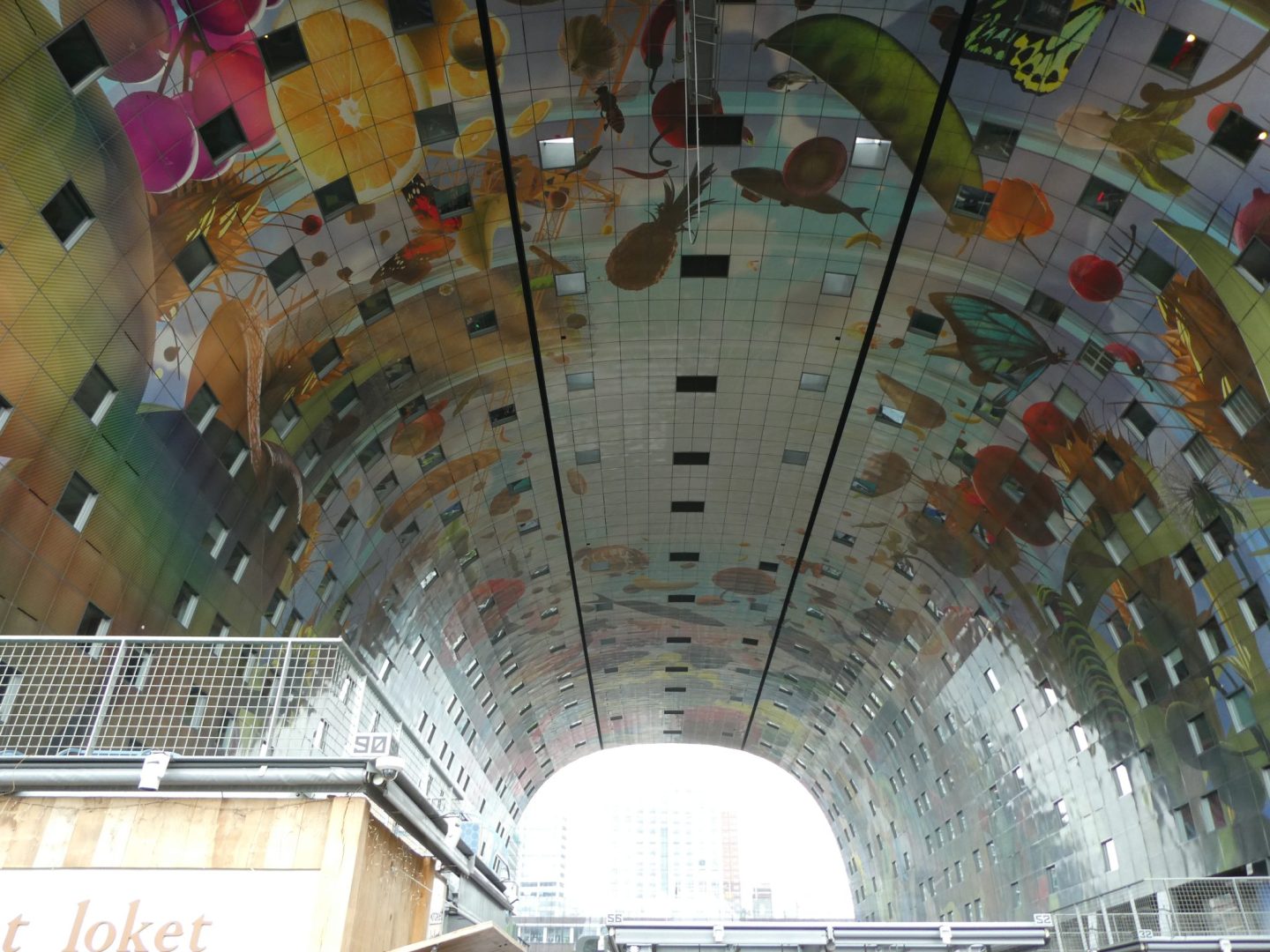
Under the arch is a food market with a truly beautiful tiled ceiling. The glass panels dotted throughout the design are windows in the apartments or, at the top of the arch, panels in the floor of the units above, giving views into the market.

Near Markthal we came across this interesting piece. It’s a tribute to Marten Toonder who was born in Rotterdam and is the Netherlands ‘most famous comic strip creator’. Which begs the question: how many other famous comic strip creators can the Netherlands claim?

And what about this. The Ark Museum. Complete with a giraffe on deck. Shouldn’t it be two giraffes? Covering 2,000 square metres over four levels, it’s the world’s only floating exhibition of Bible stories. Who knew the world needed such a thing? Well, maybe it didn’t. It’s temporarily closed.

Forty minutes upriver from Rotterdam is Kinderdijk. Meaning ‘child dyke’, the origin story is rather cute.
In the 1200s, a system of dykes and canals was built near the confluence of three rivers to enable settlement and farming of low lying areas. On 19 November 1421, the massive St Elizabeth Flood destroyed the region’s towns and farms. In the aftermath, a cradle containing a baby and a cat washed up on the river bank. Baby Beatrice survived, purportedly thanks to the cat jumping from side to side on the basket’s edge to keep it from tipping over in the turbulent water.
As staff to cats for many years, we understand what motivates them. Self interest, mostly. John was deeply suspicious. He says it’s more likely the cat was trying to overturn the basket. We all know how jealous cats get when a newborn comes along and gets all the attention.
Either way, the cat got the glory and is honoured with this floating sculpture.

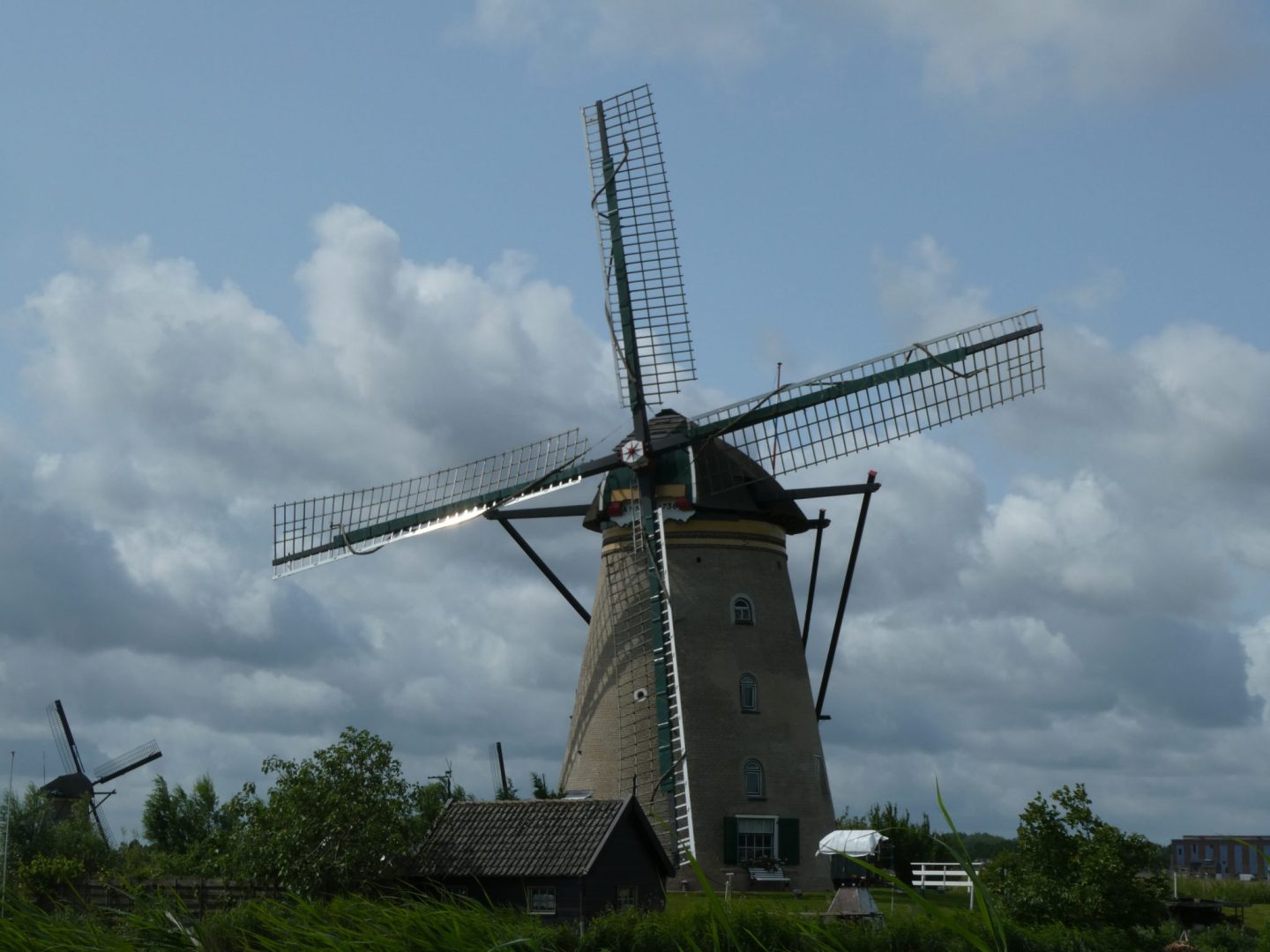
Over the next three centuries, damage to the dykes from storms and river flooding wreaked devastation with increasing frequency. And so, between 1738 and 1740, a complex of 19 monumental windmills was built to pump water from low canals to higher canals and then into the rivers which carried the water to the sea.
The mills were replaced by steam powered pumping stations in the 1920s, which were later converted to diesel, but the original windmills remained in place. During WWII they were brought back into operation due to fuel shortages. They were decommissioned after the war but thankfully were preserved and opened as a museum in the 1950s. They’ve been UNESCO listed since 1997 in recognition of “the outstanding contribution made by the people of the Netherlands to the technology of handling water”.


Sixteen of them are still inhabited by millers and their families who take care of the buildings, and two are open as museums so visitors can see how they operate and what life was like for families during their operational days.

Back in town we caught a tram to Delfshaven. Now a borough of Rotterdam, Delfshaven was developed as a harbour outside the city limits in the 1380s, attracting trading ships which could discharge cargo without paying the tolls which were charged at Rotterdam’s port.
It became a successful hub for fishing, shipbuilding and the distilling of jenever, a juniper-flavoured traditional liquor which was probably the precurser to English gin.
Delfshaven was not harmed by the German bombing of Rotterdam in 1940 and although it suffered some damage from later Allied bombing, it emerged largely unscathed from the war. It’s been beautifully preserved, and the harbour is full of restored boats.


J. H. Henkes built his jenever factory here in 1867 and became the first distiller to use steam engine technology. The building still bears his Royal Stork brand insignia and copies of medals of his wins at gin exhibitions.

Delfshaven is also where the Pilgrim Fathers started their sea journey to America. They were English Calvinists who had come to Holland to escape persecution. After twenty years living in Leiden, north of Rotterdam, they foresaw problems practising their faith here too, so decided to head to America.
They bought a boat, the Speedwell and held their last service in the church on Delfshaven harbour, before sailing to England to meet up with others of their church who planned to cross the Atlantic with them on the Mayflower. The ships left England together but the Speedwell foundered not long afterwards. Both boats returned to Plymouth where they sold the Speedwell and the whole group set off again in the Mayflower. The rest is history, and the church in Delfshaven has been known as the Pelgrimvaderskerk (Pilgrim Fathers Church) ever since.


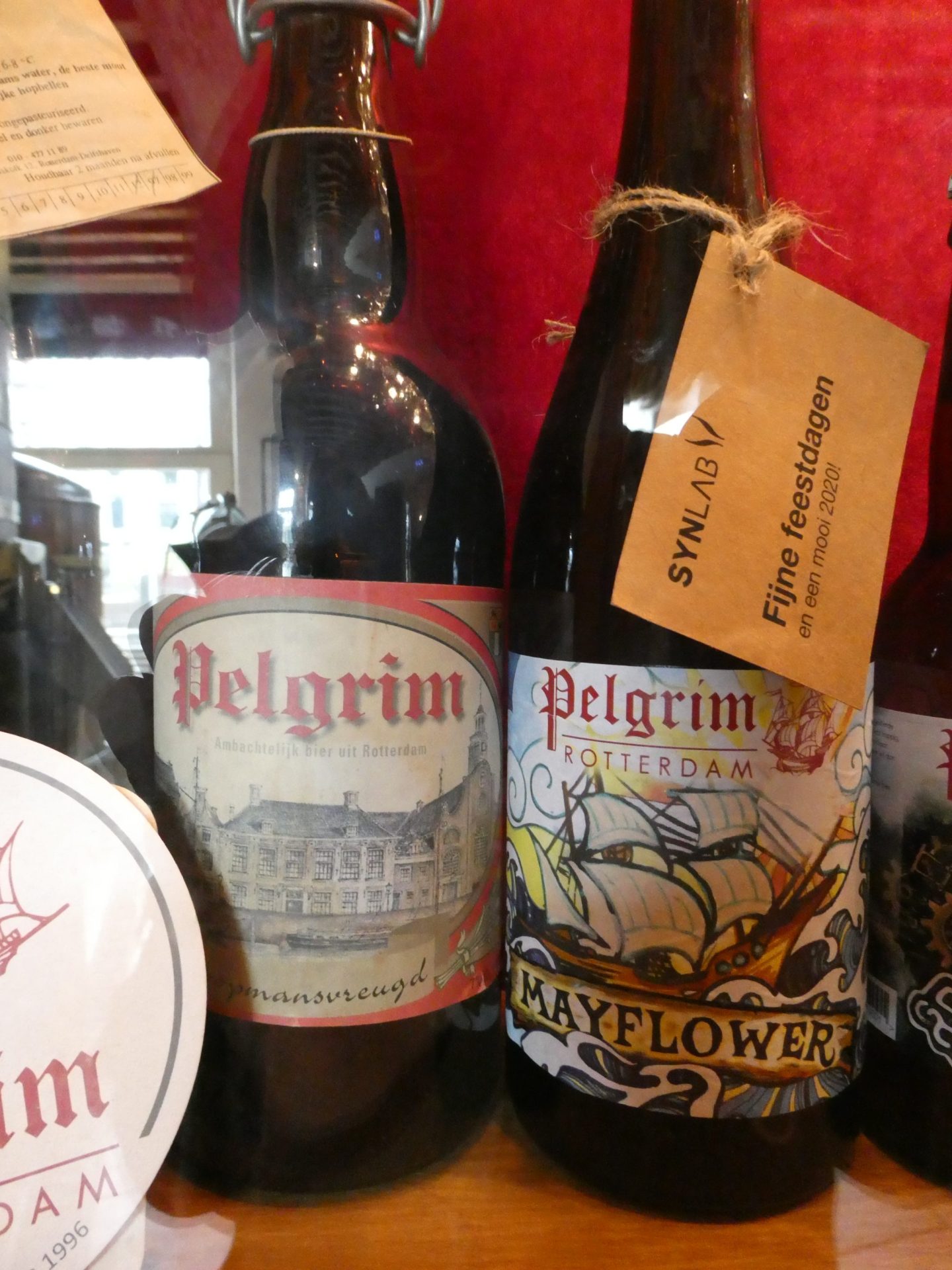
Next door, the historic building which was once Delfshaven’s town hall is now De Pelgrim Brewery, where we had a pub lunch and a flight of the micro-brewery’s rather fine beers.

That’s all we had time for in Rotterdam, but a quick final word about Dutch food. Sure, it’s not the most exciting cuisine on the planet, and this coffee shop wasn’t helping.

But there were a few notable finds. The herring isn’t bad. We had some nice herring sandwiches at this street stand in Amsterdam.

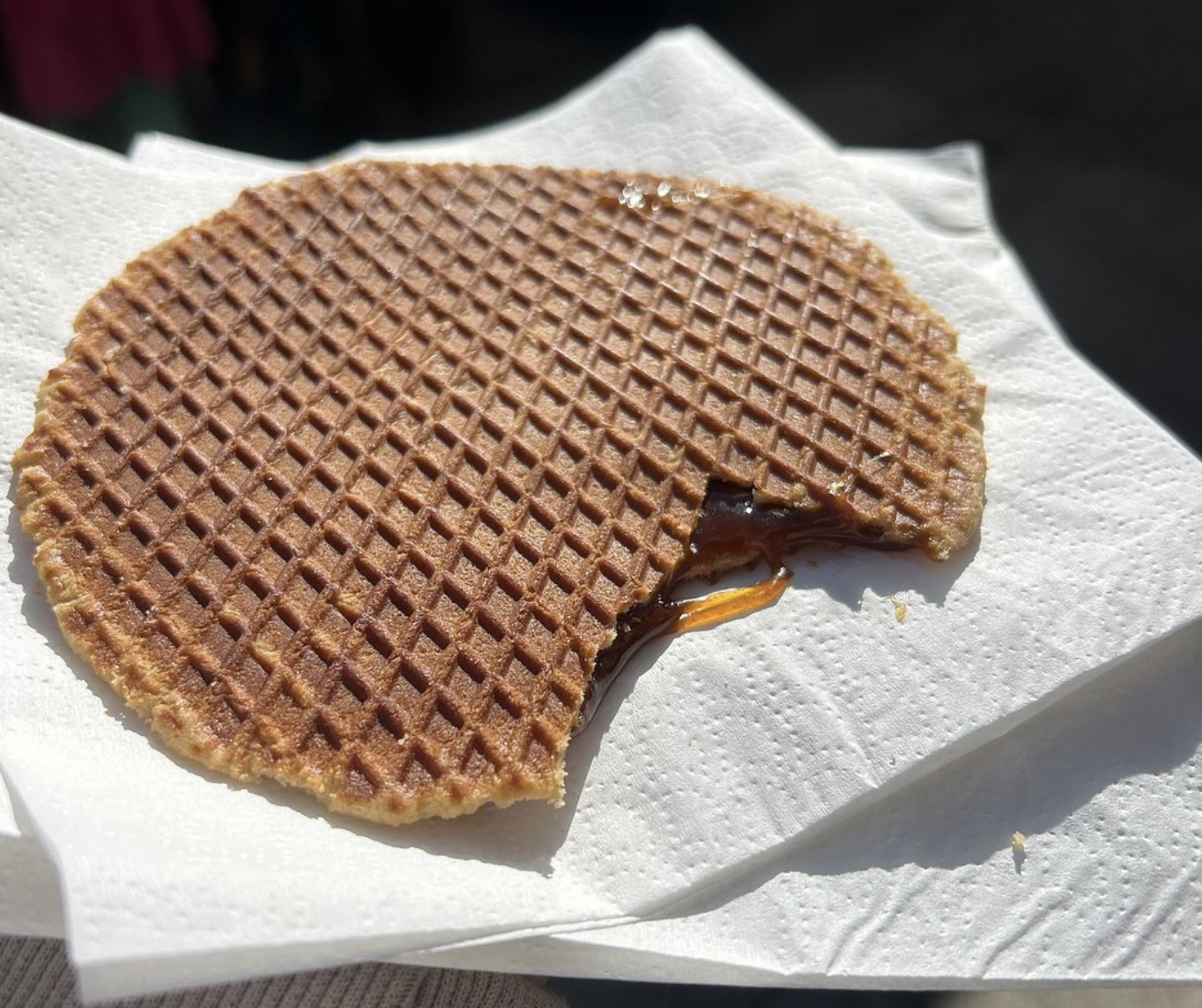
And to our surprise, really liked stroopwafels. They’re two wafer-thin crispy ‘waffles’ filled with a caramel syrup. Enormously popular, sold at stands all over town, deadly sweet but strangely moreish.
Don’t knock it if you haven’t tried it. A lot like Rotterdam really.

Great read – was amused by the bronze, & the cube houses but the cat 🐈⬛ and cradle was the best – good story too. You seem to be really enjoying Rotterdam – what’s not to love about a stroopwafel x
Rotterdam ! Amazing how we can have negative perceptions of places when we’ve never actually been there. Looks stunning .
We came across the work of O Zadkine in Central France at a small museum where he lived . Very dramatic works . There is also one in Paris .
Camino life now definitely done .
Author
Yes, very different from the Camino now.
We saw a sculpture of Vincent Van Gogh at the psychiatric hospital in St Remy done by Zadkine. And there’s one of Vincent and his brother Theo at Auvers-sur-Oise where Vincent died, but we haven’t seen that one.
So we need to thank Delfshaven for the jenever factory because what would life be without gin ? Unimaginable is the answer 😀
I am however, suspicious of the shit shake. Is it because it will make you feel like shit or will it aid in your bowel evacuation ? Either way doesn’t sound enticing.
The cat in the floating cradle sculpture is beautiful. I’ll give kitty the benefit of the doubt.🐾
Author
Yes, and kitty has grounds for complaint – they recorded and remember the baby’s name but not kitty’s. Shabby.