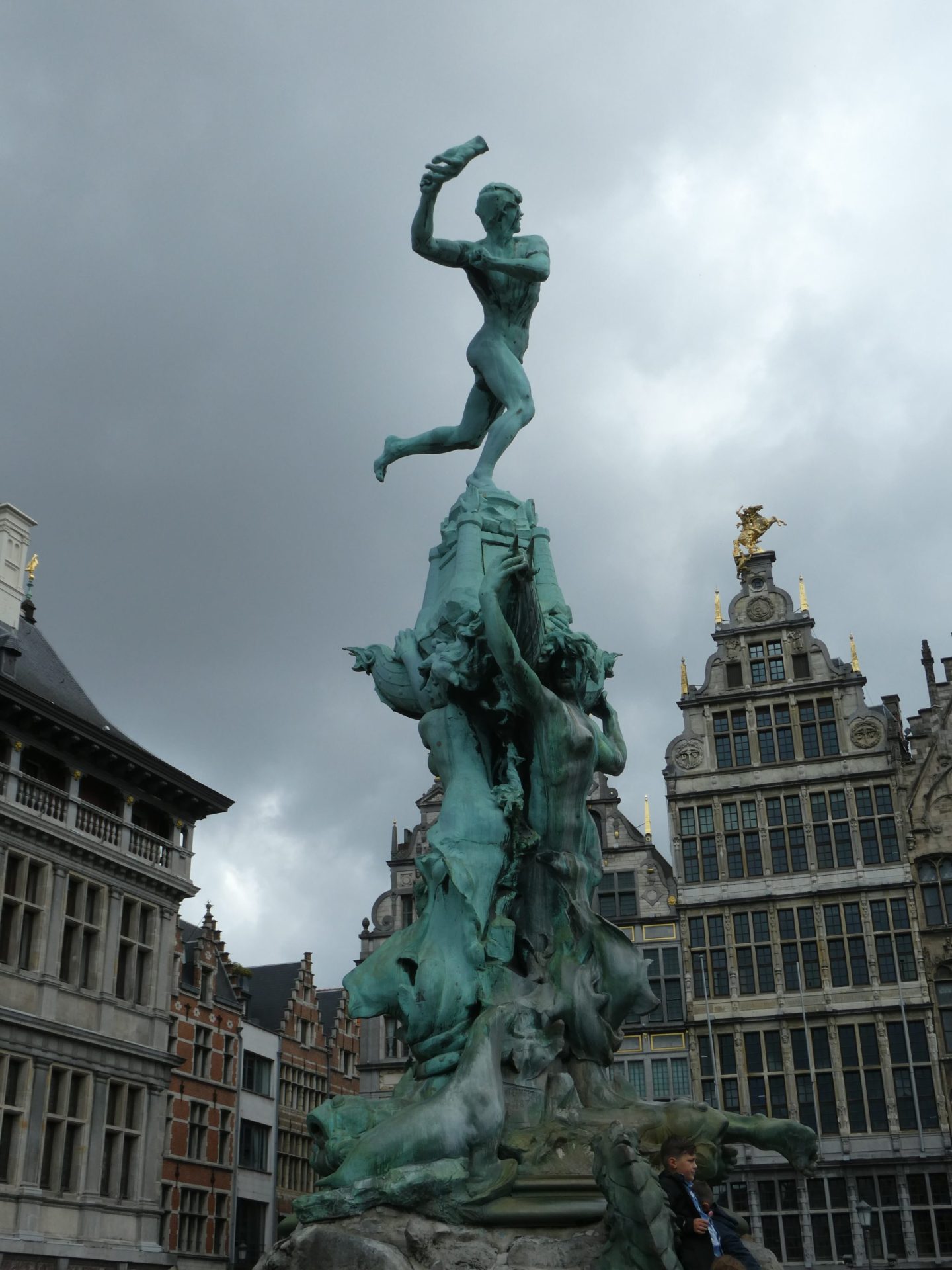
According to local folklore, in Roman times a giant named Antigoon lived on a bend in the Scheldt River. He extracted a toll from passing boatmen, cutting off the right hand of any who failed to pay. But what goes around, comes around. A heroic Roman soldier named Silvius Brabo vanquished Antigoon, severed his giant hand and threw it in the river.
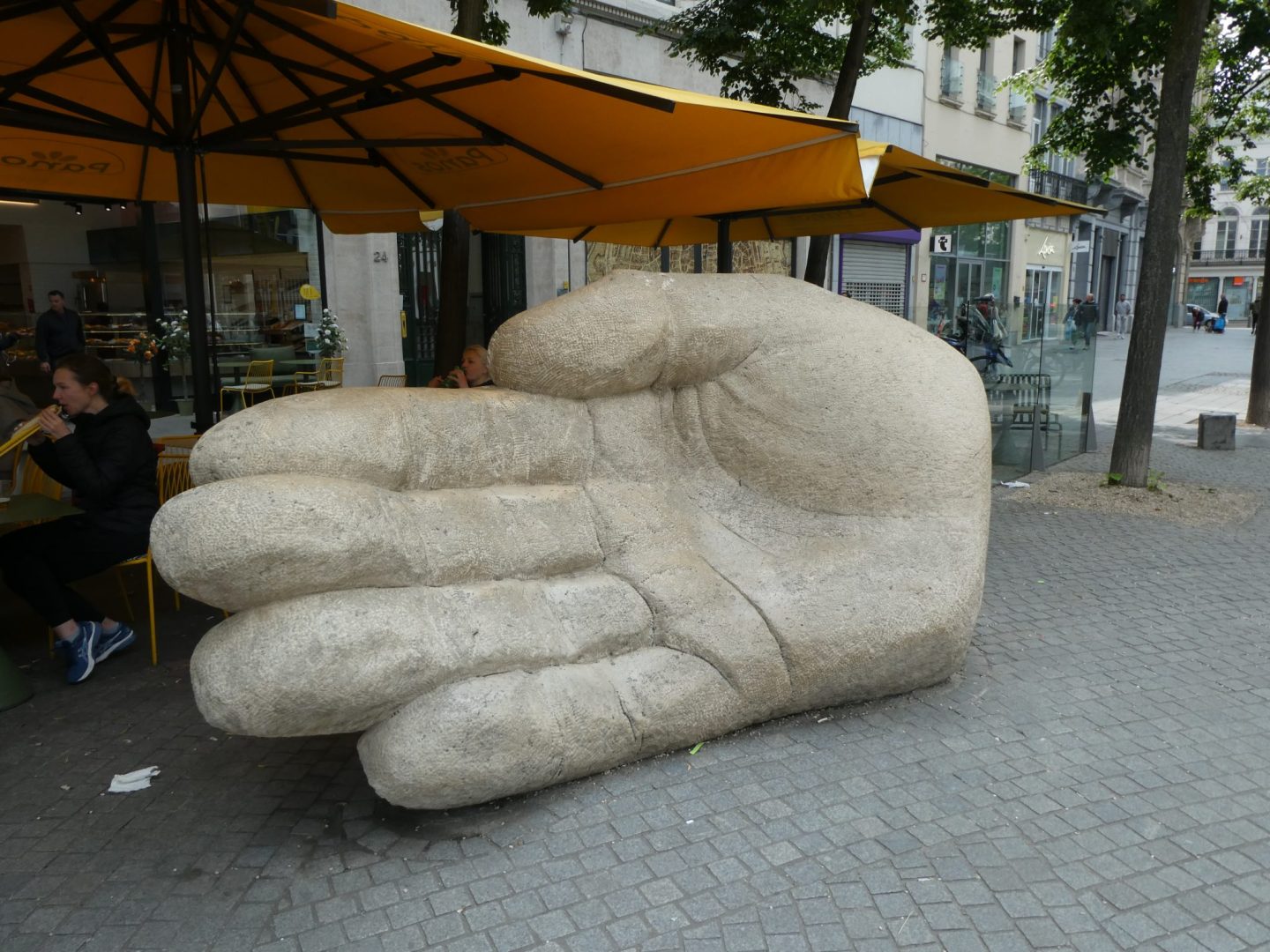
In ancient Dutch, handwerpen means ‘hand throwing’. Handwerpen became Antwerpen – the Dutch spelling – and that’s allegedly how Antwerp got its name. Probably untrue, but a good story still celebrated in the city.
In the main square there’s a statue of young Brabo flinging the offending hand. Like modern day footballers he obviously celebrated by shedding his clothes.
In 1986, French artist Henri de Miller created L’Ecoute, which means ‘listen’, a monumental sculpture of a human head lying, ear to the ground with a cupped hand beside it. It’s in a square in Paris as if listening to the sounds of the metro beneath. In 1991 the city of Antwerp bought a smaller version of the sculpture from de Miller. They didn’t tell him they didn’t plan to install it all. Despite his strong objections, they installed only the hand in Antwerp’s main pedestrian shopping mall as a nod to the city’s origin story.
Built in the early 1200s on the banks of the Scheldt River, Steen Castle is the oldest building in Antwerp and part of early city fortifications. It served as the gate house to a much larger castle, now long demolished, from which the Dukes of Brabant ruled the land. It looks a bit like a mini Disney castle.

Near the entrance is a statue of the giant, Antigoon. A couple of mere mortals, strangely, appear to be staring straight up at his crotch? Could it be the first documented example of up-skirting?

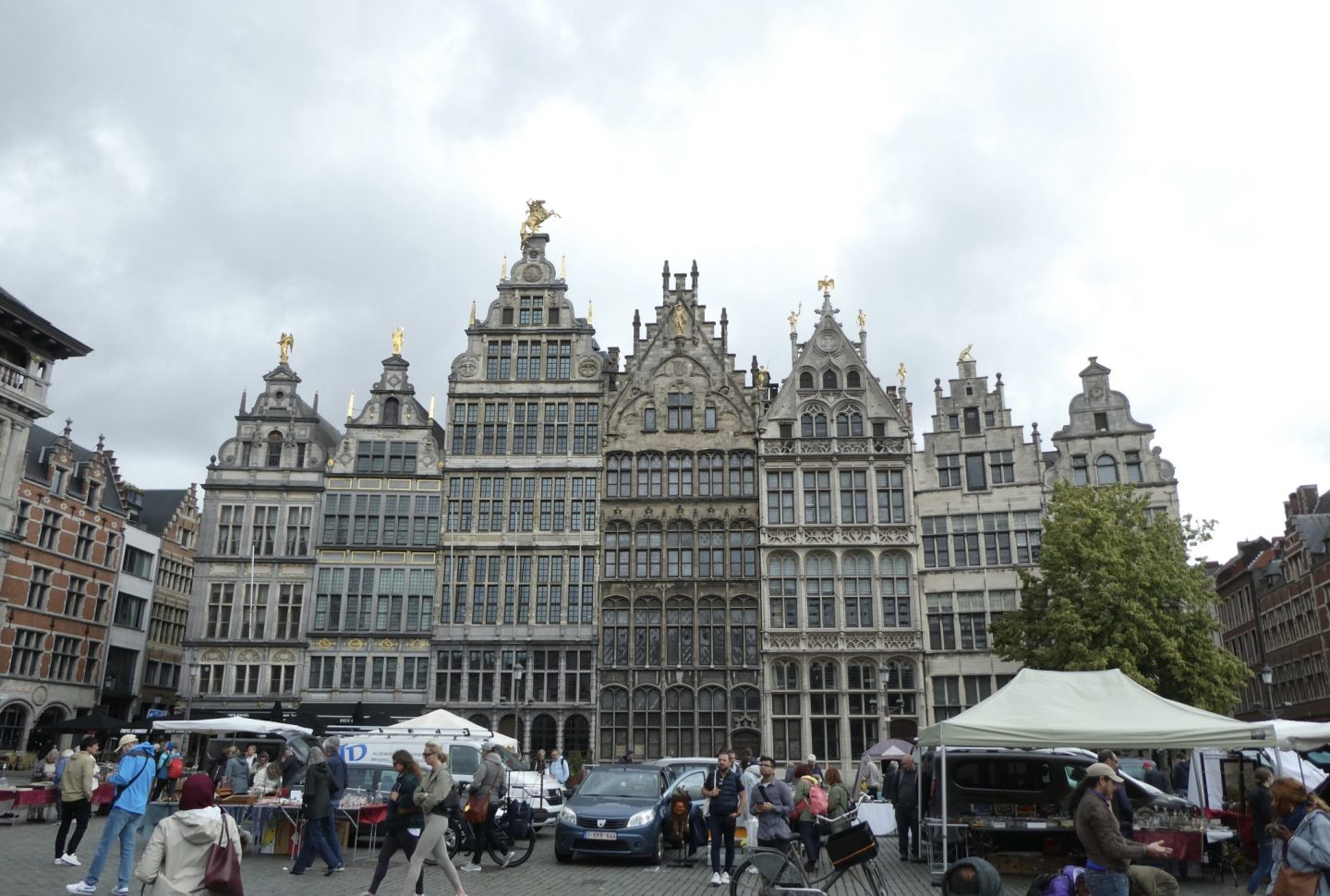
For a city that’s been pounded in two world wars, there’s a surprising amount of old architecture, everything from Gothic, Baroque and Renaissance to Art Deco.


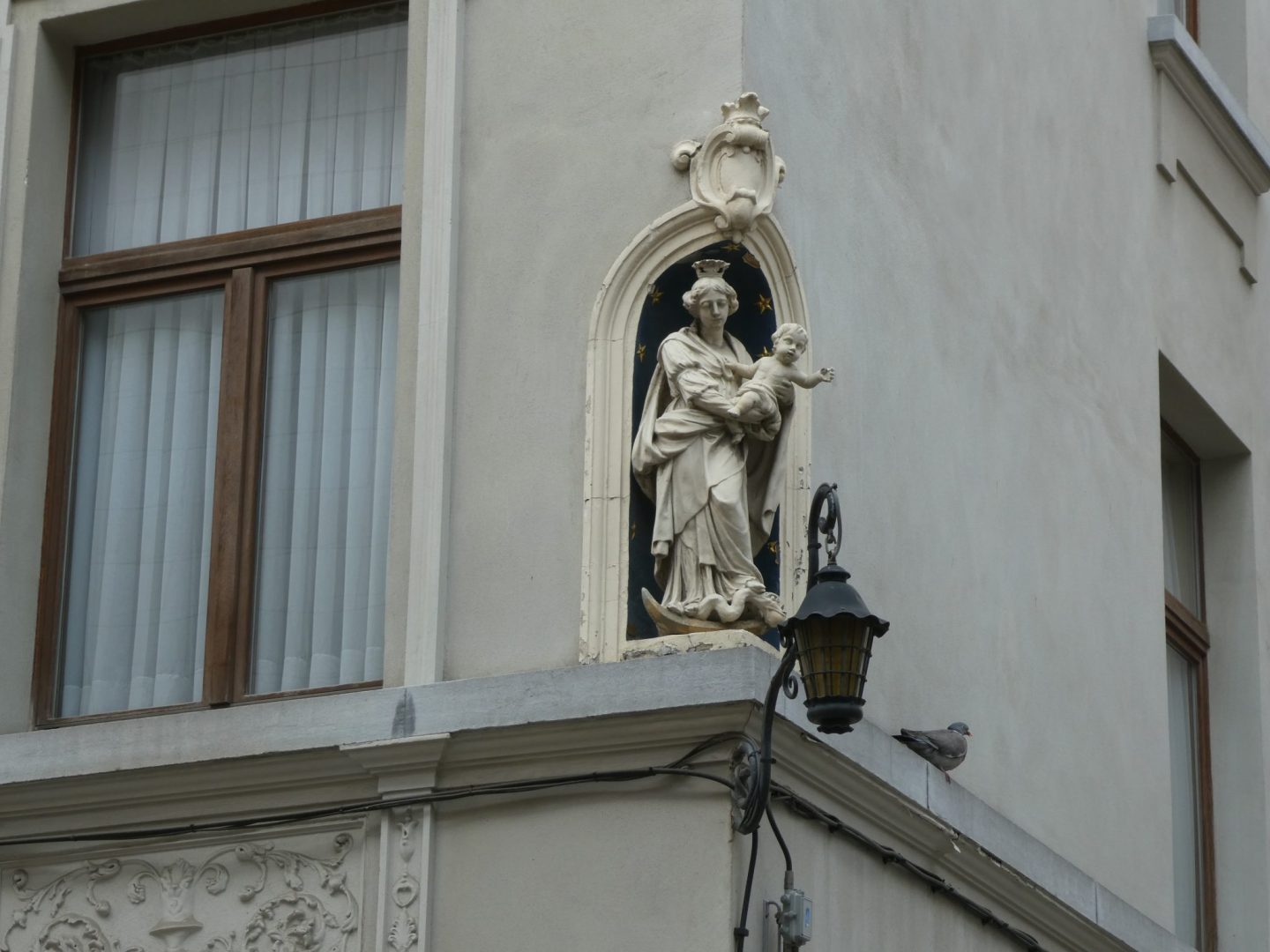
Another interesting feature are these little statues of the Madonna which appear on the corners of random buildings. They date back to the 17th and 18th centuries when building owners and religious guilds placed them on their buildings as a public sign of faith and to appeal to Our Lady for protection.

Antwerp’s central railway station is stunning. In 2009, Newsweek magazine judged it the world’s fourth greatest train station. In 2023, Conde Naste Travel declared it the world’s most beautiful.

Over $16 billion in polished diamonds pass through Antwerp’s diamond exchanges every year, and 80% of the world’s rough diamonds are purchased through traders here. It all dates back to 1476 when Lodewyk van Bergen invented the scarf, a new diamond polishing tool used to create the stereotypical sparkling, multifaceted diamonds we know and love today.
Diamonds brought money, and money caused a flourishing of the arts. Maybe that’s the origin of Antwerp’s present day role as Belgium’s ‘capital of cool’, a magnet for fashion designers, jewellers, art dealers and general culture vultures.
We were lucky to catch the final day of a temporary exhibition on the life and work of photographer Lee Miller at the highly regarded Fotomuseum Antwerp (FoMu).
Not to be confused with Fashion Museum Antwerp (MoMu) which collects, conserves, studies and exhibits contemporary Belgian fashion. We weren’t aware Belgium was known for creating cutting edge fashion design but haute couture can be elegant, zany or both, and we thought MoMu would be fun.
It was. And if you’re thinking ‘Belgium haute couture’ sounds like the punchline to a joke … Well, here’s some examples. Make up your own mind.


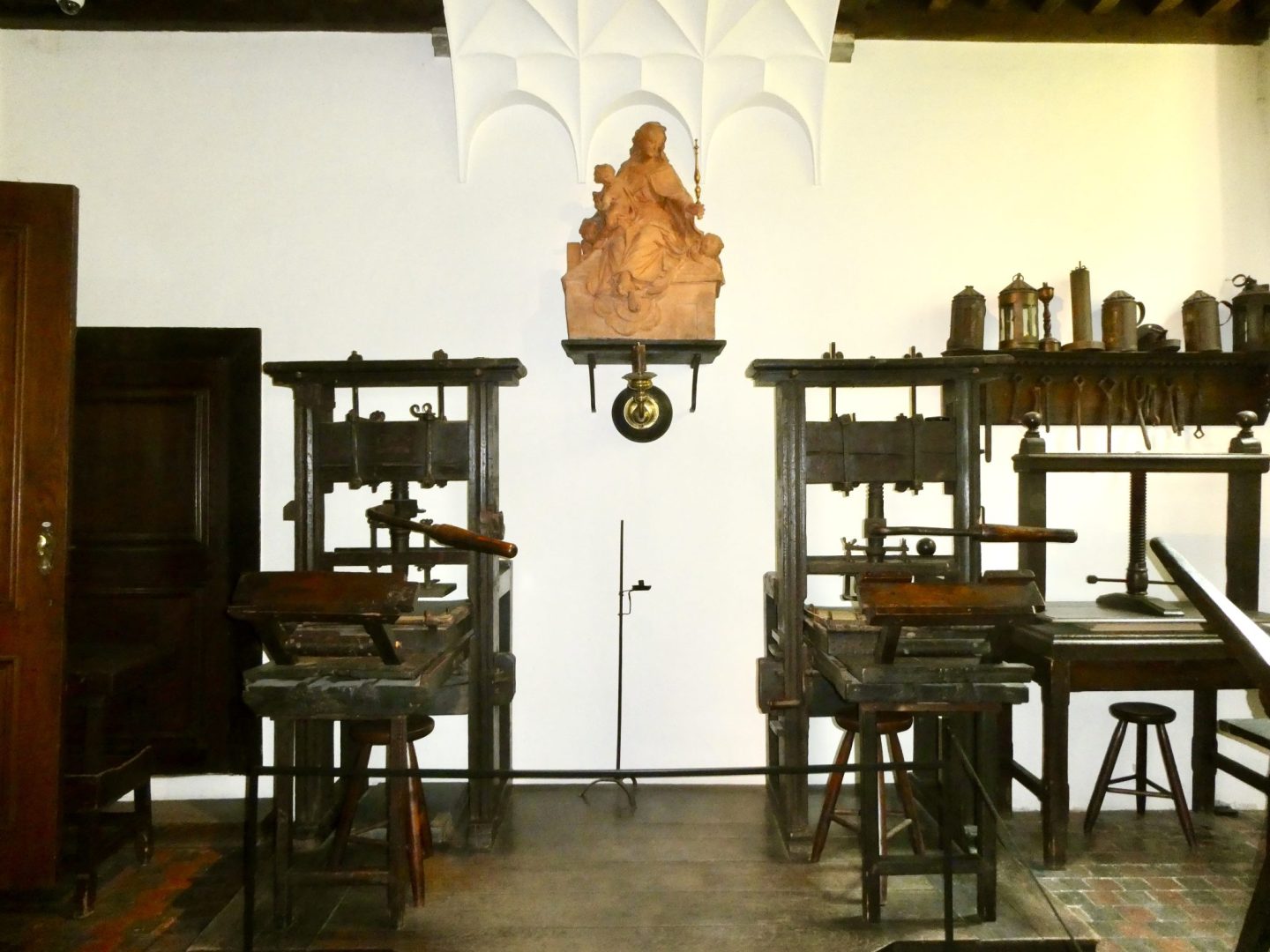
More cerebral was the Plantin-Moretus Museum. In the medieval mansion of the family of the same name, it has a superb exhibition on the early history of the printing press and its impact on the spread of philosophical, political and religious ideas as well as medical knowledge. The family were avid collectors and art lovers as well as printers. The UNESCO listed collection includes the two oldest printing presses in the world, original typesets from the 1600s to the 1800s and a leather lined library containing a priceless collection of seriously beautiful early printed books.

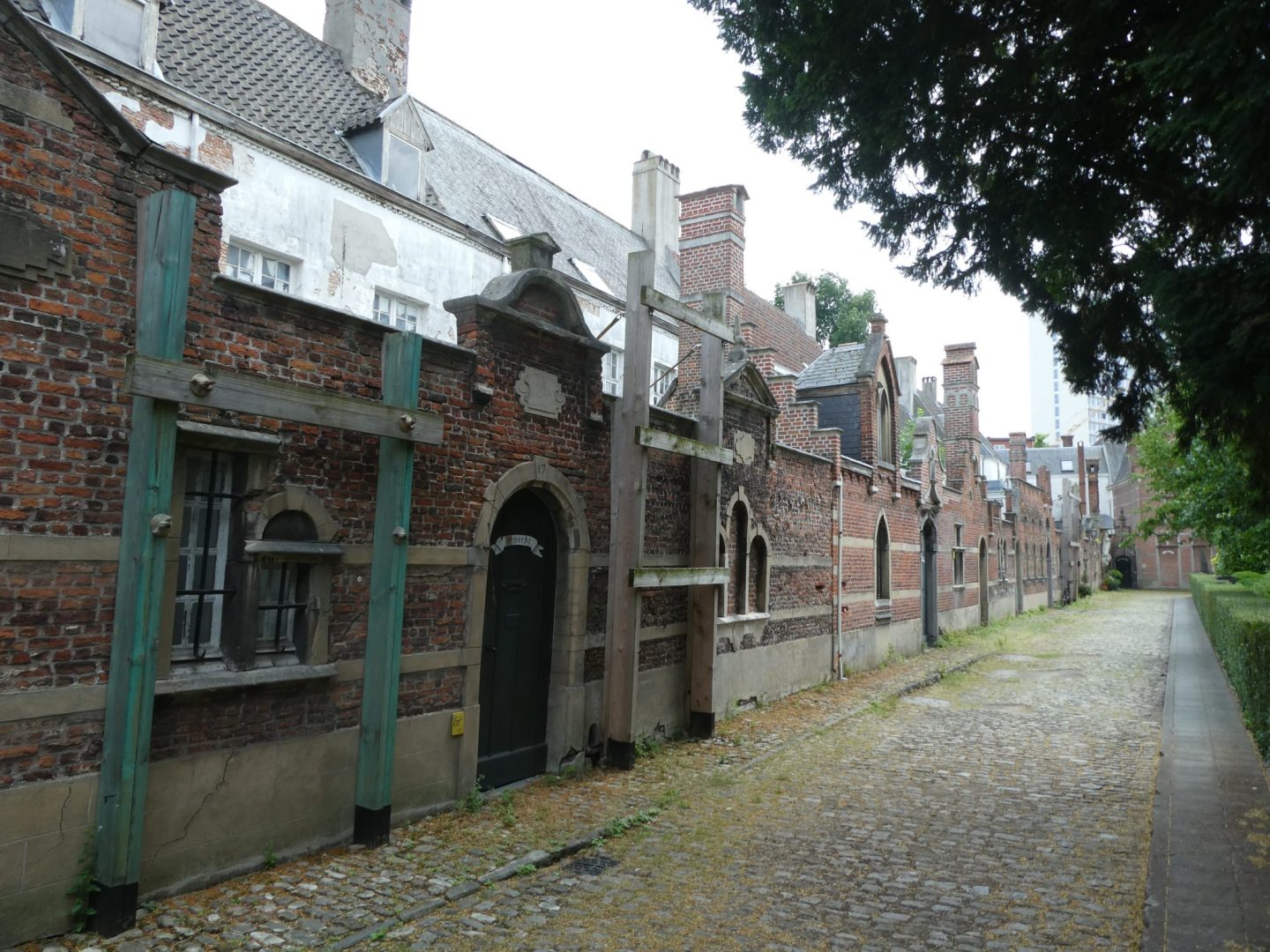
In our Amsterdam post we described the history of begijnhofs, semi-cloistered communities of lay Catholic women who dedicated their lives to service. There were quite a few in the lowland countries, including one established outside the then fortified town of Antwerp in 1240. It was destroyed by marauding French troops in 1542, so a new one was built within the city. The last of the beguines died in 1986, but it is still a residential complex open only to women. Like all begijnhofs, it is enclosed by walls, creating a quiet, contemplative environment. An oasis of calm surrounded by modern Antwerp.


Spiritually refreshed but feeling hungry? There are waffle vendors galore. Waffles with chocolate? Perfect! Waffles with slagroom? Or even extra slagroom. We didn’t ask what that might entail.

Actually, it’s just whipped cream. So not so interesting after all.
And the cutest thing in Antwerp? The small Nello and Patrasche monument. In 1872, the novel A Dog of Flanders by English author Marie Louise de La Ramee was published. Set in Antwerp, it tells the sad story of a Flemish boy named Nello and his dog, Patrasche. It was only moderately successful in the UK but became a children’s classic in Japan, Korea, Russia and Ukraine where its popularity has endured for generations. In Japan it’s been made into a film several times including in anime, and made into a TV series. There’s even been a documentary exploring why it’s become such a phenomenon despite having no connection to that part of the world.
Ironically it was only translated into Dutch in 1987. By then, city authorities had realised that a lot of tourists were coming to Antwerp Cathedral because of the book, not because of the Rubens paintings within. Spoiler alert: Nello and Patrasche both die of hypothermia in front of the altar in Antwerp Cathedral. Which is why this statue of them in the nearby square is clever. They are tucked up under a blanket, now eternally warm.

Antwerp was anything but warm during our visit. If this is summer, we know why they perished. We’re headed next to sunshine in Brussels.

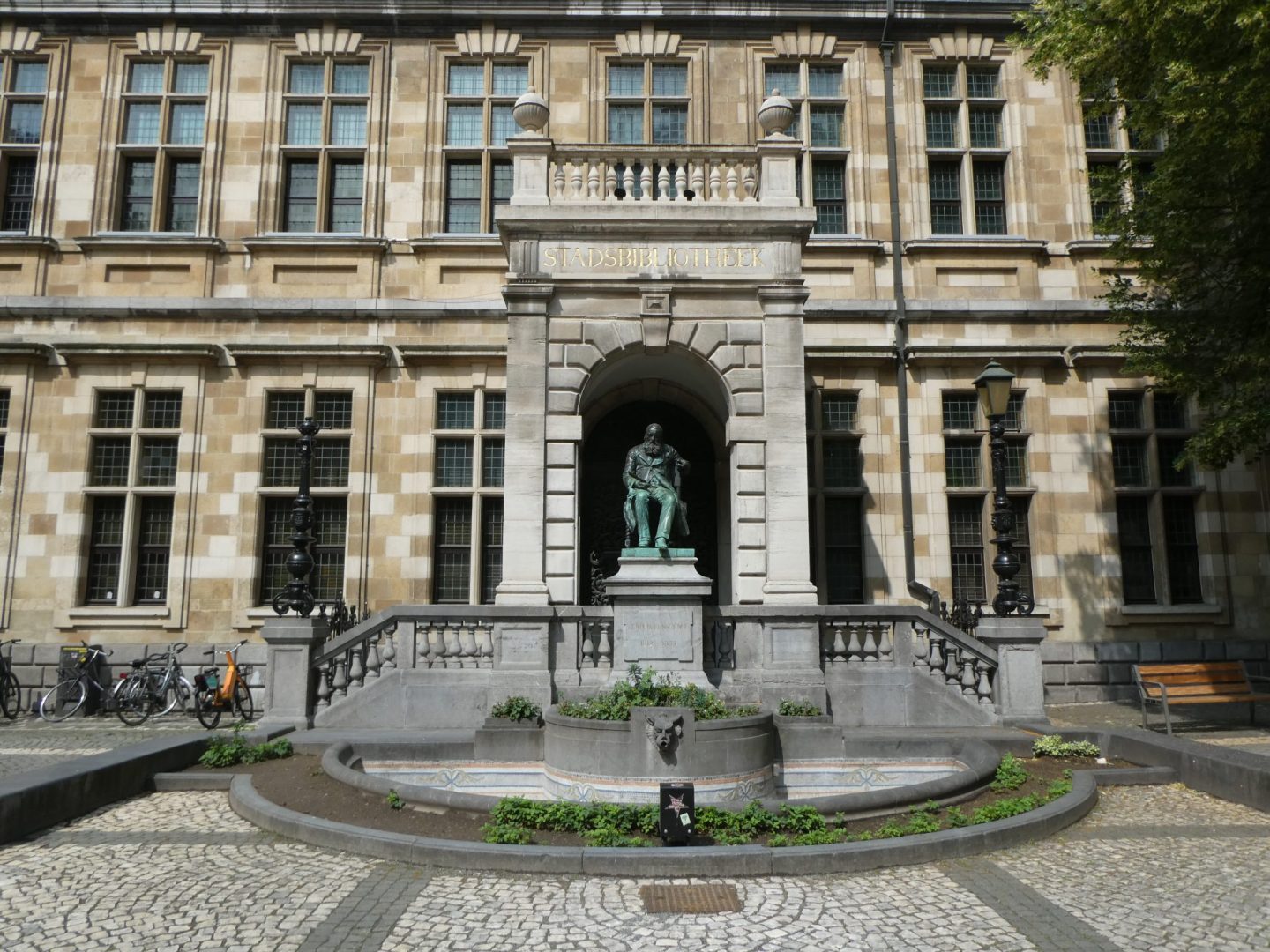
The sculpture of the boy and is dog is so touching and also artistically clever. I love the library photographs. One could spend hours there. With regard to the fashion museum, I think they’ve nailed it. Every bit as weird and unlikely to be worn in public but interesting to behold as other fashion houses and parades around the world.
Love ❤️ your crazy stories of severed hands & giants & really enjoying the sculptures – thanks so much for this blog – keeps me amused when my students are acting hopeless 😩 x