“Oh, we’re half way there, oh-oh livin’ on a prayer…” (Livin’ on a Prayer, Bon Jovi)
Day 21 was hump day. Some time that morning we clocked up 420km. We’re approximately half way to Santiago de Compostela.
But while true pilgrims may be living on a prayer, we are living more lavishly, with hearty Asturian fare predominating this week. More on that later.
A short ‘week’ this time. In four days we walked the 99km from Llanes to Gijon, with a break in Gijon as it’s a large town convenient to do some housekeeping.
Leaving Llanes, the next settlement is Poo. It has a lovely beach but we were conflicted. We imagined a conversation: “So, where is your holiday house?” “Poo Beach.” Just doesn’t sound appealing.


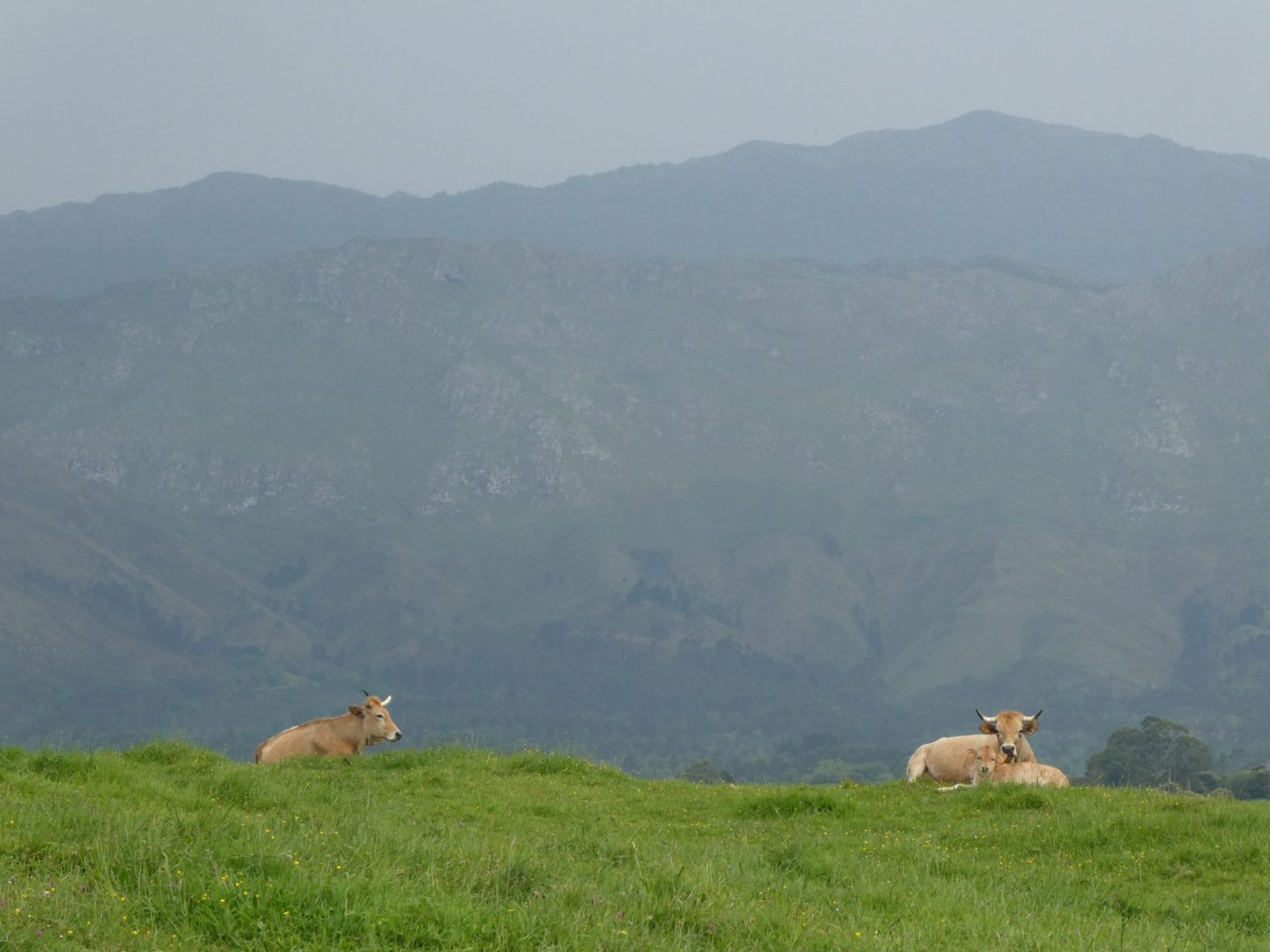
For most of the week we hiked west with the majestic Picos de Europa mountains to the left and the Cantabrian Sea to the right.
Thankfully, the Middle Ages pilgrims hugged the coast, so as yet we have not had to climb too far into the mountains. But they make a great backdrop as we wind through the foothills.


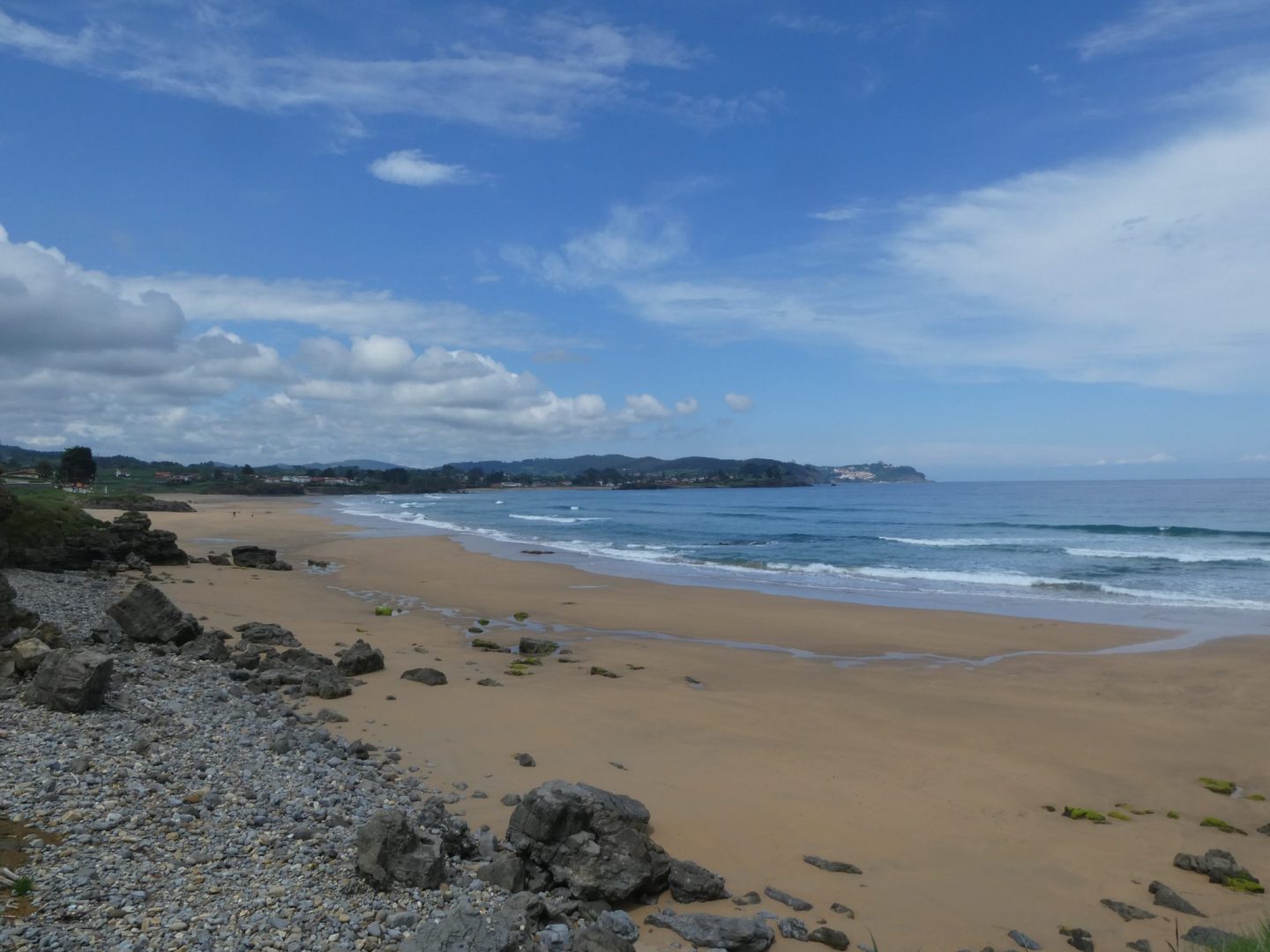
The Asturian coast has more than two hundred beaches, ranging from tiny inlets to long sandy stretches.


Our friend and loyal blog follower Hugh loved the ‘cows on the cliffs’ photo in our previous post, so here’s more cows from this week with the towering Picos in the background.
And some more by the sea.

And more rugged cliffs.


We passed an alberque where they paint boards for the places their pilgrim guests come from. As you can see, the Norte attracts walkers from all over the world.

There was even one from our home town.

If you’re wondering what 400+km can do to your footwear, check out these abandoned hiking boots. One looked suitably worn, the tread of the other had completely delaminated.

The town of Ribadesella has been called the prettiest Spanish seaside town foreigners have never heard of. There’s a string of impressive early 19th century beauties along its beach built when the town became popular with Spanish noble families as a bathing destination.


Including the gorgeous Villa Rosario, an Indiano mansion built in 1914 where we stayed the night.

We continue to see quirky things, like this miniature horse with a two-tone mullet.

A cast iron bathtub re-purposed into a cafe seat.
 A bizarre gyrating cow in a shop window.

Some trompe l’oeil on a disused church.

 Lots of Camino related artwork.


And this Camino gnome named Santiagus embedded in a stone wall.
 His plaque says “Along the way there is a magical world that you don’t see, it is the protective guardian that will guide you and wait for you, giving you success. Buen Camino”.
Buen Camino, literally ‘good way’, is the standard greeting on all the Caminos. A short way of saying ‘wishing you a good journey’. Lots of locals say it as we pass. We’ve been constantly impressed with how accepting they are of strangers wandering through their territory. On the few occasions we’ve stopped to check the route, if there’s someone around they will usually tell us which way before we even have time to pause for breath.
The path is generally well signposted, albeit the signs take many forms, some more obscure than others.
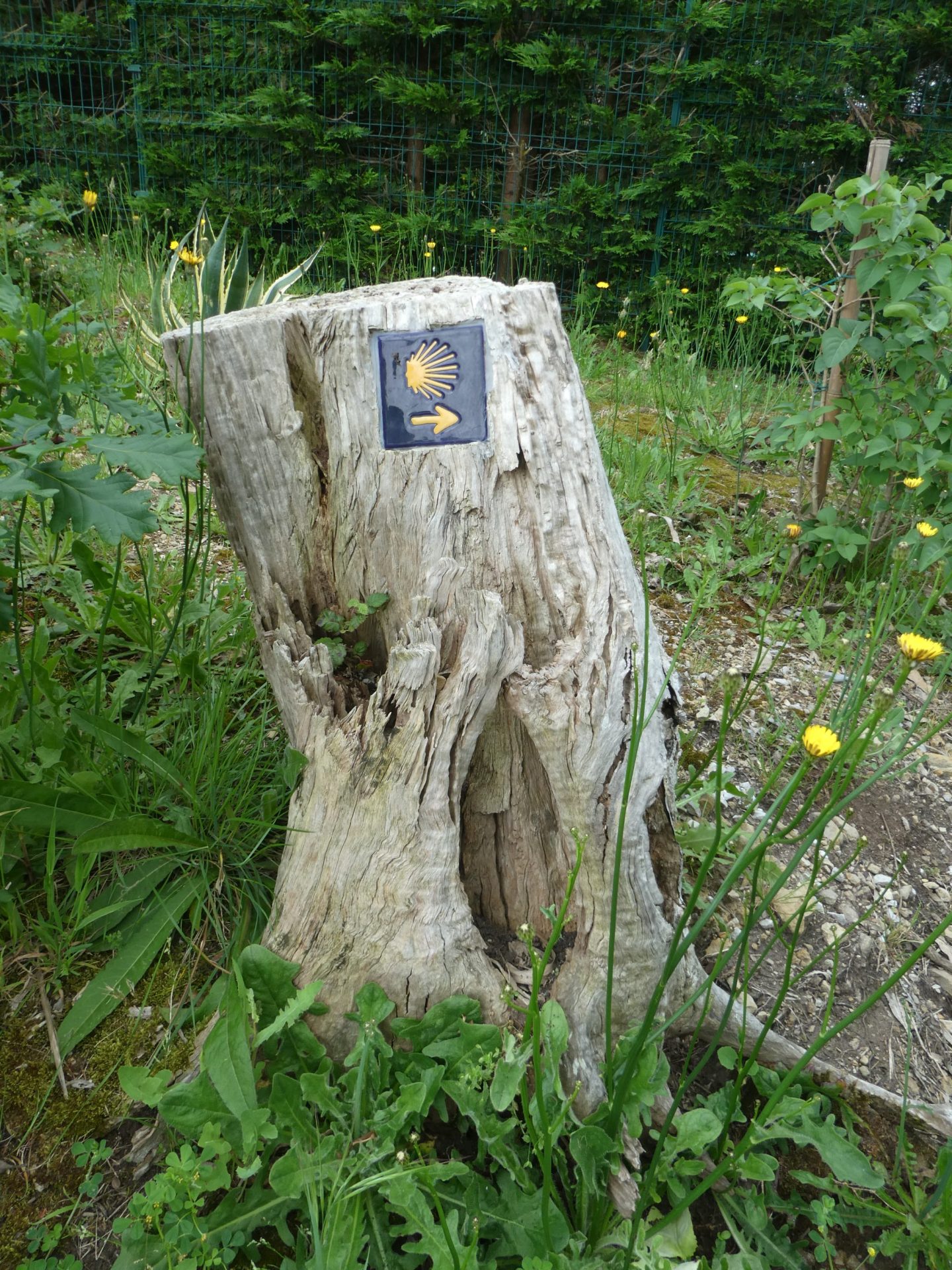


This improvised one directed us to an underpass on a section where the route was disrupted by nearby roadworks.

On day 23 we slogged up a muddy track uncertain if we were going the right way. When we reached the road at the top, the question was answered emphatically.

But we do question the wisdom of putting a marker on something that can be easily moved.

Apple trees are budding. In the autumn, the harvested apples will mostly be made into sidre natural, a dry, usually slightly tart, non-carbonated cider, about 6% alcohol and very drinkable.


It’s fermented in enormous barrels and drunk ‘fresh’, meaning it’s bottled the following spring and generally drunk within a year.


80% of Spain’s cider is produced in Asturias, about 45 million litres per year or the equivalent of 60 million standard 700ml bottles. It takes about 1.3kg of apples to make a standard bottle. That’s a lot of apples.
95% of it is consumed here in Asturias. The average Asturian consumes 60 litres per year.
The Cider Tree on the port promenade in Gijon comprises 3,200 cider bottles and was built for the city’s annual Natural Cider Festival in 2013.

As well as cellars where cider is served direct from the barrel, every town has sidrerias. Cider is served ‘escanciada’, which means poured from a bottle held above head height into a glass held at waist level. This is to enhance the fizz.
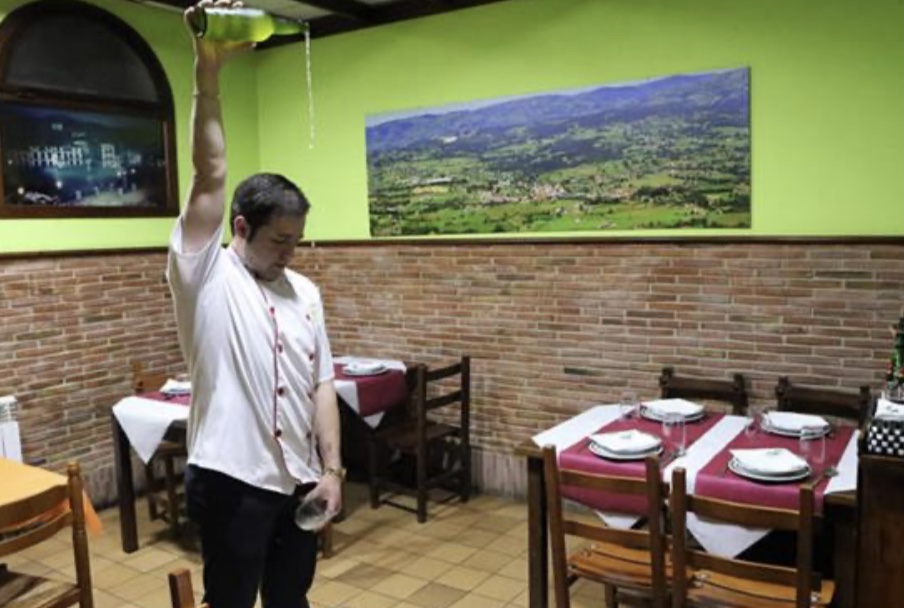
But it also leads to spillage. Best not wear your blue suede shoes if you work as a waiter in a sidreria. In Villaviciosa, this sidreria used a contraption to save the floor and waiters’ shoes from splashes. Very sensible, but it looked disturbingly like a portable urinal in the middle of the restaurant.

A less confronting option is to provide a siphon for customers to do it themselves.

This one was fun.

Asturias is dairy country, famous in particular for its cheeses. The best known is cabrales, a blue cheese that will take the roof off the mouth of the uninitiated if eaten as a piece. Much better, it makes a fantastic cheese sauce or stuffing for cachope, essentially a crumbed beef schnitzel served in restaurants and cafes throughout the province. We should be ashamed, but aren’t, to admit we came close to finishing the famous 1kg cachope at Sidreria El Antoju in Llanes.

Fortified with cider and cachope, we head into week 5. We’re on a roll now!
This week:
Day 20: Llanes to Ribadesella: 30km
Day 21: Ribadesella to La Islas: 18km
Day 22: La Islas to Villaviciosa: 21km
Day 23: Villaviciosa to Gijon: 30km
Day 24: Rest day in Gijón
Total to date: 498km

Julie and John I’m really enjoying walking the Camino vicariously with you. I’m impressed. Love Patricia.
Along with your friend Hugh I also like the cows. They look so one with their green universe. The street art is clever and that cast iron bathtub come chair would go well in any chic restaurant.
Buen Camino my dear friends. The Asturian coast is very lovely, cliffs, cows, and the reminders of walkers past. Love the flowers on the apple trees but no so sure about the cider & cachope – I keep looking at the kilometres you are covering & feeling very tired – how do you do it?
Author
Thanks, T. We are feeling good! Tired feet at the end of the day but remarkably quick recovery overnight. How do we do it? One day at a time!!!