We’ve now completed the third week of our Camino journey. It doesn’t feel like an odyssey, more that we’ve slipped into a steady rhythm, moving slowly west with mountains and coastline gradually opening up in front of us.
In the last five days we have walked another 120km, from Santander to Llanes.
Leaving Santander we continued through Cantabria and then into the province of Asturias. The route swung inland and we had misty mornings gradually transforming into bright sunny but cool days, perfect for the hilly walks.


Santillana del Mar is known as the Town of Three Lies because it doesn’t have any particular connection to a saint (santi), it’s not flat (llana) and it’s not by the sea (del mar). We also think there’s a fourth lie. It’s billed as one of the Norte’s most picturesque towns. Yes, it’s pretty, but in a very Disneyesque way. All scrubbed-clean stone, dinky tourist shops and not much evidence of real village life.


We preferred the ordinary villages we passed through on our wanderings through the countryside.


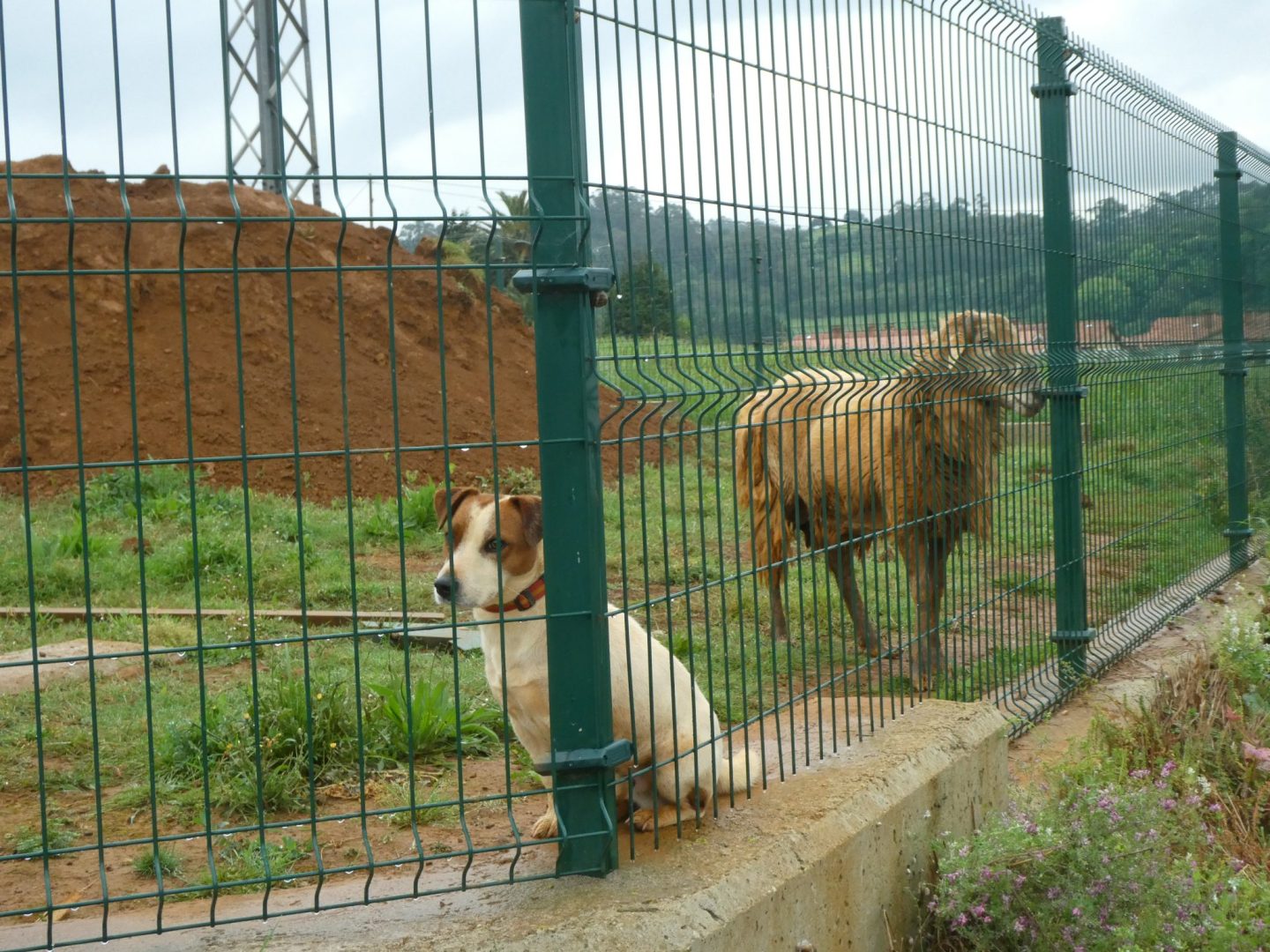
It’s in those that you see the quirky little things that only happen where real people live. This week it seemed to be all about dogs. Like this one, carrying her own lead.

This puppy looking out for his one sheep. Big responsibility!
We didn’t need a Spanish dictionary to interpret this tile we spotted on the fence post of a house.

The flip side was this cute dog, guarding the pot plants.


We did think the designer of this water font missed an opportunity to have some fun with the placement of the nozzle.

The town of Cobreces is striking for its two brightly painted churches, a break from the plain stone ones which are the norm here.


On day 18, the Norte passes near another ancient pilgrimage site, Santo Toribio de Liebana. The monastery gained a position of pre-eminence in Middle Ages Christianity because it purportedly possesses the largest surviving piece of the Cross on which Jesus was crucified. It was brought to the Iberian peninsula in the fifth century and later hidden in the monastery here in the mountains when the Moors invaded northern Spain.
So for a while the Camino doubles as the Camino Lebaniego, the route to that monastery.

Which might explain the sudden proliferation of little shrines along the way.


Back on the coast, we reached Comillas. The town boomed in the 19th century when aristocrats from Barcelona started holidaying here. The legacy of that era is a swag of ornate monuments to ego.
Antonio Lopez went to Cuba as a 15 year old pauper in 1831, founded a shipping line and made a fortune from the slave trade. During his lifetime he was one of the world’s richest men. He bought himself the title Marquis de Comillas and in 1882, had the Sobrellano Palace built in ‘neo-modernist Gothic’ style on a ridge with a view over Comillas and the ocean beyond.

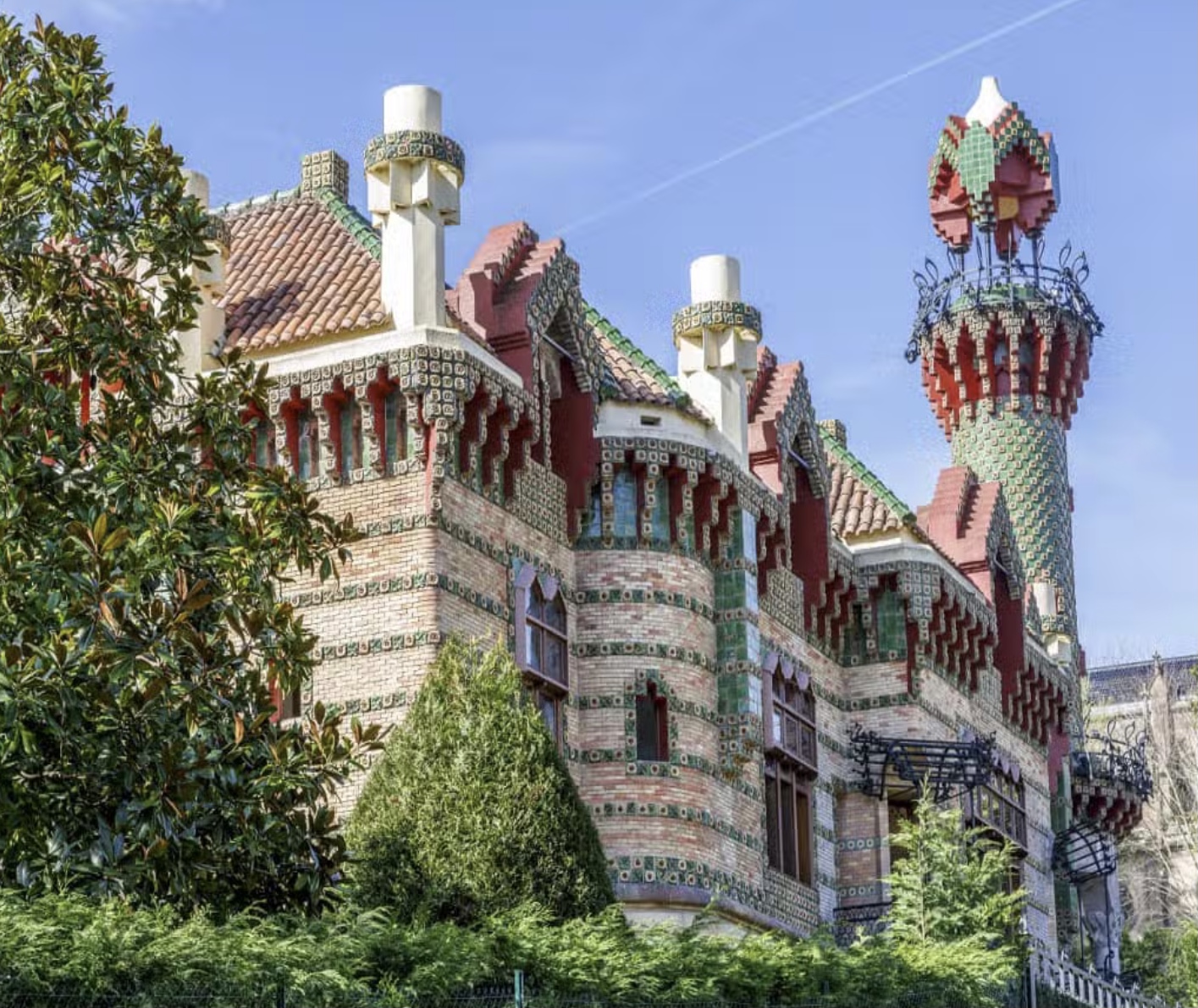
He was a major patron of Antoni Gaudi, the architect famous for the Sagrada Familia and other fanciful Catalan Modernisme buildings in Barcelona. Gaudi designed a summer house for the Marquis next to the palace. As you can see from the photo of the palace, the weather wasn’t great when we were there and the only picture we took of the Gaudi-designed house is awful, so here’s one from the local tourist association’s website. Covered in whimsical patterning and decorative flourishes, like all his work.
Also towering over town is the Pontifical University. It started life as the Seminary of St Anthony of Padua offering degrees in theology, philosophy and canon law to men entering the priesthood, founded by Pope Leo XIII in 1890 at the request of the Marquis. Being a devout Catholic didn’t stop Lopez from making money from slaving, but at least some of it went to education.

Antonio Lopez was an Indiano, a term coined in the 19th century for Spanish emigrants to the Americas who returned after amassing great wealth in the colonies. Like Lopez, many sought prestige by buying noble titles or building ostentatious homes. And while Lopez went for neo-Gothic, many built towering homes in a colourful colonial style which came to be called ‘casas de indianos’ (indianos houses).
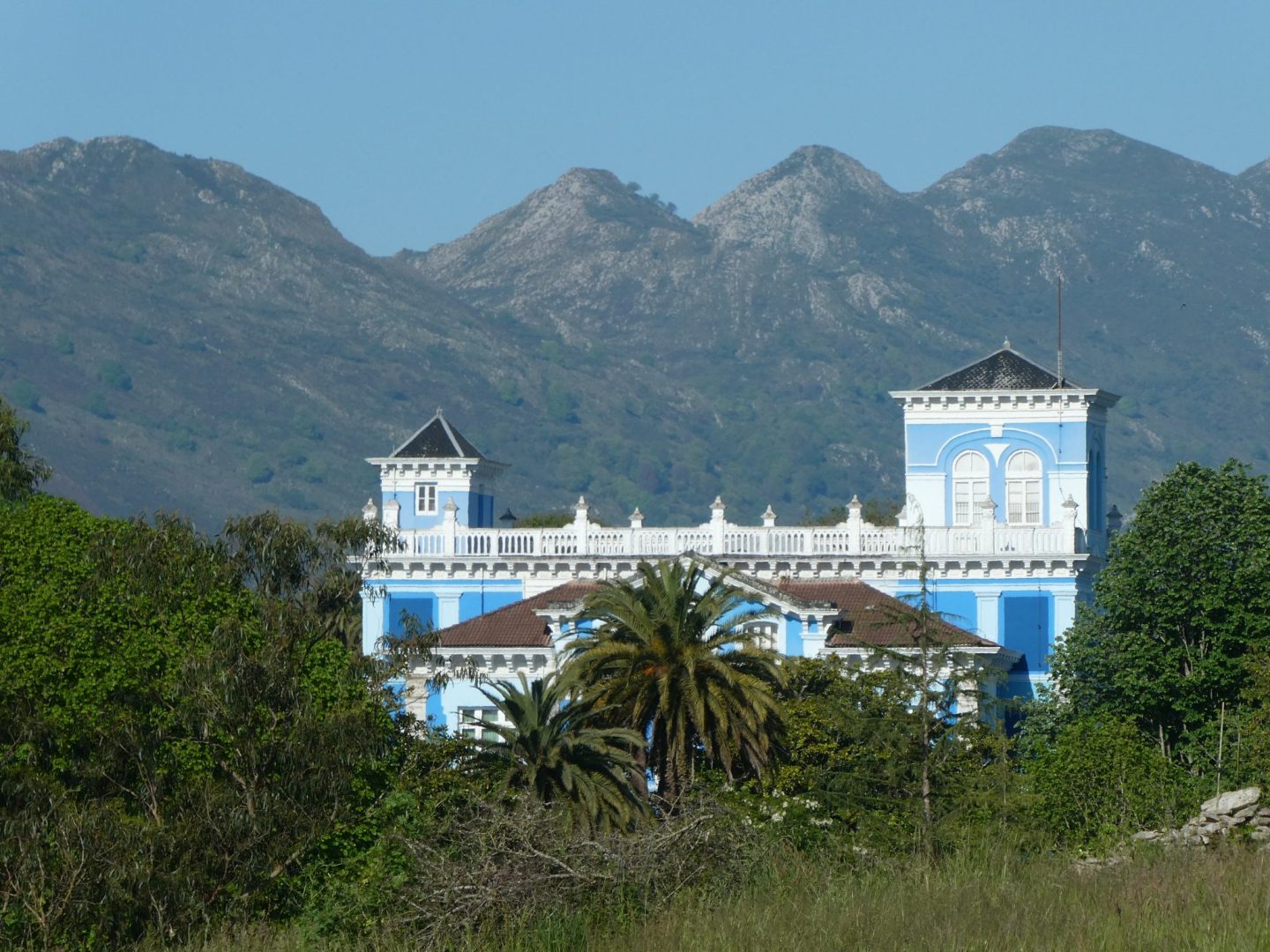
Outside Unquera we stayed in one of the mansions, built in 1908 and now a beautiful hotel.
 Many of the emigrants to the Americas were from the then poor, seaside provinces of Asturias and Galicia, so that’s where many of the returned Indianos’ mansions were built. Still intact or restored, as private homes or hotels, a concentration of them can be seen on the Indianos Route through Unquera and Colombres.

Back on the coast, the weather was treating us well.


The cows were enjoying the sunshine.

Not warm enough for swimming in our opinion, but some crazy people think it is.

We were slowly whittling down the miles.
 Eventually, Llanes came into view.

In 2019 we hiked in the Picos de Europa mountains, finishing in Llanes. It seemed a lovely town, but we only passed through on our way to our next destination, so we were pleased to have a rest day here to see more of it.
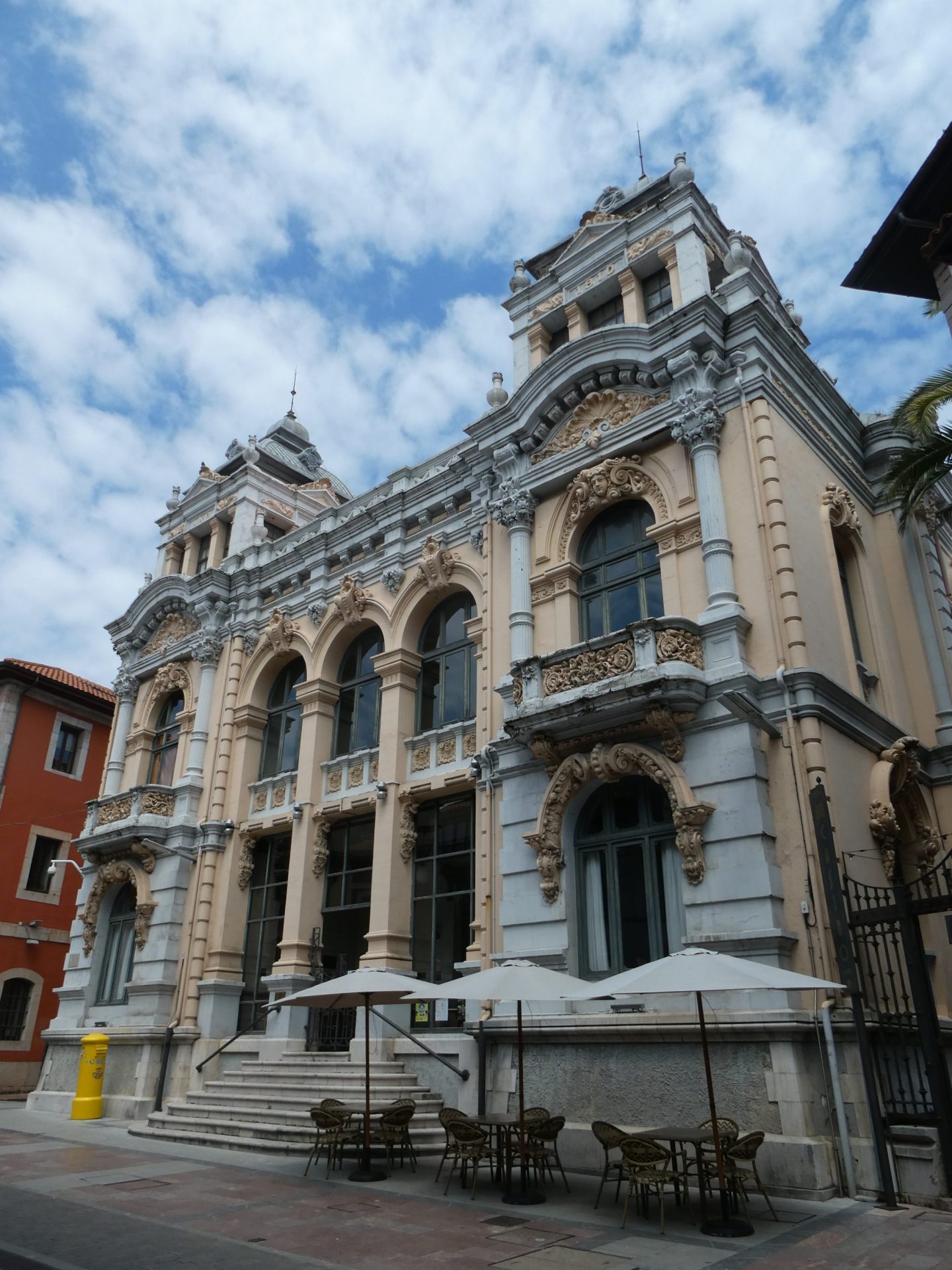
It’s buzzy in the day, quiet at night. The architecture is eclectic, with everything from medieval to more casas indianos.



It unfortunately also wins the prize for lamest art installation so far. The Cubes of Memory are said to represent “ the memory of art, the memory of the artist and the memory of the territory”, whatever that means. In reality, they are the six tonne concrete blocks which make up the port’s breakwater, painted in haphazard patterns which don’t convey any particular meaning or symbolism at all, as far as we could see.

The Indianos’ influence gave us the opportunity to have a rather good Mexican meal in Llanes. So our fun drink of the week is the michelada – beer, Worcestershire sauce, Tabasco, lime juice, tomato juice and spices. A bit like a Bloody Mary with beer instead of vodka. We’d had them in Mexico and Guatemala.

Our hotel was originally a convent, built in 1660.

A day was enough to mooch around Llanes and now we are off again. Week 4 begins.
This week:
Day 14: Santander to Puente Arce: 20km
Day 15: Puente Arce to Santillana del Mar: 23km
Day 16: Santillana del Mar to Comillas: 23km
Day 17: Comillas to Unquera: 27km
Day 18: Unquera to Llanes: 27km
Day 19: Rest day in Llanes
Total so far: 389km

Chipping away at those kms 👍🏽
Good to see an increasing number of blue sky days , let’s hope the dry weather continues. Added to that Raw travel seem to have found some nice hotels for this trek . As we know a bonus at the end of a long day .
Can’t quite believe you’re on week 4 . We have no doubt you’ll keep going . Happy trails from us
Author
Thanks, David. Hope the wine trails are as good!
Julie. I loved your photo so much of the cows sitting down with the ocean in the background, I’m using it as my screensaver! You are really bringing the Camino experience to life and saving me a very long walk!
Author
Thanks, Hugh. It’s amazing so far.