Lille is an underrated gem. Not undiscovered, but it definitely deserves more publicity than it gets.
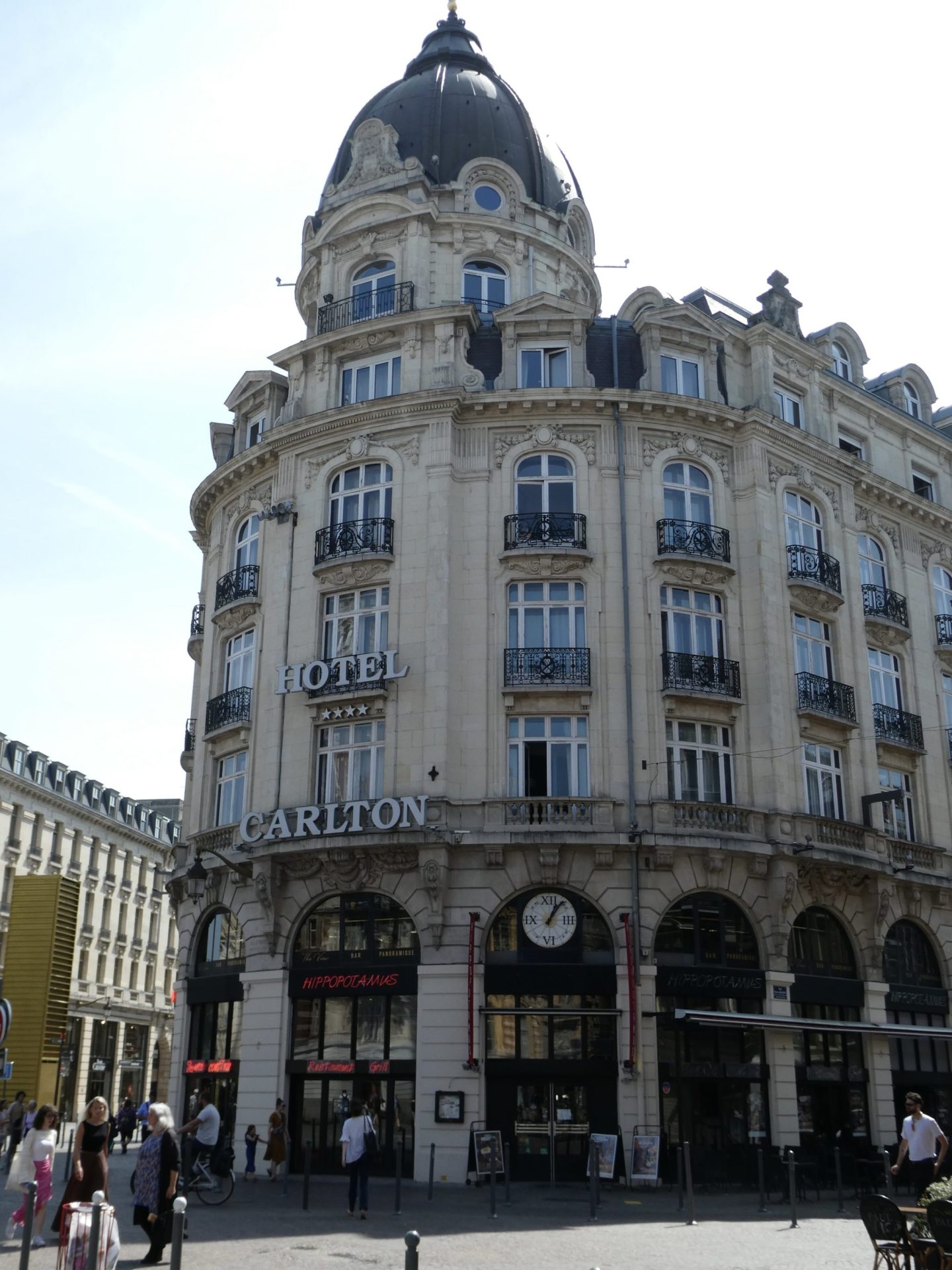
The historic centre really is a feast for the eyes, full of interesting architecture reflecting its varied history. Over the centuries it’s been Flemish, Burgundian and Spanish before being incorporated into the Kingdom of France in 1667.
Most ornate is Grand Place, also known as Place du General de Gaulle and the linked Place Rihour.

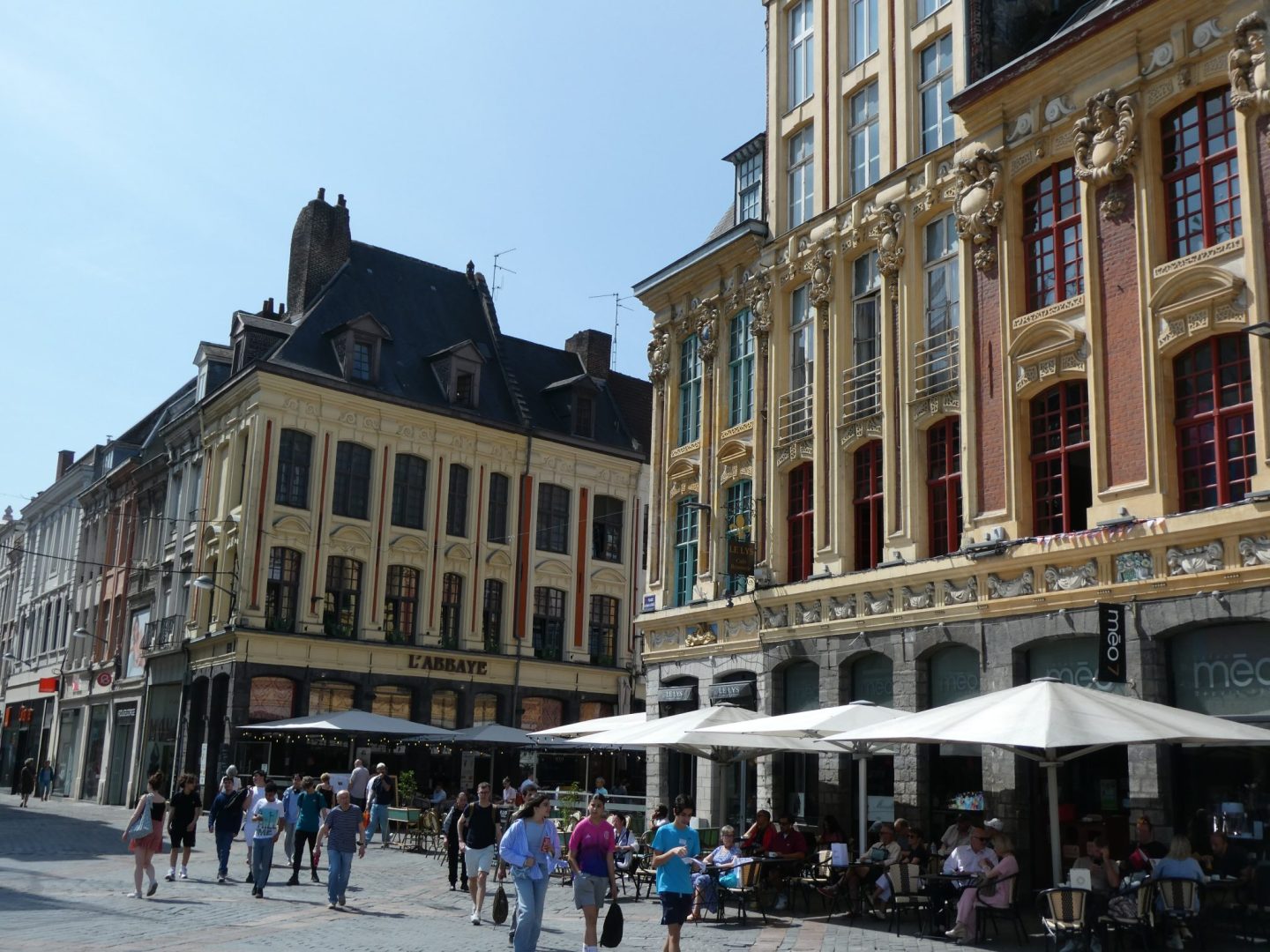
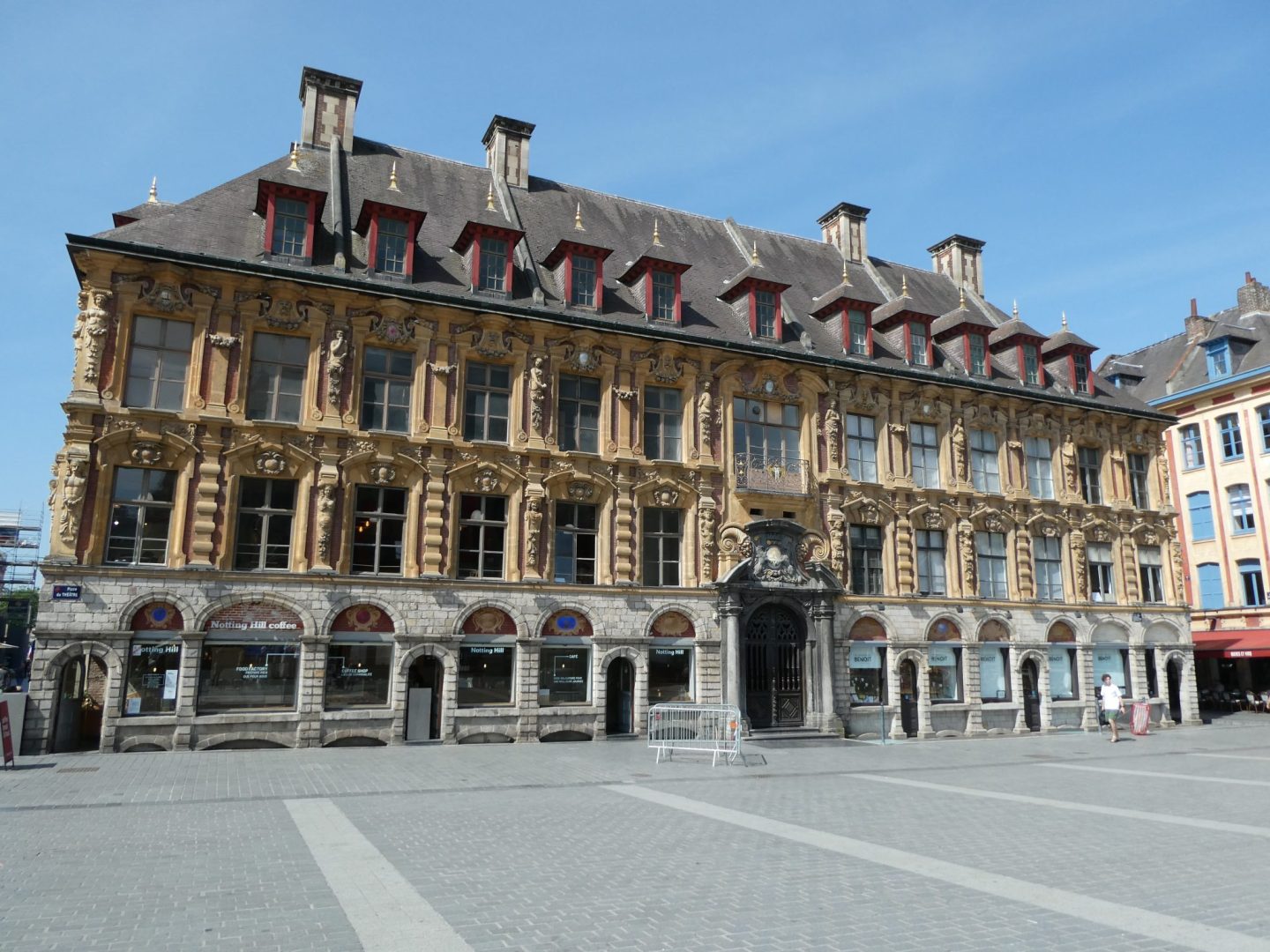
The Vieille Bourse was built in the 1650s in Flemish Renaissance style when the city was under Spanish rule. Merchants lived in apartments on the upper floors and carried out business from the open courtyard below. In 1861 the ground floor was transformed into Lille’s stock exchange. Today, it’s private apartments upstairs and through summer a second hand book market fills the courtyard in the afternoon, morphing into a space for tango dancers in the evening.

Across the square is the neo-classical Opera House inaugurated in 1923.

There’s something surprising around every corner.

Plenty of churches. This one was right outside the window of our apartment.

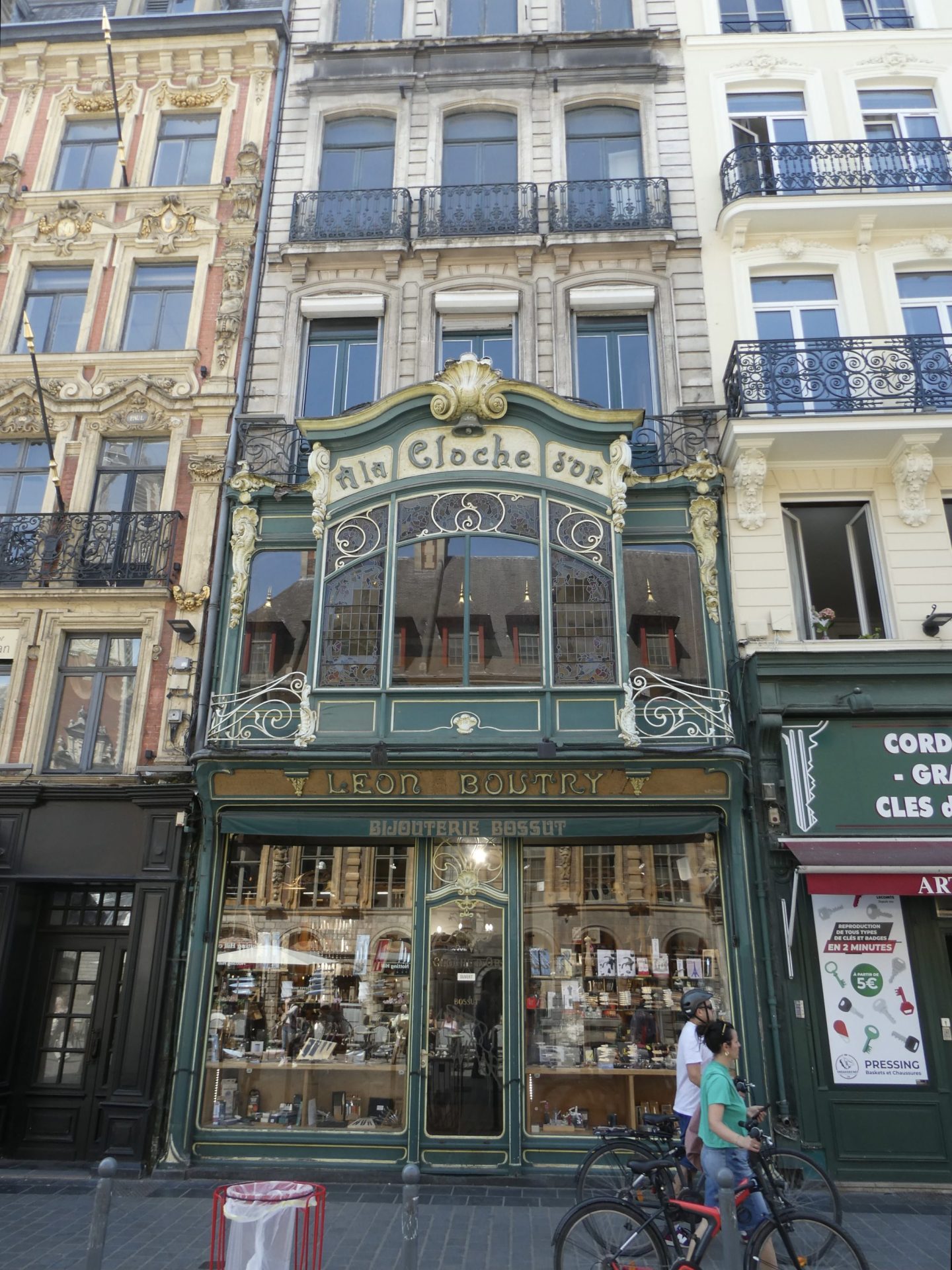
And lots of cute shopfronts, too.

The 104 metre tall Belfry of Lille is, of course, UNESCO listed, but curiously has no bells. Which begs the question, isn’t a belfry without bells just a tower?

Louis XIV wasn’t impressed that Spain controlled some parts of Flanders, including Lille. He conquered the city and surrounds in 1667, incorporating them once and for all into the Kingdom of France. When he entered Lille triumphant, he did so through the small Porte des Malades (Gate of the Sick) which led to a leper colony in medieval times when Lille was a walled city. As a sign of his authority, Porte des Malades was demolished and the monumental Porte de Paris built in its place.

Lille claims Charles de Gaulle as one of its own. Although his family lived in Paris and he was mostly raised there, he was born in his grandmother’s house in Lille, and returned frequently through his childhood and adolescence. He often said he was as much a product of the north as he was of Paris. Cynics might say this sounds like a politician seeking to soften his patrician image by claiming an affinity with ordinary folk, but who knows.
The house is still owned by the family and is now a museum, Maison Natale Charles de Gaulle. It’s faithful to the last detail in its fittings and furnishings to the way it was in his grandmother’s day. Although it’s more an insight into life in a middle class family at the turn of last century than a museum about the man himself, it’s very interesting and well worth a visit.


Lille has an energy about it which is really appealing. Maybe because it’s a university city, with lots of young people, but not overly crowded. There’s evidence of a sense of humour. Check out these topical offerings at a t-shirt printer. For non-Catholics, the second t-shirt reads “Finally, the white smoke has arrived”, a reference to the white smoke which signifies a new Pope has been elected.


There’s lots of pavement dining, bars and cafes, and thanks to a vibrant immigrant population, lots of variety.


But if its tradition you’re after, Lille is renowned for its estaminets. These eating establishments sprang up in the 19th century in northern France and Belgium. Typically, they were small, local taverns where workers and artisans would drink beer, socialise and eat hearty local food. Usually they were located in old buildings, with wooden beamed ceilings and rustic decorations. At one time, Lille had more than 1,000 of them. Most are gone, but there’s still plenty tucked away in Vieux Lille, the oldest part of the city.


And while many are touristy, they are still worth a visit for the old Flemish fare many still serve. Carbonnade Flamande, beef slow cooked in dark beer with gingerbread and onions, or Le Welsh Complet, thick brown bread soaked in beer, topped with ham then smothered in cheese, with a fried egg on top. It’s Welsh rarebit in a pot.
Fun fact: there’s no good evidence that Welsh rarebit originated in Wales. To the contrary, the origin of the name seems to be perjorative, something like “the closest thing to rabbit the Welsh could afford was cheese on toast”.
From Lille we also caught a train to Dunkirk. On the seafront, Bastion 33 and its curtain walls were built in 1874 as part of France’s coastal defences. In 1940, it served as the headquarters from which the evacuation of troops from Dunkirk was co-ordinated.
The fortifications survived the war and lay dormant until 1975 when the adjacent shipyards were extended. But the curtain walls survived the demolition and now house Musee Dunkerque 1940 which tells the story of Operation Dynamo.

When the German army stormed through Belgium and across France at pace in early 1940, it became obvious that northern France would fall. Belgian, British and French forces were surrounded and increasingly pinned in along a stretch of coast at Dunkirk.
A decision was made that evacuation of the trapped troops was the best course of action. In just nine days, from 27 May to 4 June 1940, more than 330,000 soldiers were evacuated from Dunkirk. An astonishing number.
The most heart warming part is the involvement of what came to called the Little Ships. When the decision was made to evacuate, the British Admiralty called on civilian boats to assist. Estimates vary, but between 1,176 and 1,588 British, French, Belgian and Dutch tugboats, launches, yachts, barges and even paddle steamers answered the call.
Their role was mainly to ferry soldiers from the shallows to evacuation ships further out. It’s a flat coast, the bigger ships couldn’t get close, and even to reach the small boats soldiers often had to wade out more than a kilometre. The evacuation proceeded under machine gun fire, aerial bombing and often treacherous sea conditions. 240 ships and more than 10,000 soldiers were lost.
After visiting you can walk over to the beach where it all happened. Today it’s a serene stretch of sand with a string of mid 20th century holiday apartment blocks strung out along it.

But for the memorial, you’d never know anything had happened here.

Lille was a great place to spend a few days. Now, to Paris for eight nights at the apartment we’ve rented several times. No sightseeing, except to check out the re-opened Notre Dame Cathedral. Just mooching around, revisiting some favourite places. To quote, again, Jimmy Buffet, “warm summer breezes, French wines and cheeses”. No better way to finish.

Historic centre of Lille is fantastic – loved it all – the Grand Place/ Place Rihour/ Oper House/ shopfronts/ & estaminets – great read hope Paris was a great rest x
The Small Ships movement was an amazing citizen effort. There is an authentic and very touching film simply titled Dunkirk which traces the Small Ships evacuation through the experience of one family who participated. We watched it for a second time while in Bosnia ! A must see if you haven’t already had the chance.