When we finished the Camino del Norte last year, we said we wouldn’t do another Spanish Camino but definitely would do another long distance walk. So, here we go.
In the late 6th century, the Lombards ruled much of the north and south of modern day Italy. They built a road down the western flank of the peninsula, skirting the centre which was under Byzantine rule. When the entire area was unified under the Franks in 774CE, merchants could take more direct routes through the middle of the country. The old road became part of a route used almost exclusively by pilgrims heading from middle Europe to Rome, hence its name, Via Francigena, which means ‘the road of the Franks’.
In 990CE, the then Bishop of Ramsgate tramped from the UK to Rome to be crowned Archbishop of Canterbury. Now Archbishop Sigeric the Serious, he meticulously recorded his return journey. De Roma ad usque More described in detail for the first time a comprehensive, 76 stage pilgrimage route from Canterbury Cathedral to Rome.
Over the centuries, pilgrimages fell out of vogue. Modernity intervened. The paths disappeared. But Sigeric’s text remained preserved in the British Museum.
In 1985, an Italian medieval historian, Giovanni Caselli used the text to re-map the route with the assistance of Italy’s Military Geographical Institute. The results were published in 1990, the 1,000th anniversary of Sigeric’s epic walk, as La Via Romea, Camino di Dio (The Roman Road, The Path of God).
From the early 1990s, walkers began to revive the route as a pilgrim path. In 1997, the Association Internationale Via Francigena was born. Working with provincial authorities, the path continues to be improved, snaking its way through historic towns, tiny villages, forests and farms and avoiding heavily trafficked areas.
It’s gaining in popularity with long distance hiking enthusiasts, particularly those seeking the solitude which the Camino Frances route to Santiago de Compostela can no longer offer.
The Italian leg begins at the Swiss-Italian border and runs south for approximately 1,000km through seven provinces – Aosta, Piedmont, Lombardy, Emilia-Romagna, Tuscany and Lazio – finishing at the Vatican.
If it we make it all the way we will be in what is yet a small club. Between 500 and 1,000 people walked the full route last year, compared to 30,000 on the Camino Frances. But with numbers increasing every year, we feel like we might be only just ahead of the curve.
Here’s some highlights from week 1.
The Italian Via Francigena technically begins at the Great St Bernard Pass, which marks the border of Switzerland and Italy, but we decided to start one day’s walk further back in Switzerland to have the experience of climbing up and over the pass. That seemed more authentic than starting at the top.
We began in Bourg St Pierre, a sleepy village in the Alps.
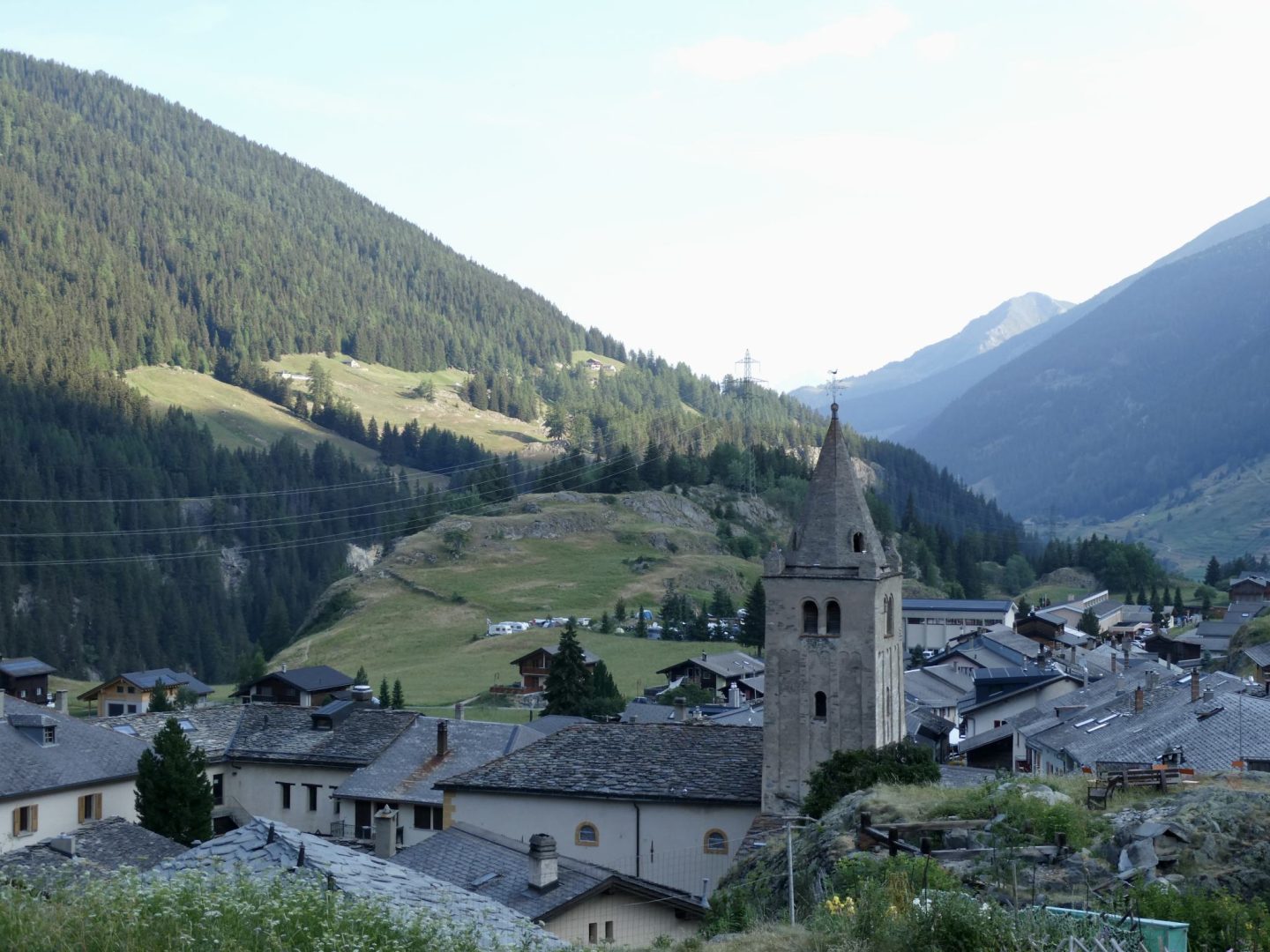 The trail threaded its way steadily higher.
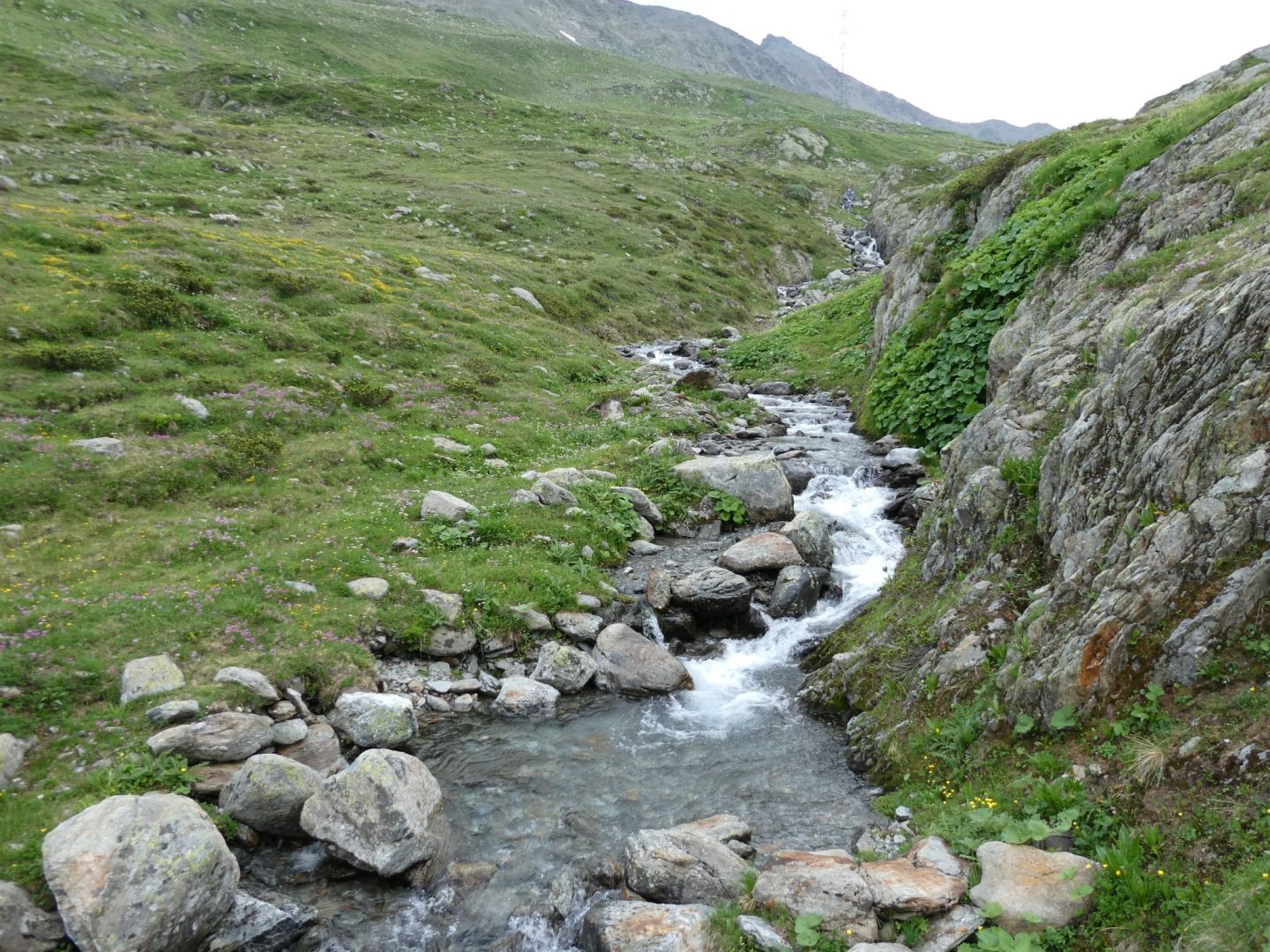
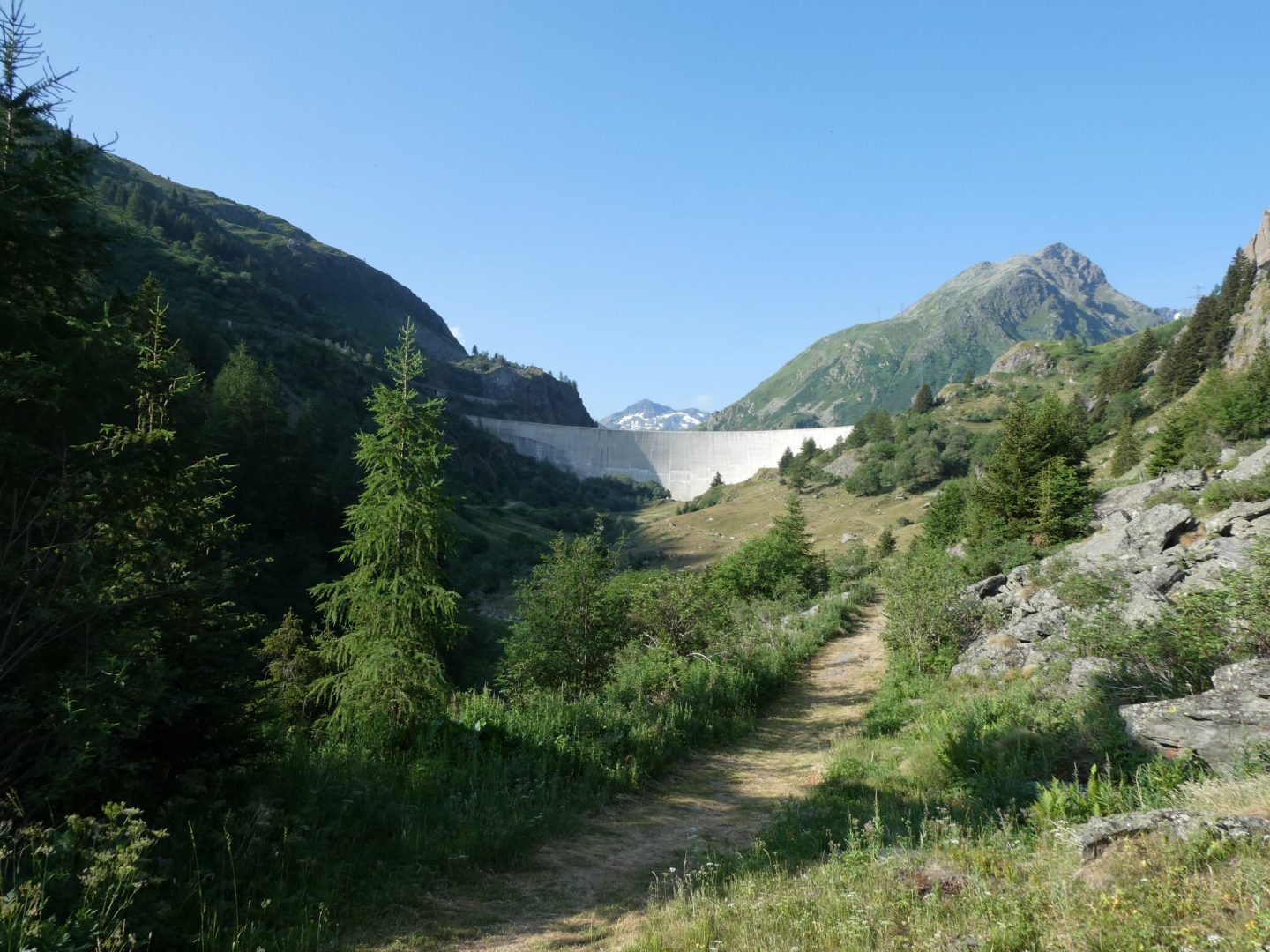
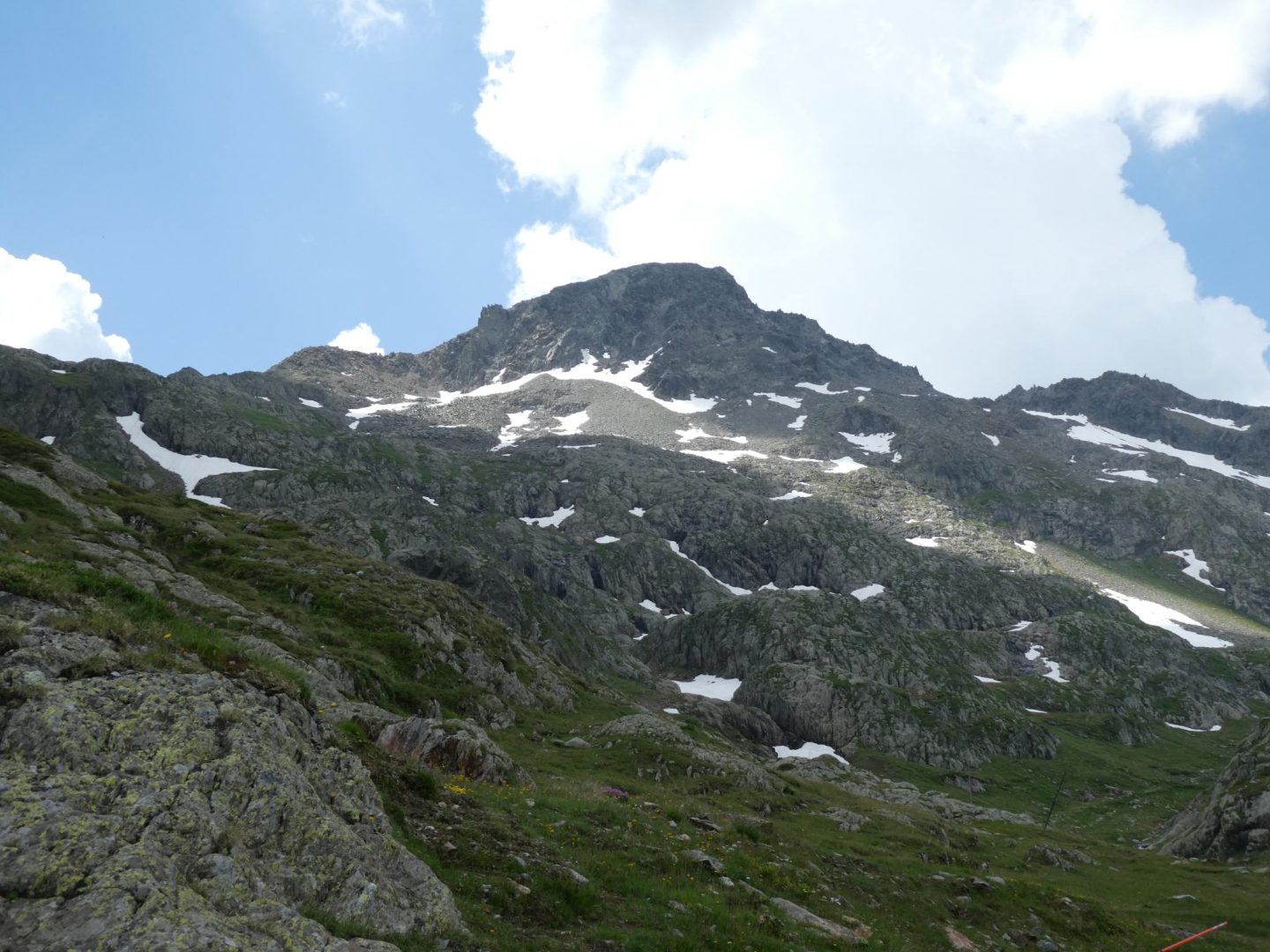
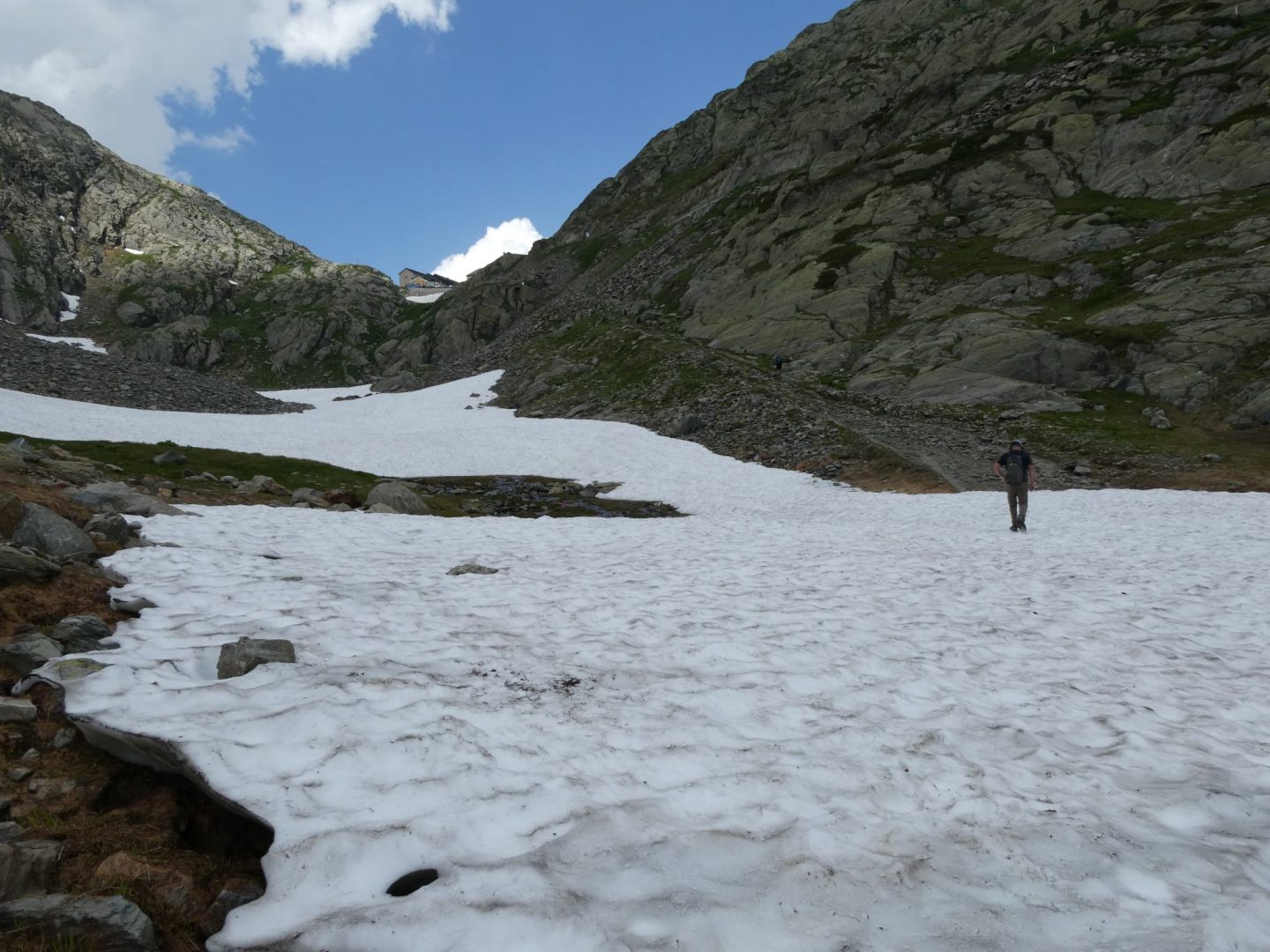
There were still patches of snow to cross just below Great St Bernard Pass.
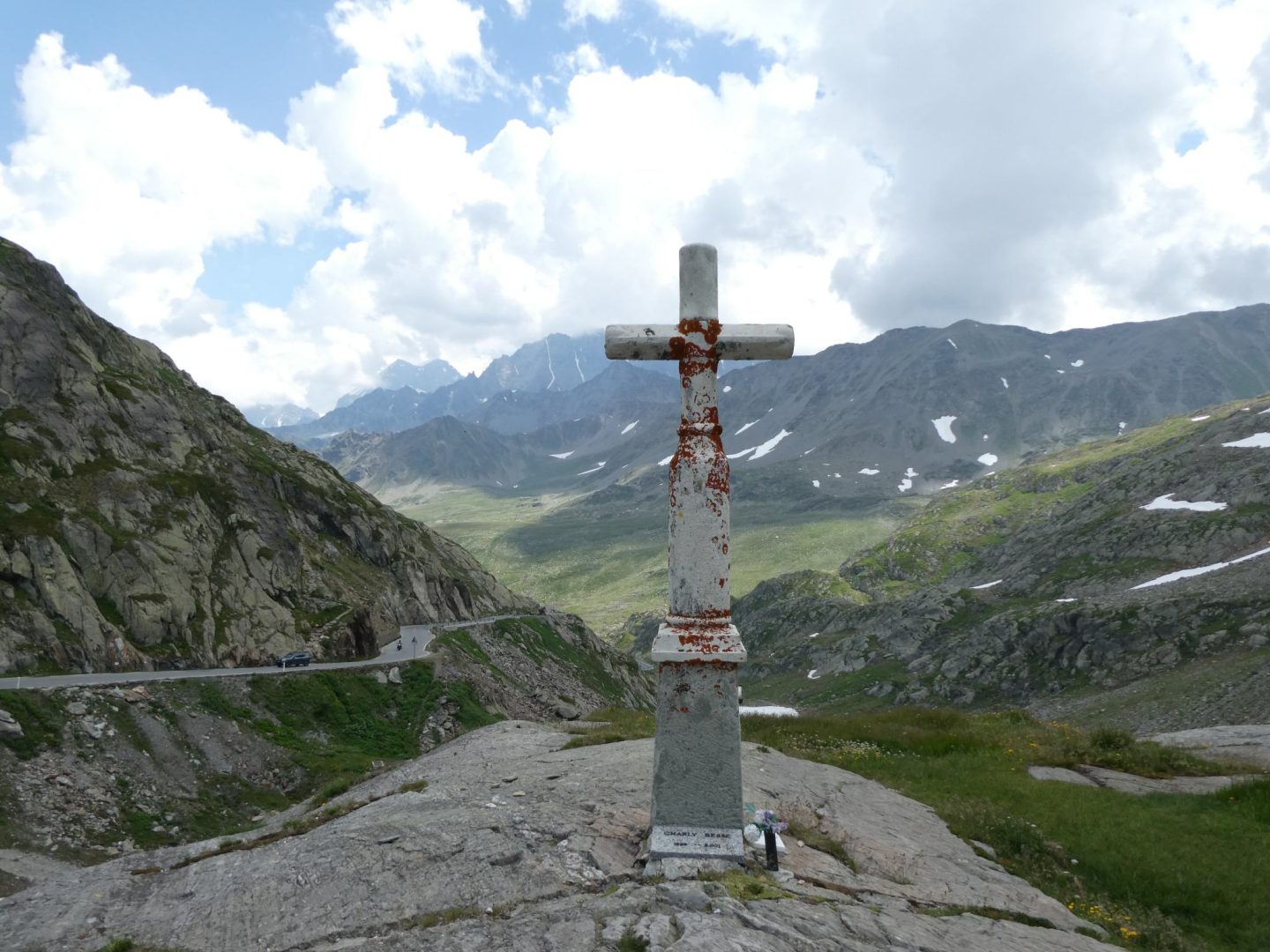
 But then we popped up to a cross marking the beginning of the pass.
Straddling the road, at its highest point is the Great St Bernard Hospice, founded in 1049 as a hostel for travellers making the perilous journey through the Alps.
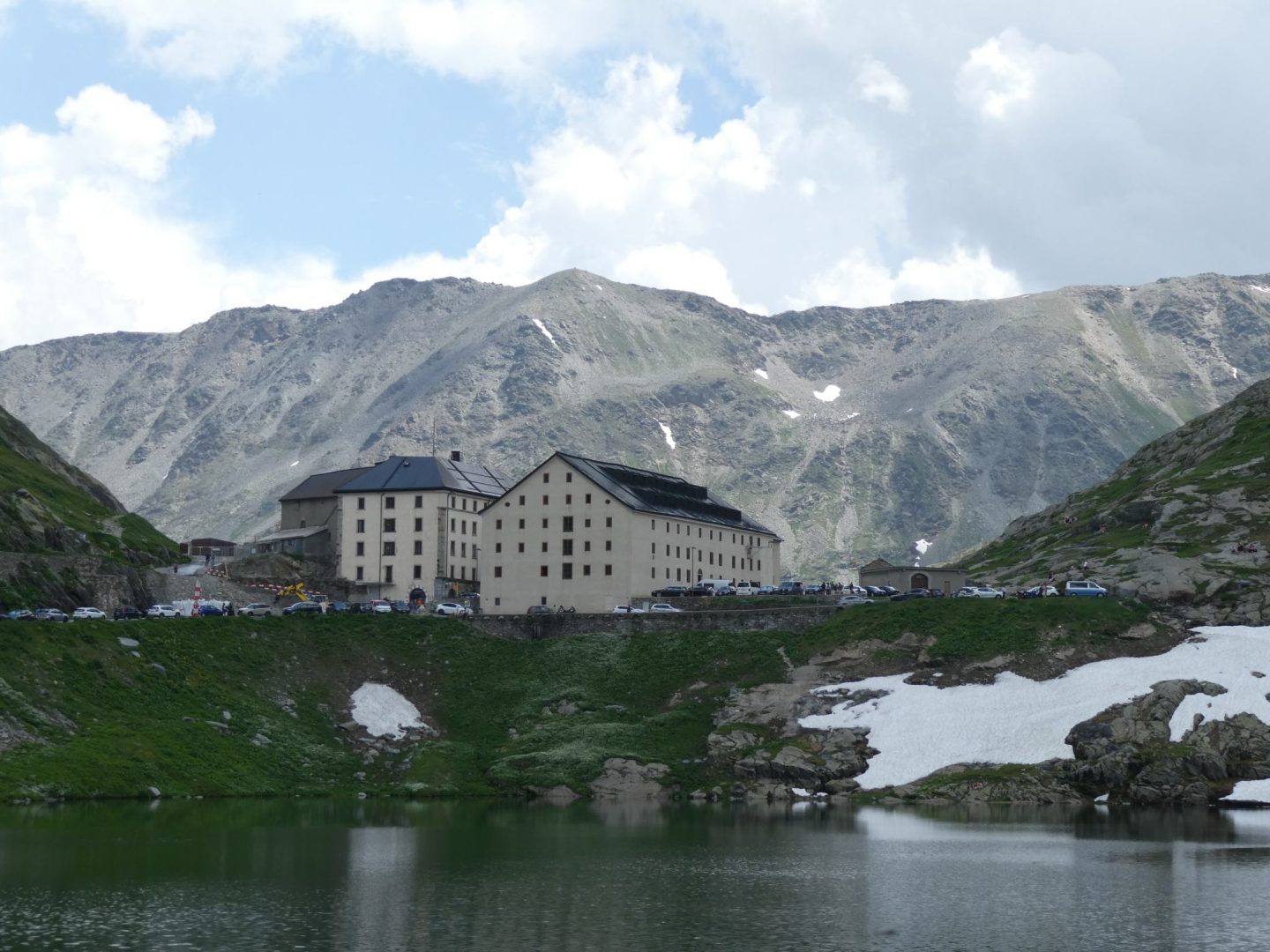
Great St Bernard is one of the most ancient passes through the Western Alps, with usage dating back to the Bronze Age. It’s perhaps most famous as the place of origin of St Bernard dogs.
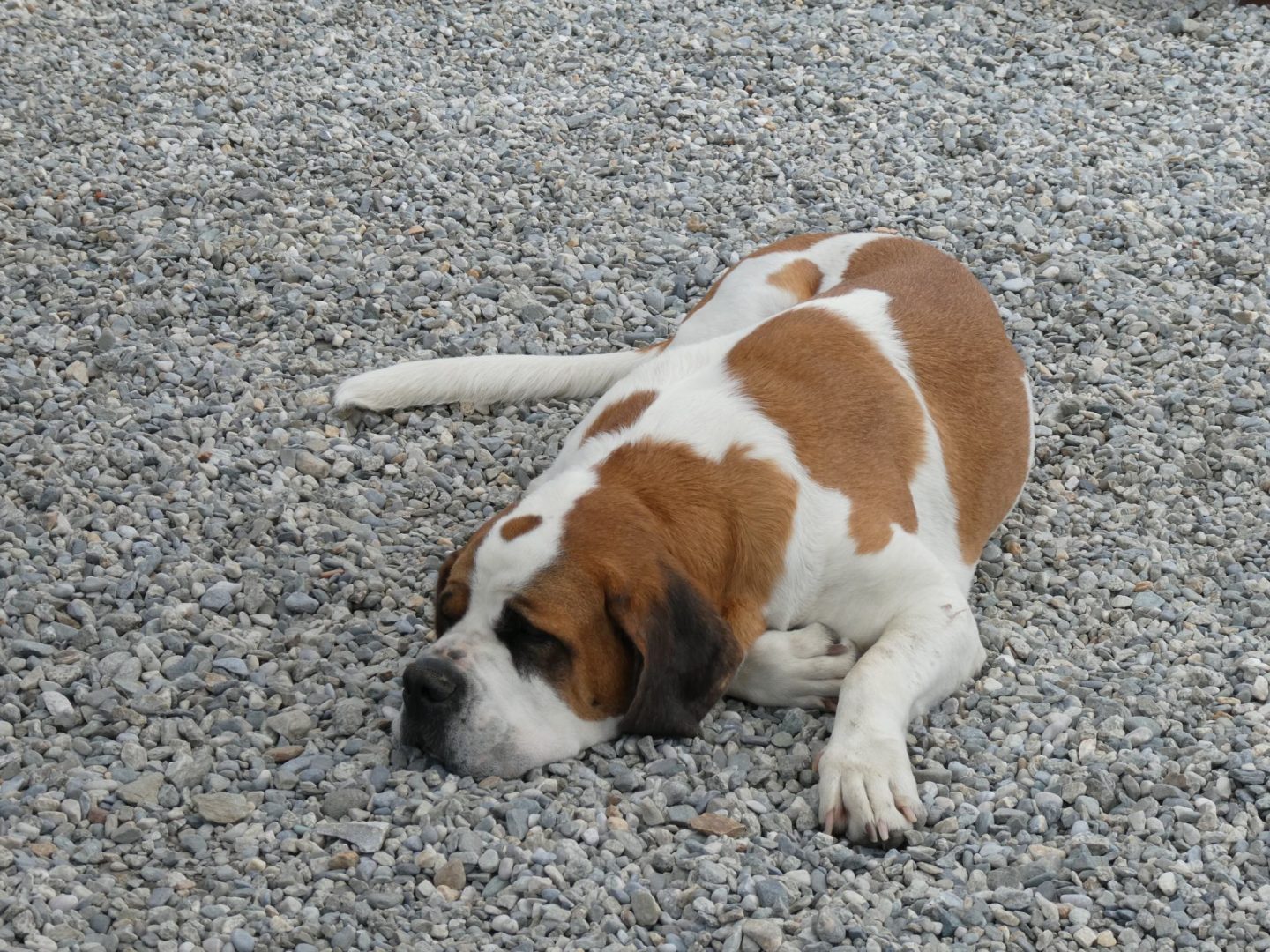
In the late 1600s the resident monks created the St Bernard by cross-breeding. Originally intended as guard dogs, they came to be specially trained and bred for mountain rescue because they were strong enough to traverse deep snow drifts and could track lost travellers by scent.
The most famous was Barry, who is credited with saving 40 people in the early 1800s. We’d seen a memorial to him in Paris a few years ago in the Cemetery for Dogs and Other Animals.

You can’t help but love a dog described as:
His zeal was indefatigable. Whenever the mountain was enveloped in fogs and snow, he set out in search of lost travellers. He was accustomed to running and barking until he lost breath and frequently ventured on the most perilous places. When he found his strength was insufficient to draw from the snow a traveller benumbed with cold, he would run back to the hospital in search of the monks….
These days, mountain rescue is usually conducted by helicopter so much smaller dogs are used. But the Barry Foundation cares for several St Bernards at the hospice, and they look like they have a great life.
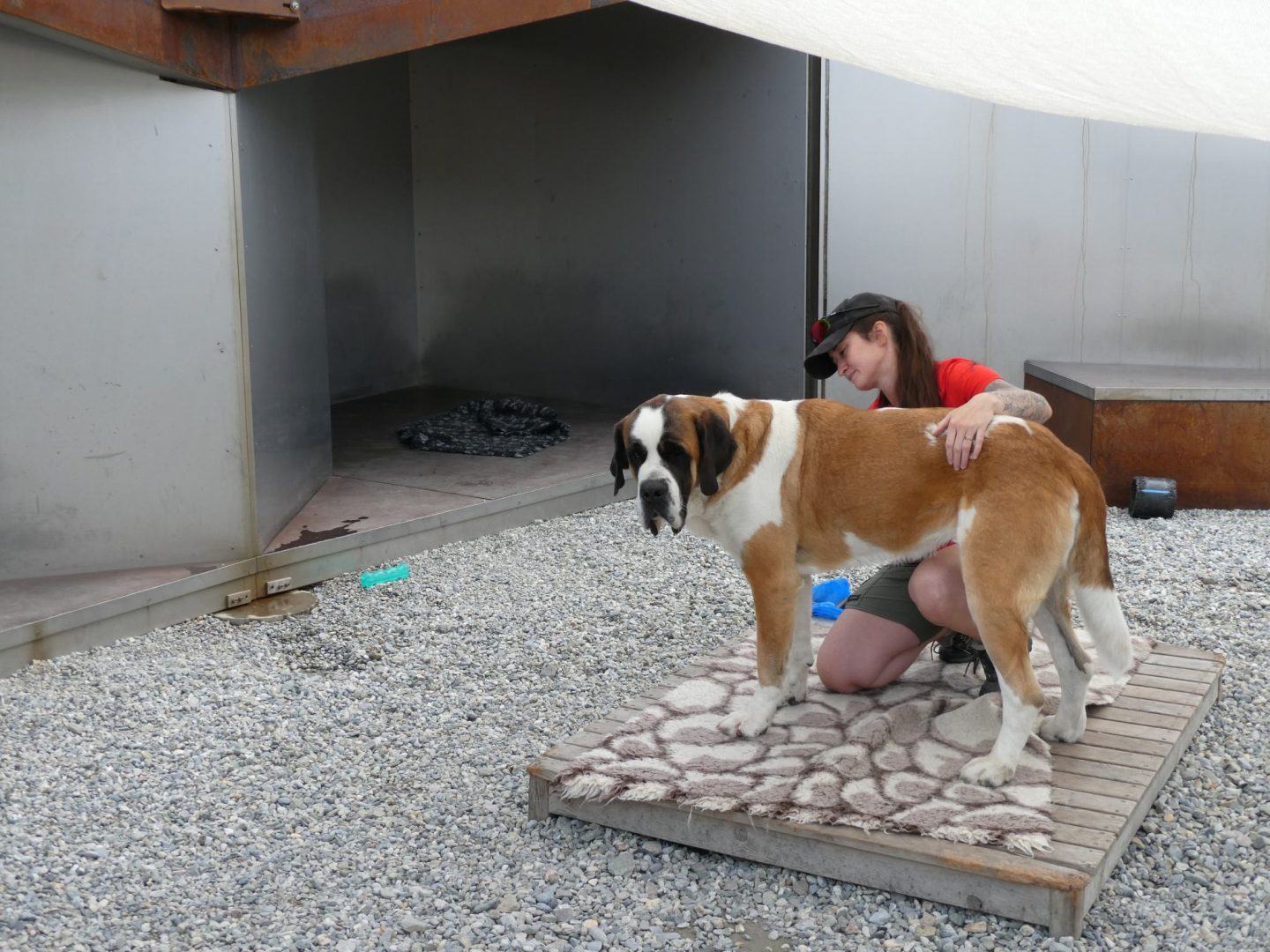


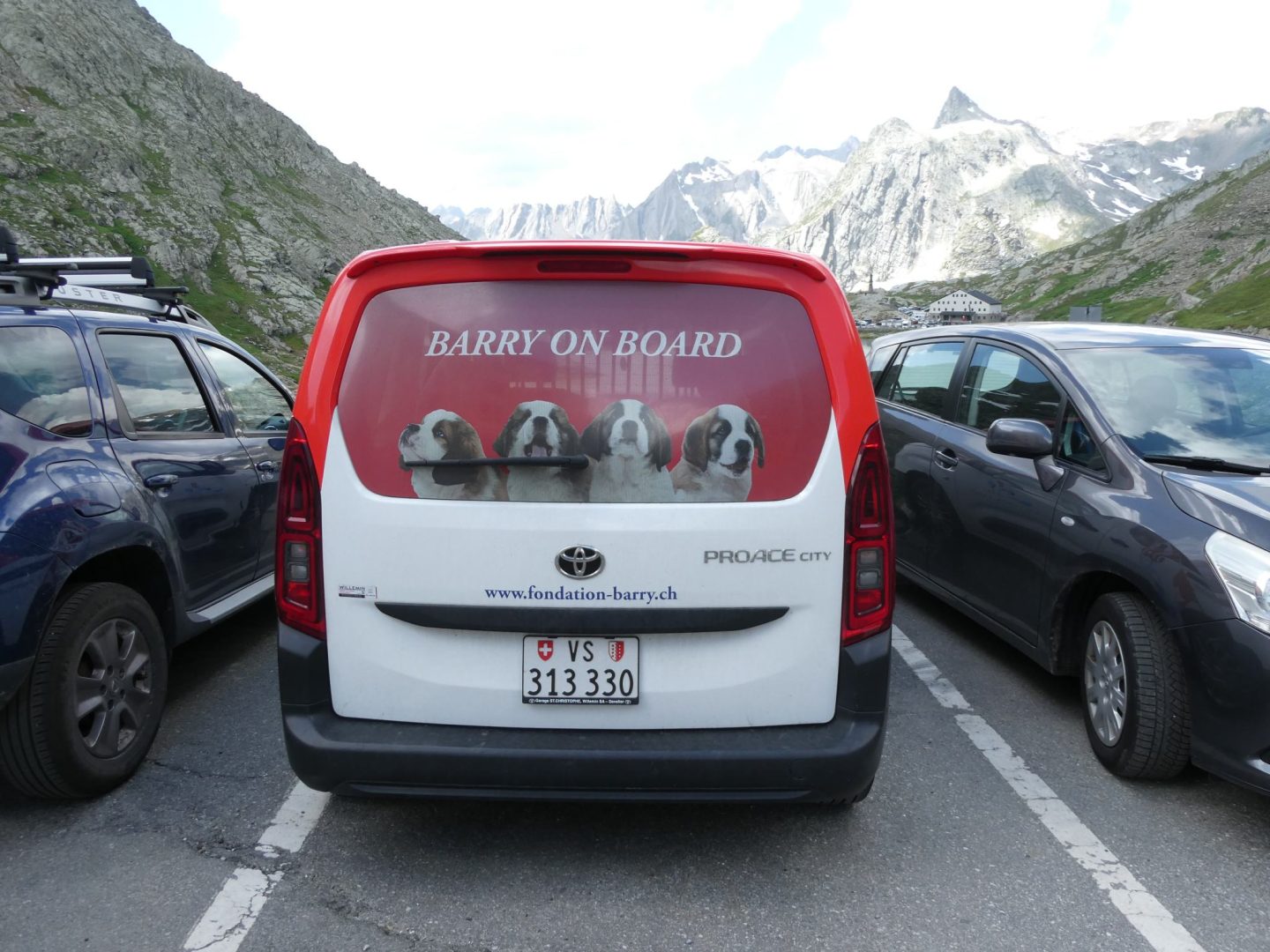
The Foundation also runs a centre in Martigny in a nearby Swiss valley. Canine chauffeur service!
 The view down Lake St Bernard to the border post and the aptly named Hotel Italia, just over the border, is stunning. And a welcome sight, as those were our lodgings for the night.

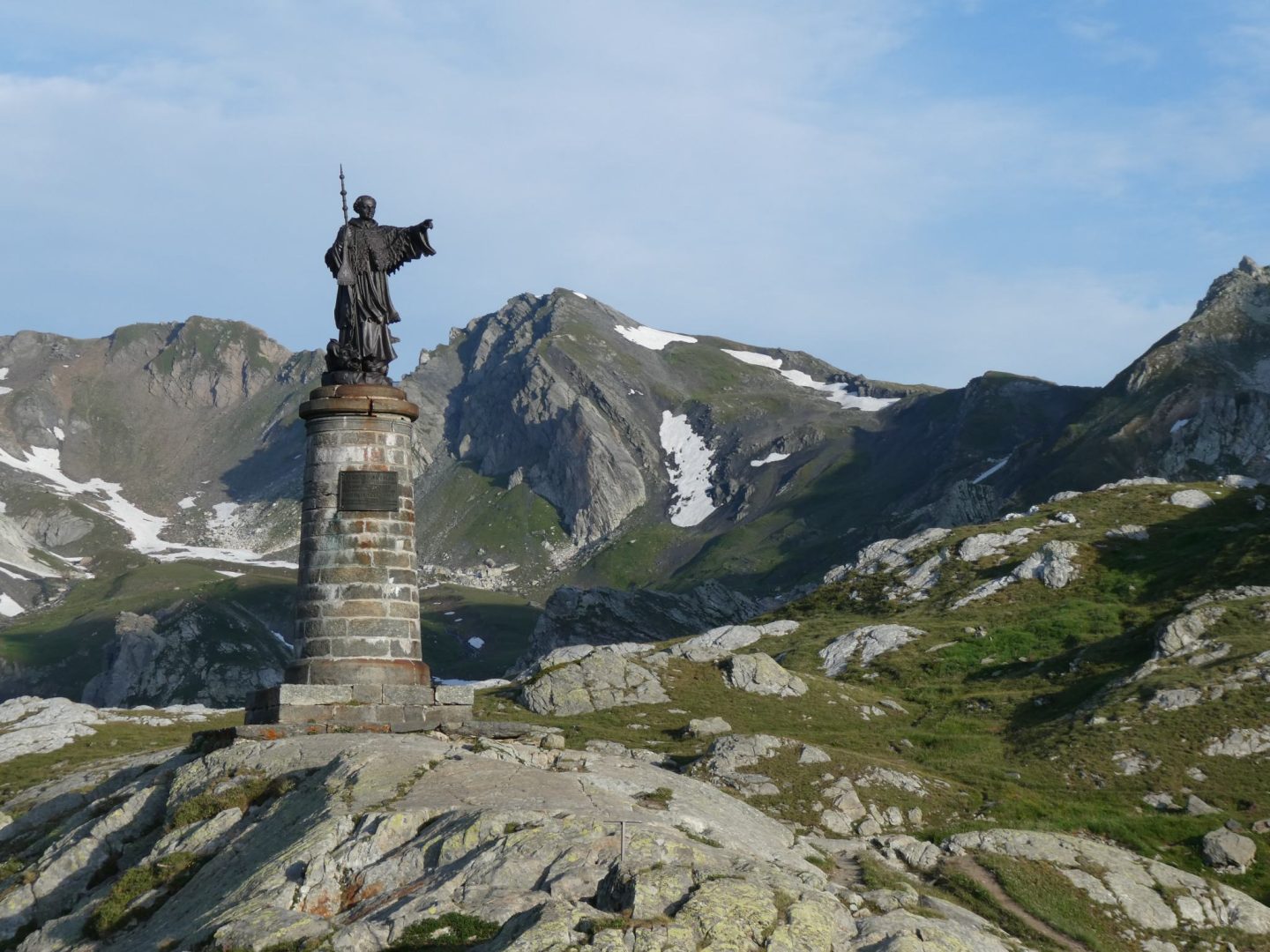
A statue of St Bernard points the way over the pass.
 Next morning we were on the ‘official’ Italian leg of the via Francigena. The landscape coming out of the Alps was dramatic and we saw a few reminders of the power of nature.
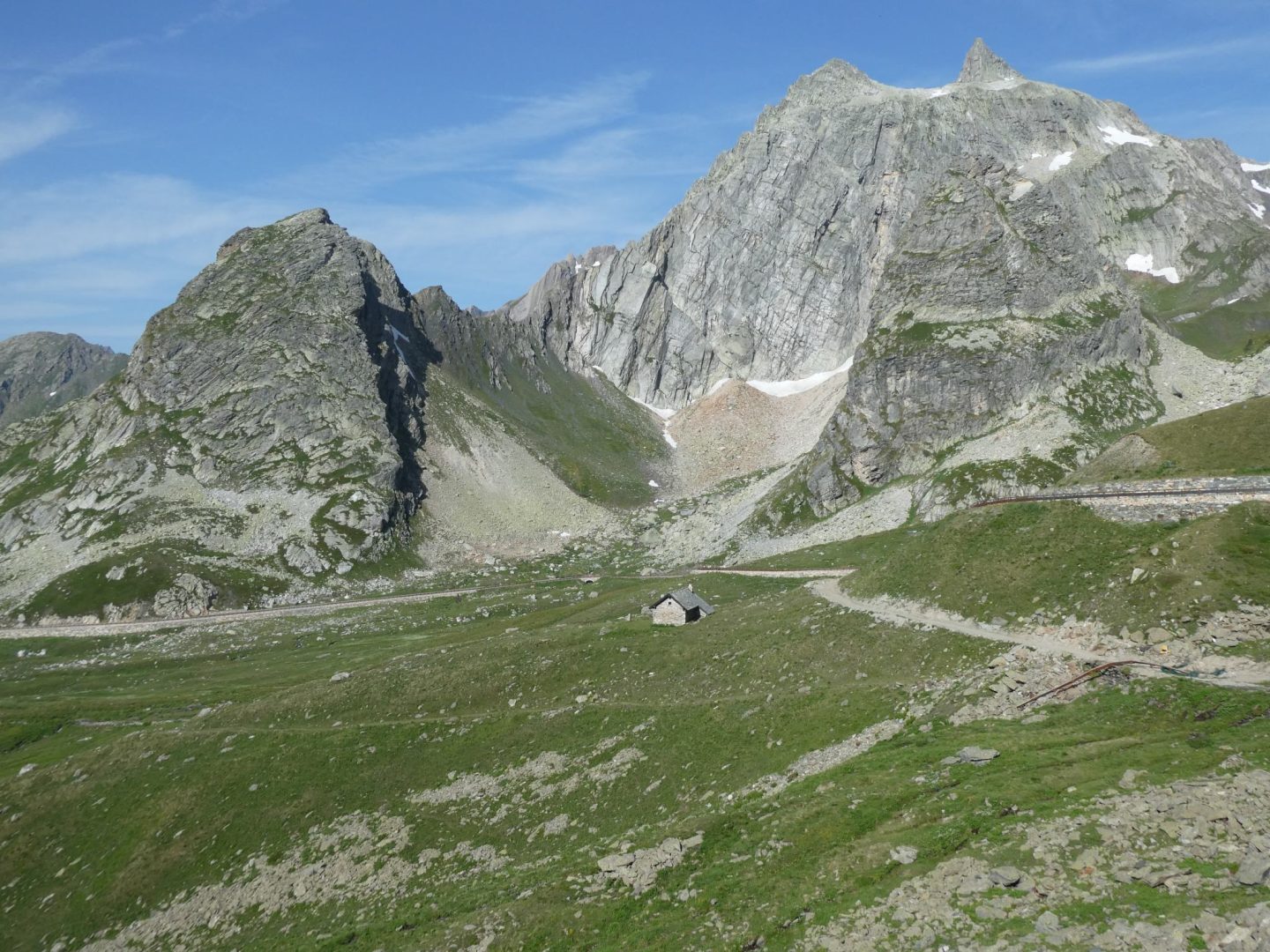
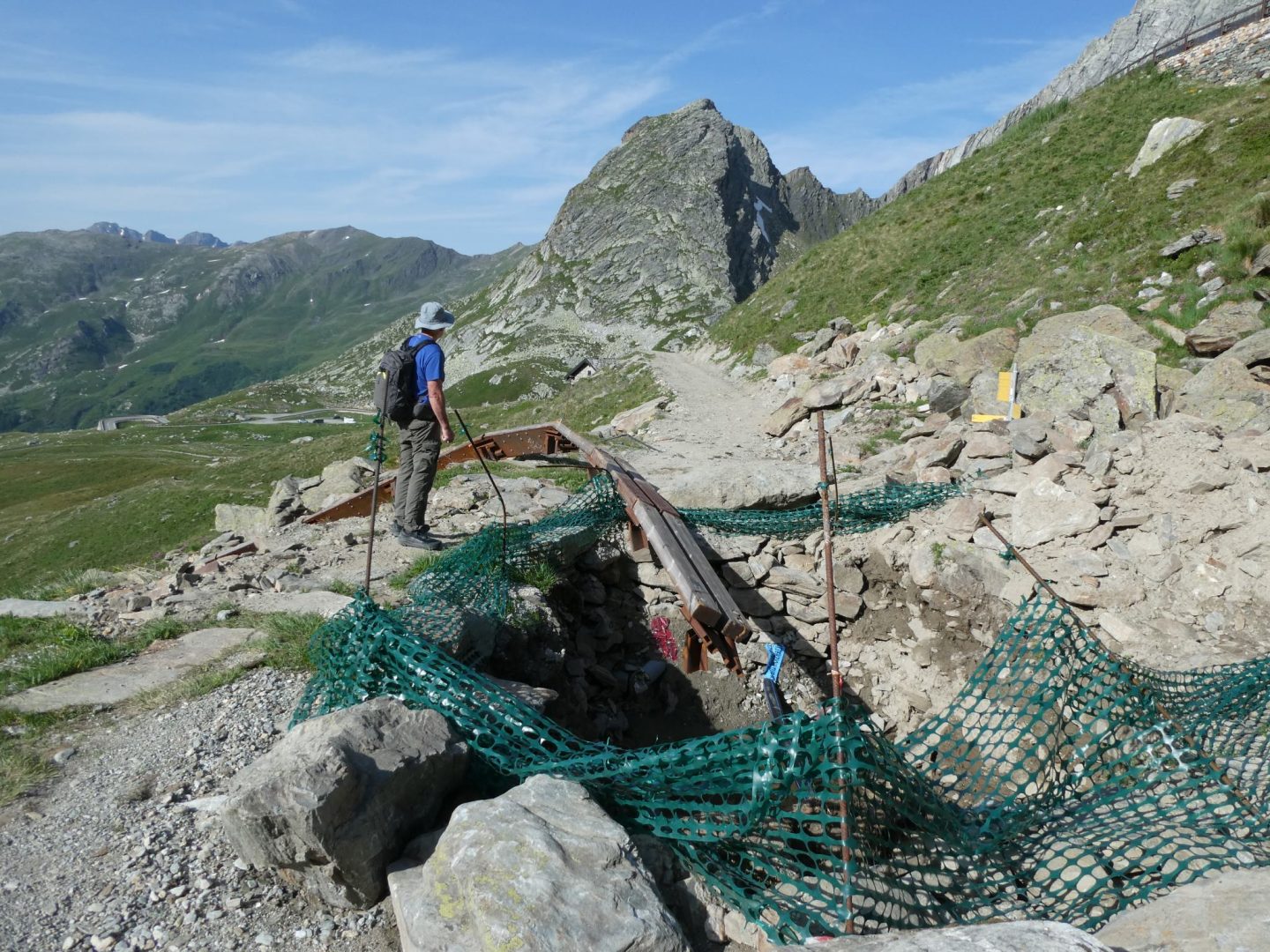
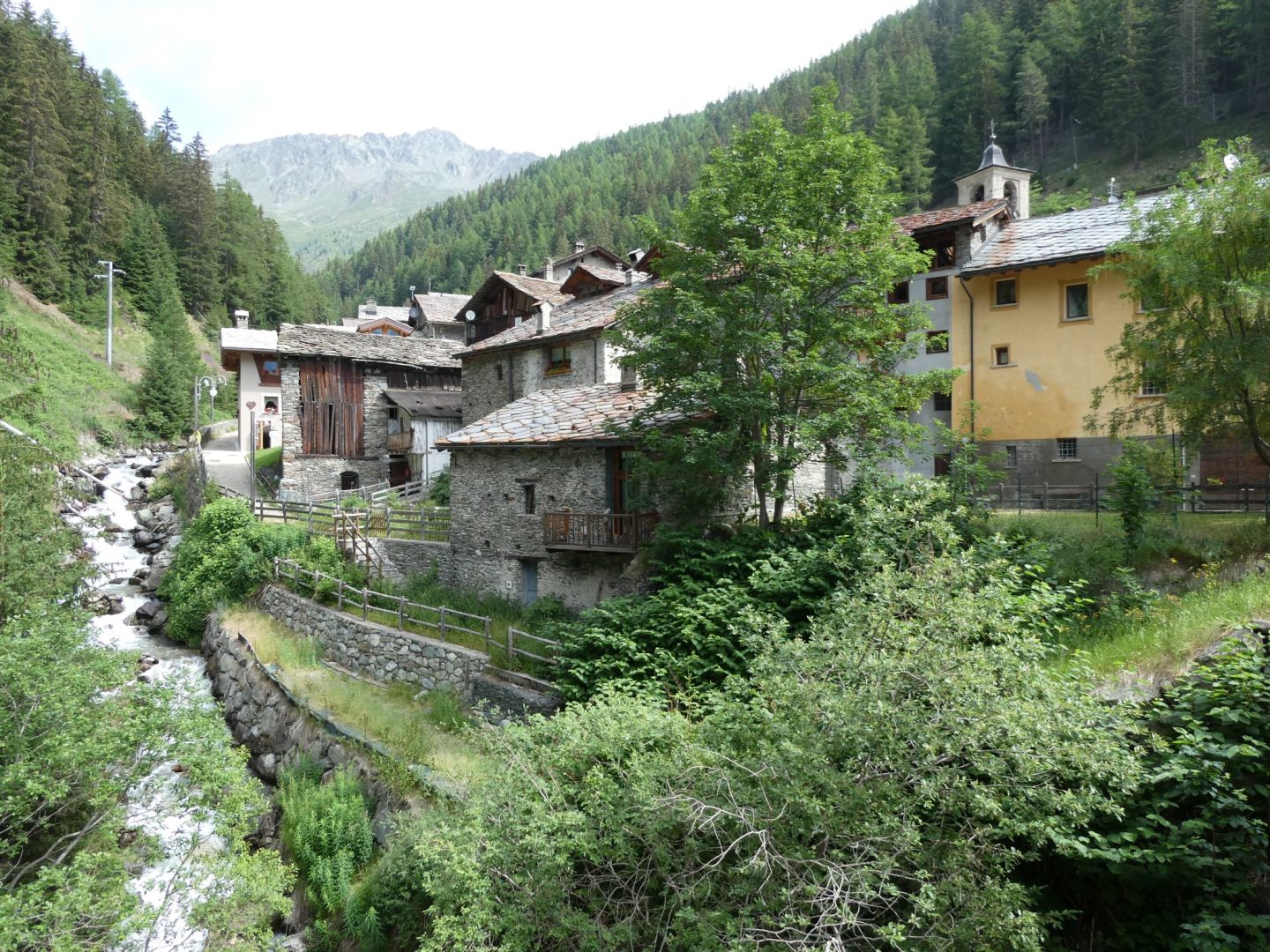
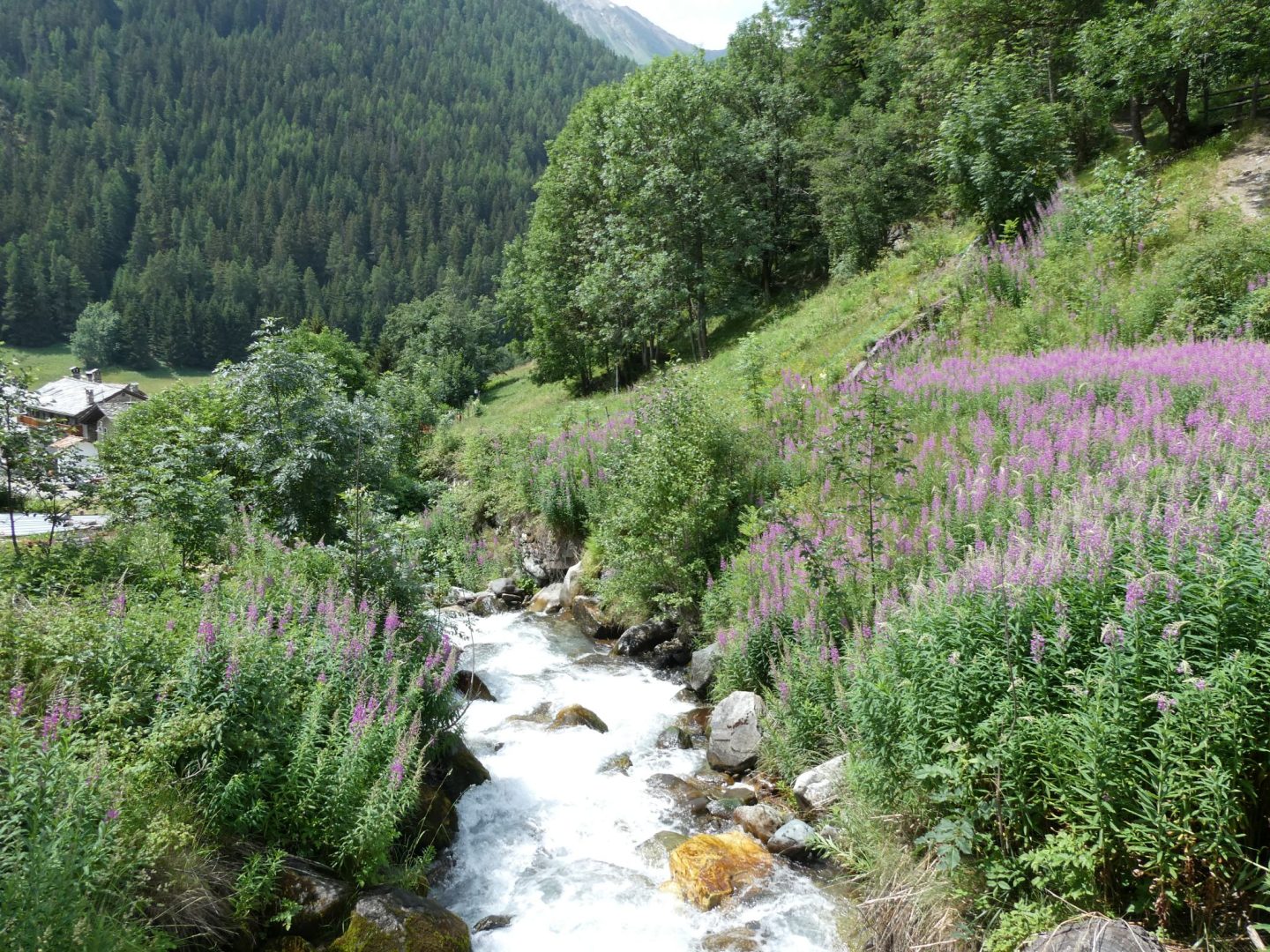
Over the course of the next few days we climbed up and down, passing through small villages and fields, as we worked our way south through the Aosta Valley.
We started to see a few symbols for pilgrims.

Sometimes almost too subtle.


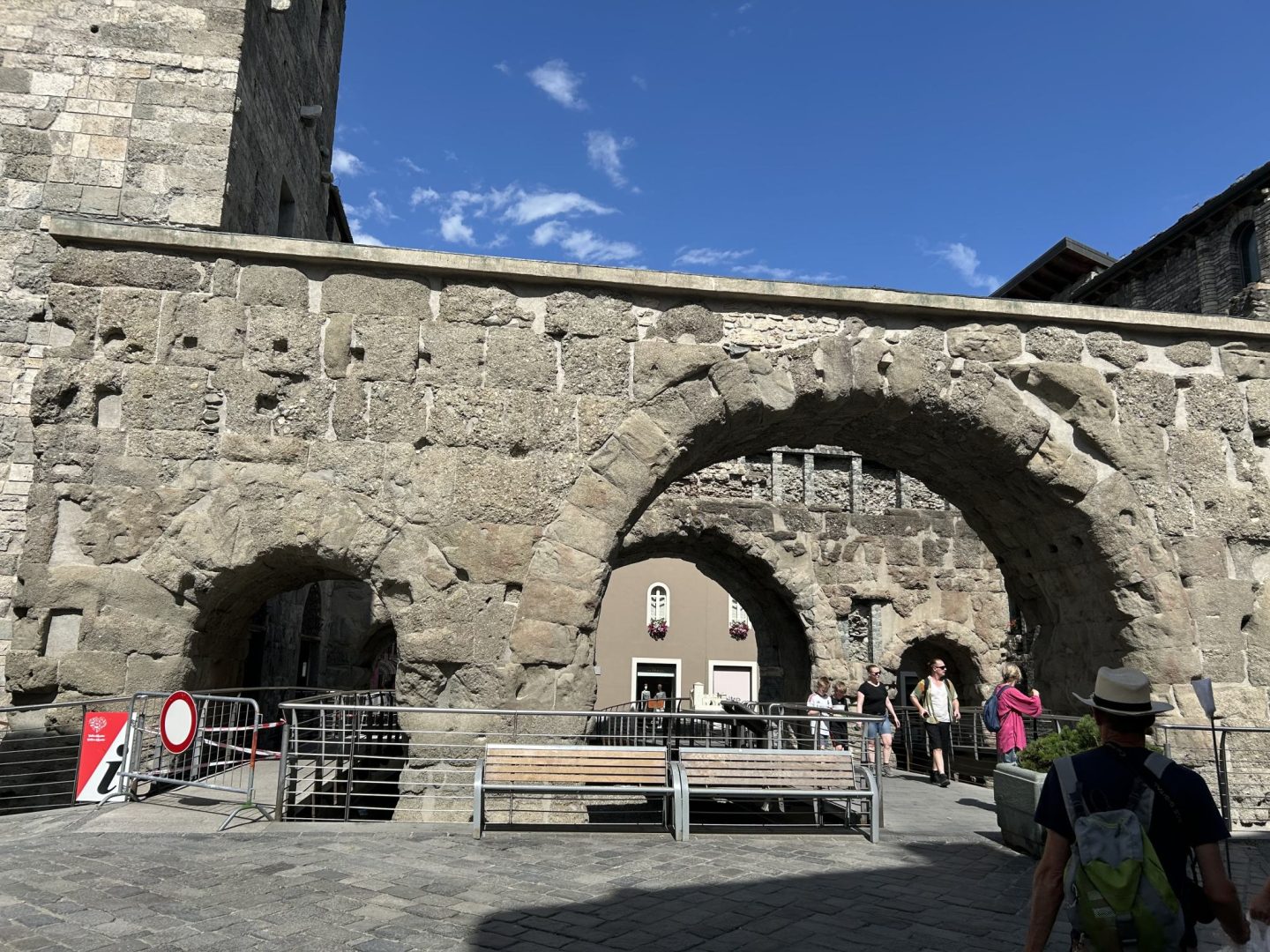
On day 4 we reached the provincial capital, Aosta, which became known as the Rome of the Alps due to its many well preserved ancient Roman remains, including the Arch of Augustus and the Praetorian Gate in the centre of town.

After leaving Aosta we followed the rus, ancient irrigation channels built between the 13th and 15th centuries. An engineering marvel for their day, many flow for several kilometres, snaking around the hillsides, combining open channels, tunnels and diversion mechanisms. Negotiating along the concrete edges was an interesting experience. Some sections had hand rails, but many did not. Don’t look down.


Along the ridges, abandoned castles appeared out of the forest.


Every village had an old church.


 In the countryside, little shrines can be found at old crossroads, on precipices and near bridges, erected by local people in past times to give thanks for a harvest, to ward off disaster or to seek safety during travel.


As we lost altitude in the second half of the week, it became really hot. Some long days at over 35 degrees. Many of the villages still have public water troughs which were great for refreshing.

These poor donkeys were baking in the sun, waiting for the irrigation jet to start.

And in the last days of the week we passed through wine country. The vineyards here are among the highest in elevation in Europe, giving the wines an Alpine character, in particularly the fresh, crisp whites.
 By day 6 we had almost walked the length of the Aosta Valley. We reached Fort Bard, built by the House of Savoy in the 1800s to control trade and traffic through the narrow gateway where the valley punches through to the south.
 A little further on, we passed the remains of a Roman road.

Through the sleepy village of Donnas.


To the town of Pont St Martin. In the 1st century, the Romans built a bridge here which was technically confounding for its day, comprising a single span 36 metres long and 25 metres high with an extremely thin vault arch.
In a marvellous example of the Catholic Church co-opting the Romans’ achievements, the bridge came to be known as Pont St Martin in the 4th or 5th century via a myth which claimed that a wooden footbridge here was washed away in a storm, stranding St Martin. Desperate to cross, St Martin made a pact with the Devil, who offered to build a solid stone bridge overnight in exchange for the soul of whoever crossed it first. St Martin agreed, but when the bridge was done, tricked the Devil by sending a small dog across. Even today, the myth is celebrated with the burning of an effigy of the Devil under the bridge during the carnival of Pont St Martin. No mention of redemption for the poor dog.
 Just beyond Pont St Martin, we crossed into Piedmont and our final destination for the week, Ivrea. It’s a pretty town with lots of Italianate architecture.


And a world class canoe slalom course which runs right through town and will host the European Championships in September.


Readers old enough to remember typewriters will know the name Olivetti. In 1908, Camillo Olivetti established a typewriter factory in Ivrea. By the 1920s, the factory employed more than 500 workers and Olivetti began what was, for its day, a radical program reflecting his philosophy that “the man who spends his long day in the workshop does not seal his humanity in his overalls”.
Embraced and expanded by his son, Adriano, who took over in 1938, it meant the company felt a responsibility to provide for workers’ social, cultural and physical welfare, not just pay wages for labour. As the company expanded after WWII, Adriano retained Italy’s top architects to design extensions which flooded factory floors with natural light, high quality residential housing estates, a nursery, library and cultural spaces for workers and their families. Health care, vocational education, art and cultural classes, generous leave entitlements and pensions were provided. In short, a bold, socialist experiment within a firmly capitalist enterprise.
After Adriano’s sudden death in 1960, the company’s fortunes flagged and its business was ultimately subsumed in takeovers in the 1980s, but the precinct of buildings constructed during its heyday remains as a cohesive whole.
In 2018, Ivrea was added to the UNESCO World Heritage List as “Industrial City of the 20th Century” recognised for Olivetti’s “pioneering, human-centric vision that seamlessly integrated modern architecture, urban planning, and social welfare into industrial production”. UNESCO publishes a walking map identifying the main buildings and their significance. They are classic examples of mid 20th century architecture.


Of particular interest is the West Residential Unit, known as Talponia – ‘Molehill’ – because it’s built into the side of a hill with just one facade open to the air. Skylights filter light down from the hillside above.


And La Serra, a cultural centre with auditorium, cinema, restaurant and hotel designed to resemble typewriter keys.

We spent a day in Ivrea, visited the Olivetti area, did some washing, rested our legs and had a few granitas to cool down. Tomorrow, week 2 begins.
This week:
Day 1: Bourg St Pierre to Great St Bernard Pass: 12km
Day 2: Great St Bernard Pass to Etroubles: 13km
Day 3: Etroubles to Aosta: 16km
Day 4: Aosta to Chambave: 23km
Day 5: Chambave to Verres: 28km
Day 6: Verres to Pont St Martin: 18km
Day 7: Pont St Martin to Ivrea: 24km
Day 8: Rest day in Ivrea
Total so far: 134km

I would have queued with the donkeys . Or found that cow trough ! Sounds like you’re enjoying the quieter element of this hike . Excellent . Look forward to following your progress
Author
It’s certainly heating up! See you in Lucca soon.
Love the pics. Great seeing Barry get a statue. You are covering a lot of ground despite the lack of WHS- well done Julie & John you are missed back home x
Looks like a great start to the hike. Interestingly I was chatting to a fellow walker at Wallaroo. This lady has done 6 caminos. When I was saying I would like to do a section at some stage but would like to avoid the crowds she was strongly espousing the Via Francigena. Your feedback post walk will be most welcome.