Continuing our southbound trajectory, Bratislava was our next stop. We didn’t know much about the city aside from it being the capital of the Slovak Republic. Now that we’ve spent a couple of days there, we are going to make a bold prediction: it will continue to feature on those lists of ‘places you may not know much about but are worth a look’ but is unlikely to make it to any list of ‘top 10 places you must see before you die’.
Although a bit obscure, it is by no means an ‘undiscovered’ destination. From what we saw, it attracts two types of tourists.
Firstly there are lots and lots of day trip groups from Vienna who spend a few hours shuffling along after a guide with a flag and an earphone-based audio system talking them through the sights of the Old Town.
And then there are boisterous English and Irish hens and bucks here for drunken revelling. We couldn’t quite figure out why, since booze isn’t all that cheap here. We blame Ryan Air.
Anyway, we were two decades too young to fit into the first group and three decades too old to fit the second. Bratislava is pleasant enough, but not really our scene.
We’ve seen plenty of Central European old towns. Bratislava’s is nice but not distinctively different enough to have a ‘wow’ factor.


The Primate’s Palace, home to the city’s archbishop, is a pretty confectionery pink.


Everyone loves Cumil the Sewer Worker. He was installed in 1997 but no one seems to know why. Is he a diligent worker taking a breather from the fumes in the sewers? Is it a subtle jibe about the Communist ‘work ethic’ of doing as little as possible? Is he a sleaze bag taking advantage of his subterranean job to perve up women’s skirts? The debate continues unresolved.

Speaking of sewerage related matters, WTF was this supposed to be? No wonder the sign said ‘don’t touch’!

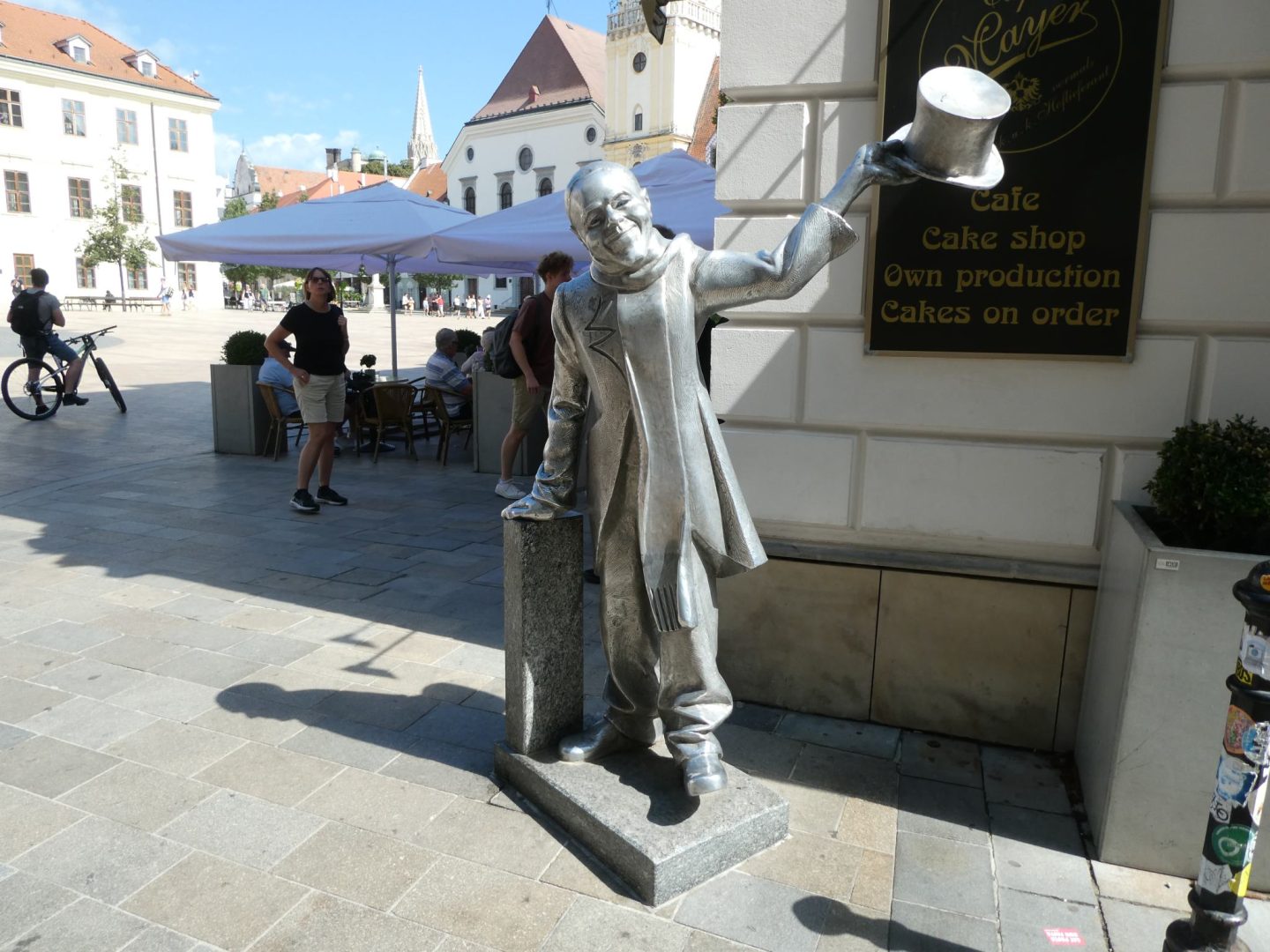
Schone Naci – real name Ignac Lamar – was a colourful local identity who lived in Bratislava last century. He wanted to be a famous circus clown like his grandfather but what we would now recognise as mental health issues prevented him fulfilling his ambition. Instead he strolled around town in an elegant evening suit, with top hat and small cakes, greeting ladies by saying “I kiss your hand” in Slovak, Hungarian or German.
Although people found him charming, he died, forgotten, in a tuberculosis facility in 1967. But in 2007, the city erected a statue in his memory.
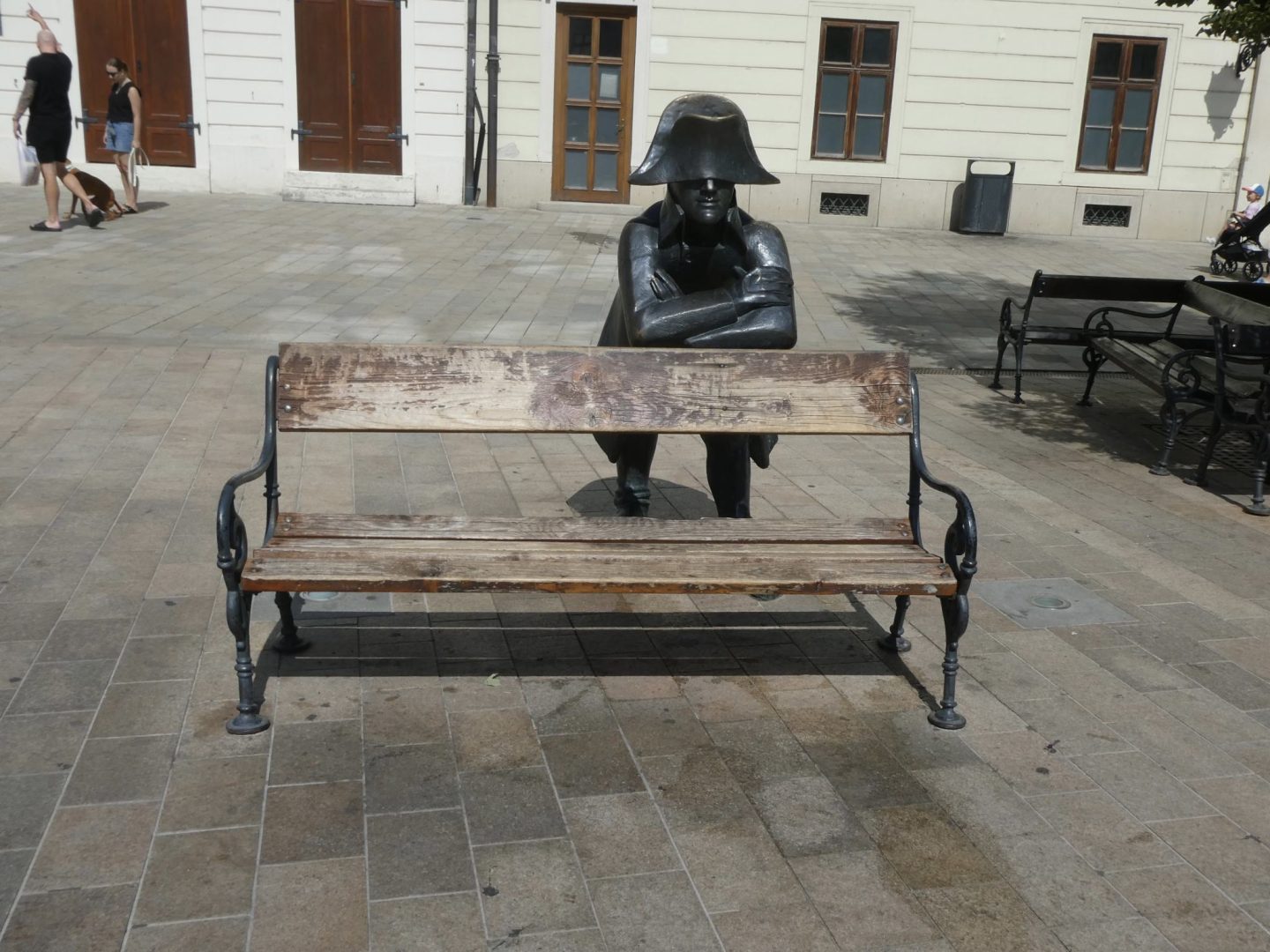
John maintains Napoleon Bonaparte slept in every town in Europe. That might be right. He came through Bratislava in 1805 and his legacy is more than a plaque on a wall. One of his soldiers fell in love with a local girl and ‘decided to stay’. We think that’s called desertion.
Ex-soldier Hubert began making sparkling wine which he named after himself. Over 200 years later, it’s still being produced.
There’s a statue of Hubert in the main square in the Old Town.
And the manager of our apartment gave us a bottle of his eponymous wine. French champagne it is not, but better than the Equadorian bubbly we had in 1999 which continues its decades-long run as the worst sparkling wine we’ve ever had.

Outside the Old Town, there are plenty of buildings from the days when Slovakia was part of the Austro-Hungarian Empire.

 Bratislava Castle sits on a bare hill just outside the Old Town. It was briefly the main castle of the Kingdom of Hungary, when the Ottomans conquered much of the rest of central Europe.

The castle is quite plain and has been unkindly compared to an upturned table. When we left Bratislava we caught a ferry to Vienna and from the river it was easy to see why.

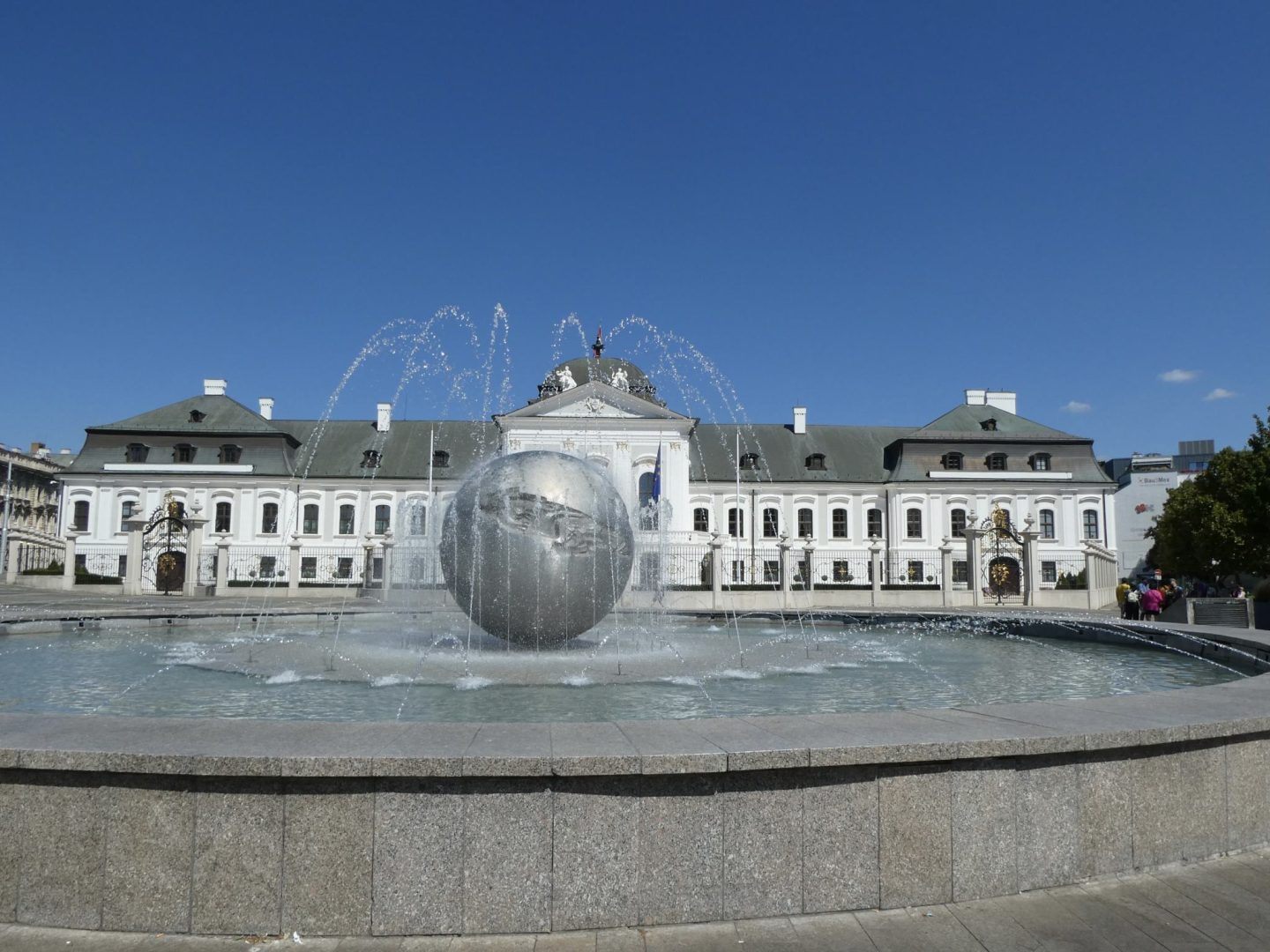
The slightly more impressive Presidential Palace was built in 1760 for a Hungarian Count who was the equivalent of Minister of Finance to Empress Maria Theresa. In the Communist era it was an activity centre for schoolchildren who, being children, caused extensive damage to it.
In the early 1990s the then First Lady oversaw a renovation which brought it back to its former splendour and it became the residence of the President. That would have made a great episode of Grand Designs.
Our favourite building – everyone’s favourite – is the very distinctive art nouveau Church of St Elizabeth, aptly known as the Blue Church.

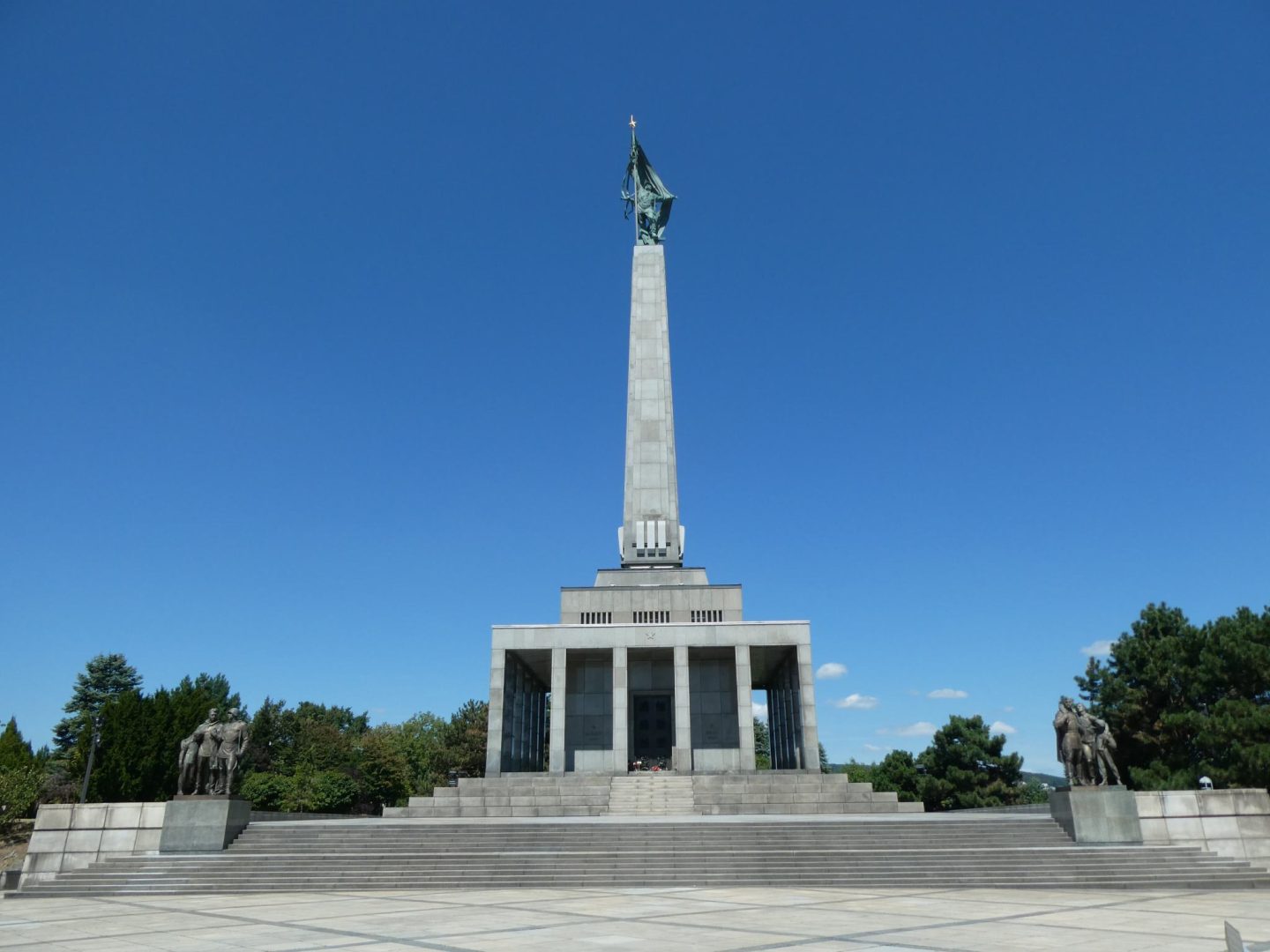
In the spring of 1945, 6,845 soldiers and officers of the Red Army died driving the German Army out of Bratislavia and Western Slovakia in the closing stages of WWII. On a hill towering over the city are six mass graves and 278 individual graves of the Russian dead.
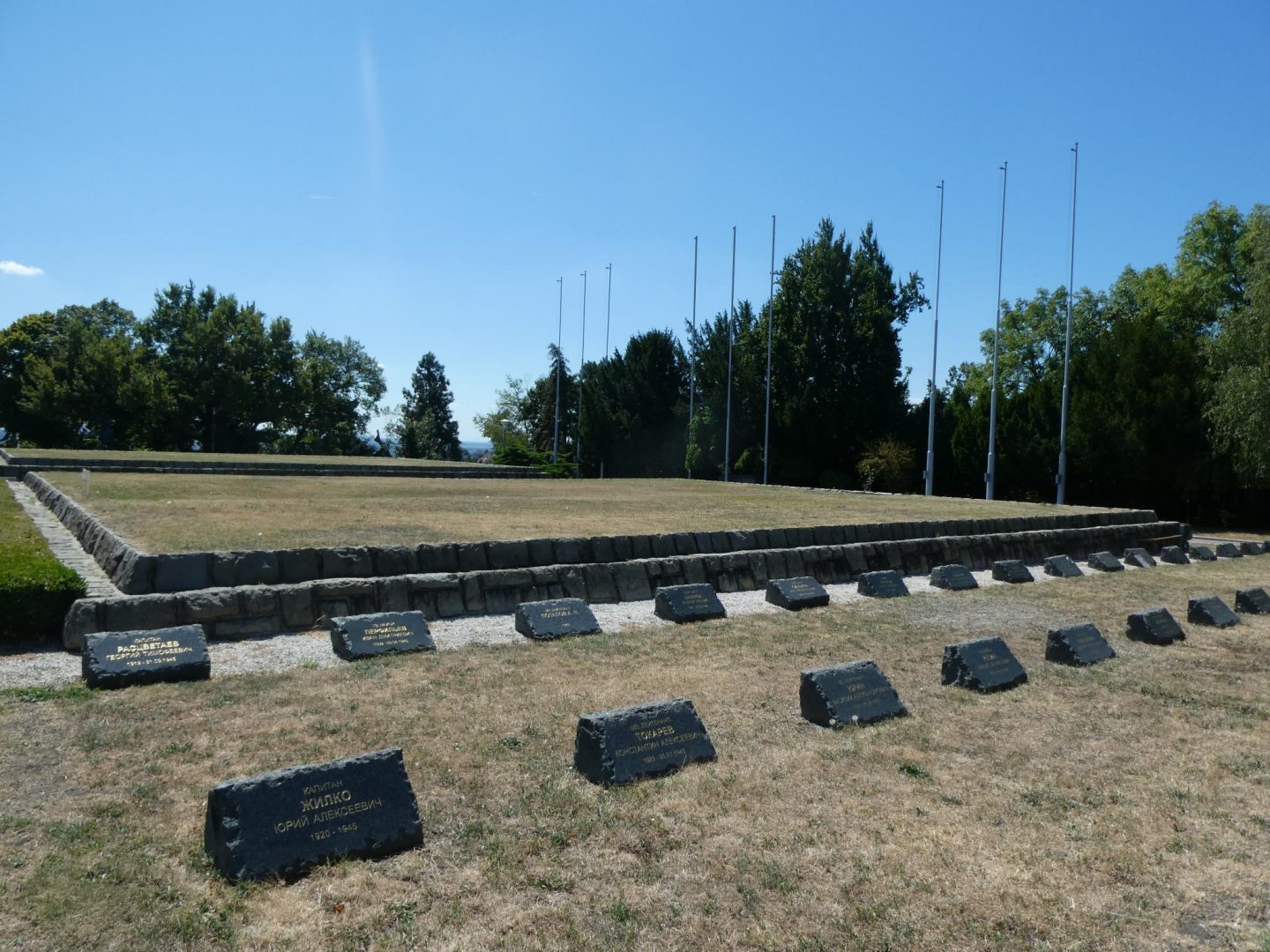
In 1960, the Slavin Memorial was built on the site. On top of a 42 metre tower is a 12.5 metre tall statue of a Russian soldier holding a flag and crushing a swastika with his boot. It has so far escaped the dismantling of Soviet era monuments which is ongoing throughout the former Eastern bloc. And rightly so. Regardless of the brutality of the Communist era that followed, this is still a war grave.

Bratislava has also retained some great examples of Communist era architecture. When it opened in 1967, the designers of the SNP bridge claimed it was ‘the most daring building of its time’. Its distinctive central tower has an open air observation deck above a glass enclosed restaurant that looks just like a stereotypical 1960s flying saucer.
It may not be to everyone’s taste but the UFO Bridge, as it’s universally known, has come to be one of the most recognisable images of the city.
 Looking across the river from the Old Town, what you see behind the bridge is Petrazlka, one of the largest Communist era housing developments ever built. Panelaks, buildings comprised of huge concrete panels, were erected with great enthusiasm by city authorities throughout Eastern bloc countries. Those living there now may feel less enthusiastic. Petrzalka is the most densely populated residential district in Central Europe. It’s nicknamed the Bronx of Bratislava for its crime rate and drug problems, although these are said to be improving.
 And if Communist era buildings are your thing, you cannot miss the Slovak Radio building. It is consistently voted one of the ten ugliest buildings in the world, which we think is unkind. A stunning waste of usable footprint, but there are uglier buildings around.

Bratislava isn’t renowned for street art, but we happened across a couple of interesting ones. Especially this one whose hanging paper almost looked 3D.

Slovakia has good food, and Bratislava has a particularly good coffee-and-cake culture and some lovely cafes in which to enjoy them.

Our verdict? Bratislava is worth more than the few hours that day trippers from Vienna give it, but it’s not a place you need to linger for too long. A couple of days is enough.

I love ❤️ “Cumil the Sewer Worker” as well & having an interest in Communist era architecture thought the SNP bridge in Bratislava was as you said “interesting “ and like many examples as bit “austere”?
Author
That bridge is straight out of The Jetsons to me.
Love the second photo. Tired, hot, been here. done that sort of photo.
Love the 3D paint peeling street art. So clever 😀