The Polish language is impenetrable. After two weeks, all we’ve mastered is ‘pork’, ‘wine’ and ‘thank you’. That covers the essentials, although it might be helpful to know ‘niebezpieczenstwa’ means danger.
The person who constructed this language clearly had a prejudice against vowels. How else do you explain words like ‘vzbrst’ and ‘cmrlj’. There’s even a joke about a Polish man who goes to the optometrist:
Doctor: “Can you read the bottom line of the eye chart?”
Polish man:. “Read it? I f*#%ing know the guy”.
And to make matters worse, it’s absolutely not phonetic. Our next stop was the city of Wroclaw. We knew asking for a ticket to ‘Rock-law’ would draw a blank. But what to say? Depending on what you read, it is pronounced either ‘vrohtz-wahv ’ or ‘vrots-wahf’. Go figure.
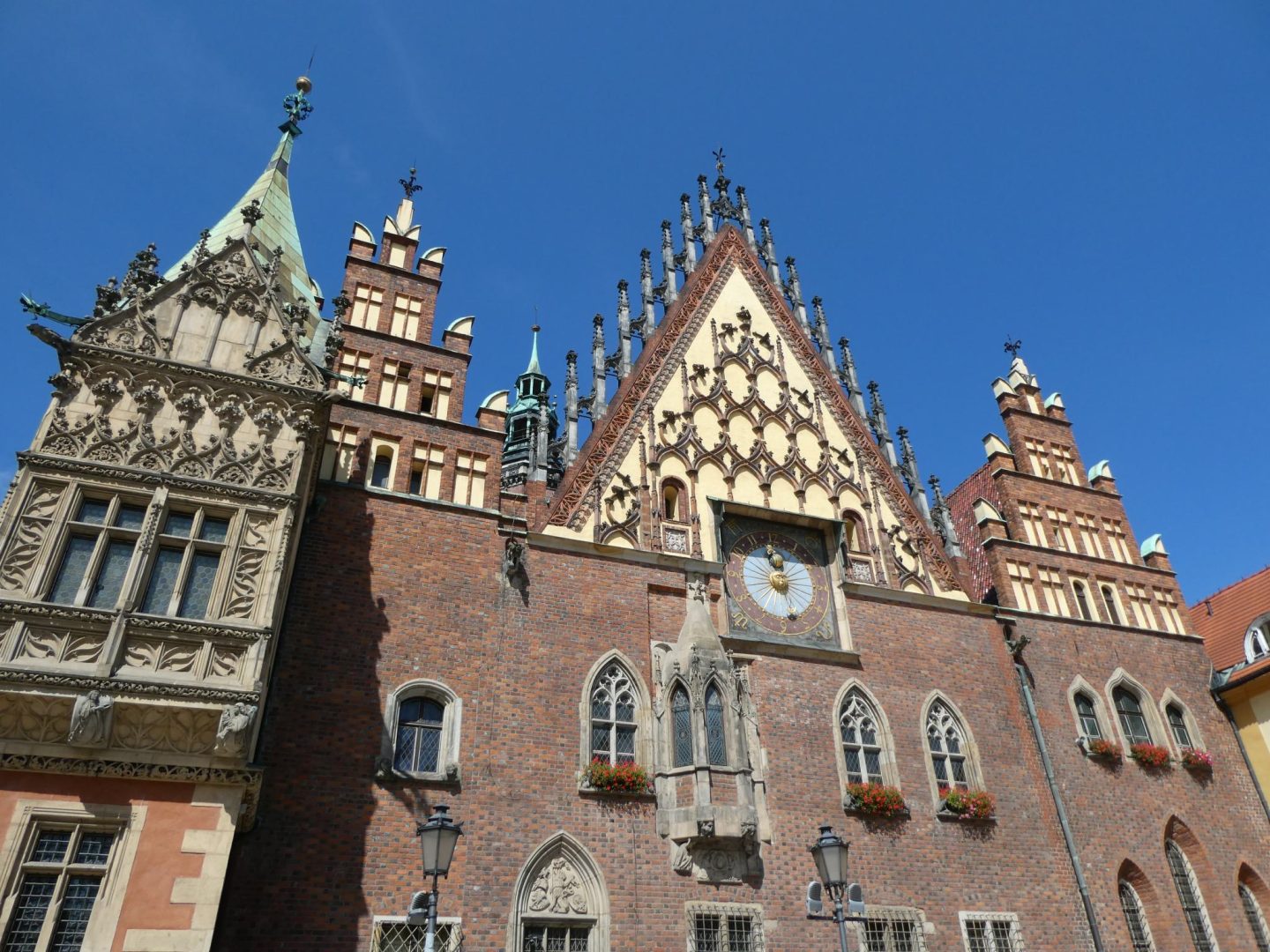
Wroclaw is an ancient city, part of many empires over the centuries. Although Polish for 350 years, it came under Prussian rule in the 1800s and was re-named Breslau. The German population rapidly increased and by the beginning of WWII it was the largest city in Germany east of Berlin. Much of its central architecture reflects that heritage.
As the Soviet Army advanced into Germany in late 1944, Hitler declared Breslau must be held “at all costs”. The German army forced the civilian population to leave. 18,000 people froze to death in -20C snow storms.
When the Soviets arrived in February 1945, the German army hunkered down. The brutal Siege of Breslau lasted three months. By the end, half the city had been destroyed. Breslau was the last major German city to surrender. They continued to fight even after Berlin had fallen, capitulating only two days before the war officially ended.
After the war, new geo-political boundaries were drawn up by the victors. Poland got the whole of this region back in compensation for Lviv and the surrounding eastern territory being allocated to Ukraine. The old Polish name, Wroclaw was re-instated.
Thankfully much of the traditional city centre survived or was sympathetically rebuilt.


There’s a few decorative features that probably wouldn’t be allowed today.


The massive Cathedral of St Mary Magdalene has two 45 metre towers connected by a footbridge known as the Bridge of Penitents. It is claimed that after the church was finished in 1523, shadowy figures could be seen on the bridge at night. One version is that they are the tormented souls of loose women who consorted with men instead of “fulfilling their God-ordained duties” of looking after house, husband and children.
There are also stories of the bridge being used as a test for witches. Like the ‘ducking’ test used in other medieval cities. Women accused of witchcraft had to walk the bridge rail. If they lost balance and fell to their death, they were innocent. If they made it across alive, this proved they were a witch and they were burned at the stake. Classic no-win situation.

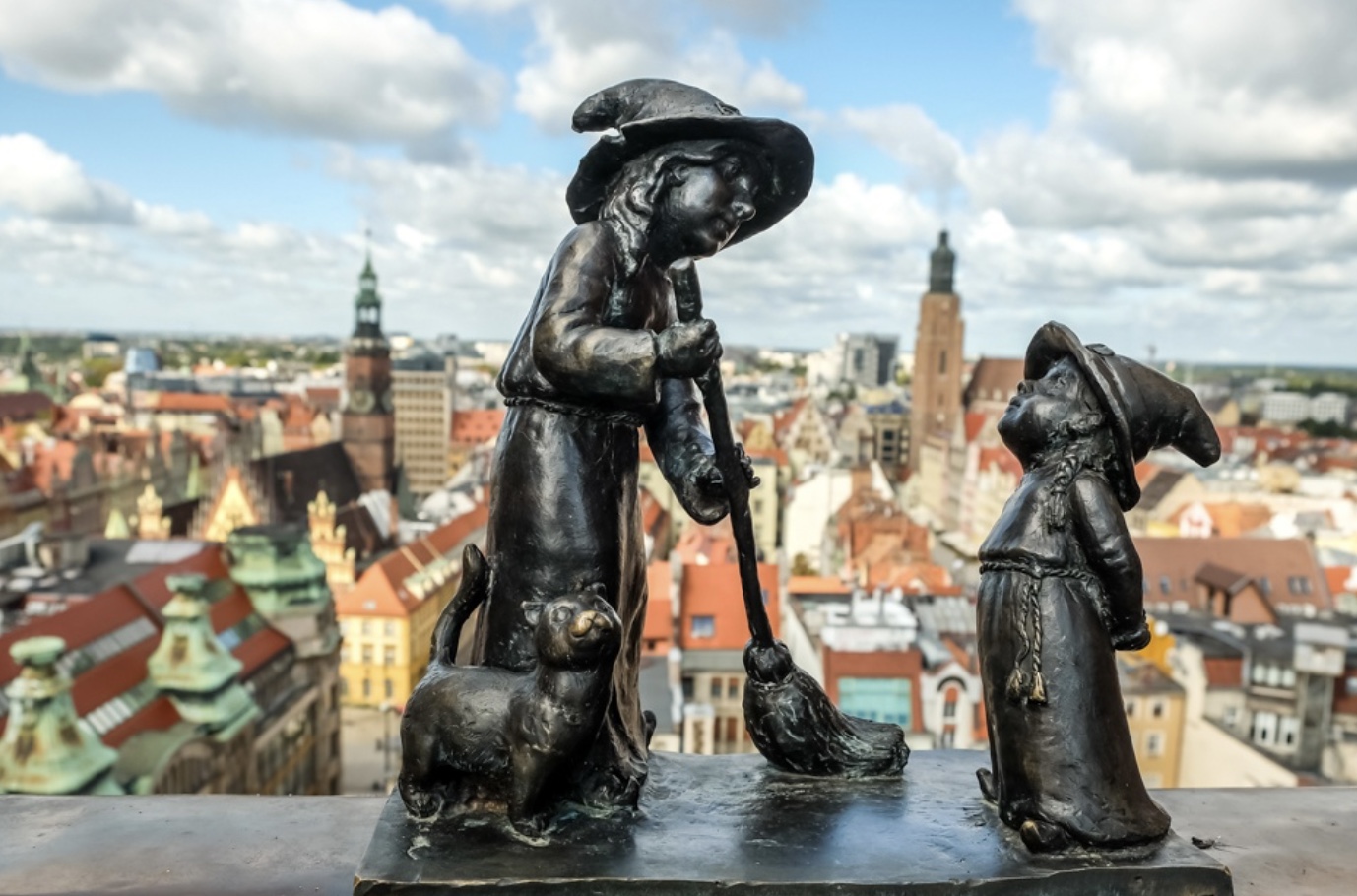
Another tale is that a vain young girl named Tekla refused to do housework, choosing to attend balls and flirt with men instead. Her father cursed her and she was banished to the bridge where she was forced to sweep it for the rest of eternity. Her shadow could be seen from the ground – a warning to other women not to challenge the patriarchy.
In a variation of that one, a kind witch borrows Tekla’s broom, helps out a wizard and secures Tekla’s release from the curse. That’s the story referenced in the cute statue on the rail.
These two medieval houses joined by an arch are nicknamed the Hansel and Gretel houses. Supposedly they look like siblings holding hands. Toward the end of the 1900s one of them was rented to a local artist and sculptor for “a bag of fur”.

The University of Breslau, founded in 1702, was badly damaged in the siege. After the war it was renamed the University of Wroclaw and restored through the efforts of academics who came from the pre-war Polish University in Lviv.
The Aula Leopoldina is an absolutely stunning auditorium which is still used for academic staff events.


And the equally beautiful Oratorium Marianum was a ballroom, now used for concert performances.


The 17th meridien line, a line of longitude which runs from the North to the South Pole, passes through Wroclaw. A professor worked this out in 1791 and marked the exact location on the pavement outside the Astronomical Tower.

Before WWII, the Polish University in Lviv held the country’s largest collection of scientific research materials and national collections of maps, medals, coins, stamps and other historical items. Staff managed to transfer about 20% of it to Wroclaw in the post-war period before the Russians destroyed the rest in an attempt to remove all traces of Polish culture from Ukraine. The precious 20% that was saved is housed in the Ossolineum. Today it is one of Poland’s most important scientific and cultural libraries.

As a university town, there’s plenty of bars and cafes. These showed some flair.


The Soviet era is far enough in the past that cafes referencing that time can be entertaining rather than triggering, like this one where the plates are glued down and the forks and condiments are chained to the tables. Just like the old days, apparently.

The Oder River runs through Wroclaw, and four smaller rivers converge here, creating a network of small islands. Wroclaw is sometimes called ‘the Polish Venice’. It is, needless to say, nothing like Venice. But with 130 bridges connecting 12 islands, some parts of it do resemble a canal city. These islands are the oldest inhabited parts of Wroclaw, filled with parks, religious complexes, quiet semi-pedestrianised streets and impeccably restored old buildings.


Polish people suffered greatly under German rule and for many, resentment toward Germans remained strong in the post-war period.
In 1966, the Catholic Church celebrated 1,000 years of Christianity in Poland. Archbishop Kominek penned the Pastoral Letter, signed by all of the Polish bishops and sent to their German counterparts seeking a path to reconciliation. The letter is famous now for the words “we extend our hands to you … and we forgive and ask for forgiveness”. The notion of the victims forgiving the aggressors and asking for forgiveness rather than seeking or demanding an apology, has come to be seen as a template for progress for peoples who have to learn to co-exist after other conflicts such as the Balkans.
An original manuscript of the letter is held in St John the Baptist Church here.

One of the iconic images of Wroclaw is the Tumski Bridge which connects two of Wrocław’s small islands.

Built in 1889, it survived the war only to be almost brought down by a different form of senseless assault. In 2009, it became one of those bridges where lovers fix a padlock and throw the key into the river. By 2019 the weight of the locks was so great, the bridge was at structural risk.
In a renovation that year, 17.5 tonnes of corroded locks were removed. The bridge was spruced up and attaching locks now attracts a hefty fine. So couples put them on the rail on the adjacent island instead.
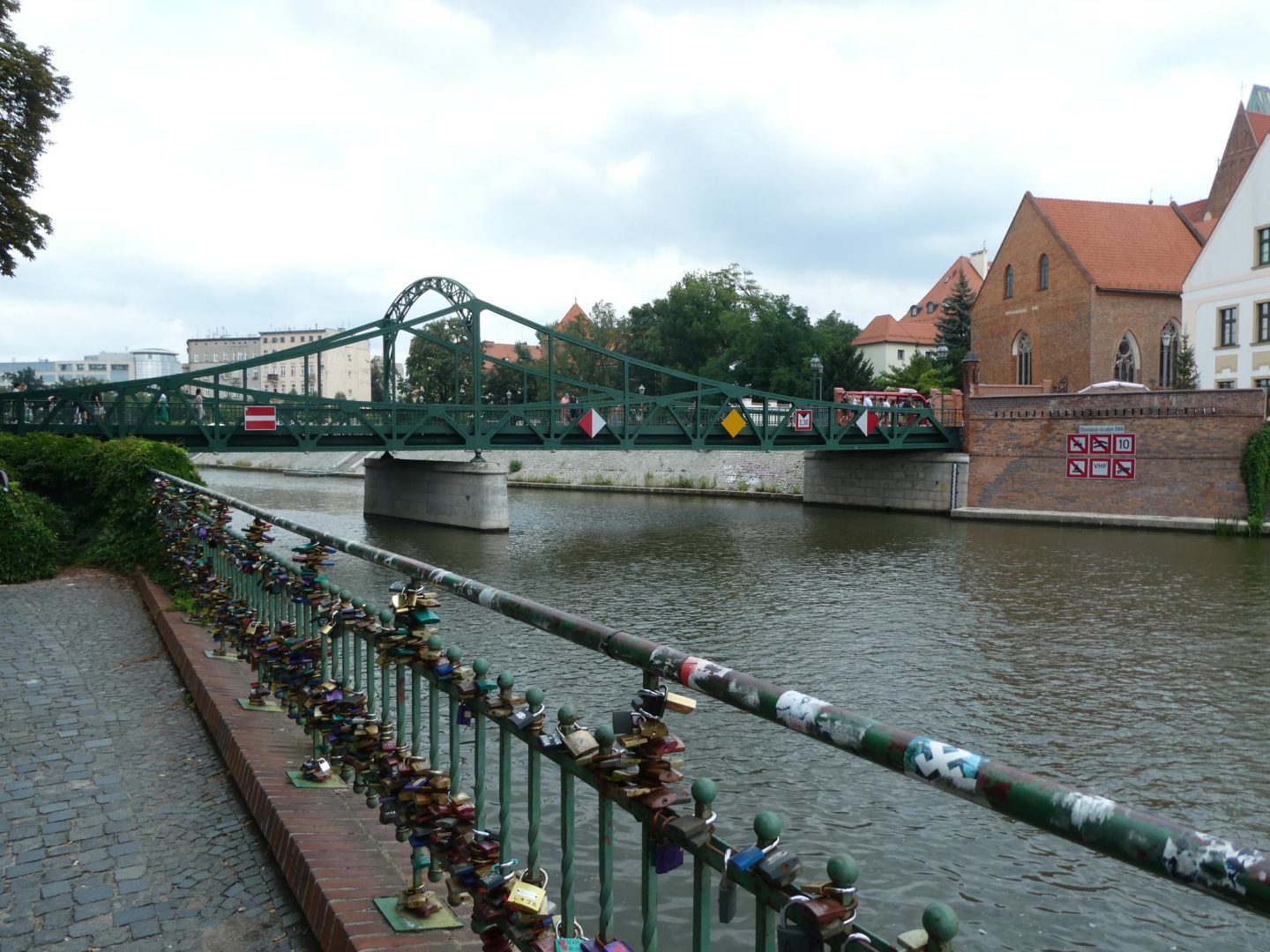
The authorities have tried to reinforce the ‘no locks’ message in a lighthearted way with a message board and dwarf at either end, which some idiots have similarly vandalised.
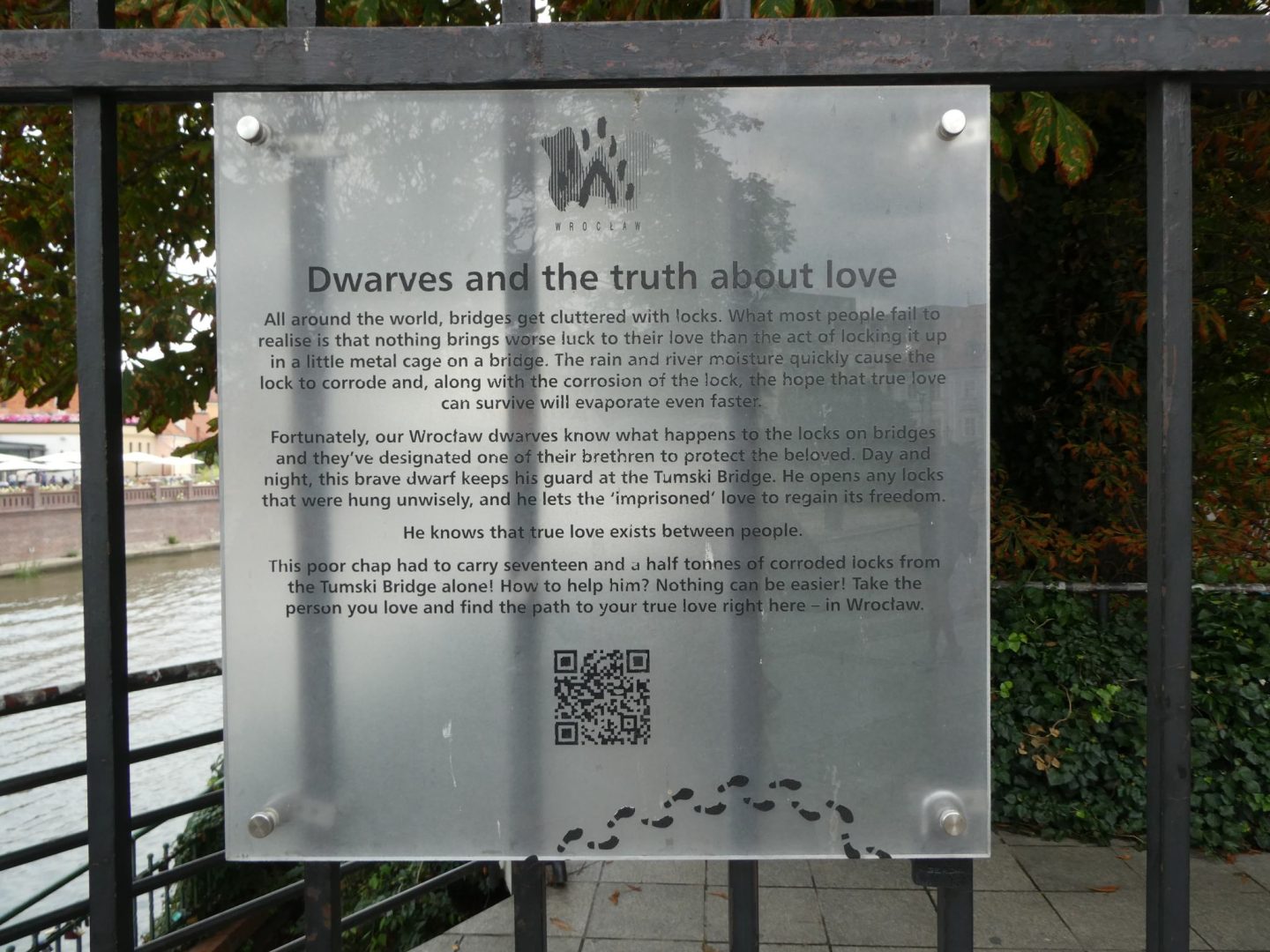


Which brings us to the Wroclaw Dwarves.
When martial law was declared in 1981 in an attempt to crush the Solidarity Movement and regain totalitarian control, different forms of non-violent protest arose across Poland. In Wroclaw, the Orange Alternative emerged, led by artist Waldemar Fydrych.
It started with graffiti. Police would paint over anti-communist graffiti. Under cover of darkness, Fydrych and his group would paint gnomes in orange hats over the police work. It was extremely dangerous since even being out at night would get you arrested.
Next he started arranging peaceful street gatherings advocating for ‘dwarves’ rights’. Police tried to crack down by arresting attendees but realised they themselves looked ridiculous in television footage beamed around the world. What’s so threatening about a bunch of pro-gnome students in orange dwarf hats?
The protestors’ actions sent a subversive message: the government’s attempts to silence people are absurd and should be ridiculed not feared.
In 2001, the city installed Papa Dwarf on the street corner where the protesters had gathered.

In 2005, a local sculptor proposed installing more dwarves representing aspects of the city. The council agreed, and over the years it’s become a phenomenon. Now there are more than 300 of these 20-30cm figures hiding all over town. You can buy maps of where they are. Not that you need to – just wander around looking in corners. And the sight of a kid crouching down, or an adult bending over with a camera, is a clear sign of one.
There’s lots representing the traditional trades, like a scribe, a key maker, a printer.

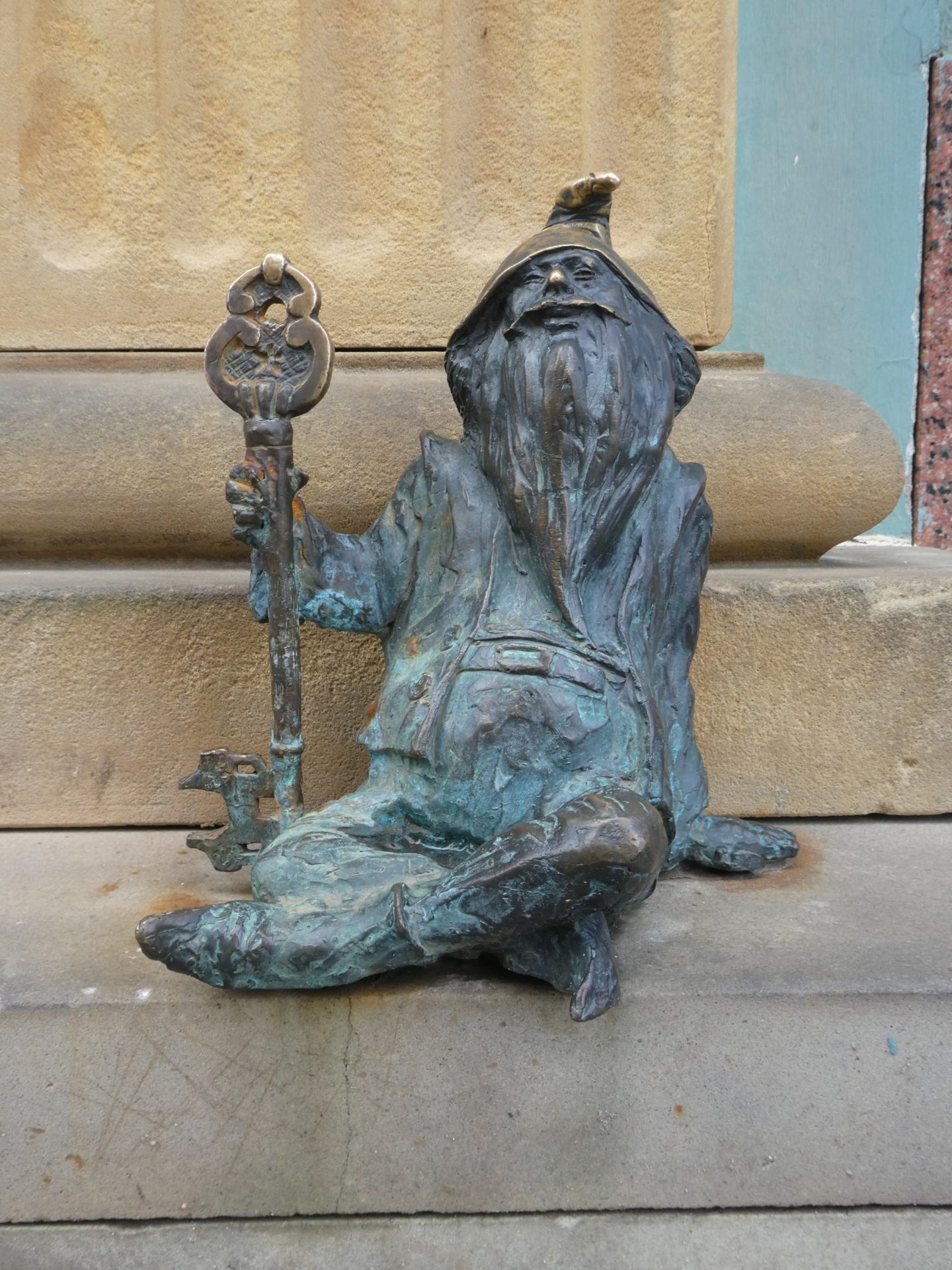
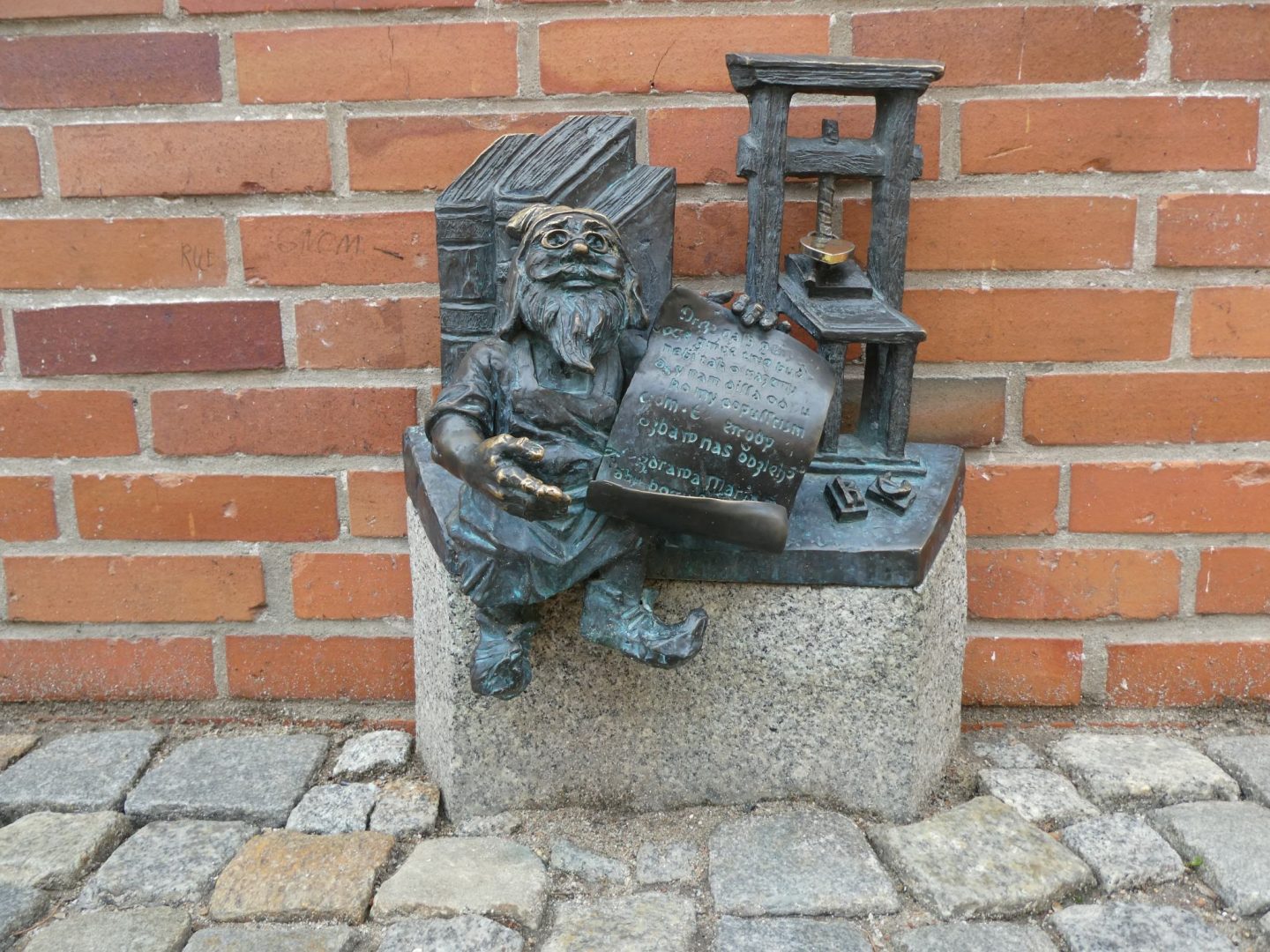
One of the most famous ones is Sisyphus from the Greek legend.
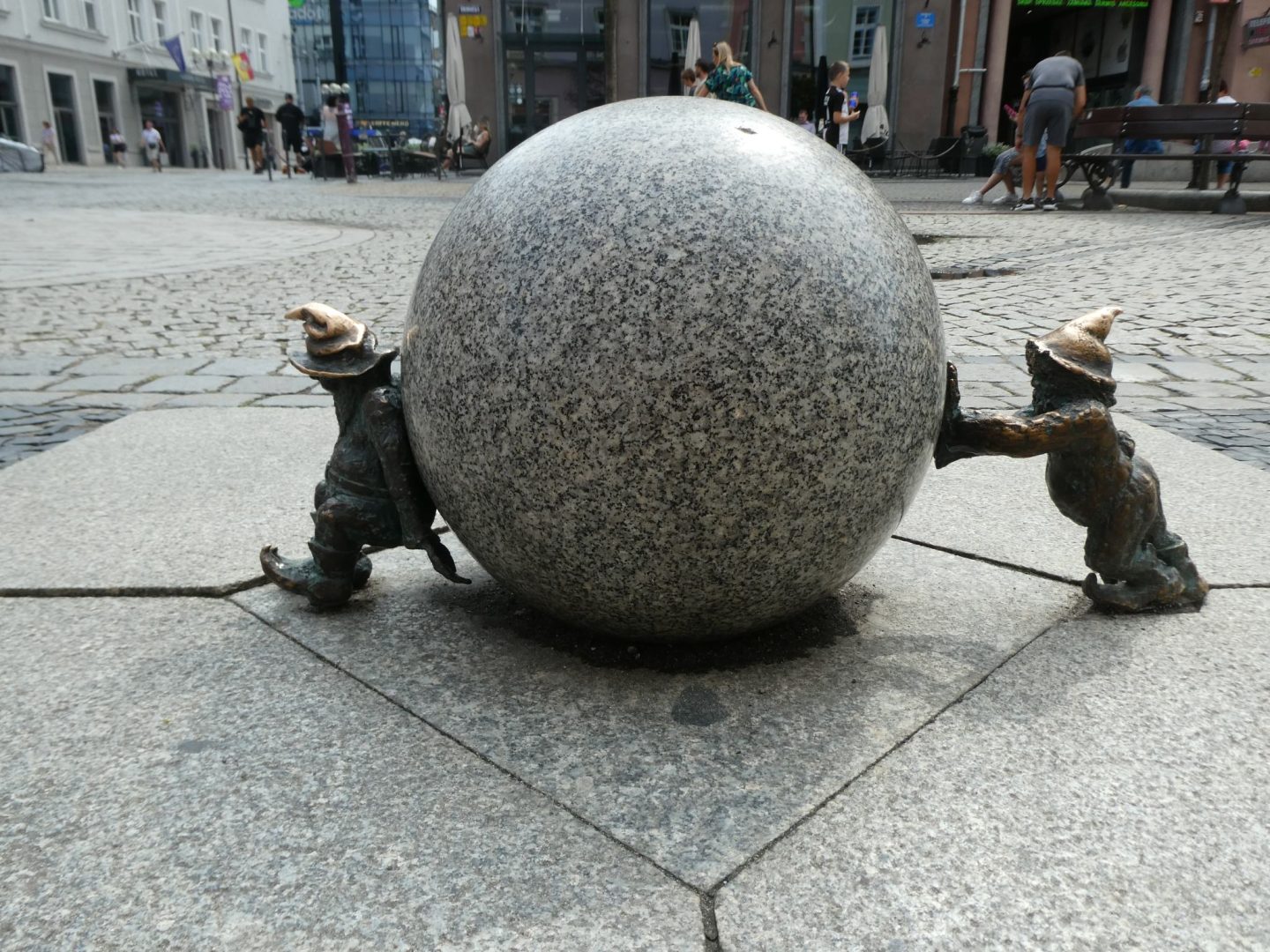
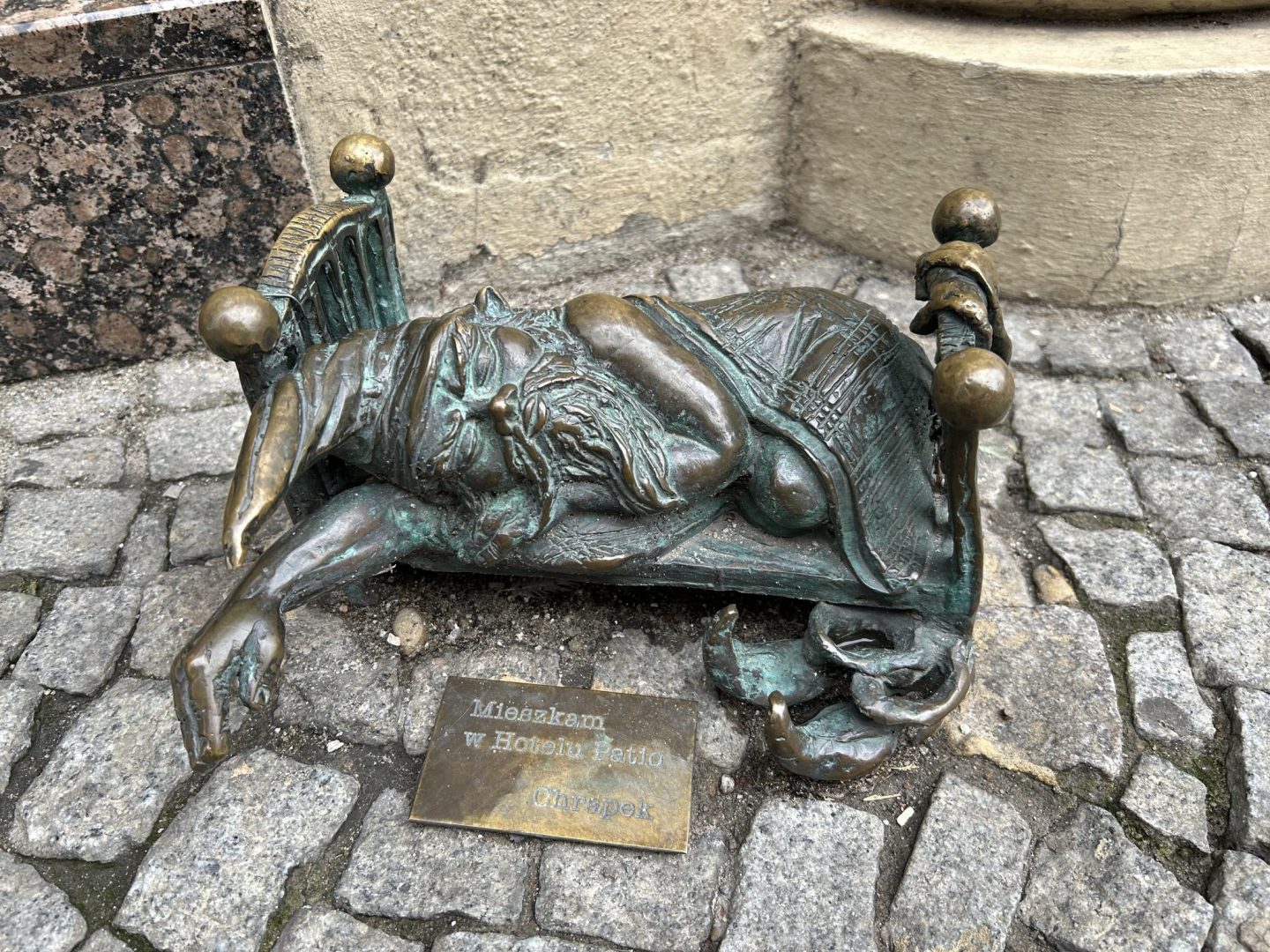
Here’s a few of our favourites.
The snorer, outside a hotel.
The tourist, complete with guidebook and camera, outside the tourist information office.

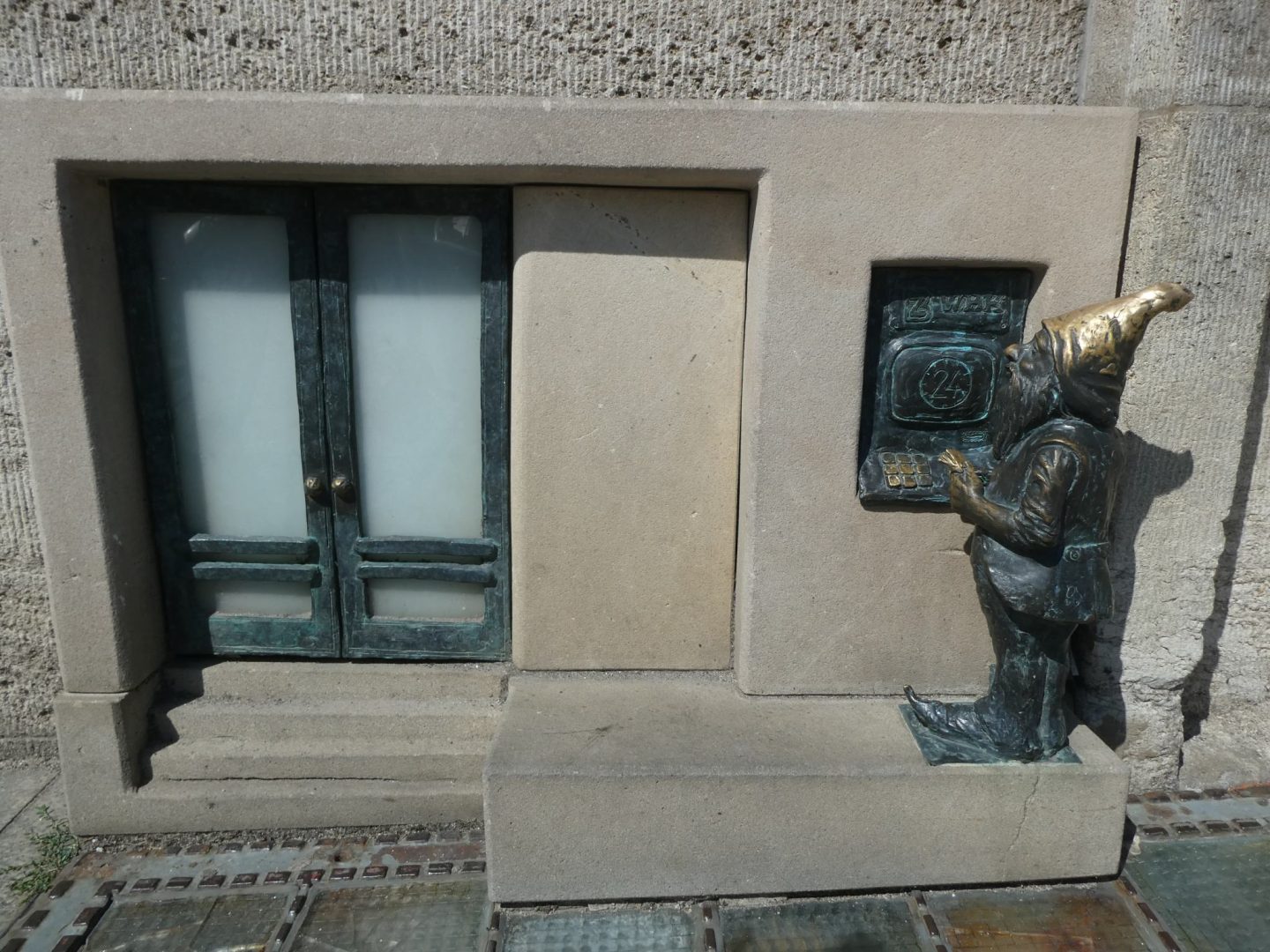
Using an ATM machine and, even better, showing how an ATM really works.

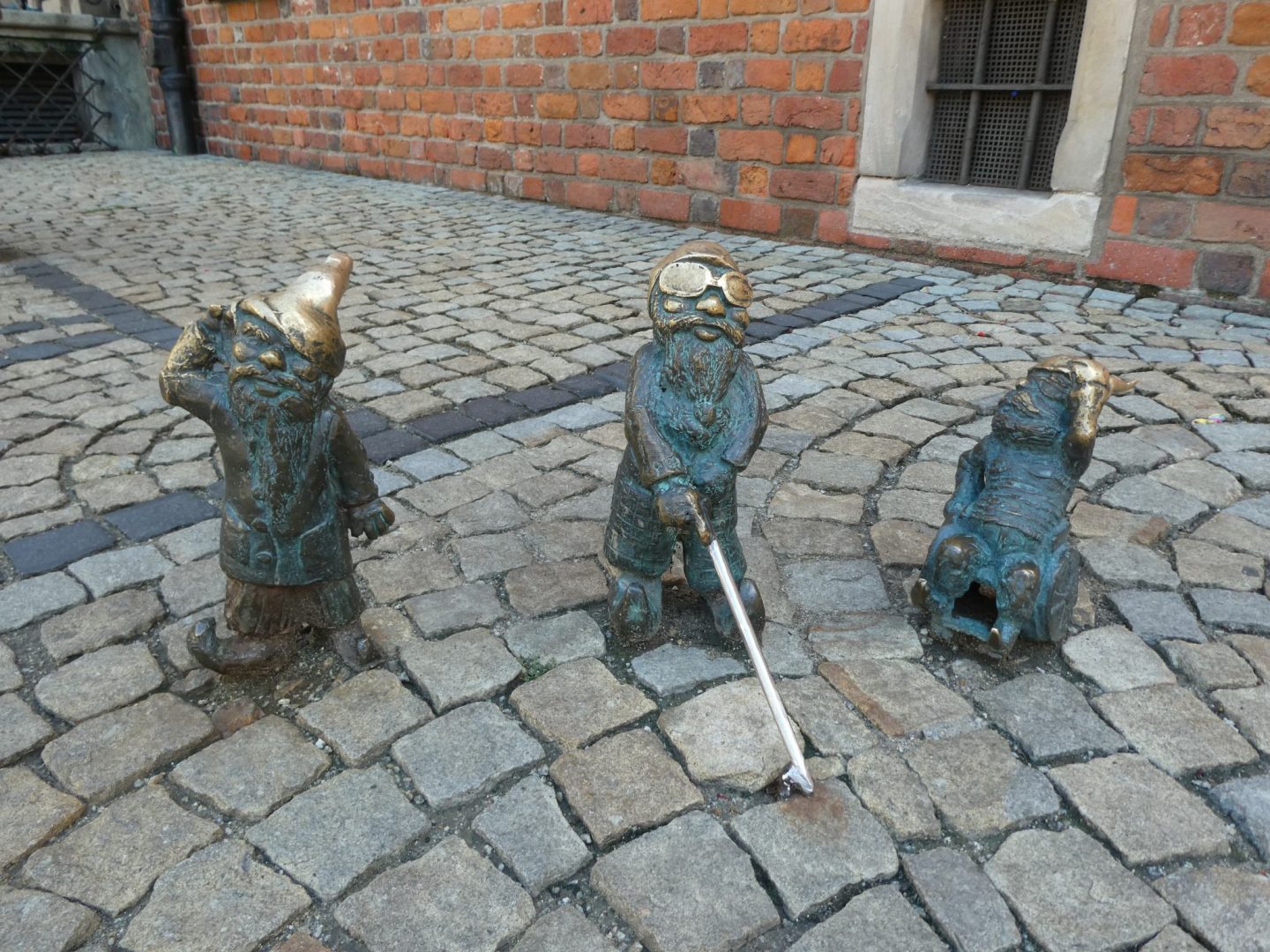
Celebrating the city’s commitment to disability awareness.
And some modern history – a Solidarity activist and a pro-democracy protestor.


A soldier and a veteran.


One for the lovers.

A professor at the university.

And of course, since it’s a student town, the drunkards.
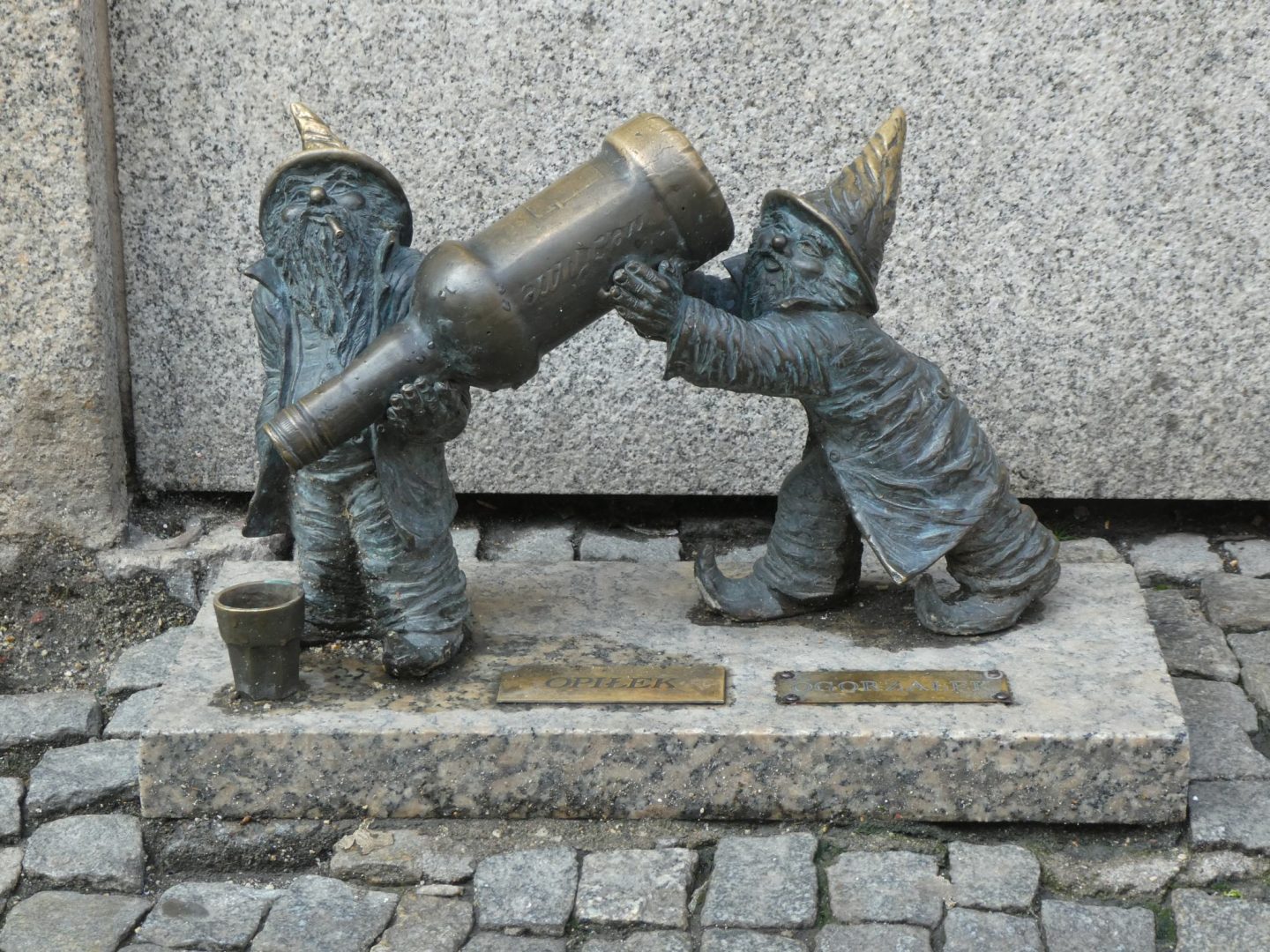
No, we didn’t bag all 300+ of them. Not even close. But gnome-spotting was fun.

Love the gnomes 😉