Novi Sad is a charming place. 2022 European Capital of Culture, Serbia’s second city, a vibrant food and music culture, and despite its turbulent history, lots of beautiful architecture.
Officially established by Serb merchants in 1694 while the region was under the control of the Habsburg Monarchy, Novi Sad was declared a ‘free royal city’ by Empress Maria Theresa in 1748. For most of the 18th and 19th centuries it was the largest Serb-inhabited city in the world. It was part of the Austro-Hungarian Empire until the end of WWI and then became part of the Kingdom of Serbia.
In the 19th century it was the centre of Serbian culture, earning it the nickname ‘the Athens of Serbia’.
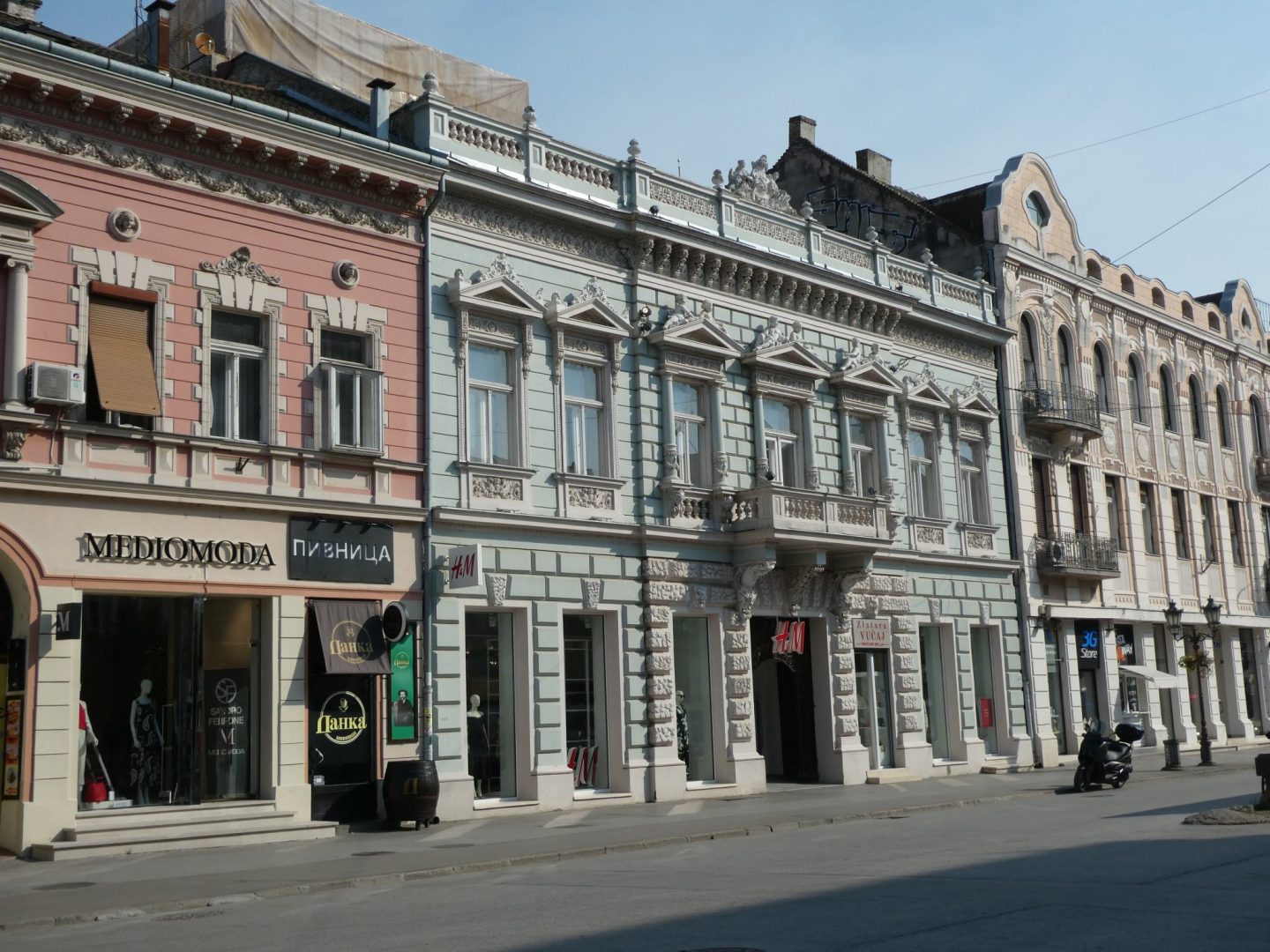
Zmaj Jovian Street is the main thoroughfare of Novi Sad’s fine pedestrian zone on and around which many of the city’s historical buildings are found.
On the Square of the Republic, the City Hall, built is 1895, is a showpiece of Neo-Renaissance style.

Facing it from the other side of the square is the Roman Catholic Church of The Name of Mary. With a 73 metre tower and cavernous Gothic Revival interior, it’s the largest religious building in the city.


Between the two, in the centre of the square is the Monument of Svetozar Miletic, a Serbian author, lawyer, journalist and politician. Some wags say the statue depicts him shaking his fist at the Catholic Church, but more likely the sculptor intended him to be seen as striding purposefully out of the Town Hall where he served as mayor.

There’s a statue of his son-in-law, Jasa Tomic, also a statesman, around the corner. He looks like he’s making a rude gesture at someone. Co-incidence? Family feud?

The entire precinct is full of late 19th/early 20th century beauties with lots of intricate decorative flourishes.


Many have been re-purposed into shops, including the turn of the century townhouse in this row which is now a branch of UK department store, H&M with ornate iron stair rails, intricate tiling and an amazing ceiling.

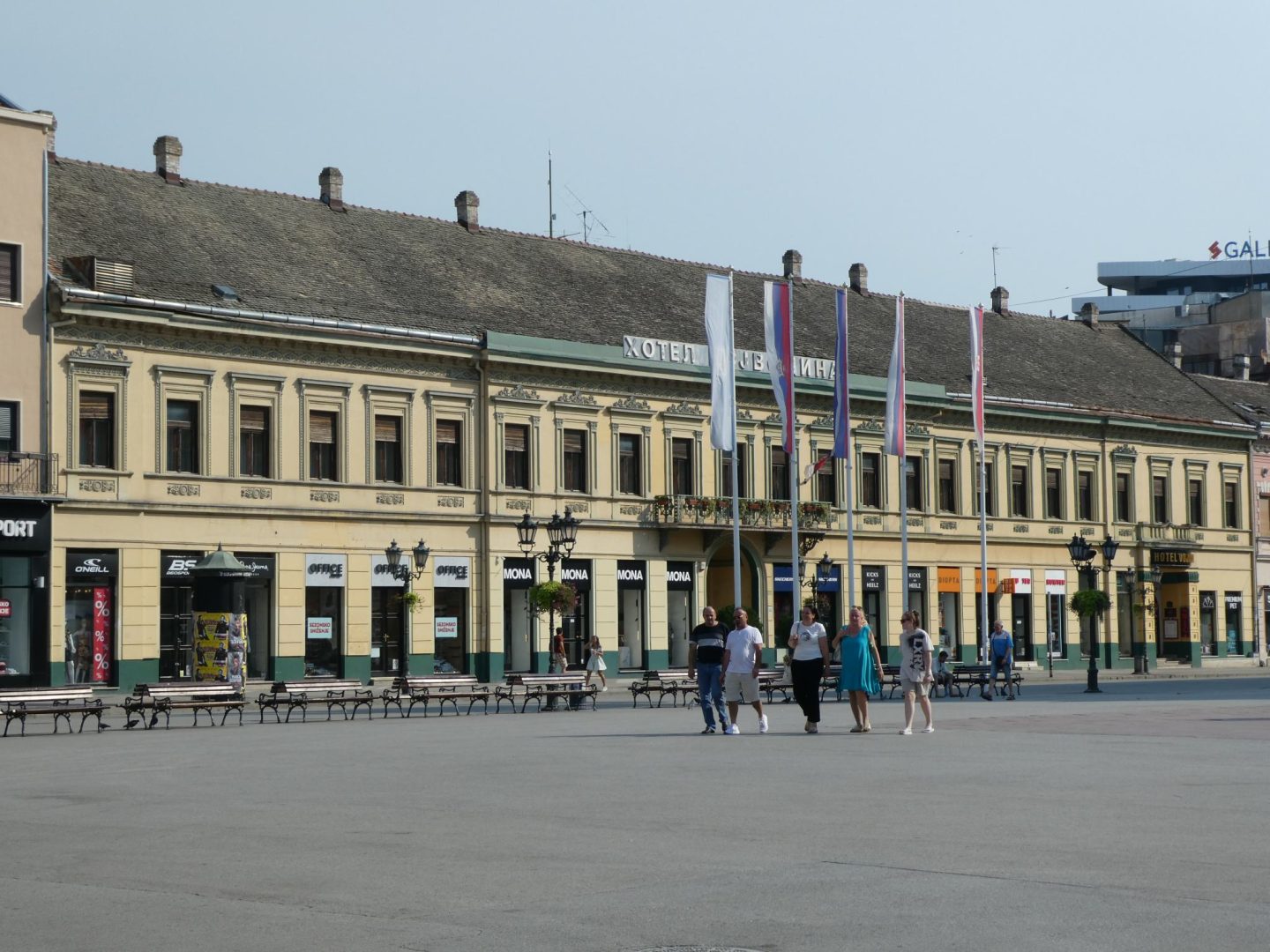
Hotel Vojvodina, built in 1854, is the oldest hotel in the city still in operation.

 There’s also a few Art Nouveau buildings, including Menrat’s Palace, now occupied by a credit union and with a tram re-purposed into a cafe out the front.

At the other end of the pedestrian zone is the Bishop’s Palace, built in 1741 in a style very different from the rounded curves of the other buildings along the street.
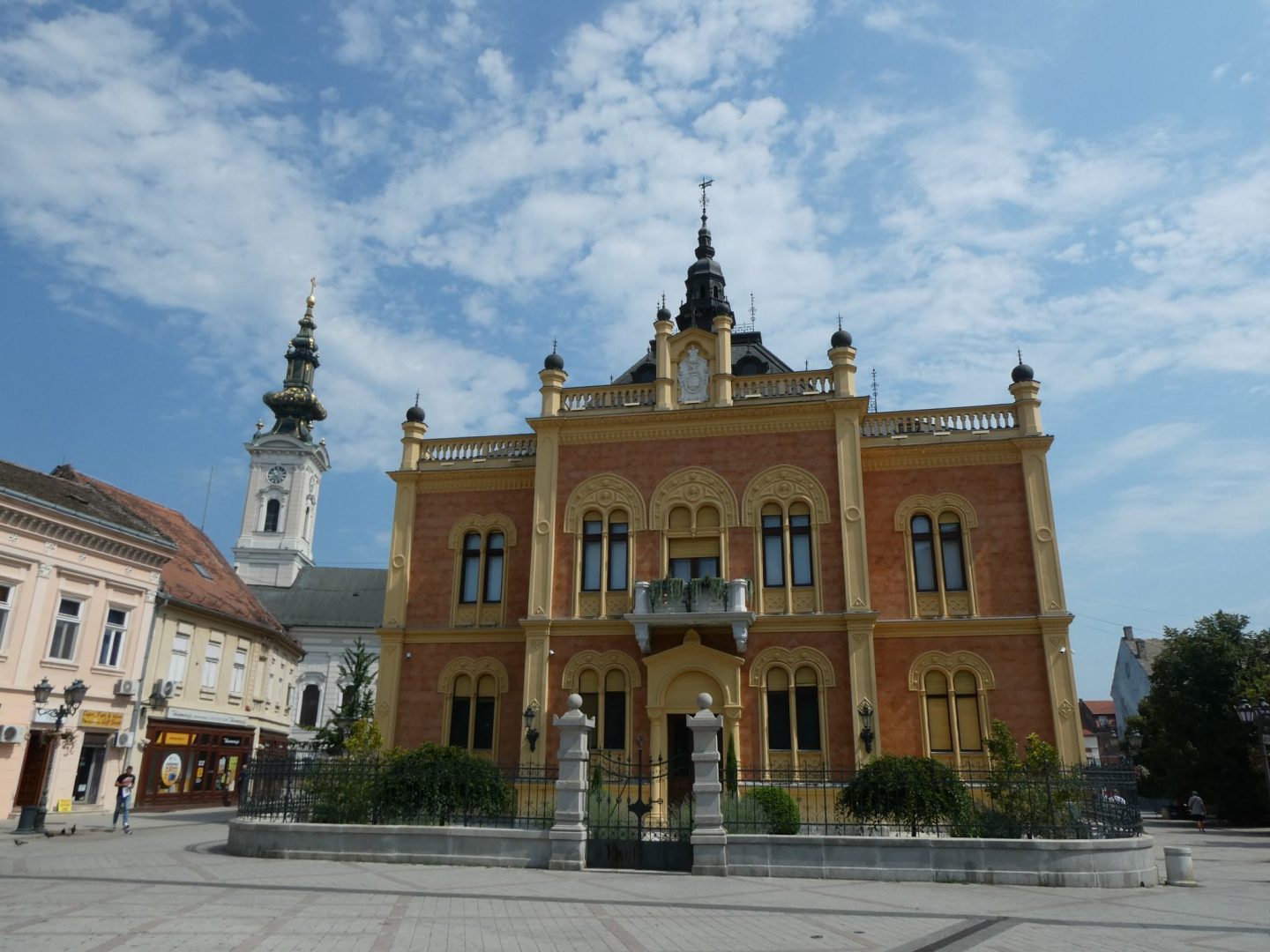
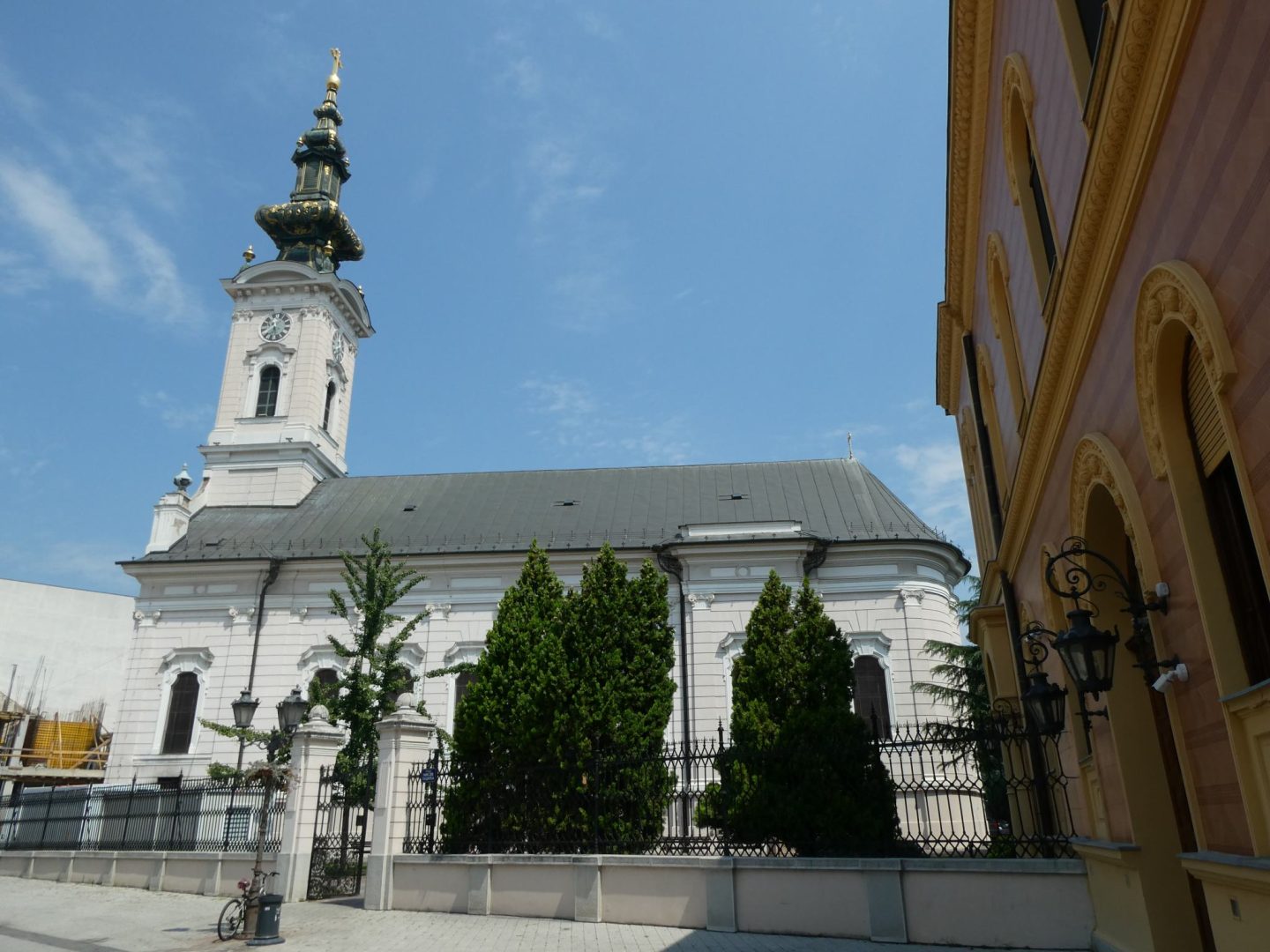
Behind it, the Orthodox Church of Saint George is famous for the gold and hand-painted iconostasis inside. It’s one of the most impressive we’ve seen in a small church like this.

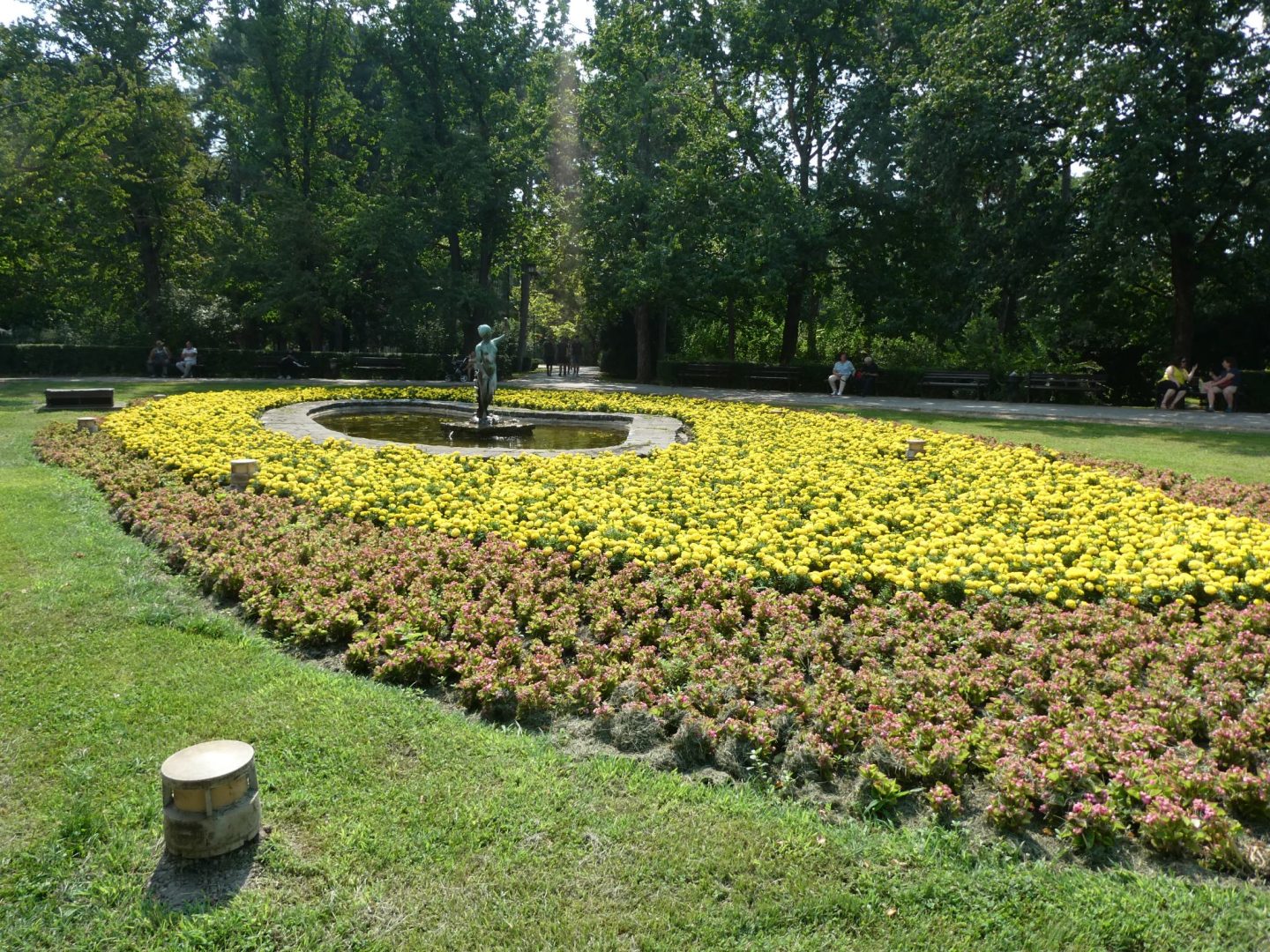
On the banks of the Danube, Dunavski Park was built at the turn of the last century on land reclaimed from marshy swamp. It’s a cooling green space with ponds, sculptures and plenty of park seats for locals seeking relief from the ferocious heat.

The Monument to the Victims of Fascism in Novi Sad stands in a small square on the River. During WWII, this area of Serbia was occupied by Hungarian forces allied to the Germans. The memorial honours the victims of a brutal attack by Hungarian police on 21-23 January 1942. In just 48 hours, 1,246 Novi Sad citizens, including more than 800 Jews, were slaughtered and their bodies thrown into the Danube.

All three of Novi Sad’s bridges across the Danube were destroyed by NATO in precision bombing in April 1999 during the Kosovo War. All have been rebuilt and we found this remembrance panel showing ‘before and after’ photos of the destroyed bridges under the arches of one of the new ones.

On the other side of the river is Petrovaradin Fortress. A medieval fortification was built here by the Hungarians in the 14th century, then enhanced to its current state by the Austro-Hungarians between 1692 and 1780. A decisive victory against the Ottoman army by Austrian forces assembled here in 1715 marked the end of Turkish expansion toward Central Europe. The fortress became known as ‘the Gibraltar of the Danube’.
After WWI, when the Kingdom of Yugoslavia was established, many Austrian fortresses across the new kingdom were demolished. No one is sure why, but the general in charge of Petrovaradin refused to follow orders to destroy it and it stands to this day.
The complex is huge and includes 16km of underground tunnels. It now houses the City Museum and one of the largest informal art colonies in the world, with studios for painters, sculptors and designers on site.

And it’s the location for the EXIT festival. Held every July since 2000, except for 2020 due to the COVID-19 pandemic, it attracts more than 200,000 music lovers from around the world for four days of concerts from more than 40 sound stages and zones.
We missed it by about a week, but there were still banners for it everywhere.
 Novi Sad was much quieter than we expected. The outdoor cafes and restaurants were almost empty and there were few people on the streets. Probably because of the weather. The average July temperature is 28C but every day we were there it reached 39C by around 10am and did not drop until 9pm. An ‘extreme heat’ warning was in place. It was a struggle to do anything.
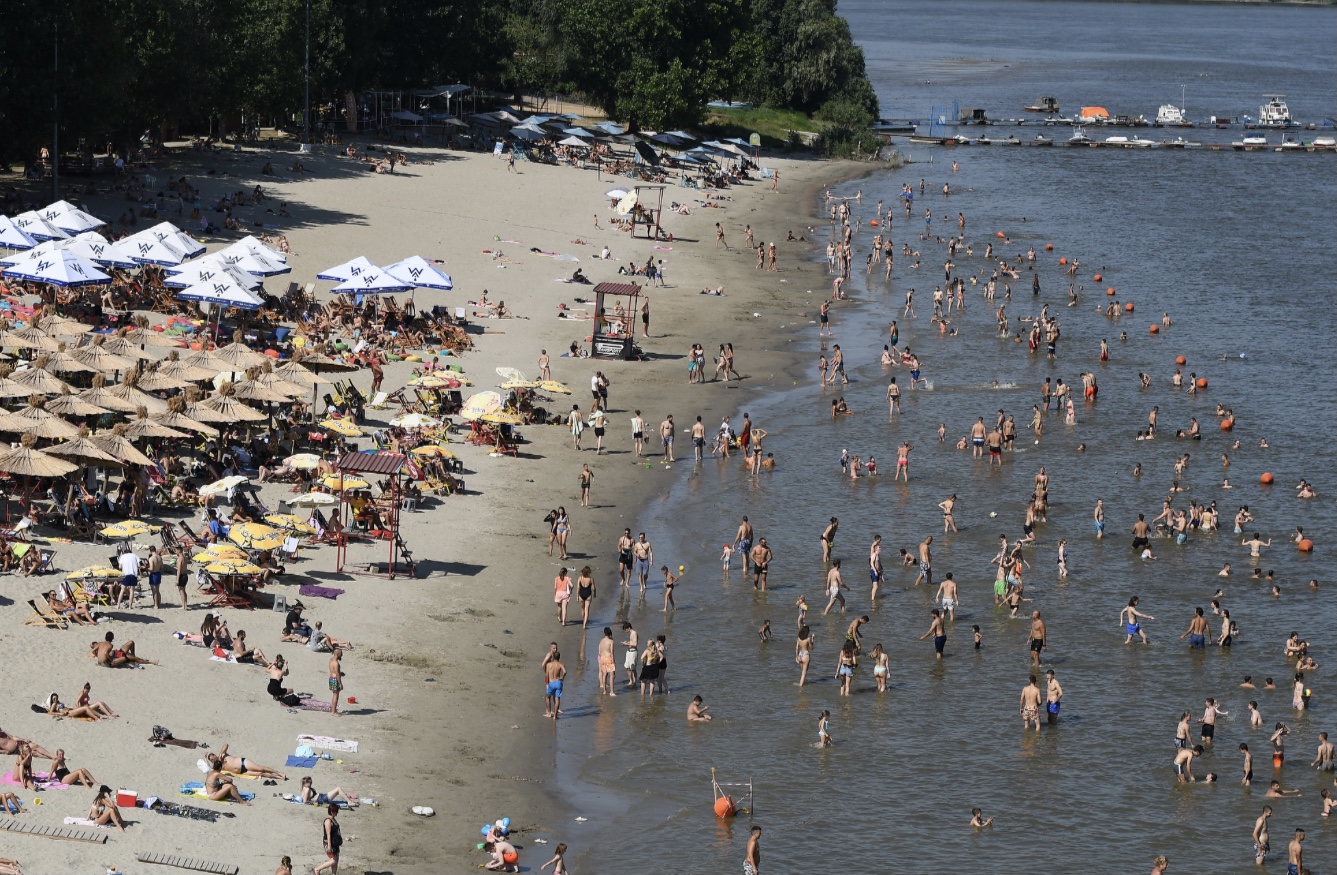
Serbia is a landlocked country. No seaside. But in weather like this, people need to cool off. In Novi Sad, that means a visit to the Strand, an artificially created city beach on the Danube, complete with umbrellas, cafes and stalls. We didn’t make it. Ironically, it was just too hot to make the effort to get there.
This is what we missed. Maybe the entire city was at the beach.
 On our last day we caught a bus to the nearby village of Sremski Karlovci.
The surrounding Fruska Gora area has been a wine growing region since Roman times. Where there’s wine, there’s monks – or is it the other way around? In either case, there’s 16 monasteries on the slopes of Fruska Gora built between the 15th and 18th centuries to preserve Serbian and Orthodox culture during the period of Ottoman rule.
Sremski Karlovci was and remains an important spiritual centre for the Serbian Orthodox Church. It’s quite a small town, with a bunch of historical buildings surrounding its modest square.
The first Serbian Orthodox Seminary was founded here in 1794 and still operates, although the current building only dates to 1900.
 The Patriarchal Court built in the late 1890s houses the Treasury Museum of the Serbian Orthodox Church and is the summer residence of the Serbian Patriarch.
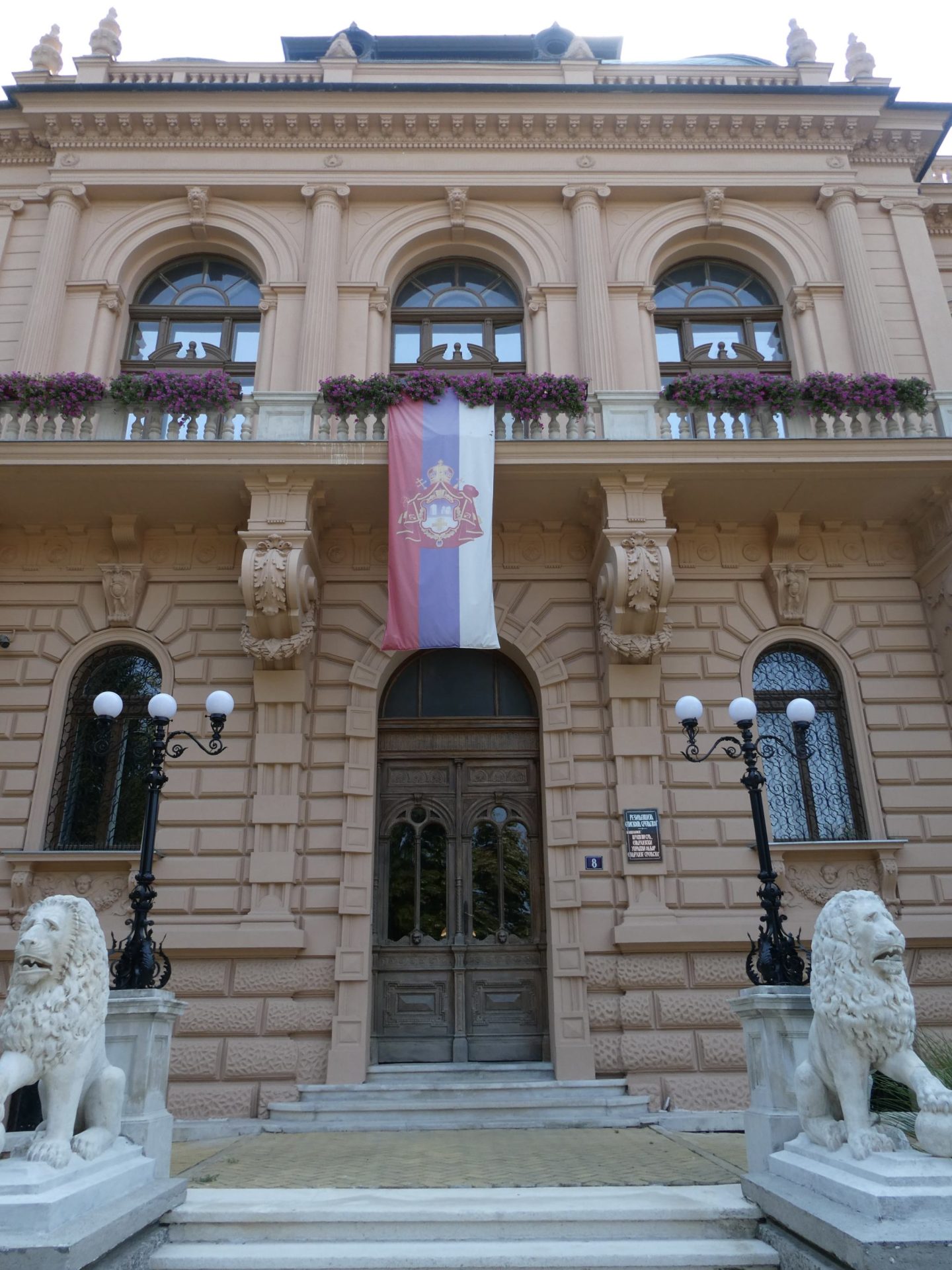 It’s next door to the Orthodox Cathedral of St Nikola which houses the remains of Saint Arsenije Sremac, Serbia’s second archbishop.
 The most impressive building in this small village is the Karlovci Grammar School. Erected in 1891, it is Serbia’s oldest grammar school. Today it’s one of two specialist schools in Serbia teaching philology. That’s the study of the structure and historical development of languages, in particular through the examination of literary and canonical texts.
 The Four Lions Fountain was erected in 1799 to celebrate completion of the village’s first piped water supply. Legend says that if you drink from it, you will one day return to the village.

There are dozens of wineries in the hills surrounding Sremski Karlovci. Many of them have tasting rooms or you can visit one of the many wine shops in town.
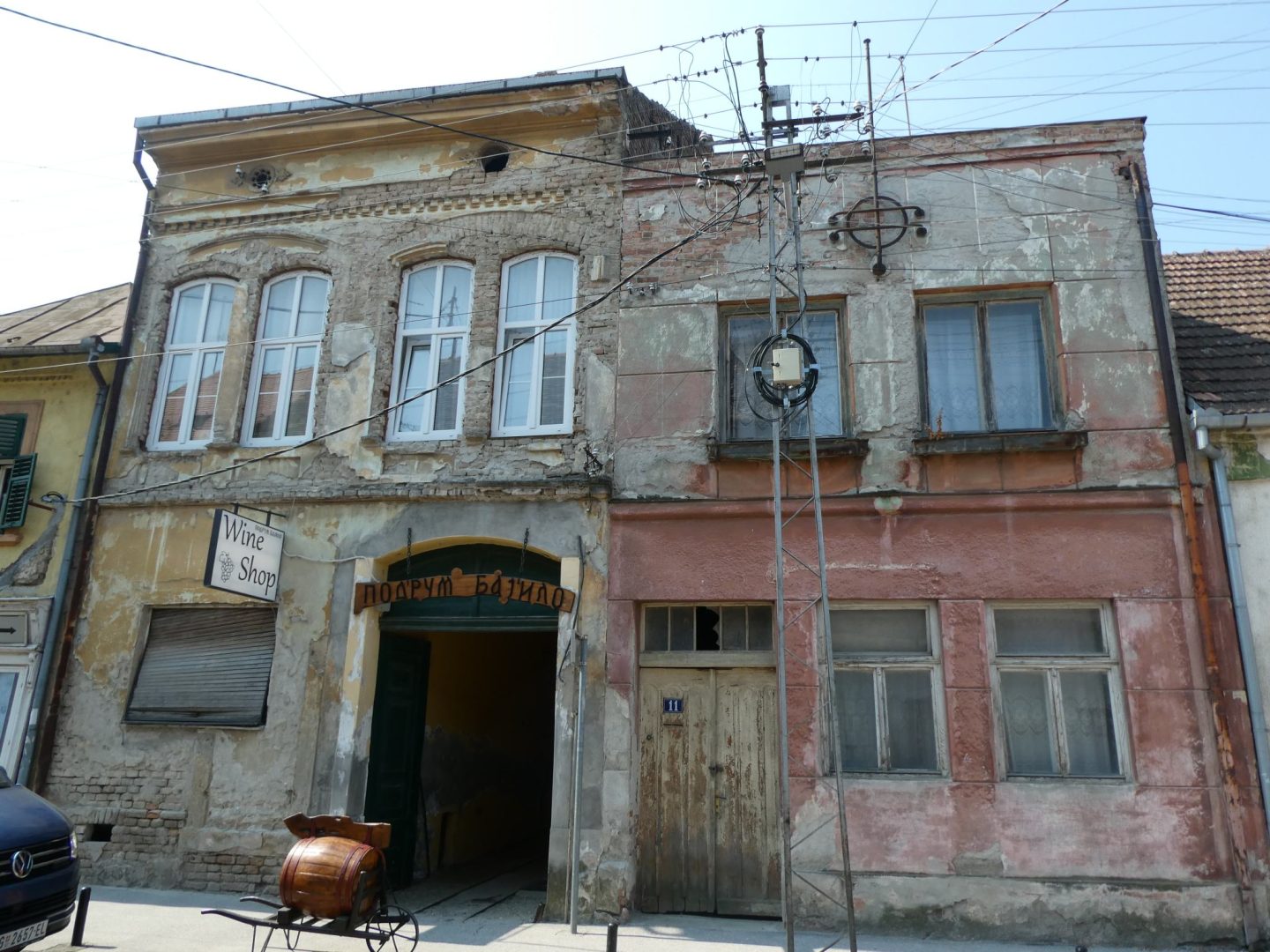
One option stood out. A short way from the town centre is the Museum of Beekeeping and Wine Cellar Zivanovic.
 The family has been making wine here since 1770. There’s a small museum showcasing the wine heritage of the family as well as an interesting beekeeping museum.
The museum honours the work of one of the family patriarchs, Jovan Zivanovic. He was a scientist and a writer, Professor of Serbian Language at the Karlovci Grammar School and Professor of Apiculture at the Karlovci Seminary. He established the practice of ‘rational beekeeping’ in Serbia in the 1870s. This meant devising bee hives from which the honey could be extracted without destroying the hive. His first one was in the shape of an Orthodox Church!
 As well as the museum, you can visit the wine cellar. It’s a constant 14 degrees Celsius. On this stinking hot day, we wanted to stay down there.

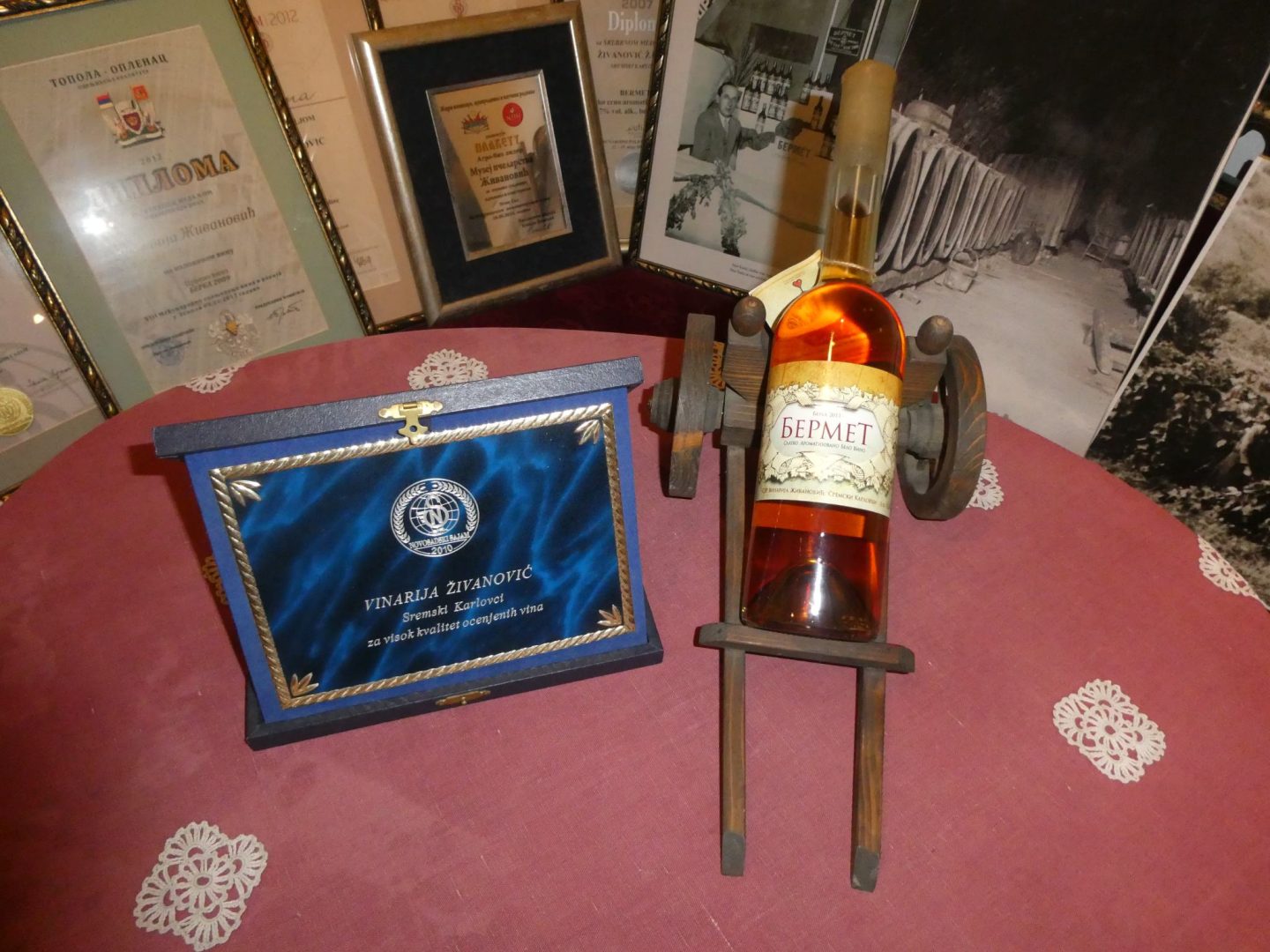
Instead we had a wine and honey tasting. Six wines and three honeys, all delicious. The region is particularly known for the grape variety Bermet. Bermet wines were being exported to the US as far back as the 1800s, and it is even believed it was on the wine list on the Titanic.
The Zivanovic winery makes a lovely, slightly syrupy, almost-a-dessert-wine from it, for which they’ve won a swag of awards.
 We got talking to the only other visitors, a woman from Novi Sad and her friend from the UK who’d come for the EXIT festival and was staying on for a few days. She offered us a lift back to town. On the way, she invited us to her home for a swim in the pool and a glass of wine. Fantastic. Her husband is a chef and we were invited to stay for dinner with them and some other friends and relatives. Delicious food, welcoming company and such a great experience of Serbian hospitality. Thank you again, Sofija and Zlatko.

Love the concluding paragraph on this blog . With so much history and architecture to marvel at there’s nothing quite like human hospitality to make travelling a special experience.
Author
Brilliantly said. Agree 100%.
Wine and honey in Serbia – delicious x
Novi Sad looks like a clear winner over Belgrade. The beautiful architecture is so much more appealing than brutalism, a winery with beekeeping and honey is a perfect concept and the locals were so friendly. What’s there not to like 👍🏽
Author
Beautiful but sooooo hot.