It was 38 degrees Celsius when we arrived at Ongava, a private reserve at the eastern end of Etosha National Park in central Namibia. The parched landscape rippled in the heat as the dry season reaches its climax.
For human visitors, the gorgeous Ongava Tented Camp has just nine glam tents. Although to describe them as tents is misleading. Each is a canvas sided bungalow with a bathroom, indoor and outdoor showers, all the mod cons of a conventional hotel room, and a private deck from which to watch the wildlife activity around the waterhole out the front.

In between morning and afternoon game drives, we spent lazy hours watching the parade of animals who pass by to quench their thirst.
When we first arrived, a group of black-faced impala were busily drinking. They are a sub-species of the common impala found only in southwestern Angola and northern Namibia. They were introduced to Etosha in the 1970s to preserve them from the threat of over-hunting in the north, and have spread naturally to adjoining reserves.


After a while, the impala left and kudus arrived.


Next came zebras.
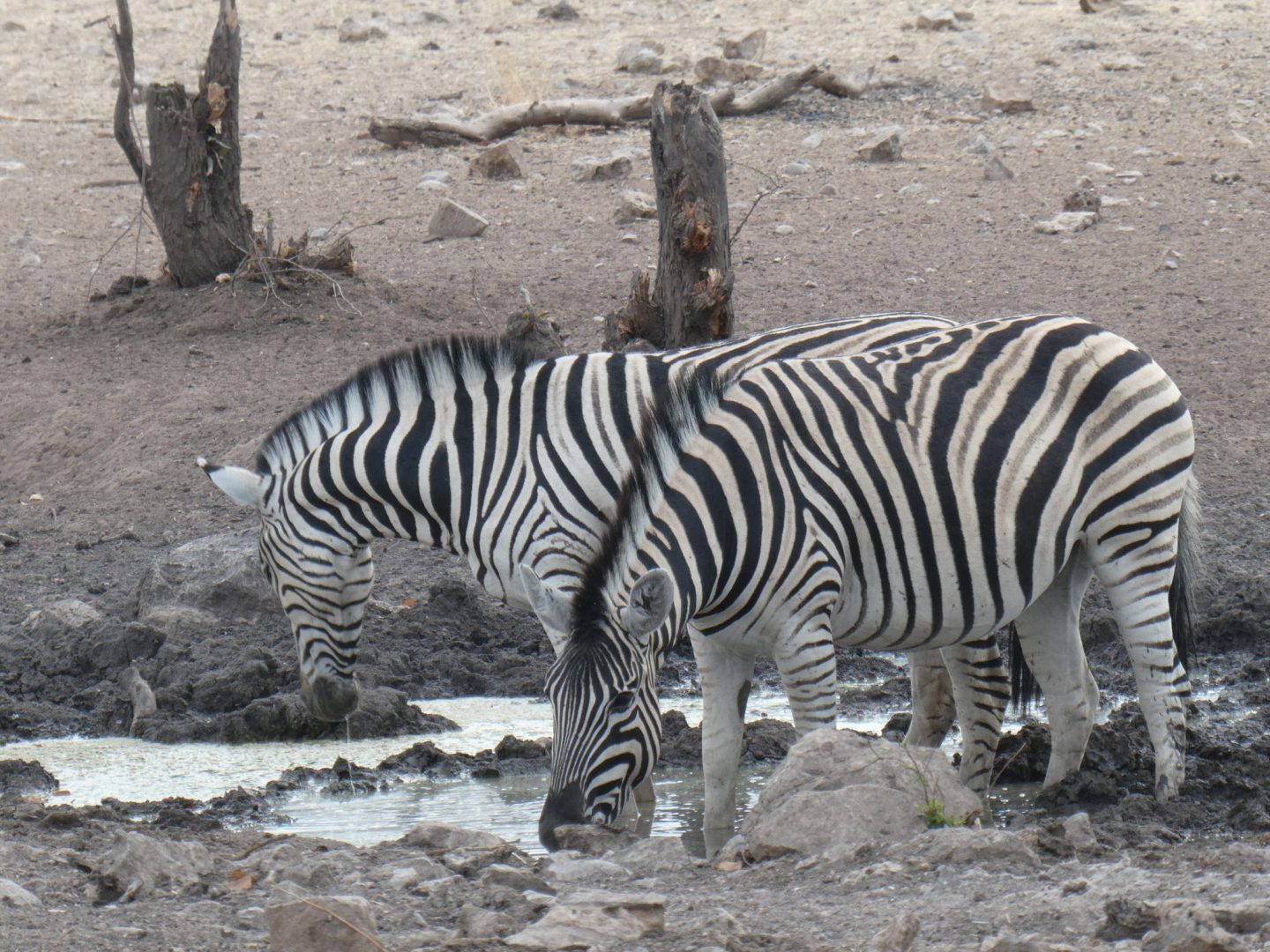
And then a few springboks. It was as if there was a director off-stage with a clip board and a stop watch sending them in, one species at a time, on a timetable.

The locals have a cute story about how the waterbuck got the distinctive white marking on its behind. The joke is that they were the first animals onto the Ark. Noah was still finishing it off and the paint on the toilet seats hadn’t quite dried…


On our second day, an elephant strolled down. The other animals vacated the waterhole area but humans could watch from the people pool.

Until he decided the salt water in the people pool was more to his liking.

And yes, it definitely was a ‘he’. As one of the guides in Damaraland had said, “male elephants have six legs.

We could have just watched the waterhole all day but there was more to see.
Tuly, our guide from the reserve was so enthusiast and knowledgeable, and knew exactly where to find the animals on this vast property. The highlight of the first afternoon game drive was this male lion.

We watched for a while. He was showing a great deal of interest in something in the grass.

And then it became clear. A female was there with him. He was keen but she kept gently batting him away.

Tuly got a call to say there were two other lionesses with cubs at a waterhole some distance away, but we lingered watching these two and by the time we arrived at the waterhole, they’d gone.
Next morning, as we drove along just after dawn, a male lion streaked across the track.

Followed by another in hot pursuit.

We charged into the scrub, trying to keep pace with them but they disappeared. We waited and a short while later the pursuer returned. He’d successfully evicted the interloper from his territory.

But the interloper hadn’t gone without a fight. The price for protecting his patch was some visible claw marks on his flank and a face wound from a swipe that must have come worryingly close to his eye.


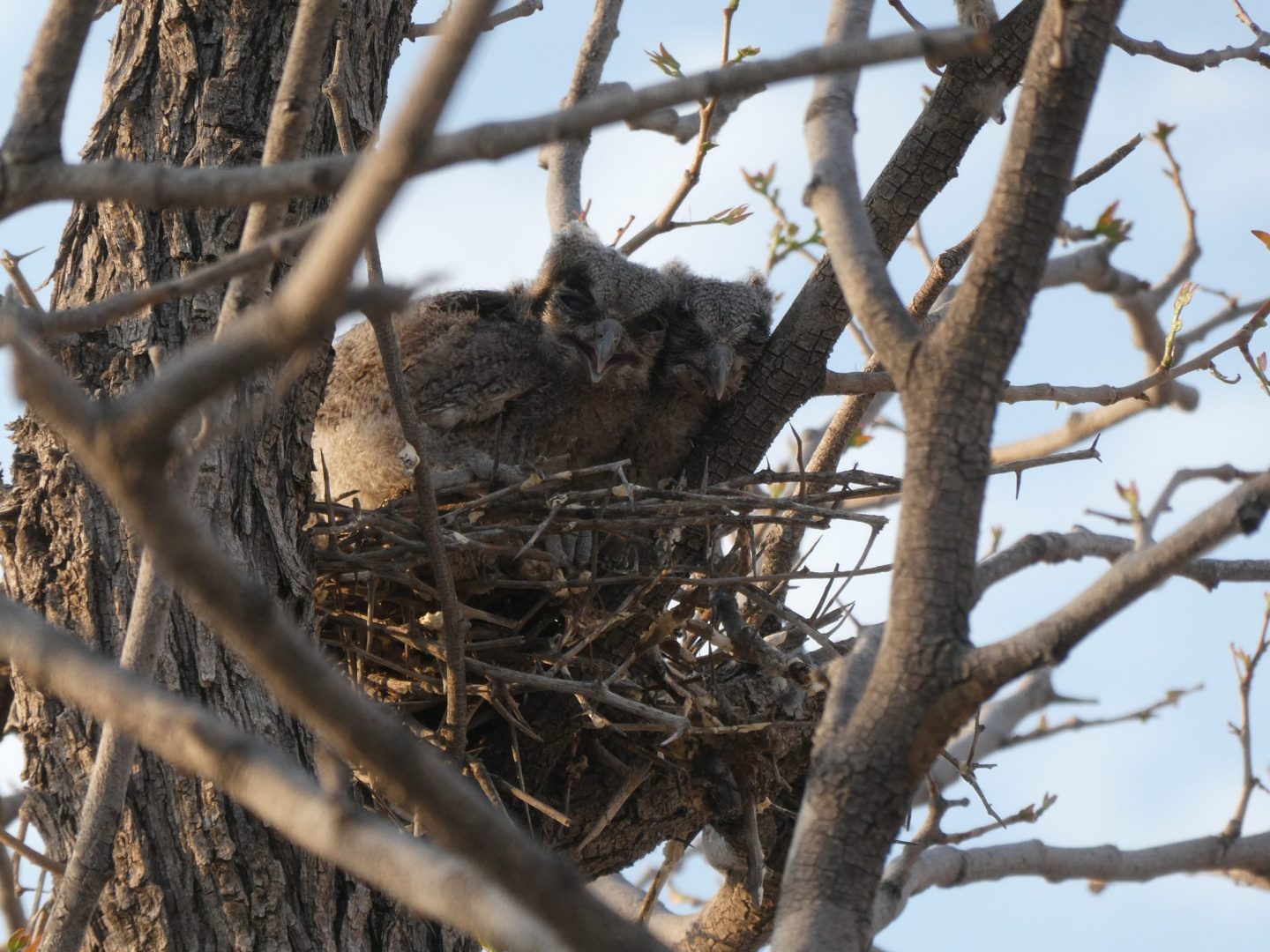
After a morning in Etosha – more on it in our next post – in the afternoon we did a walking expedition in Ongava to find white rhinos. En route we chanced upon this cool owl looking after his little ones.

The rhinos here are shy and easily spooked, so it was very different to our experience stroking them in the Kalahari. After locating a mum and junior some distance off track in the bushes, we left the vehicle and walked cautiously toward them, with Tuly toting a rifle and directing us so we stayed upwind.
We got close enough to follow them as they quietly grazed their way through the scrub.
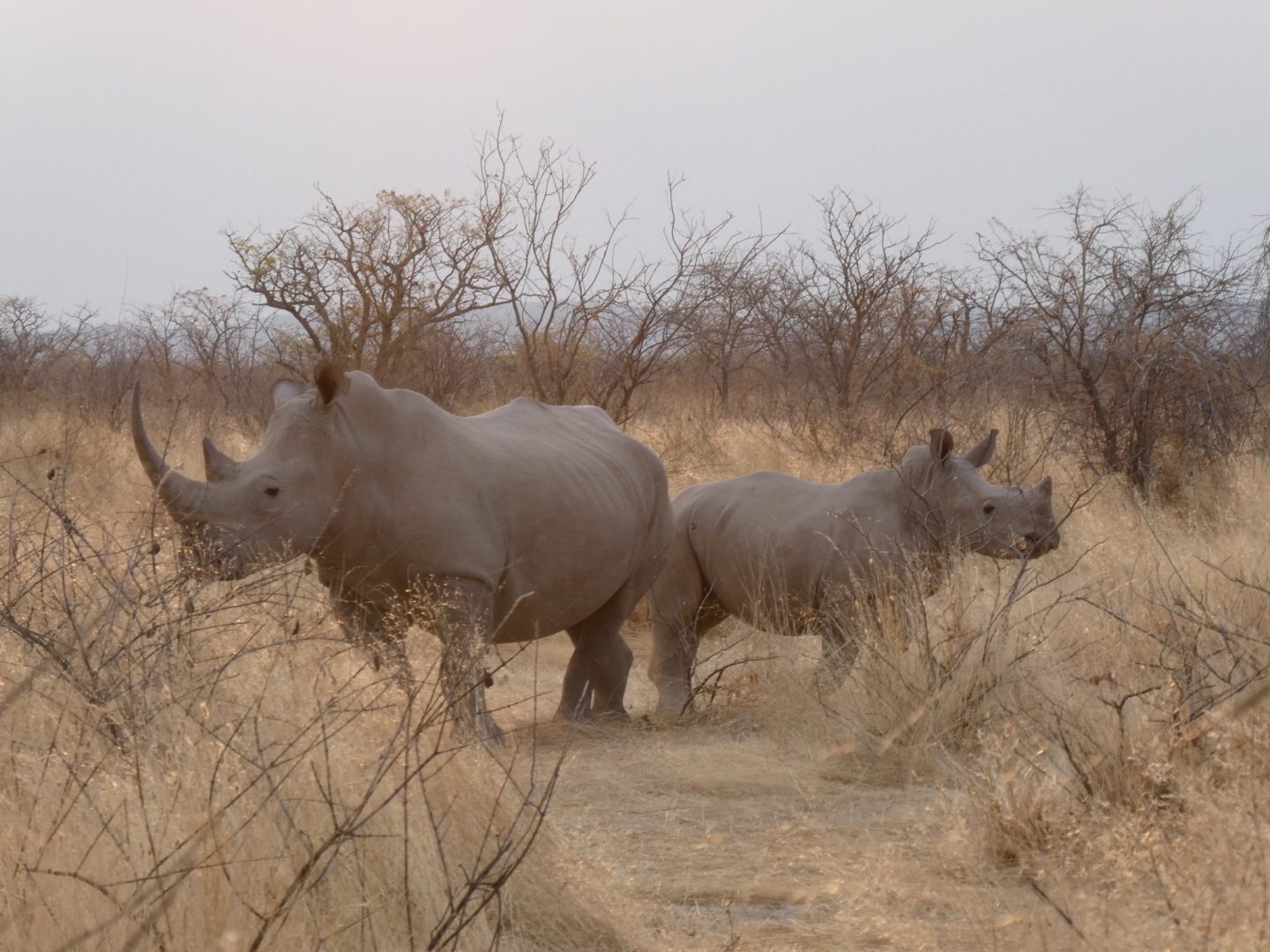
But of course eventually they became aware of us. And trundled off.

About an hour later we randomly encountered them crossing the road. Tuly said they’d be heading toward the waterhole at the Camp.

They are slow moving, but sure enough, around 9pm they appeared out of the dark for a drink. The waterhole is lit at night so guests can see nocturnal visitors. It’s a surreal experience to be sitting having dinner and a couple of rhinos appear out of the darkness 50 metres away.

They stayed a while, drank a lot, then wandered away. Much later, there was movement in the darkness. Something shy was making an appearance. Of the headline animals everyone comes to Africa to see, there was just one we hadn’t found yet. And here he was. A black rhino. Much rarer than the white ones. Hook shaped lip, smaller body, and they hold their head higher. But much the same colour, especially in the dark.

He got spooked by a brown hyena and departed. The picture quality is awful because of the low light, but we had to put this in. Brown hyenas are the rarest species of hyena and unlike their spotted cousins, they are incredibly shy, so you have to be very lucky to see one.

But back to that afternoon. After watching the rhinos, we headed to the waterhole where the lionesses had been seen the previous day. Here, three female lions were lounging.

While three cubs belonging to one of them played nearby. So much like domesticated kittens.


It was close to dusk. The cubs’ mother called them in.

And led them away.


As Tuly explained, we’d seen a story in several episodes unfold.
A pride of lions consists of an alpha male, several females and the offspring resulting from the male coupling with all of them. Their biggest threat is other male lions trying to muscle in, kill the cubs and take over the females.
In this case, the male lion we saw in a tryst on the first afternoon was the interloper. He had been seeking out the females and would have killed the cubs if he’d found them. So one of the females lured him away, feigning interest to distract him. Hers was the paw we saw, batting at his face. It was altruism in the animal world – protecting the cubs of another female.
In the meantime, the other two lionesses had taken the cubs and retreated to safety, which is why they were gone from the waterhole by the time we went looking.
Next morning, the chase we saw was the alpha male of the pride fighting and seeing off the interloper.
With the threat averted, the decoy lioness had rejoined the other females. They and the cubs were once again free to lie in the open by the waterhole. Equilibrium had been restored. And Julie’s cat attracting super power had operated at full strength.

Great story about the lion pride. The females so look out for the extended family cubs as well as hunting together and teaching the young ones hunting skills together. But the male lion has only one job 😀
Love those owls. Do you know what species they are ?
Author
Species of owl is a tough one for us non-birders. There are 10 found in Namibia. I’m sure Tuly told us but I can’t remember. After a bit of googling I’m inclined to think it was a southern white-faced owl, but I’m open to correction on that.