South east of Kibale, Queen Elizabeth National Park is Uganda’s joint-oldest. A treasure with an unfortunate origin story.
In 1921, the indigenous inhabitants of the region suffered a double blow. Rinderpest, an infectious viral disease in cattle also known as cattle plague, decimated their herds. And a sleeping sickness epidemic killed much of the population. With the region depleted of people and grazing stock, game thrived. So the government evicted the remaining people, burning their homes and slaughtering their livestock, to create British-run game reserves. Although untrue, it’s easy to see why the indigenous people blamed the epidemics on a cattle vaccination program the colonial government had insisted on implementing just before they occurred. Perfect circumstances for a conspiracy theory to take root.
Originally named Kazinga, the park was renamed QENP in 1954 to commemorate the park’s namesake’s first visit to Uganda in 1952. Elizabeth had come to Africa as Princess Elizabeth but left as Queen when her father’s death cut short their tour. She returned only once, in 2007 to open a CHOGM in Kampala.
QENP supports at least 95 mammal species, the highest of any Uganda national park. On our first afternoon we spotted a lioness on the move. She was wearing a collar – in this park, the lead lioness in each pride has been fitted with a GPS for research and tracking under the supervision of the Uganda Carnivore Program and Uganda Wildlife Authority. It just looks wrong on these magnificent wild creatures, but it’s in a good cause.


Like a solar powered hot water system after a cloudy day, Julie’s cat attracting superpower wasn’t working to full effect. We saw a leopard but it refused to budge from the long grass and we only got a glimpse.
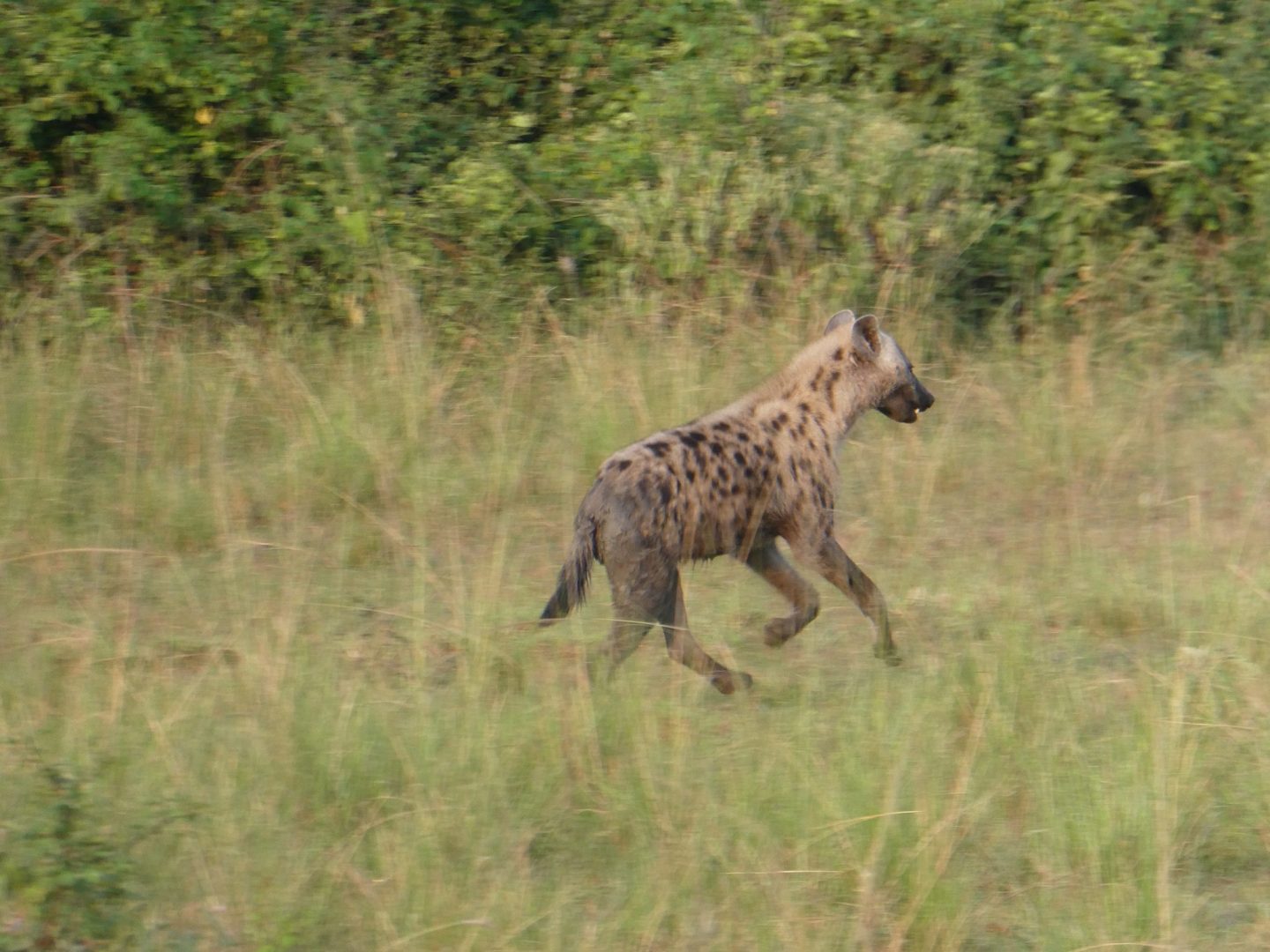
 Not to worry. There are more big cat adventures to come. Next best thing, we always love spotted hyenas.
But the best thing to do in the north section of QENP is a boat trip on the Kazinga Channel.
On the way we saw large numbers of elephants heading down from the hills toward the channel for afternoon drinks.

We’d seen some banded mongooses late the previous afternoon.
 But here was a funny sight. On our way to the boat we stopped for coffee at a lodge above the channel. Banded mongooses are social, living in groups of up to 75. And a troop of them have taken up residence near the lodge. Ordinarily they sleep during the day in dens, but these are happy to park themselves in the shade against the steps to the restaurant!
Not just one.
 Not several even.
 Lots and lots!


The 32km long channel links Lake George and Lake Edward. There was a penchant for honouring the British royals here once upon a time, and surprisingly the names haven’t been changed following independence.
The channel is a magnet for animals coming in the late afternoon to drink.


Or wallow around in the mud.


 A dress code could be a good idea.

The channel is home to around 2,000 hippos, one of the largest concentrations in the world. They graze along the banks in the afternoon.
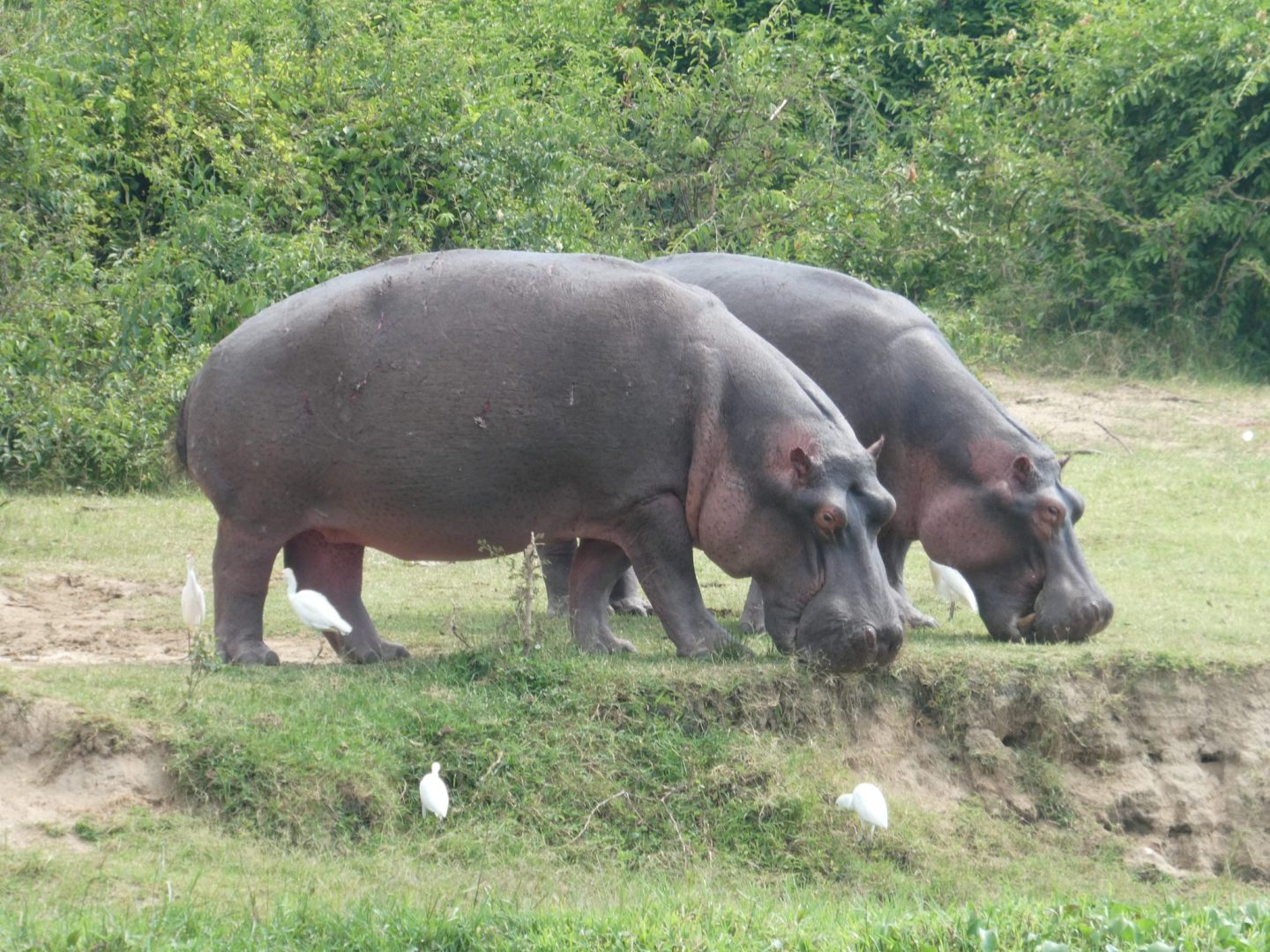
And laze in the cool waters.


Crocodiles vanished from the archeological record here about 7,000 years ago. It seems likely volcanic activity disrupted living conditions and also cut off potential access points from which crocodiles from the Semliki River further north could have expanded later to re-populate the area. But suddenly in the 1990s, they re-appeared. No one knows for sure how they got here, but probably they came overland when deforestation along the Semliki opened up access.
A win for nature. Not so much for the fishermen in the small communities on the lakes for whom they are a hazard lurking in the shallows.

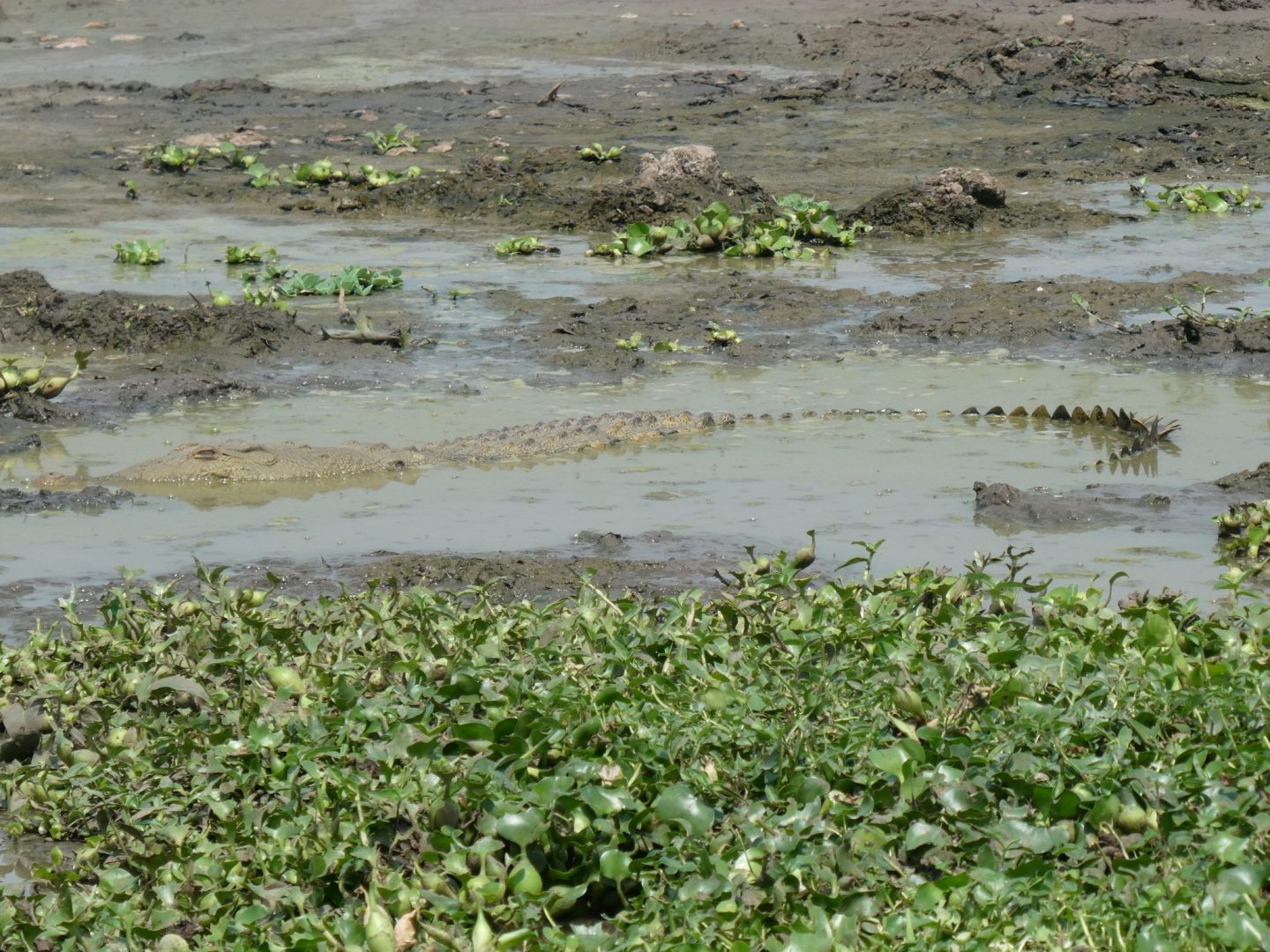
This one shadowed our boat for quite some time.

 On cue, elephants arrived at the shore.


This one had a sand bath first.
 Then a nice long drink, untroubled by the hippos and the buffalo which appeared from amongst them.
 But then the buffalo rose up and defecated on the hapless hippos!
 The elephant gave him a lecture. “Poor form, mate. You don’t poop in the pool. Get out of here!”
 Of course, it’s a paradise for birds. More than 100 species can be found here. We plan to do a dedicated post on Ugandan bird life, but here we have to mention the colony of pink-backed pelicans which congregate where the channel meets Lake Edward. Their colours are quite something in the late afternoon light – pale pink feathers under their white wings, with brighter pink around the eyes and along the beak.


And on the way back, a curious sight. These vervets perched on top of enormous cactus trees. That cannot be comfortable!
 And if you look very closely at this next one, you will see why male vervets are nicknamed ‘blue balled monkeys’. It’s both a sign for attracting females and a way of communicating social rank. If the individual’s rank within the troop falls, the bright blue hue pales.
It lets everyone know who is the dominant male and is actually a way for them to avoid unnecessary physical conflict. No one picks on the guy with the brightest balls!


Brightest balls…we humans could learn from our ancestors !! Loving the pics…thank you xxx
Look at that stunning Goliath Heron hanging around with the water buffalo 😀
Love the snoozy mongers too 😀