All lions can climb trees, but most are strictly terrestrial unless escaping a buffalo stampede or similar threat. In a couple of places in Tanzania, lions will sometimes sleep in trees. But the only place in the world where they do it habitually is Ishasha, in the far south west corner of Queen Elizabeth National Park.
As we left the northern sector of the park, a farewell committee assembled to bid us goodbye.
 We headed to our next lodge, about three hours drive south, just outside the Ishasha sector. Our plan was to have lunch there and then spend the afternoon looking for tree sleeping lions. But just as we reached the park boundary, we crossed paths with another safari vehicle coming the opposite way. As always, a conversation ensued in Swahili, and Emmanuel announced “the lions are up”.
The lions climb into the trees around 11am and sleep until around 3pm, returning to the ground well before they begin hunting at dusk. So instead of lunch, we went straight to the area where they had been sighted.
These lions don’t sleep in just any trees. Sycamore fig trees and albezias are their dormitories of choice. And as we’ve said previously, lions don’t sleep in the jungle. These are stand alone trees dotted over the savannah grasslands.
Nonetheless, they camouflage well. There are four lions in the photo below. Well done if you can spot them all.
 But they are surprisingly unconcerned about a vehicle circling or parking almost under the tree. Far too sleepy to care!
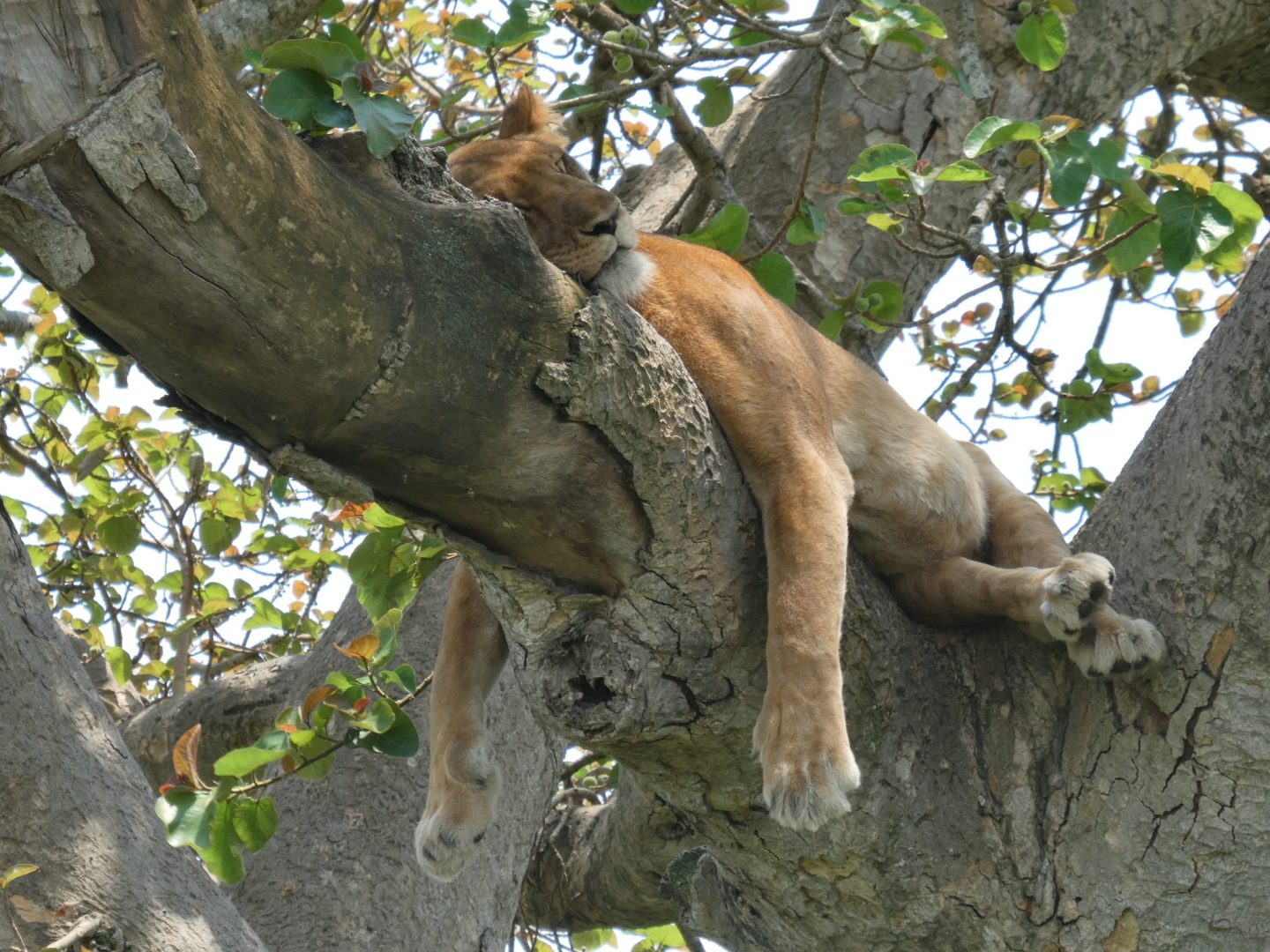
 So, why climb trees when you are the apex predator? Four reasons – to escape biting insects which are more abundant in the grasses, because it’s cooler in the trees, to spot potential prey, and to keep a lookout for rival lions potentially threatening to move into their territory.
As to why the Ishasha lions are habitual tree climbers, no one is quite sure. The prevailing hypothesis is that several generations ago, a particularly intense season of biting insects drove the lions into the trees and the habit stuck. Each generation learned from the last, and it’s now been going on for long enough that it’s classified as a behavioural adaption – an instinctual or learned behaviour which gives a species or group a survival advantage in particular environmental conditions.
Whatever the cause, they’ve certainly perfected the practice.


 Except for this juvenile who was like a toddler who doesn’t want to settle for his afternoon nap. He was happier putting on a little show for us.
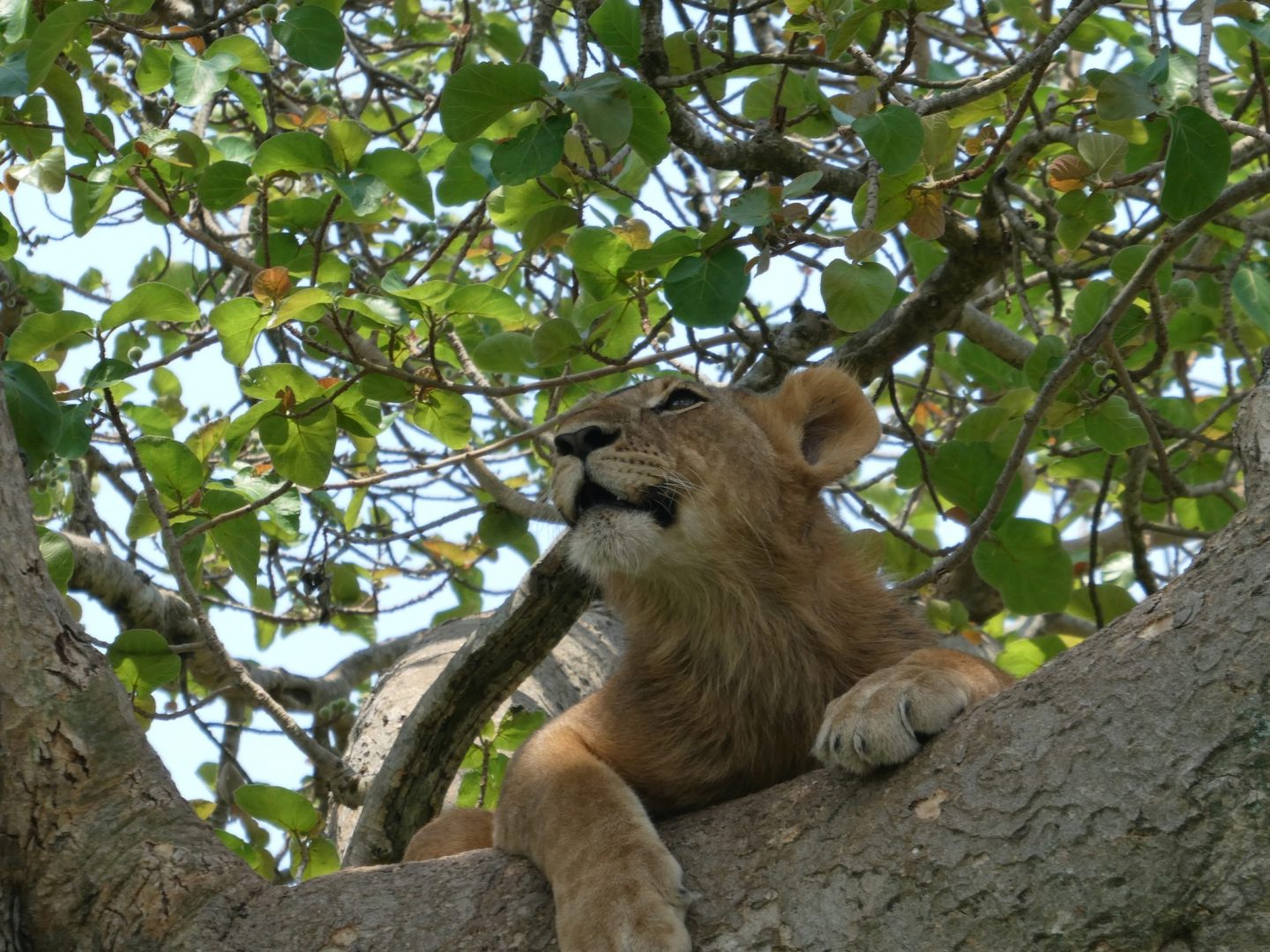


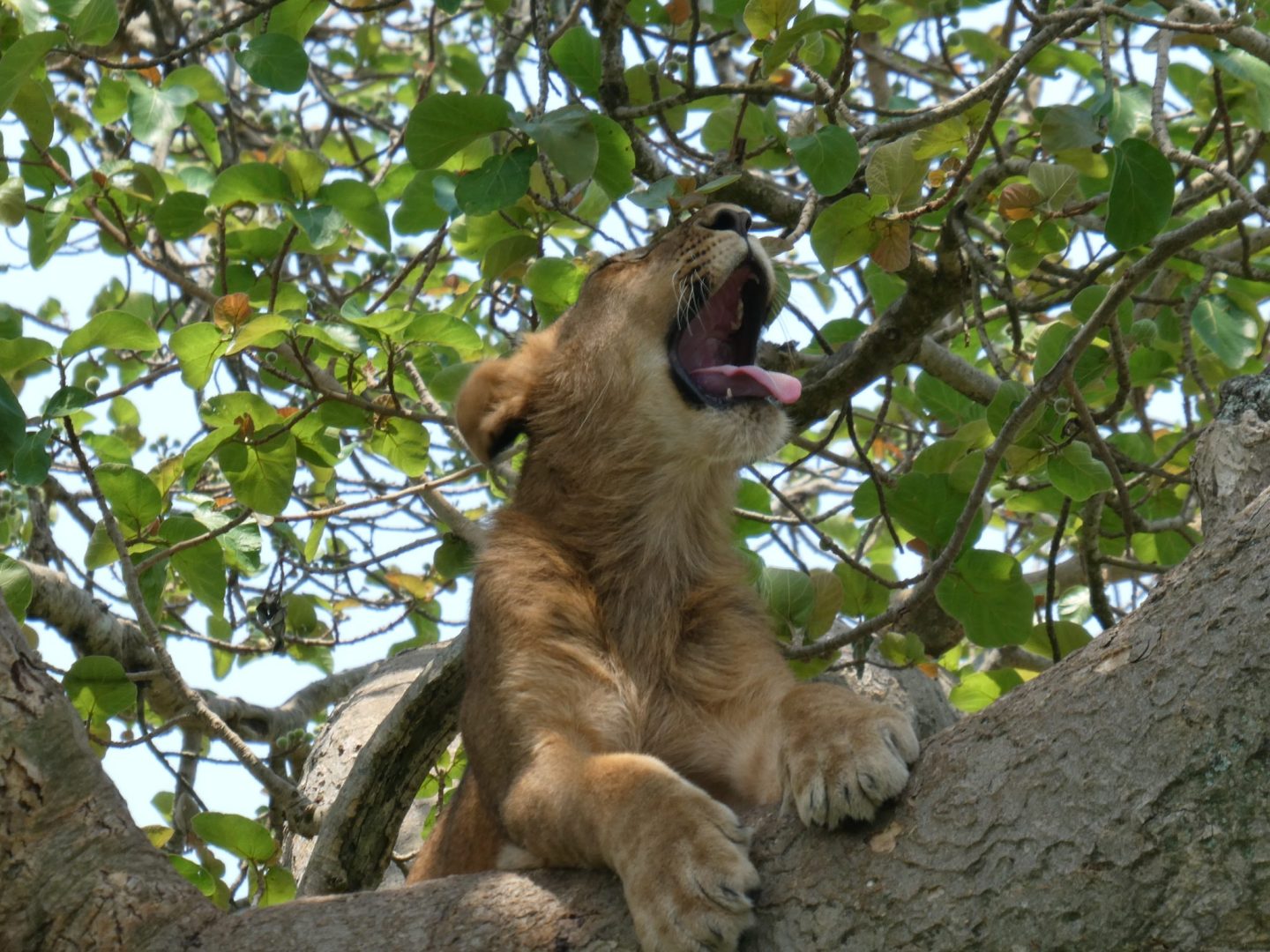
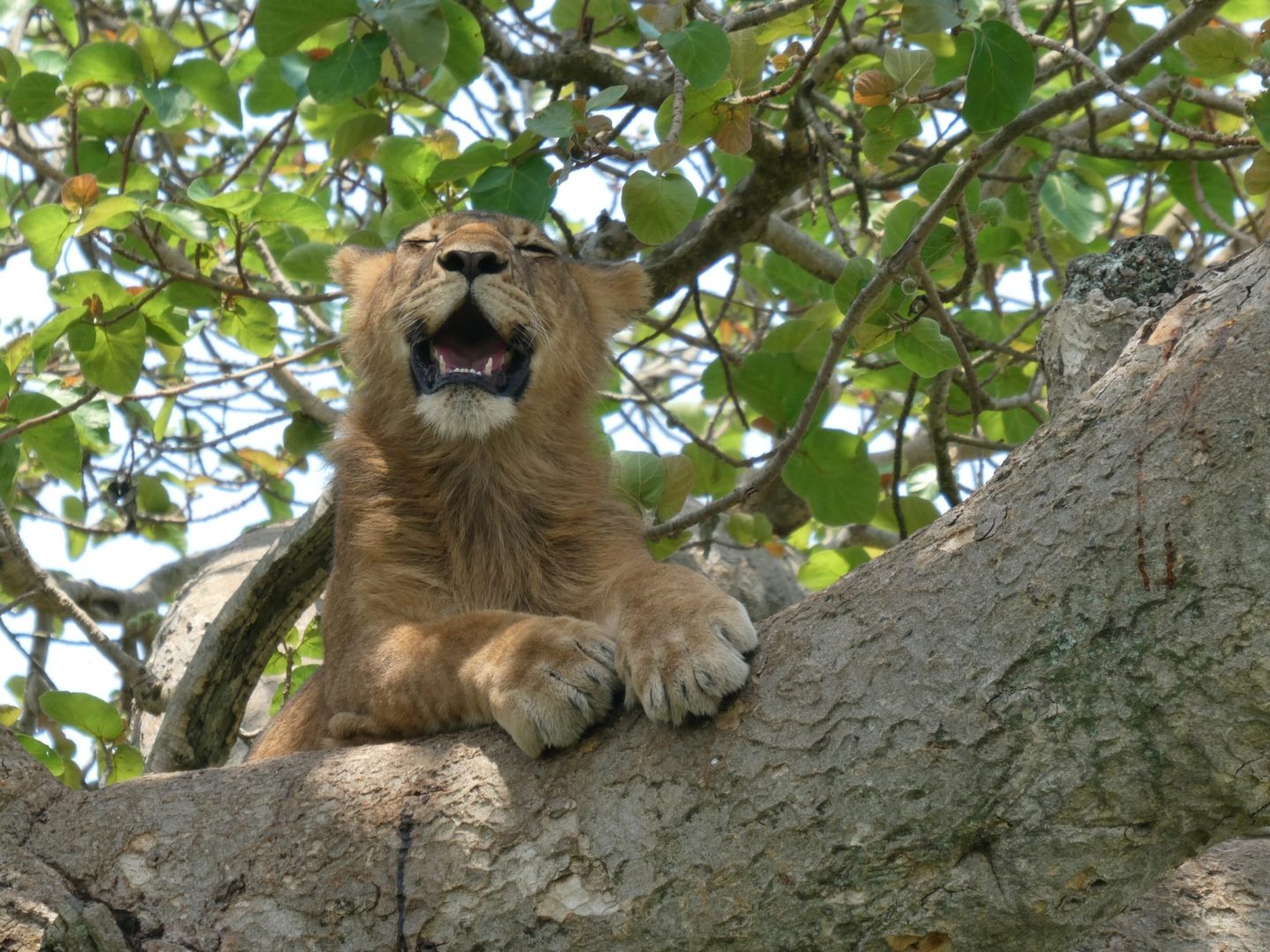

 What a joyous experience!
Next morning, Emmanuel insisted on an early start. He knew something we didn’t – where to find an active clan of hyenas. He was quietly confident we could catch them as they returned from their night hunting. He was right.
We watched as eight of them returned to the den.
 A cub poked its head above the grass.
 The matriarch must have been in the wars. She had a pronounced limp in one back leg. Despite their bad reputation, hyenas are highly protective of clan members and unlike some species, don’t drive weaker ones out. In fact, they will contribute food to ensure the survival of younger or weaker kin.
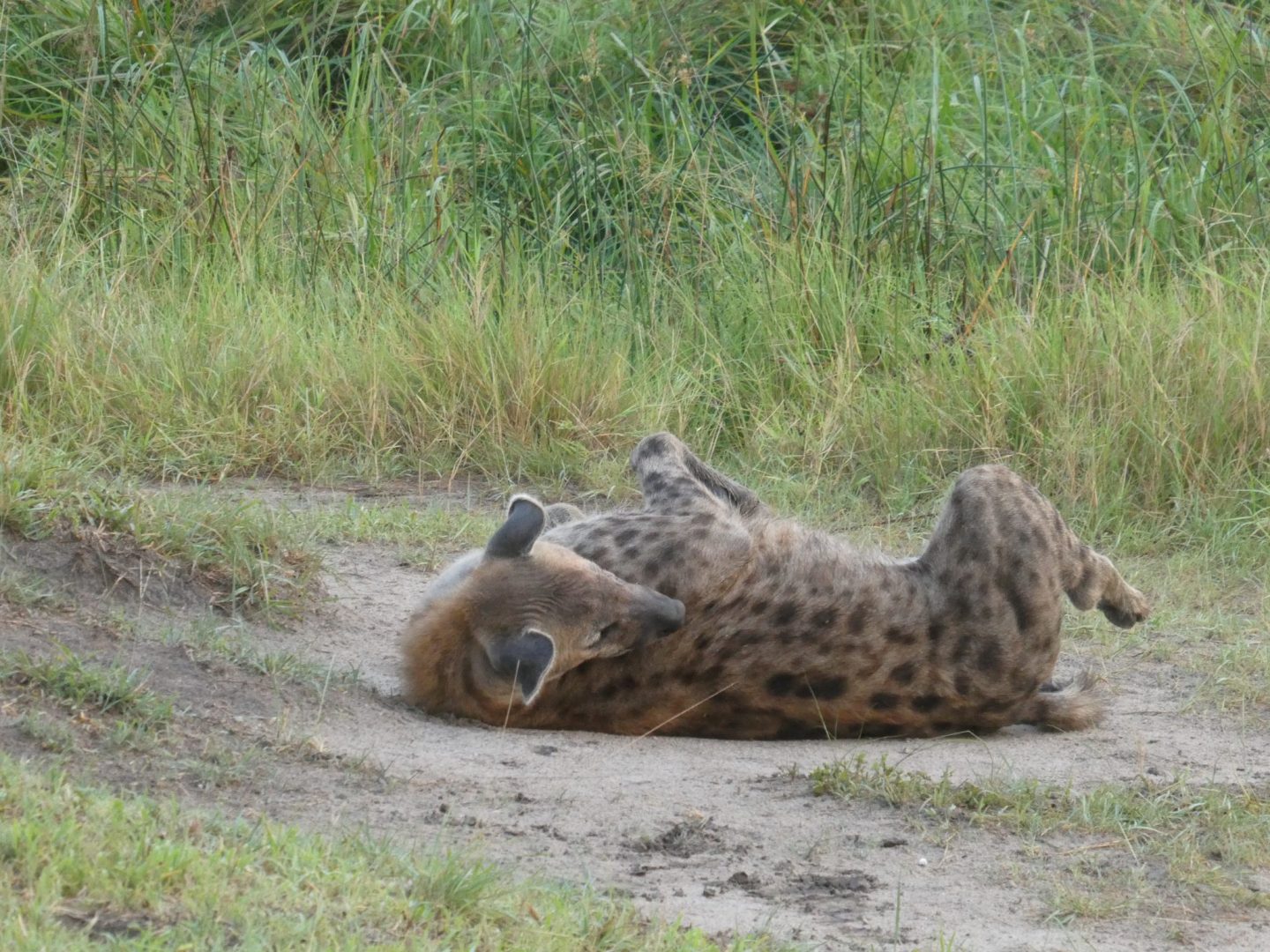
She hopped around the area, making sure her crew were all returning, then flopped in the dust to rest.
 Rolling about just like a dog with an itch it can’t scratch.
 We watched until most had returned to the den and disappeared for the day. As we drove off, we saw a grey crowned crane, Uganda’s national bird. It was only when we reviewed our photo afterwards that we noticed the hyena lurking in the background.
 We drove down to the mangroves. This languid shallow river is the Ugandan border. The other side is the decidedly un-Democratic Republic of Congo.

All that wildlife, protected on this side of the river, at the mercy of hunters on the other. This hippo must have decided the Ugandan side was a better option.
 But the border patrol had other ideas and chased him right back.
 Is there such a thing as too many lions? We don’t think so. We went searching for more. Success!


 These two were obviously sick of being papped.
 Others were chill.


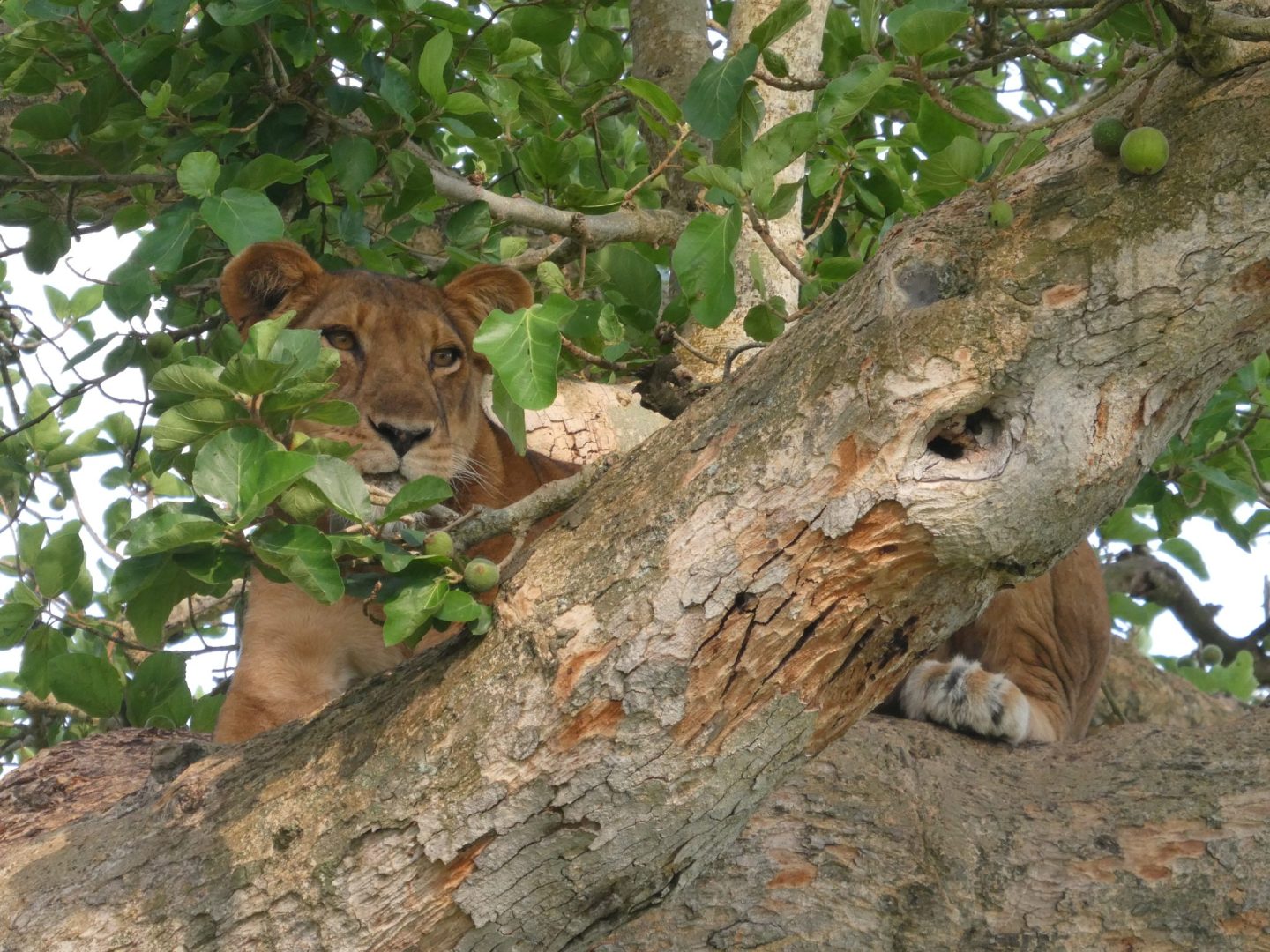
 These guys looked happy enough.
 But surely that’s not comfortable.
 “You’re right. Not comfortable”.
 “Maybe I should find a better spot.”
 “Yeah, nah. Can’t be bothered”.


And just like yesterday, a young one hamming it up for the cameras.

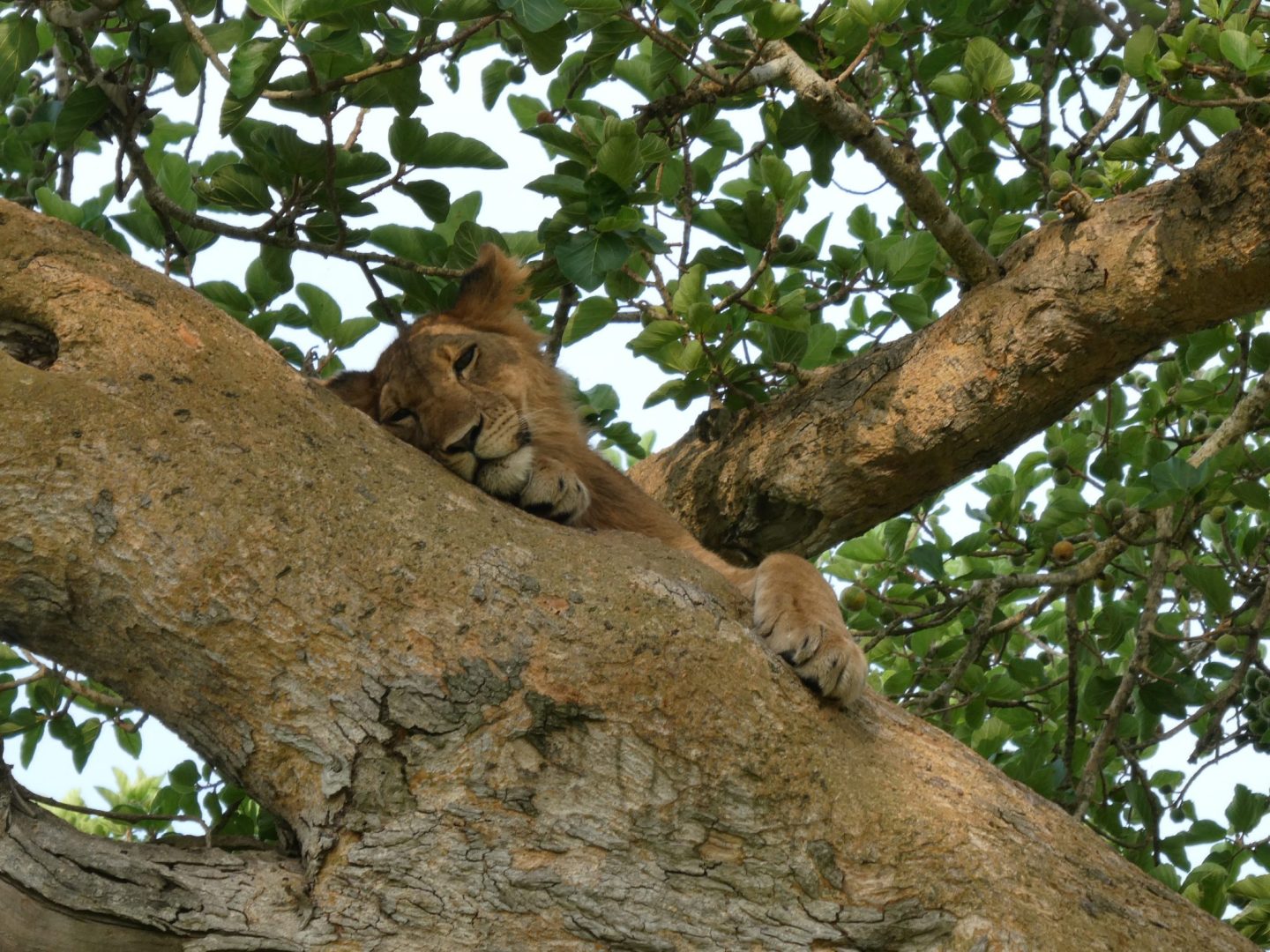
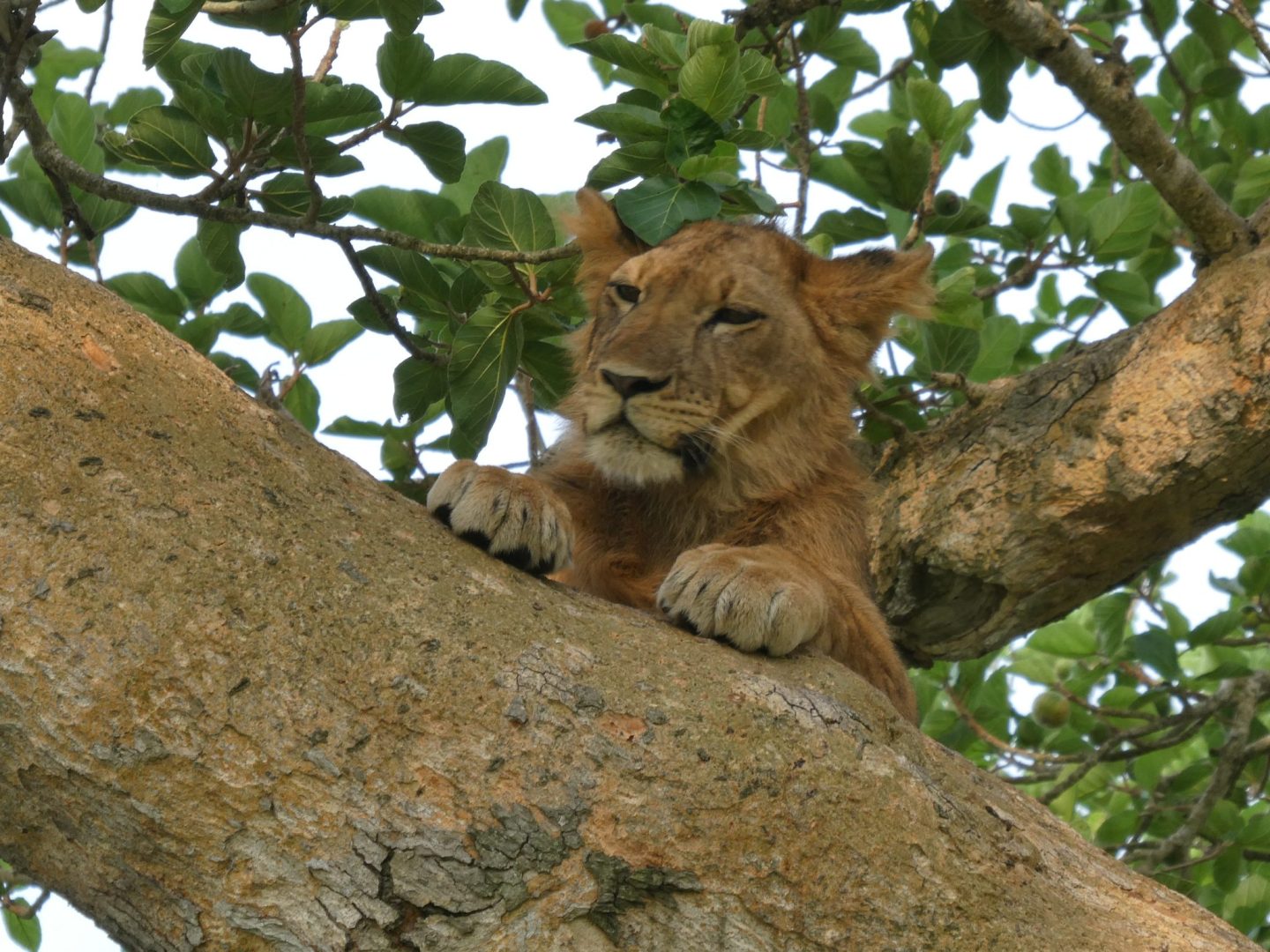


 Apologies if that’s too many lion pictures. It was just too hard to choose.

Wow those sleeping lions are a treat . Had no idea lions climbed trees to sleep – love learning new fun facts x
It is just not possible to have too many lion photos, especially when they’re hanging out in the trees.
I feel a photo wall of lions coming on 🐾