In the 1950s, Murchison Falls National Park was widely regarded as one of east Africa’s best, because of its eponymous waterfall and prolific wildlife. But Idi Amin closed the park to foreigners in 1972, and the next twenty years saw its animals decimated by commercial poaching, subsistence hunting and occupation by the army who treated the park animals as food and target practice. Its elephant numbers fell from 14,500 to just 250. The thriving giraffe population collapsed. Lions looked likely to disappear completely.
With strong conservation and park management practices in place since the early 1990s, things have steadily improved. All of these animal populations are growing.
Knowing how close to disaster they came, makes the quality and quantity of animal life we saw even more special. Right inside the park boundary, we saw the first of many giraffes. In fact, the park now has the world’s largest population of the endangered Rothschild’s giraffe.
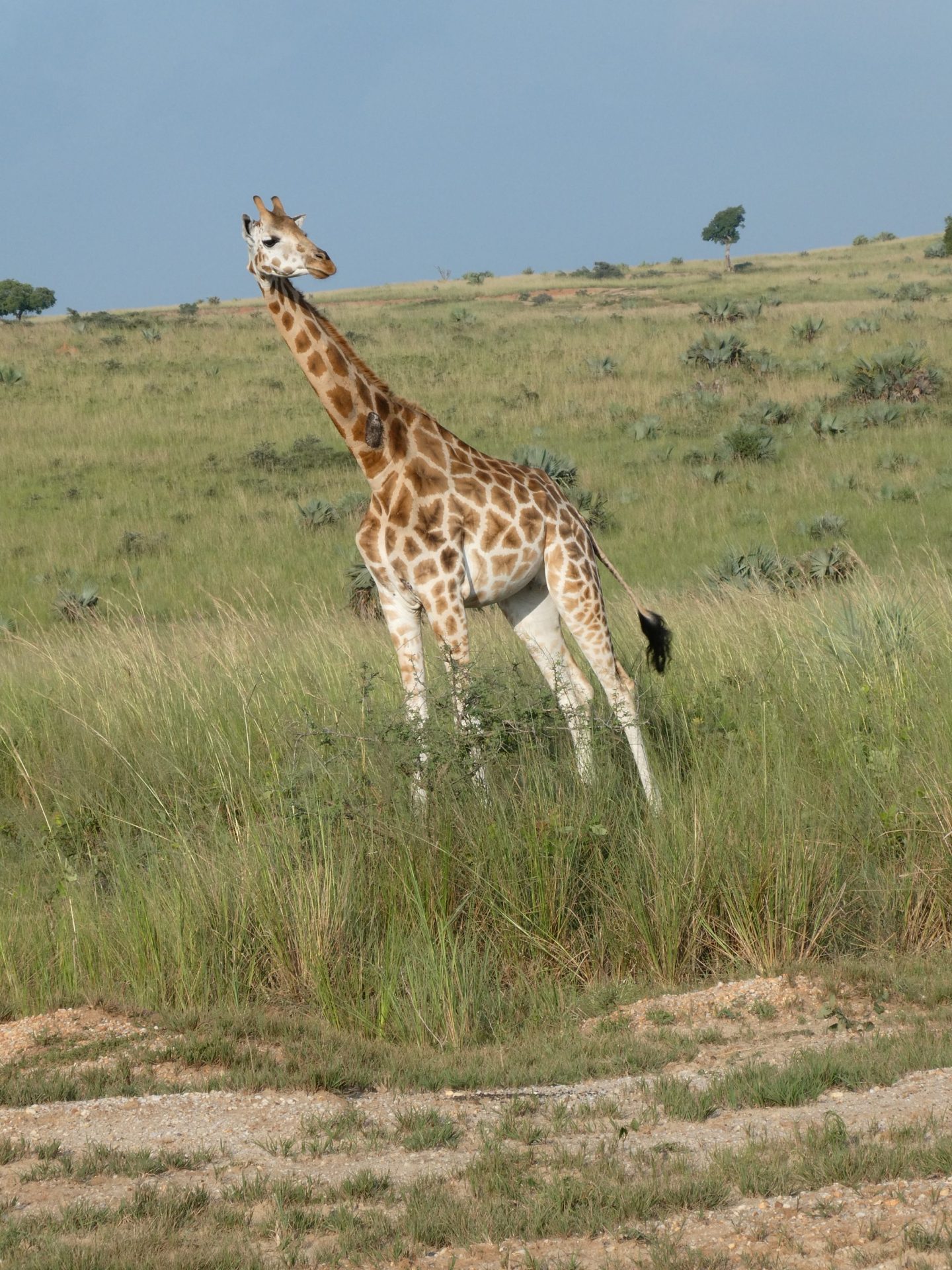
What was he looking at?
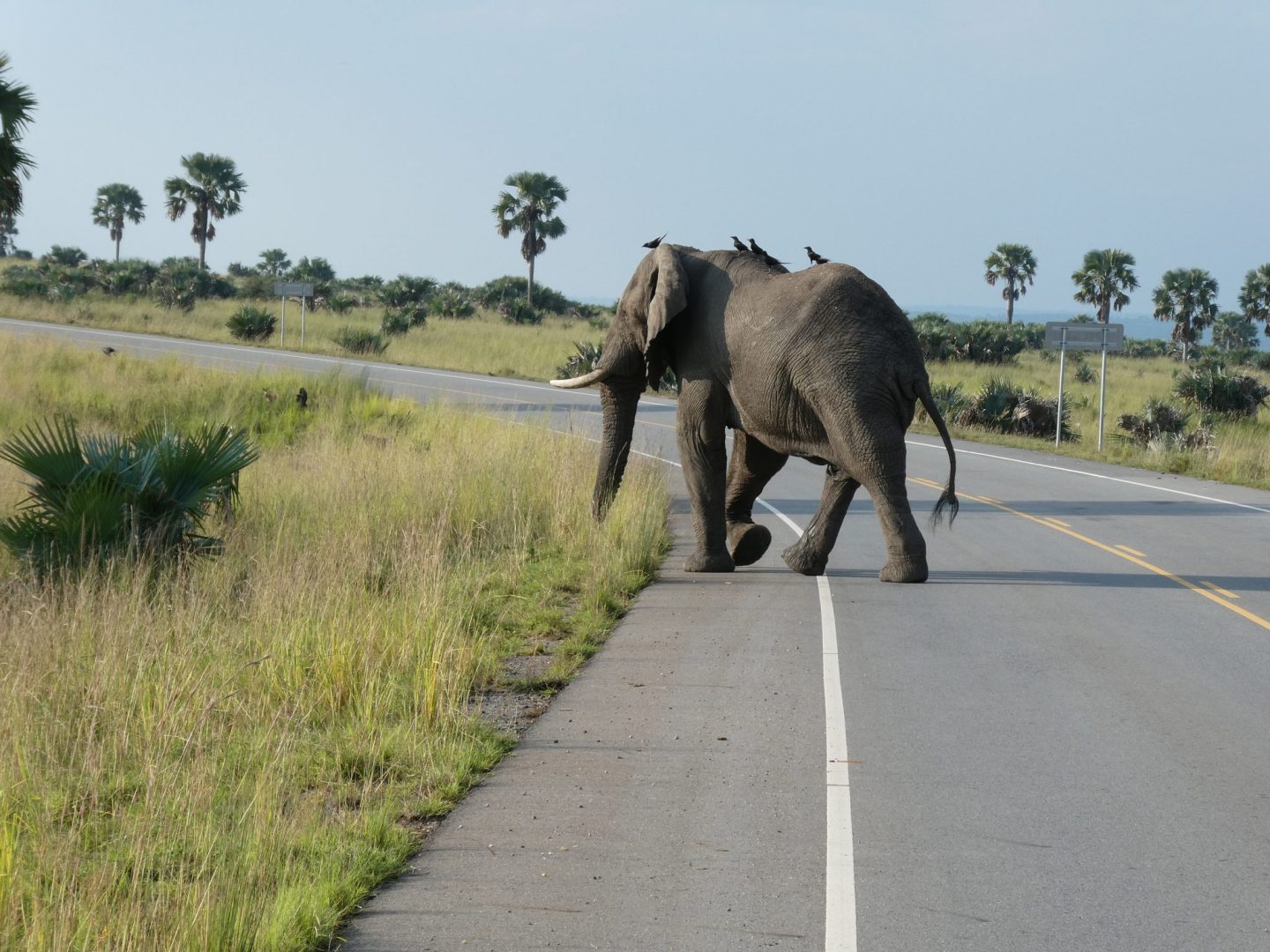
An elephant crossing the road. There are now more than 1,300 in the park.
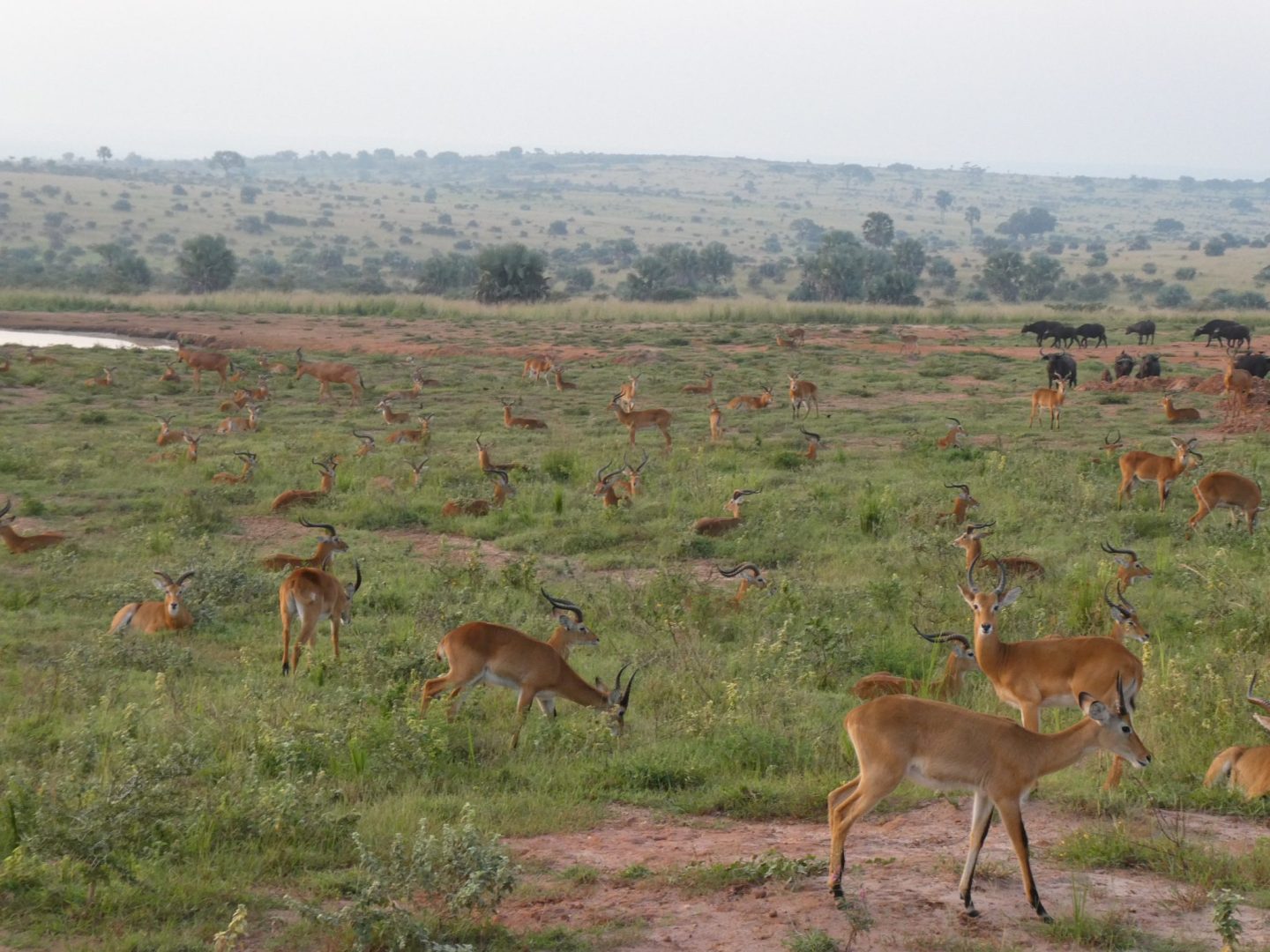
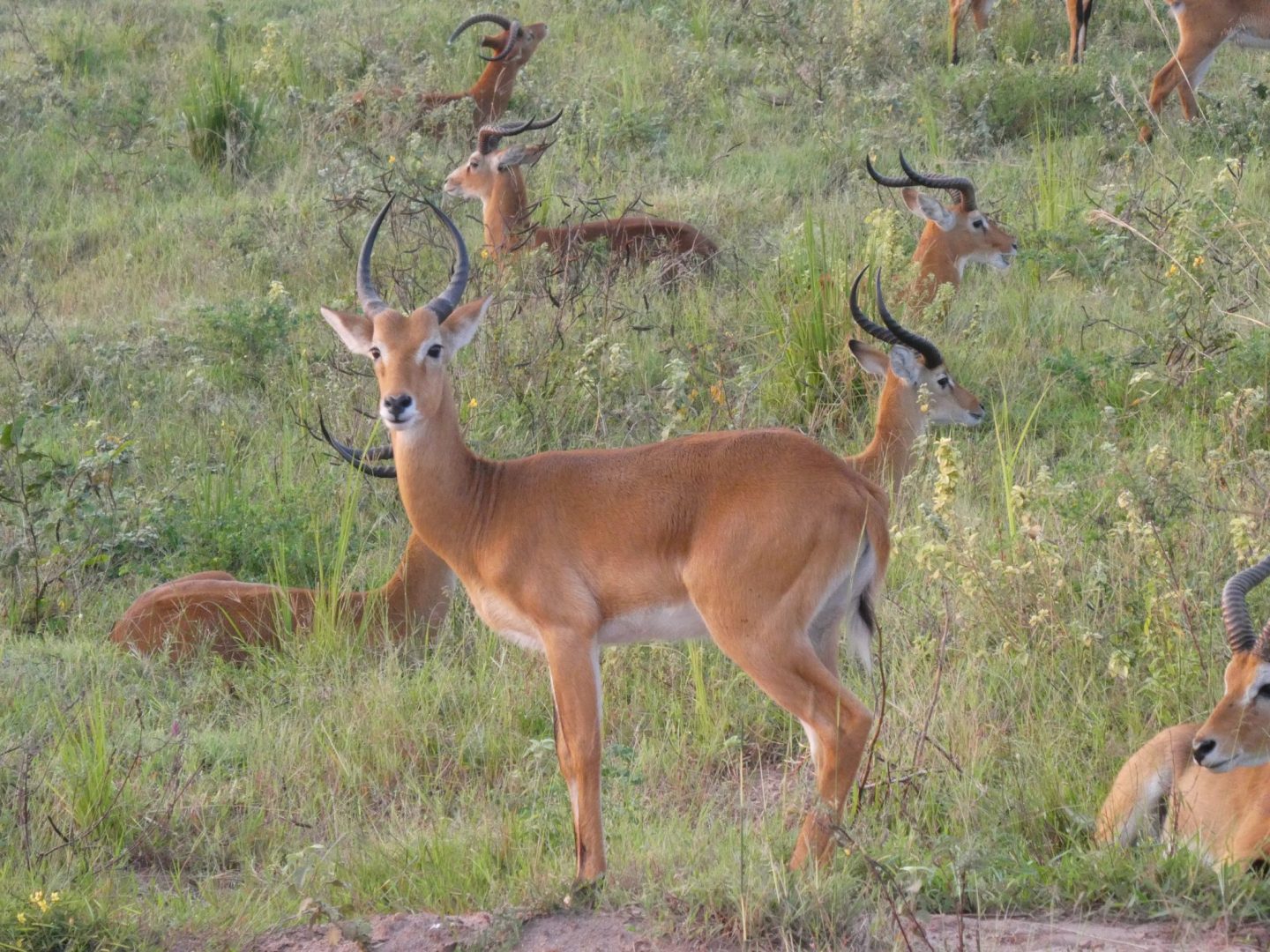
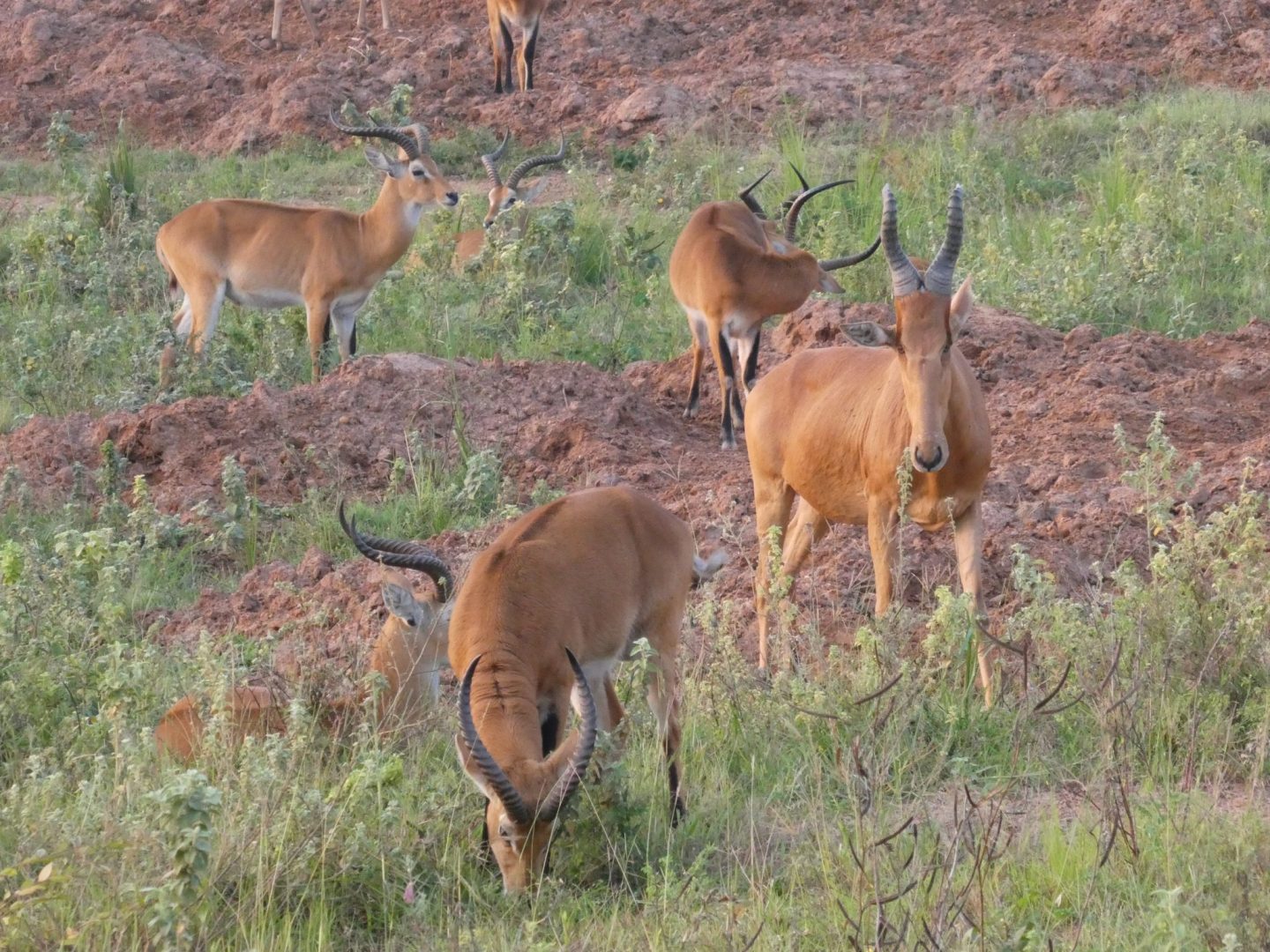
Next morning, we headed out early. The park lost 80% of its Ugandan kobs, Jackson’s hartebeests and other antelopes in that 20 years. So scenes like these were heartwarming. So many, grazing contentedly.
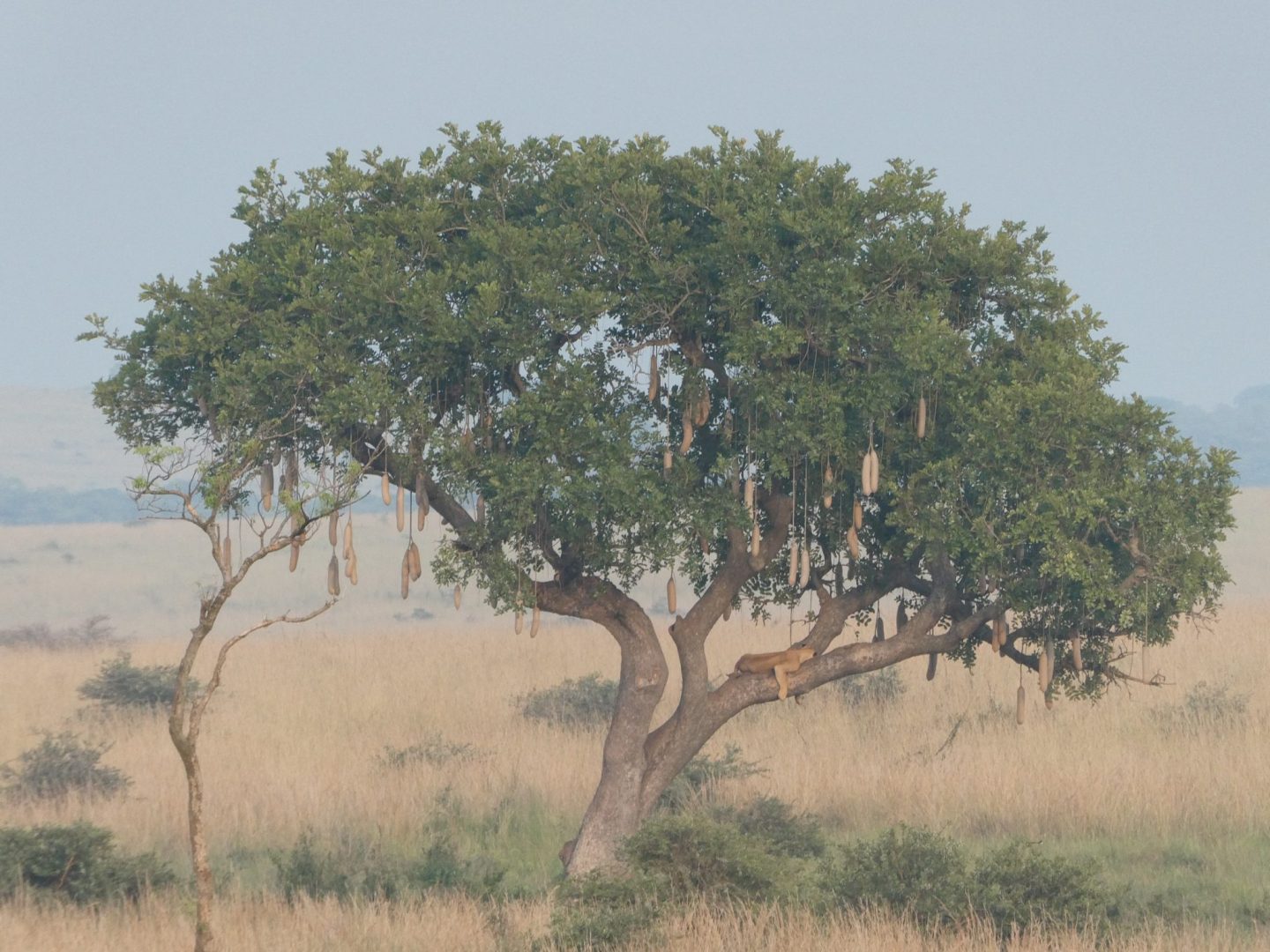
Of course, their resurgence has also been good for the big cats. We saw this female lion sleeping in an African sausage tree.
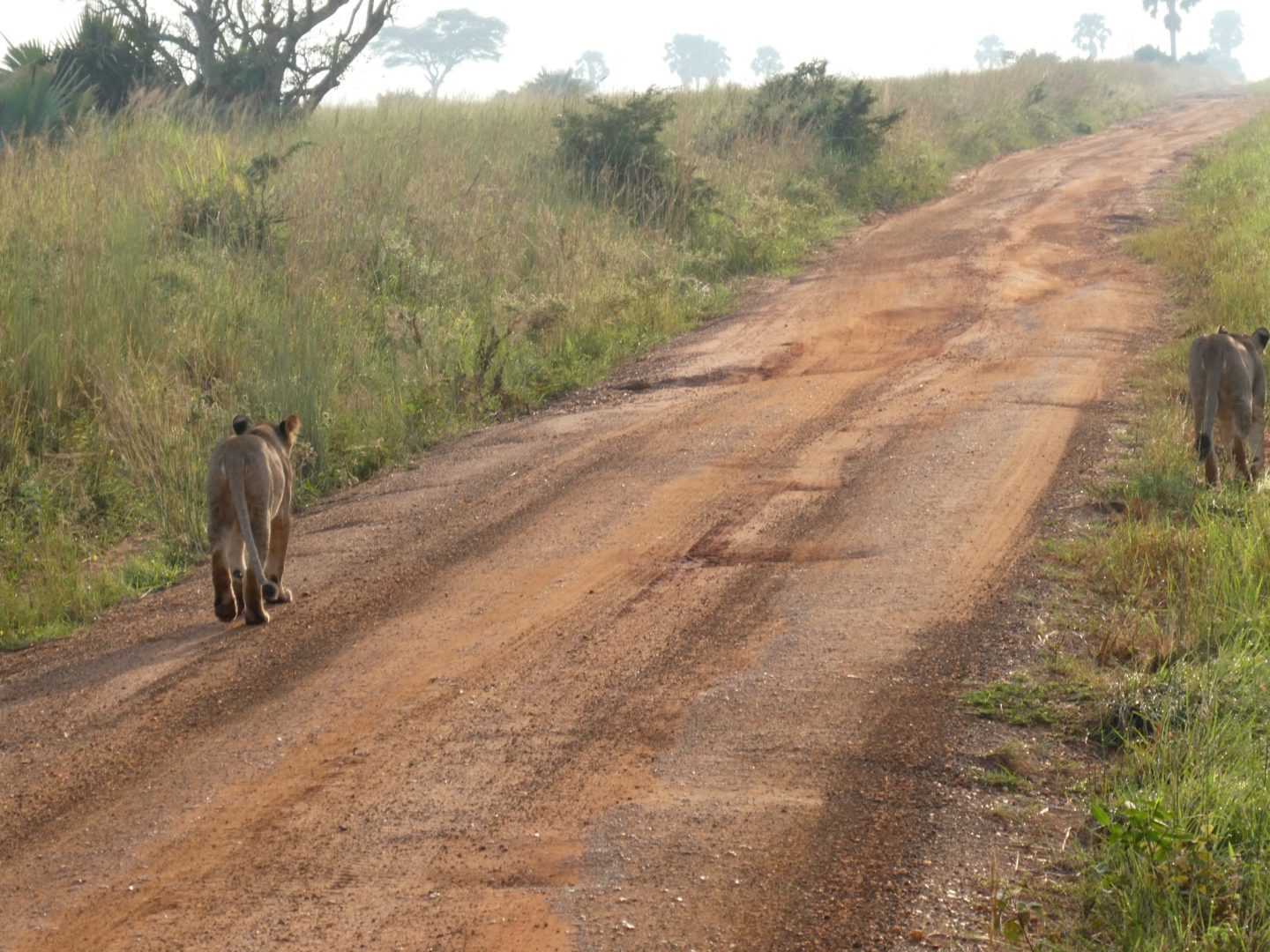
We were quietly watching her when Emmanuel got a phone call. “Hold on”, he yelled and took off like a rocket. We’re pretty sure all four wheels were off the ground at times but a few minutes later it became clear why he was flying. Ahead on the road, two juvenile lions were striding along.
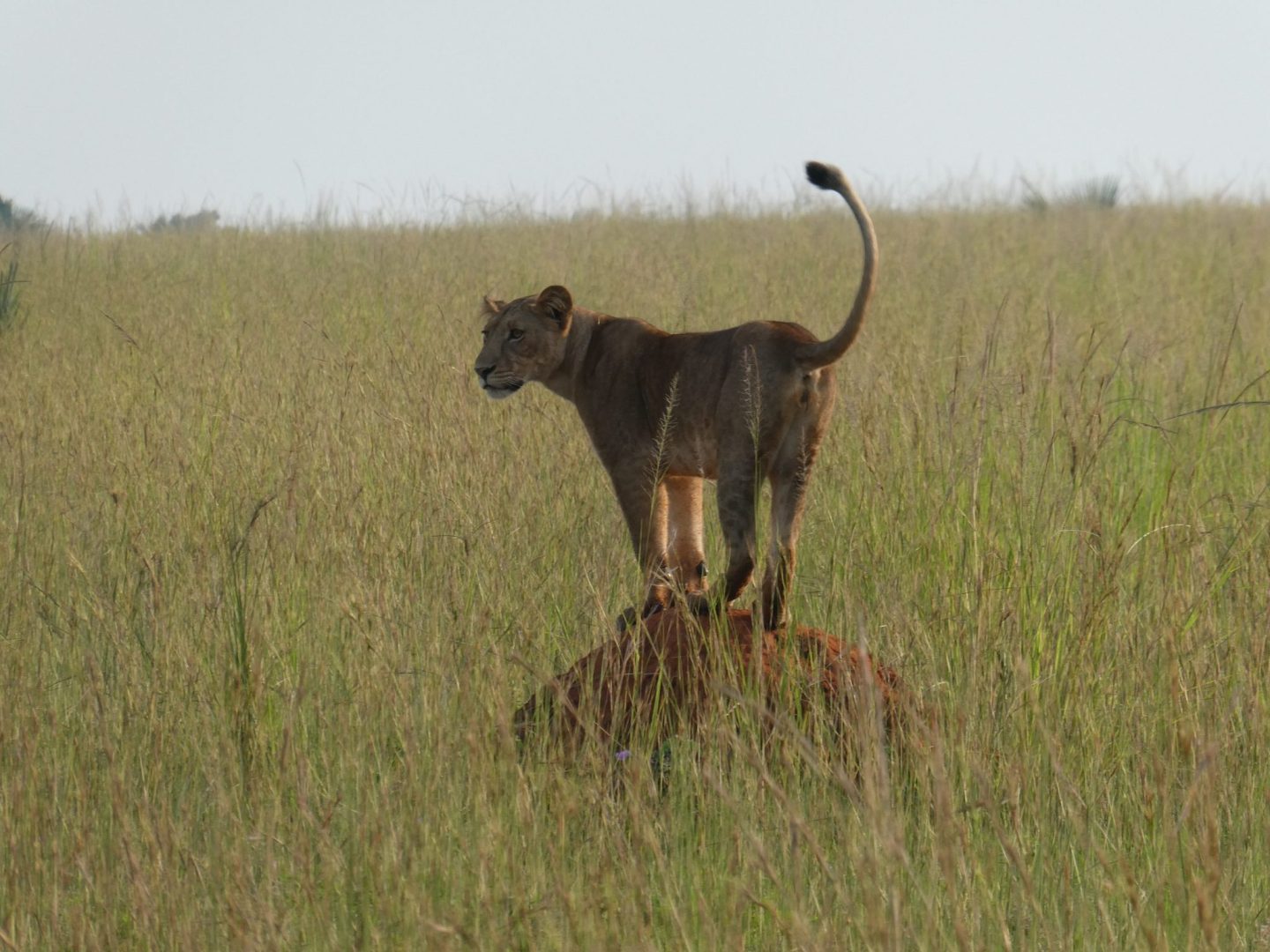
It was about 8am and Emmanuel commented that still being active at that hour probably meant they had been unsuccessful in hunting during the night. That seemed confirmed when they veered off the road and into the grass to eye off two giraffe.

But giraffe aren’t an easy target. It takes a team to bring one down. One of the lions was looking around for reinforcements.

Some arrived, but it looked like the giraffe had summoned back-up too.

Maybe it would be better to see what else might be around.
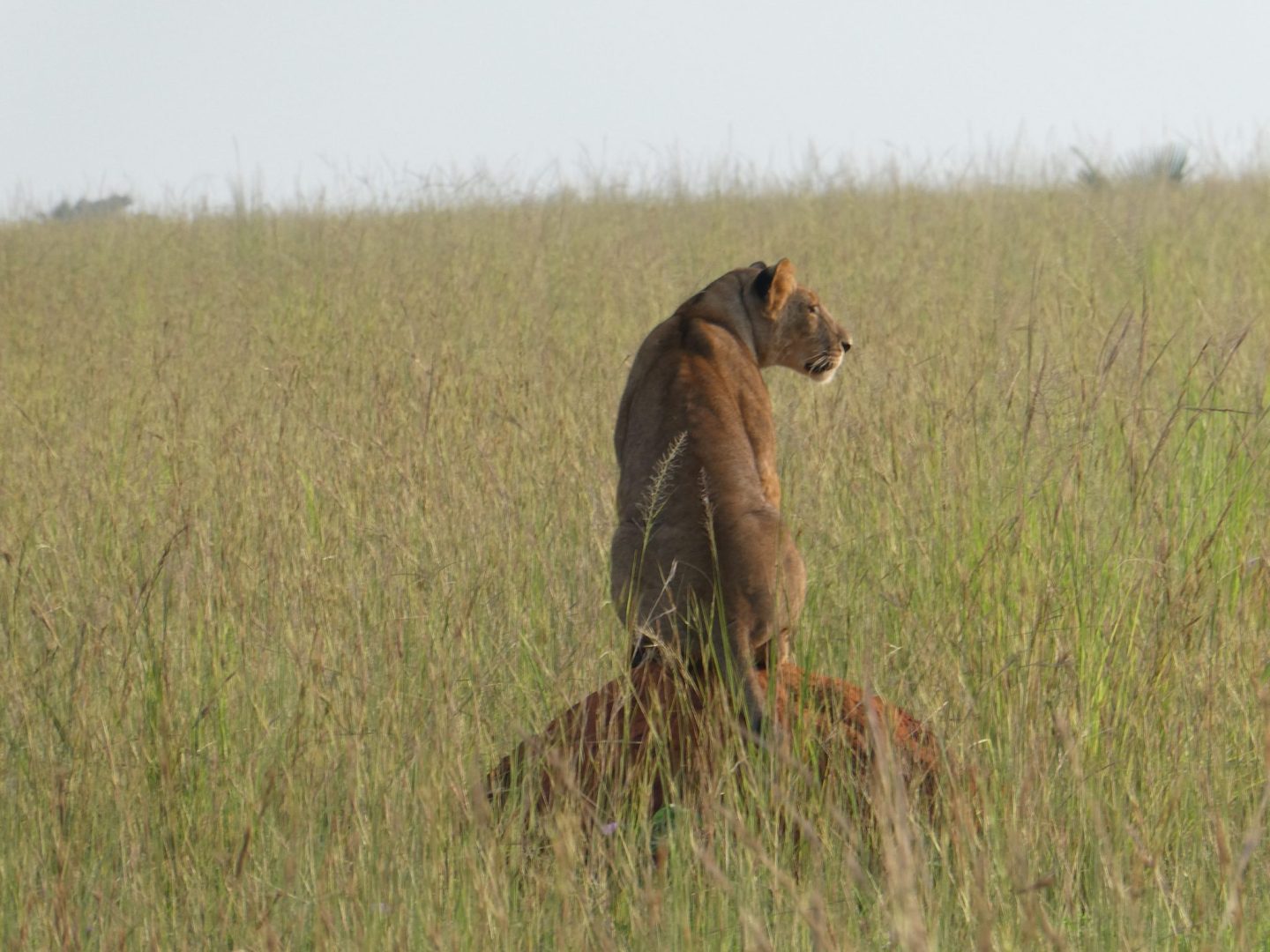
The alpha male arrived and took over scoping for prey.

A lioness joined him. They scanned the surrounds together.
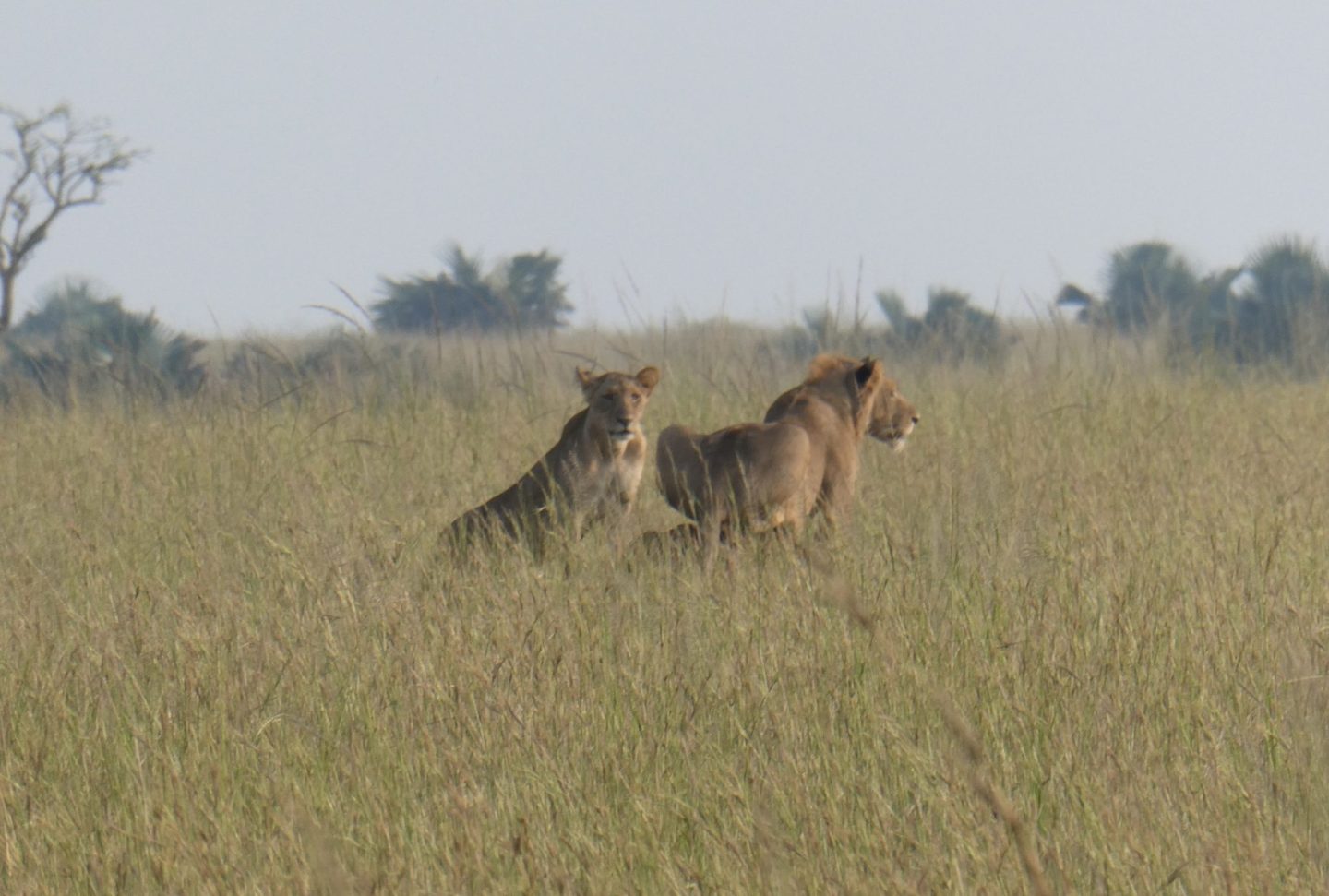
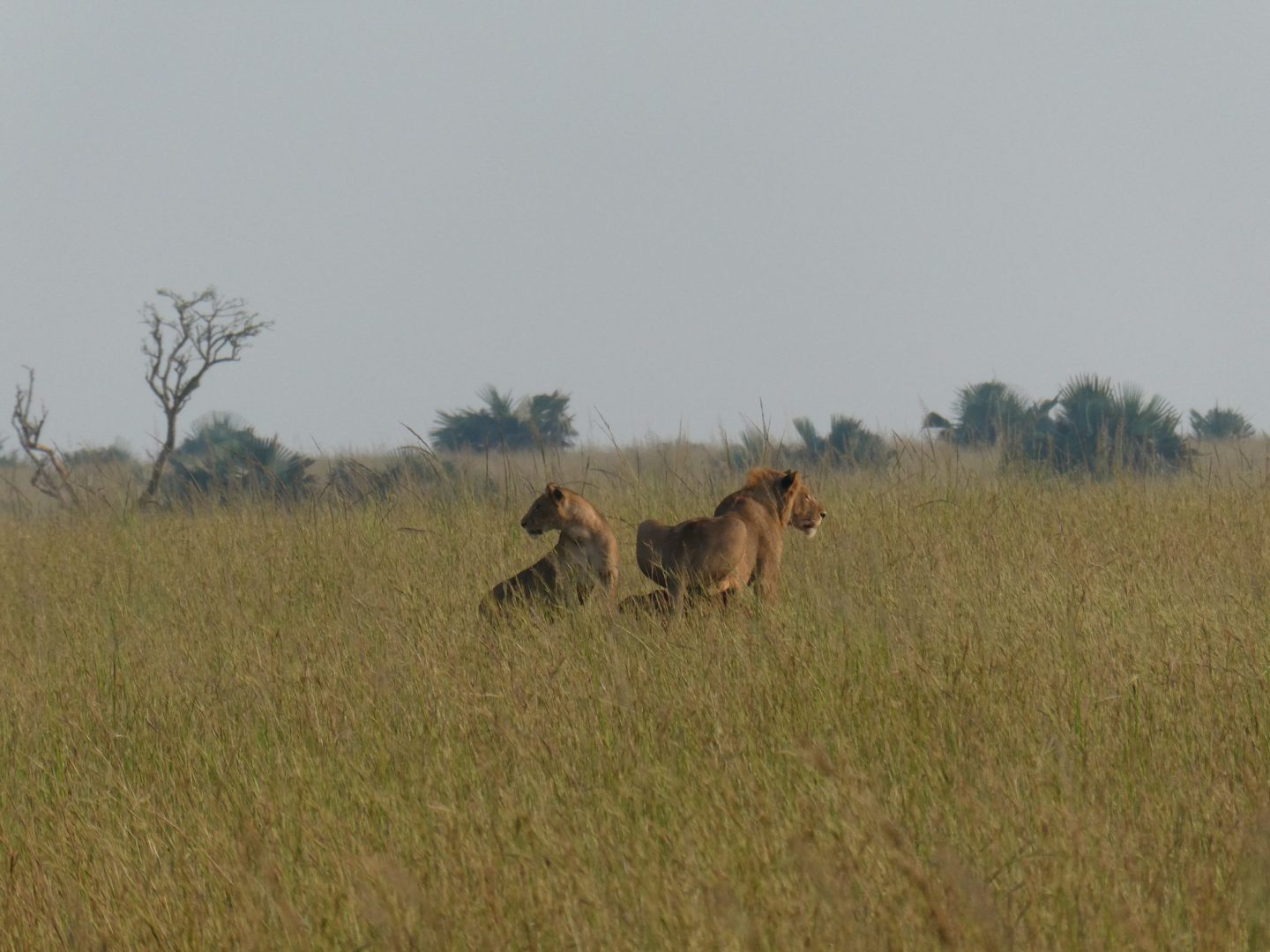
They saw a buffalo and it looked like she despatched him to have a go. He took off.
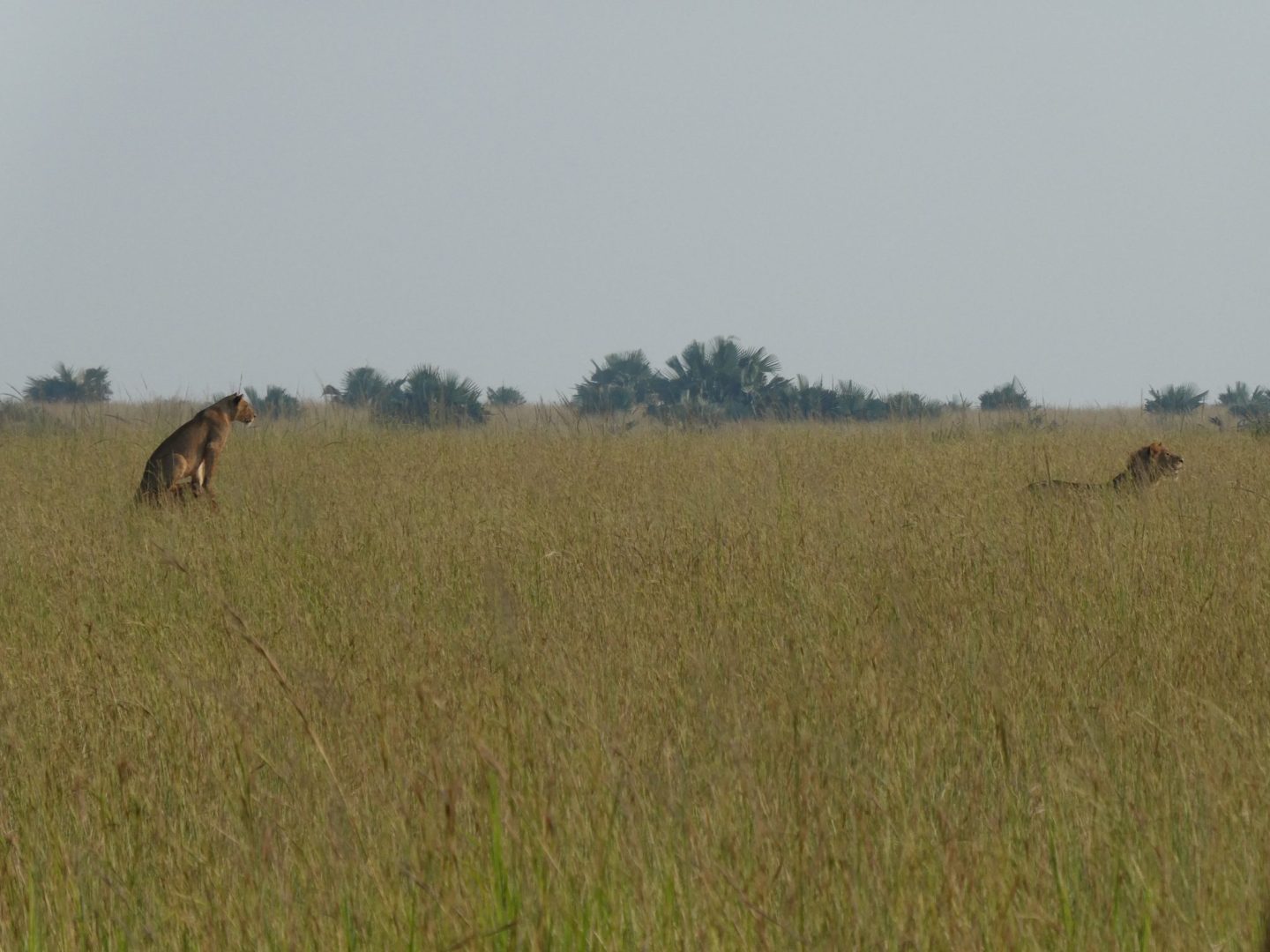
But the buffalo had his running shoes on.

No breakfast for the lions today. But for us, a great spectacle.
Then we went looking for leopards. None had been sighted for three days. Would Julie’s cat superpower draw one out?
We trundled slowly through likely areas for a while. Other vehicles were doing the same. No leopards could be seen in the grass. But then ….
A sleek, muscular adult hiding in the branches of an acacia. Initially she was facing away from us, but then she turned. She barely moved, just sat quietly regarding us.
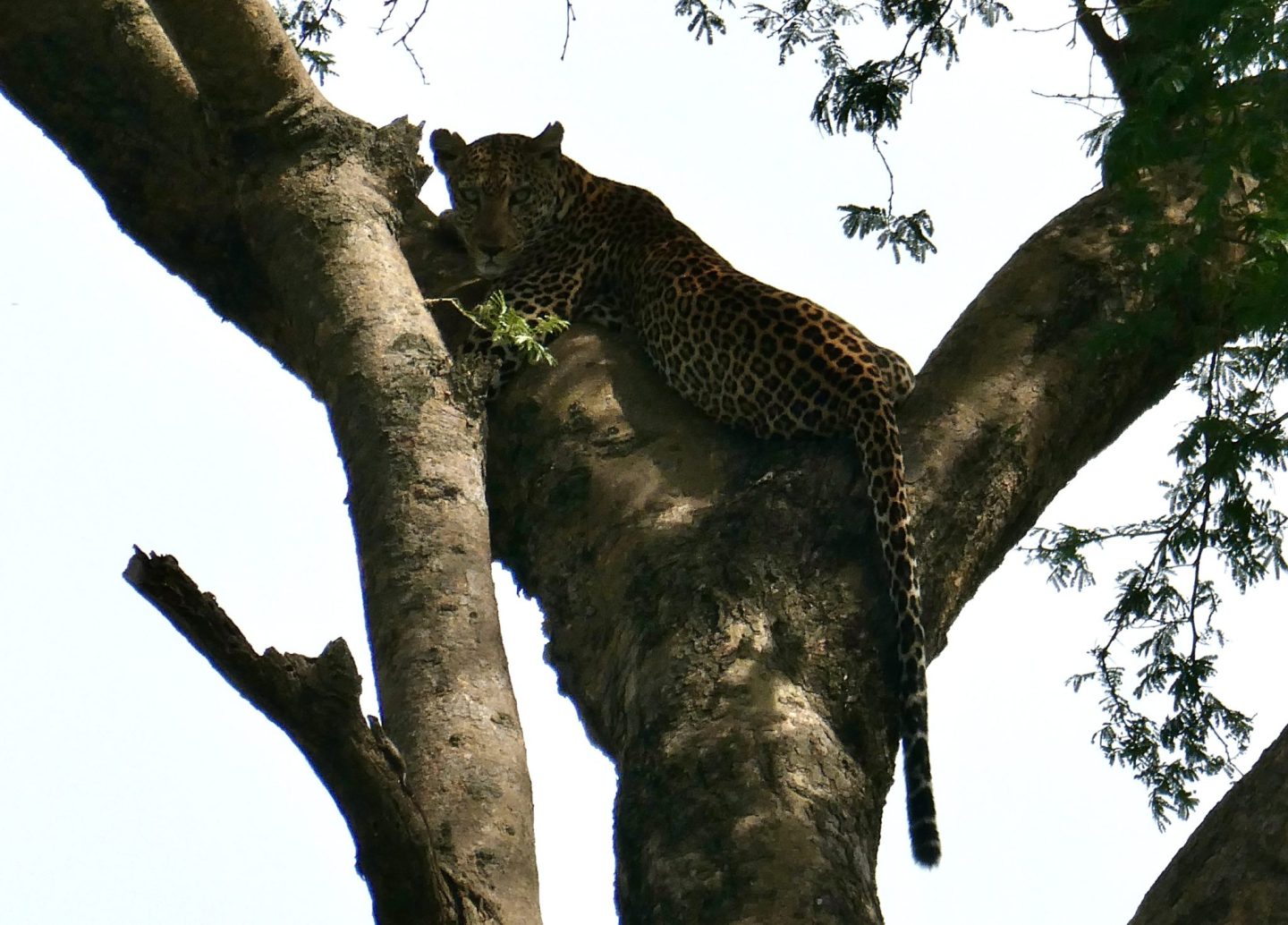
She gnawed on the bark.

Then returned to staring.

Another vehicle arrived and an over-zealous woman started to clamber noisily onto the roof. The leopard did not approve. She jumped to a lower branch.
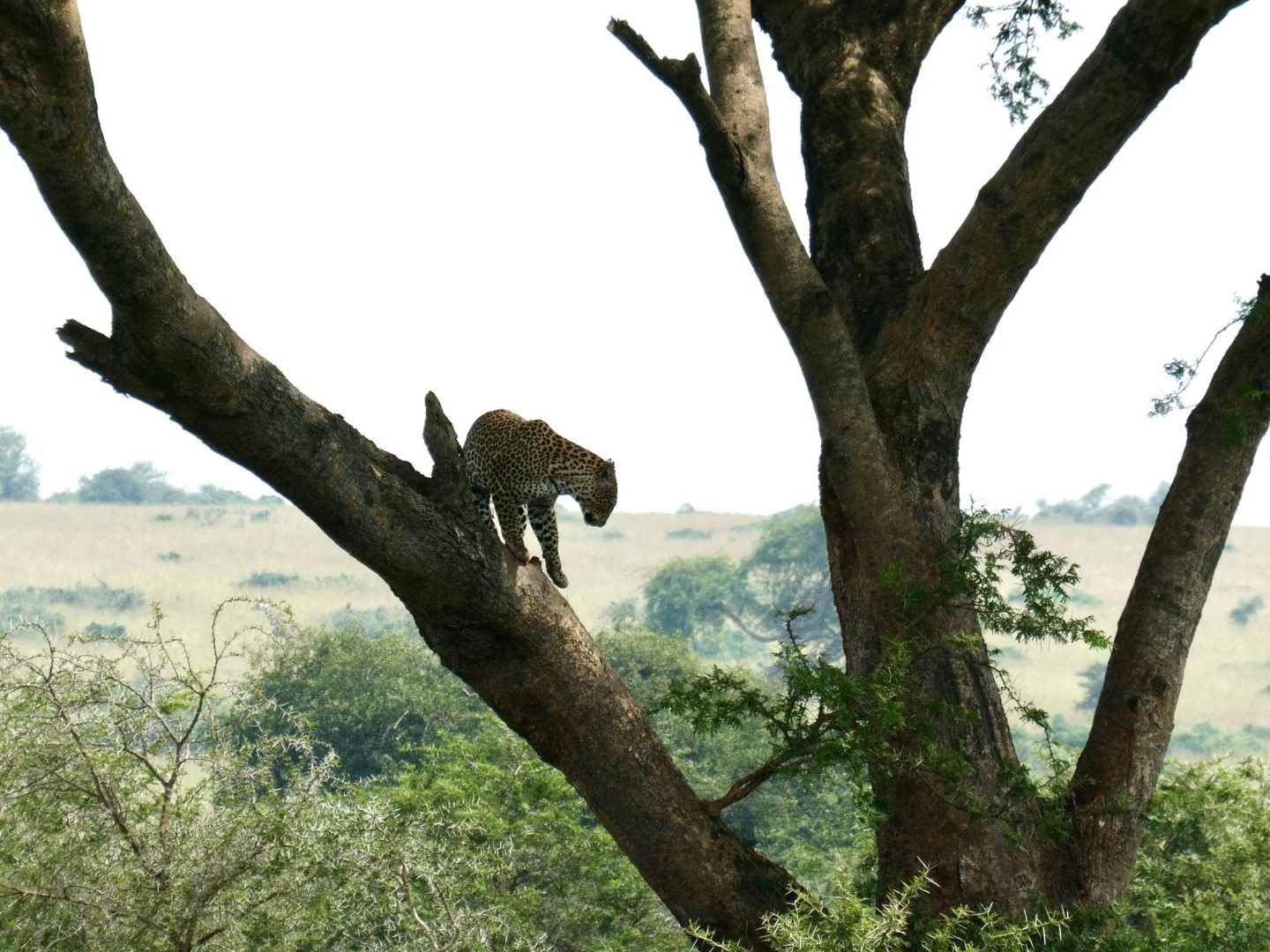
Scampered down the trunk.


Flashed her cat star.

And disappeared. Given the time the woman took getting onto the roof and into position, we don’t know if she got any photos at all. Ironically, she had such a ridiculously long lensed camera, she could have taken stunning photographs from her original position. But we didn’t mind. The leopard skedaddling gave us a nice little drama to enjoy.
The final 115km of the Victoria Nile flows through the park, including the point where it tumbles over Murchison Falls, before entering Lake Albert at the northern end of the park.
We took a boat trip up the river toward the falls, passing schools of hippos lazing in the shallows.

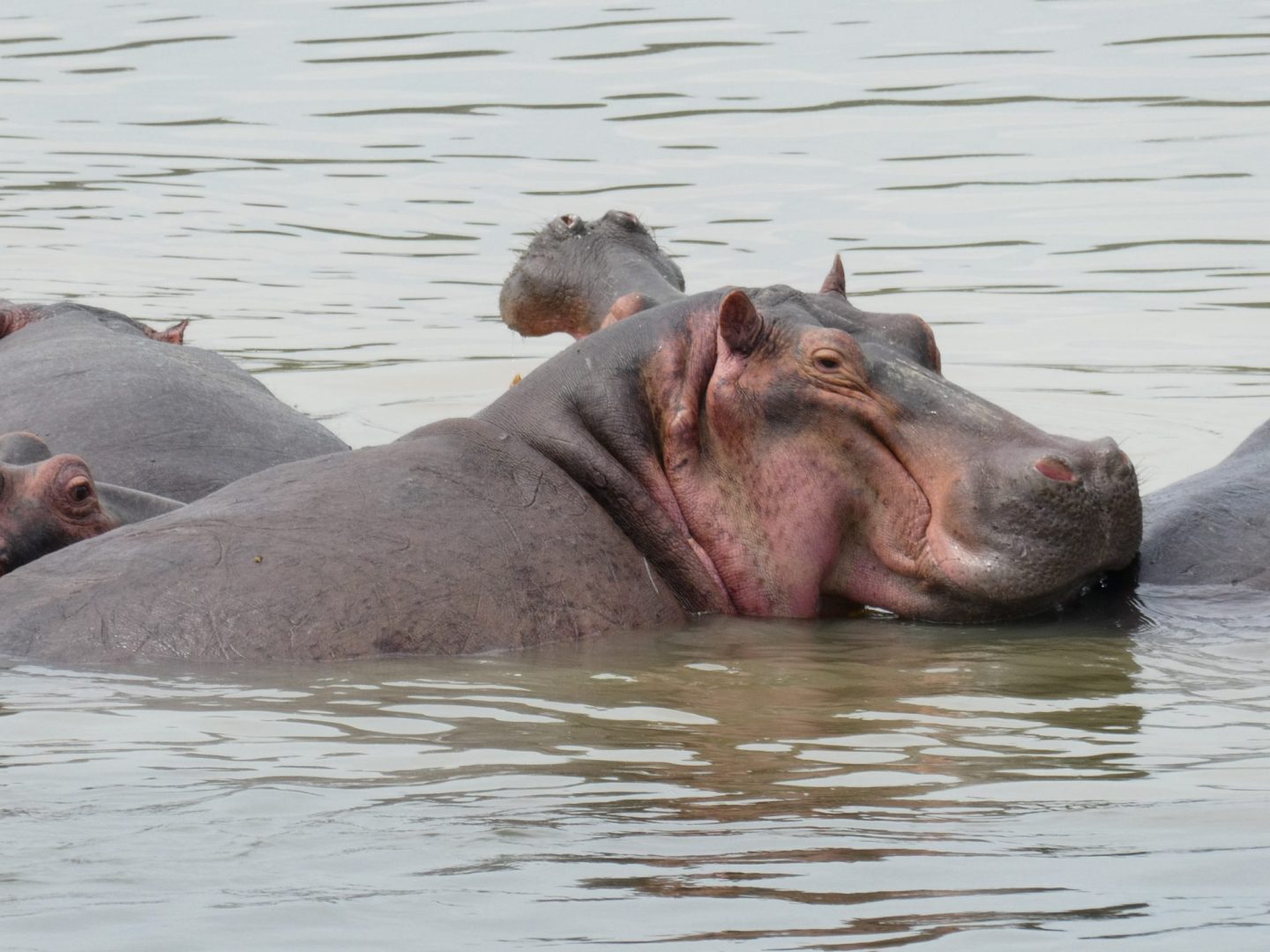
In the cool of the afternoon, buffaloes and elephants come down to drink.


This antelope was taking a risk.

There’s lots of Nile crocodiles looking for a feed.


After an hour or so of wildlife and bird spotting, the banks steepen, the forest becomes denser and the water flow begins to increase. You see the spray from the falls long before they come into view.

The falls hold no records for height or width, but they are the most powerful in the world. 300 cubic metres of water per second flows out of Lake Victoria and downriver to where, at Murchison Falls, it is forced into a gorge just ten metres wide plummeting down 43 metres. We’re told that’s the equivalent of 200 bathtubs of water per second squeezing through a channel seven paces wide.
As the boat rounded the corner, the falls came into view. The strength of flow is so high, this is as close as the boats can go. The first Europeans to sight the falls were Sir Samuel Baker and his wife, Florence, during their years long expedition in the 1860s to find the source of the Nile. Baker named the falls after Roderick Murchison, then President of the Royal Geographical Society and described them as “the greatest waterfall of the Nile”.

For a closer look we also drove up to the top of the falls. From here there’s a loop walk from which you can see the full face of the falls.


In 1962, floods caused a tributary to break through adjacent to Murchison Falls. It was named Uhuru Falls. Uhuru means ‘independence’ and was to commemorate Uganda’s independence that year. The twin falls are a stunning sight.

The next morning a boatman took us in a small motorboat in the opposite direction, downstream to the delta where the river fans out into Lake Albert. It was drizzling rain and the baboons were hunkered down.

They might look cute when they’re asleep, but when they get excited, it’s a Little Red Riding Hood moment. “My what sharp teeth you have, grandmother”.

We were on the hunt for the elusive shoebill stork. It has a unique clog-shaped, hook-tipped bill measuring around 20cm long and the same wide. That’s the largest bill of any living bird. The description which sparked our interest in tracking them down was that “the bill is fixed in a permanent Cheshire Cat smirk that contrives to look at once sinister and somewhat inane”.
The first reports by Europeans following sightings in what is now Sudan described it as “a camel sized flying creature known by the local Arabs as Abu Markub – Father of the Shoe”. Now, ‘camel sized’ is clearly an exaggeration, although with adults averaging 1.5 metres in height, they are indeed a large bird.
They’re listed as Vulnerable on the IUCN Red List of Threatened Species and are only infrequently seen, not so much because of their rarity, but because they are solitary birds except during mating, and invariably live in inaccessible locales. Like the mouth of the delta. Even by boat, sightings are not guaranteed. Although there’s a population of them here, the boatman told us he once went three months without seeing one.
Along the river we saw hippos, crocodiles, baboons, other birds but no shoebills. When we entered the delta proper, we cruised around the swampy foreshore getting colder and wetter. But the rain stopped and then suddenly, we came upon one. Standing stock still in the grass.

Come on then, show us the legendary bill.

And then another one, probably it’s mate, in clearer view.


Mission accomplished.
And for one final treat, we headed to Budongo Forest Reserve. It was here that Vernon Reynolds, a pioneer of chimpanzee field research, studied chimps in the 1960s. In the 1970s and 80s, civil conflict shut down that work. Many chimp mothers were shot and the offspring illegally smuggled to collectors in Asia, Europe and America.
When the area became safe again in 1990, Reynolds returned. Only 50 chimps could be found. Numbers started to rise in the 2000s and an NGO established what continues today as the Budongo Forest Conservation Station, where chimpanzee behaviour studies are ongoing.
We are heading to Kibale, famous for chimp trekking , but two wild chimp experiences have to be better than one, and it was an insurance policy – just in case we didn’t see chimps at Kibale.
We arrived around 1pm and it wasn’t good news. A group had gone at 7am, trekked for four hours and seen no chimps. A second group had gone at ten o’clock and had been gone three hours and as yet had seen no chimps. We were due to go at 2pm and had just started eating our boxed lunch when there was a flurry of activity. The trackers from the second group had found the chimps. We were told to abandon lunch and start immediately.
By the time we reached the spot, which was quite near, the previous group had finished their time, and we had the chimps to ourselves.

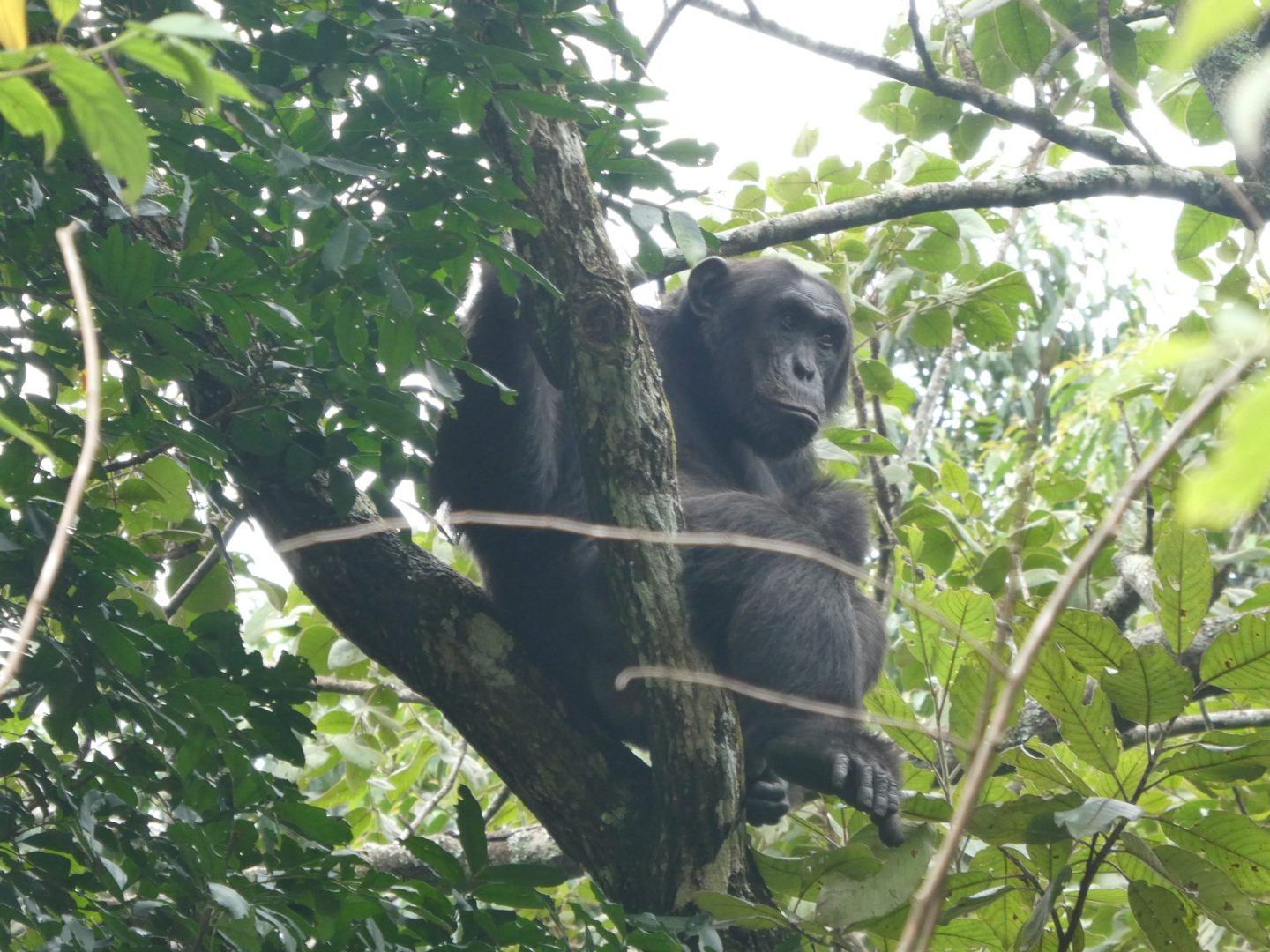

Sometimes the chimps will come down to the ground, but these stayed in the trees. And then when they move, they don’t use the human-made tracks in the forest, which makes following them difficult. Here’s our tracker trying to keep up with them.

Chimps in the trees are faster than a man in dense undergrowth. The chimps disappeared. But we were pleased to have seen them and it gave us a preview of what to expect at Kibale. That’s coming up next.

You’ve wet my appetited to explore Africa and see these beautiful creatures in the wild. I’m not sure where you start with planning a trip to Africa.
Certainly, what you’re doing captivates me. I’ll certainly look at the additional blogs you have on Africa. This may assist with my planning.
Author
Africa is dauntingly big. You just have to dive in! Any questions, please feel free to ask. I will help if I can.
A fantastic post – so heart warming to think all that wildlife survived & grew after the devastation in the 70s – you are having such a wonderful trip seeing & experiencing so much of earth’s wonders x
What an amazing album of photos – thank you so much …and HAPPY BIRTHDAY for 21st (today in Aus) Ms J.
Hope you see the lots of chimps on your special day xxx
Author
Thanks!