From Ziwa we headed north, far north, almost to the border with South Sudan. For most of the way, the roads were good. But the last 100km gets sketchy.

Vehicles commonly come to grief.

Our destination was Kidepo National Park, described by Lonely Planet as ‘one of the most remote safari parks in Africa’ with ‘some of the most stunning scenery of any protected area in Uganda’. Vast savannah grasslands with a backdrop of mountains marking Uganda’s border with South Sudan.
Next morning, sunrise driving into the park was spectacular.


The 1,442 sq km park protects one of Africa’s largest herds of wild buffalo. Some 15,000 call this place home.
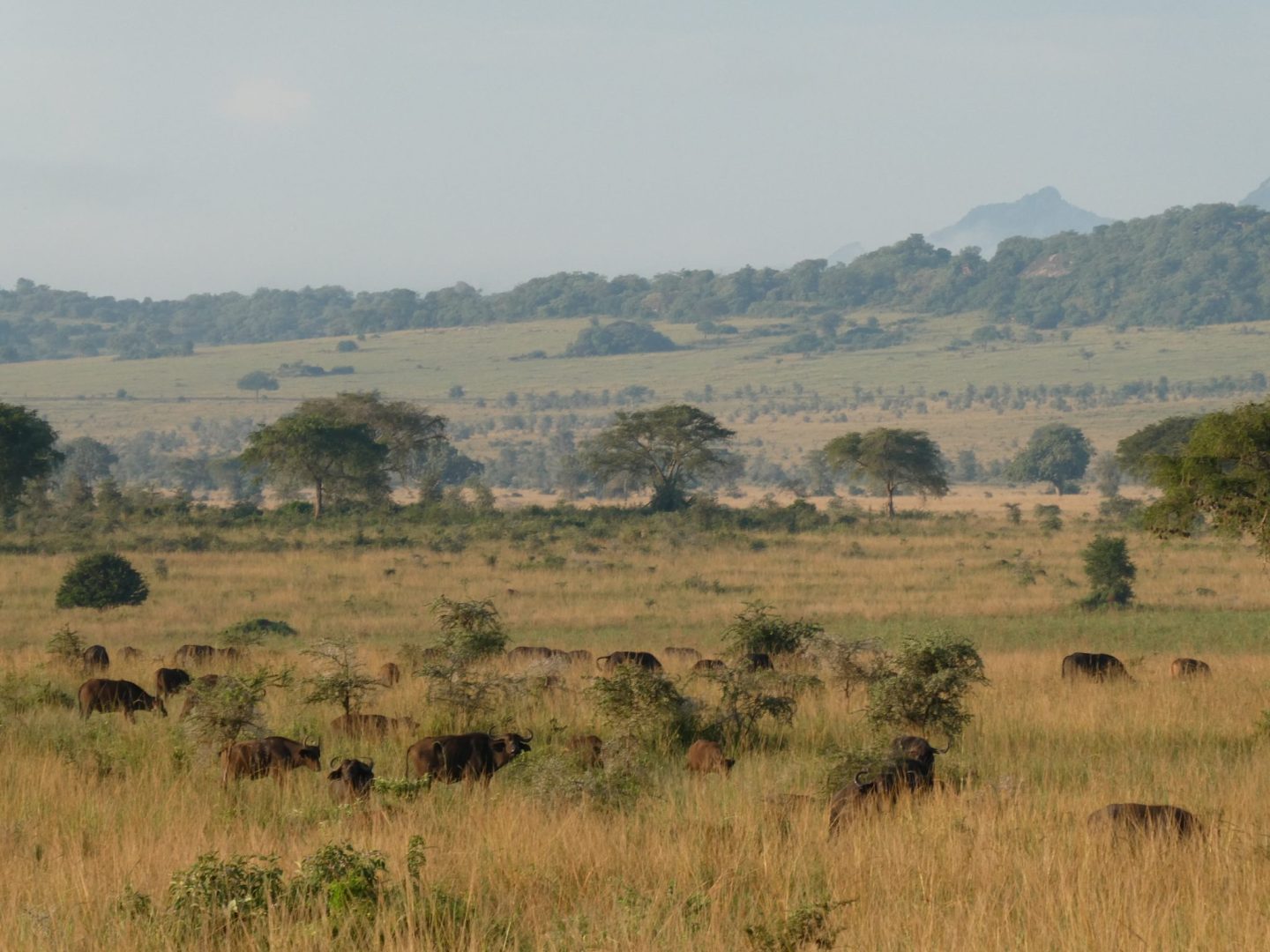
Unlike their Asian cousins, the African wild buffalo has never successfully been domesticated due to its unpredictable temperament. We haven’t been able to confirm it, but we read that more people are killed each year in Uganda by buffalo than by any other wild animal.
They regard safari vehicles with interest.
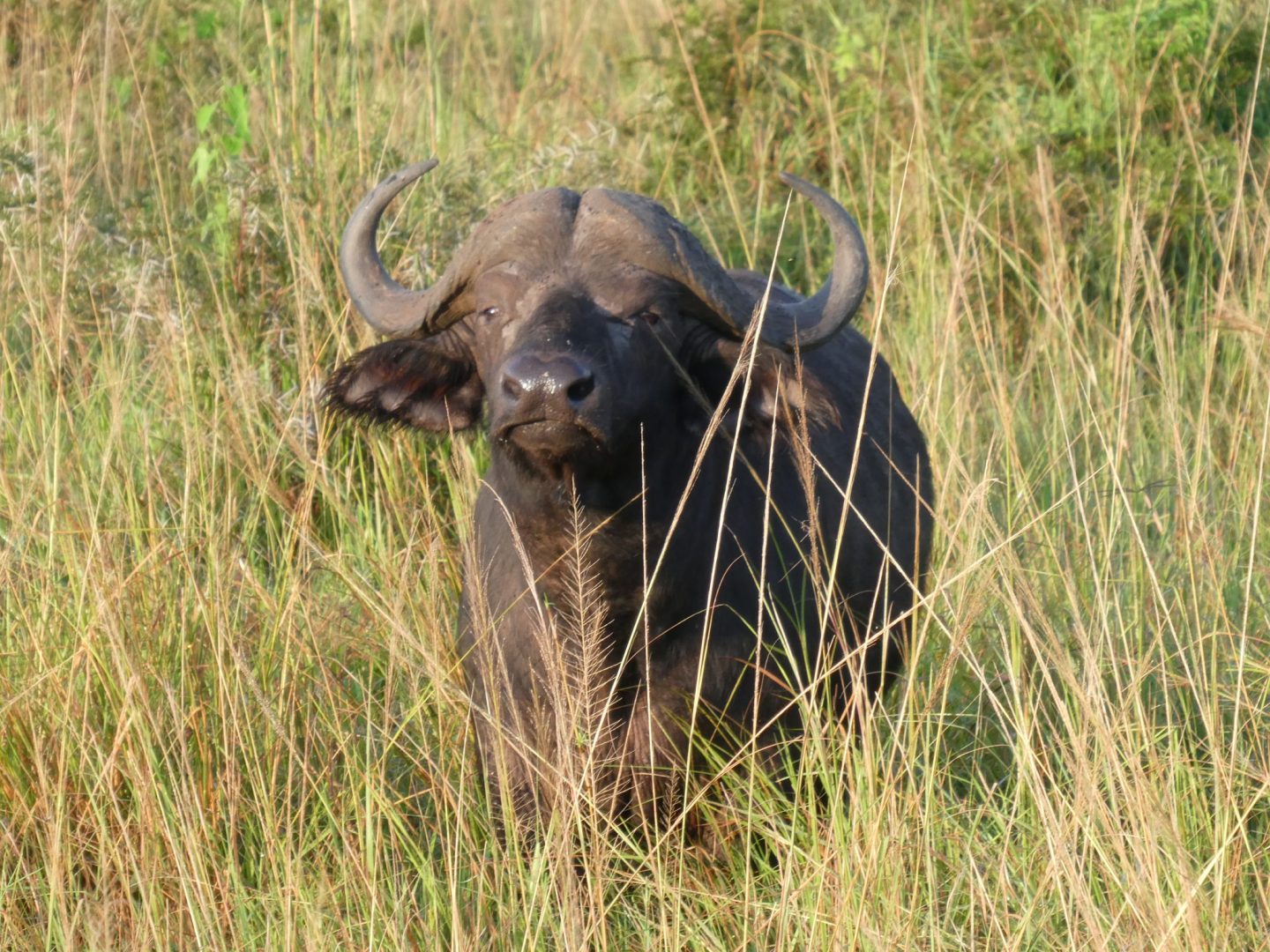
But they know they rule the roads in this park.

We did a walking safari with a ranger learning about plant species and their use in traditional life, as well as the habits of the small savannah animals like hyenas and warthogs. Meandering around the grassland, we noticed the buffaloes’ watchfulness escalated if they think you are too close. They give you the death stare and start snorting. The ranger was always careful to make sure we gave them a wide berth and told us of an experience a few years ago when a buffalo attempted to charge at a group he was guiding. He wasn’t impressed with the brash American who had stood still taking a video instead of crouching down on the ground as instructed.
They look much more benign when they are wallowing. It keeps them cool and helps drown the ticks which afflict them.

Kidepo was our first introduction to the Jackson’s hartebeest. Their disproportionately long faces look like mammalian grasshopper heads. Once widespread, they are now confined to protected parts of Uganda and western Kenya. They are officially listed as Endangered, although you wouldn’t guess that from the herds here.

They live in sociable groups and there’s always one on sentry duty, perched on a termite mound or higher ground keeping watch for predators.

Apparently, if the sentry misses something and a member of the herd is attacked, the rest of the herd will turn on him, punishing him brutally for the fail.

We were charmed by the oribis. These diminutive antelopes stand just 50 to 70cm tall. They are shy and elusive, and can run up to an impressive 80kph. Only the males have horns.

But both sexes have this adorable pattern in the fur in their ears which resembles mini reindeer antlers. A deer and an antelope all in one!

There are herds of eland, the largest of Africa’s antelopes but notoriously shy. Traditionally they were regarded as the sweetest of antelope meats and a wariness of humans seems to have been hardwired into their DNA. Even after generations in protected parks, they still stay far from the game drive tracks.

Not so the waterbuck. Not tame, but not bolters either.
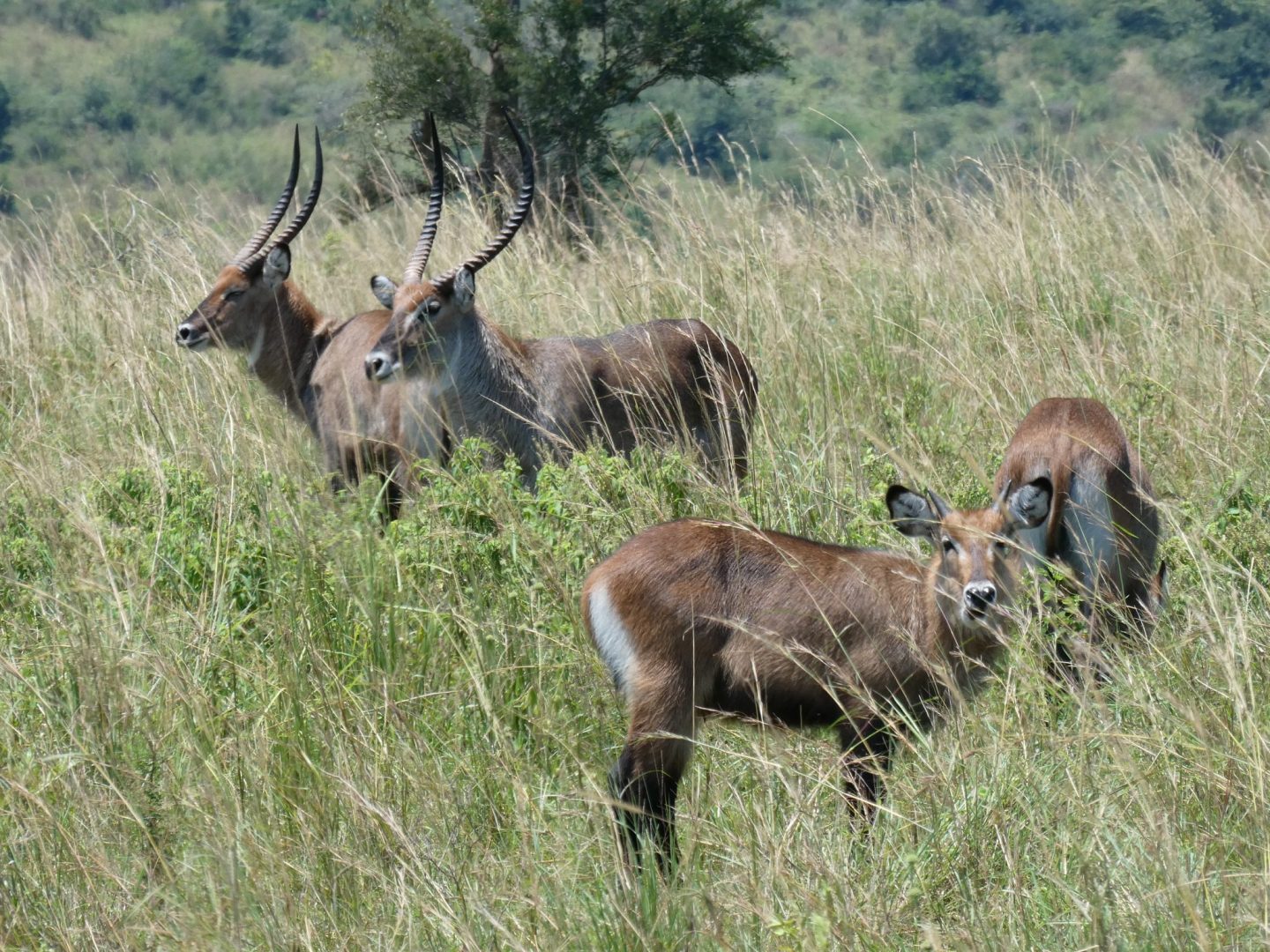

There were good numbers of zebra and warthogs.


Lots of smaller creatures live in the boulder outcrops, like the hyrax. They resemble a slightly oversized guinea pig. Evolutionists say they are the closest living relative of the elephant. No trunk, no flaring ears, a furred body, obvious size difference, how does this work? The scientific explanation is simple – they share a common, long extinct ancestor.
The folklore explanation is much more charming – when God made the elephant, it was so big, there was just a scrap of material left over. But rather than waste it, he made the hyrax from the little that was left.

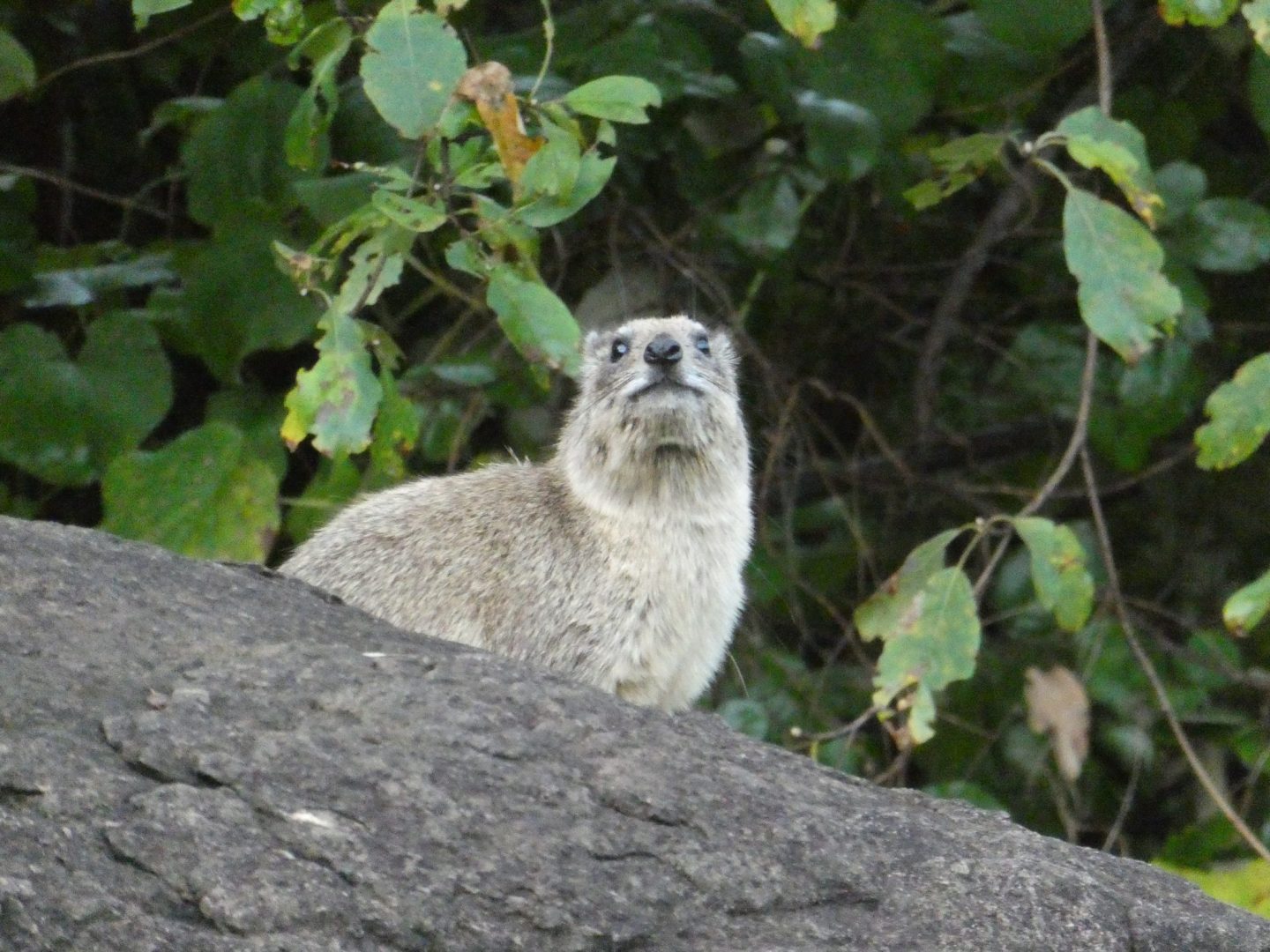
We stayed in a lodge just outside the park entrance. There was a boulder outcrop right next to our deck and in the late afternoon lots of hyrax ventured out to nibble on the leaves. This mother and her babies were looking at us like we were the entertainment.

In our Serengeti post we mentioned the secretary bird and how insulting it might be to draw a comparison to human secretaries. But when we saw this one strutting back and forth, apparently lecturing the buffalo, it did put us in mind of one or two secretaries we saw over the years keeping junior lawyers in line!

It’s always a delight to spot a jackal, and Kidepo is the only place in Uganda where you’ll find the black-backed jackal.

Oops, it seems we interrupted his morning routine.

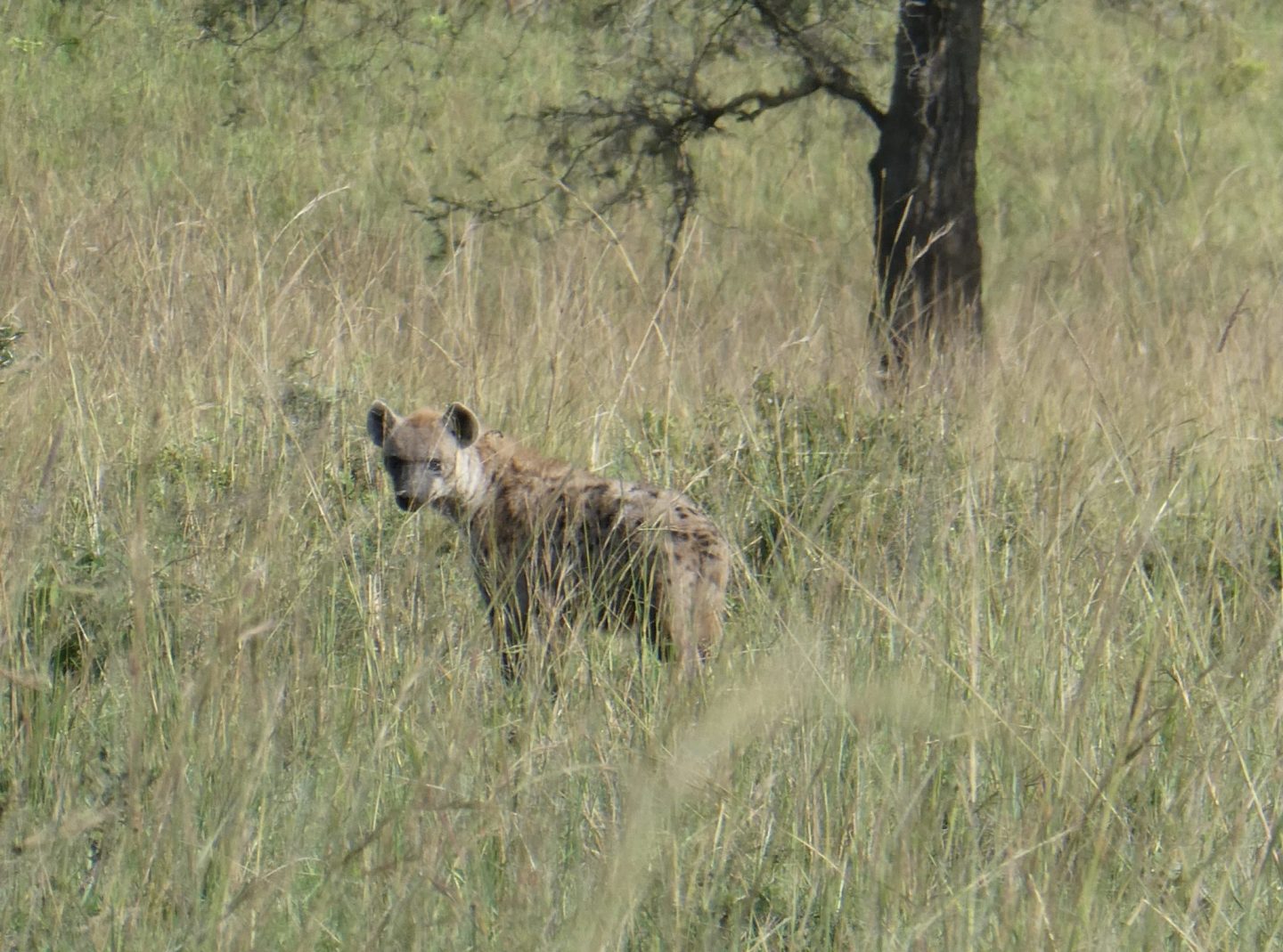
And we love spotted hyenas.
But our favourite at Kidepo were the patas monkeys. They are the world’s fastest primates, running at a top speed of 55kph. They must be the cool dudes of the monkey world. The females in particular look like they are wearing wrap around sunglasses.


This junior was taking a sneaky drink from its mother.

It rained heavily through the late afternoon on the day before we were due to leave. We were heading to Murchison Falls and asked “How long will it take?”
Emmanuel, who has a degree in economics and worked as an economist before becoming a guide a decade ago, replied “All other factors being held constant, about seven hours”.
But the factors didn’t hold constant.
The bush mechanic at the lodge adjusted the brakes overnight but, as it turned out, a bit too aggressively. About 30 minutes out, an acrid smell started filling the car. Burning brake pads. We limped into a village and a mechanic from the Wildlife Authority depot came with a fix.
And the rain had continued through the night. The road out, already muddy when we drove in three days ago, was a quagmire.
We forged on. The sun was out and the road was drying but not quickly enough. In yet another trough in the road, the best make of 4×4 for the African environment stuck fast.
Out of nowhere, young men and children drifted in. Everyone had an opinion.
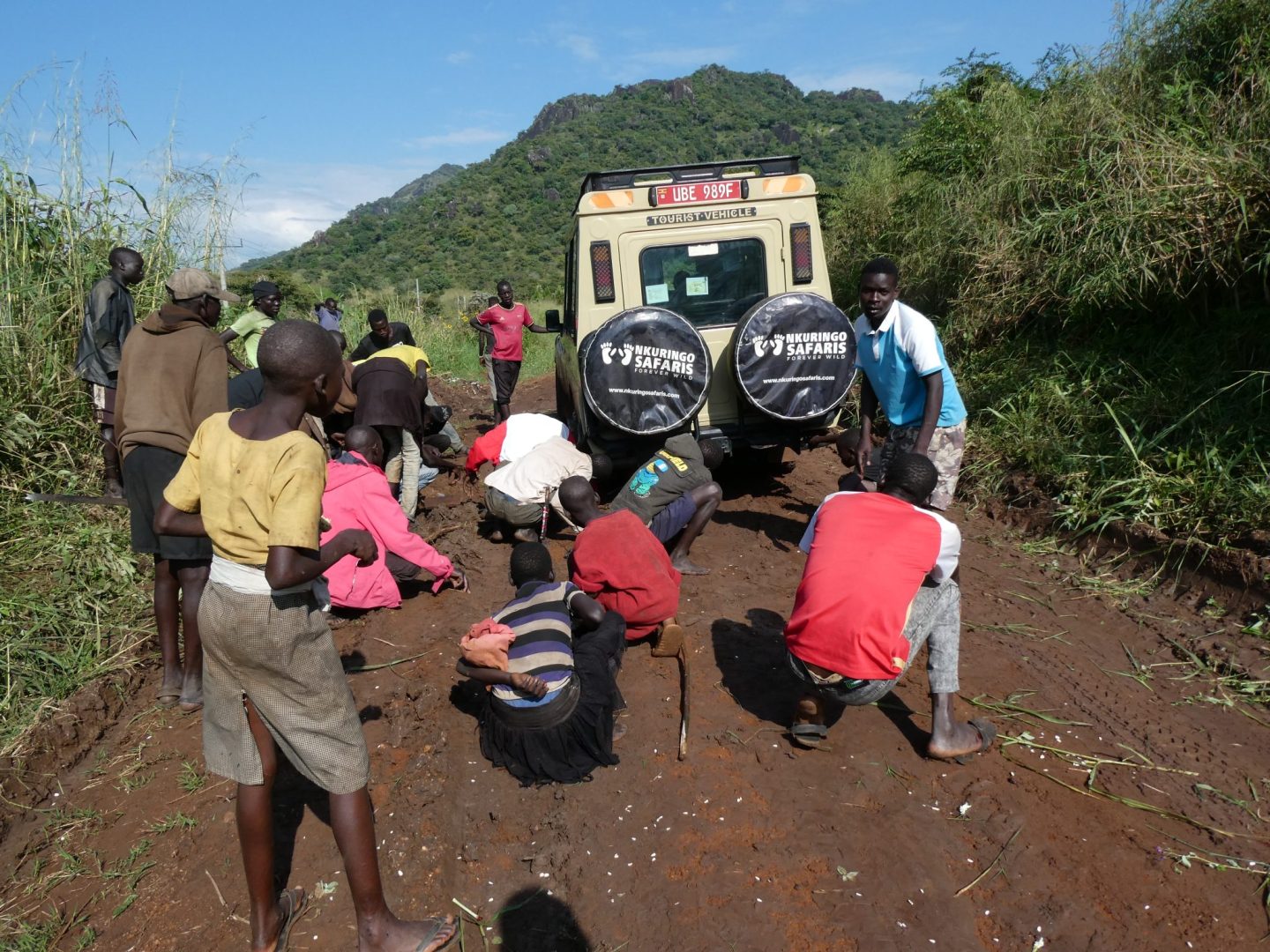
Mud was dug out, stones were lodged under. No joy. Saplings were cut down and wedged into the mud. There was rocking and pushing and pulling. Finally, the vehicle clambered out. Thank you to all the local lads.
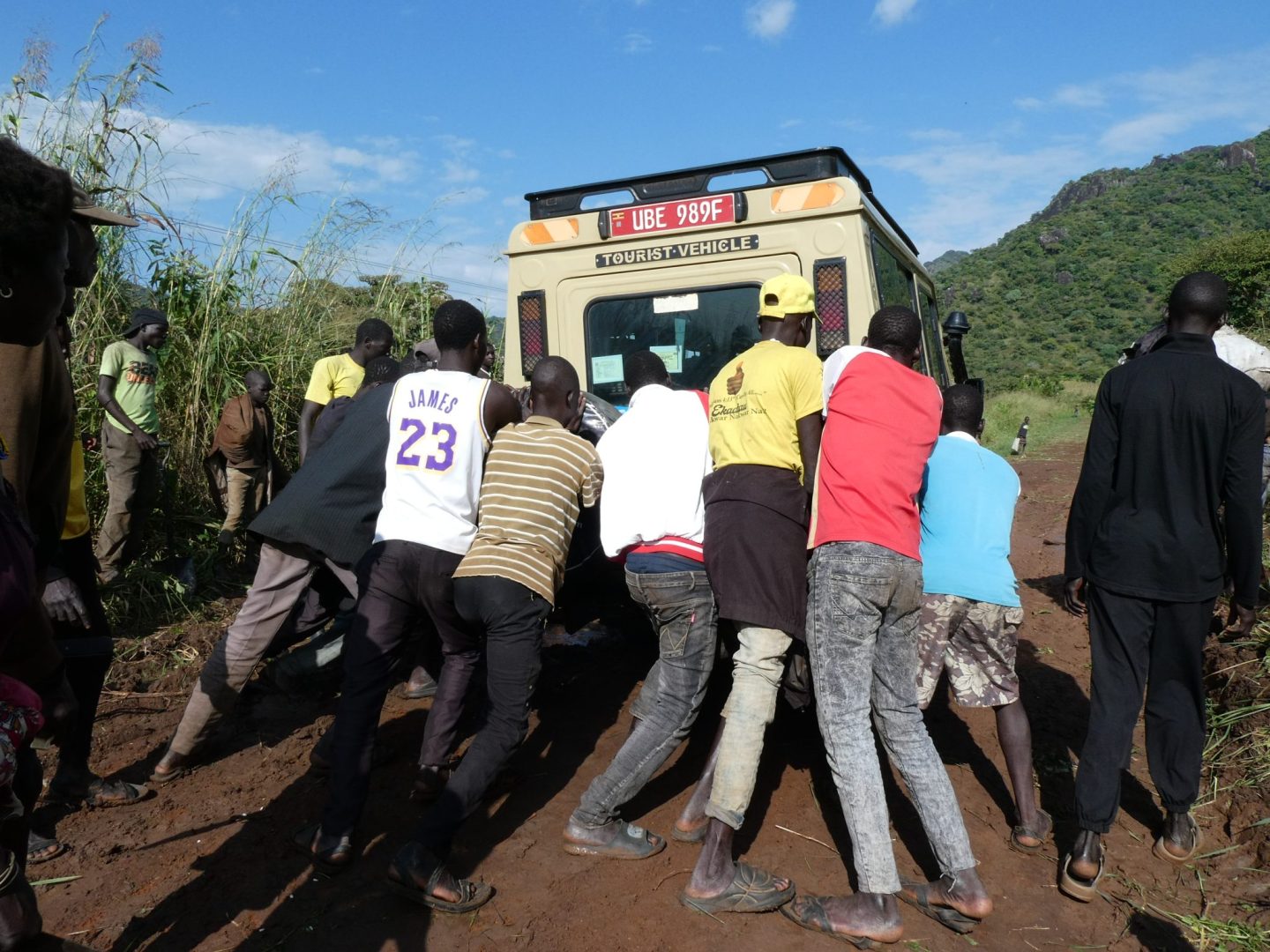
When we finally reached the tarmac, it had taken five hours to go 100km. It would take us 11 hours in total to reach Murchison Falls, but we made it.

Like you charmed by the oribis but my favorite the monkeys 🙉 in sunglasses 🕶️- love a good pair of sunglasses x
Absolutely beautiful Julie!
Author
Great to hear from you!
African roads at their finest ! Very reminiscent of southern Madagascar 😀
Author
We’ve done both, and this was consistently worse!