National Geographic named it one of the Seven Wonders of the Natural World. The annual Great Migration is the largest herd movement of animals on the planet.
Over 1.2 million wildebeest move in a constant, seasonally driven, elliptical trajectory through the Serengeti-Mara ecosystem following water and food. In a year they cover a loop of 800 to 1,000 km, guided by instinct along routes their forebears have been taking for thousands of years. Here’s a diagram from Africa Geographic.
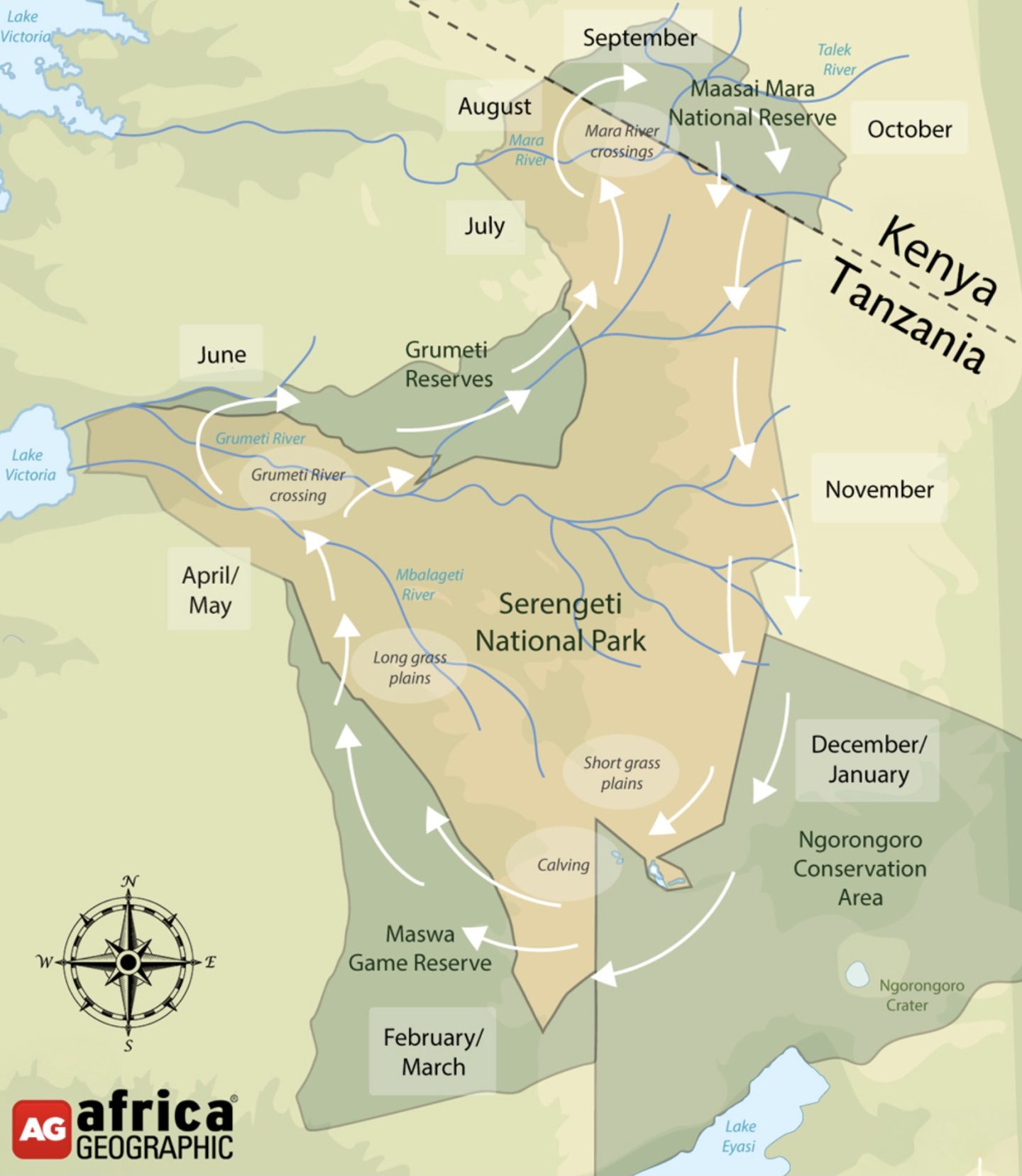
The most famous and visually spectacular part of the migration occurs when the wildebeest congregate on the banks of the Mara River near the Kenya/Tanzania border, dive into the fast flowing water and swim like crazy for the other side. This is what we wanted to see.
Although crossings of the Mara River happen over the course of a month, there’s no guarantee of seeing one. Year to year, the crossing season can be anywhere between late June and late August depending on the weather. Crossings occur at many different places, not always predictable. Herds coalesce in one location, then change their mind and move. Crossings don’t happen every day. You can wait for days, looking at a herd of thousands over the river, only to have them either stubbornly refuse to enter the water or disperse and regroup elsewhere. So it’s nowhere near as simple as saying ‘if we go in August, we’ll see it”. We came hoping, but steeling ourselves against disappointment.
At breakfast on our first morning in the Serengeti, our guide, Bakari was busy phoning his contacts – park rangers and other guides. There’d been a crossing the day before and he had some information about where more wildebeests were grouping together.
We arrived at the site about 11.30am and parked in a prime spot, a regulation-mandated 60 metres back from the river bank with an expansive view of the other side. There were probably a few hundred wildebeests milling around.
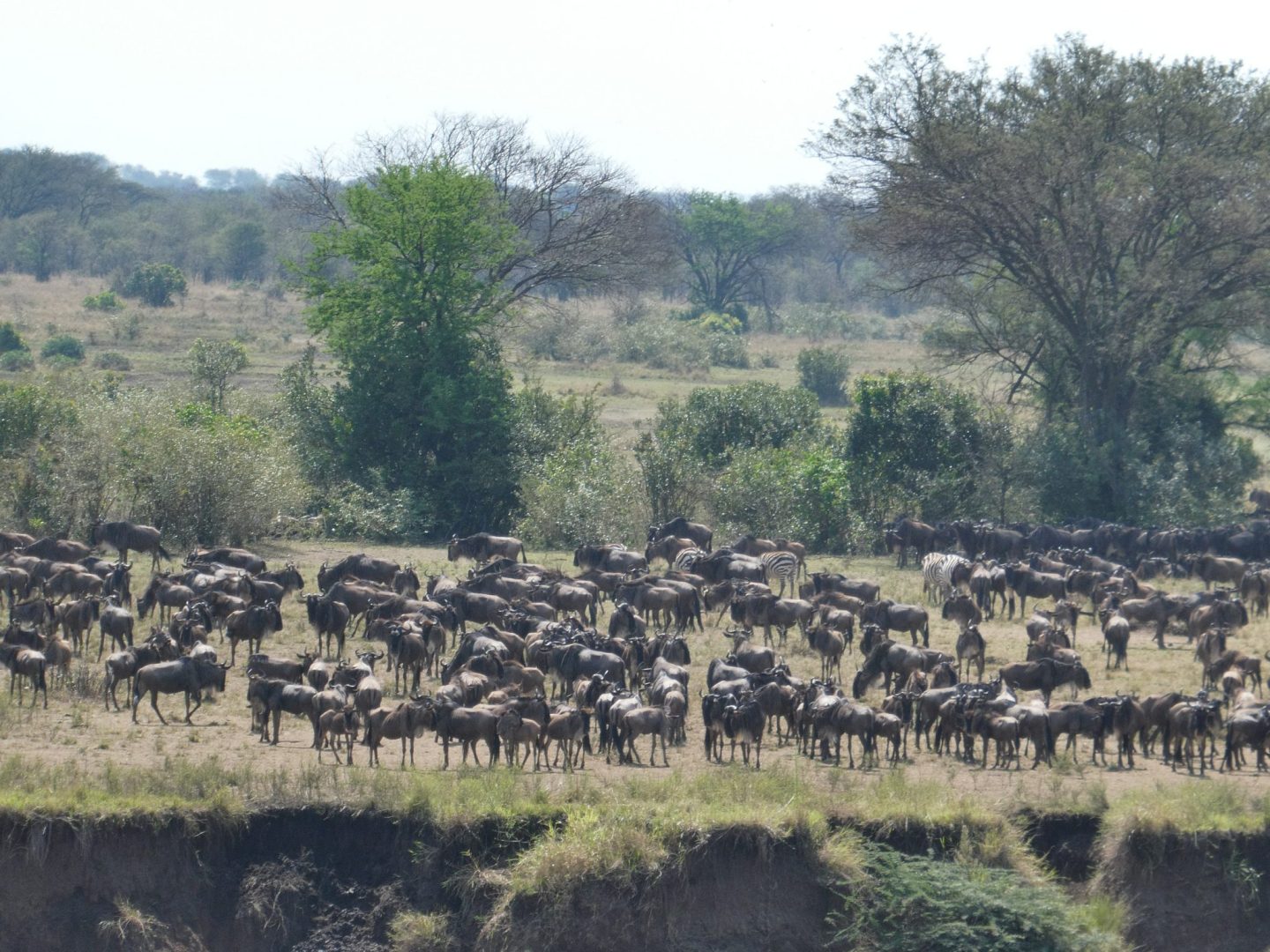
Over the course of the next hour or so, more and more herds streamed in and pressed together. The columns of wildebeest heading to the river join together in a density of up to 1,000 beasts per sq km, so distinctive and intense that as a mass they can be seen from space.
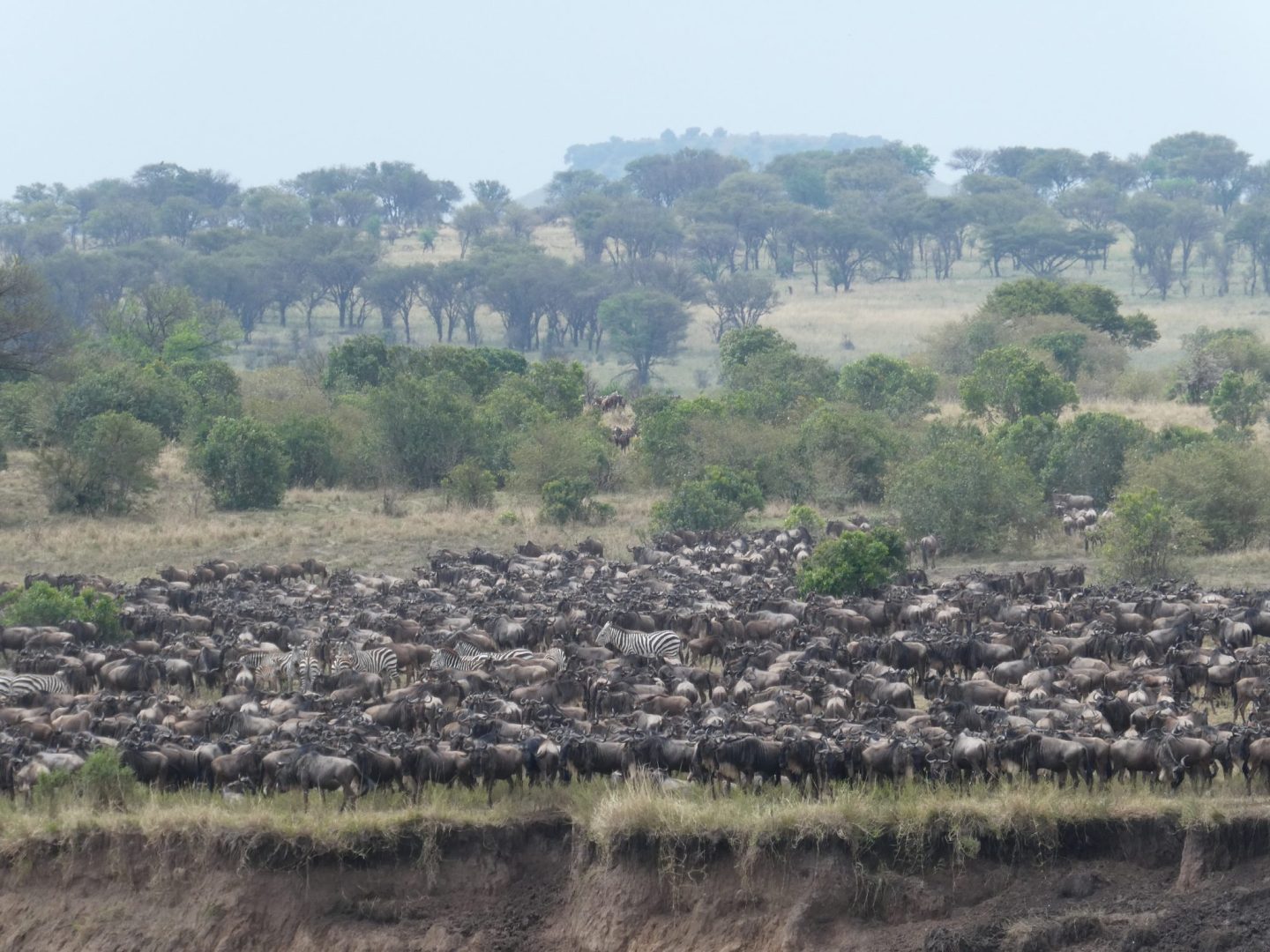

We waited. It was like a theatre show.
At one stage, two wildebeest who had already crossed inexplicably decided to go back.
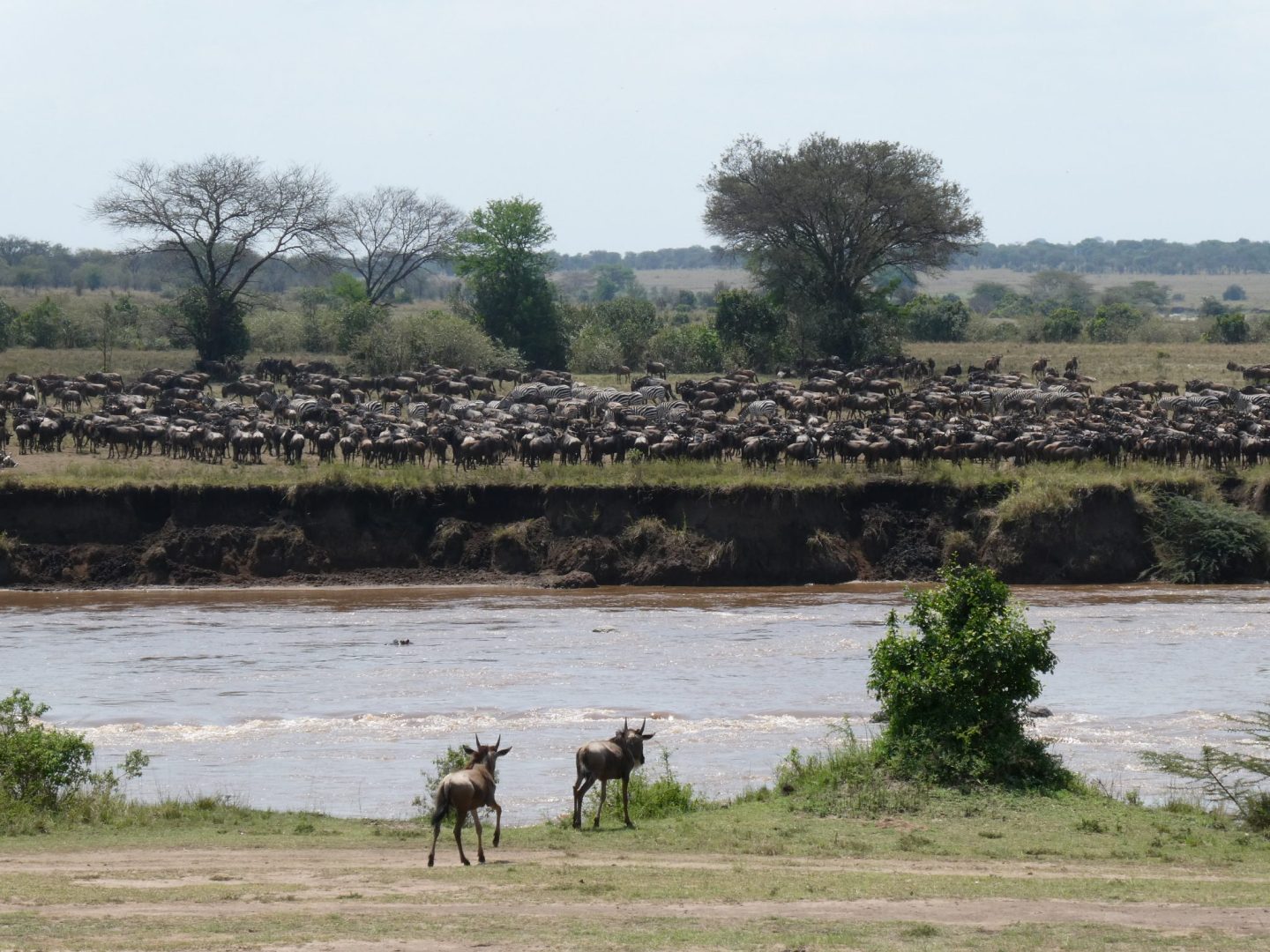
As we watched, they struggled against the current. Also looking on was a hippopotamus whose eyes and nostrils are just visible above the water in the top right corner of the next photo.
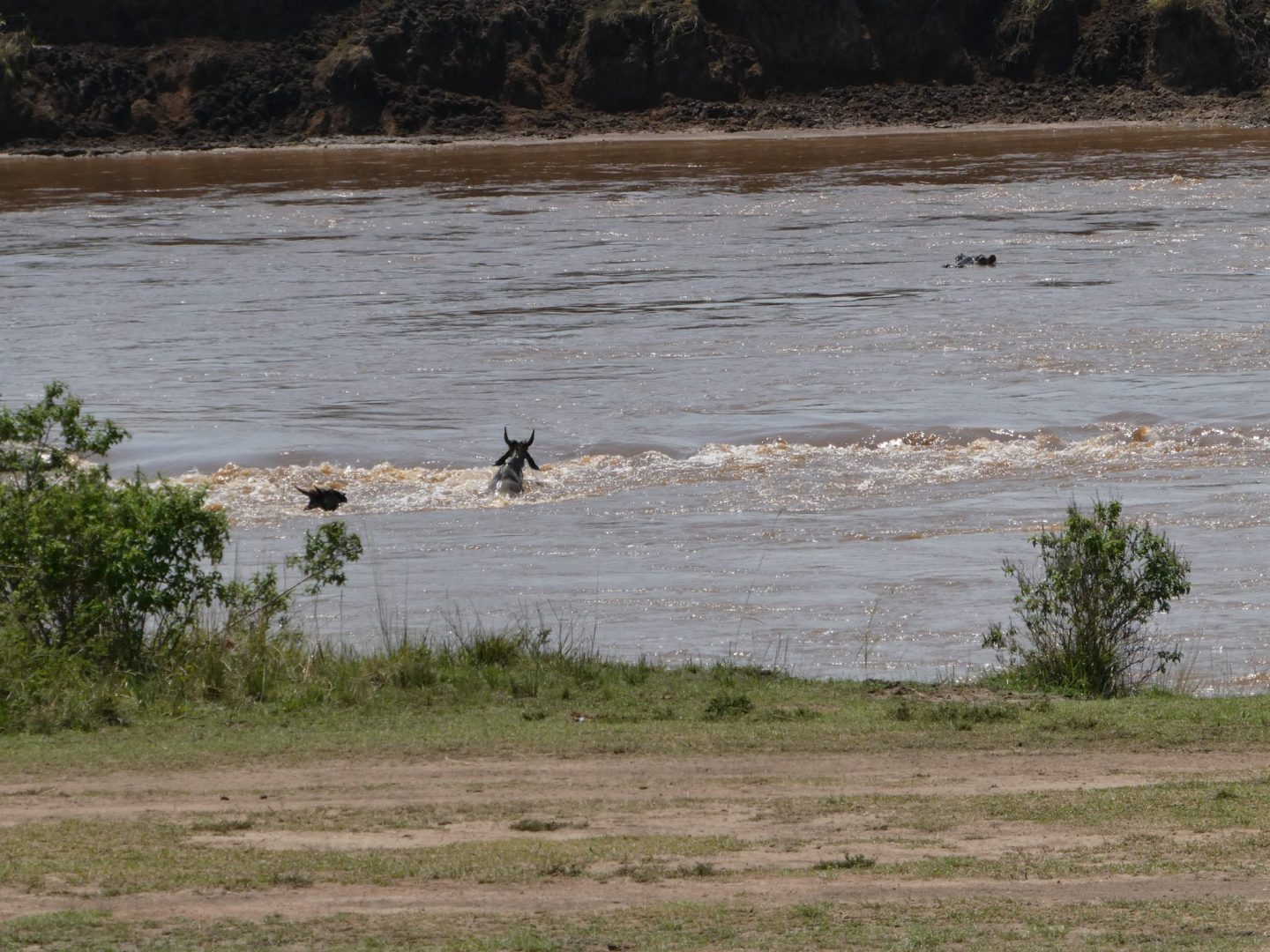
One made it across. The one behind was swept away.
Around 250,000 wildebeest perish in the course of each annual migration from predation by carnivores, thirst, hunger, exhaustion and drownings, with the highest death toll occurring during the crossings.
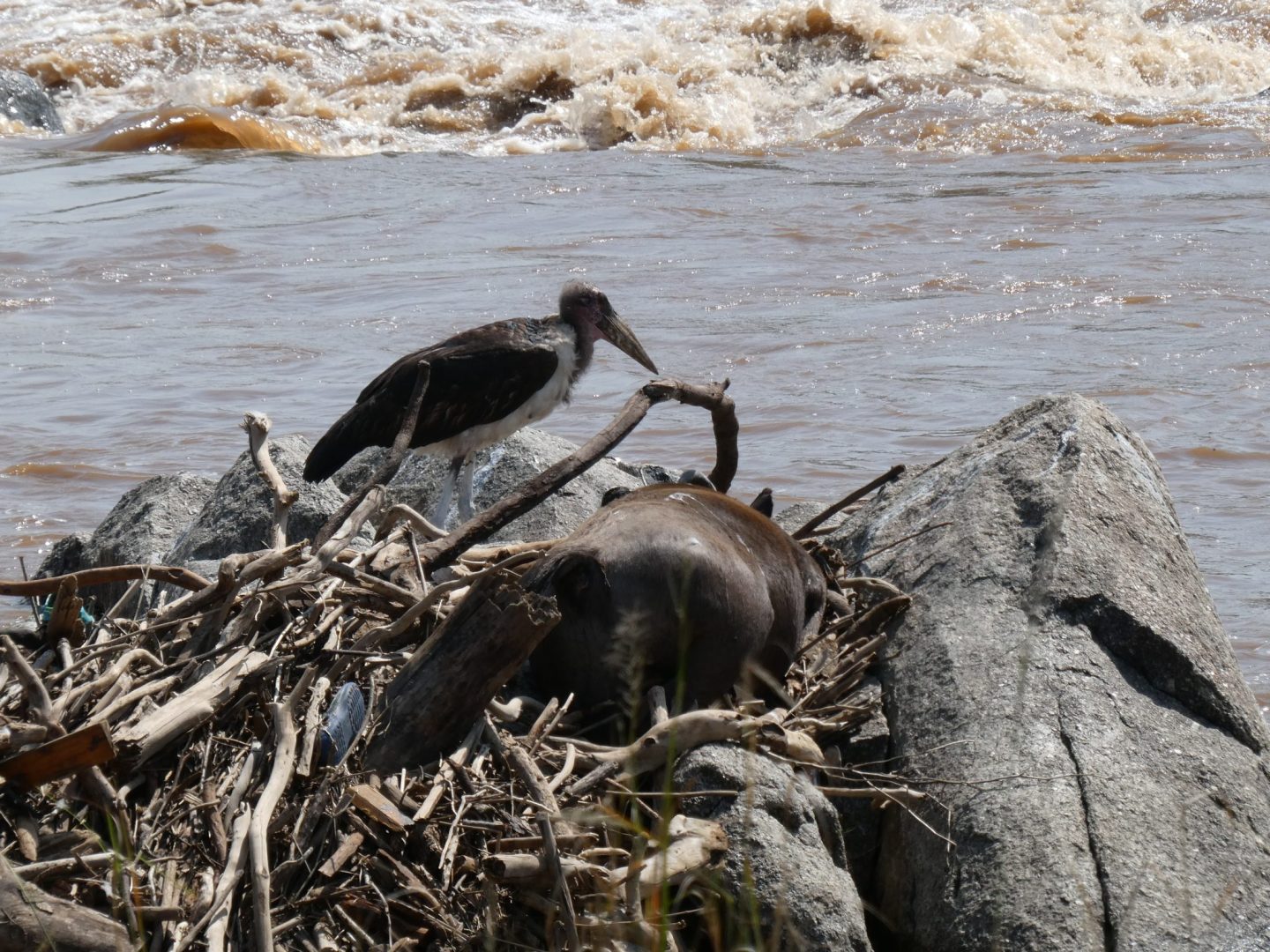
On a walk along the river with a park ranger earlier in the morning we saw the bloated bodies of wildebeest who’d drowned and been swept downstream in crossings on previous days.

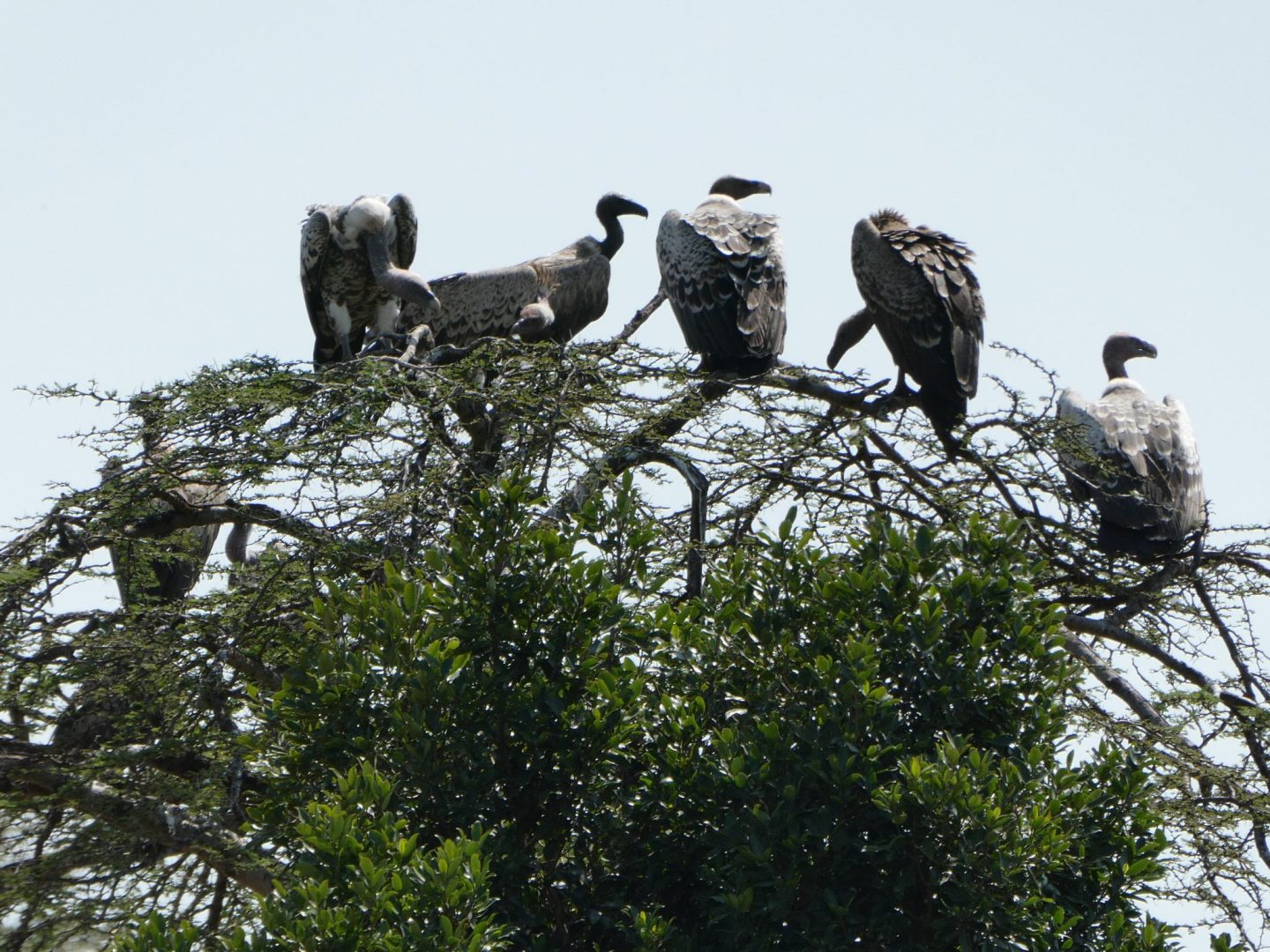
The bodies trapped in the river are an easy feed for vultures, especially since other scavengers such as hyenas who would normally compete for dead beasts won’t go swimming to find food.

The vultures congregate in trees and strut around on the ground, confident of a feast.

Another carrion feeder, the Marabou stork is also happy with the easy feed.
Drowning isn’t the only peril faced by the wildebeest. Crocodiles patrol the river, lurking beneath the surface, waiting for a crossing to begin. They are well capable of dragging a wildebeest under, and they can afford to be patient. A good sized wildebeest will sustain a crocodile for up to three months. This one was sunning himself on the bank.

Another looked like it had already had a good feed.

As hours passed, the herd of wildebeest grew and grew. But then the ones at the back started streaming away and the rest followed, disappearing out of sight. Bakari joked that they’d decided to return to Kenya, about 10km away. But don’t worry, he said, they will be back. And they were. Several times, for no apparent reason, the herd moved back toward Kenya or streamed downriver to another potential crossing point, but always returned, gaining numbers each time.
About 300,000 zebra follow the same migration route, intermingling with the wildebeest at the river. At one point it seemed the zebras got tired of waiting for the wildebeest to get their act together. A group headed down to the riverbank as if to say “Look, here’s how it’s done”.

But the wildebeest weren’t taking the hint. They refused to budge. And the zebras returned to the upper bank.

We were entertained by a baby hippo grazing on our side of the river, unperturbed by the watching humans. Strutting back and forth, maybe he thought he was the star attraction!

Around 4pm it looked like the wildebeest were ready. Some started heading down to the waterline.

But a huge hippo heaved up out of the water. This spooked the wildebeest and they scrambled back up the bank.
Around 5pm, for no apparent reason, the whole herd streamed away again.

Within 30 minutes the riverbank was bare. Not a single wildebeest in sight. Bakari said that even if they returned, they would not cross today. They wouldn’t be back before dusk, and they won’t cross in the dark. He suggested we call it quits and return at first light to see what was happening.
Next morning, all was quiet. A troop of baboons was lined up like cinema patrons waiting for a movie to begin.
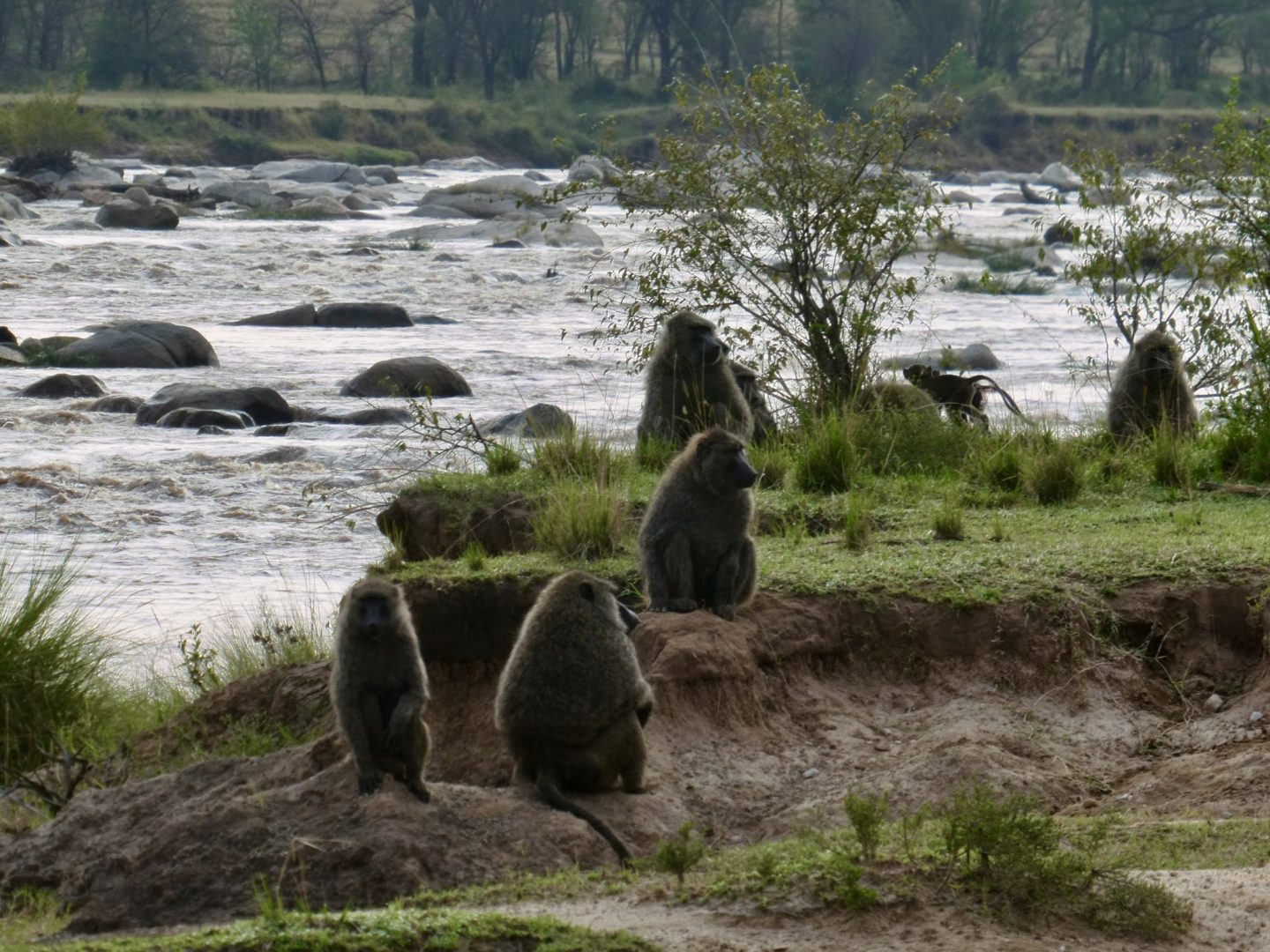
But no wildebeest. Bakari was sure they had not crossed, and said they had probably gone back to grazing in Kenya. He said we should check out other crossing sites. Far downriver we found herds coming together.
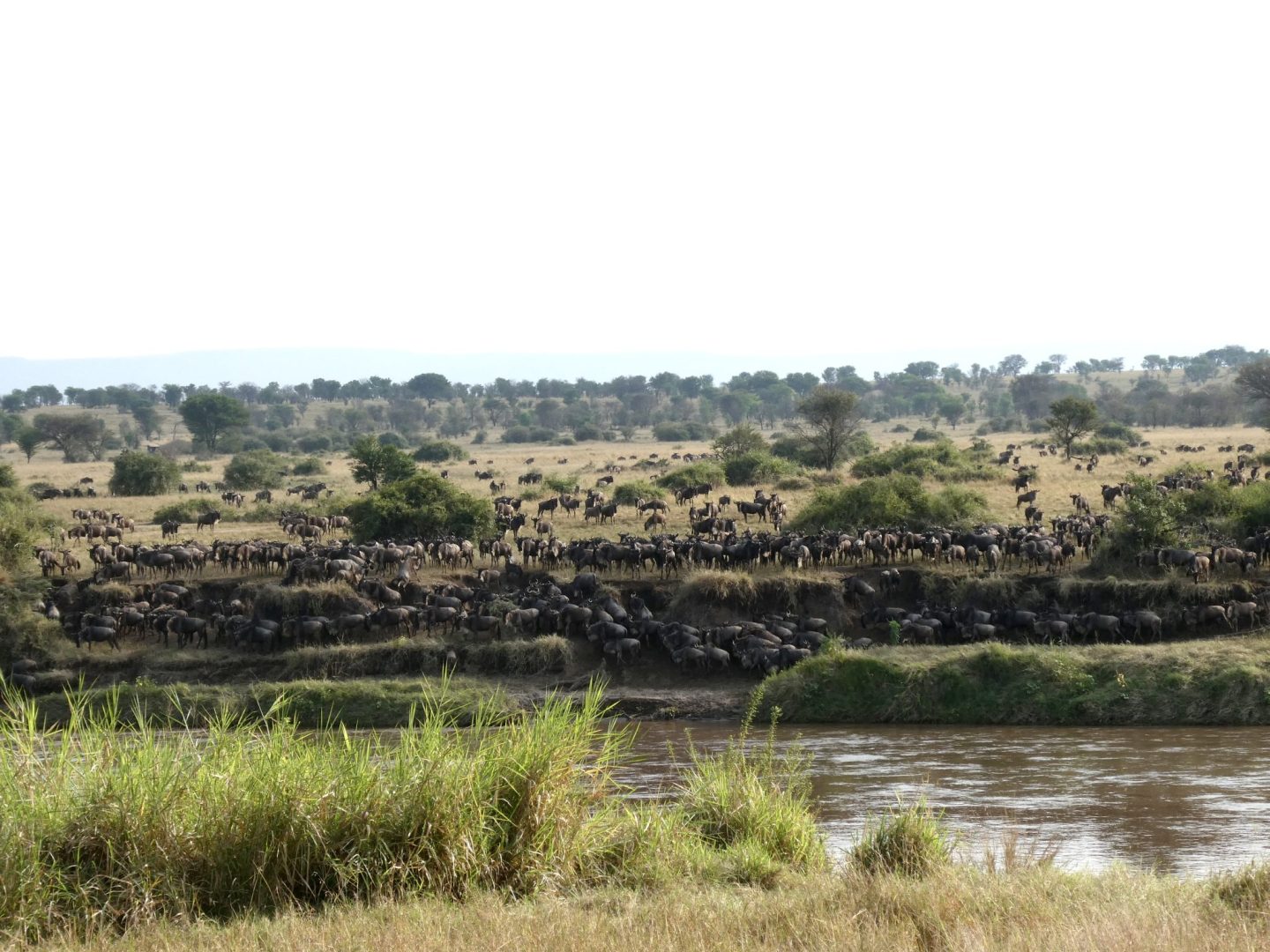
The waiting game resumed. A conga line of game drive vehicles lined up, everyone anticipating but resigned to a long wait. The spectacle of the combined herd circling and re-grouping continued.
Crossing might seem suicidal, and we can certainly understand the animals’ hesitation given the risks. But the wildebeest, many of the females already pregnant, must reach the nutrient-rich grasses of the southern Serengeti to sustain their young, due to be born in a few months time.
Suddenly, it was all systems go. With no apparent signal, wildebeests started leaping into the water a little upriver. There was a mad scramble as 4x4s repositioned for better views. Our hero, Bakari, jagged us a brilliant position and we watched in awe.
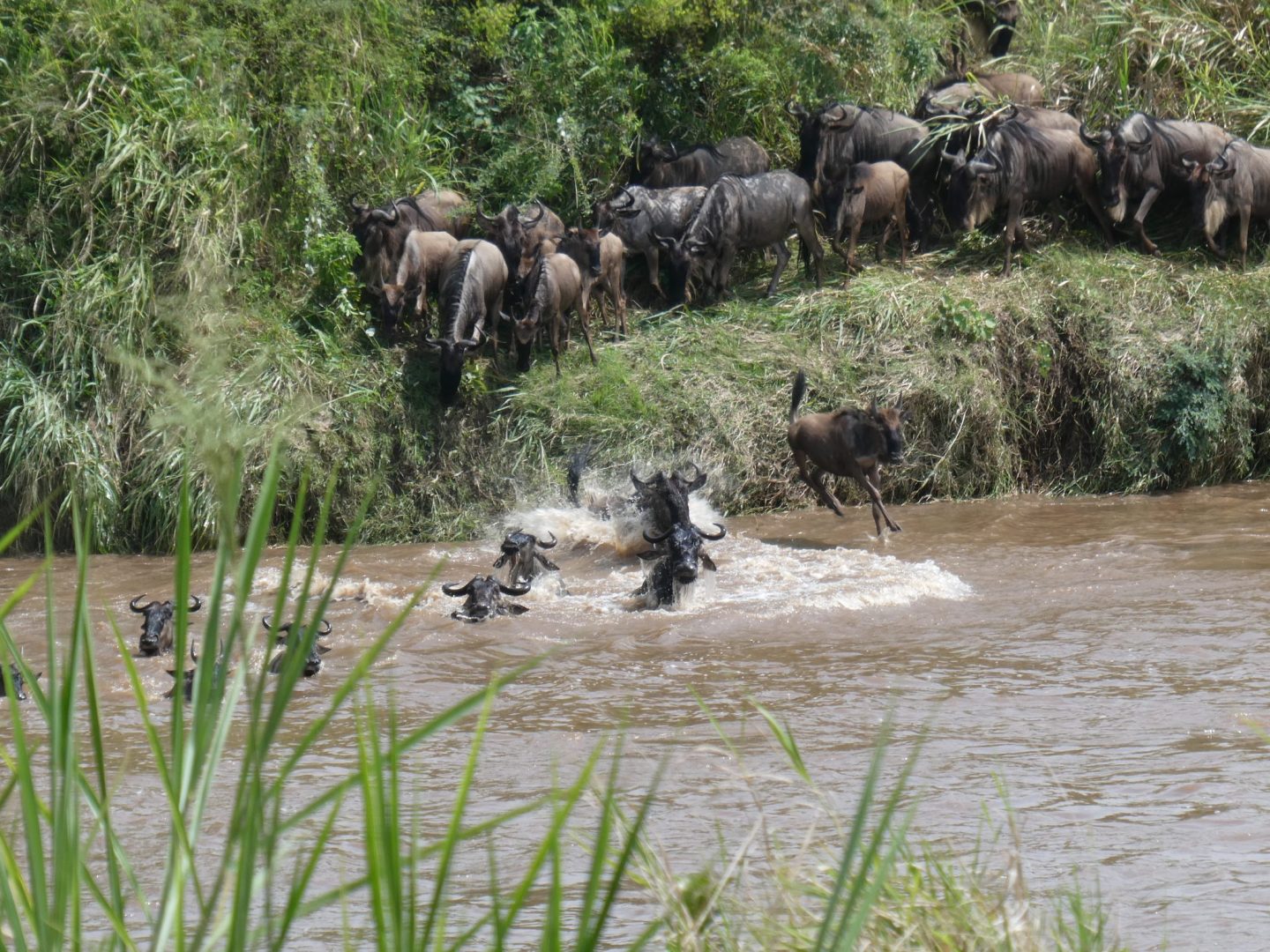

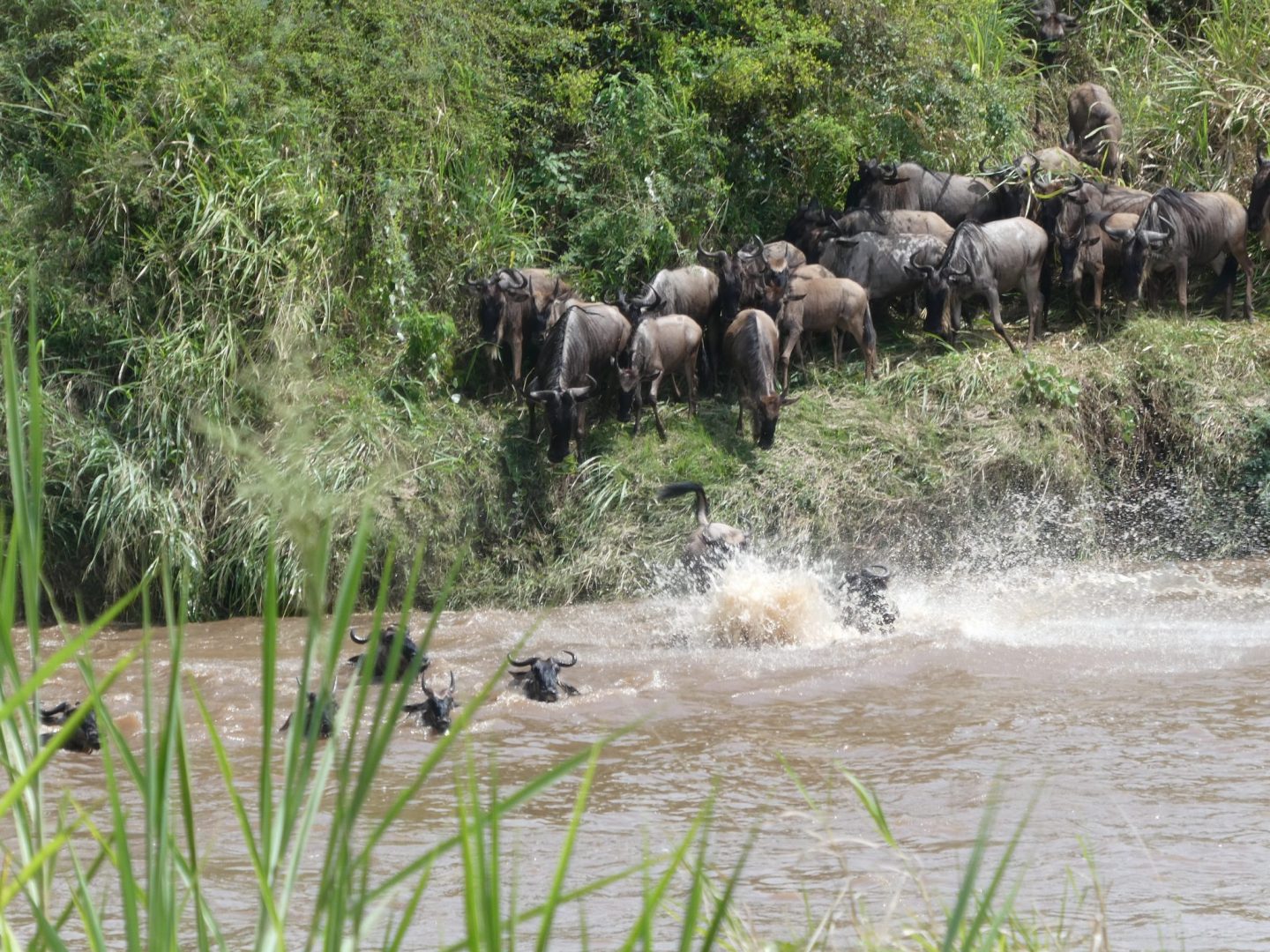

Many made it. Some did not, swept away in the strong current.
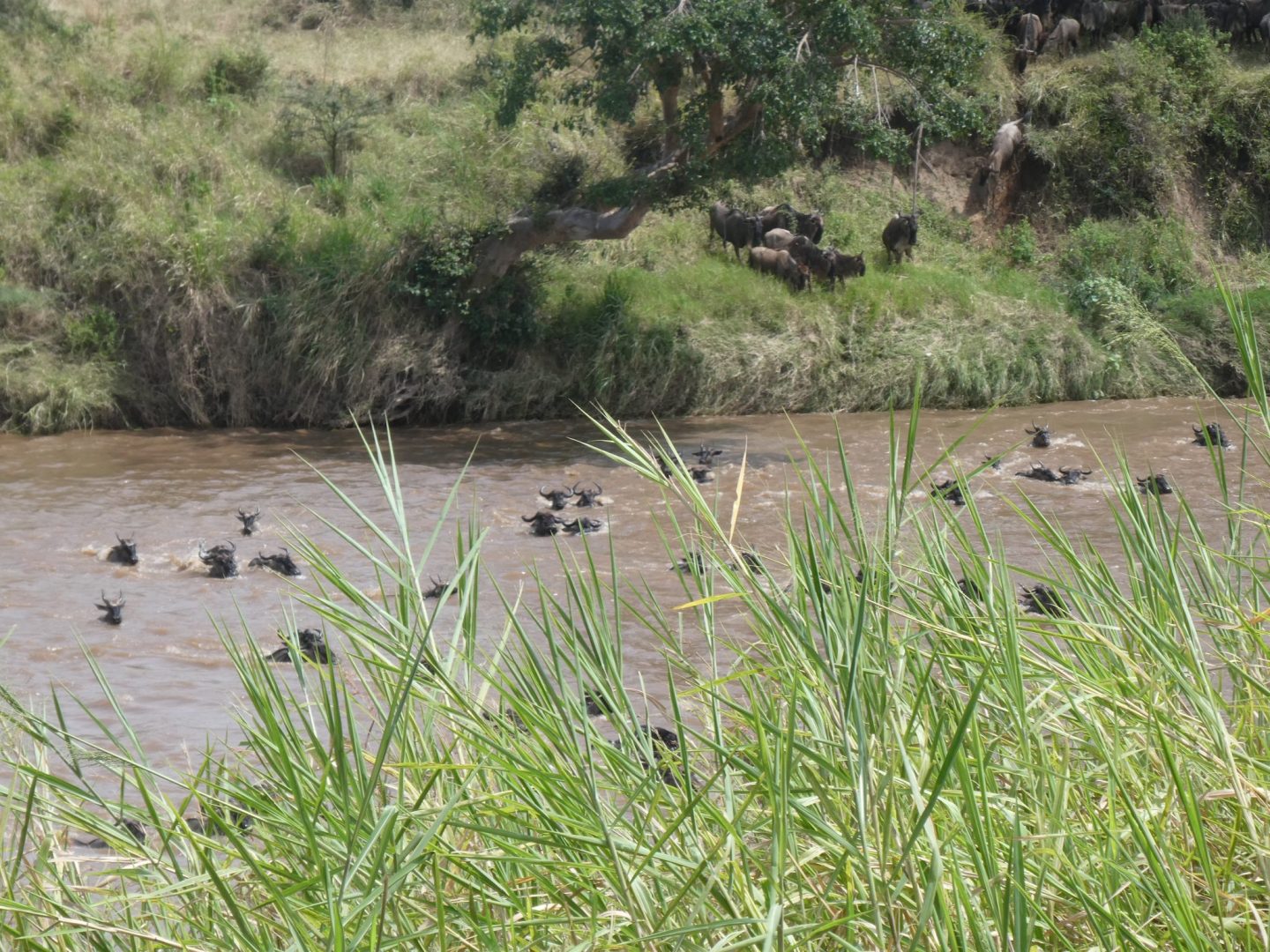 Some, realising they would not make it, managed to scramble back up the bank further downstream, surviving to make another attempt after resting.

Wet but successful, a parade of wildebeests filed past us, no doubt relieved to have reached this side.
For reasons known only to wildebeest, abruptly the crossing stopped and those remaining evaporated away, certain to reconvene somewhere else or some time soon, but content to bide their time for now.
We checked the clock. 11.30am exactly. A 24 hour spectacle.
As we drove back to our digs, we could see the successful ones joining the herds who’d already crossed. Ready to head to rich pastures, safe at least for a while.
 What an incredible experience! Nature at its best.

Fantastic – I was a nervous wreck reading this post worried you wouldn’t see a crossing – it is a wonder of the world 🌎 & you ‘ve experienced it amazing x
What a spectacular and so good to have had to wait through the build ups and false alarms. Makes it more special when you can’t just turn up and know it will happen 😀
What an experience! Thanks for sharing some amazing photos and for a thrilling story.
After reading so many of your posts , from Nuclear bunkers to the Serengeti , this one is unique . Felt like we were there with you . Excellent I’m sure it was truly memorable.
Author
It was indeed quite unlike anything we’ve ever seen before.