Ngorongoro Crater is the world’s largest intact, unfilled volcanic caldera, formed following the explosion of a massive volcano two to three million years ago.
Known as ‘Africa’s Garden of Eden’, the 600 metre high walls of the crater plunge steeply down to a 260 sq km bowl, creating a contained ecosystem hosting an incredible concentration of wildlife.
About 25,000 large mammals live in the crater and game driving here is a feast for the eyes. Immediately after reaching the crater floor we saw herds of eland.

And Grant’s gazelles intermingling with the smaller, daintier Thompson’s gazelles.

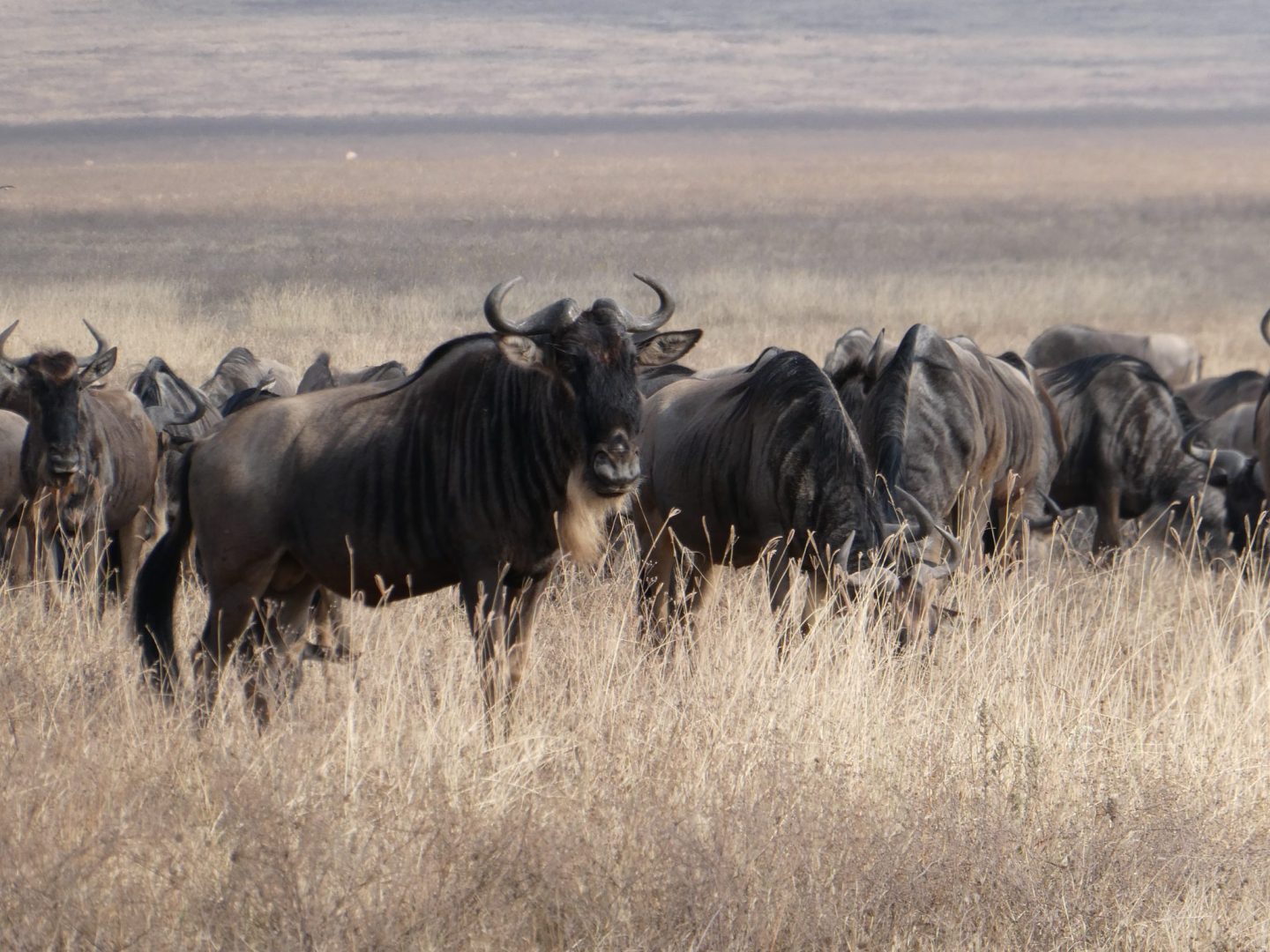
There are estimated to be around 7,000 wildebeest in the crater.
And more than 4,000 zebras. Just like horses, they love rolling in the dust.
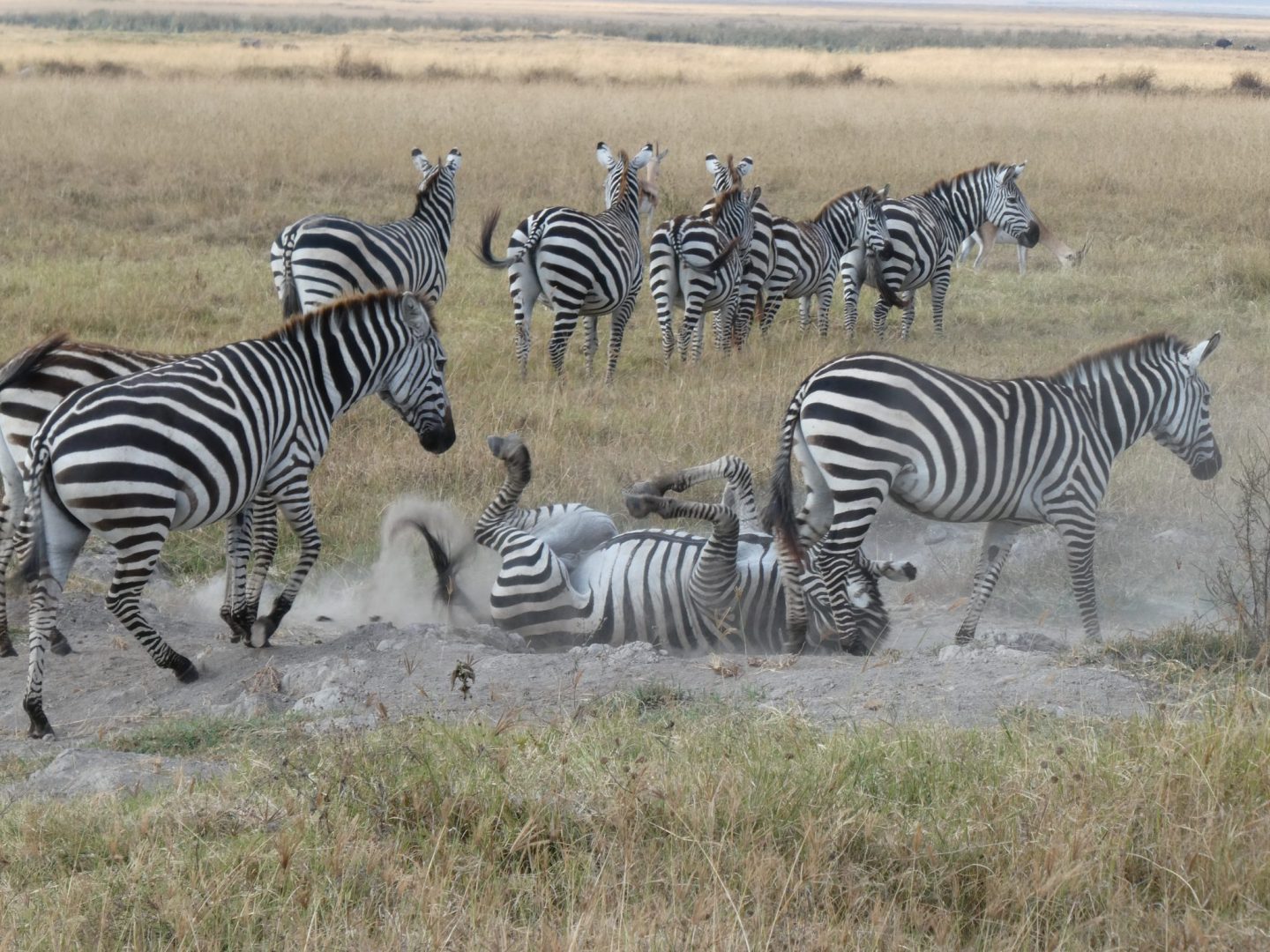
Herds of wildebeest and zebras hang out together for protection. Zebras have good eyesight and wildebeest have a great sense of smell. Sticking together doubles their chances of detecting predators.

They’re worried about the lions, but the ones we saw were more interested in romance than hunting. The male lion selects a female and the pair seperate from the pride and find a quiet spot for what our guide described as their honeymoon.
They lie contentedly, the male staring into the middle distance, brooding and mysterious. For lovers of English classics, he’s more Heathcliffe than Mr Darcy.
 When he thinks he’s played hard to get for long enough, he makes his move. First he whispers sweet nothings in her ear.
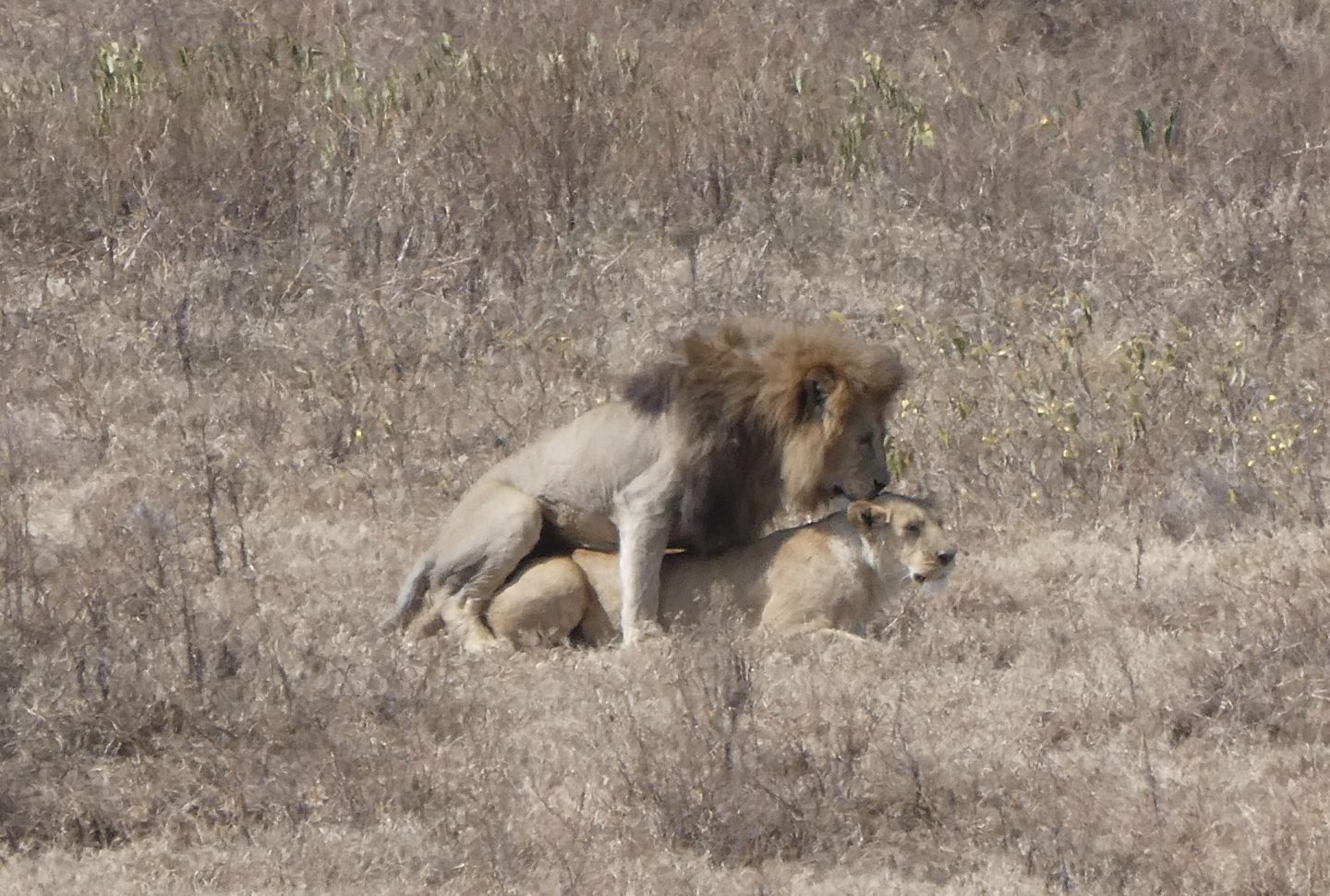 Then a love bite to the neck.
 The deed is done discreetly. It takes mere seconds, literally.
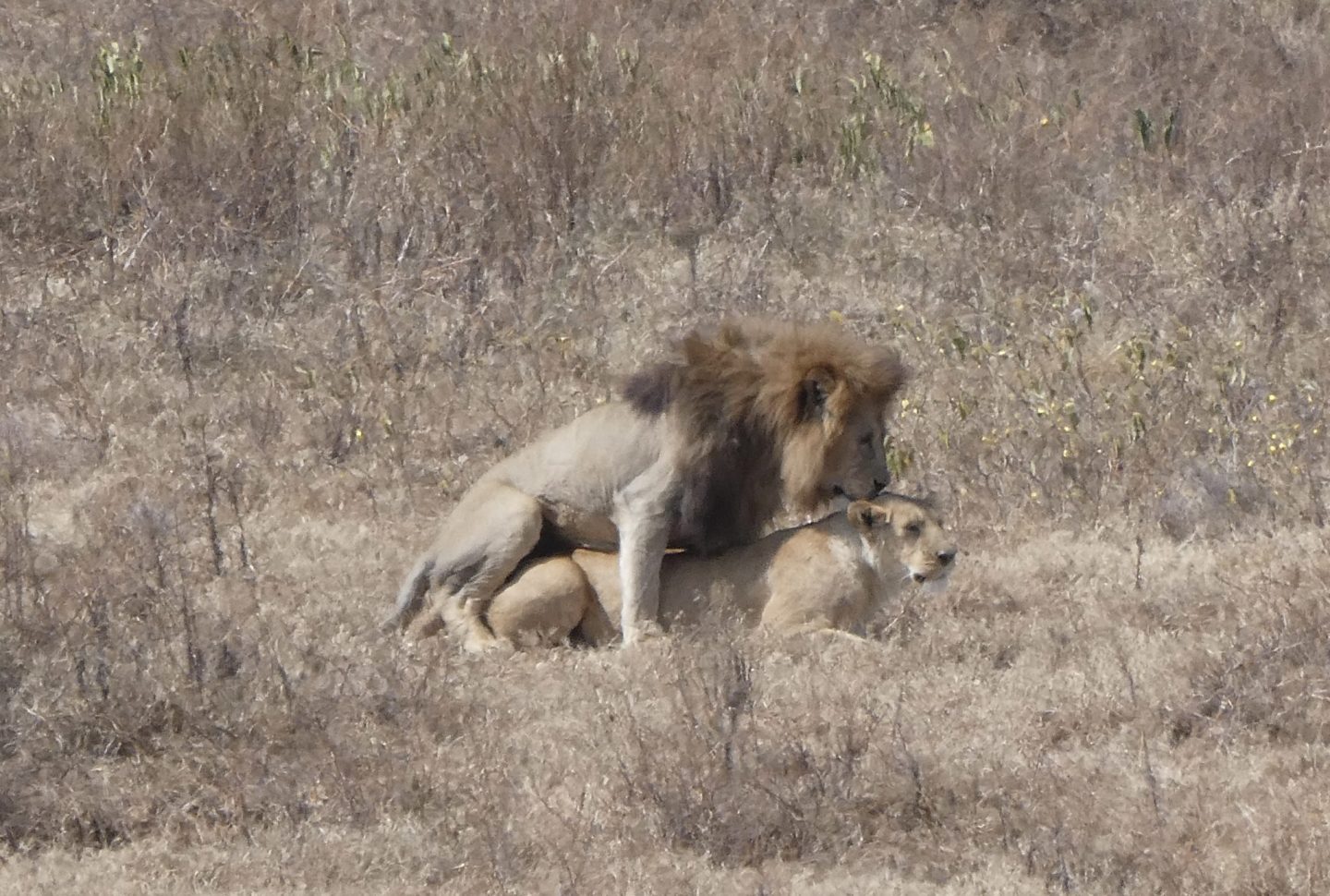 When it’s over, the female rolls unceremoniously onto her back and falls asleep.

The whole process is over in under a minute. But will be repeated with impressive frequency for about four days before they re-join the pride and he chooses another female. And they say romance is dead!
This hyena, on the other hand, had only food on his mind. We followed him as he headed determinedly across the grassland.
 He’d seen vultures and knew it meant flesh. But he was late to the party and most of the food was gone.
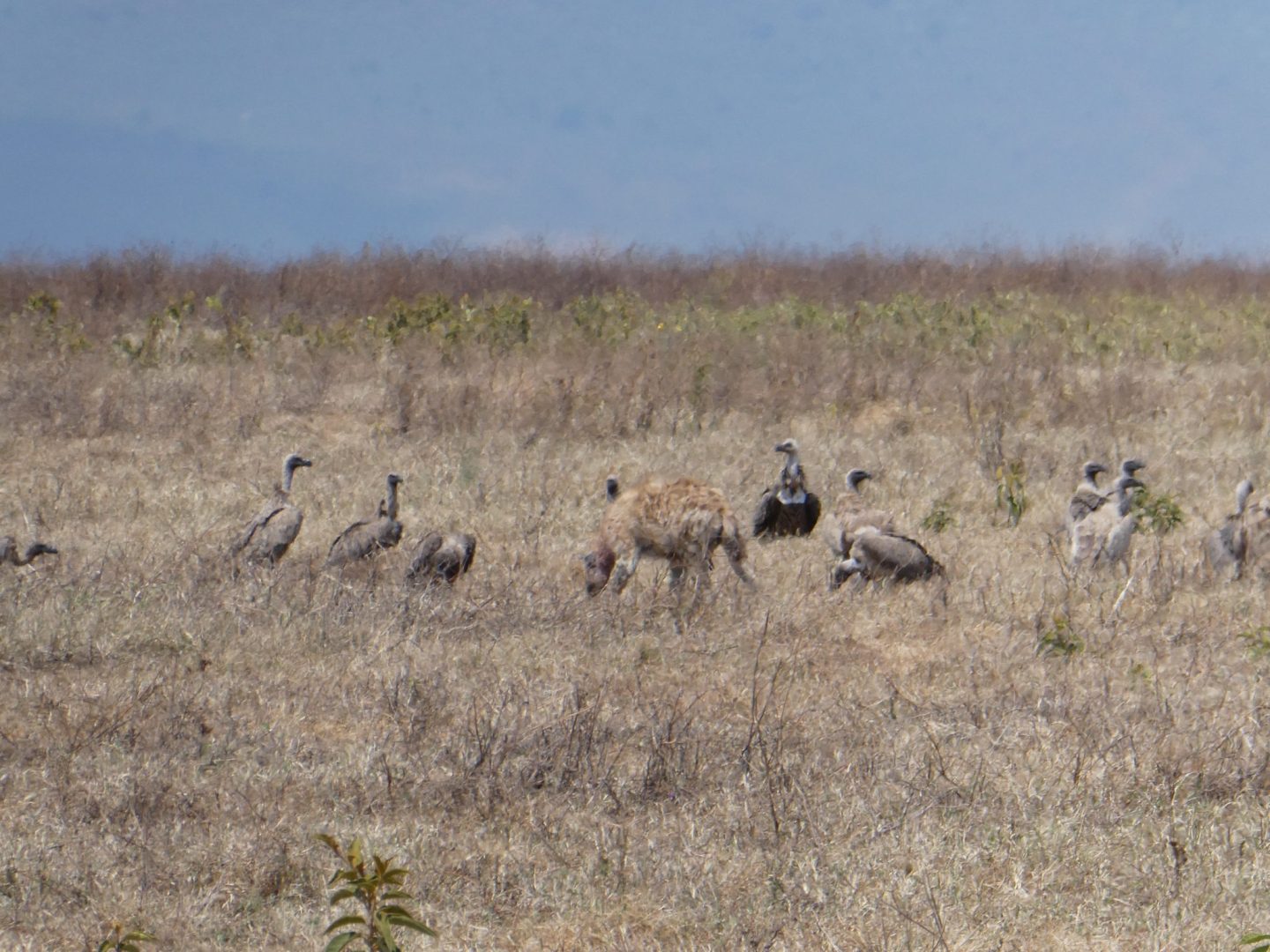 He sniffed around for a while but was out of luck. Then somehow he sensed another opportunity and took off.

We followed. He reached another hyena who’d hit the jackpot and was busy crunching on the skull of a freshly dead wildebeest. Hyena eat the bones as well as the flesh and we were so close we could hear the wildebeest’s skull bones cracking as the hyena tucked into his feast.
 The one we’d been following hung back. He seemed to be saying “Come on, mate. Give us a bit”, but wasn’t prepared to get in and fight for it.
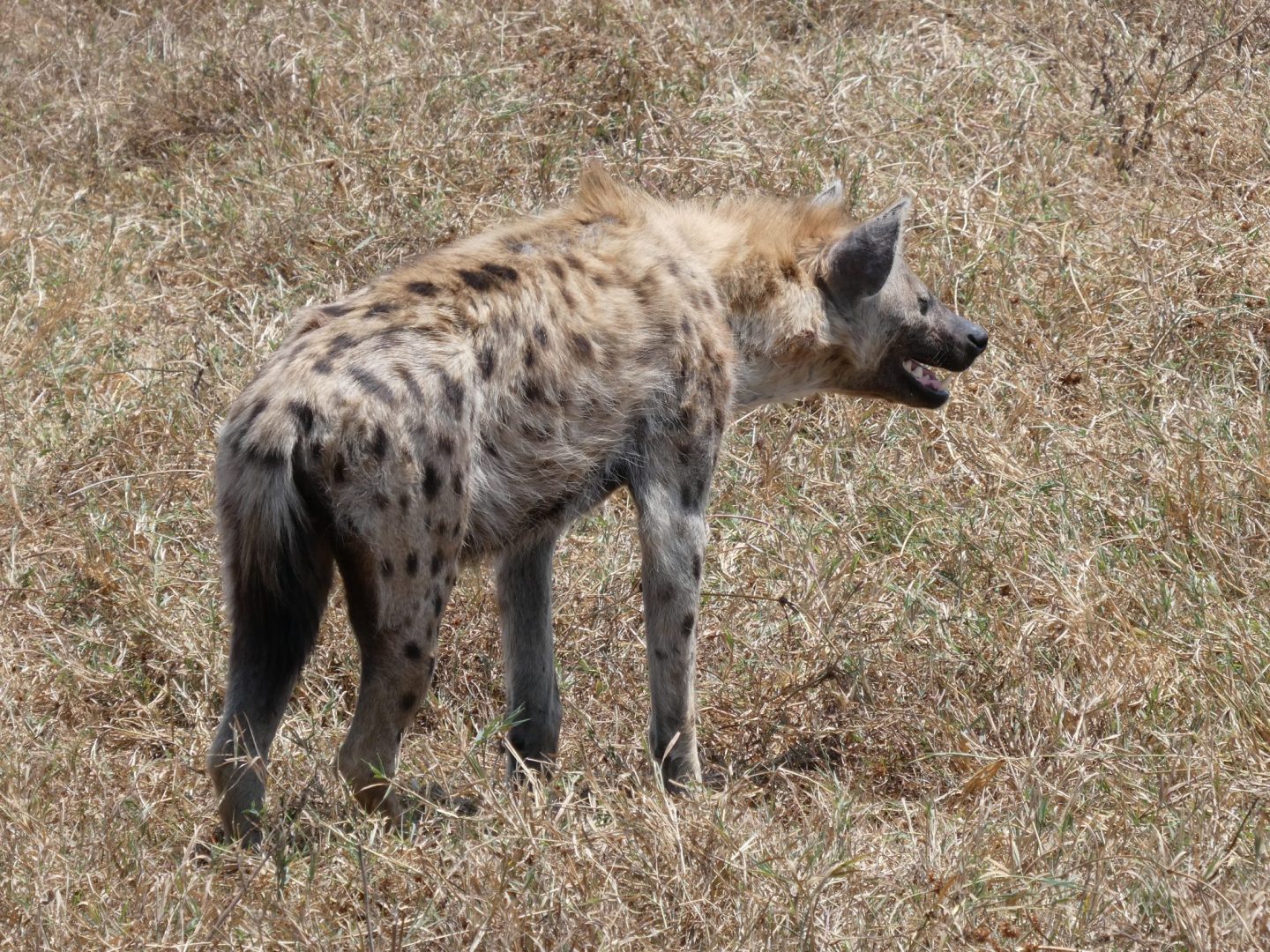
But possession is everything and his mate was in no mood to share. “Bugger off” would be putting it politely.
 “Selfish bastard. I’m going to sulk now”.

But sulking did no good. And he lolloped away, still hungry.
As well as vultures, we saw many Kori bustards. The world’s heaviest flying bird can weigh up to 19kg. That’s a lot to get airborne and they generally stay on the ground. If alarmed they will run first, but if desperate will issue a sound like a loud growling bark and take to flight from a running start.
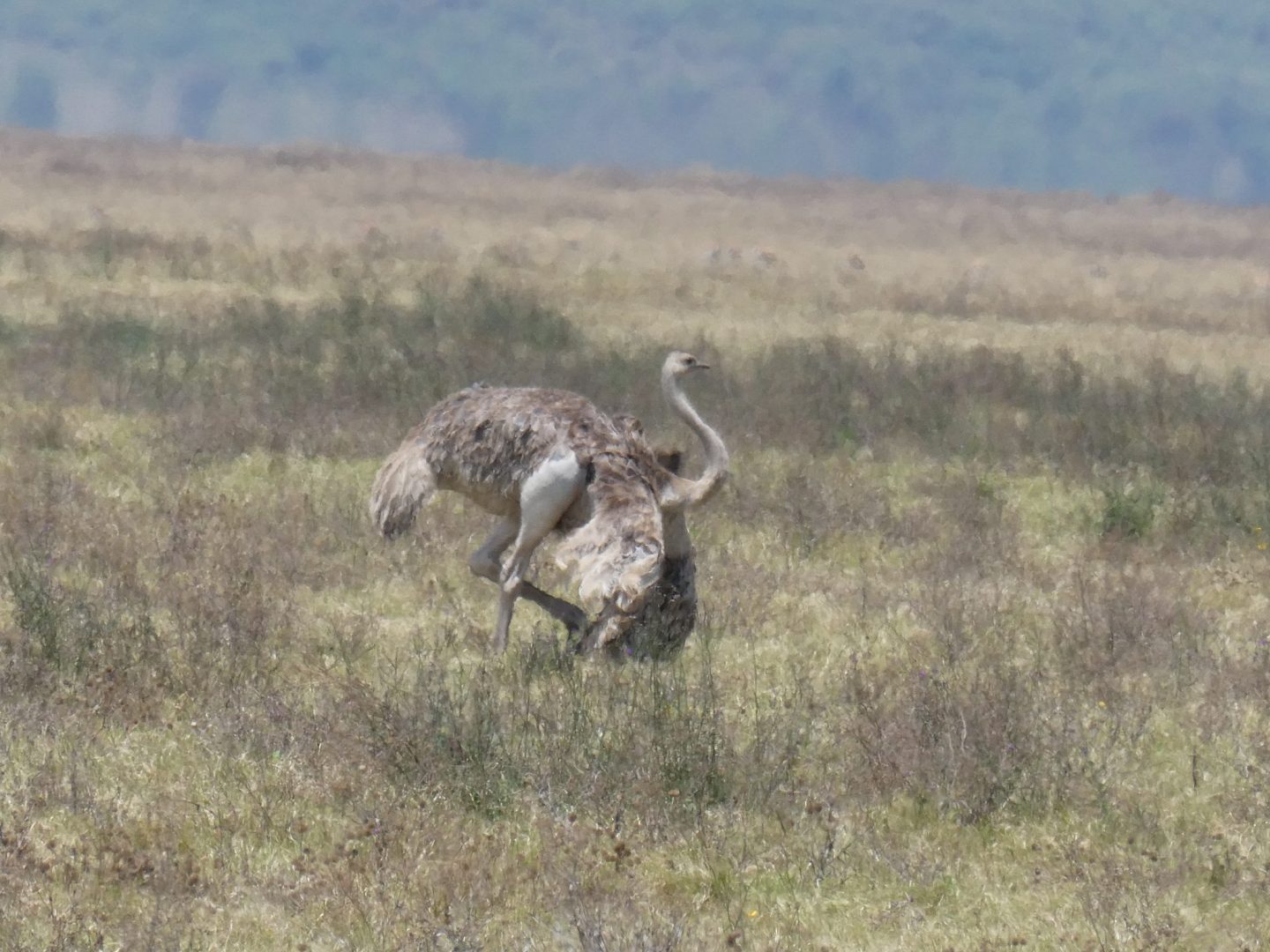
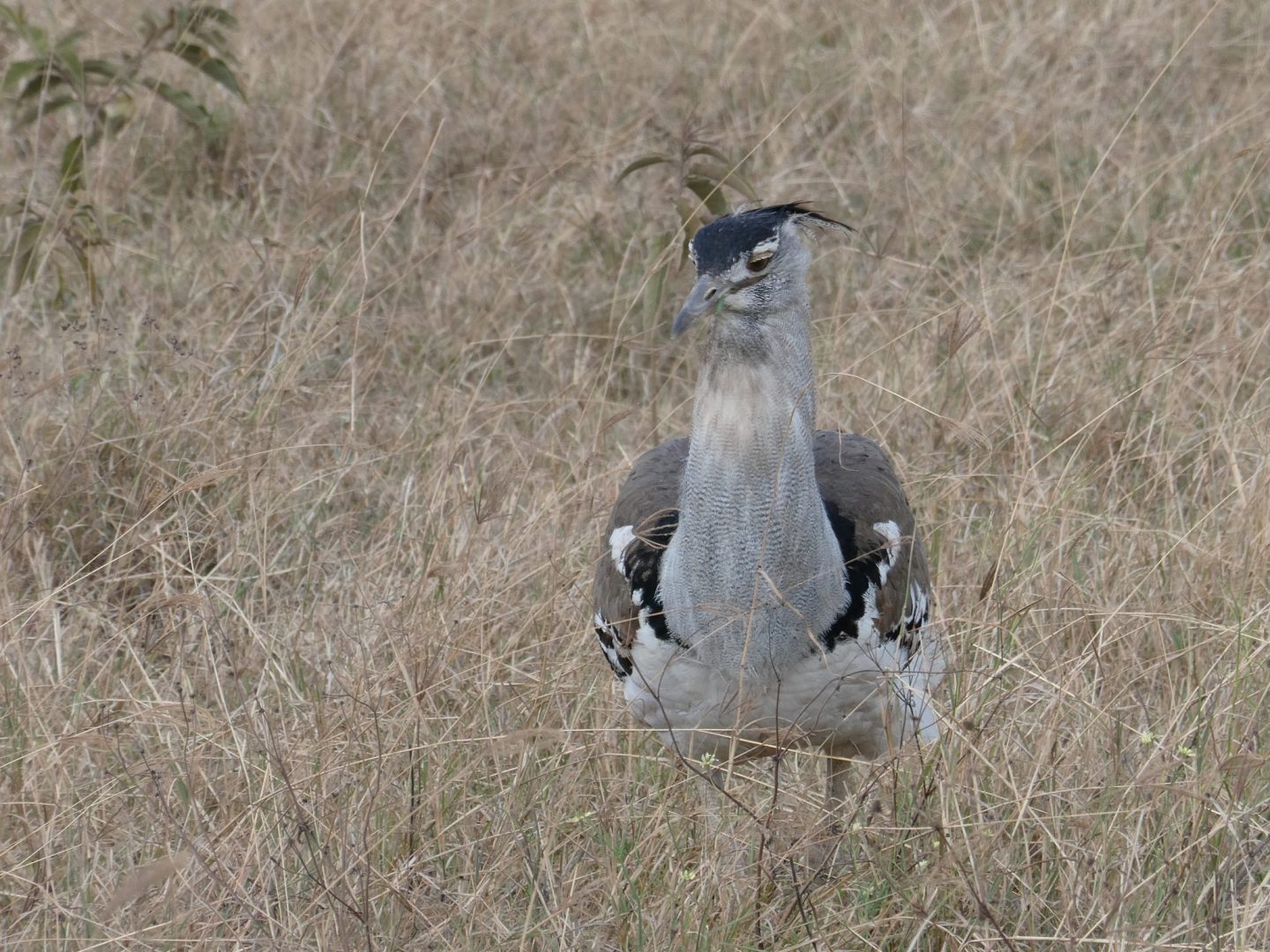 They share the ground with ostriches, the world’s heaviest, largest, fastest-running bird. They cannot fly but can run up to 70kph.
Fun fact: their eye is bigger than their brain. They have the largest eye of any land vertebrate, about 5cm in diameter, while their brain is the size of a walnut. So, oversized eye or undersized brain? You decide.
Contrary to the popular saying, they don’t bury their head in the sand when they sense danger. This myth has been around since ancient Roman times, probably originating from a misunderstanding. Unlike many birds, ostriches don’t build nests. Instead they dig a hole, bury their eggs and then use their beak to periodically rotate the eggs during incubation. It’s likely that long ago people thought the ostrich was hiding her head, but that’s not so.
When not fussing with their eggs, they seem to delight in racing across the grasslands.

Another handsome bird is the grey crowned crane, which stands an impressive one metre tall and has a delightful crown of stiff golden feathers. It’s the national bird of Uganda and they are said to symbolise wealth and longevity.

Another animal with a fun hairstyle is the warthog. And the Cape Buffaloes horn look like a bad wig.


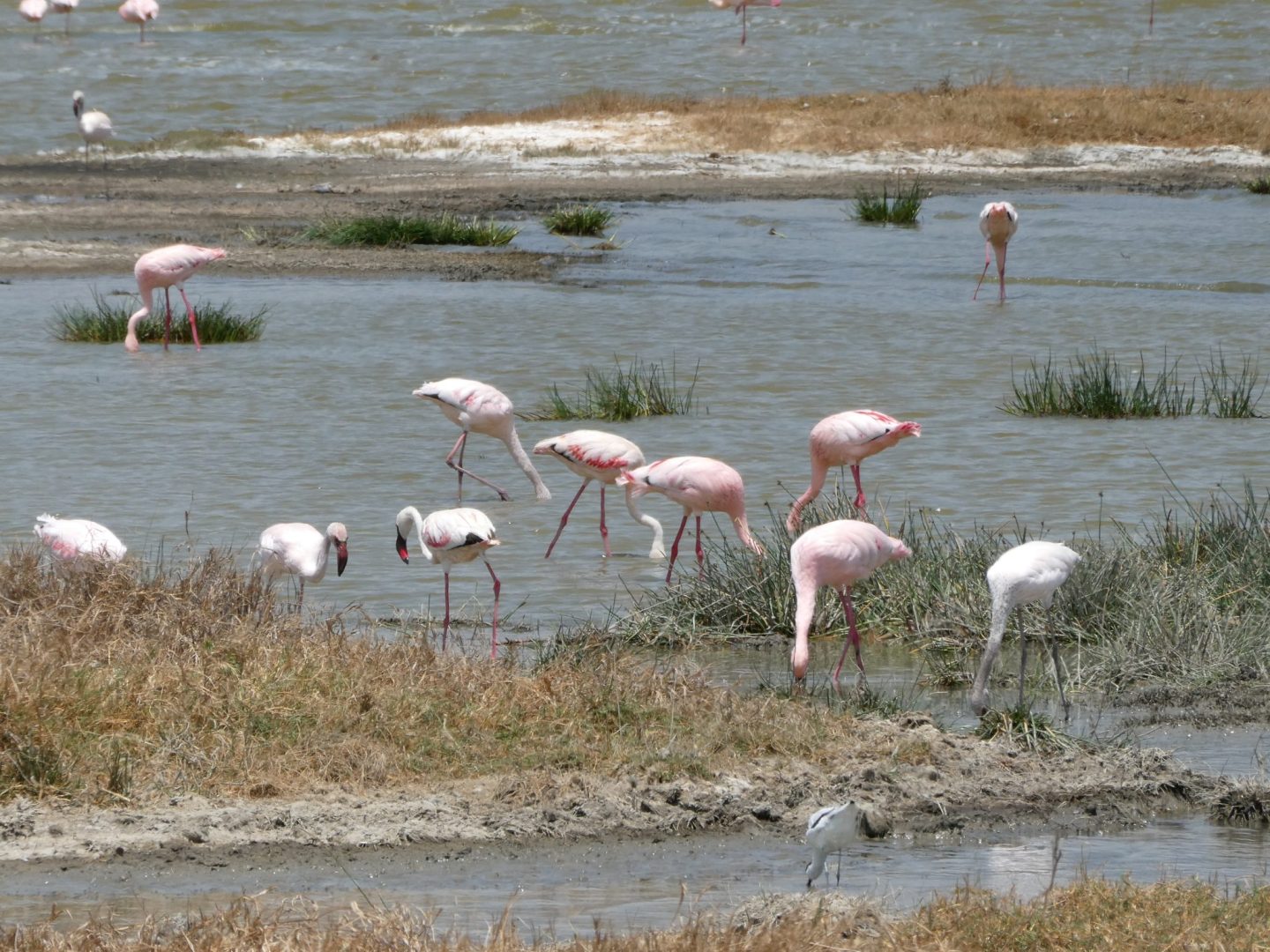
In the heart of the crater is Lake Magadi, a shallow alkaline lake perfect for flamingos.
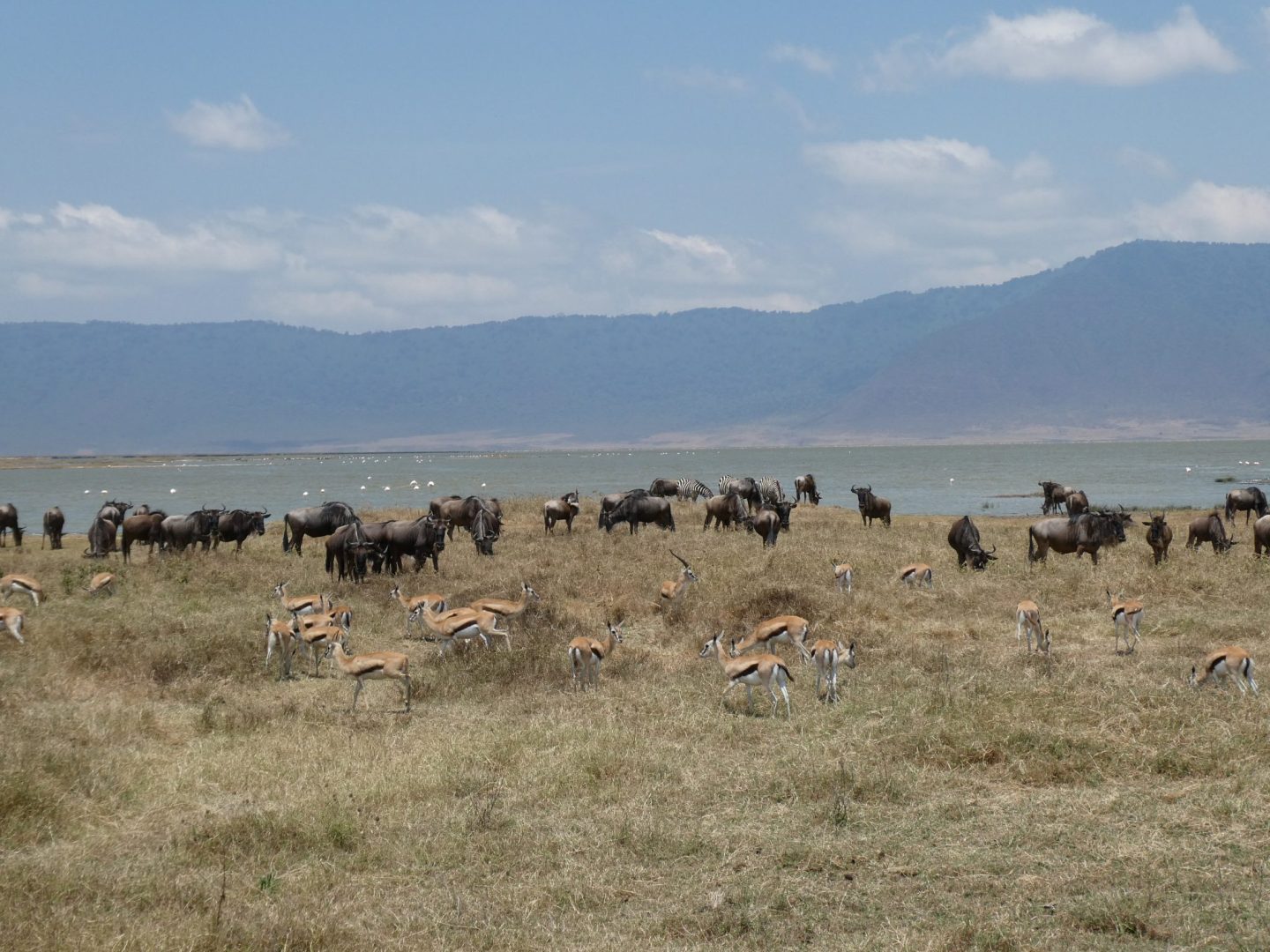
 Wildebeest graze on the shore, along with zebras and Thompson’s gazelles.

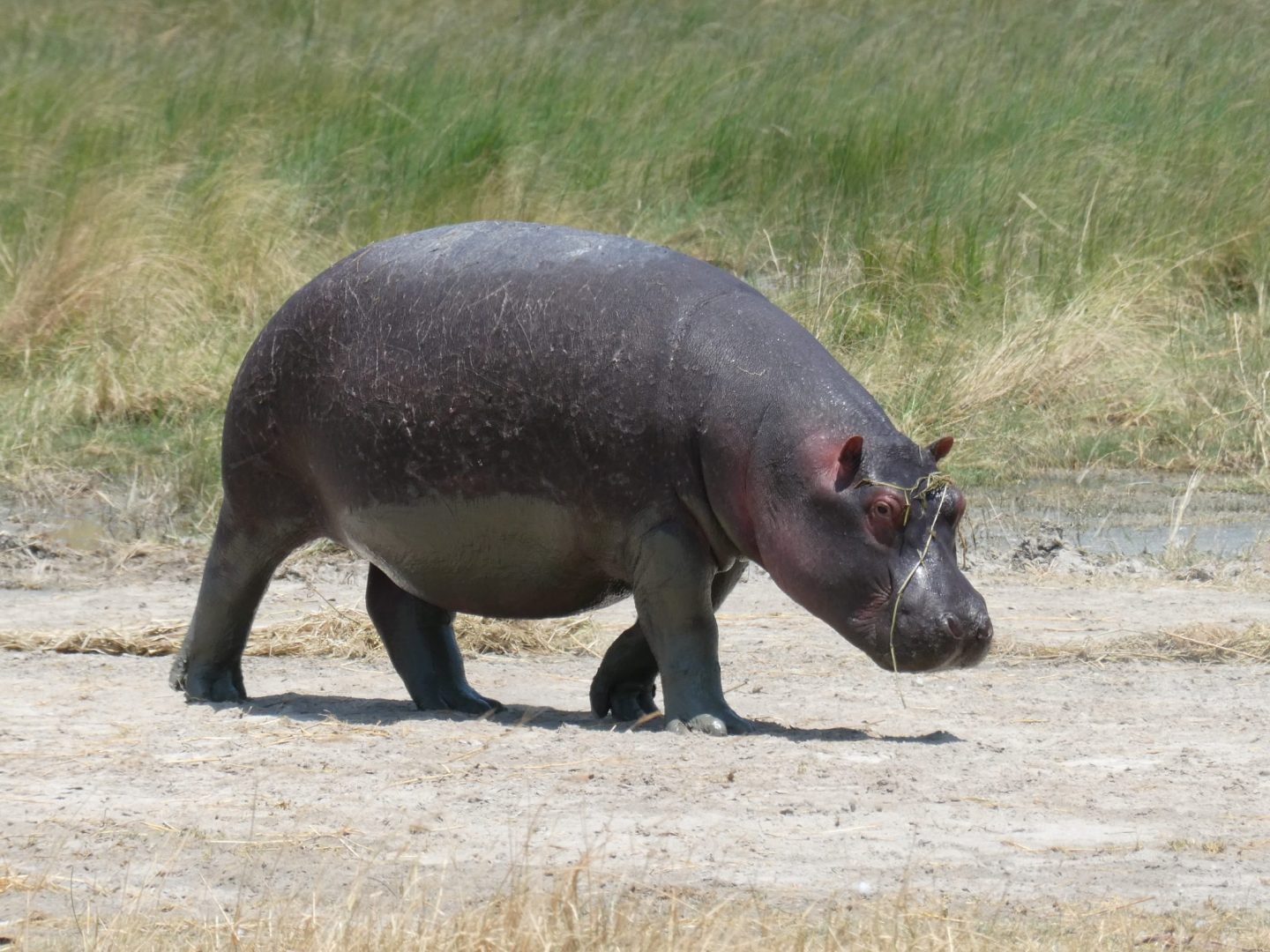
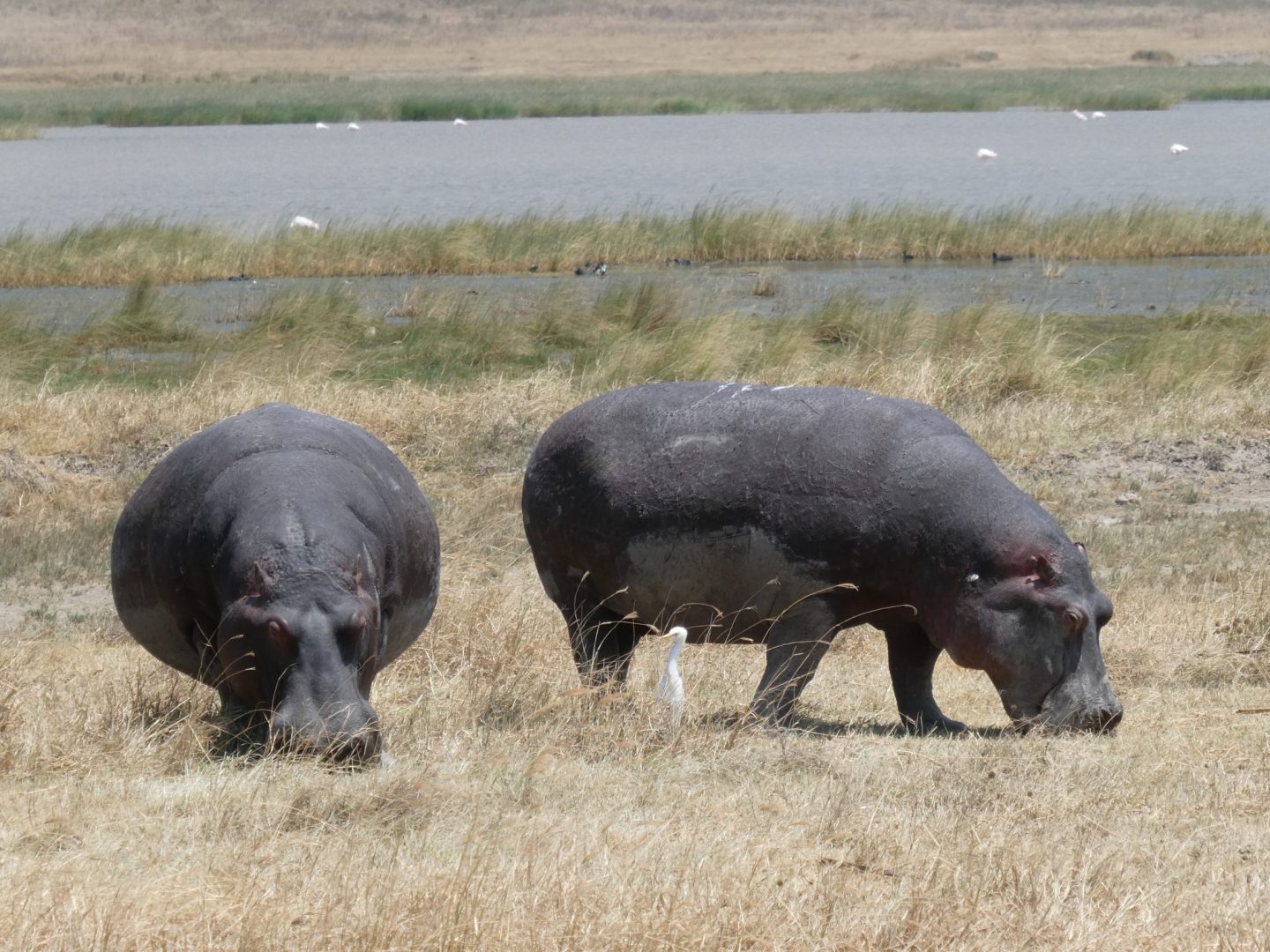
And in the shallower pools nearby, many, many hippos.


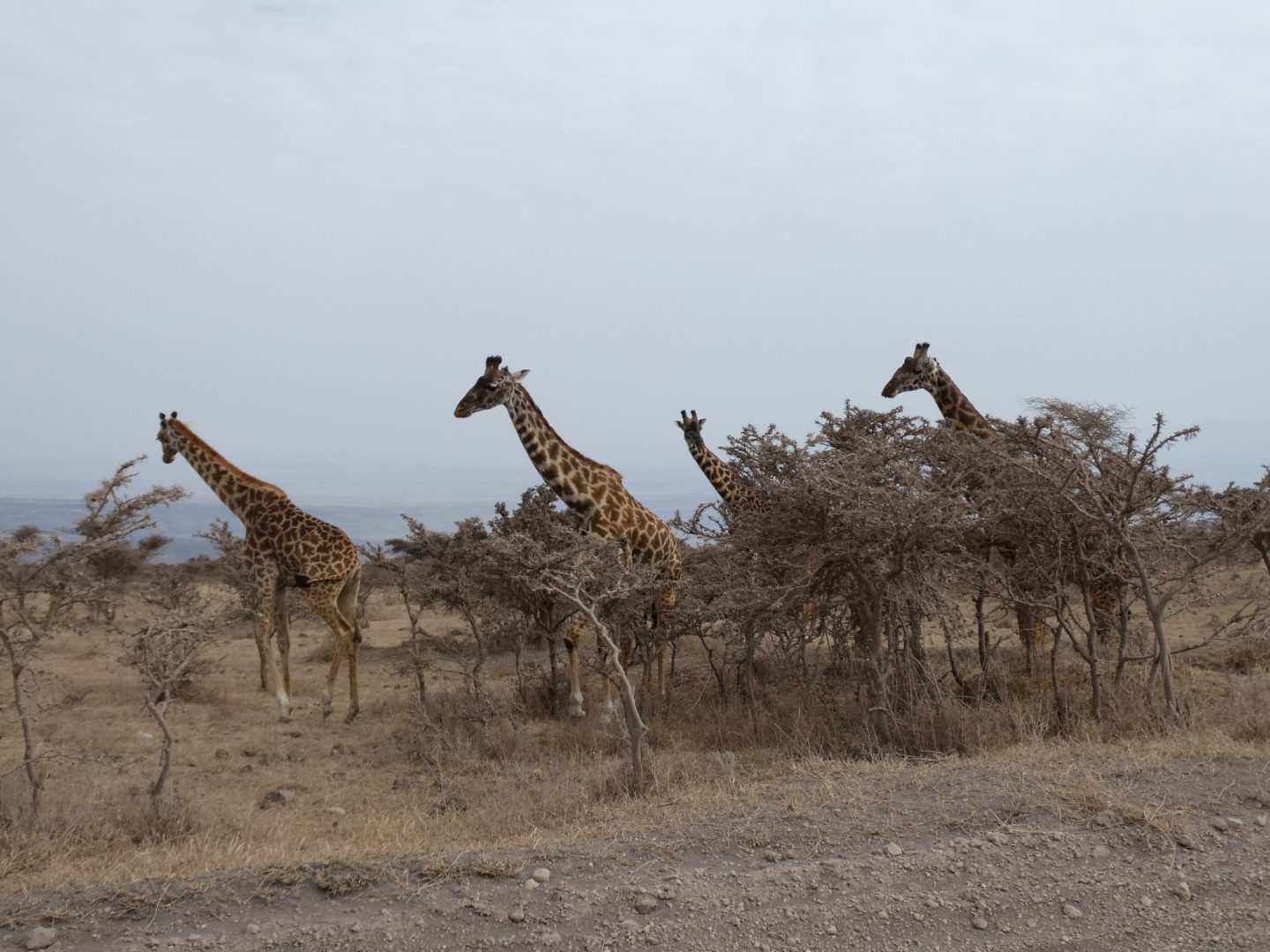
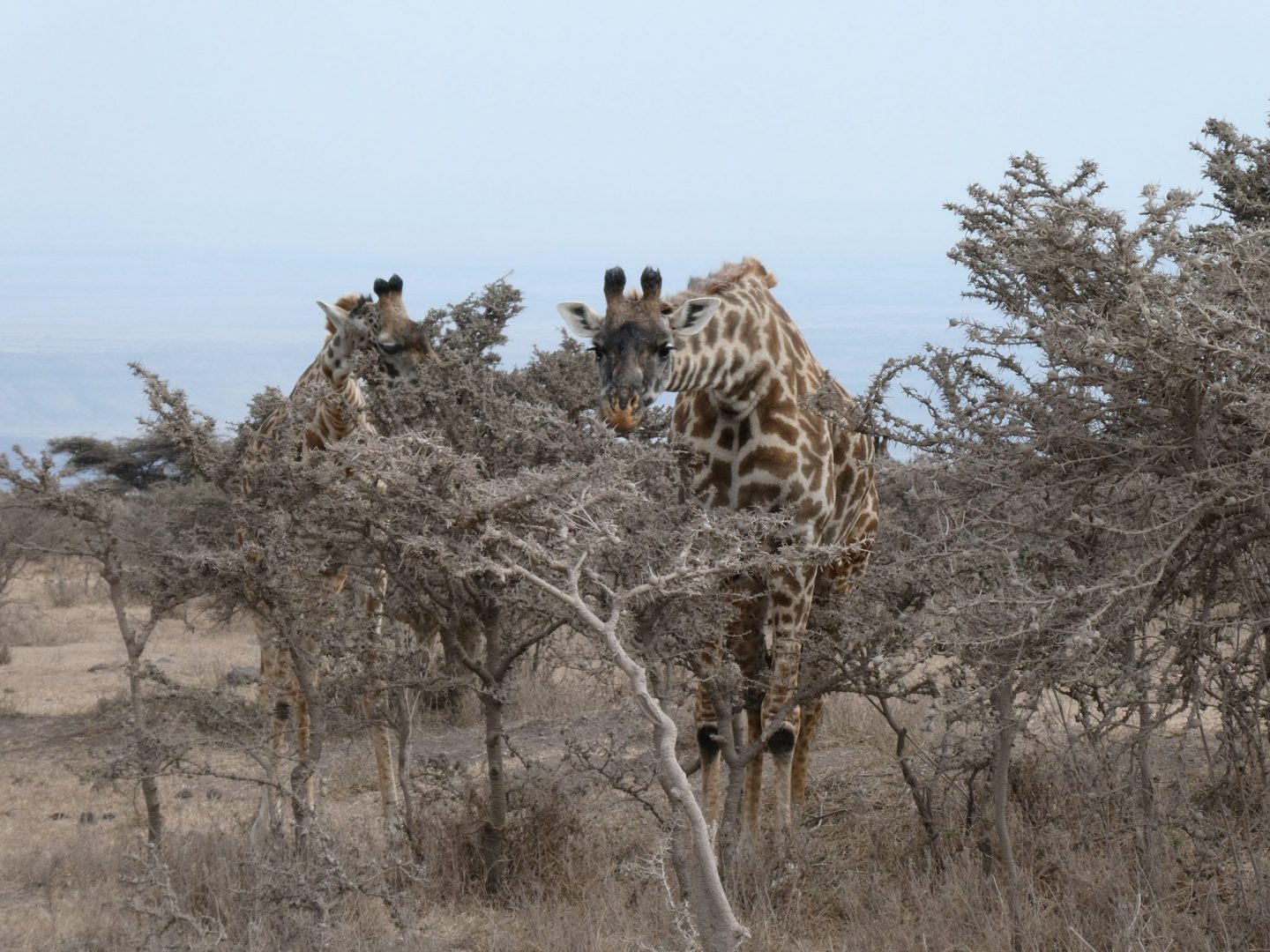
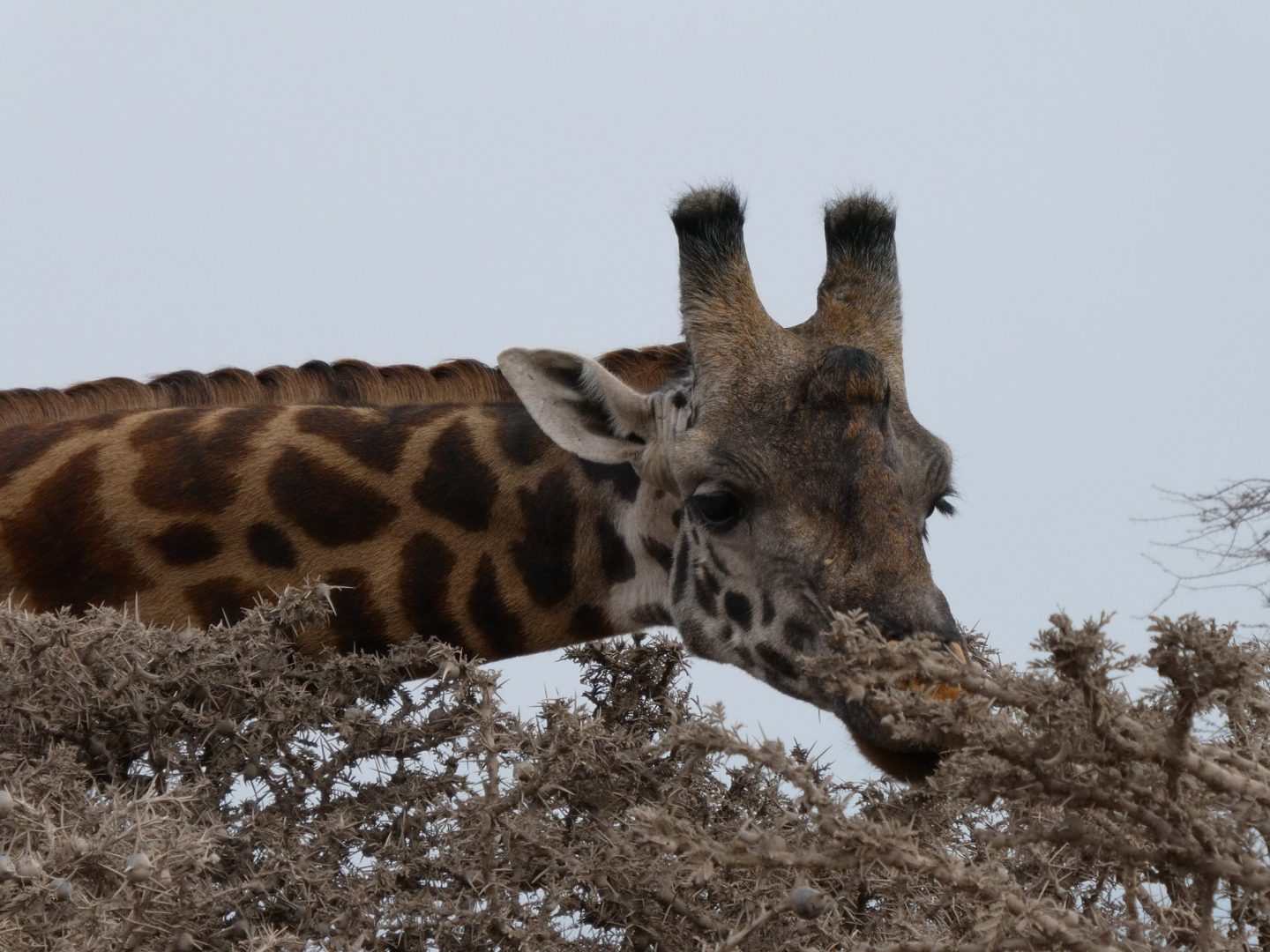
The Crater sits within the broader Ngorongoro Conservation Area, more than 8,000 sq km which also includes vast grasslands where more wildlife thrives, including our new favourite animals, giraffe.
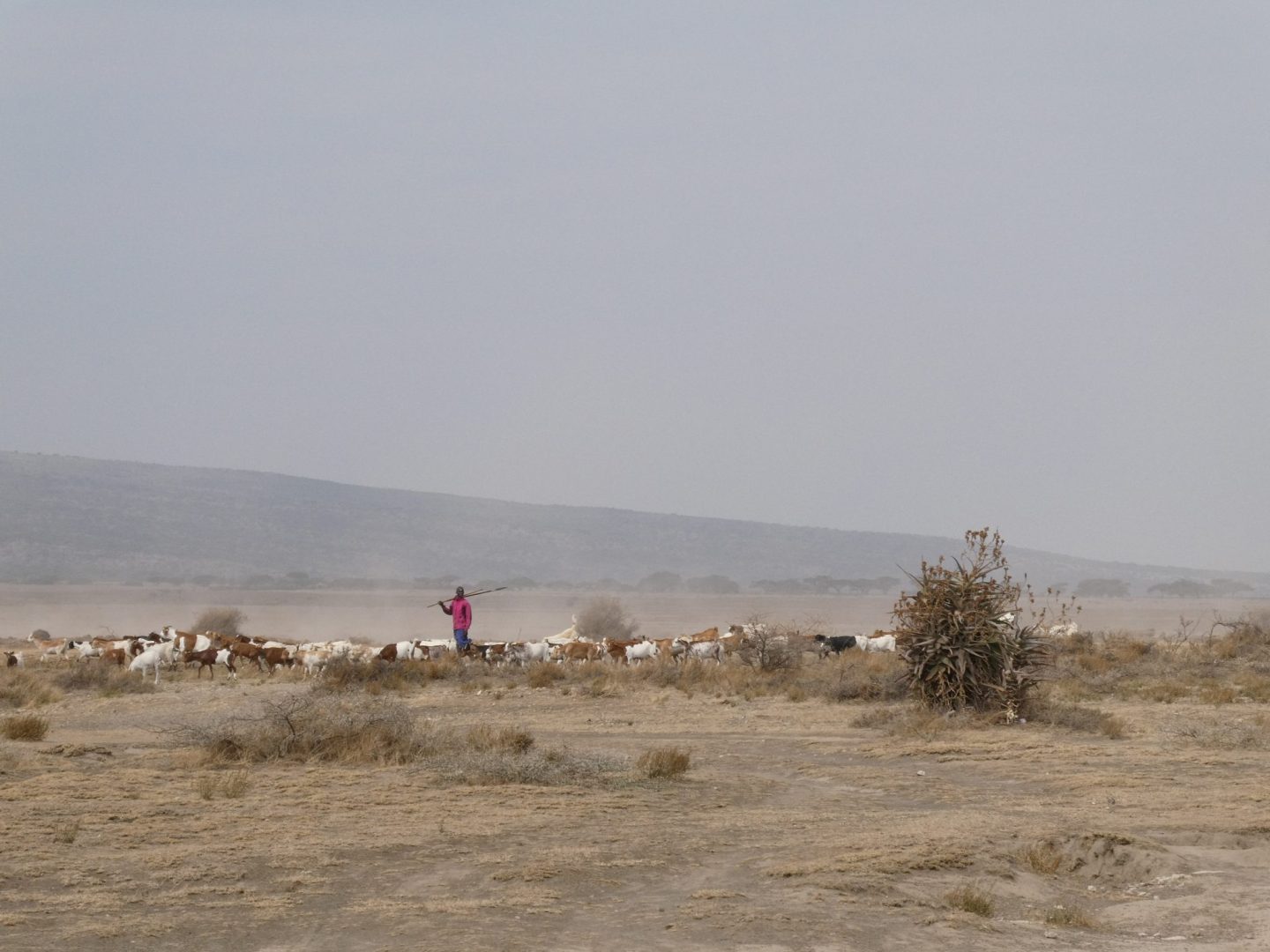
These are traditional land of the Masai, who have herded cattle here since pushing out the previous hunter-gatherer occupants in the 1880s. Indeed the name Ngorongoro is an onomatopoeic Masai word for the sound of the cowbell they use on their cattle.
The Masai have been compulsorily relocated out of the crater but still live in other parts of the Conservation Area. By tradition, Masai do not eat wild meats. Our guide, who belongs to a different tribe, joked that only Masai are allowed to live here because they don’t pose a threat to the wildlife whereas if his tribe moved in “the impala would disappear in two weeks”!
Some live a hard semi-traditional life, herding cattle in this arid environment, very different to the more fertile Crater.
Our guide pressed us to visit a community, which we weren’t enthusiastic to do. We usually avoid this type of thing because they are either a contrived ‘tourist experience’ or they treat local people living a traditional life like exhibits in a zoo. Against our better judgment, we agreed, and it turned out to be the former. A hustler lined up a bunch of ‘locals’ in spanking clean tribal dress to perform a traditional welcome, and we saw the inside of house we are sure no one actually lived in.
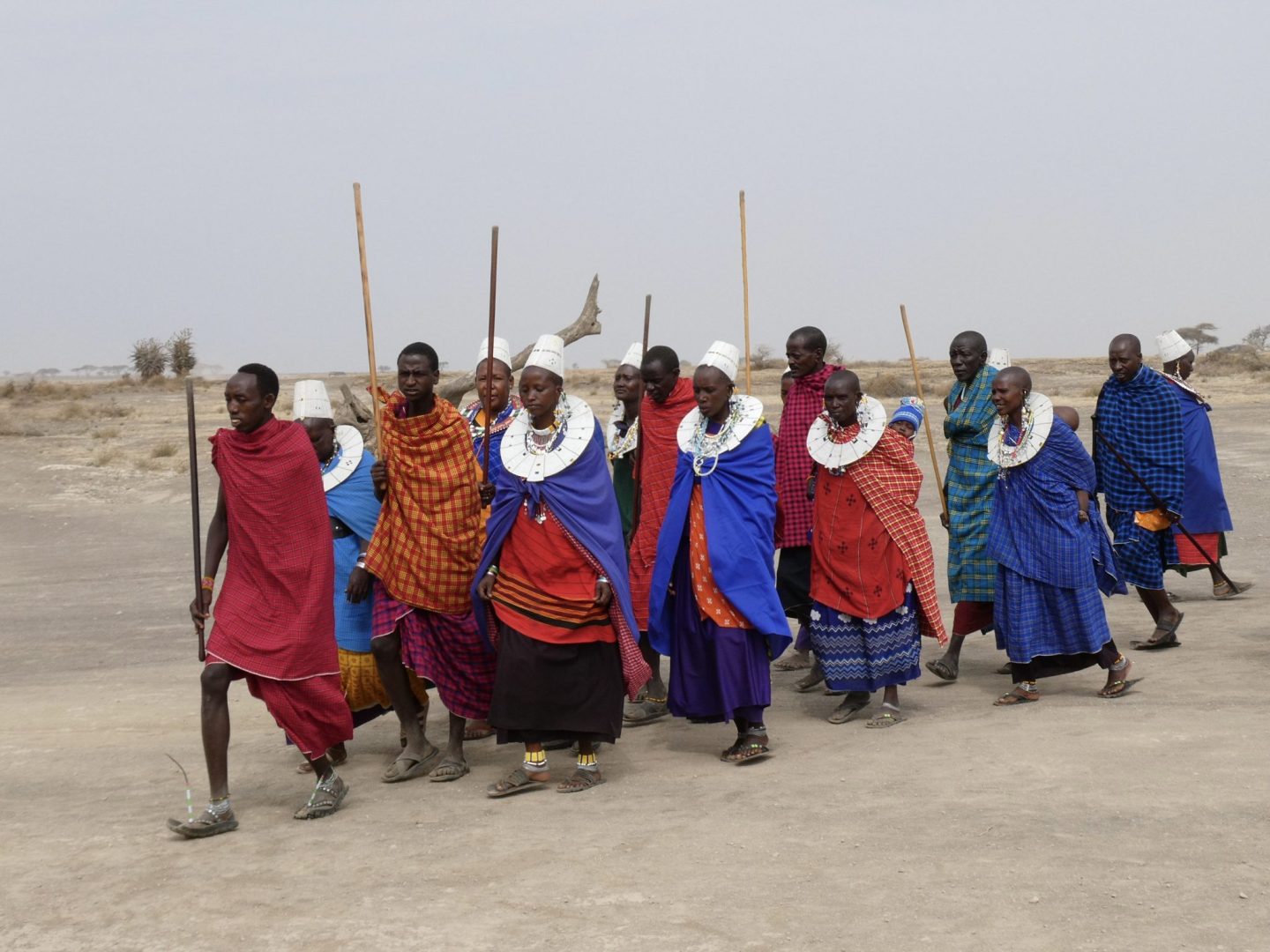
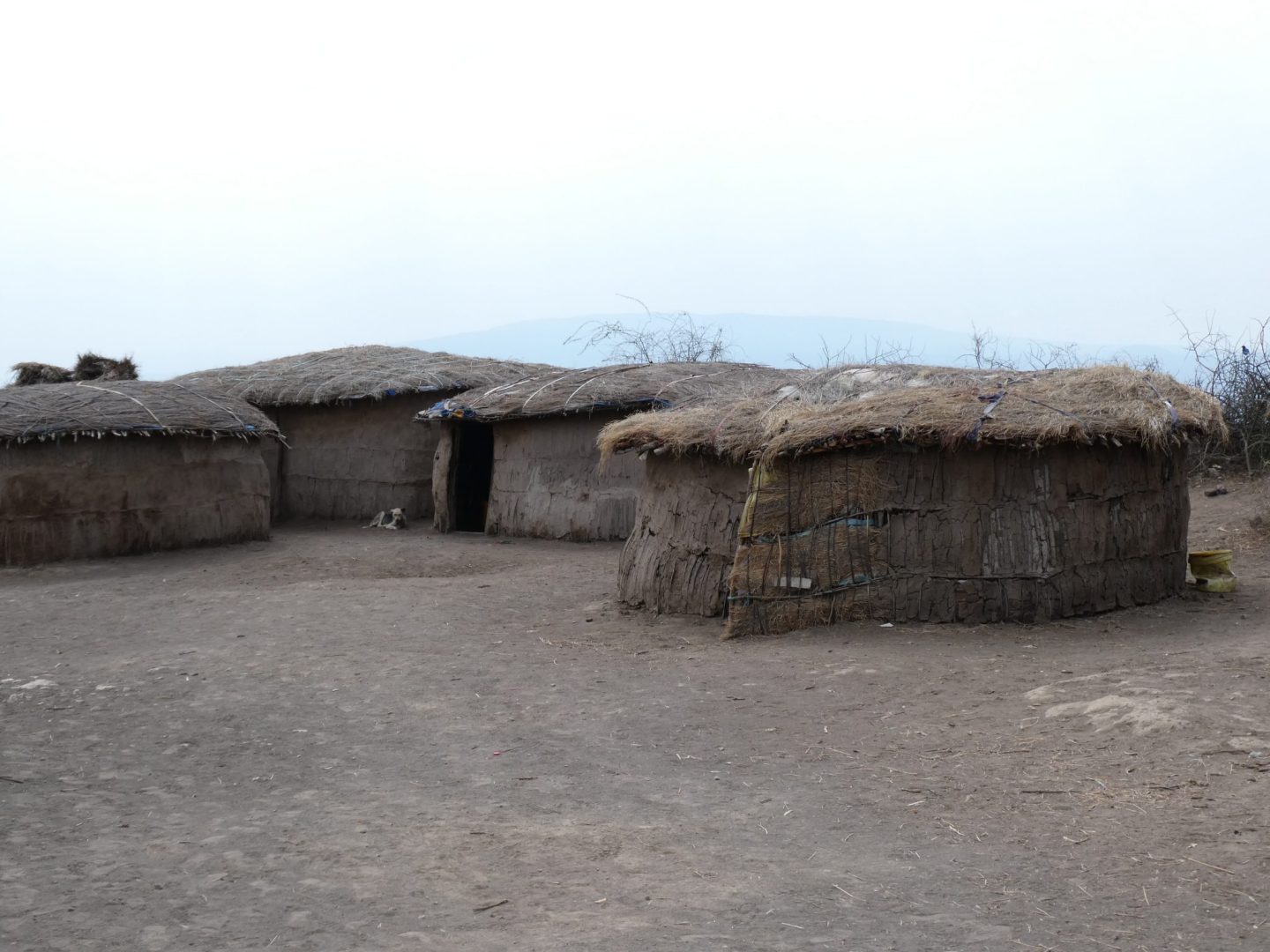
We were then pressured to buy from a selection of trinkets ‘made by the woman whose house you visited’ which looked no different to those we’ve seen at roadside gift shacks on the main roads elsewhere. Call us cynics, but we doubt the contribution we made to the local school will go anywhere near benefitting the kids.
Ngorongoro Conservation Area also includes Olduvai Gorge. Nicknamed the ‘Cradle of Mankind’, this is where famed palaeontologists/archeologists Louis and Mary Leakey discovered the 1.75 million year old fossilised skull of a new hominin, nicknamed ‘Nutcracker Man’ for his massive molars. Their son later discovered the fossilised skull of ‘Handy Man’, with a larger brain and smaller jaw. These and their other discoveries including early stone tools, provided the first conclusive evidence that human evolution began in Africa.
A monument with oversized replicas of Nutcracker Man and Handy Man celebrates the finds.

Next we are off to the Serengeti. More wildlife awaits.

Fabulous 👌
The lion sex we have seen on several occasions was always most brutal. If I was a lioness I would definitely be playing hard to get, another phenomenon we saw often.