Serengeti comes from the Masai word ‘siringit’ meaning ‘the place where the land runs on forever’ or the truncated translation ‘endless plains’. The Serengeti National Park encompasses almost 15,000 sq km of virgin savannah grasslands. Driving across it, it did indeed seem endless. It must have felt even more so for the Masai herdsmen of old, roaming it on foot.
We had five nights in the Park, three nights at a luxury camp in the northern sector along the Mara River, then two nights in a sister camp in the Central zone. We saw the wildebeest crossing in the north, and as amazing as that was, there’s a lot more to see.
It began with elephants literally right inside the park gate. The African savanna elephant is the largest terrestrial animal on earth, with fully grown males reaching an average shoulder height of 3 to 3.36 metres and a body mass of 5 to 7 tonnes. The population in the Park has slowly recovered since the 1980s after being decimated by poaching in previous years. Nonetheless, the species is still listed as Endangered on the IUCN Red List.


Elephants go wherever they please, stripping trees and knocking them over. A few years ago in South Africa we saw a pair tearing up the drip irrigation tubing along the path into the lodge where we were staying. Just for fun. But it’s incorrect to call them ‘destructive’. Apparently they are merely engaged in ‘environmental reorganisation’.

How about this – baby elephants tussling, with giraffes and a hippo watching on.

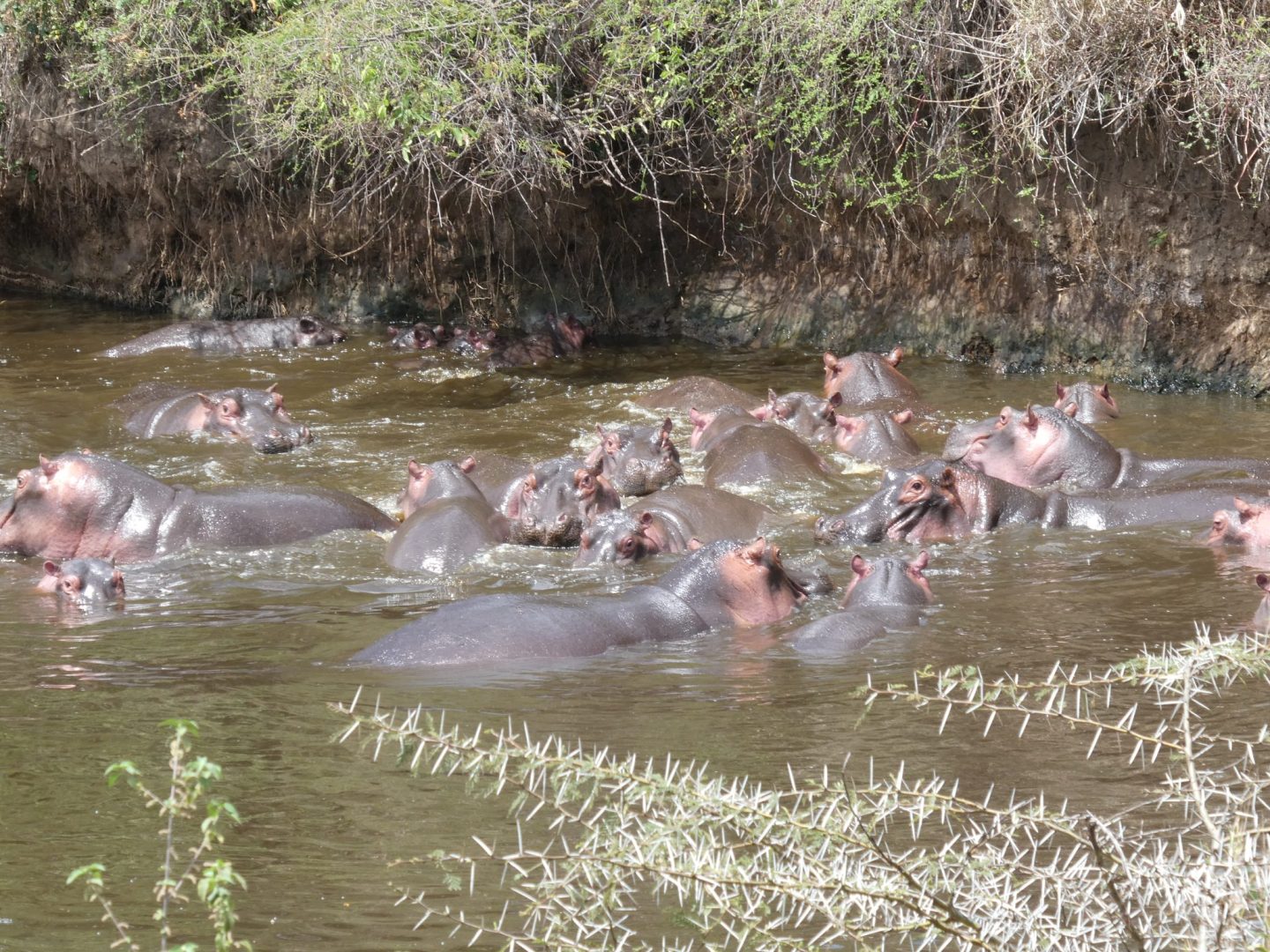
There are many places to see the hippos, and finding them isn’t difficult. Hippos are creatures of habit. They leave the water and walk up to 5km to graze at night, but always return near dawn to the same waterhole. They don’t have a particularly great sense of direction, but they poop at regular intervals and then follow their own stink back. Their heavy footedness makes tracking them easy.

As the dry season shrinks many of the waterholes, the hippos look like half submerged boulders as they hunker down trying to keep cool.

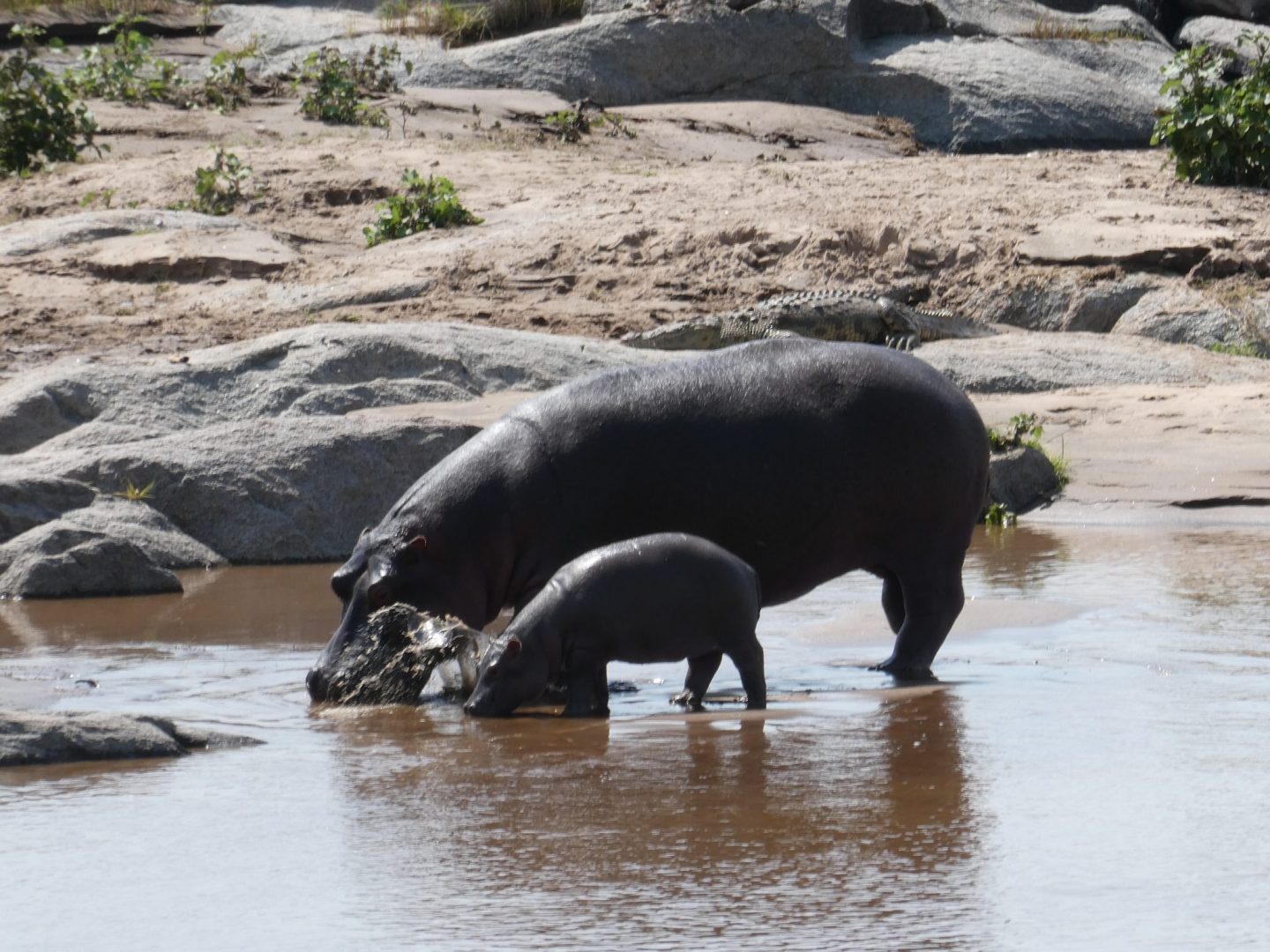
Many of the permanent water sources become hippo playgrounds. We did a walking safari with a park ranger which began with an up close and personal encounter. The ranger stood by, fingering his rifle and warning us not to get too close.


Official park rules forbid anyone leaving their vehicle except at the park gate stations and a couple of official picnic grounds, so we were surprised to be able to do a walking safari at all. But we had Bakari, who knew the rangers. Anyone can do these walks if they can arrange it with the rangers, but it doesn’t seem broadly known and apparently there’s not much take up because people think it’s not safe.
After we finished we discovered that several safari vehicle drivers had reported us to park headquarters, along the lines of “there are three mad people roaming around the grasslands”. They were assured this was ok because we were on an officially sanctioned activity. But when the ranger walked us through an area he described as a place where lions often sleep, seeming quite disappointed there weren’t any to be seen, we wondered if it was such a good idea.
As well as close encounters with the hippos, we saw some groovy giraffes.


Lots of hyperactive vervets, some with babies.


Troops of baboons.

And some skittish antelopes.

The grasslands support a wide variety of antelopes, of which the wildebeest is the most prolific. Yes, wildebeest are an antelope, also known interchangeably as the white-bearded gnu or the blue gnu even though their ‘beard’ isn’t really white and they certainly aren’t blue.

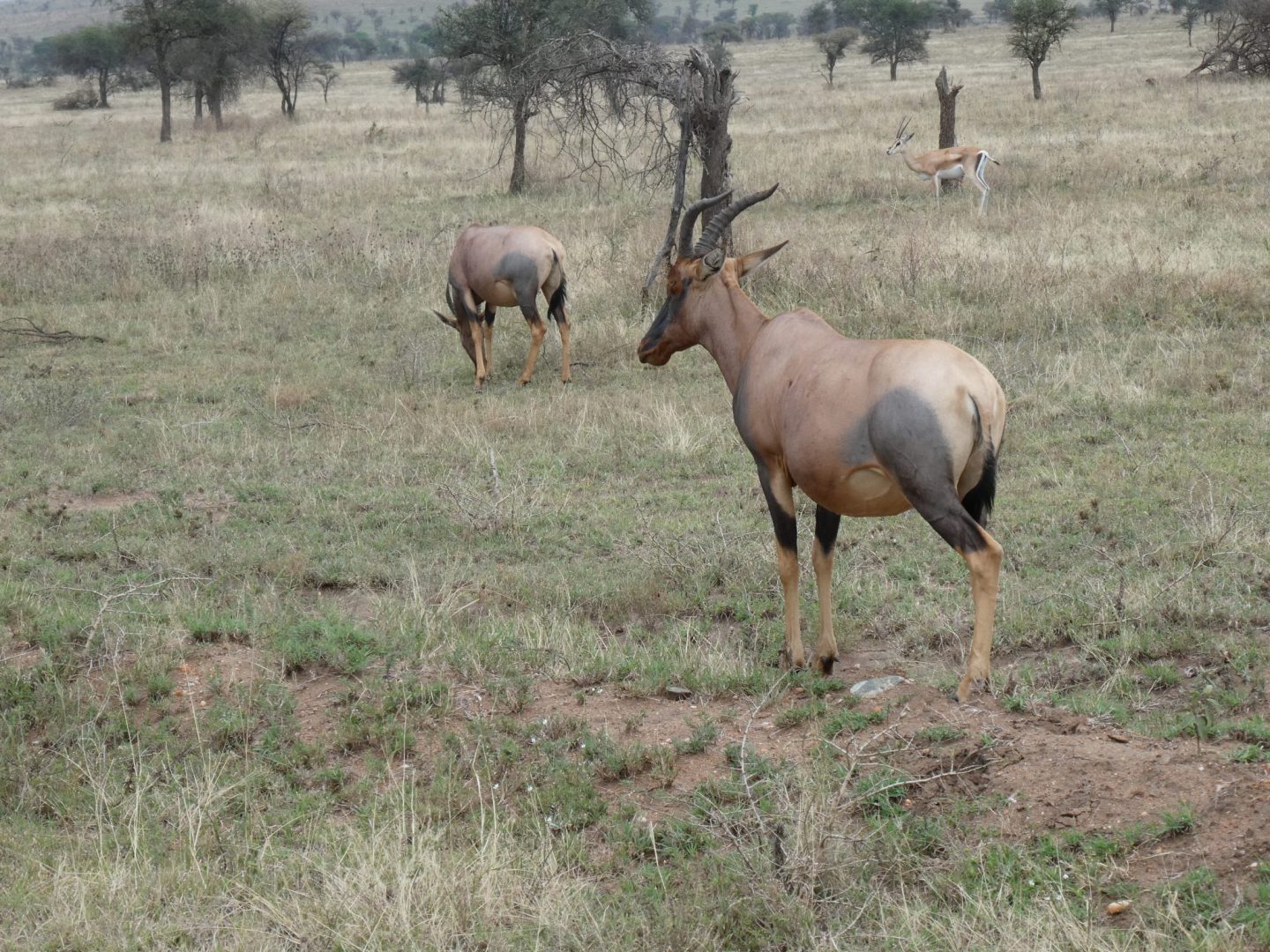
Here’s a new one. The topi is one of the fastest running antelopes in Africa. Effortlessly reaching 70kph is a handy skill for leaving predators with nothing but a view of their luminous behinds.
The Bohor Reedbuck whistles to mark its territory and the air exits its nose with such force that its whole body vibrates.

Lots of gazelles of different kinds.

And many water bucks.

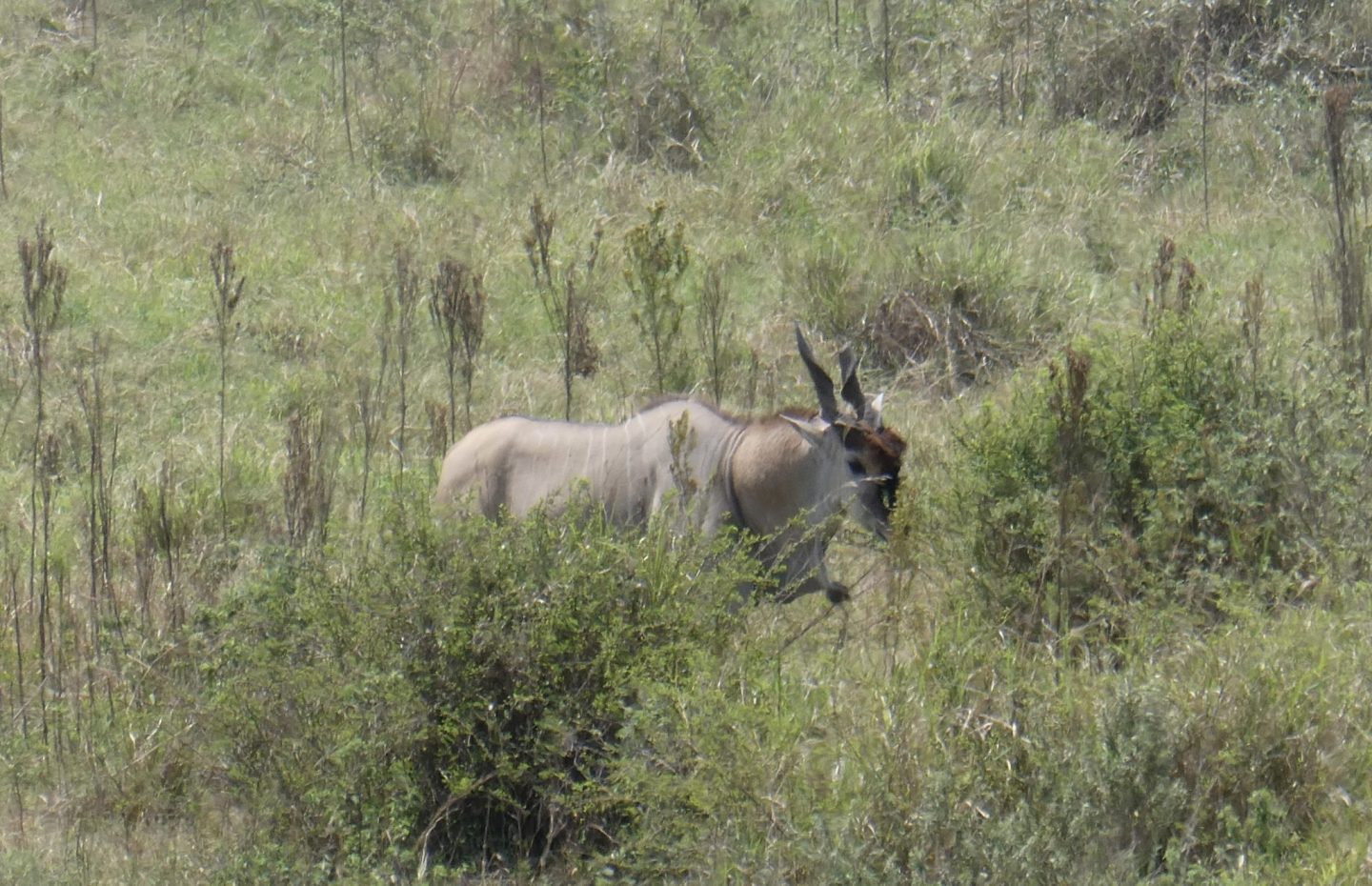
The eland looks a bit like a cow with more exotic horns and colouring. They are the world’s largest antelope, and despite weighing up to 900kg, can jump a 1.5 metre fence from a standing start. Not that there are any fences here.
At the opposite end of the scale, Julie’s brother urged her to keep an eye out for African dik diks. Their name comes from the sound they make, by the way.
They stand just 30cm tall and are rather shy but worth seeking out. East Africa’s smallest, and the world’s second smallest, antelope is indeed very cute.

Small but striking is the rainbow agama. The name ‘agama’ comes from a bastardisation of a word in a West African language for a chameleon, but that’s misleading. They do change colour, but not for camouflage. It’s now thought to be pigmentation change similar to tanning in humans.

Banded mongeese are common throughout sub-Saharan Africa, renowned for their ability to kill snakes. They have a secret advantage – underneath that soft fur, their skin is tough enough to withstand the fangs of most snakes.

They look a bit like a meerkat when they stand on their back legs. But there are no meerkats here.

Hyenas have a bad reputation, but up close they can appear quite endearing . They are not canines, but it’s not surprising many people mistake them for dogs when they strike a pose..

We saw this group of mothers and babies scampering around in the late afternoon.
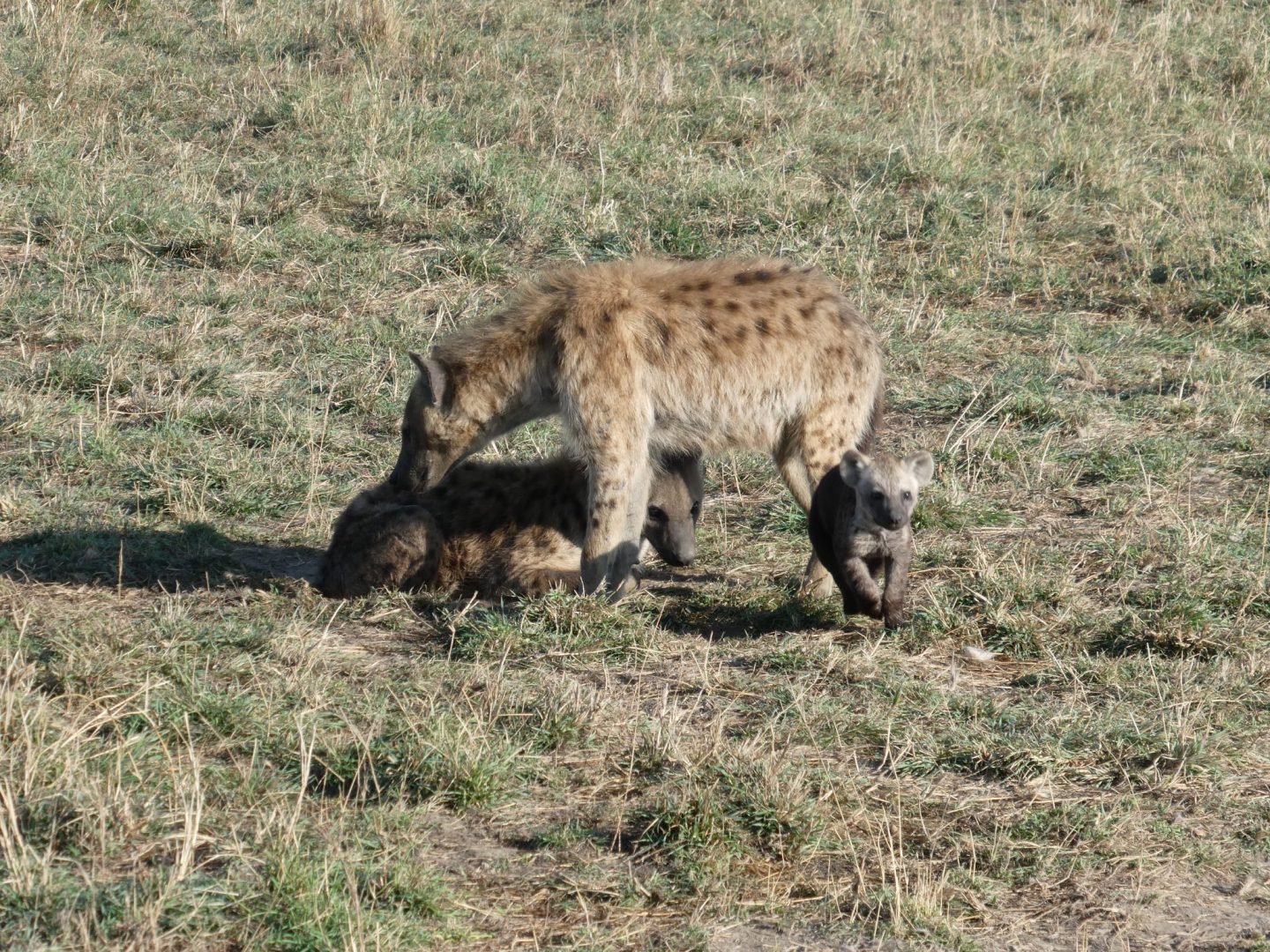

This one was either pregnant or had spent too much time at the giraffe buffet.

Early one morning we came across a jackal whose tail was missing. A tussle with a lion, maybe?
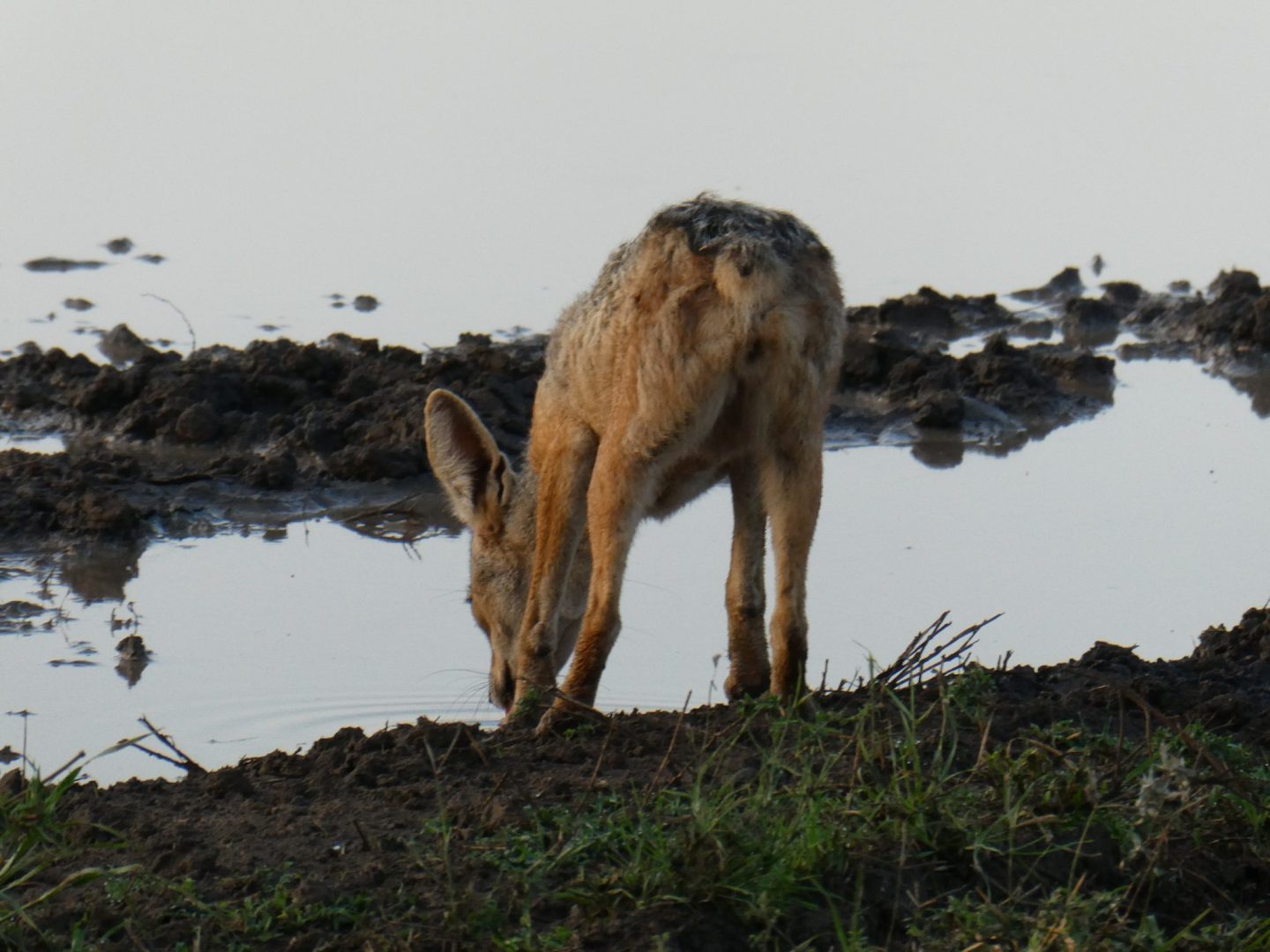
Another afternoon we encountered three juveniles loping down the road looking like teenagers out for an adventure.


Sunrise and sunset deliver classic Serengeti scenes.


And of course there were birds. Serengeti National Park supports more than 500 bird species. Unlike Charles Darwin, we don’t get in a lather about infinite varieties of small brown finches. But if birds are big, wacky or colourful, that will keep us interested. Here’s a few we liked.
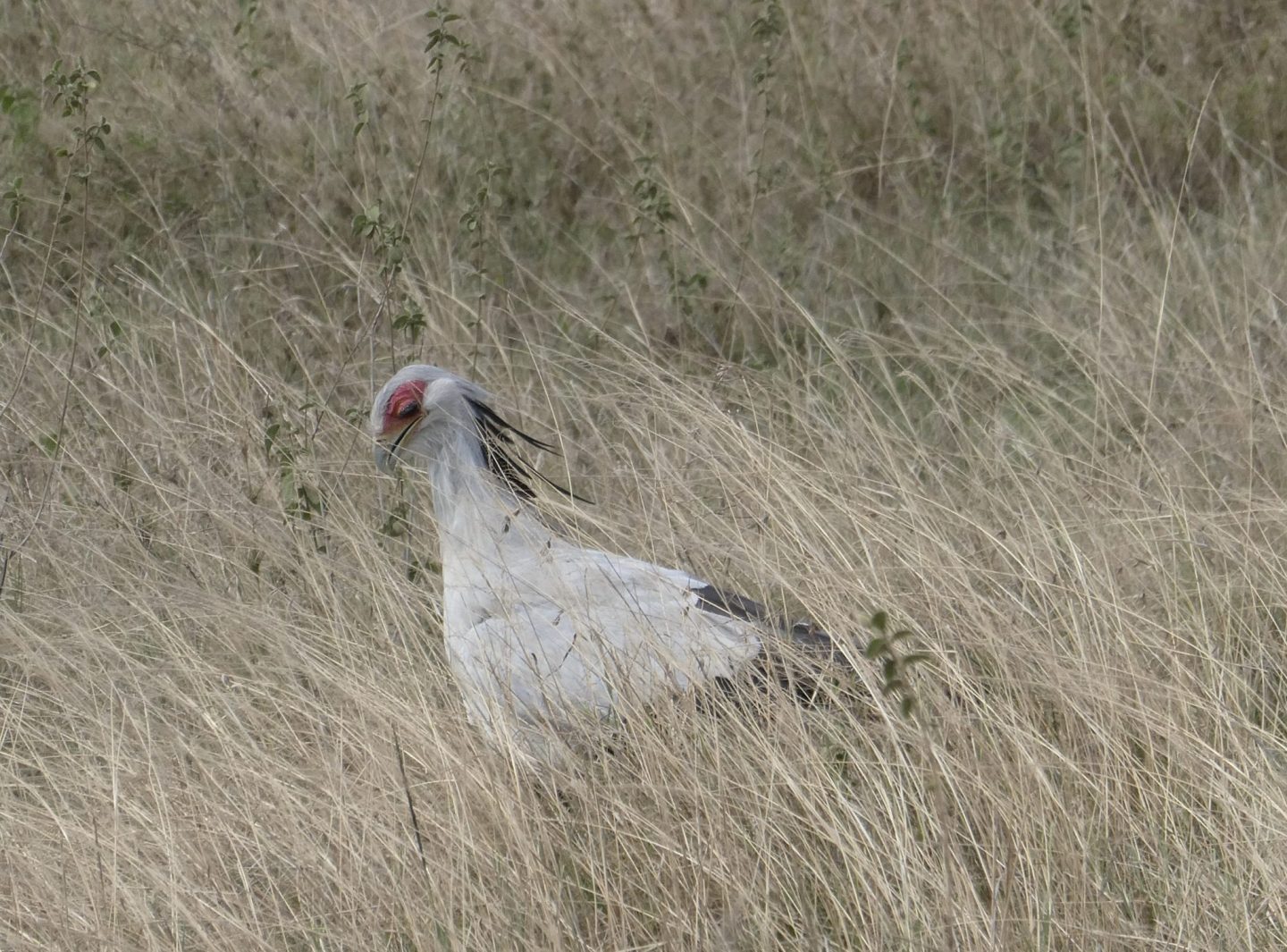
The secretary bird has an eagle-like body but spindly crane-like legs, and an odd arrangement of black features sprouting untidily from the back of its head.
We asked, “Why is it called a secretary bird?” Answer, “Because it looks like a secretary”.
We both thought “Hmm, if we’d told any of the secretaries either of us had during our working life that they looked like this bird, we’d have had a visit from the HR Manager”.

This funny looking fellow is a saddle-billed stork, a huge bird standing 1.4 to 1.5 metres tall. In captivity it has been recorded at up to 1.8 metres in height.

In our post on the wildebeest crossing we mentioned the Marabou stork, another massive bird. They are similar height, standing an average of 1.5 metres. And with a wingspan of 3.7 metres, they rival the Andean condor as the bird with the longest wingspan in the world.

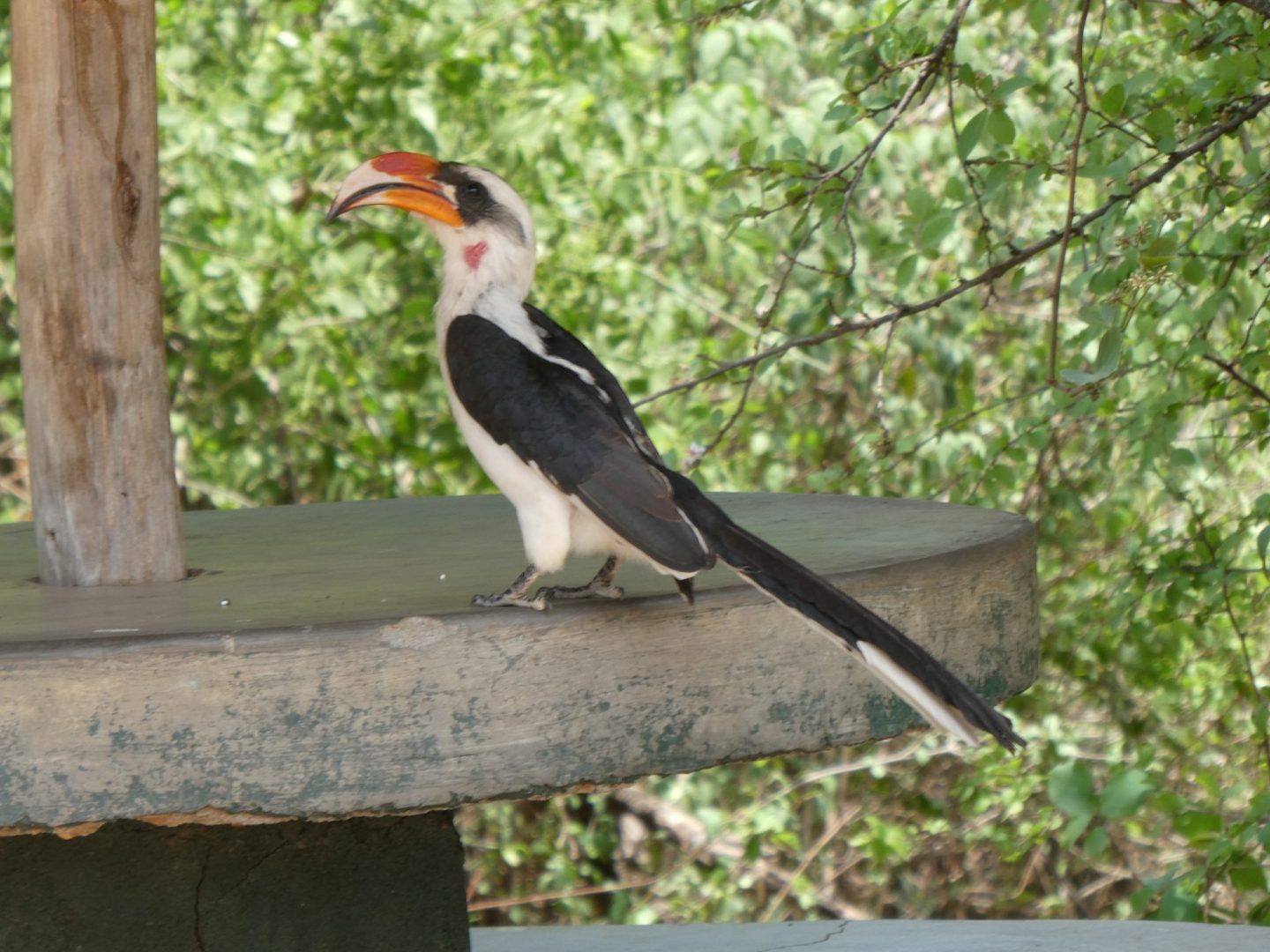
The Von der Decken hornbill looks like a poor cousin of the toucan but of course they are completely unrelated.
We saw many impressive raptors including the Steppe eagle and Ayre’s hawk-eagle.


We had to put this one in, just because of its name. It ‘s the bare-faced go-away bird. It is restless, always on the move, with a distinctive call that sounds like ‘go away’.

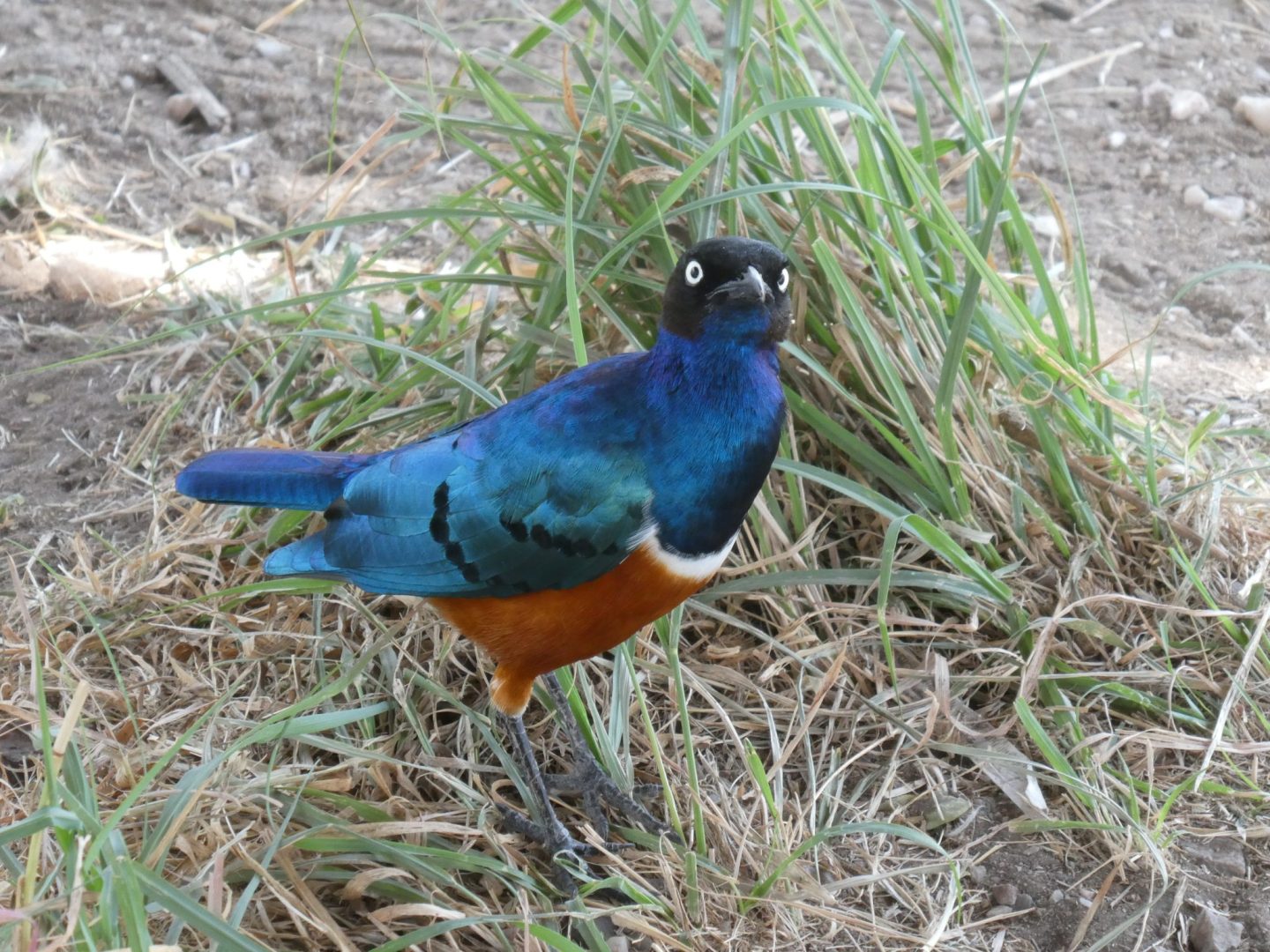
Some little beauties as well. Both the Hildebrand starling and the superb starling – the one with the white stripe – are common here, but the colours are stunning.

This amazing bird is the lilac breasted roller. Again, not rare, but what incredible colours. So crisp, you might ask if this shot is photoshopped. It isn’t. This is 100% original, point-and-shoot.

Many more birds, plus zebras, warthogs, buffalo, and the list goes on. The Serengeti was a brilliant and very comprehensive showcase of east African wildlife.
What’s missing from this gallery? Cats, of course. And given our love of all furry felines, the Serengeti cats deserve a post all of their own. Coming up next!

Most people go to Africa hoping to see the Big Five. You two have seen the big 55! Great photos and great writing.
Author
Thanks, Hugh. And there’s more to come!
Loved the animals & birds in this post – looking for to the cat post coming up next – do not roam around anymore in lion country want you to come home alive x
Looks like you getting a great variety of Africa’s best. I love the little black-backed jackals, so dainty, but also have a soft spot for the hyenas. When you see a mum with the little ones she looks very gentle.
The birds are stunning. What great pics. Did you happen to see the lilac-breasted roller’s mating ritual ?
It is an amazing display whereby the male flies up and then spirals down in a rolling motion, hence their name.
We saw it quite a few times, sometimes with mating occurring mid-air.
Author
Actually, the juvenile jackals were side striped jackals. The stripes are never distinct so the name isn’t a helpful identifier. And they have a black mottled back like the black backed jackal, so it’s confusing. They are closely related and we were told the best way, for us non-scientists, to distinguish them is that the flank and leg fur on the black backed jackal is red whereas on the side striped jackal it’s pale.
We weren’t lucky enough to see the rollers’ mating ritual. It sounds amazing. All 13 species do the same. What makes the lilac breasted roller special is the variety of colours in its feathers, 8 in total, which is why it was chosen as Kenya’s national bird.