Uganda is considered one of Africa’s top birding destinations. It has over 1,000 recorded species, representing nearly 50% of Africa’s bird diversity, and a number of habitats that support unique endemic species.
As we’ve said in previous posts, we aren’t birders, but there were so many interesting ones, we thought we’d do a post highlighting just a few we saw.
Let’s start with the freakiest looking. Abyssinian ground hornbills are found across the northern part of sub-Saharan Africa. In some areas, they were traditionally seen as harbingers of rain and therefore it was considered bad luck to kill them. In others, hunters would hang the severed head of one around their neck, believing it would bring them good luck in hunting.


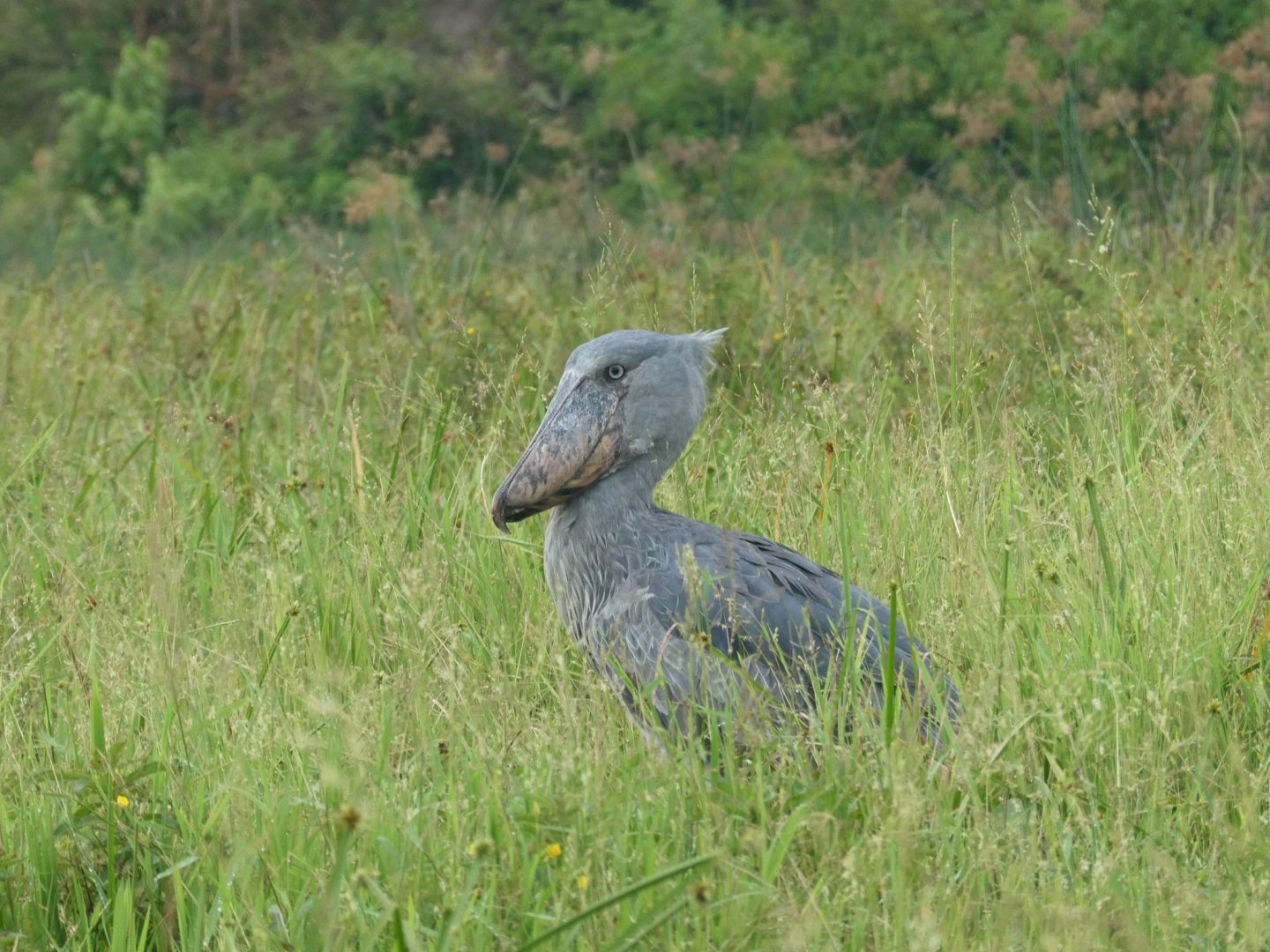
Similarly prehistoric-looking is the shoebill stork. It is Uganda’s rarest bird.

The award for strangest behaviour goes to the hammerkops. They like to hop onto each other’s backs and flap. Contrary to popular belief, it isn’t a mating ritual. It’s just their idea of fun.


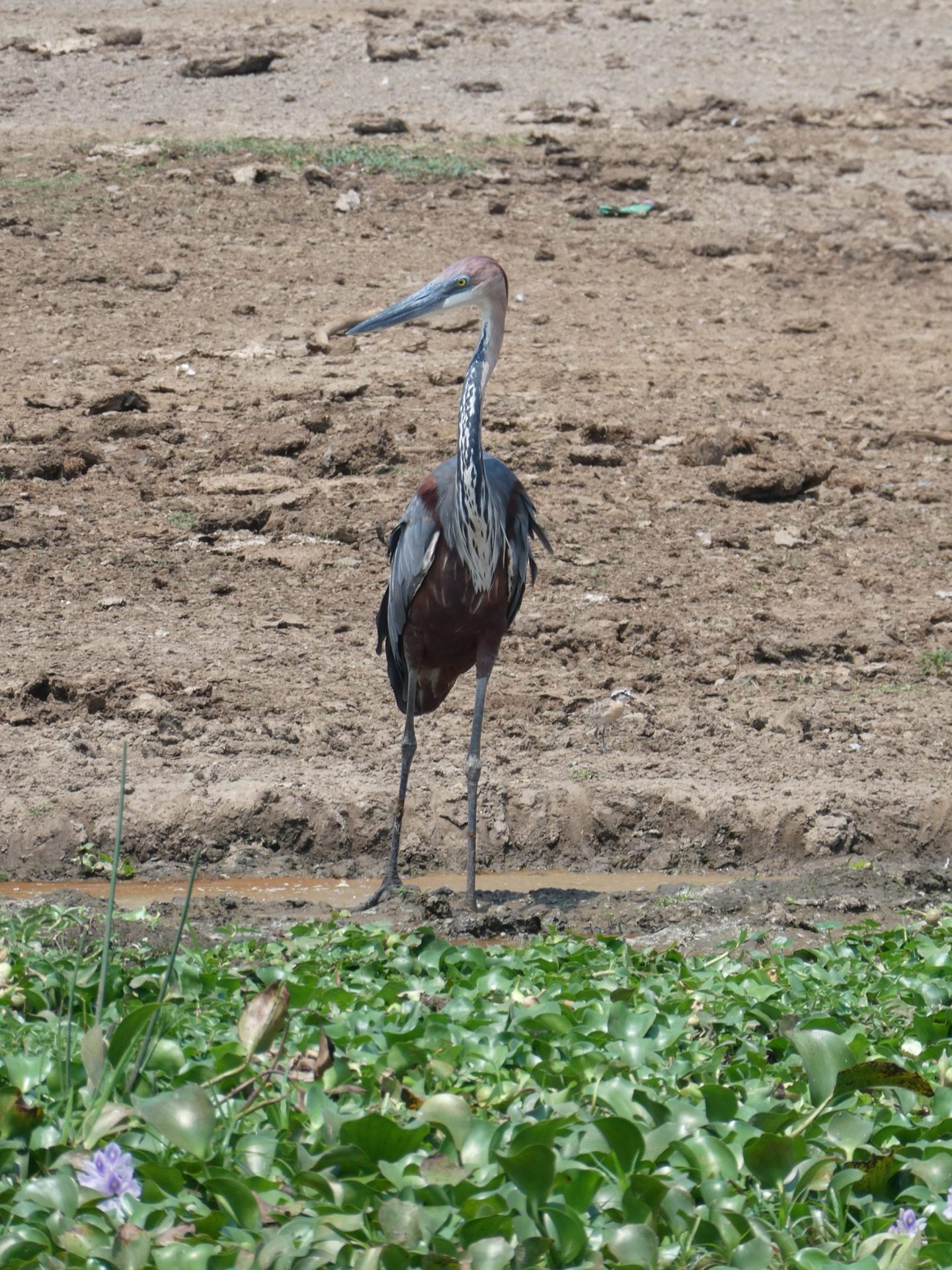
Unsurprisingly, given Uganda’s fertile waterways, there are many elegant herons, including the grey and goliath herons.

We saw saddle billed storks in Tanzania but didn’t notice the large red patch on the chest. It looks unfortunately like a bulls eye target.

The African jacana is known as the Jesus bird because striding over floating plants it appears to walk on water.

Male black headed weavers spend weeks carefully building a nest in the hope of attracting a mate. The female inspects the finished product. If she’s impressed, she moves in and all is fine. If she deems the nest sub-standard, she doesn’t just reject him. She destroys the nest before moving on, leaving the disappointed fellow to start again. There’s a lesson in that for males of the human species.

Uganda has its share of birds of prey. There’s none stranger than the lappet-faced vulture, Africa’s largest.

There’s an impressive array of eagles including the African long crested, brown snake and the ubiquitous fish eagles, which we saw everywhere.


We have to include Uganda’s national bird, the grey crowned crane.

And of course there was an assortment of pretty little ones, like these bee eaters we saw nesting in a riverbank.

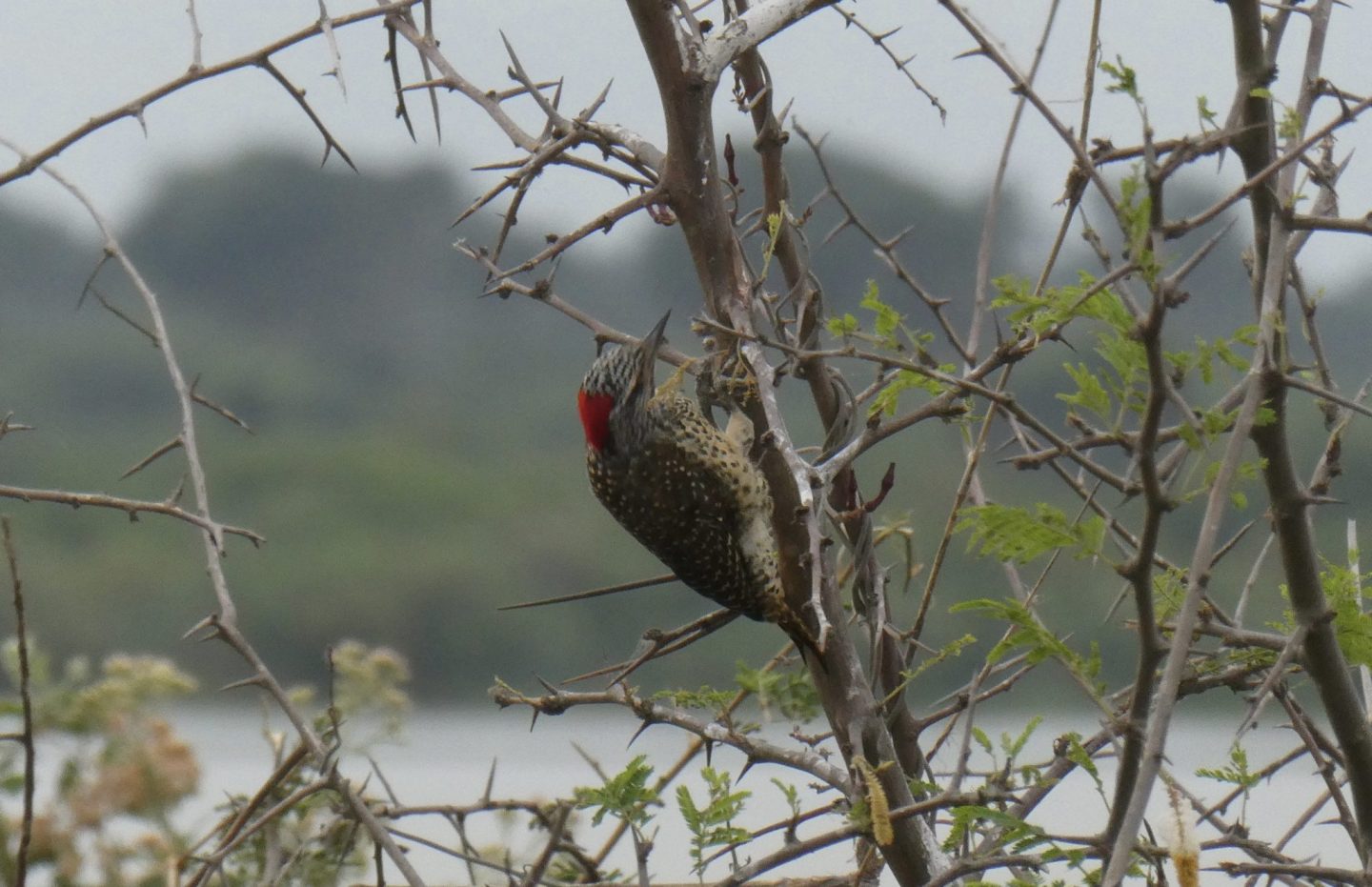
Also the southern red bishop, a very cute woodpecker and crested barbets.


This pin tailed whydar looked rightly proud of his impressive tail. When he flies, the feathers flow out like a bunch of streamers in the breeze.

Julie’s favourites were the kingfishers. Uganda has some beauties. These are, respectively, the pied, grey headed, striped and chocolate backed kingfisher.


Enough birds!
Our circumnavigation of Uganda was almost complete. From Bwindi we drove back to Entebbe to fly out. We broke the journey at Lake Mburo National Park where we did more game driving, a morning walking safari and a boat trip on the lake.
We saw a lot of animals but nothing we haven’t shared in previous posts, so we won’t repeat them. But we wanted to share two cool things we saw.
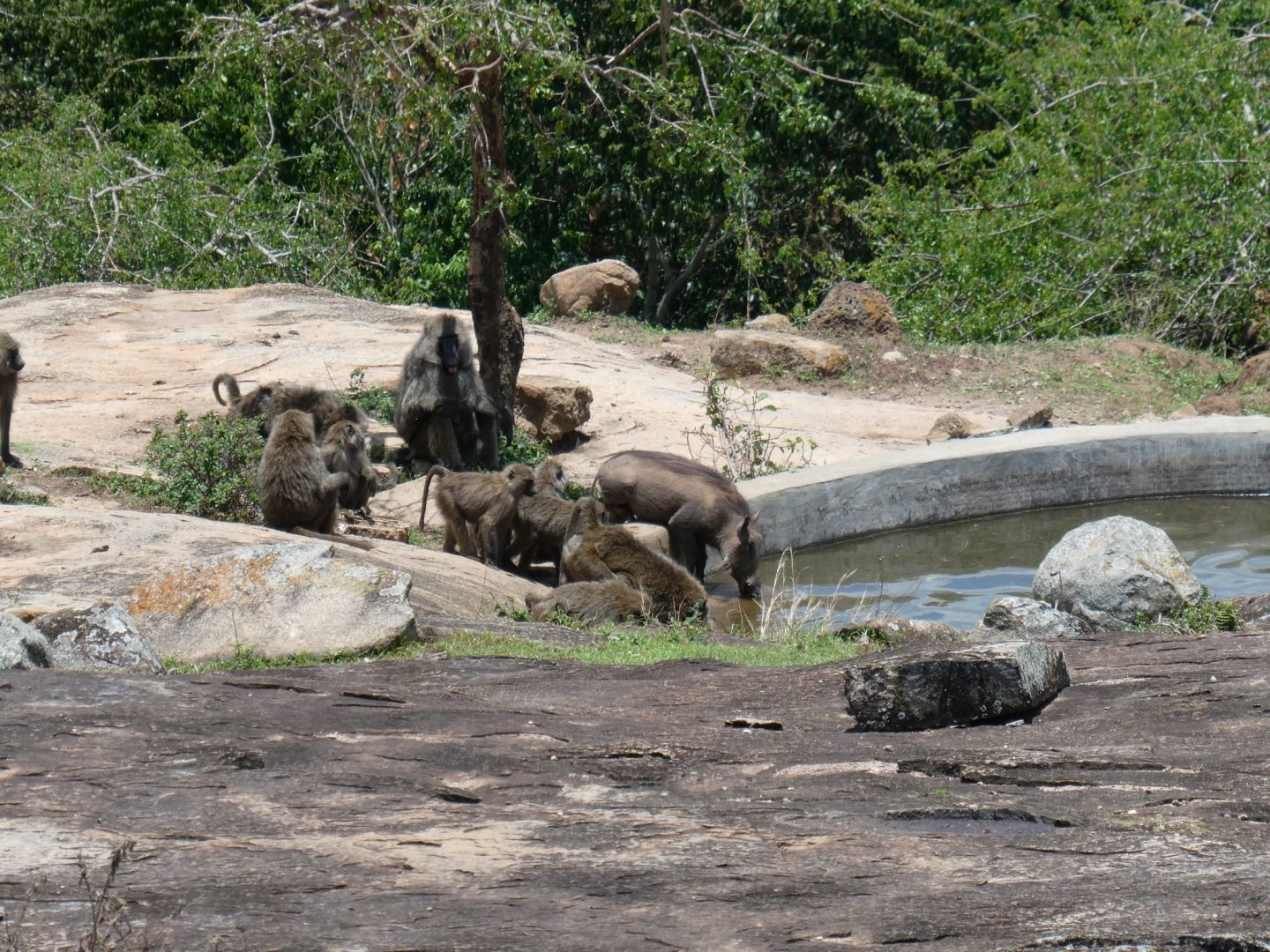
The lodge where we stayed is built on top of a large rocky outcrop with a horizon view across the park. Like many of the lodges, it has a swimming pool for human guests. But it also has a small pool for casual visitors from the park – baboons and warthogs!
The two species usually don’t get along. Baboons consider warthog piglets – which we think should be called wartlets – to be a tasty snack. But it’s hot and dry in the park, so compromise is possible. The baboons come first, but the warthogs muscle right in.


And how gorgeous is this! A tiny, newborn vervet with its mother, sitting in the rocks outside our chalet. A perfect finale.
 And that’s a wrap for Uganda.

Best bird post I’ve ever seen – the look & behaviour of those birds give a new meaning to neurodiverse – love ❤️ Therese x
The birds : the stunning, the majestic and the weirdly grotesque. Africa has them all, big and small 😀
Great pics 👍🏽