Bookending our hike in the Supramonte, we spent a bit of time in a few of Sardinia’s small towns.
Alghero
Alghero is Sardinia’s principal port, main northern resort town and, according to Lonely Planet ‘one of Sardinia’s most beautiful medieval cities’.

 It’s nicknamed la Barceloneta Sarda – little Sardinian Barcelona – for the heavy Spanish influence seen here.
Alghero has a unique dialect which is actually a ‘frozen in time’ old Catalan language.
The Spanish influence is obvious in the food and in the language of food. Fregola, a type of Sardinian pasta similar in taste and appearance to pearl couscous, is ubiquitous throughout the island, but only in Alghero is it called Sardinian paella.
Alghero’s old town is encircled by walls built by the Spanish.

And the cobblestone streets can have the feel of a Spanish resort town.
 There’s several sandy beaches near town and if you don’t want to travel, a little pebble beach under the ramparts.
 On the Capo Caccia peninsula near Alghero is Neptune’s Grotto, a series of marine caves extending 4km inside a sheer cliff. Boats from Alghero marina ferry visitors to the cave entrance at sea level. This saves the walk down 654 steps from the top of the cliff.
It’s Alghero’s most popular tourist activity and accordingly is ridiculously busy. It’s something which would best be appreciated in quiet solitude, but that is never going to happen. That’s a shame, because the caves are quite spectacular.


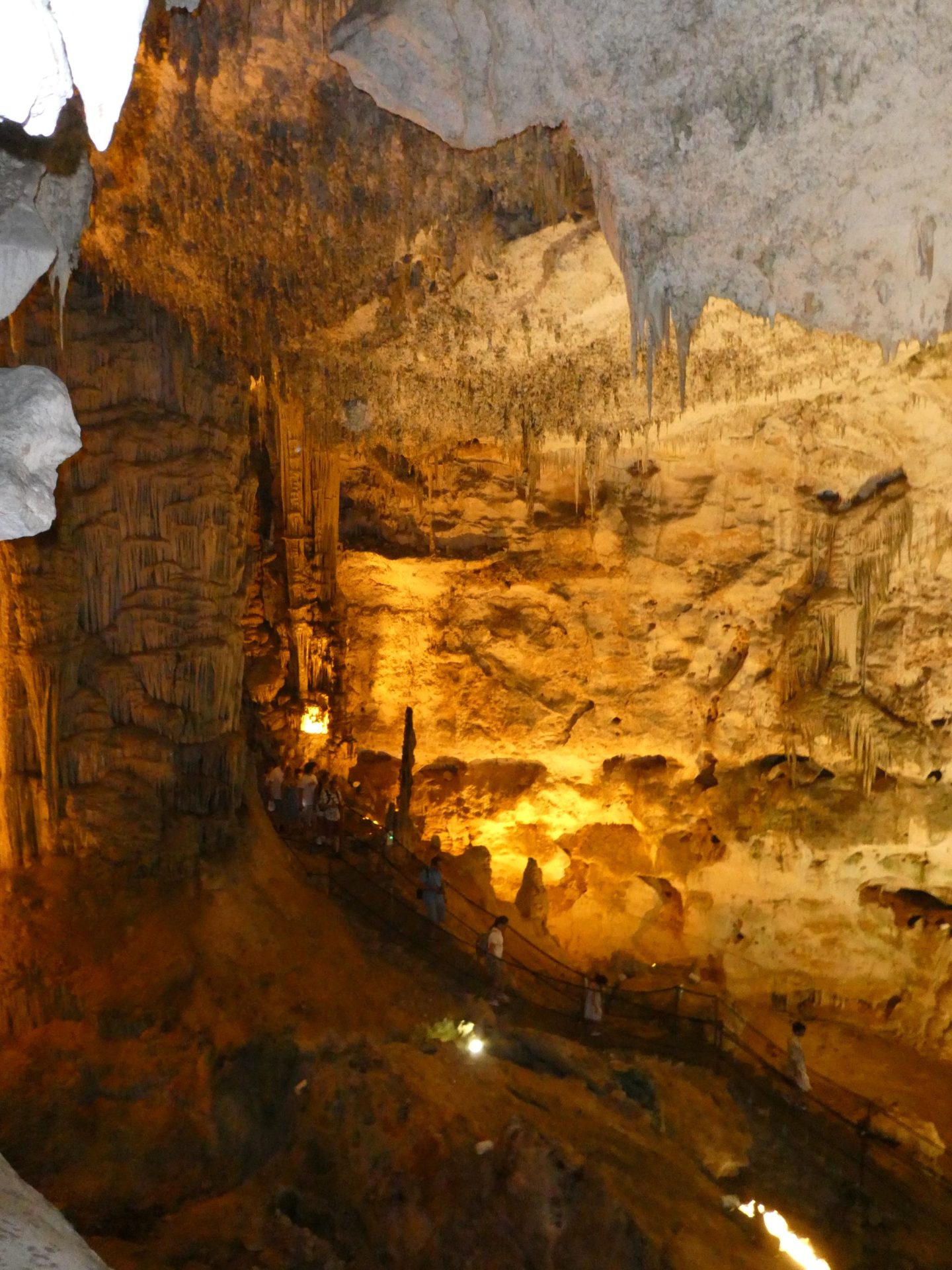
Capo Caccia is also a popular scuba diving destination. The cliffs along this coast are riddled with underwater caverns and submerged caves. In some of them, a precious curiosity can be found.
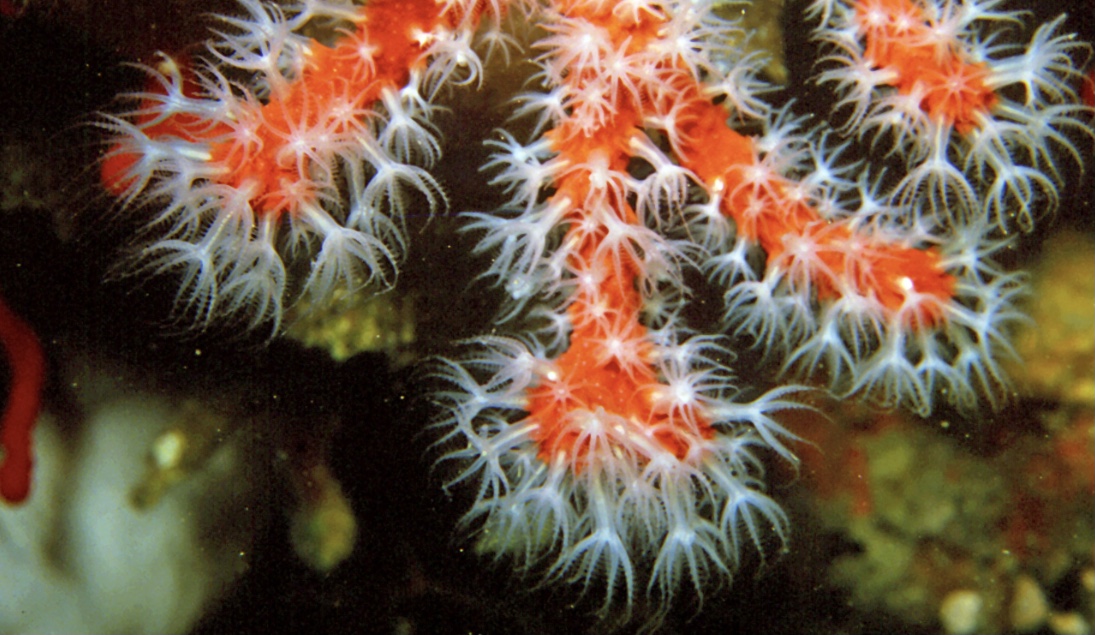
According to Roman mythology, after Medusa was decapitated by Perseus, he placed her head on the ground while he washed his hands. When he picked up the head he saw that her blood had stained the surrounding seaweed and turned it to stone. The result was Corallium Rubrum – Mediterranean Red Coral.
Alghero is often called ‘the Coral Riviera’ for the red coral which grows in abundance here. It appears on Alghero’s official coat of arms, and items made from it have been part of the area’s tradition and economy for hundreds of years.
It grows slowly, one to three centimetres every five years, so collecting the coral is heavily regulated. It can only be done by a handful of licensed harvesters authorised to collect no more than 2.5kg of coral each during a short May to October season.
Red coral thrives in the dark. Elsewhere it is found up to 200 metres underwater, far too deep for recreational divers to ever see it. But along the coast near Alghero, submerged caves and overhangs with little light and the right hydrodynamics are the perfect environment for this delicate coral to grow at between ten and thirty metres depth.
We were lucky enough to do some dives to see it, although it’s ridiculously cold down there. The water is around 24 degrees Celsius to about five metres, then abruptly drops to 14. The dark, cold caverns were a strange experience compared to our usual diving in open tropical waters.
The coral is smaller than we imagined but delicate and very beautiful. Our dive guide poetically described it as an octopus with flowers.
Nuoro
Nuoro is billed as ‘the Athens of Sardinia’. Having spent a few days there, we’ve no idea why. It is a classic Sardinian hill town.
 Nuoro’s most famous resident was Grazia Deledda. Born here in 1871, Deledda wrote many novels with themes of poverty and the struggles of Sardinian peasants, although she lived most of her adult life in Rome.
She won the Nobel Prize for Literature in 1926. According to the awards committee it was “for her idealistically inspired writings which with plastic clarity picture the life on her native island and with depth and sympathy deal with human problems in general”.
She was the first Italian woman to receive the prize, and only the second woman up to that time. Her childhood home in Nuoro is a museum dedicated to her work and there’s a statue of her in the main pedestrian zone.
 Nuoro doesn’t have many tourist attractions but is often used as a base for visiting towns in the area and by walkers hiking in the mountains. We’d done a lot of hiking already but we did do the popular hike from town to the summit of Mount Ortobene.
The weather finally cooled to an agreeable 26 degrees and it was a lovely walk.

At the 924 metre summit there’s a bronze statue of Christ the Redeemer. Erected in 1901, he stands four metres high and weighs two tonnes.

And he has a fine view over Nuoro.

Orgosolo
At the turn of the 20th century, Orgosolo was known across Europe as the ‘village of bandits’. In these isolated mountains, the ancient Barbaracino Code, which demanded revenge for any offence caused to others, ie blood feuds, was alive and well.
Now it’s famous as Sardinia’s town of murals, but they aren’t the usual kind. Rather than being primarily decorative, the murals deal with Sardinian and broader Italian political and social issues, scandals and controversial identities. As many of these would not necessarily be known to outsiders, a group has produced an audio guide covering more than 80 of the 300+ murals which now decorate the village.
The first ones appeared in 1969 when government plans to compulsorily acquire local agricultural land to build an army shooting range sparked protests against the increasing militarisation of the island. The locals ultimately prevailed and the plan was abandoned.

In 1975, local teacher, Francesco del Casino began painting and organising his students to produce murals about anti-fascist resistance. Over a couple of decades he and his collaborators created more than one hundred.
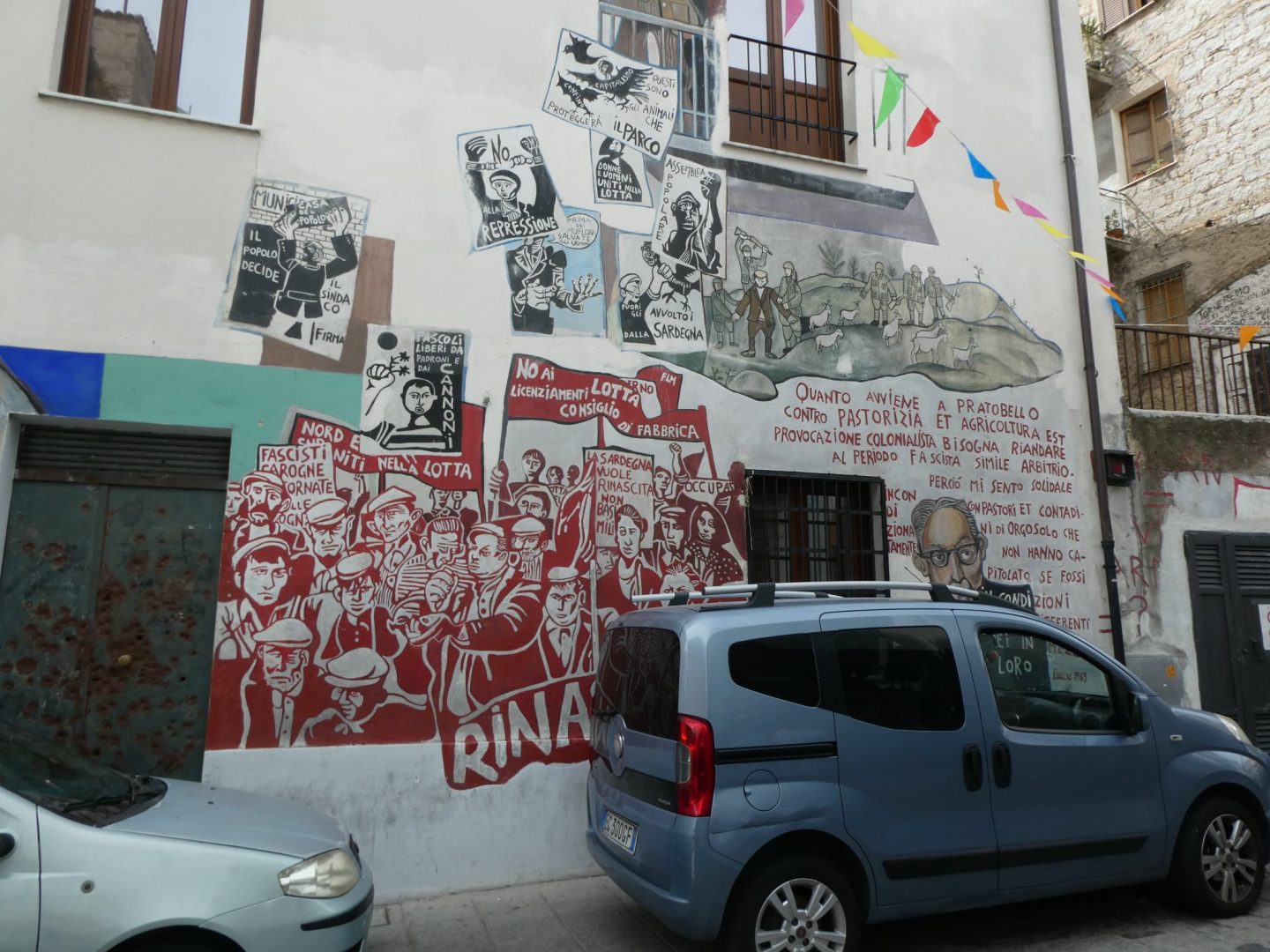
He also did quite a few over the years about political scandal and corruption.


And others lamenting the increasing encroachment of government into the lives of farmers.

His murals seem to have become more Picasso-esque over time. They also came to embrace broader social and geo-political issues. This one essentially says ‘Jesus was a Palestinian refugee too’.

He did many depicting aspects of village life. We’re not sure the women of Orgosolo thanked him for portraying them like this.
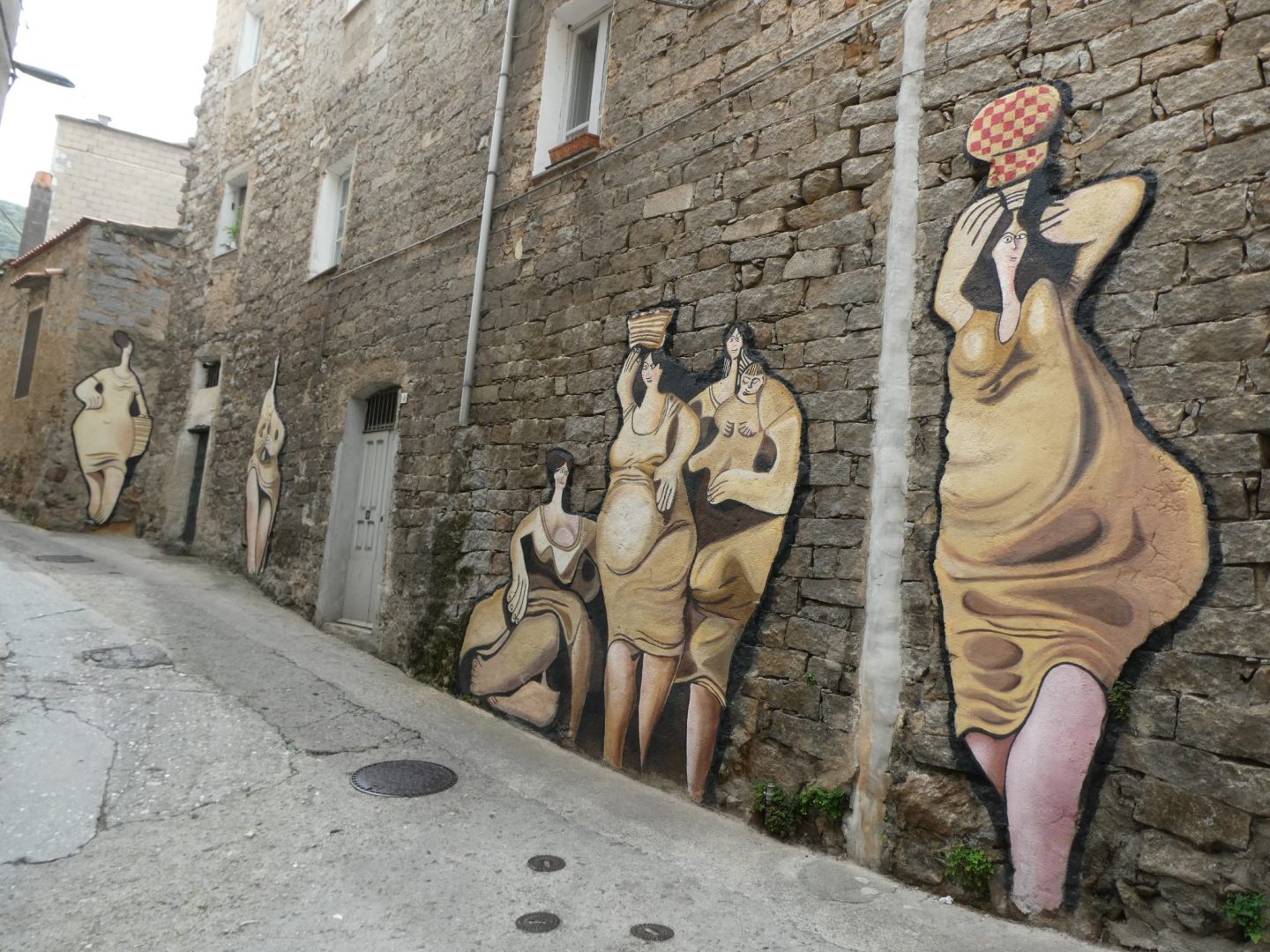
Other artists also contributed over the years. The international themes need little explanation.


And a few are homages to famous people. Most are Sardinian, like this one for Pinuccio Sciola, the artist who created the Sound Stones described in our post on Cagliari.

We aren’t sure Frida Kahlo had any connection to Orgosolo but she’s everywhere these days.

Sardinia hasn’t delivered much in the ‘freaky religion’ stakes but in Orgosolo there’s something a little disturbing.
In 1935, local 15 year old Antonia Mesina was gathering firewood when she was attacked by a 19 year old local man. A devout Catholic, she resisted. After a protracted struggle, he murdered her by striking her 74 times with a rock. An autopsy confirmed she died undefiled. Her attacker was sentenced to death by firing squad.
In 1979 she was beatified by Pope John Paul II, the first step toward sainthood.
The freaky bit? She was originally buried in the local cemetery, but in 1983 her body was exhumed. The remains were dressed in traditional costume, with a wax mask for a face, and placed in a glass coffin in the crypt of a newly built church for all the world to see.

Olbia
Our last stop in Sardinia was Olbia. The name means ‘happiness’ in Ancient Greek. It’s a pleasant place with a small historic centre.


It’s one of Sardinia’s three airport cities and the gateway to the Costa Smeralda – the Emerald Coast – where in 1963 the Aga Khan pulled together a consortium of investors to buy 55km of unspoilt coastline now covered with marina, villa and resort developments for the rich and famous.
We didn’t get to celebrity land. We really only came through Olbia to fly out. But it has several small beaches in the vicinity. We spent some pleasant sunny time at one of the local favourites, Porto Istana.
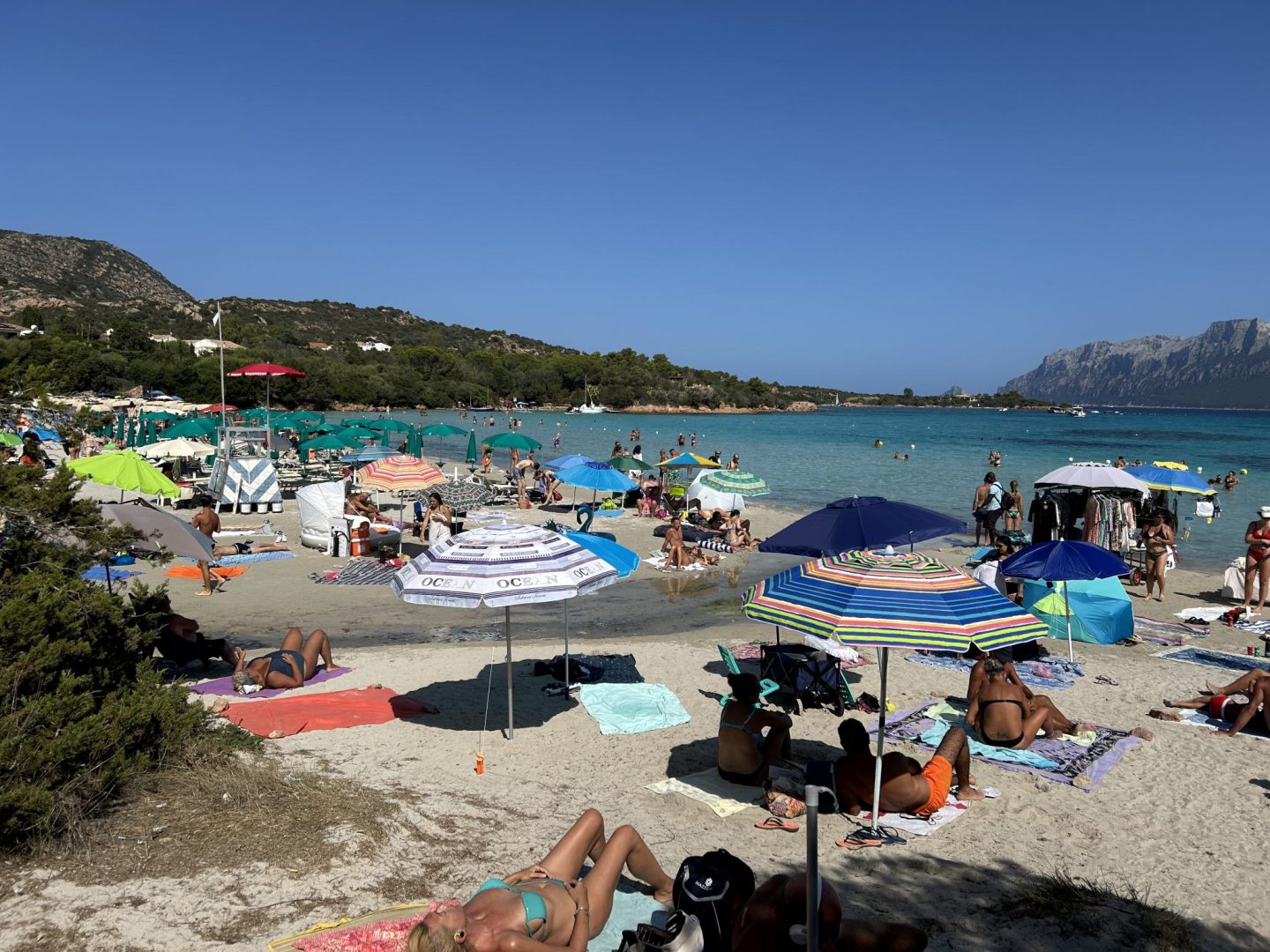

And that’s a wrap for Sardinia, and for this trip. We’re posting this from Singapore airport on our way home. Looking forward to seeing our Australian friends soon!

So 4 nights in Nuoro turned out just fine .
And the temperature dropped , good for you climbing up just 1 more hill .
As ever it was great to share a small bit of the trip with you both . Prego Ciao Ciao …for now
Author
Grazie Prego!
Brilliant – such a terrific summary. Travel safely and welcome home.