From Vienna we winged our way south again, to Sardinia. Its capital and largest city, Cagliari, has been the site of human settlement since Neolithic times but the influences you see today in the architecture, food and culture reflect its recent history: Italian for 200 years, then Spanish for 300, then Italian again since the early 1700s.
In a lot of ways it feels like ‘Palermo lite’. It doesn’t have that city’s glittering palazzos and ornate buildings, but its architecture is similar.


In the centre of town, walls once encircled a hilltop citadel for the city’s aristocracy. The former Royal Palace, Cathedral and municipal buildings are all here.
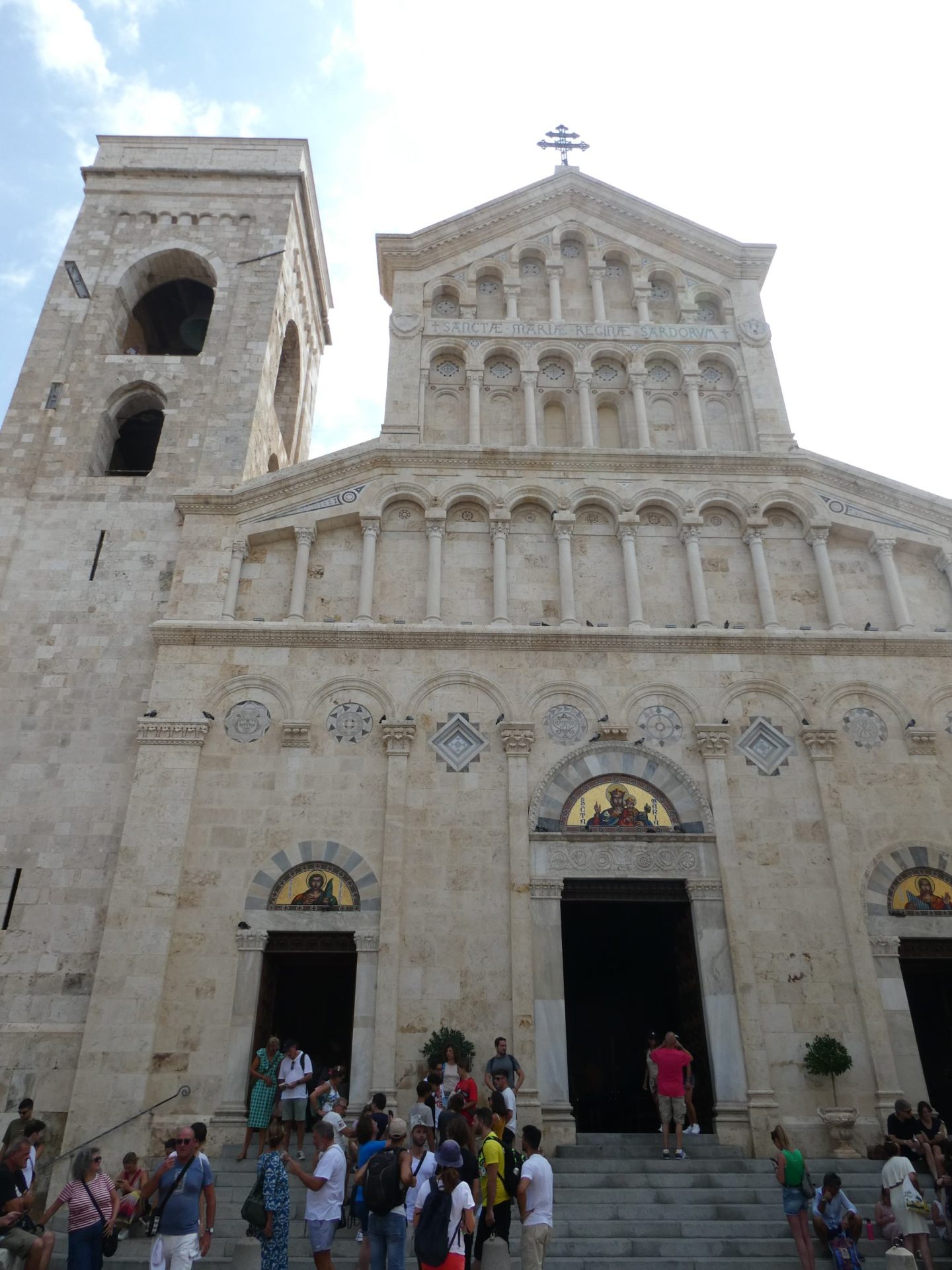

Access is via St Remy Bastion, a remnant of the city’s fortified walls.
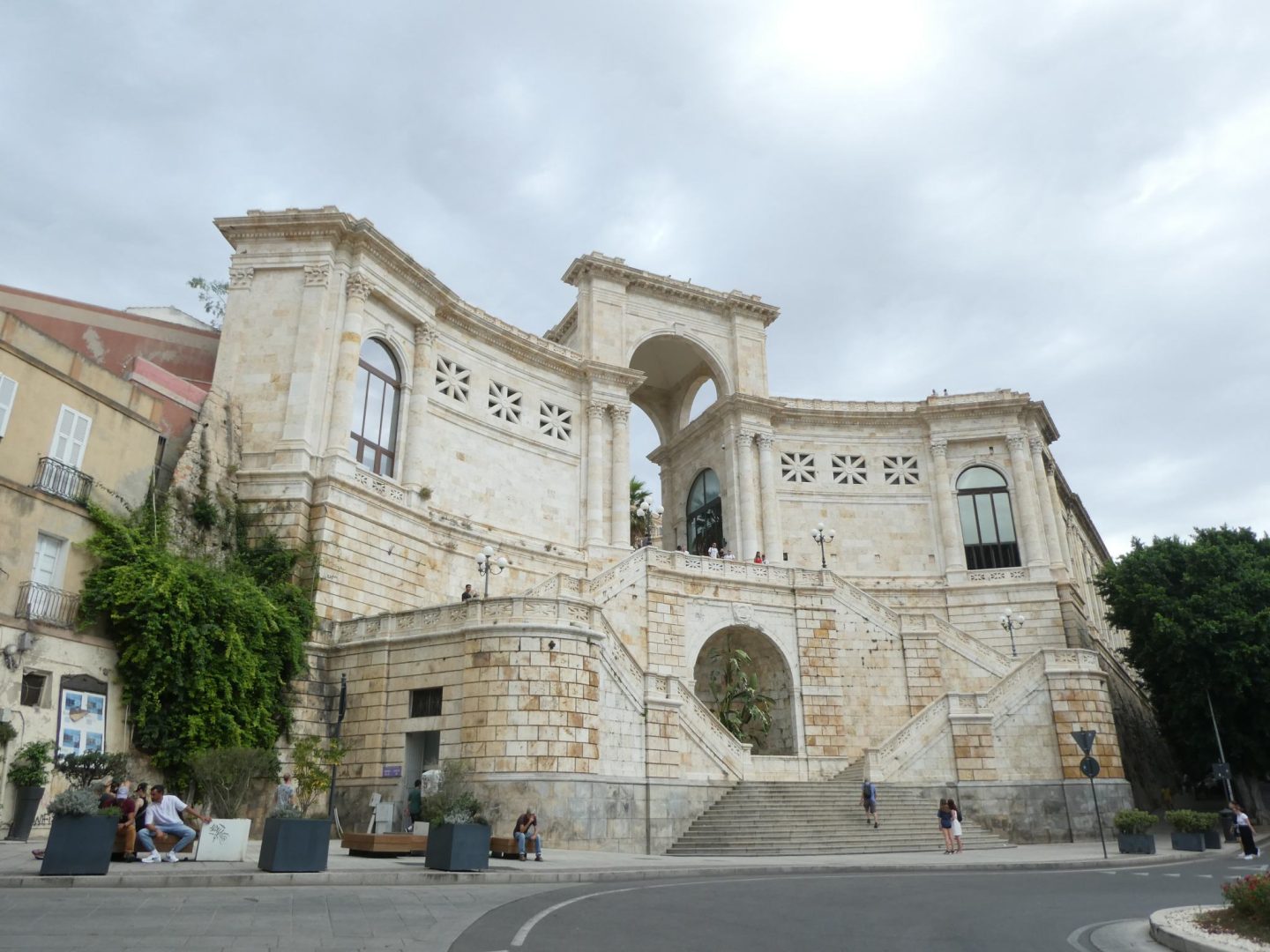
The view from the terrace on top is worth the climb.

Like Sicily, Cagliari even has an elephant. Torre Dell’elefante is Cagliari’s second highest medieval tower, with an elephant 30 metres up on the side.

He’s not as cute as the one on Catania’s Fontana Elefante. In fact, we thought he looked like a pig with a trunk grafted on.

There are lots of old town lanes and squares filled with cafes and bars.


And while it doesn’t have Palermo’s gilded splendour, the upside is that as a result Cagliari also doesn’t have the mass tourism that threatens to overwhelm that wonderful city. It’s a laid back, pleasant place to soak up a truly southern Italian vibe.
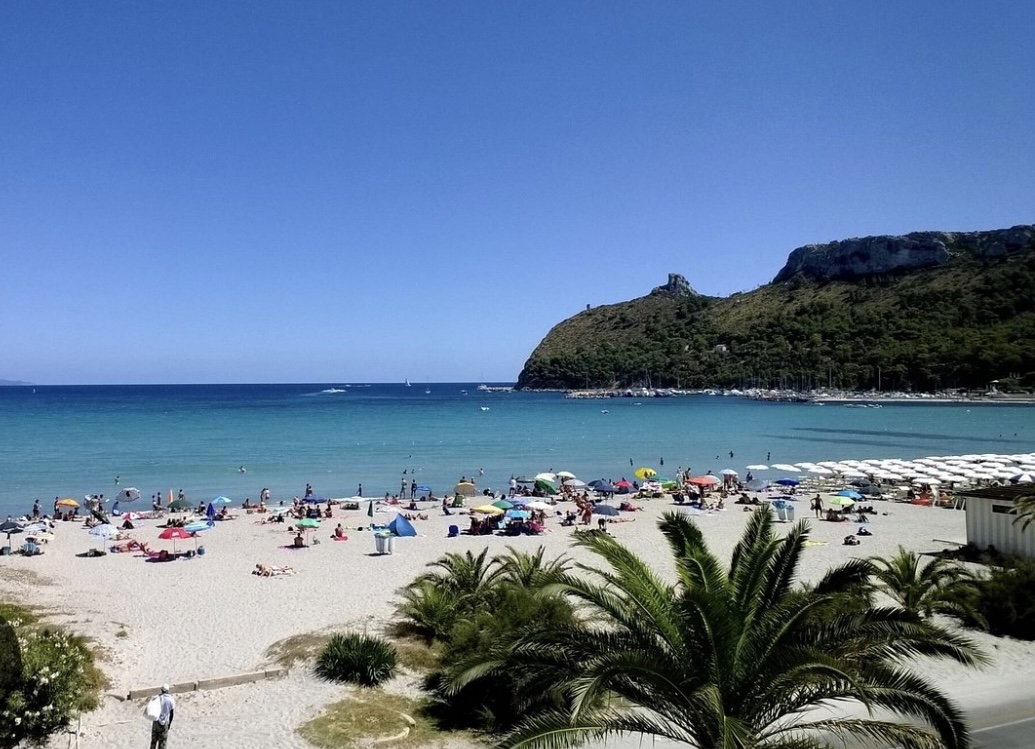
And it has Poetto Beach. Eight kilometres of fine white sand, just a short bus ride from the centre.
During the French Revolution, France tried to conquer Sardinia because of its strategic location in the Mediterranean Sea. It already had control of Corsica, right next door.
The French Army landed on Poetto Beach but was defeated by Sardinians who thought their overlords in what is now central Italy were the lesser of two evils. Italy was unified shortly after, and Sardinia has been Italian ever since.
The beach is popular with locals and visiting Italians through the summer. And there are some lovely seafood restaurants along the edge of the sand. It was great to be back by the ocean. And fish, pasta and robust Italian flavours beat Central European cuisine any day of the week for us.
Tearing ourselves away from the beach, we caught a bus up to San Sperate, a small town in the hills north of Cagliari, to see something truly unique. The Sound Garden of the Artist Pinuccio Sciola is an open air museum displaying megalithic rocks which Sciola sculpted in such a way that they can be played like musical instruments.


Somehow, he knew how to cut and shape them so that when a smooth stone was traced over the rock, musical notes emerge. He called it releasing the inner sonorousness of the rock.
It’s hard to describe, so click here to see a video of a guide demonstrating one: Video: Playing the Sound Stone
And another one shaped a bit like a boat which the guide played by just strumming the rock with her fingers: Video: Ship Shaped Sound Stone
Sciola, who died in 2016, was one of Sardinia’s best known artists. His sound stones can be found around the world. And in his home village he started a tradition of street murals. Many he completed himself, depicting different aspects of the life and history of San Sperate.


The tradition has continued and now there are more than 200. Here’s a few more recent ones.


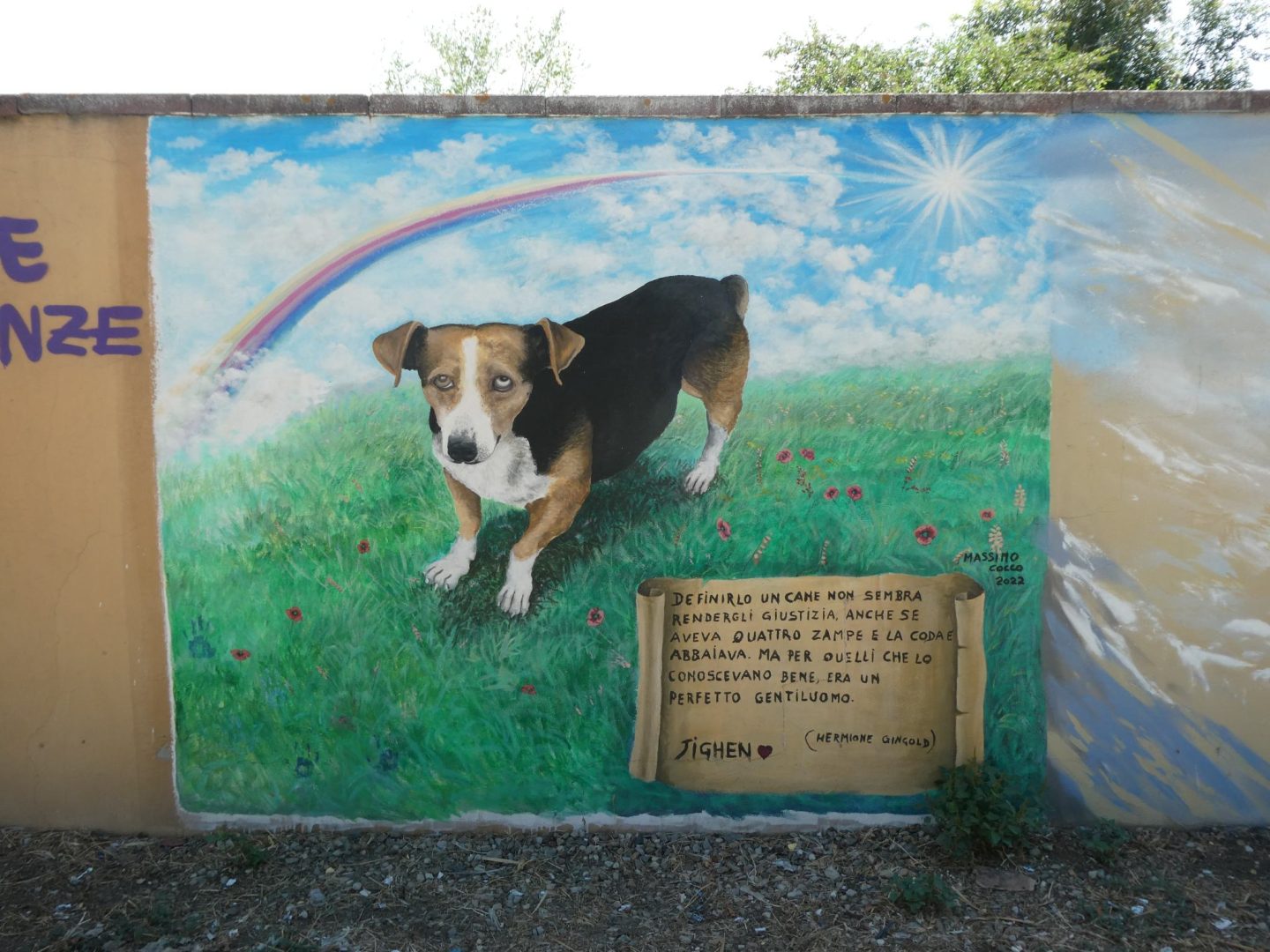
And this touching tribute to a much loved furry friend. It reads in part “Calling him a dog doesn’t seem to do him justice … To those who knew him, he was a perfect gentleman”.
We also spent a few days in Iglesias, just over an hour west of Cagliari. Silver, lead and zinc mining in the surrounding hills once made it a major industrial centre.
It was one of the first places in Europe where silver was mined, with evidence of silver extraction from as early as the 5th century BCE. By the 14th century CE, the region was producing about 10% of the circulating silver in Europe.
Silver production tapered off, but in the 1800s, lead and zinc mines were opened. For more than half a century, the area was Sardinia’s major mining region. The mining has ended but for fans of mining history or abandoned industrial landscape, it has a wealth of interesting sites.
Iglesias itself is a quiet working town. Not glamorous and not particularly touristic. But that’s part of its charm. In the summer heat, it was practically comatose when we arrived in the mid afternoon. Most shops were closed for siesta.
The local council must have got a discount on umbrellas.

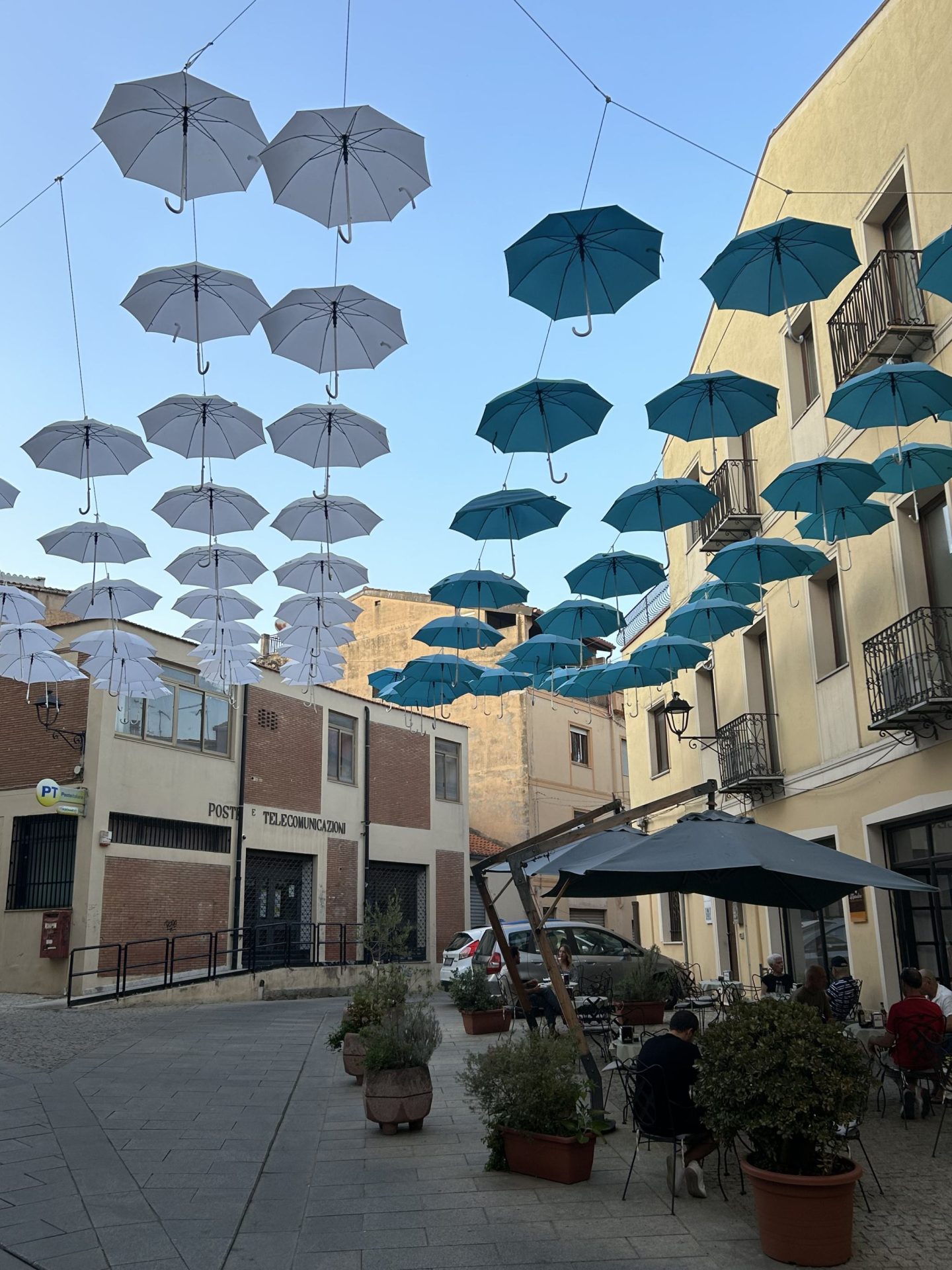
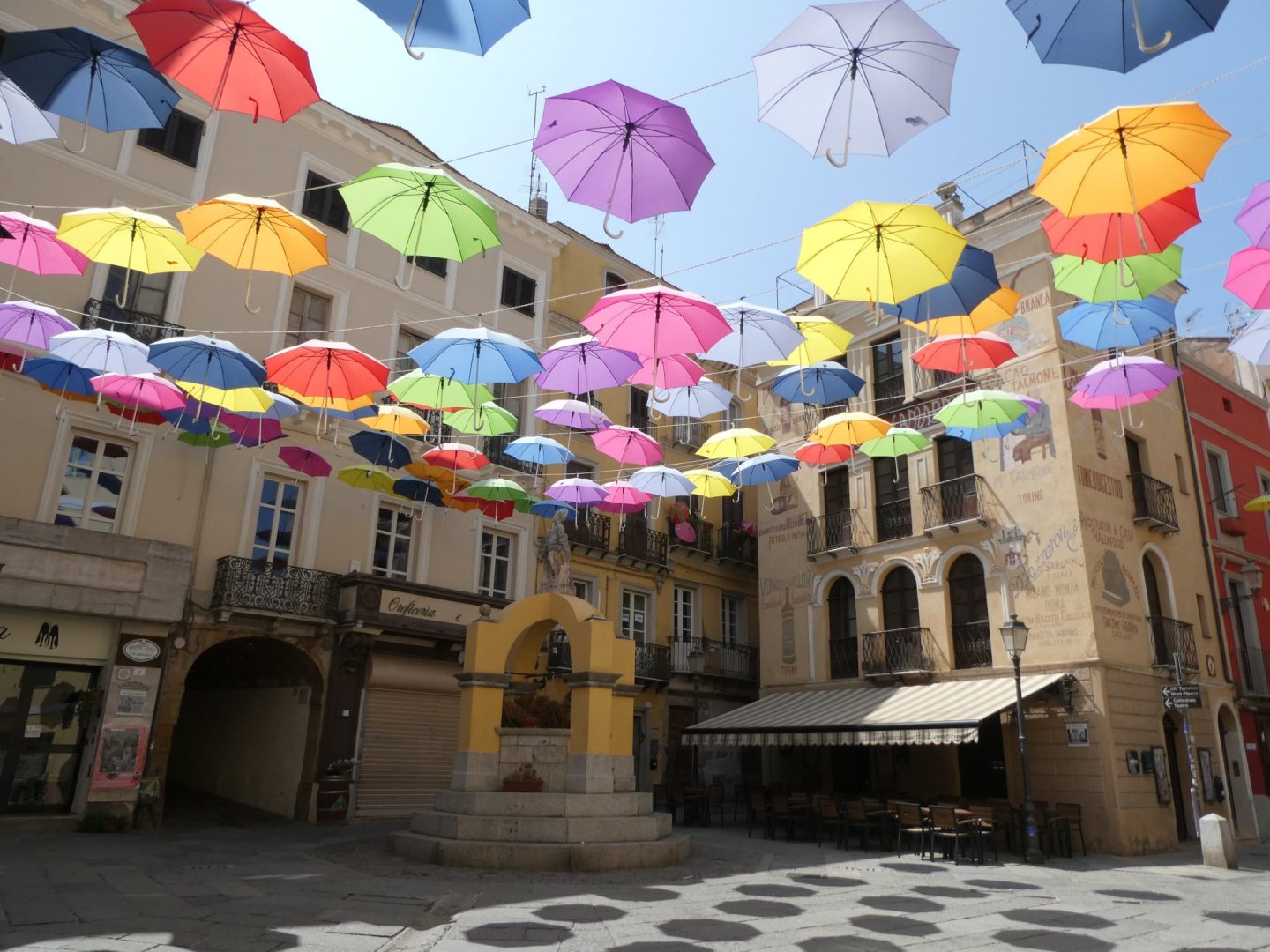
Come sundown, the town comes alive. Locals stroll, chat, walk the dogs and stop for a coffee or drink in one of the many bars. We spent a few afternoons nursing an Aperol Spritz in this one. The square was perfect for people watching.

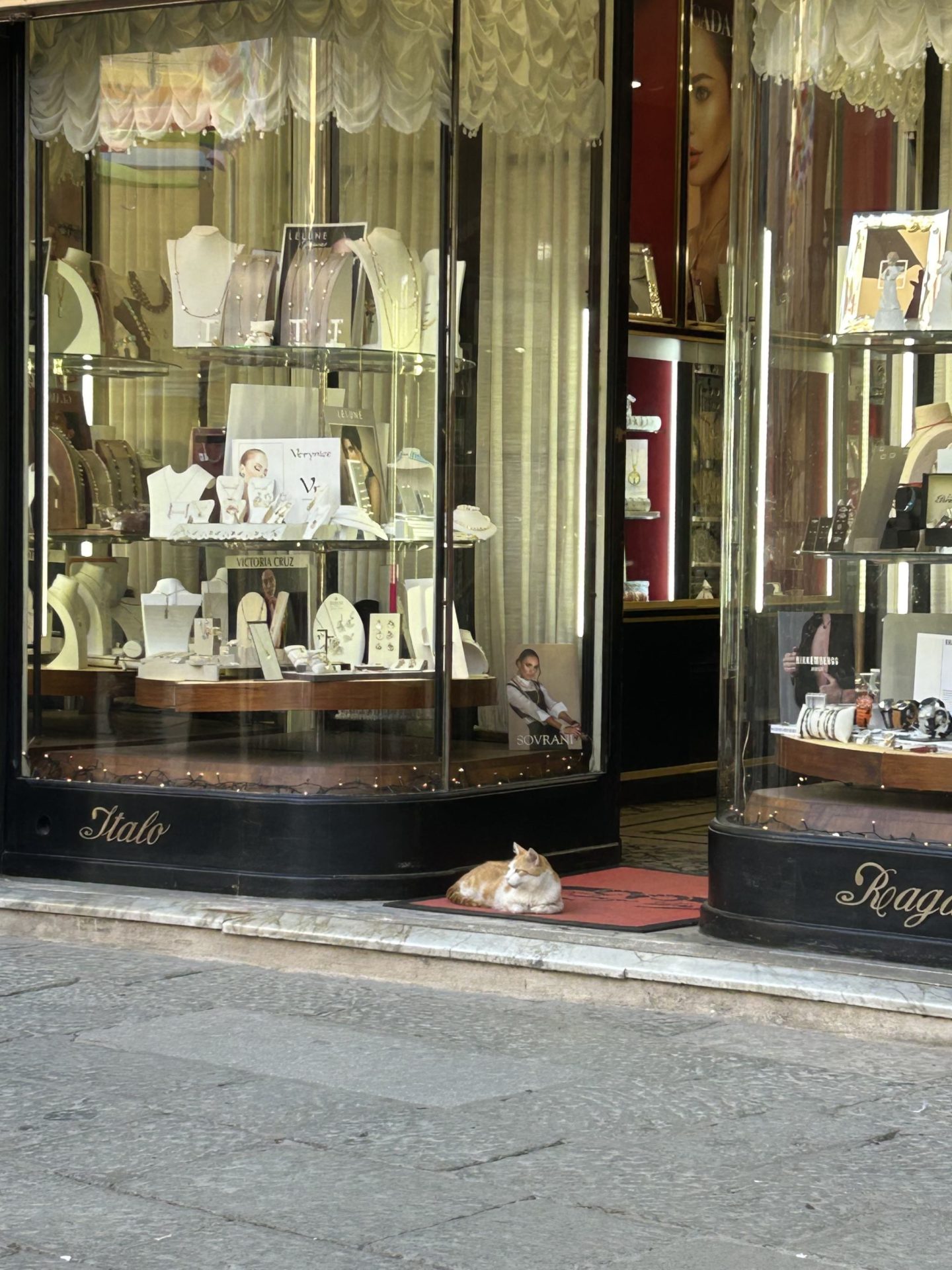
This cat, guarding the jewellery shop opposite, also seemed to think so.
Mining wealth also left an unexpected legacy: a cemetery filled with elaborate tombstones of that era.

Unusually it has an Avenue of Children.


The cemetery is famous for the sculptures of Giuseppe Sartorio (1854-1922), a Venetian renowned for his monumental public statues and tombstones. He was particularly known for the realism of his depiction of human facial expressions. There are 64 of his bespoke gravestones here.


Even the more recent tombstones are elaborate, individualised works of art.


Most of the mines stopped operating in the 1950s and 60s due to declining profitability. But there are relics of the era all over the hills.
The lead and zinc mine near the village of Nebida, just down the road from Iglesias, was one of Sardinia’s main mines in its day. A walking path from the village passes the remains of the administration building and site offices.
 The paved path turns to a goat track which leads to the rail system once used to convey rock to the processing building. Adjacent to the rails, 300+ steps lead down to Lavenderia Lamamora.

Built in 1897, the Lavenderia was where a workforce of mainly women stood or knelt in water and mud to sort and wash the minerals from the rock. The good material then passed to a marina below where it was shipped. Poorly paid, back breaking work. If a worker spoke, an amount was deducted from their pay, but curiously they were allowed to sing.
Decommissioned in the 1930s, the site was neglected for decades. In recent times, some restoration work has been done, although technically it’s still closed to the public.

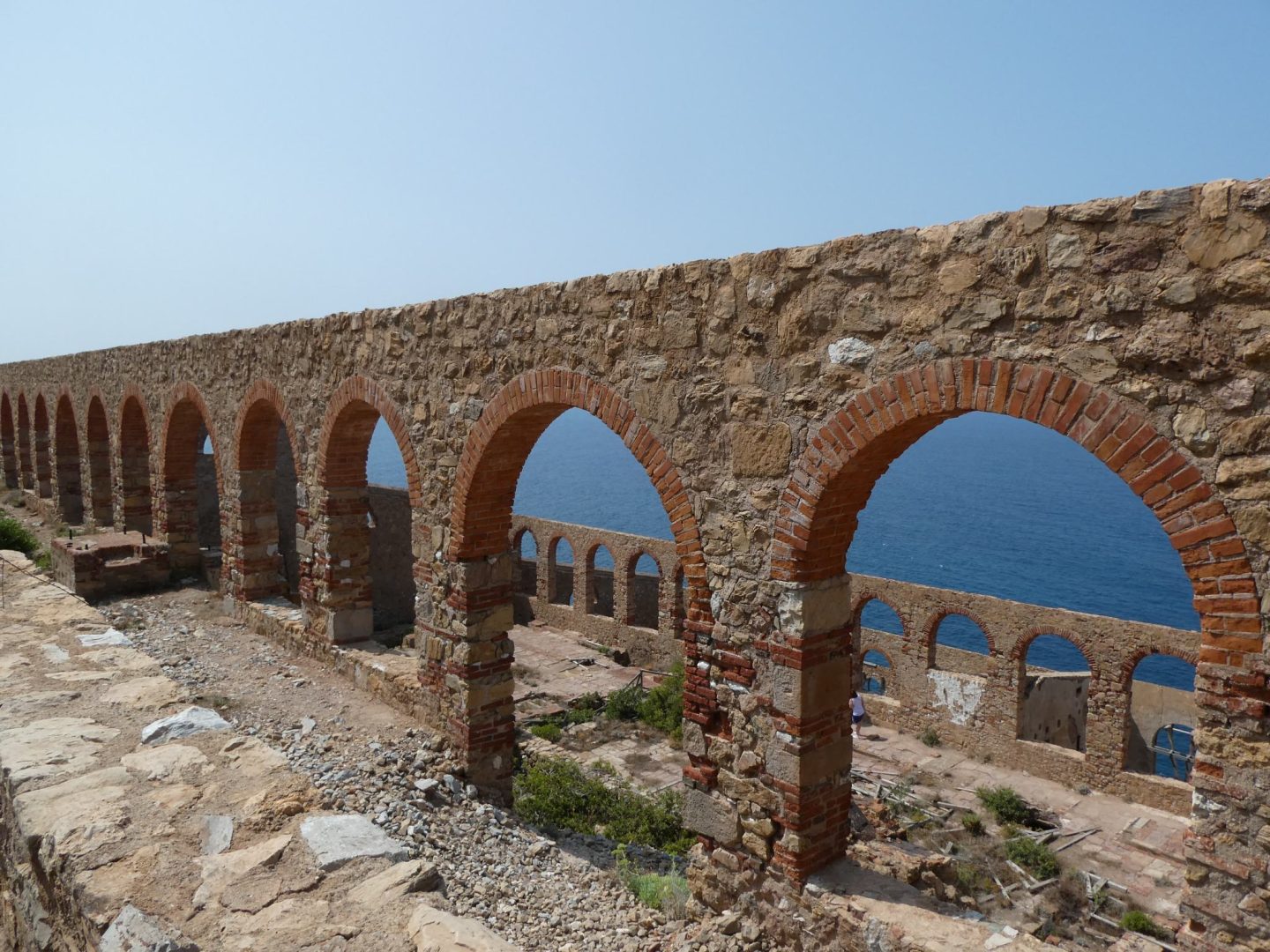
The views from the ruin on a bright blue sky day are impressive. This is a spectacular coast.


And after the climb back up the 300+ steps, the reward is a pizza with one of the best views you could ask for.

From the beach at Masua, 20 minutes north, boats will take visitors out to see the Lavenderia from the sea. It’s a view which features heavily in tourism promotions for Sardinia. But unfortunately we didn’t get the opportunity to see it. Even though the ocean looks benign in the photos above, the wind was strong and the boat captains weren’t prepared to go out. Here’s one of the promotional shots.

There are no deep water ports in the area. The coast is essentially mountains running straight down into the sea. When lead and zinc mining started here, the minerals had to be loaded manually onto small boats at sites like the Lavenderia and then transferred to bigger boats for shipping to foundries elsewhere in Europe. It was time consuming, labour intensive and costly.
In 1922-24, an ambitious project was conceived to overcome this problem. Two 600 metre tunnels, one over the other, were blasted through a cliff near Masua exiting high above the sea. The chosen site was sufficiently sheltered from strong wind to enable large boats to anchor close to land. The tunnels were interspersed with silos capable of holding 10,000 tonnes of material which was then discharged directly into the hold of the ship below.

You can walk the tunnel, with a guide explaining the history and engineering aspects, ending at the sea outlet. Here there’s a great view of Pan di Zucchero – Italian for ‘sugarloaf’. Rising 132 metres out of the ocean, it is the tallest sea stack in the Mediterranean.

Like Lavenderia Lamamora, the best view of Porto Flavia is from the sea but with the boats not runnning, here’s a photo from the internet.

No boat trips for us but there are walking trails along the cliffs. Steps down to Masua Beach and nearby Porto Cauli lead to tiny beaches where the water is calm and a perfect temperature for swimming. Not a bad alternative.

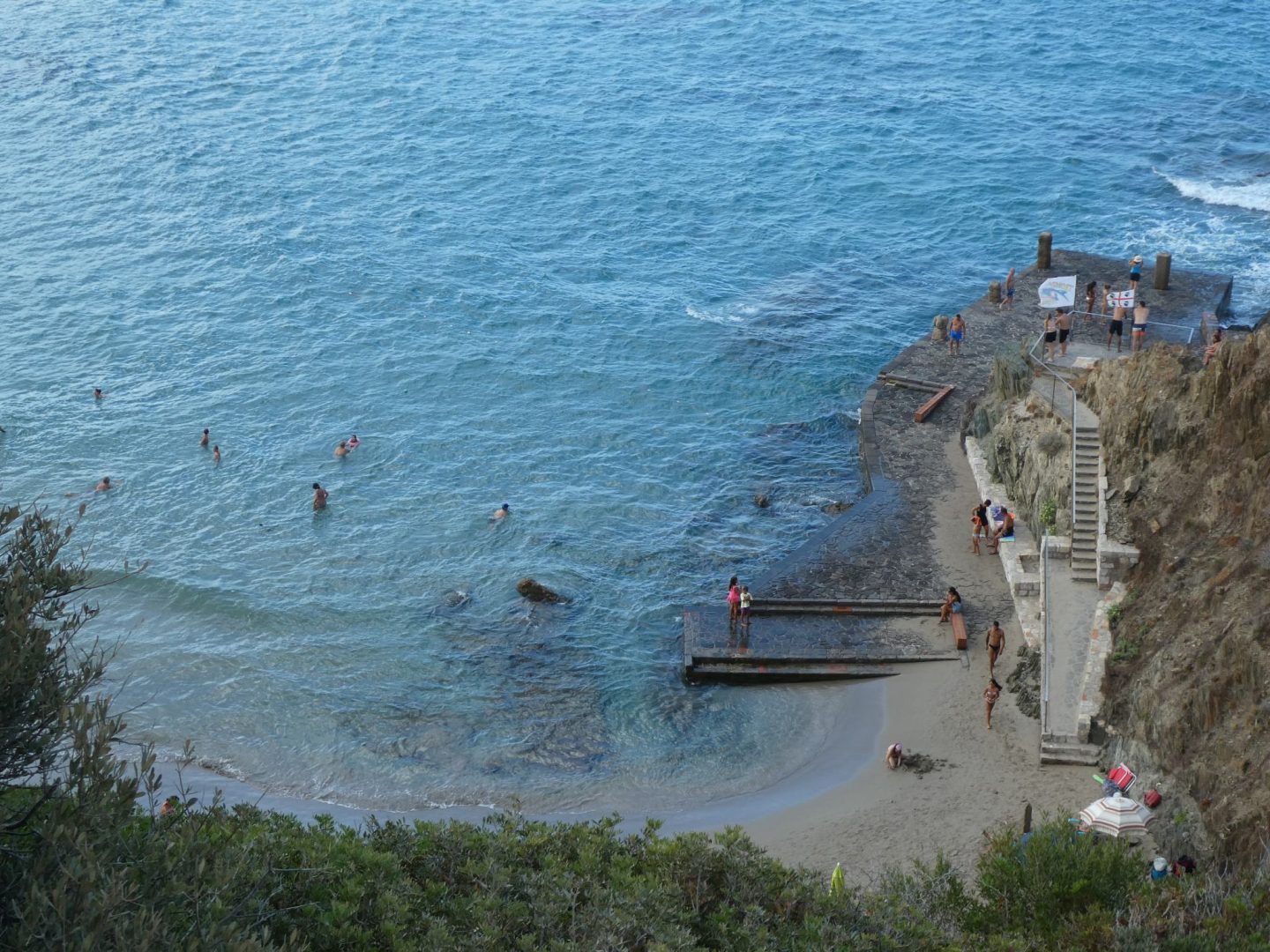

A relaxing few days in a less touristed part of Italy.

Very interesting read – the sound artistry is really something different – thanks for the experience x
Yes, the elephant does look most porcine like. Love the beautiful pooch portrait. He has very sad eyes. Interesting to note the mask wearing in the recent murals. It will forever mark that time in history.
Nice to visit a less touristed place that still has stunning architecture and gorgeous beaches.