When UNESCO announced its inaugural World Heritage list in 1978 naming twelve sites around the world for their outstanding cultural or natural heritage, Kraków’s historic centre, including the Old Town and adjacent Wawel Castle compound was one. It’s easy to see why.
Krakow was the royal capital of Poland for almost 600 years, until the court moved to Warsaw in 1596. It has also briefly been the capital a few times in the modern era, and for centuries has been recognised as one of Poland’s leading cultural, artistic, academic and economic centres.
It wasn’t extensively bombed in WWII. And unlike in Warsaw, the Nazis didn’t lay waste to the city as they retreated in the closing stages of the war. As a result, most of the Old Town emerged relatively intact.
Wawel Castle in its roughly present form dates to the 14th century.
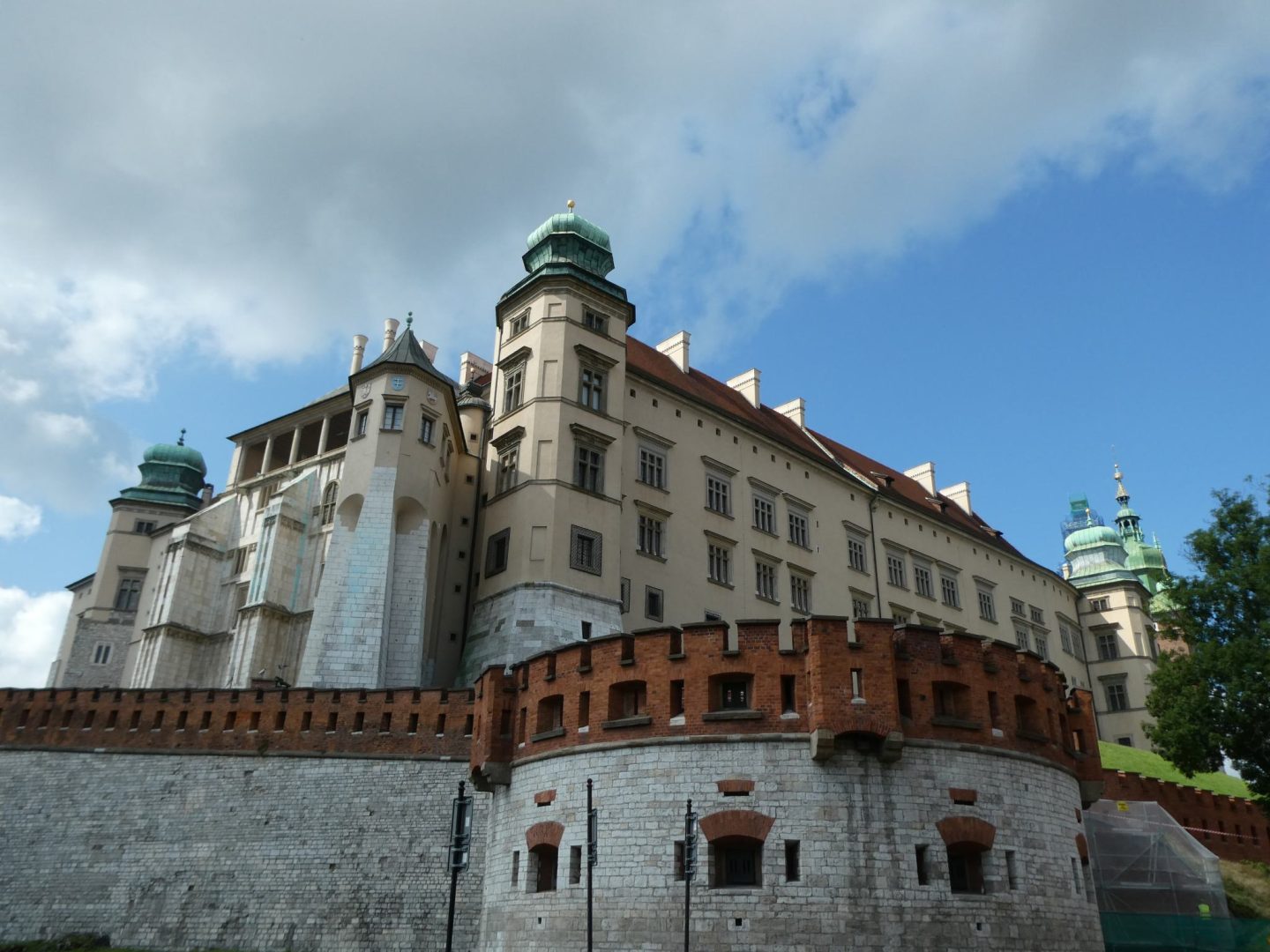
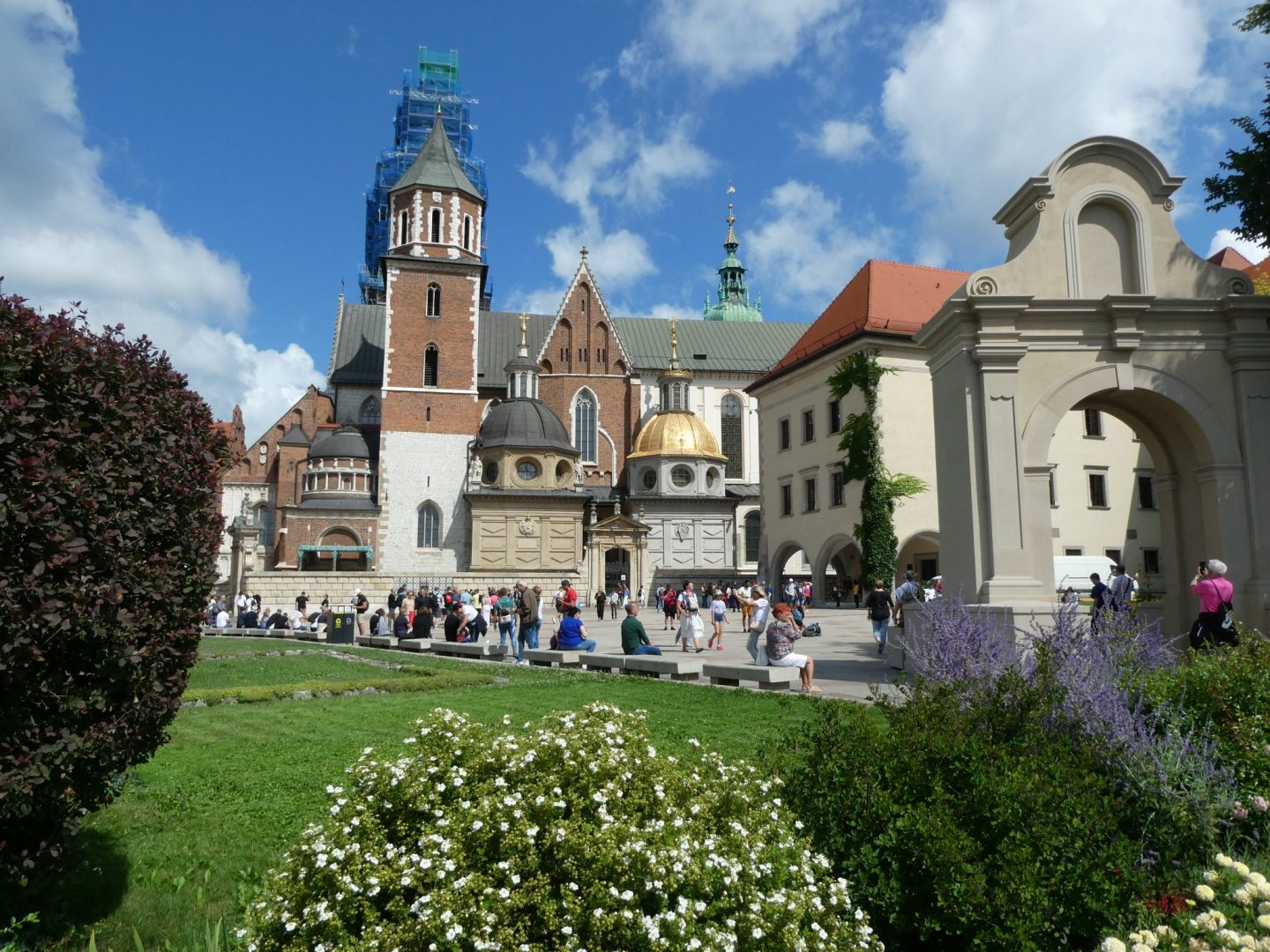
Because it’s been added to, repaired and re-decorated over the centuries according to the tastes of the reigning monarch, the castle complex is a hotch-potch mix of Gothic, Renaissance and Baroque.
Inside the castle, the restored royal apartments showcase such treasures as a collection of tapestries dating to 1550, a Meissen porcelain collection and a display of Ottoman era tents. Exhilarating viewing.
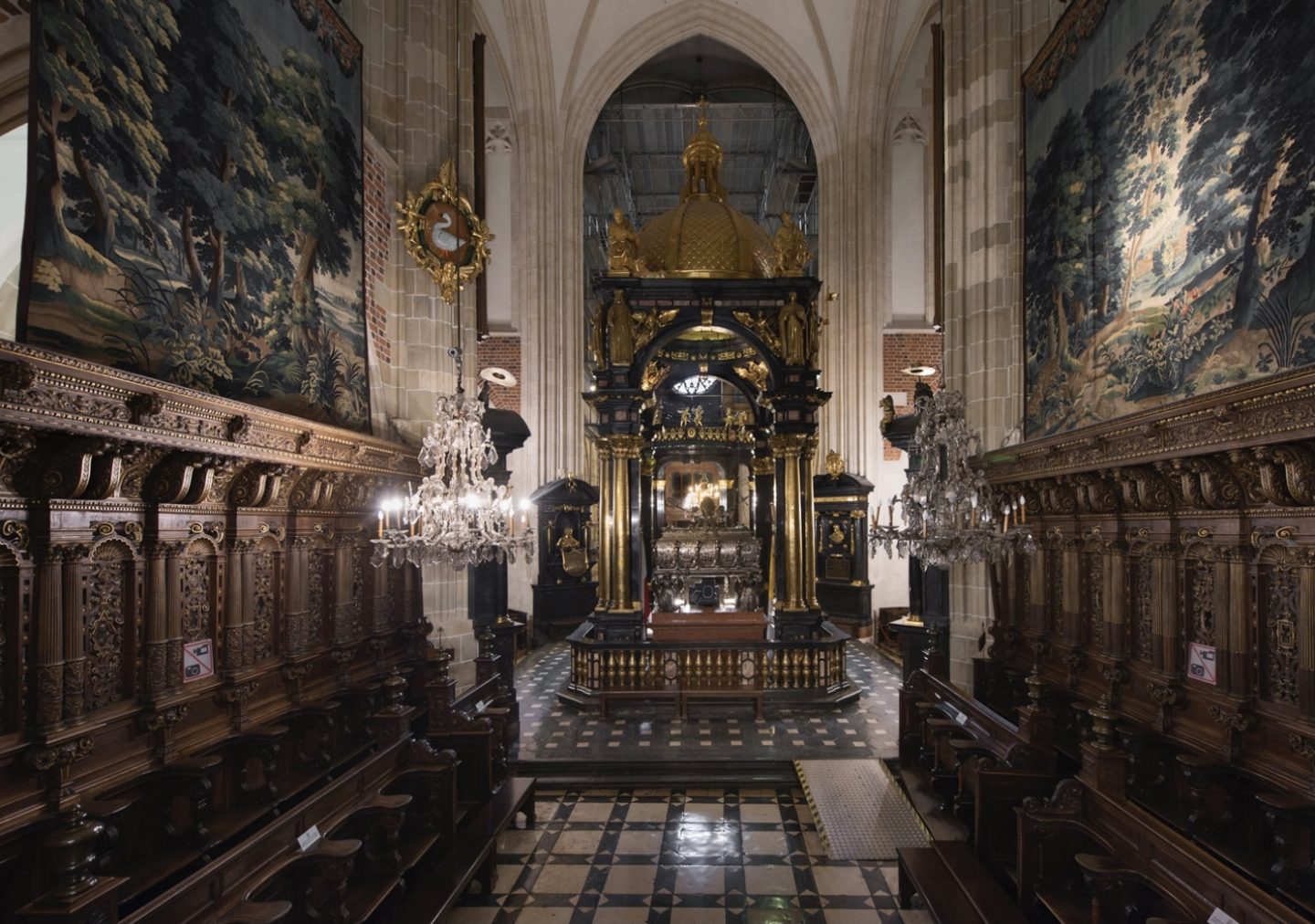
But the highlight of the complex is Wawel Cathedral, built in the mid 1300s complete with side chapels dedicated to a myriad of saints and an underground crypt full of Polish luminaries.
The first Polish king to be crowned, and later buried, in the cathedral had the unfortunate name Wladyslaw I the Elbow-high. By all accounts a skilled military leader and canny political strategist, the moniker seems rather cruel. Polish archeologists who have examined his sarcophagus estimate he was probably about 152 to 155cm high, which is short by modern standards but only a shade less than the average European living in the Middle Ages.
After him, a succession of other royals were interred here.
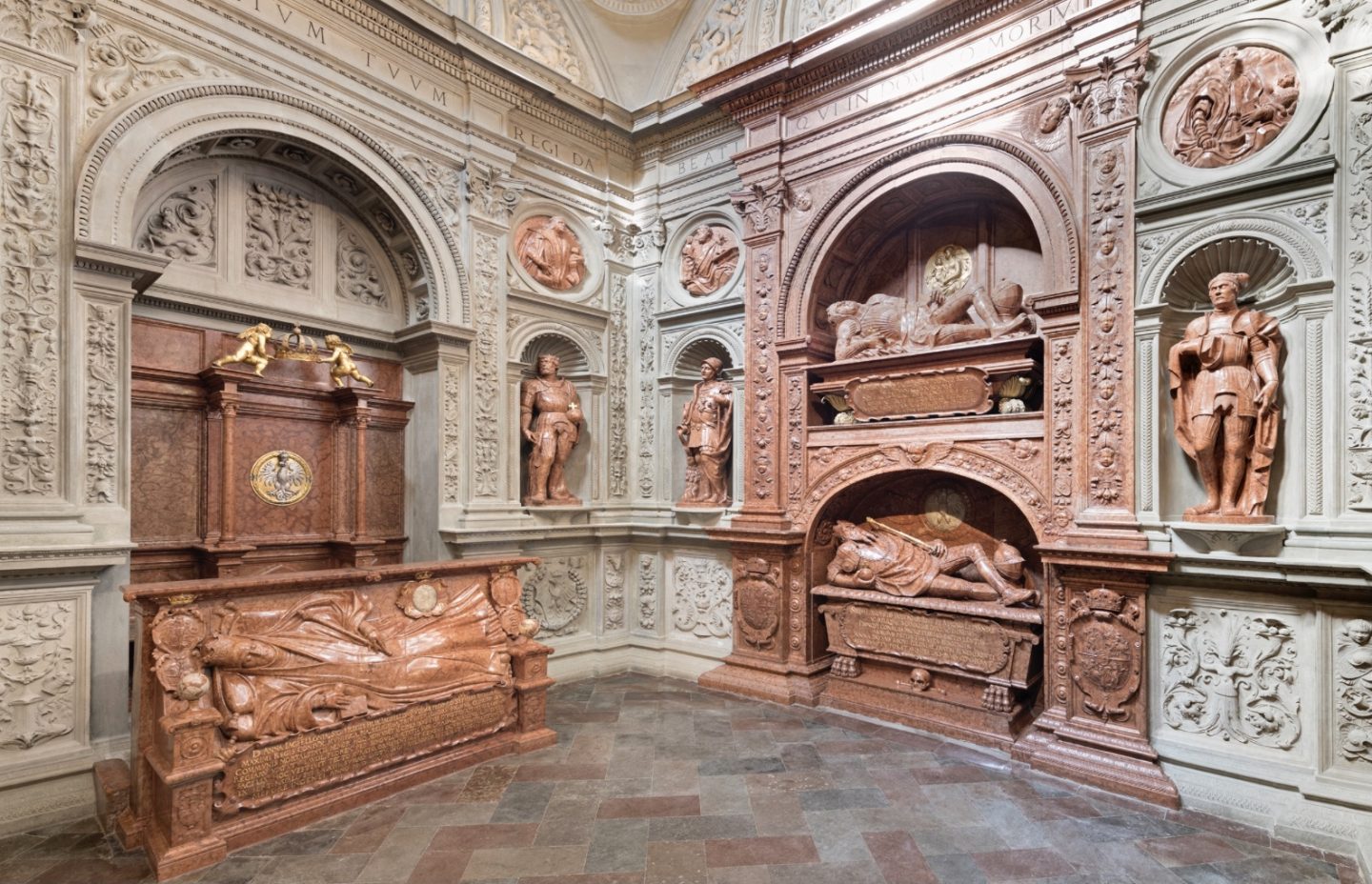
There are also several national heroes of Poland’s independence struggle and some notable Polish poets and writers. We’d never heard of any of them, which led us to play ‘name five world famous Poles’. That ended up being reasonably easy: Copernicus, Chopin, Pope John Paul II, Lech Walesa, Roman Polanski. Better than Serbia where, aside from war criminals, the only one we could think of was Novak Djokovic.
The Cathedral is quite gob-smacking but photographs are prohibited, so the previous one and these next three are some we’ve pulled from the internet. It really does look like this, except with a zillion or so people trudging through or standing, gaping at the bling.


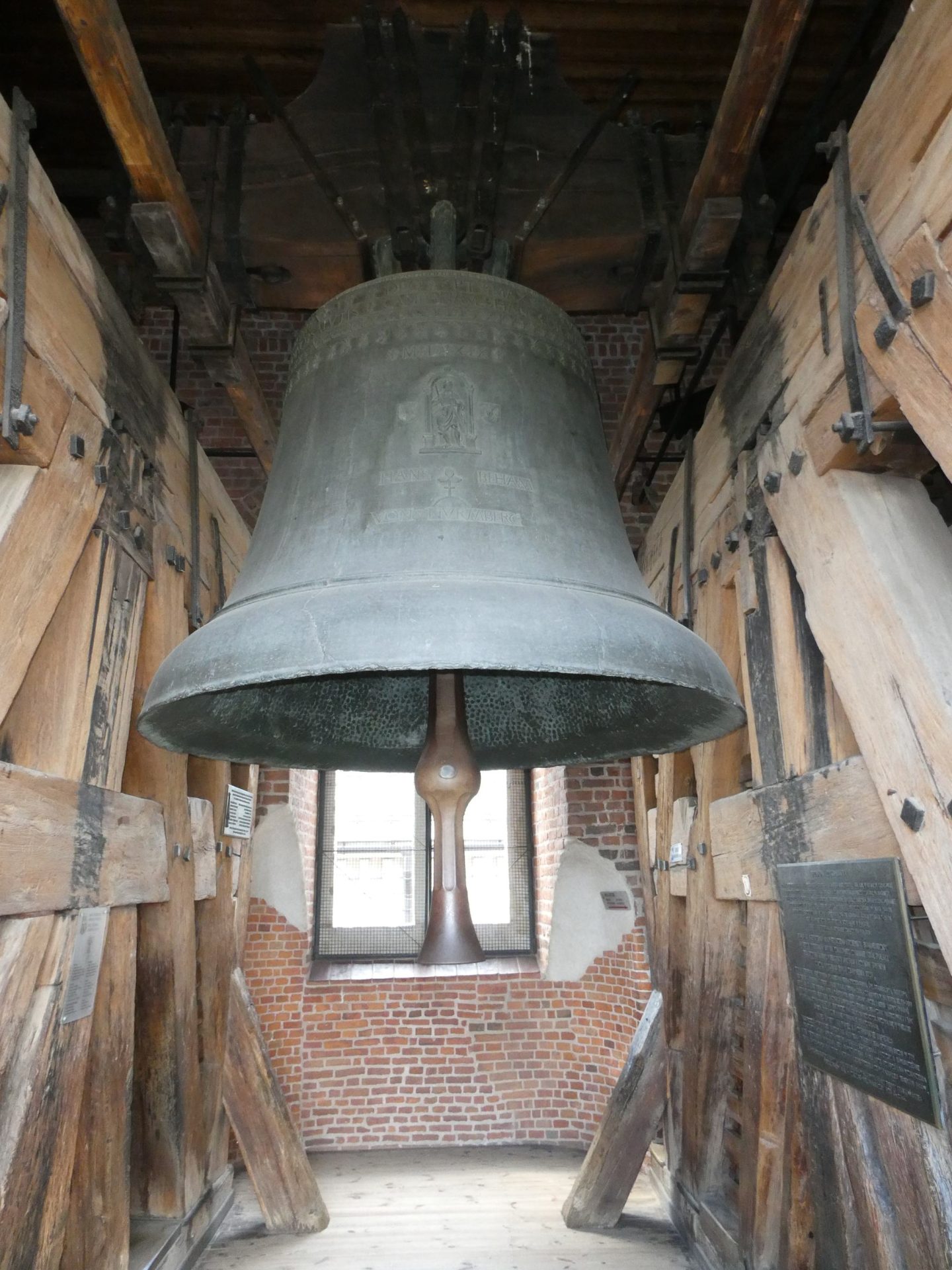
Up in the tower is the Sigismund Bell weighing almost 13 tonnes, named to honour King Sigismund I the Old. It takes 12 bell-ringers to toll and can be heard 30km away. It’s reserved for special occasions such as, in recent times, the election of Pope John Paul II as the first Polish Pope, and Poland’s accession to the EU.
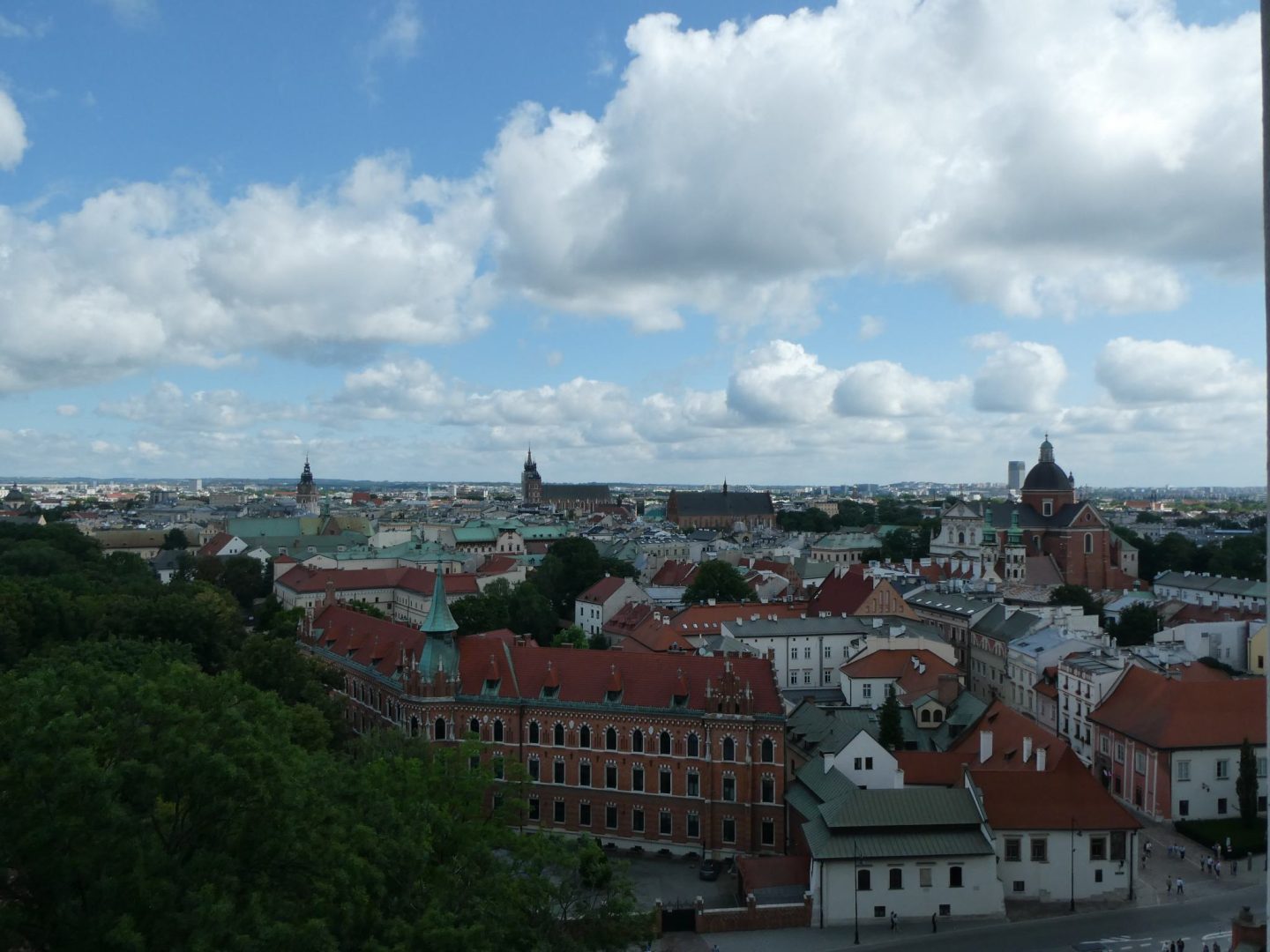
More interesting than the bell is the view over Krakow from the window of the tower.
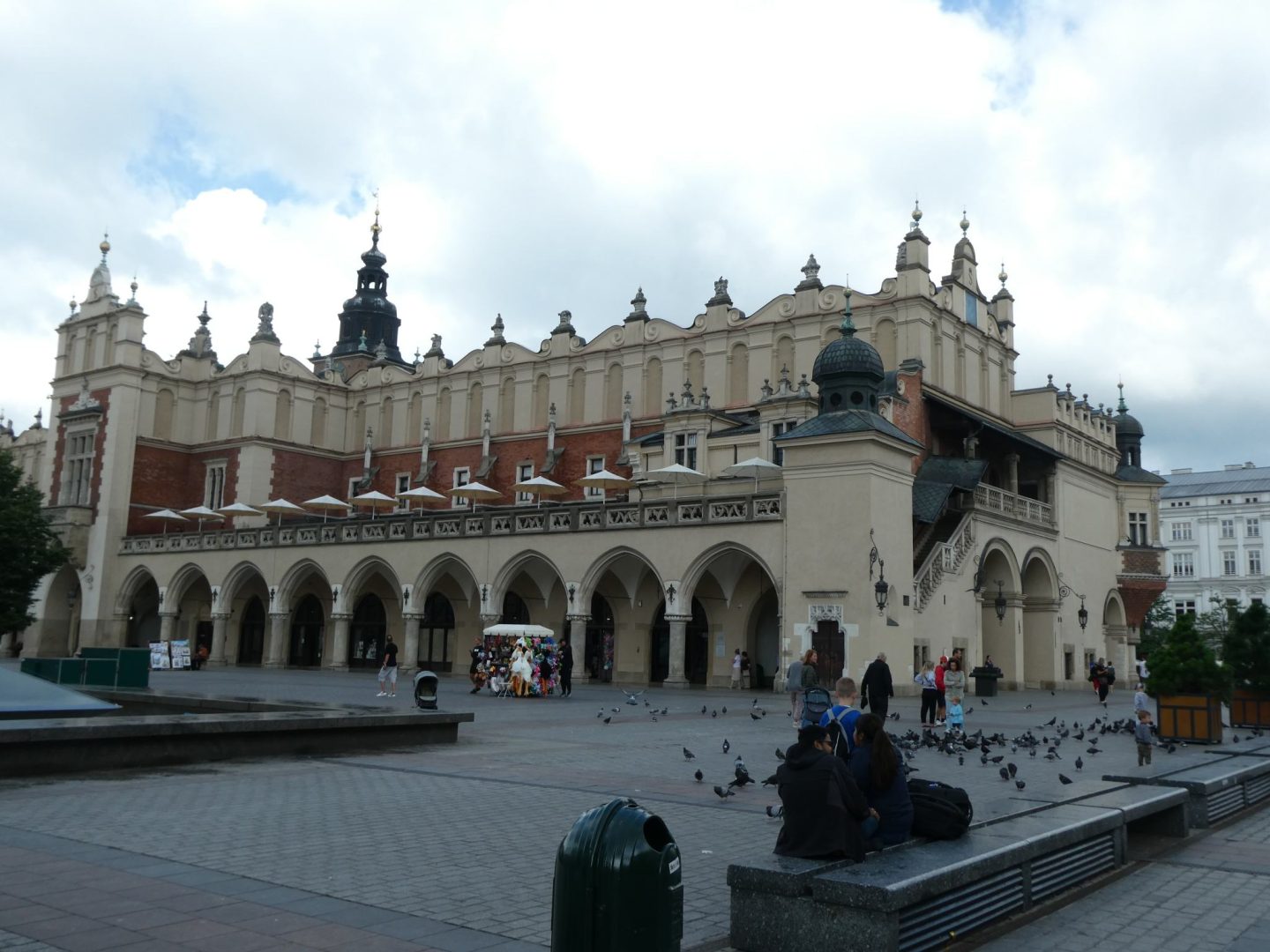
From the 1300s to the 1800s, several major trade routes ran through Krakow. It has the largest preserved medieval market square in Europe, 200 x 200 metres.
Cloth Hall was built in the 1800s to replace a previous Gothic hall. Once full of textile merchants, the ground floor is now a series of stalls selling tacky tourist souvenirs, junky jewellery and mass produced ‘crafts’.
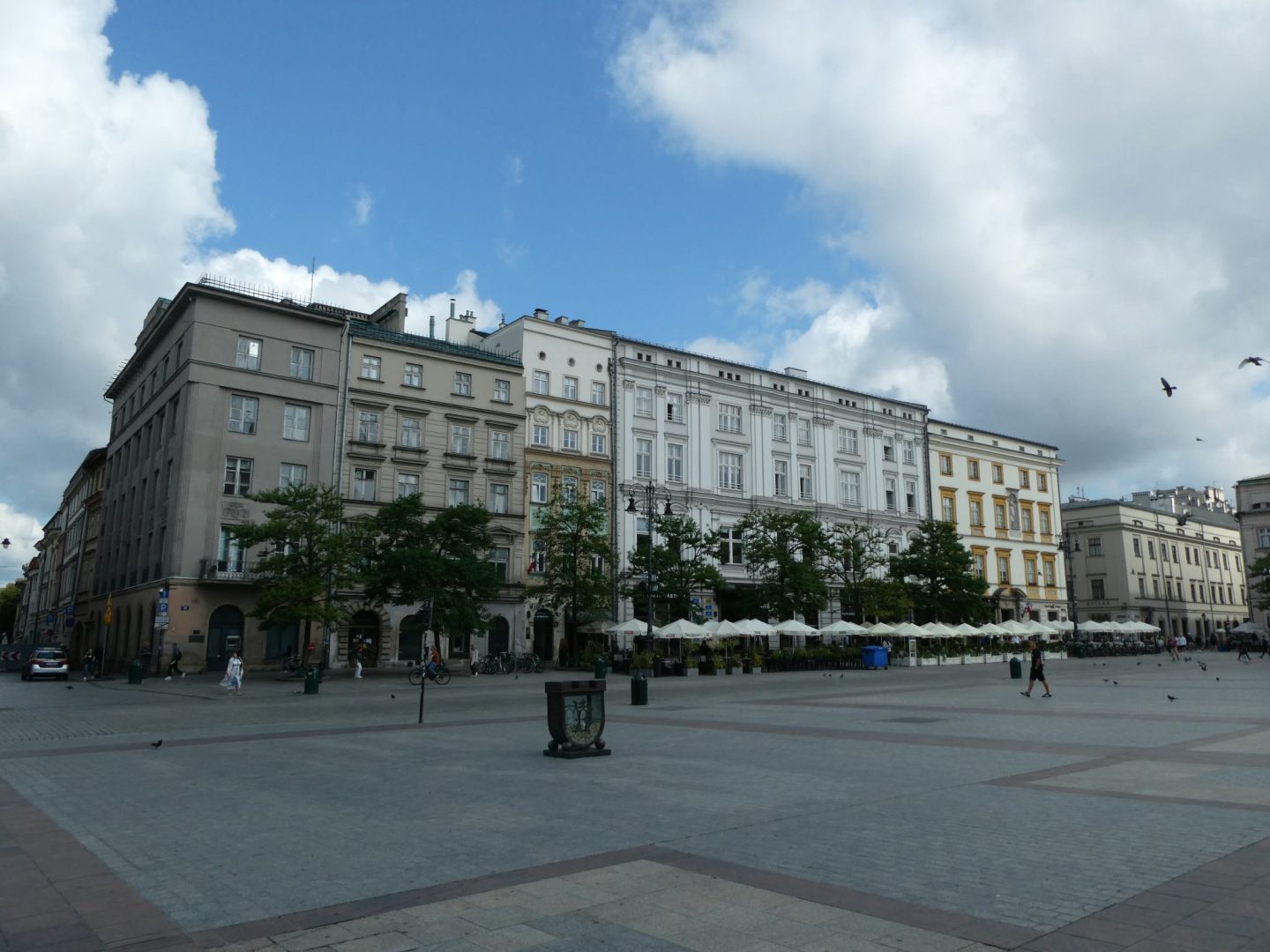
 The square is bordered on all sides with the former townhouses of wealthy merchants and almost completely encircled with restaurants and cafes. Over-priced for sure, but not a bad spot for a late afternoon drink while people watching.
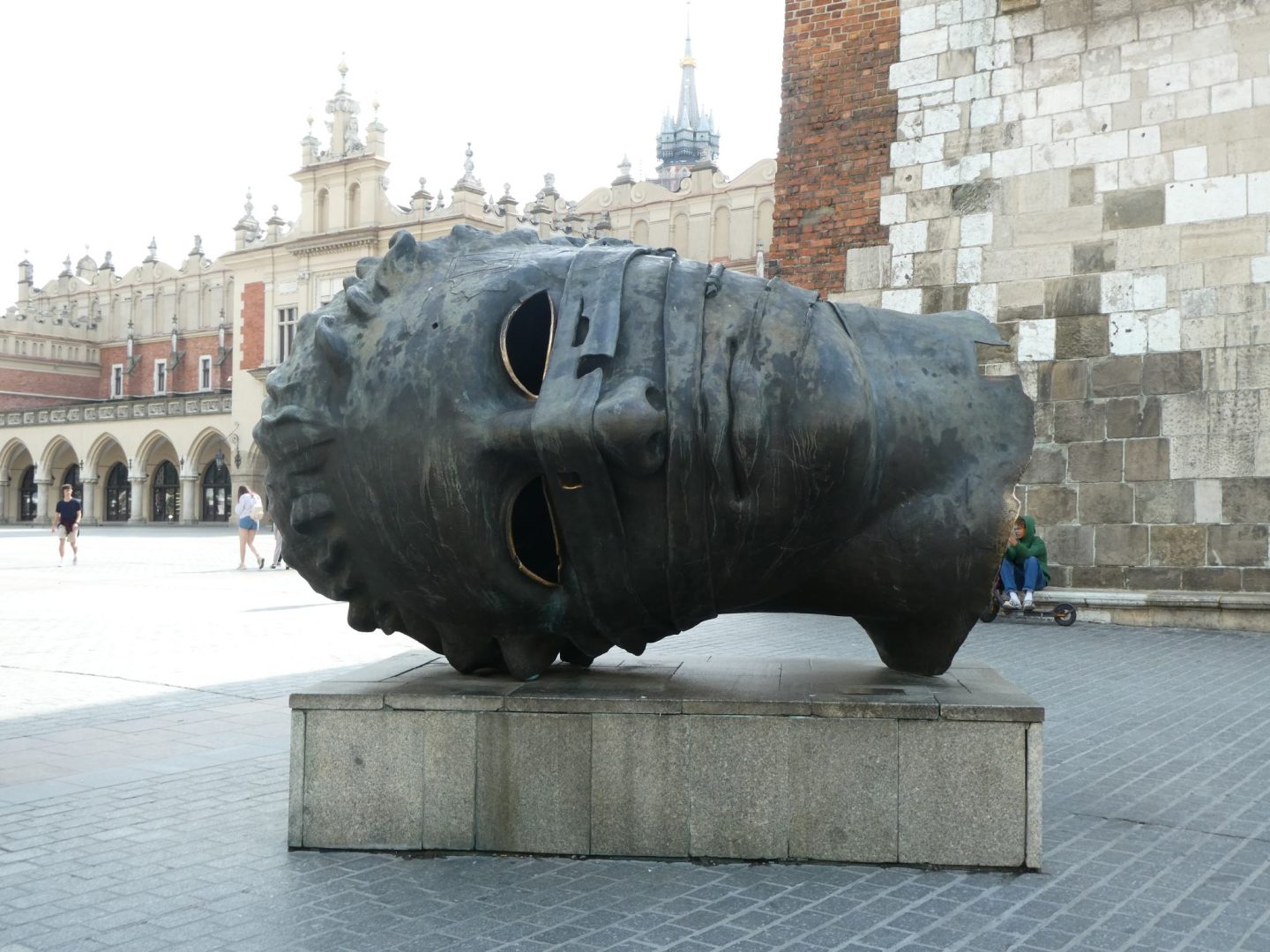
Randomly placed in the square is Eros Bound, affectionately known as The Head. It’s the work of Igor Mitoraj. If you read our Siracusa post, it might look familiar. He’s the Polish sculptor responsible for the monumental Greek and Roman style pieces temporarily installed among the ruins there.
Carriage rides around the Old Town are popular.

South of the Old Town is the suburb of Kazimierz. It was the heart of Jewish life in Krakow until WWII when the occupying Nazis forced all Jews to relocate to the Krakow ghetto. They largely destroyed the suburb, and after the war the communists left it as a crumbling ruin.
In recent decades it has started to take on a new life as a trendy, buzzy bar precinct. Classic inner-urban renewal.
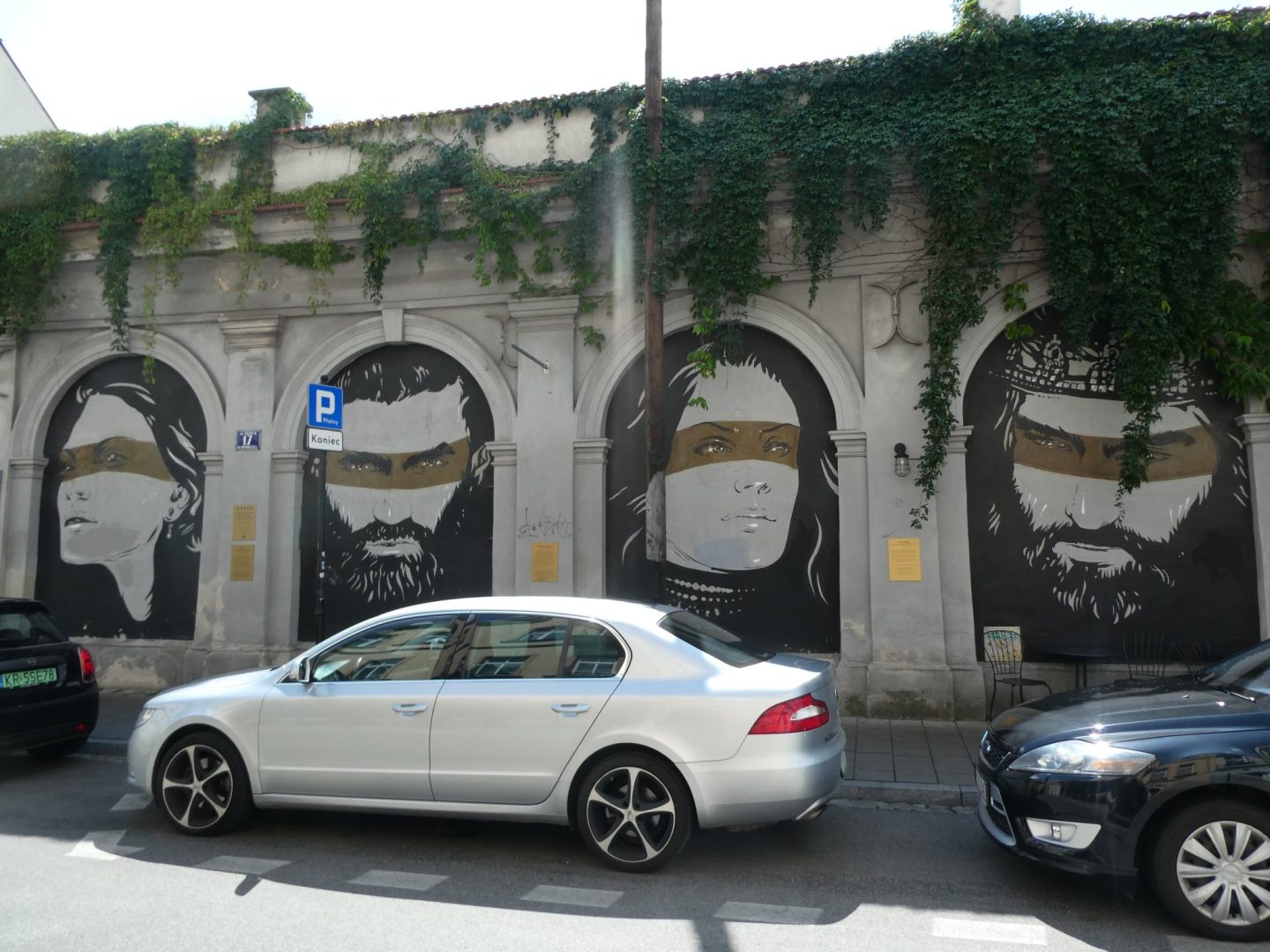
This mural depicts four famous Jews born in Kazimierz, including Helena Rubinstein. She emigrated to Australia in 1896 after refusing a proposal for an arranged marriage. Starting with no money and limited English, she went on to create a cosmetics empire based on lanolin from our famous merino sheep.
She was the world’s first female self-made millionaire. In a beautiful example of sticking it to the male-dominated world of commerce, she sold her business to Lehman Brothers in 1928 for $7.8m, bought it back during the Great Depression for $1m and over the next three decades built it up to a company worth $100m.
She famously said “There are no ugly women. Only lazy ones”. Not exactly a feminist for modern times. That’s her second from the right.
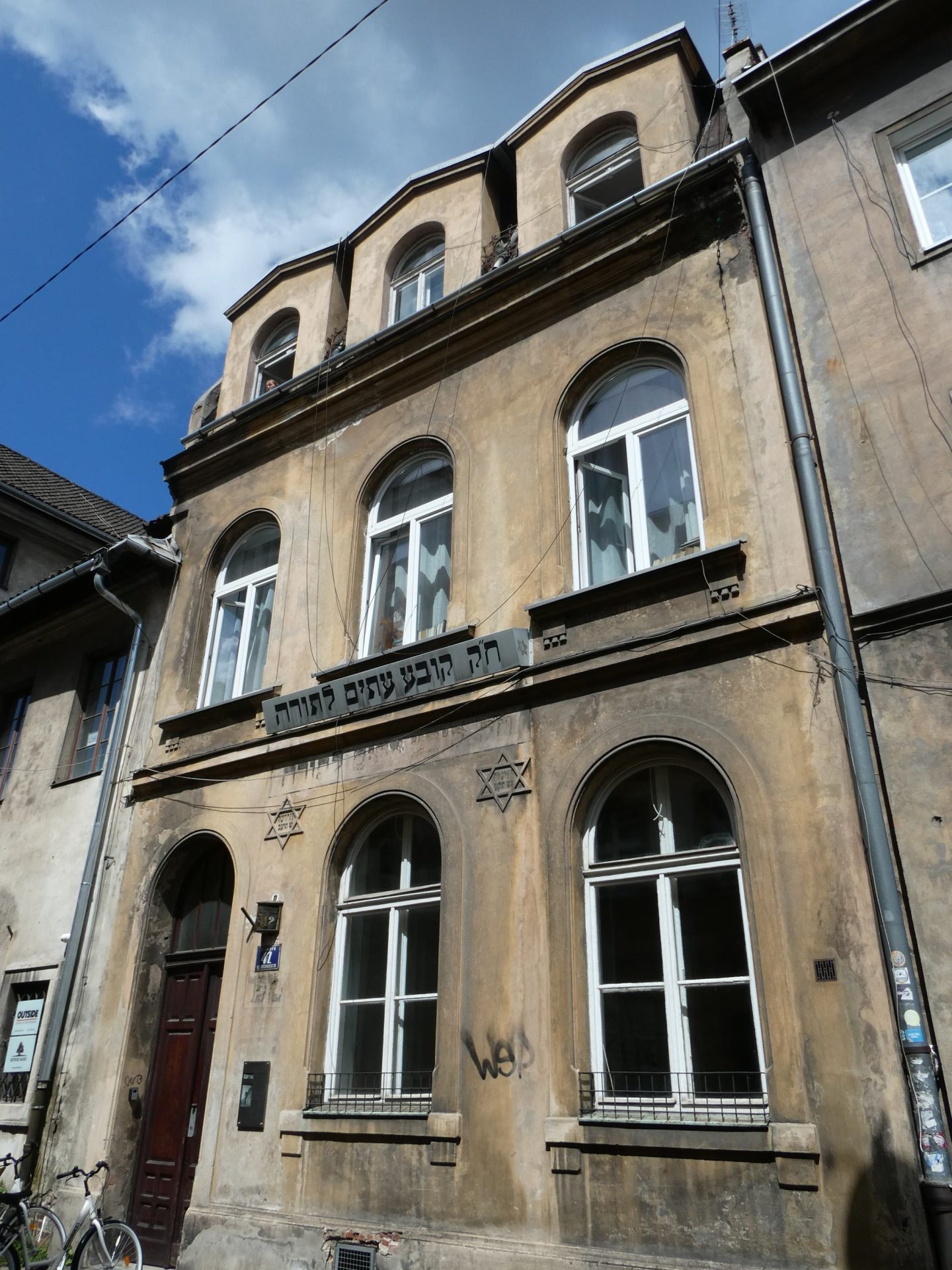
There are only a very few traces of the old Jewish character in Kazimierz, like the marking on the facade of this building, once a Jewish school, now an apartment building.
Before the war, there were around 130 synagogues in Krakow. The Old Synagogue is one of a few that survived. It’s been fully restored and is a rare example of a ‘fortress style’ which developed in Polish lands during the 1500s at a time of frequent attacks by Russians and Ottomans.

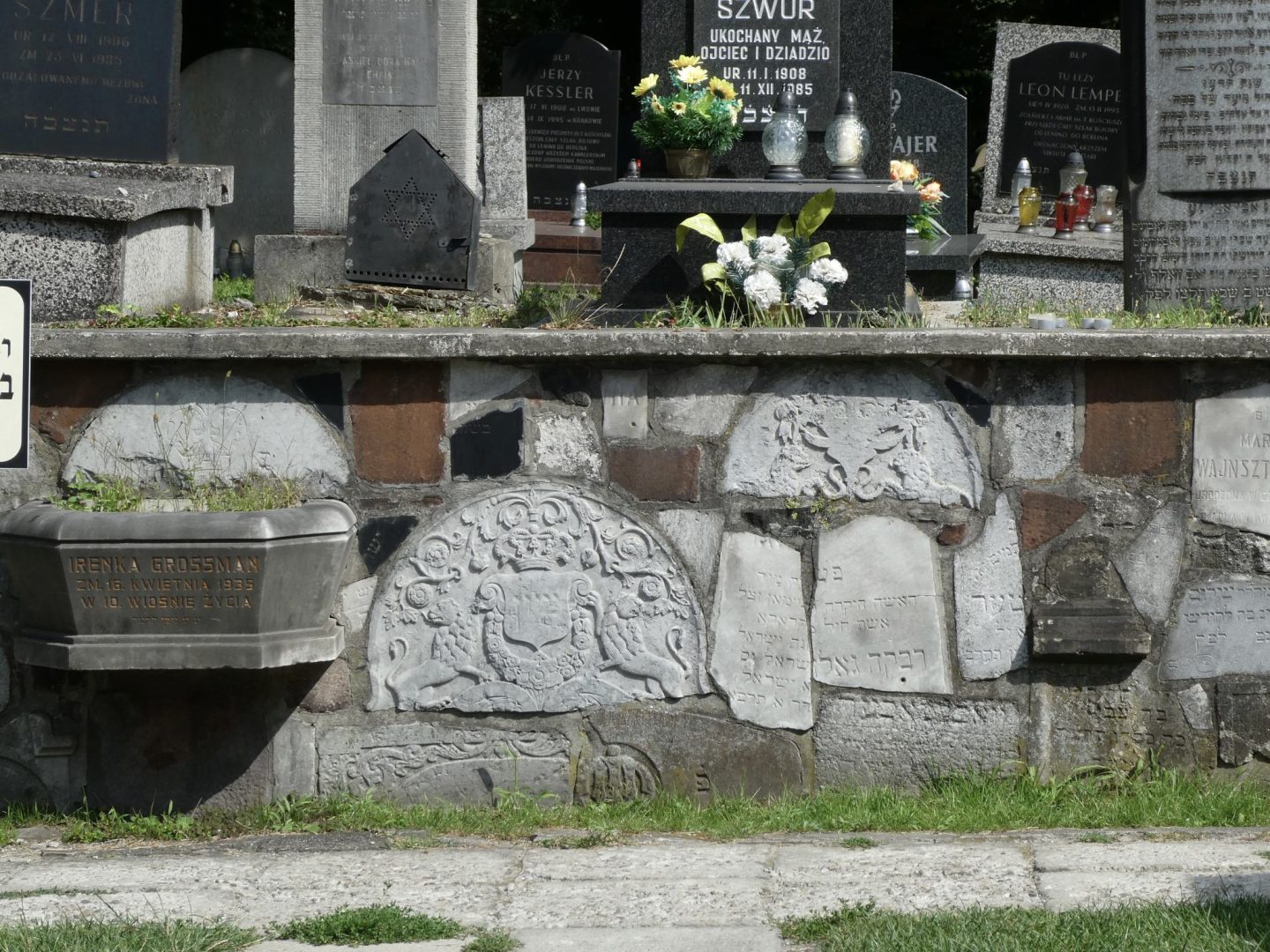
When the Nazis invaded Poland, they closed Kraków’s Jewish Cemetery and sold off any valuable stonework to their own masons. Other tombstones were used as construction material for roads. After the war, a local engineer, most likely a camp survivor, recovered many of them and they were formed into memorial walls at the cemetery.
 In Kazimierz we also visited the Galicia Jewish Museum. It presents the effects of the Nazi era through photographs of Jewish buildings and sites. There are synagogues, schools and housing enclaves emptied out as a result of the Nazi terror, some still derelict, some unrecognisable due to repurposing. Also, sites of massacres which have never been properly marked for remembrance. And in contrast, buildings which have been successfully restored. What makes the exhibition unique is that the Holocaust story is told entirely through buildings, not people. Very interesting.
A more conventional approach to the history of both Jewish and non-Jewish citizens of Krakow during the Nazi era is presented at the Oscar Schindler Enamel Factory.
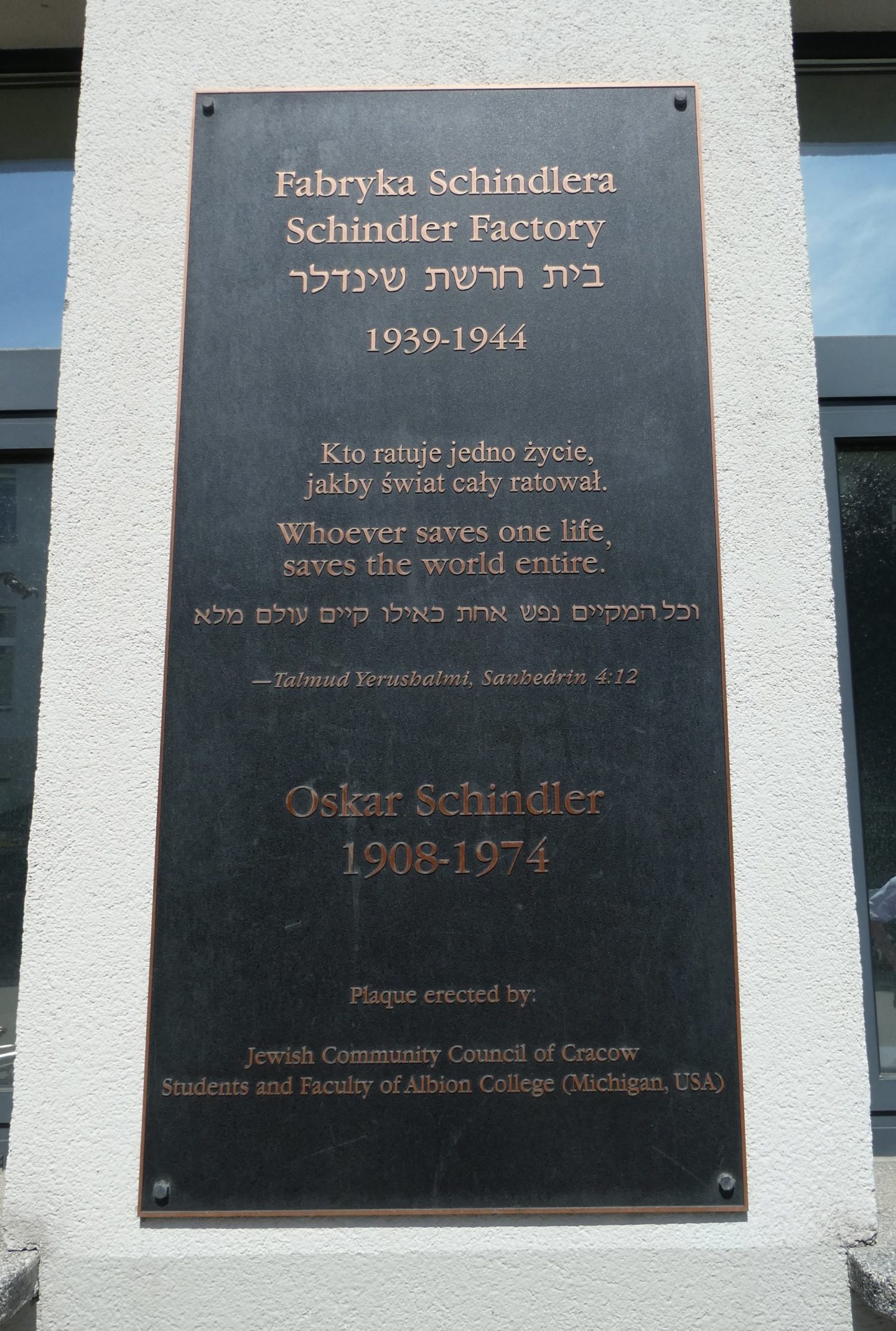
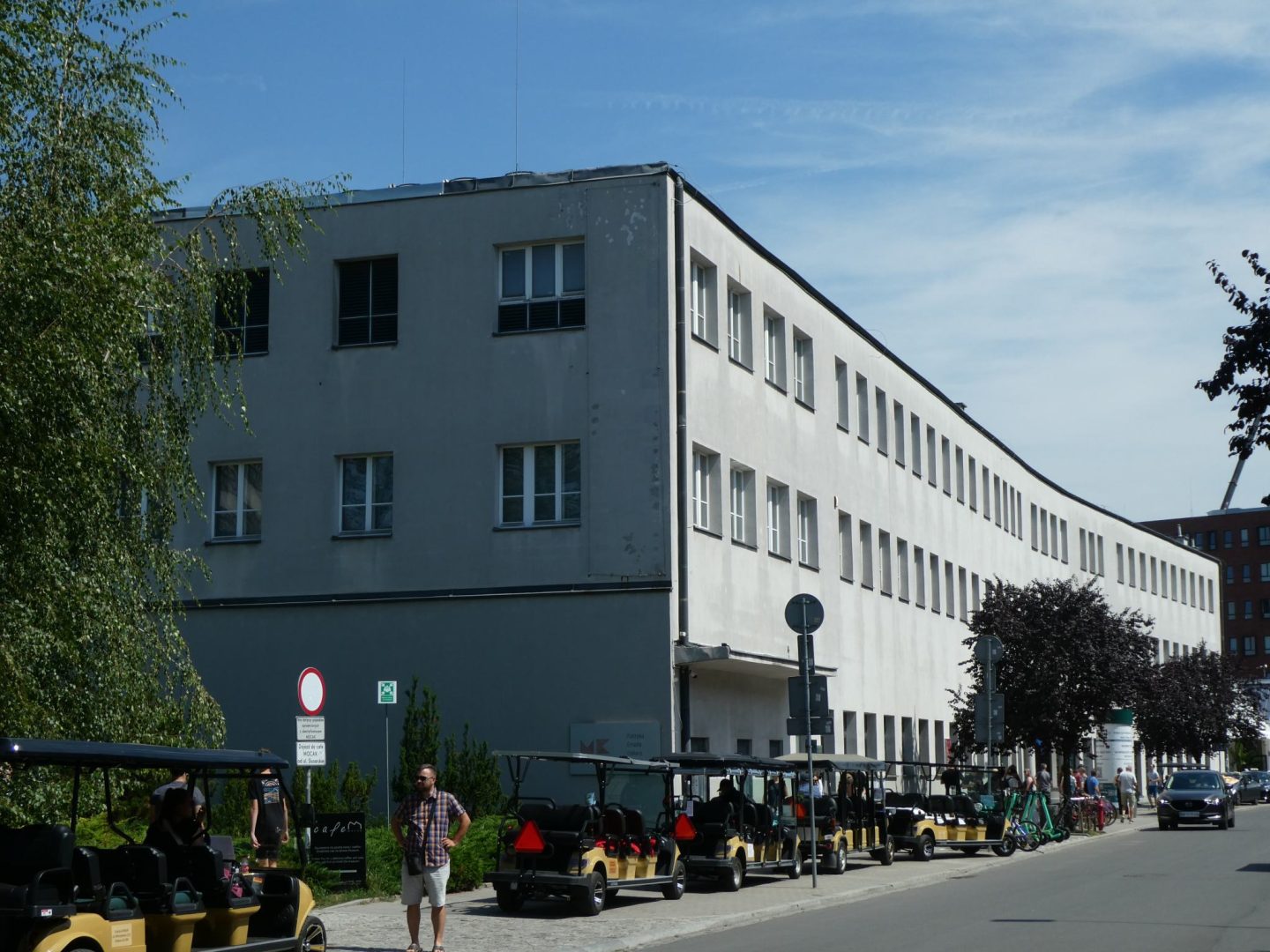
Beginning with an exhibit showing the vibrant life of Krakow before the war, it details the invasion by the Nazis, life during the occupation, the deportations and transportation of the Jews to the death camps, and some thought-provoking analysis of the attitudes of non-Jewish Poles during the era.
There’s not a lot about Schindler himself except for a good documentary where a couple of those who worked in the factory talk about how workers were treated. If you’ve read the book, Schindler’s Ark or seen the movie adaptation, Schindler’s List, you’ll know the basics. But it’s interesting to know that despite the movie’s title and content, Schindler did not draw up a list of 1,100 Jewish workers to be saved. As the Germans came under threat in Krakow and decided to move their factories to safer areas, Schindler moved his operation to Brunnlist in current day Czech Republic. He certainly bribed and cajoled the authorities into giving him permission to take his 1,000 workers and others, but the scene where he dictates a ‘list’ is pure dramatic fiction.
We don’t mean to diminish his contribution. It’s well established that he treated his workers better than other forced labour operations, and that he moved the workforce because he knew they would be taken to the death camps if he didn’t, all at personal risk of being targeted by the authorities.

The Auschwitz-Birkenau concentration camp was located only about 70km from Krakow. Preserved as a museum from 1946, the complex is now a major destination for visitors from all over the world.
Everyone knows the history so we won’t go into detail. But familiarity does not make it any less horrific. Between 1940 and 1945, the Nazis transported 1.3 million men, women and children to Auschwitz. 1.1 million of them died, 90% of them Jews. Some from disease, malnutrition or maltreatment, but most were gassed in the purpose-built crematoria.
Before they were killed, they were stripped of their belongings, which the Germans sorted in massive warehouses on the site. Stockpiles of some items which were not destroyed at the end of the war have been preserved and give a tiny insight into the scale of the attempted genocide.
A cabinet contains 4 tonnes of human hair. Out of respect for the dead, photographs are not allowed. But you can take pictures of other horrors: eye glasses, prosthetic limbs, shoes and suitcases.


You can see the ‘experimental’ crematorium at Auschwitz which pre-dated the industrial scale ones at adjoining Birkenau.

And the remains of the infamous Birkenau crematoria, which the Germans blew up as the Russian army approached, in an attempt to hide their crimes.
 And a field where the ashes of cremated victims were dumped in massive pits.

During summer, visiting is by tour only. Four groups of 40, in four different languages, leave every 15 minutes. The crowding does diminish the experience but it’s hard to criticise the museum’s philosophy that as many people as possible should see it.
The site is vast. It takes over three hours for what’s really just an overview and even with the crowds, it’s definitively worth the visit.

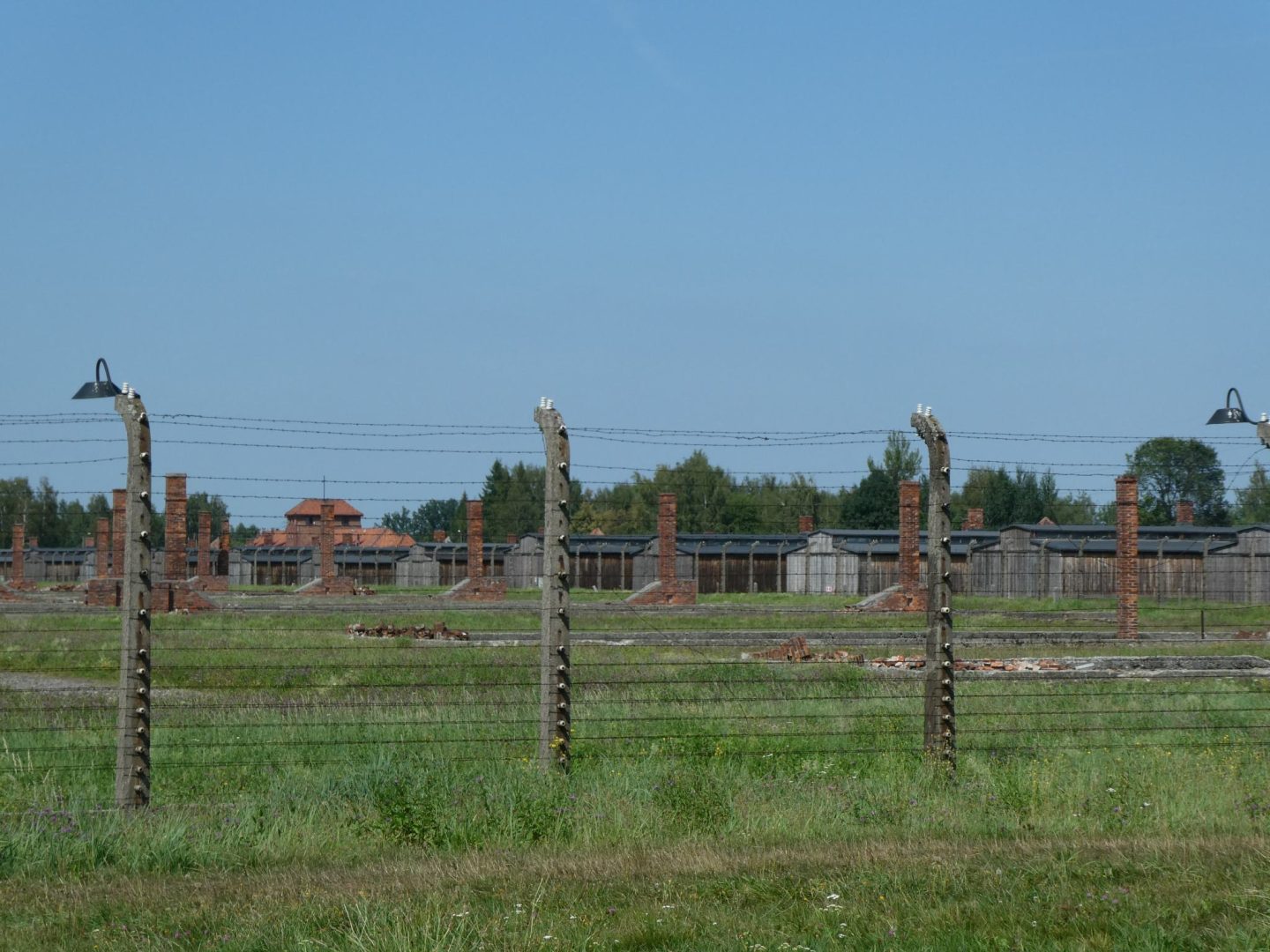

This plaque, which is replicated in 22 languages, says it all.

To finish on a less somber topic, here is the Wieliczka Salt Mine, just outside Krakow. From the 1200s up until 1996, the mine produced table salt, making it one of the world’s oldest operating salt mines.
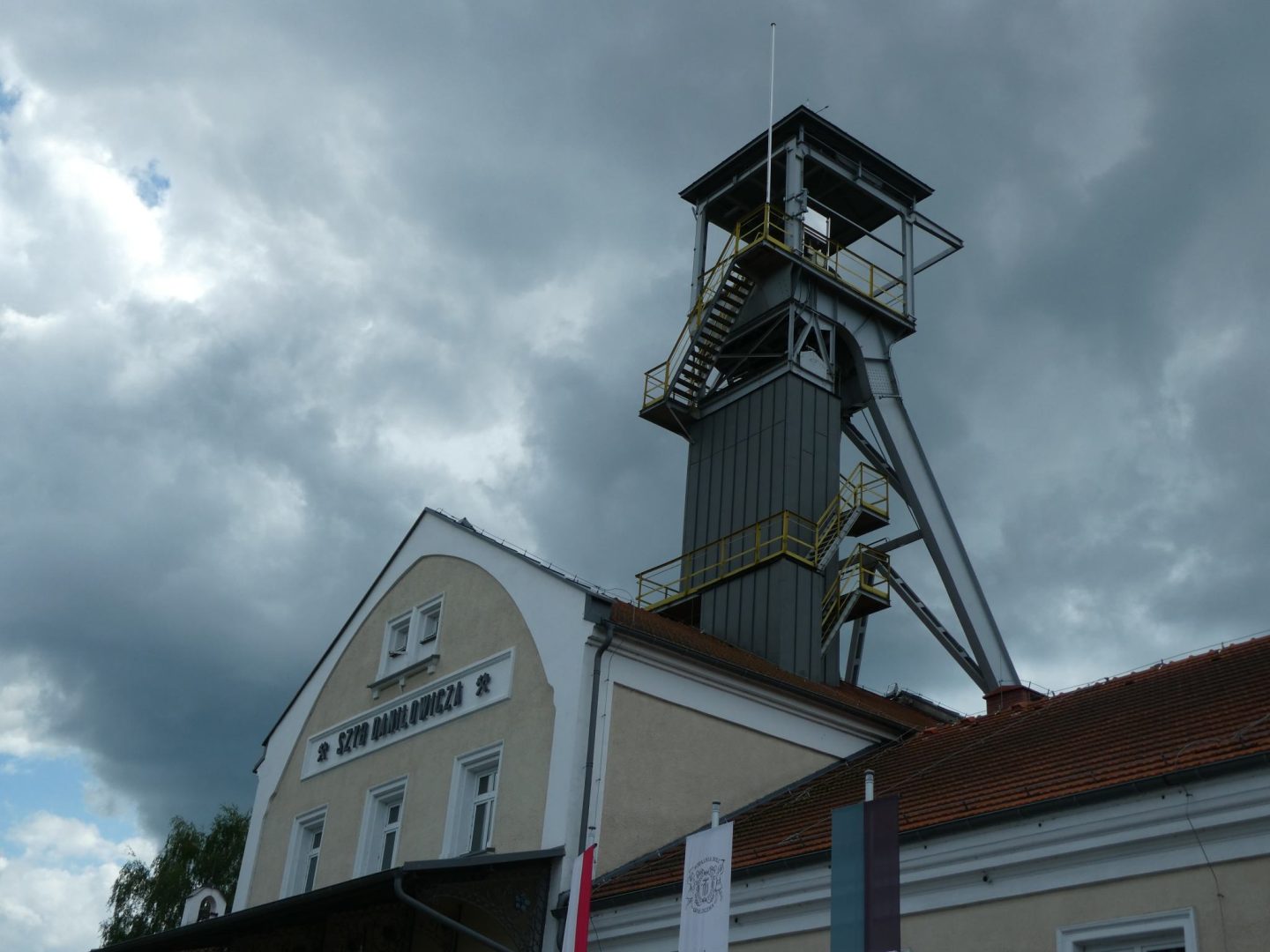
It made UNESCO’s inaugural World Heritage listing, not just because of its age but because of the remarkable salt sculptures deep inside. In the 13th century, devout miners carved chapels and niches with religious images so they could offer a prayer or two as they went about their work.
The most elaborate is St Kinga Chapel. Princess Kinga was a Hungarian royal betrothed to the Prince of Krakow. According to legend she asked her father for a lump of salt as a wedding gift. He took her to one of his salt mines and she threw her engagement ring in. Upon arriving in Krakow, she asked miners to start digging. They found a lump of salt and presented it to her. Cracked open, it contained her engagement ring. A miracle! And the beginning of a prosperous industry for Krakow.
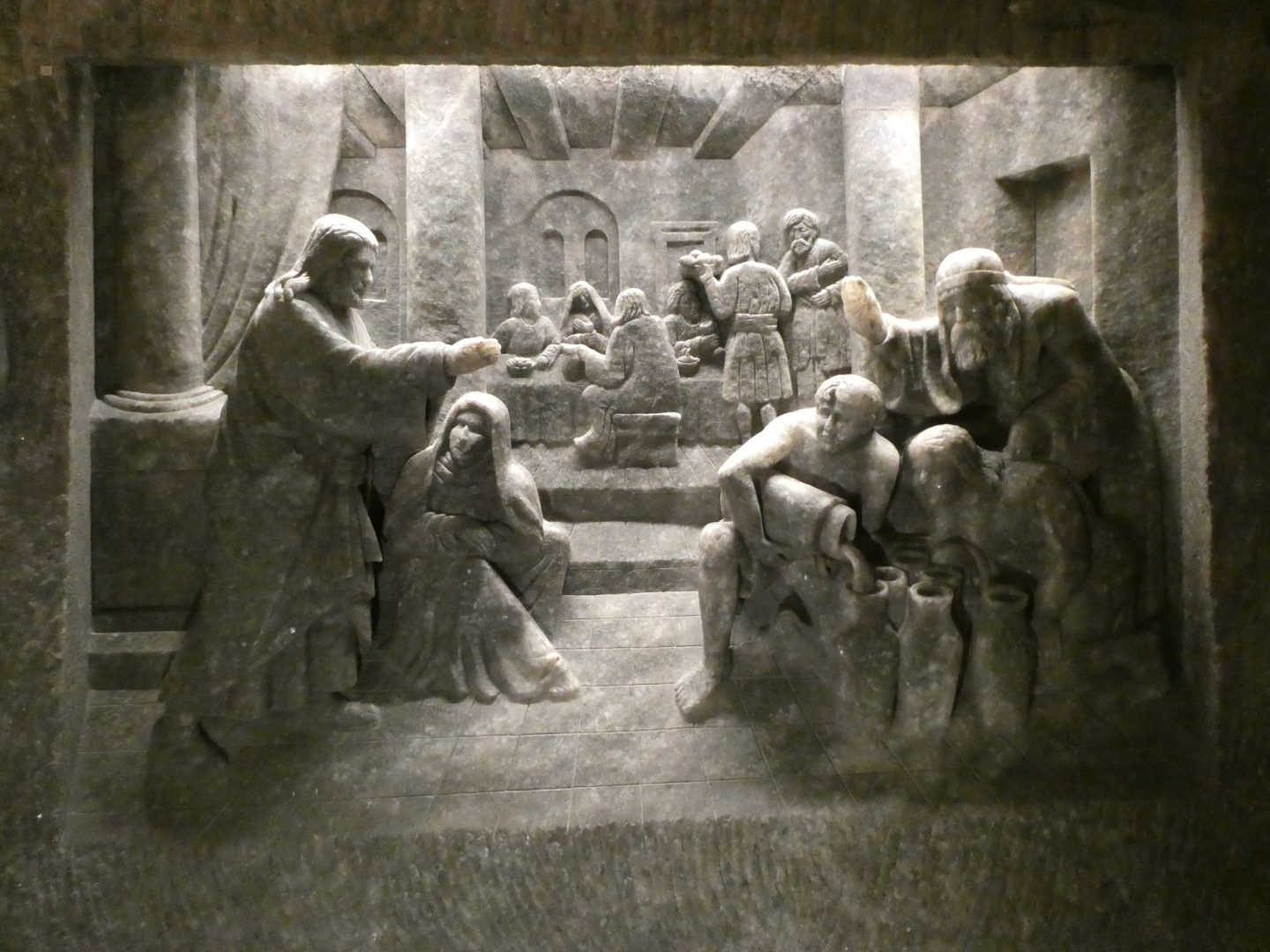
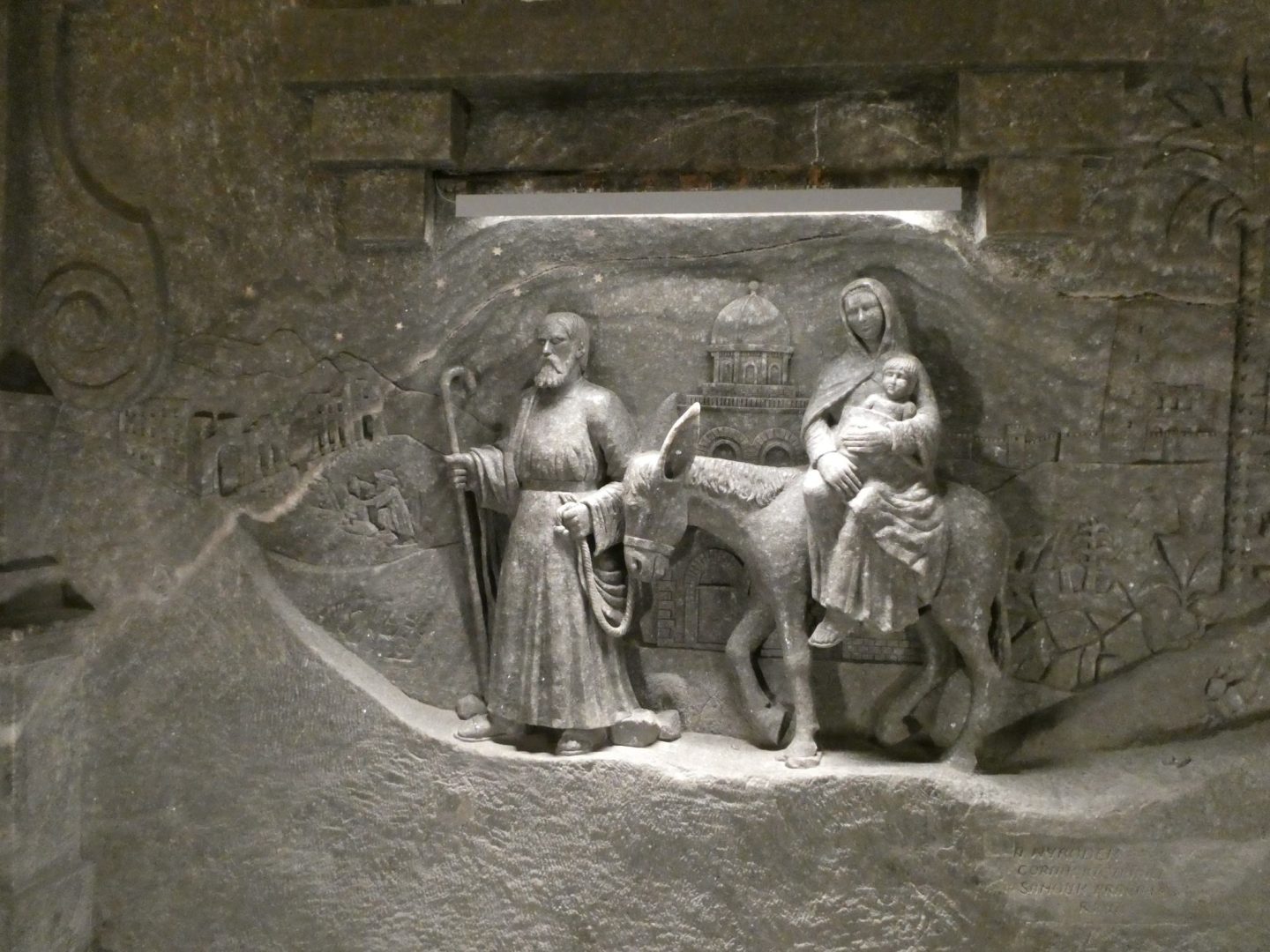
The Chapel is still a working church, 150 metres underground. The entire chamber is carved out of the salt. Even the chandeliers, a more recent addition obviously, are carved from salt.


The incredibly detailed bas relief carvings on the walls depicting scenes from Jesus’ life took one man 70 years to complete.

Princess Kinga was canonised by the first and only Polish Pope, John Paul II in 1999. In gratitude a salt statue of him was added.
 Patriotism at its most benign.
